06.23.2026

How Connecticut Agents Generate Real Estate Leads in a Record-Low-Inventory Market

In Connecticut, the hard part of an agent’s job is rarely finding buyers. It is finding sellers. The state runs persistently short on inventory, well under the five to six months of supply that marks a balanced market, while demand stays strong enough that well-priced homes move quickly and often above asking. That is the structural shape of Connecticut real estate leads: motivated buyers in good supply, listings scarce, and a steady race among agents to reach the owner who is ready to sell before anyone else does.

Connecticut is not one market, either. The Gold Coast in Fairfield County behaves nothing like Greater Hartford, the New Haven bioscience corridor runs on a different engine than the Quiet Corner, and the Litchfield Hills answer to second-home money from Manhattan. An agent who treats the whole state as a single story will lose to one who reads each region for what it actually is. This is a guide to where the opportunity sits, how agents are chasing it today, and the model that changes the math.
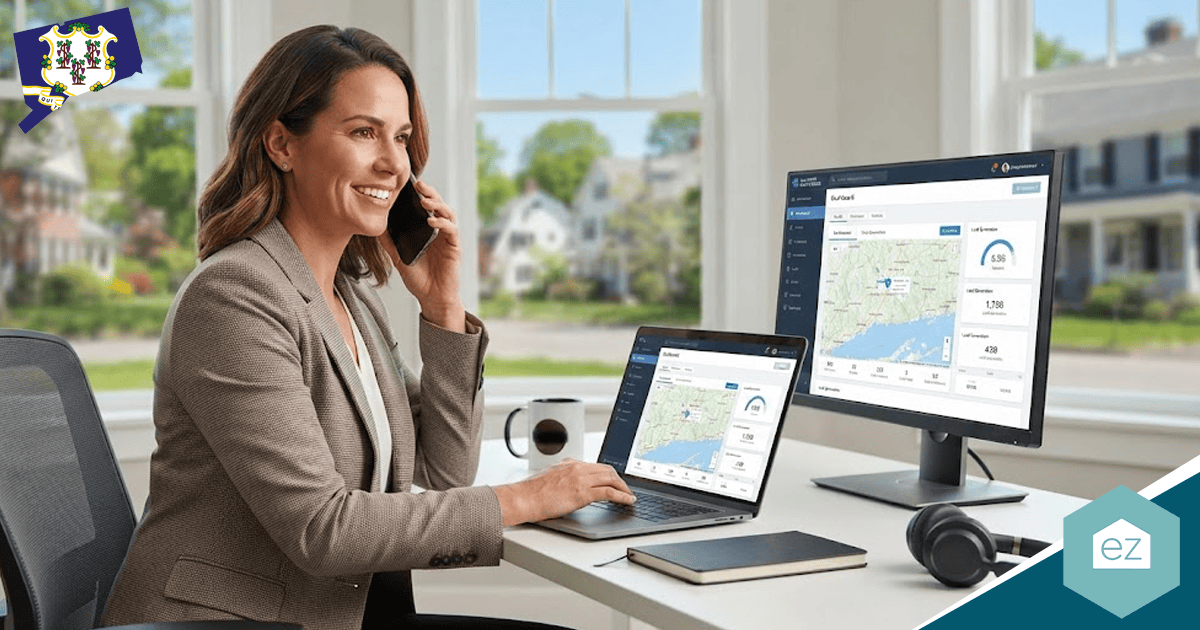
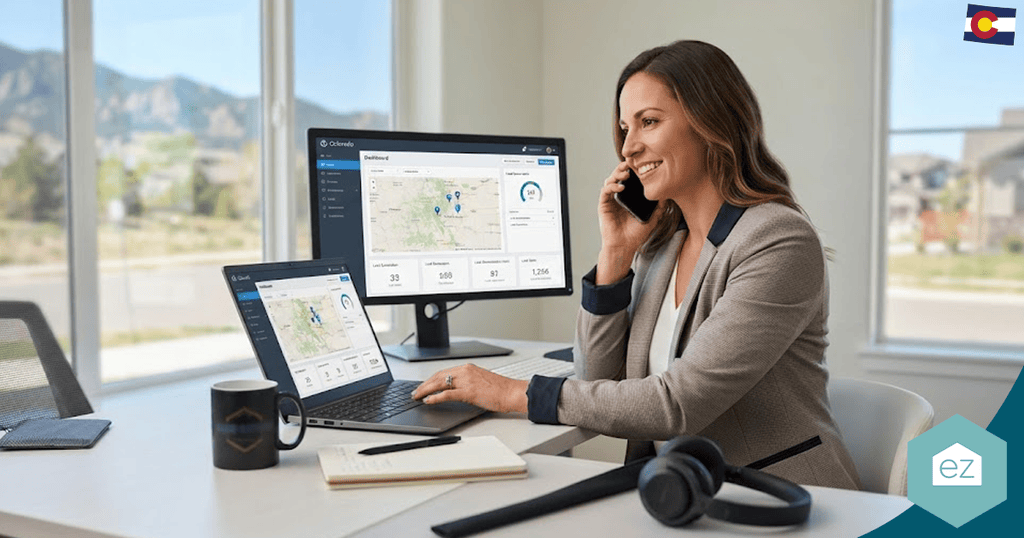
Woman in an office smiles while talking on the phone, working on a laptop and desktop displaying maps and data related to Connecticut real estate leads, with a notebook and headphones nearby.

Connecticut’s market is moving on at least eight forces at once

The fastest way to misread Connecticut is to pick one headline and build a strategy around it. Several forces are pushing the market in parallel, and the agents who win listings hold all of them in view at once. Here is the honest breadth, by category.

Prices keep climbing through high rates. Even with mortgage rates well above their pandemic-era lows, Connecticut home prices have kept rising, with the state’s gains outpacing the national average and ranking among the larger state-level increases in the country, according to the Federal Housing Finance Agency’s house price index for the state. Higher rates have slowed the pace of sales; they have not broken prices.

Inventory is the binding constraint. Connecticut has run well under two months of supply against the five to six months that marks a balanced market, a shortage that has held for years. When supply is this thin, the seller holds the leverage, and the agent who controls listings controls the market.

The lock-in effect is the engine behind the shortage. Owners holding mortgages well below the rate a new loan would carry have little financial reason to sell, so a large share simply stay put. That single dynamic explains most of the inventory problem, and it tells an agent exactly who to talk to: the owner with a life reason to move that outweighs the rate they would give up.

Connecticut is growing, and the growth is coming from abroad. The state’s population has grown past 3.6 million, and recent Census estimates credit that growth to international in-migration, with a small positive natural increase, even as Connecticut posts a modest net domestic outflow, per population estimates compiled by the Connecticut Data Collaborative. Put that outflow in context before anyone calls it a problem: a net domestic loss of a few thousand residents against an owner base near 940,000 households is a rounding error, not a decline, and it points to opportunity on both sides. Every household that leaves is a listing and often a relocation referral, and every household that arrives is a buyer who needs local representation.

The biggest moves are New York in and Florida out. Internal Revenue Service migration data, which tracks address changes on tax returns, shows New York as Connecticut’s single largest net source of new residents, on the order of 17,000 people in a recent filing year and the bulk of the state’s gains from net-positive states, with Florida the largest single net destination for those leaving. The Metro-North New Haven Line keeps Fairfield County commuter towns inside Manhattan’s orbit, which is why the New York inflow lands first on the Gold Coast.

The regions are pulling apart on price. Fairfield County’s typical home value runs north of $650,000, more than $200,000 above Hartford County near $367,000, on county-level price data. That gap is itself a lead source, because value-seeking buyers priced out of Fairfield look inland to Hartford, the Naugatuck Valley, and Eastern Connecticut.

Employment runs on several engines, and health care is the largest. Connecticut’s health care and social assistance sector, at roughly 294,000 jobs, is the state’s largest and has led its recent job growth, with private-sector employment reaching record levels, according to the Connecticut Department of Labor. That sits alongside the insurance and finance cluster anchored in Hartford, defense manufacturing in the southeast where General Dynamics Electric Boat employs about 24,000 across Groton and Quonset Point, and the Yale-anchored health and bioscience base in New Haven. No single anchor defines the state, which means relocation and buyer demand surface in more than one place.

A woman points to a heat map on a large screen, illustrating Connecticut real estate leads as two men watch and take notes in a bright office setting.

Demographics are setting up a contest for starter homes. Connecticut skews older, with a median age near 41 and seniors above the national share, and equity-rich boomers weighing a downsize increasingly compete with first-time millennial buyers for the same limited starter inventory. The agent who can serve both sides of that contest, the downsizer with a home to sell and the first-timer who needs a win, is positioned in the part of the market with the most activity.

CountyPrincipal cityApprox. city population
FairfieldBridgeport149,000
HartfordHartford121,000
New HavenNew Haven134,000
New LondonNorwich40,000
LitchfieldTorrington35,000
MiddlesexMiddletown47,000
TollandVernon30,000
WindhamWindham (Willimantic)25,000

Connecticut’s eight counties are historic geographic regions, not units of government: the state abolished county government in 1960, the 169 towns govern locally, and the U.S. Census Bureau now uses nine planning regions as the state’s county-equivalents. City population figures are Census-derived approximations.

An exclusive territory is built on exactly this idea: one partner owns the activity across a defined part of the state. If that is the position you want, it is worth checking early whether your Connecticut territory is still available.

Connecticut is many markets, and the regional map decides your strategy

The practical way to read Connecticut is region by region, because each one offers a different kind of lead. The state’s nine official planning regions now serve as its county-equivalents for Census reporting, and the four largest, Capitol around Greater Hartford, Western Connecticut along the Danbury to Stamford corridor, South Central around New Haven, and Naugatuck Valley around Waterbury, hold roughly 72% of all residents. That is the real “where the deals are” map. The table below pairs the recognizable regions with the force driving each one.

RegionWhat is driving it
Fairfield County / Gold Coast (Greenwich, Stamford, Westport)Wealthiest part of the state, typical values above $650,000, absorbing the New York inflow first
Greater Hartford (Capitol region)Most affordable major metro near $367,000, anchored by insurance and finance, a tight seller’s market
Greater New Haven (South Central)Yale and Yale New Haven Health employ more than 12,000 regionally, with 70-plus bioscience firms feeding demand
Eastern Connecticut / Mystic and New London shorelineGeneral Dynamics Electric Boat, about 24,000 workers across Groton and Quonset Point, sustains southeastern demand
Litchfield Hills / NorthwestThe “anti-Hamptons” second-home market, median list near $650,000, inventory around a quarter of pre-pandemic levels
Naugatuck Valley / WaterburyThe value tier of the New Haven area, drawing budget-conscious buyers priced out of the coast

Read across that table and the lead strategy writes itself. Fairfield rewards an agent who can handle high-value listings and the privacy that wealthy sellers expect. Greater Hartford rewards volume and speed in a market where affordability still pulls buyers. The shoreline and the Litchfield Hills reward an agent who understands second-home buyers who live somewhere else most of the year. One playbook does not cover all of it.
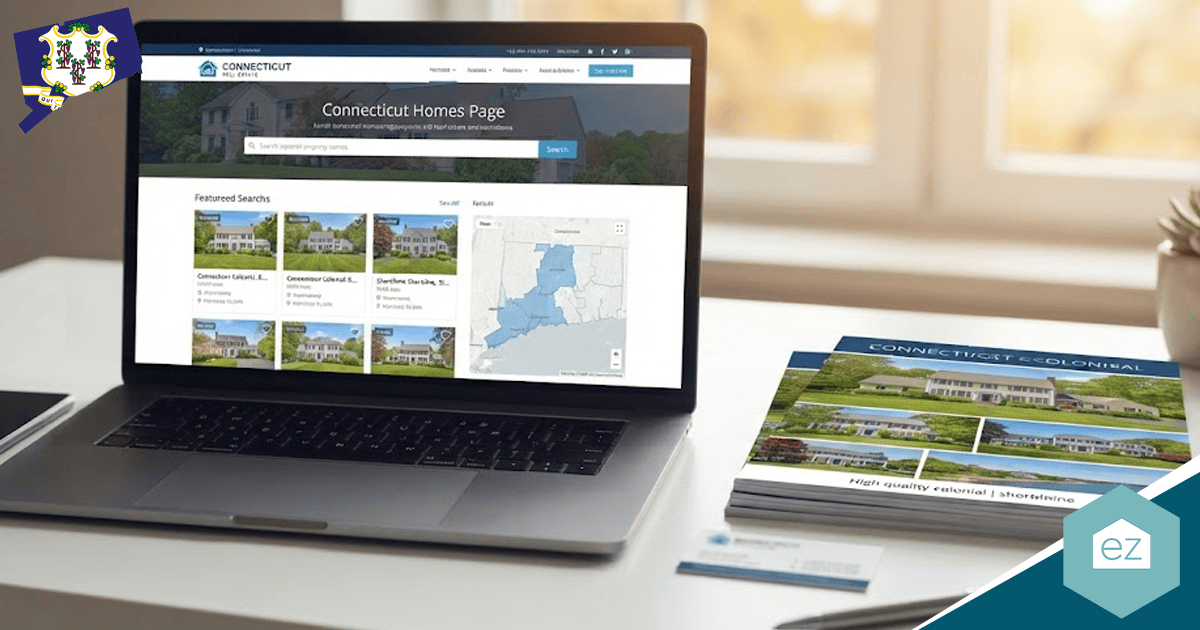
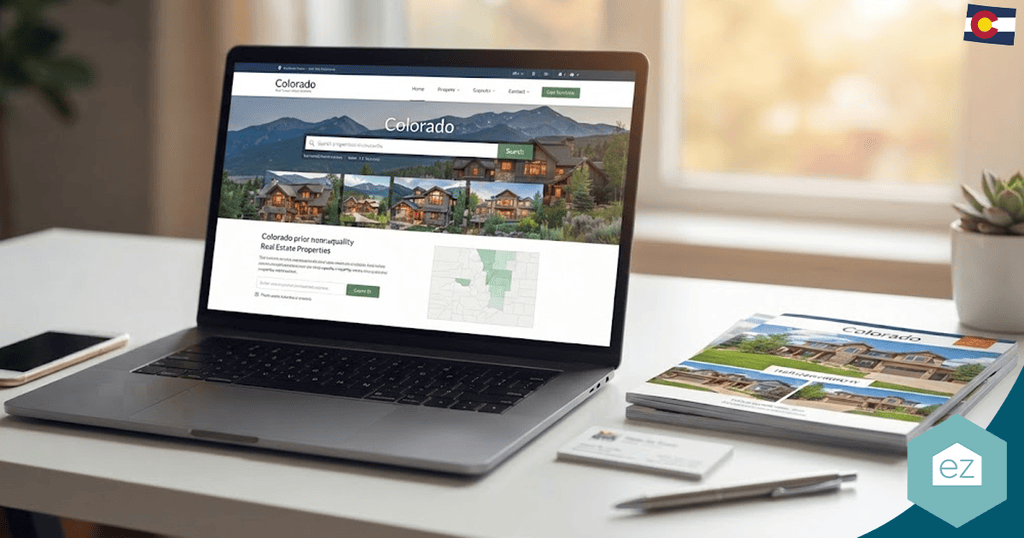
A laptop displays the Connecticut Homes Page real estate website, highlighting valuable Connecticut real estate leads. Nearby, printed brochures and the Connecticut state flag are visible.

The true cost of owning a Connecticut home swings sixfold by town

One Connecticut fact almost no out-of-state lead source understands: the same house can carry a property-tax bill six times higher in one town than in another. Municipal mill rates run from about 10.85 in Washington, with Salisbury, Sharon, and even Greenwich among the lowest, up to 68.95 in Hartford, with Bridgeport and Waterbury above 40, per the Connecticut Office of Policy and Management’s mill-rate dataset. Real estate is assessed at 70% of market value before the town applies its mill rate, so on a $300,000 home assessed at $210,000, a 30-mill town bills $6,300 a year while a high-mill town bills far more on the identical property.

That is not trivia. It is the single most useful thing a Connecticut agent can put in front of a buyer comparing towns, and it is exactly the kind of guidance a recycled internet lead never receives. An agent who can show a buyer the real carrying cost of a Greenwich home versus a Hartford one, taxes included, becomes the trusted advisor instead of one more name in a buyer’s inbox. The same depth helps sellers. A home’s value is tied to more than the home, and a buyer who has to carry a heavy tax bill on top of the mortgage adjusts the price they will pay; an automated valuation model (AVM) that accounts for the local tax picture gives a seller a realistic number rather than a hopeful one.

Sellers also carry a Connecticut-specific cost at the closing table. The state conveyance tax runs 0.75% on the first $800,000 of price, 1.25% from there to $2.5 million, and 2.25% on the portion above $2.5 million, paid by the seller, plus a municipal share. As of July 1, 2025, conveyance-tax revenue above $300 million is directed to the state’s Housing Trust Fund under Public Act 23-207. For listing agents working high-value Fairfield County homes, that top tier is part of the pricing conversation, and knowing it cold is part of earning the listing.

Beyond the metros, Connecticut’s communities are where farm areas are won

The breadth of Connecticut’s towns is the opening for agents willing to own a defined area. The big metros draw the most agents and the most competition; the towns beyond them reward the agent who becomes the recognized local name. The table below maps communities worth farming, by county and sub-area.

County / sub-areaCommunities
Fairfield (Gold Coast)Greenwich, Stamford, Norwalk, Westport
Fairfield (inland / north)Danbury, Ridgefield, Newtown, Bethel
HartfordHartford, West Hartford, Manchester, Glastonbury
New Haven (urban)New Haven, Hamden, Milford, Branford
New Haven (Naugatuck Valley)Waterbury, Naugatuck, Cheshire, Wallingford
New London (shoreline)Groton, New London, Stonington (Mystic area), Waterford
New London (inland)Norwich, Montville, East Lyme, Old Lyme
Litchfield Hills / NorthwestLitchfield, Torrington, Kent, Washington, Salisbury
Middlesex (CT River / shoreline)Middletown, Old Saybrook, Essex, Clinton
Tolland (UConn / Storrs)Vernon, Mansfield (Storrs), Tolland, Ellington
Windham (Quiet Corner)Windham (Willimantic), Putnam, Killingly (Danielson), Woodstock

The pattern across these communities is the same one the lock-in effect created statewide. Owners are not listing, which makes the agent who already has a relationship with a town’s homeowners far more valuable than the agent buying cold leads into that town. An agent farms a Connecticut community less by blanketing it with mailers than by becoming the name those owners already associate with their street, the one they think of when a life event finally outweighs their low mortgage rate.

The remote-work edge most Connecticut agents are missing

Here is an advantage hiding in plain sight: remote and hybrid work did not collapse, and it is still pushing buyers into Connecticut’s smaller and more affordable markets. The headlines that declare remote work dead measure against the emergency peak of the pandemic, not against the long-run baseline. Measured correctly, work from home has settled at roughly three times its pre-pandemic level and has held steady there.

The institutions that actually count this agree. The Bureau of Labor Statistics has counted about 36.7 million Americans doing at least some of their work from home, a year-over-year rise, with the telework rate above 23%. Gallup’s tracking shows that among remote-capable workers, roughly half the workforce, about 51% work hybrid and 28% are fully remote, a split that has been stable for years. The Pew Research Center has found about three-quarters of employees with remote-capable jobs still working from home at least some of the time. When the U.S. Census Bureau surveyed about 150,000 firms for its business survey, employers projected roughly the same level of remote work a full five years out. This is not a fad fading; it is the new normal, and the agents who understand that have a read on demand their competitors do not.
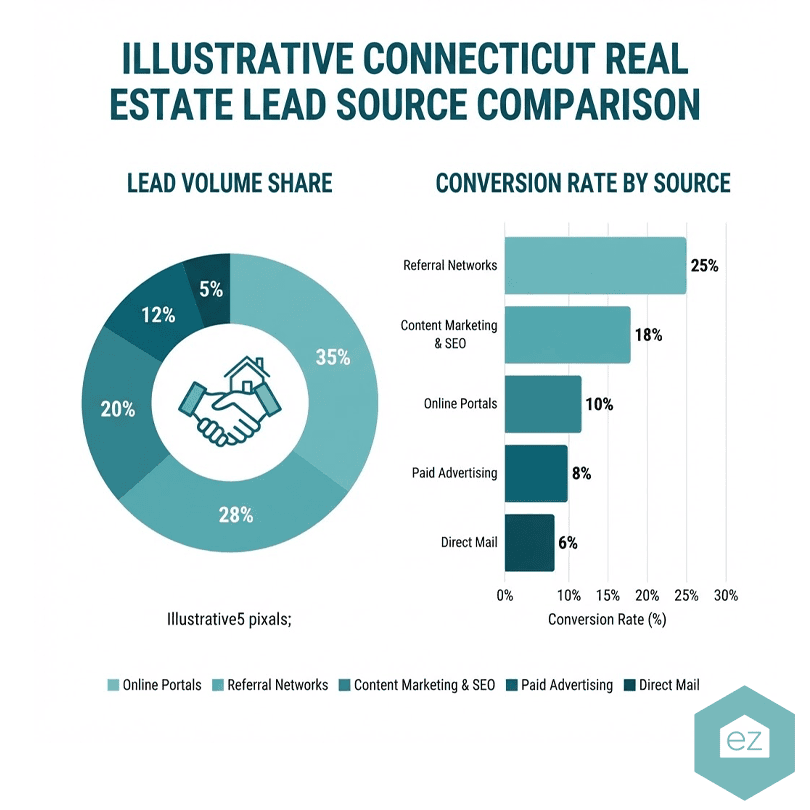
Pie chart and bar chart comparing Connecticut real estate leads by source and their conversion rates: Online Portals (35%, 10%), Referral Networks (28%, 25%), with other lead sources for Connecticut real estate shown at lower values.

For Connecticut, that demand lands hardest in exactly the markets that need the story told well. The Litchfield Hills draw Manhattan second-home buyers who can now spend three or four days a week away from a Midtown desk. The Quiet Corner in Windham County, the towns around UConn in Tolland County, and the Naugatuck Valley offer space and price that a hybrid worker on a New York or Hartford salary can finally reach. The Metro-North towns let a buyer commute twice a week and live somewhere larger the other three days. What these buyers want has shifted with them: a home office they can close the door on, an accessory dwelling unit or detached structure that handles work or guests, more square footage, and broadband that genuinely keeps up. An agent who markets a Salisbury or a Woodstock listing on those features, to the buyer who is actually looking for them, is fishing where the fish are. Most agents in the state are still selling those homes the way they always have.

How Connecticut agents chase leads now, and where each tactic tops out

Most Connecticut agents are working hard at lead generation already, and the common tactics each do something real before they reach a limit. The fair thing is to credit what each one accomplishes before showing where it stalls.

Shared portal leads put buyers in front of an agent quickly, which is their appeal. The catch is in the word shared. When the lead comes from a legacy real estate portal, it can be sold or routed to whoever pays the most, which often means the same buyer is fielding calls from several agents at once, and the agent is paying for the privilege of competing for a cold name. In a market this short on listings, paying for buyer leads also solves the wrong problem.

An IDX-enabled website is the right instinct, because owning the search experience builds a real asset. The difficulty is that an individual agent’s site is expensive to keep fast and current, and the data behind it updates slowly compared to what buyers expect, so the asset ages even as the agent pays to maintain it. Cold calling and circle prospecting still generate listings, and they remain a legitimate part of the business, but they put the agent squarely under telemarketing law, where the burden of proving consent falls on the caller. Predictive-seller tools score a database and guess who might list, which is useful, yet a ranking is not rapport, and the agent still has to build the trust that turns a guess into a signed listing agreement. Generic all-in-one CRMs, do-it-yourself content, and paid ads all help at the margin and all share the same limitation: they are systems the agent has to run, on top of actually serving clients.

There is one more Connecticut-specific wrinkle worth naming. The state effectively requires a real estate attorney at the closing table, so every deal involves coordinating counsel. That sounds like friction, and handled poorly it is. Handled well, it is a relationship channel most agents underuse, because the attorneys, lenders, and inspectors an agent works with repeatedly are a referral network that compounds.

The honest summary is that none of these approaches is wrong. They are partial. Each one solves a slice of the problem and leaves the agent assembling and paying for the rest. That is the gap an exclusive model is built to close.

What an exclusive Connecticut territory changes about lead generation

ez Home Search approaches this from the other direction. Its partnership for agents gives one agent, team, or brokerage an exclusive Connecticut territory, defined by county or by planning region since the state governs by town, with that partner’s brand carried across the consumer experience and no competing partner operating inside the same ground. One partner holds the territory. The model carries no per-lead charge and takes no slice of the closing commission, so a busy month of opportunities pays off for the agent instead of running up a bigger invoice.

The reason the leads convert is the part that matters most. ez Home Search is built as The Only Confidential Home Search. In practice that means a consumer’s contact information and budget are never put up for sale, recycled, or handed off to a long roster of businesses the person never chose. Every buyer and seller is paired with a Single Local Expert, the partner holding that territory, picked because they fit what the person needs. A consumer who reaches that partner is not a cold name pulled from a list; they already trust the platform and have signaled genuine intent through real activity, and the partner can read that history before the first call. The agents and teams ez Home Search works with consistently tell us those connections behave like warm referrals, not like internet leads, and that many of them convert inside the first 30 to 60 days.

For a low-inventory state, the highest-leverage piece is reactivation. When listings are scarce, the cheapest business available is the database an agent already owns. The research holds steady on this: most past clients tell surveys they would happily hire their agent again, yet only about 18% ever do, and repeat and referral business makes up a large share of a typical agent’s volume. The gap is follow-up, which is where most agents fall short, not for lack of intent but for lack of time and material. ez Home Search handles that reactivation on the partner’s behalf, co-branded and done for them: the home-value updates, the listing alerts, the market reports past clients actually open. Across the partners we work with, past-client reactivation, whether through repeat business or referral, runs at roughly two and a half to five times the market rate. In a state where owners are locked in and not listing, the agent already top of mind with their own sphere wins the listing the moment a life event tips the scale.

Connecticut’s migration math makes a second beat valuable. With New York the largest source of arrivals and Florida the largest destination for those leaving, a Connecticut agent’s past clients are moving in and out of the state at a steady, predictable rate. National coverage means a past client who starts searching Florida does it on the partner’s own co-branded platform rather than disappearing to a legacy portal, and that activity shows up early as a signal the move is underway. The agent reaches out before the local home is listed with someone else, keeps the listing they earned, and refers the buyer to a trusted agent at the destination for a referral fee. Without that visibility, the relocation is a silent and total loss.

Two more pieces fit the way Connecticut agents actually work. Because prospecting by phone or text puts an agent under consent law, ezVerify.ai documents that a person opted in, retains the recording that proves consent, checks numbers against a known-litigator database, suppresses Do Not Call registrations, and supplies the contact detail an agent would otherwise have to dig up. Its job is proof of consent and protection, never a lead score. And the conversion tools an agent would otherwise build or rent, the home-value pages, the saved-search alerts, the automated follow-up through ezNurture in Follow Up Boss or deeper in Sure Send, already run as part of the platform under the partner’s brand, with nothing to set up. The wealthy Fairfield County seller who expects discretion gets it from a model built on confidentiality, not from a portal that treats the listing as inventory to monetize.

Claiming a Connecticut territory before a competitor does

Exclusivity is the whole point, which means availability is limited by design. Only one partner holds a given Connecticut territory, so demand for the open ones tends to run ahead of supply, and territories are claimed every month. Many of the state’s counties and planning regions are already held. The honest way to find out is to check whether the one you want is still available rather than to assume it is.

What a partner steps into is not a project. The platform millions of people already use carries the partner’s brand from day one, with the search, the alerts, the valuations, and the follow-up already built and running. There is no stack to assemble and no system to administer. The agent’s hours go to clients and closings while the engine does the part that used to take a marketing team and a budget most single offices could never reach.

The decision a Connecticut agent actually faces

Strip away the detail and a Connecticut agent has three real options for solving the lead problem. The first is the status quo: keep buying shared leads that get sold to several agents at once, in a market where the scarce resource is listings, not buyers. That keeps the agent busy and keeps the costs recurring without building anything the agent owns. The third option is the opposite extreme: build the whole thing yourself, the fast IDX site, the data, the valuation engine, the compliance layer, the follow-up automation, which would cost a marketing team and years to reach the quality buyers now expect, if a single office could reach it at all.

The middle path is the Exclusive Territory Partnership: one partner per Connecticut territory, no charge per lead, no commission split, the consumer platform and the conversion tools already running under the agent’s brand, and a model built to reactivate the database the agent already owns. It is the reasonable answer between doing the same expensive thing and building an empire from scratch.

The honest trade-off is exactly the exclusivity that makes it valuable. Because only one partner holds a territory, the partnership is not available everywhere, and the returns compound over months as the database warms and the brand takes hold, rather than arriving the day a lead list is purchased. That is the cost of an asset that keeps producing instead of an expense that resets every month.

If one number captures it, our partners bring past clients back, by repeat business or referral, at roughly two and a half to five times the market rate, in a state where the listing the agent already earned is the listing worth protecting. The next step is simple: check whether your Connecticut territory is available, and see the platform against your own market. Schedule a call to find out what is available near you.

Frequently asked questions

Start from the reason owners are not listing. Most are holding mortgages well below the rate a new loan would carry and will not give that up without a real life reason, so the listing leads are the owners whose circumstances now outweigh their rate. The most reliable way to reach them is to already be the name they associate with real estate, which is why reactivating an owned database beats buying cold buyer leads in a market short on homes, not buyers. A co-branded home search that keeps past clients watching their own home’s value surfaces the owner who is getting close before they call anyone.

New York is Connecticut’s largest single source of new residents, and that inflow lands first in the Fairfield County towns on the Metro-North New Haven Line, where a buyer can keep a Manhattan job and live with more space. To reach those buyers, market on what they want, hybrid-friendly homes with a real office and genuine broadband within commuting distance, and be present on a platform they trust before they have committed to an agent. The same coverage protects the other side of the move, surfacing a Connecticut owner’s out-of-state search early enough to keep the local listing.

Connecticut sellers pay a state conveyance tax of 0.75% up to $800,000, 1.25% to $2.5 million, and 2.25% on the portion above $2.5 million, plus a municipal share, so in high-value Fairfield County towns the top tier is a real line item in the seller’s net proceeds. An agent who can walk a Greenwich or Westport seller through their actual net, conveyance tax included, earns more trust than one who quotes a price and lets the closing statement deliver the surprise. As of July 2025, conveyance revenue above $300 million flows to the state Housing Trust Fund, a detail worth knowing when the subject of where the tax goes comes up.

Connecticut effectively requires a real estate attorney at the closing table, which makes the attorneys an agent works with a standing part of every transaction rather than an occasional contact. Treated as a referral network, that group of attorneys, along with the lenders and inspectors an agent uses repeatedly, sends business back the way a strong sphere does. The agents who do this well keep those relationships warm with the same consistency they bring to past clients, and a co-branded platform that keeps the agent visible to the whole network makes the referrals flow more reliably.

The Litchfield Hills function as an “anti-Hamptons” market, drawing Manhattan second-home buyers within about a two-hour drive at price points well below Hamptons tiers, while the shoreline around Mystic and New London draws its own second-home and lifestyle demand. These buyers live somewhere else most of the year, so reaching them depends on national coverage and on marketing the features they want, space, a place to work, and access, rather than on local foot traffic. An agent visible to a buyer searching from New York or Boston, on a platform that keeps their search private, reaches them before a portal does.

Connecticut has no county government and now uses nine planning regions as its county-equivalents, so the practical farm area is defined by towns and by region rather than by a county office. The four largest planning regions, Capitol around Hartford, Western Connecticut, South Central around New Haven, and Naugatuck Valley, hold roughly 72% of the state’s residents, which is where most of the transaction volume sits. An exclusive territory can be drawn around a county’s worth of towns or a planning region, and the value comes from being the one recognized name across that defined ground rather than competing with every other agent statewide.

Connecticut’s older population means equity-rich boomers weighing a downsize are often bidding on the same starter homes as first-time millennial buyers, and an agent can serve both sides of that contest. For the downsizer, the play is a realistic valuation and a clear view of the equity a sale frees up; for the first-time buyer, it helps to know the tools that level the field, including the Connecticut Housing Finance Authority’s “Time To Own” program, a 0% loan of up to $50,000 that is forgiven over ten years for eligible buyers. An agent who can guide both the seller and the buyer in the same scarce-inventory market is working the most active part of it.


06.23.2026

How to Get Real Estate Leads in Texas Without Wasting Time or Money

Texas added 563,000 people in a single year and still turned into a buyer’s market. That is the contradiction Texas agents keep working inside. The statewide median price sat near $330,000 in late 2025, inventory climbed past four and a half months of supply, and more than two-thirds of closed sales in the final stretch of the year carried price cuts. The demand is real and the growth is real, yet the leads feel harder to convert than they did two years ago. The reason is not a shortage of people. It is that Texas real estate leads behave differently in six distinct markets, and most lead sources treat the state as one flat list.

The Texas market is six markets, not one

The first thing to understand about generating leads in Texas is that there is no single Texas market to generate them in. Price direction, buyer profile, and the dominant industry change completely as you move across the state, and a strategy tuned for one region underperforms in the next.

Start with price, because 2025 split the state in two. Austin corrected sharply, falling roughly 22% from its pandemic peak to about $440,000 by mid-year after a run-up that had pushed prices up nearly 60% between 2020 and 2022. Dallas-Fort Worth, backed by a broader employment base, held far steadier and gave back only around 7% from its peak, with the most stable major-metro prices in the state. The same year and the same state produced two very different conversations with a seller.

Migration is the trend everyone quotes and the one most often misread. Texas led the country in numeric population growth, reaching 31.29 million people in mid-2024. Break that growth into its parts and the picture gets more useful than the headline. Natural increase, births over deaths, added 158,753 residents, the most of any state. Net domestic migration added 85,267, the result of roughly 612,000 people moving in and 478,000 moving out. Net international migration added 319,569, the third-highest in the nation, and it is now the single largest source of the state’s growth. Set against an owner base of millions of existing Texas households, none of these flows is the whole story. Each one is a lead source. The 478,000 who left are listings and relocation business. The arrivals, domestic and international, are buyers.

Employment is where Texas refuses to be reduced to a single anchor. The oil and gas industry still supports roughly 476,000 direct jobs across the state, paying an average wage near $133,000, with most of that production running out of the Permian Basin. Houston pairs that energy base with the largest medical complex in the world at the Texas Medical Center and with Port Houston, which ranks first in the country in foreign tonnage and supports about 1.3 million jobs. Health care has become one of the fastest-growing employment sectors in the state. Semiconductors and advanced manufacturing are landing new plants and the suppliers that follow them. And Dallas-Fort Worth keeps absorbing corporate relocations from companies like Toyota, JPMorgan Chase, Goldman Sachs, and Caterpillar. Texas also files close to 500,000 new business applications a year, which feeds household formation on top of everything else.

The table below frames the six regions an agent has to think in. Each one carries a different lead dynamic, and the rest of this article comes back to them.

RegionAnchor marketsWhat drives leads here
Dallas-Fort Worth MetroplexDallas, Fort Worth, Plano, ArlingtonCorporate relocations and the most stable prices in the state
Greater Houston and the Gulf CoastHouston, Sugar Land, The WoodlandsInternational migration, the Texas Medical Center, and Port Houston
Central TexasAustin, Round Rock, GeorgetownA corrected, buyer-friendly tech market
San Antonio and South CentralSan Antonio, New Braunfels, SeguinMilitary, health care, and affordability relative to Austin
Rio Grande Valley and South TexasMcAllen, Edinburg, BrownsvilleThe most affordable region and a first-time-buyer magnet
West Texas and the Permian BasinMidland, OdessaEnergy wages and some of the lowest unemployment in Texas
Aerial view of a Texas business district at sunset, representing the state's multiple real estate markets
Texas is not one real estate market but at least six, each with its own lead dynamic.

Property taxes are a Texas lead engine, not just a line item

Property tax is the most underused lead source in Texas, and it is sitting in plain sight. Texas has no state income tax, which every agent knows how to sell. What gets less attention is the other half of that trade: the average effective property tax rate in Texas runs around 1.3% of a home’s value, among the ten highest in the country, against a national average closer to 0.9%. The median Texas homeowner pays roughly $4,000 a year in property taxes, more than the national median even though Texas home values often sit below it. (Treat those figures as directional and current to recent Census-based reporting rather than a fixed number.)

That single fact generates conversations all year. Proposition 4, approved in November 2023, raised the school-district homestead exemption from $40,000 to $100,000, and the legislature has moved to push it higher still. Every homeowner in the state has a reason to ask what their exemption is worth, whether their appraisal is fair, and what their true monthly cost of owning will be once taxes are counted. Most agents answer those questions one at a time, reactively, when a client happens to call.

The agents who win here turn the question into a recurring touchpoint. A buyer weighing two towns wants to see how the tax bill changes the real cost of each, not just the sticker price. A seller needs to understand how a rising tax bill can quietly hold down what buyers will pay, because the buyer has to carry those taxes on top of the mortgage. Behind ez Home Search sits an automated valuation model (AVM) engineered for the highest accuracy on the market, and it is tied to property-tax figures broken out by state, county, city, and ZIP, so an agent helping a homeowner can settle the true-cost question with real numbers rather than a guess. That is a reason for a past client to come back every year, which is exactly what a lead source in a high-tax state should be built to do.

If that kind of recurring, county-wide advantage is what you want, the move is to check whether your Texas county is still open.

What lead generation looks like region by region

Lead generation in Texas works best when it matches the region’s actual economy, and the six markets reward very different moves.

Aerial view of the downtown Houston, Texas skyline along the water
Greater Houston runs on energy, the world’s largest medical complex, and a port that supports about 1.3 million jobs.

In Dallas-Fort Worth, the steadiest opportunity is relocation. The corporate campuses moving into the metro arrive with a pipeline of high-income buyers who do not know the difference between Prosper and Celina yet, and the agent positioned as the local authority before they land is the one who wins them. In Greater Houston, international migration now drives the majority of growth in the metro, the medical center and the port keep the employment base diversified, and the lead work is as much about being findable and trusted as it is about prospecting.

Central Texas is the correction story. Austin agents are working a market that gave back a fifth of its peak value, which means buyers have leverage they have not had in years and sellers need honest pricing more than optimism. The lead that converts here is the one that arrives already trusting the source. San Antonio and the South Central counties around it stay comparatively affordable, which keeps a steady base of move-up and military-driven demand that does not swing the way Austin does. The Rio Grande Valley is the affordability magnet, with Hidalgo County home values still well below the state median and a homeownership rate above the national average, so the work skews toward first-time buyers, investors, and value-driven relocations. And West Texas runs on energy, where Midland-Odessa wages jumped almost 10% in a single year and unemployment sits near the bottom of the state, producing buyers with income and urgency when production is strong.

No shared lead list knows which of those six conversations it is dropping an agent into. That is the gap that costs agents money, and it is the gap a county-level model is built to close.

The remote-work edge most Texas agents miss

The most overlooked buyer demand in Texas comes from remote and hybrid workers, and the headlines have the trend backwards. The story that remote work is collapsing is not what the primary data shows. By the Bureau of Labor Statistics’ own count, the number of Americans doing at least some of their work remotely reached 36.7 million in the fourth quarter of 2024, a jump from 32.5 million the year before, and the telework rate climbed to 23.4% over that stretch. The Census Bureau’s Business Trends and Outlook Survey, which covers 150,000 firms, found that employers expect their work-from-home levels in 2029 to look almost exactly like they do today. This is a settled, structural share of how the country works, not a fad on its way out.

Green, tree-covered hills of the Texas Hill Country under a wide sky
Affordable, lifestyle-driven markets like the Hill Country are positioned to capture lasting remote-work demand.

For a national figure that is interesting. For a Texas agent it is a buying signal, because Texas owns the kind of geography that captures it. When a knowledge worker no longer has to live within a commute of a downtown office, the affordable exurbs and lifestyle markets win. That points straight at the Hill Country around Comal and Hays counties, the Rio Grande Valley, the smaller and mid-size counties along the I-35 and I-45 corridors, and the East Texas and Panhandle markets that have never competed on a daily commute. These are the places a remote buyer can afford more house and more land, and they are exactly where most agents are not positioning themselves as the local expert.

The remote buyer also wants specific things, and the agent who knows that lists and sells faster. They want a home office they can dedicate or close off, and frequently a second workspace on top of it. They want a separate structure or an accessory dwelling unit (ADU) that can serve as an office or a guest space. They want more square footage and real broadband, which is not a given in rural Texas and is worth confirming before a buyer falls for a property. An agent who can speak to all of that, and who is already the recognized name in one of these growth counties, meets that demand instead of chasing it.

Where Texas buyers are actually moving

Texas growth is moving to the exurbs faster than to the urban cores, and the county map shows exactly where. Kaufman County, east of Dallas, was the fastest-growing county in the state and the second-fastest in the entire country between 2023 and 2024. Liberty and Montgomery counties on the Houston side both ranked among the nation’s top ten. Over a longer window, Kaufman, Rockwall, Comal, Ellis, and Chambers have all posted some of the highest growth rates in the country. These are not bedroom suburbs anymore. They are absorbing both the blue-collar and white-collar jobs spreading out along the interstate corridors, and they are where listings and buyers are multiplying.

Aerial view of a small Texas town downtown with historic brick buildings
Texas growth is moving to exurban counties and smaller-town markets faster than to the urban cores.

The counties below sit beyond the big metros and are carrying a large share of the state’s growth. For an agent, each community in this table is a place where being the known local name is still winnable.

CountyRegionCommunities
KaufmanDFW exurbs, eastForney, Terrell, Kaufman, Crandall
RockwallDFW exurbs, northeastRockwall, Royse City, Fate, Heath
EllisDFW exurbs, southWaxahachie, Midlothian, Ennis, Red Oak
ParkerDFW exurbs, westWeatherford, Aledo, Willow Park, Springtown
ComalAustin-San Antonio corridorNew Braunfels, Bulverde, Garden Ridge, Canyon Lake
HaysAustin metro, southSan Marcos, Kyle, Buda, Dripping Springs
GuadalupeSan Antonio metro, eastSeguin, Schertz, Cibolo, Marion
MontgomeryHouston exurbs, northConroe, The Woodlands, Magnolia, Willis
LibertyHouston exurbs, eastLiberty, Cleveland, Dayton, Hardin
CaldwellAustin exurbs, southeastLockhart, Luling, Martindale, Maxwell

The lead sources Texas agents lean on, and the ceiling each one hits

A man in a polo shirt sits at a desk, looking at a computer screen displaying Texas real estate leads for coastal listings.

The typical Texas agent already runs several lead sources at once, and each delivers something real until it reaches a natural limit. None of them is worthless. The problem is that they never add up to a system.

Shared portal leads are the most common starting point. They turn on quickly and they put names in front of an agent fast. The ceiling is built into the model: on a legacy real estate portal, one person’s contact information and budget can end up sold or handed to whichever business pays the most, which leaves the agent as one of several people dialing the same cold name and racing to connect first instead of earning trust.

A self-built IDX website is the opposite trade. It is an owned asset, which counts for something, but it is slow and expensive to keep current and to rank, and a single team rarely reaches the data depth or the minute-by-minute freshness that buyers now expect.

Cold calling expired and for-sale-by-owner listings still works for the agents willing to grind it out. The catch is the consent exposure under the Telephone Consumer Protection Act (TCPA). If a contact is challenged, the burden falls on the person who placed the call, not the one who received it, to prove the number had agreed to hear from them.

That exposure is not theoretical, and the math is what makes it dangerous. Every call or text an agent cannot prove consent for carries a penalty of $500, rising to $1,500 for a willful violation, with nothing capping the total. A ten-agent team that runs 3,000 calls in one campaign and cannot document consent for 2,000 of them is looking at exposure that starts near $1 million and climbs toward $3 million, and these claims increasingly arrive as class actions.

Predictive-seller tools rank a database and estimate who might list, which can help an agent decide where to spend the week, but a ranking is only a guess about a person, and someone still has to do the work of building the relationship that actually produces the listing. Generic all-in-one CRMs are capable, yet they leave the agent configuring and running the system instead of working clients. DIY content and paid ads work when they are sustained, and most agents cannot sustain them while also serving the clients they already have.

ez Home Search is built on a different mechanism. Instead of selling the same lead to a crowd, it runs The Only Confidential Home Search, where the contact information and budget of the person searching are never sold, recycled, or pushed out to a list of businesses, and it pairs each buyer or seller with a Single Local Expert in their county. The connection an agent gets is warm and chosen, driven by the person’s real activity on the platform rather than a name bought off a list. When a contact reopens a search they had set aside, pulls a fresh valuation, or circles back to a home they saved, that is intent the agent can move on. That is the difference between a cold name and a warm, ready conversation, and it is why these connections convert.

That warm, county-level model is what an Exclusive County Partner runs in Texas, and you can see whether your county is still available.

The ten counties below carry most of the state’s population, and they anchor the major-metro side of any Texas lead strategy.

RankCountyPrincipal city
1HarrisHouston
2DallasDallas
3TarrantFort Worth
4BexarSan Antonio
5TravisAustin
6CollinPlano
7DentonDenton
8Fort BendSugar Land
9HidalgoMcAllen
10El PasoEl Paso

What an Exclusive County Partner gets in Texas

The Exclusive County Partnership hands one Texas county to a single partner, whether that is a solo agent, a team, or a brokerage, and no rival partner operates inside the same lines. That is the core of the model. The partner’s brand sits across the consumer experience the county already uses, leads belong to the partner with no charge per lead and no share of the commission at closing, and the territory is theirs alone. In a state with one of the largest agent populations in the country, being the single recognized name in a county is worth more than any volume of shared names.

The model is built around the work that actually grows a Texas business, and most of it is not chasing strangers. The largest and cheapest opportunity is the database a partner already owns. Research consistently finds that the great majority of buyers and sellers would use their agent again, yet only a small fraction actually do, because follow-up is where almost everyone falls short. For the partner, ez Home Search reactivates that database, co-branded and handled for them, and our own numbers show partners win repeat and referral business from past clients at a rate that runs 2.5 to 5 times the broader market. When transaction volume tightens, that revived business becomes the most dependable revenue a Texas agent can count on.

Relocation retention matters more in Texas than almost anywhere, because so many people move both into and out of the state. When a past client starts looking in another market, that usually means the home they own in the agent’s county is about to become a listing. On a legacy portal, the client drifts to a stranger and the agent learns about the move after the listing is gone. Since the ez Home Search platform reaches every market in the country, that client keeps searching on the agent’s co-branded version of it, and the early signal lets the agent win the listing they earned and refer the client out for a fee instead of losing both.

The compliance exposure from cold outreach is carried by the platform, not dropped on the partner. Before a Texas partner ever dials, ezVerify.ai has already confirmed the person agreed to be contacted, saved the recording that documents it, run the number past a known-litigator list, filtered out anything on the Do Not Call registry, and added the background detail an agent would normally have to dig up. That is documented consent and a shield, not a probability score on whether someone might list. Alongside it, the partner gets the conversion tools already built and running as part of the national platform, plus weekly coaching and sales support, none of which the partner has to assemble or operate.

A strong team could try to build some of this on its own. Doing so means assembling and running a stack that costs millions and still cannot match the data behind the valuations and the search. The partner skips that and steps onto a platform that already works, with their name on it.

Why Texas counties go fast

A woman in a blazer shows Texas real estate leads on a tablet dashboard during a meeting with a man in an office.

Texas has 254 counties, and only one partner can hold each one. That math is the whole reason availability moves. As partners claim territory, the open counties in the strongest markets close first, and more are taken every month. A partner cannot hold a county that someone else has already secured, which is why the agents who want one tend to ask early, before a competitor down the road does. Everything behind the partnership is plug-and-play, so a partner who secures a county is running on a platform millions of people already use from day one, not waiting months for a build.

The decision: three ways to handle Texas leads

When an agent or team sits down to decide how to handle Texas leads, the choice comes down to three options.

Option one is to keep paying for shared portal leads and fighting everyone else over the same cold name, which fills the pipeline with low-trust contacts and hands the deal to whoever connects first.

Option two is to build and operate the entire stack in-house, the IDX site, the CRM, the content, the compliance, a path that is doable, costly, and a constant drain on hours that should go to clients.

Option three is to hold your county on a platform that already exists, where the leads belong to you, the connections arrive warm, and the follow-up runs in the background.

There is one honest trade-off to name. County exclusivity means only one partner per county, so the opportunity belongs to whoever asks first, and the leads convert over 30 to 60 days rather than overnight, because warm relationships are built, not flipped. What you get for that patience is the steadiest business in real estate: a reactivated database producing repeat and referral business at several times the market rate, in a county where you are the recognized name. If that is the position you want in your market, the next step is simple. Check whether your Texas county is still open.

Frequently asked questions

When a market like Austin corrects hard from a pandemic-era peak, the lead that converts is the one that already trusts the source before the first call. Optimistic pricing does not work when buyers have leverage and inventory is up, so the agents winning here lead with honest data and become the local name buyers and sellers come to on their own. A platform that brings warm, activity-driven connections instead of cold shared names fits a corrected market better than speed-to-dial ever will.

Proposition 4 raised the school-district homestead exemption from $40,000 to $100,000, and the legislature has moved to push it higher, which gives every homeowner a fresh reason to ask what their exemption and their true cost of owning actually are. That is a recurring touchpoint, not a one-time talking point. An agent who can show a buyer how the exemption and the tax bill change the real monthly cost, or show a seller how taxes affect what buyers will pay, has a reason to stay in front of clients all year.

Property-tax season is a built-in reason to reach out, because the average effective rate in Texas runs around 1.3% of value and the median bill is roughly $4,000 a year. Appraisal notices, protest deadlines, and exemption questions hit every homeowner on a schedule. An agent armed with an accurate valuation and property-tax detail by county and ZIP can answer those questions with data, which turns a stressful annual event into a relationship touchpoint that produces listings.

The growth is moving to the exurbs faster than to the city centers. Kaufman and Rockwall east of Dallas, Ellis and Parker on the other sides of the Metroplex, Comal and Hays along the I-35 corridor, and Montgomery and Liberty north and east of Houston are among the fastest-growing counties in the state and the country. These markets are absorbing jobs and households spreading out from the metros, and being the known local name in one of them is still winnable in a way it no longer is in the urban core.

They serve almost opposite buyers. Midland-Odessa runs on energy, where strong production brings high wages, urgency, and move-up demand, so timing the outreach to the cycle matters. McAllen and the Rio Grande Valley compete on affordability, with home values well below the state median and a first-time-buyer and investor base that responds to value and patient guidance. A single shared-lead approach cannot tell which market it is in. A county-level model that knows the local activity can.

International arrivals now drive the majority of growth in metros like Houston, and they reach an agent through trust and presence rather than a cold call. An agent reaches these buyers by being the established, trusted local name on a platform they already use, not by making a cold call to someone choosing where to plant roots. The connection is warm because the buyer came to the source, which is the opposite of being one of several agents handed the same purchased name.

The strongest seller leads come from the database an agent already owns and from owners watching their equity and taxes, not from cold lists. When transactions thin out, reactivating past clients and sphere is the cheapest and steadiest business available, and the signals that a homeowner is ready show up in their activity: a valuation run again, a saved home revisited, a search picked back up. An agent who is already the co-branded source those owners return to sees those signals first.

Relocation business goes to the team that is established as the local authority before the employee arrives. Corporate moves into the Metroplex bring waves of high-income buyers who do not yet know the difference between one suburb and the next, and they search the new market long before they call anyone. A team whose brand is on the platform those buyers use, with national coverage so the move surfaces as a signal, reaches them early and keeps both sides of the transaction.

06.22.2026

How to win Pennsylvania real estate leads across a six-region market

In a single recent year, 26 Pennsylvania counties grew while 41 lost population, and a home in suburban Bucks County sold in roughly a week while a comparable listing near Pittsburgh sat for close to 50 days. That gap is the first thing to understand about Pennsylvania real estate leads: there is no statewide market to win. There is a fast suburban belt outside Philadelphia, a slow-and-steady value market in the southwest, a Lehigh Valley filling up with New York and New Jersey transplants, a Poconos fed by relocation, an eds-and-meds and logistics core through the middle of the state, and an affordable Great Lakes anchor in Erie.

A lead product built for “Pennsylvania” treats all of that as one number. The agents and teams who win here do the opposite. They pick a market they can actually own and become the name buyers and sellers there already trust. This article lays out the trends shaping each region, the pains that make leads hard to convert, and the model that lets a team stop renting shared names and start owning the relationships in their county.

Pennsylvania is not one real estate market, it is at least six

Philadelphia skyline in Pennsylvania
Philadelphia anchors the state’s hottest and most expensive region, but it is only one of six very different Pennsylvania markets.

The honest picture of Pennsylvania is a plural one, and that plurality is the opportunity. Statewide prices have climbed steadily, up about 57% over the five years through 2025 according to the Pennsylvania Association of Realtors, but the averages hide how differently each region behaves.

Inventory is the binding constraint almost everywhere. Statewide months of supply has hovered near two months, firmly a seller’s market, with active listings rebuilding only slowly off historic lows. The deeper cause is structural: Pennsylvania has built among the fewest homes per capita in the country. The Pew Charitable Trusts found that from 2017 through 2023, permits added only about 3.4% to the housing supply while households grew 5.1%. Sized in units, the shortage is large. One widely cited estimate from Up for Growth puts the state roughly 98,000 homes short, and the Commonwealth’s own housing planning projects a need for about 450,000 new units by 2035, with the state on track to fall short by nearly 185,000 at current building rates. For an agent, that single fact reframes the whole job: the scarce resource in Pennsylvania is not buyers, it is listings.

Migration is real here, but it is widely misread, so it is worth sizing. Against a population near 13 million and more than five million households, Pennsylvania’s net domestic out-migration runs in the low tens of thousands cumulatively since 2020, a modest figure next to the owner base and annual turnover. International migration more than offsets it, adding roughly 27,000 residents in a recent year and pushing overall population up. Treat departures and arrivals as two sides of the same opportunity. People leaving for another state are listings today and relocation referrals tomorrow. People arriving, whether from abroad, from New York and New Jersey, or from another Pennsylvania county, are buyers. A market with modest net out-migration still has a full, active two-sided business.

Employment is the other reason Pennsylvania holds up, and it does not rest on one industry. Healthcare and life sciences anchor both ends of the state, from the UPMC and Allegheny Health Network systems in the southwest to a major investment of up to $800 million by GSK in Lancaster County. The southwest has become a real technology and robotics center, with more than a hundred AI and robotics firms drawing young professionals into Pittsburgh, where over 23% of the city’s population is in its twenties. The natural gas industry across the northern and southwestern shale counties supports well over a hundred thousand jobs by industry estimates, at wages above the state average. And the I-78 and I-81 corridor has become one of the East Coast’s logistics engines, with millions of square feet of new warehouse space completed and under construction as distributors shift operations west out of northern New Jersey. New business formation is strong and, more telling, it lasts: Pennsylvania ranks among the top states for new-business survival, not just new-business starts.

The demographics split sharply by geography. Seniors make up close to 19% of the state, above the national share, and Pittsburgh is one of the oldest large metros in the country. At the same time, nearly half of the state’s young adults cluster in the Philadelphia and Pittsburgh metros. That divergence, an aging owner base in much of the state alongside young-professional density in the two big metros, is itself a lead-generation map. The table below grounds the scale of each major market.

RankCountyPopulationPrincipal city
1Philadelphia1,579,706Philadelphia (city and county)
2Allegheny1,238,177Pittsburgh
3Montgomery867,573Norristown (county seat)
4Bucks647,461Doylestown (county seat)
5Delaware579,222Media (county seat); Upper Darby is the largest municipality
6Lancaster557,931Lancaster
7Chester547,840West Chester (county seat)
8York462,924York
9Berks433,015Reading
10Lehigh378,792Allentown

County populations from U.S. Census Bureau American Community Survey estimates.

Six regions, six different lead problems

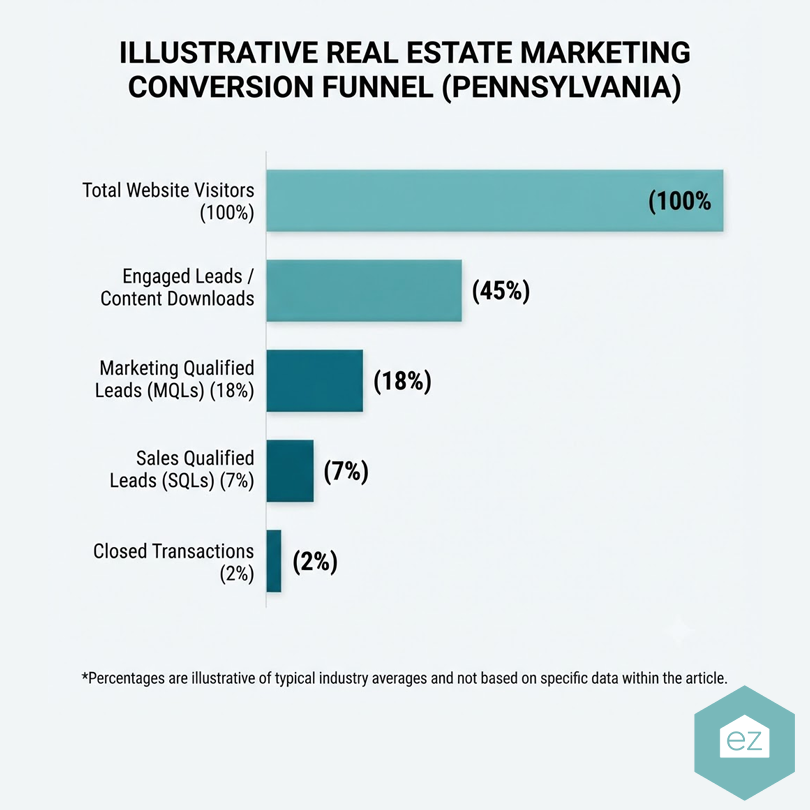
Horizontal bar chart showing a Pennsylvania real estate leads conversion funnel, ranging from 100% of website visitors down to 2% of closed transactions.

A lead strategy that works in one Pennsylvania region can fail completely in the next, because the underlying market behaves differently. Here is how the six major regions diverge, and what each one means for the leads worth chasing.

Philadelphia and the southeast is the state’s hottest market and its most expensive. The region ranked near the top of national big-metro outlooks for 2025, and the suburban counties move fast: Bucks County listings have turned in roughly a week in recent reporting, against about three weeks inside Philadelphia itself. The complication here is cost of ownership, not just price. Philadelphia carries one of the highest realty transfer taxes of any major U.S. city, around 4.3% to 4.6% of the sale price once the city and state portions are combined, compared with roughly 2% across most of the state. Add the highest school taxes in Pennsylvania in the surrounding suburbs, where median school tax bills in Chester, Montgomery, Delaware, and Bucks counties run well above the rest of the state, and the seller’s true net proceeds become a real conversation. Agents who can model that math win listings; agents working a generic price estimate do not.

Aerial view of the Pittsburgh, Pennsylvania skyline
Pittsburgh is the state’s value market, where slower sales and frozen 2012 assessments reward agents who know the local tax picture.

Pittsburgh and the southwest is the value story, slower and more affordable, with homes taking around 50 days to sell. It is also where a specific piece of local knowledge separates the professionals from the lead buyers. Allegheny County has not reassessed property since its 2012 base year, and the county’s Common Level Ratio, the figure that converts today’s market value back to a 2012 assessment, fell to 50.14% for 2026 from about 52.7% a year earlier. A falling ratio widens the gap between assessed and market value and changes who should be appealing their taxes, and the county is now weighing a move to reassess every three years beginning in 2028. A team that understands this can open both sides of the conversation: sellers worried about tax exposure and buyers trying to estimate their real carrying cost. Layer on the region’s young-professional and eds-and-meds buyers against its large 65-plus owner base, and the southwest rewards an agent who can serve two very different clients.

Panoramic view of Allentown, Pennsylvania in the Lehigh Valley
Allentown and the Lehigh Valley draw a steady stream of New York and New Jersey buyers trading big-metro costs for more space.

The Lehigh Valley is Pennsylvania’s clearest growth magnet. The region pushed past 708,000 residents in 2025, drawing a net of roughly 17,000 international and 6,800 domestic in-migrants since 2020, with New York and New Jersey a major source as buyers trade big-metro costs for Allentown, Bethlehem, and Easton. Young-adult population has grown sharply. The lead opportunity here is relocation: buyers who do not know the market and need a local expert to guide them.

The Pennsylvania State Capitol building in Harrisburg
The Harrisburg capital region sits at the center of Pennsylvania’s I-81 logistics corridor and its life-sciences growth.

The South Central capital region of Harrisburg, York, Lancaster, Lebanon, and Cumberland is the logistics and life-sciences core, home to the I-81 distribution corridor and GSK’s Lancaster County investment. Harrisburg moved toward a more balanced market heading into 2026, which makes it a place where both buyer and seller leads can be worked without the bidding-war pace of the southeast.

Northeast Pennsylvania and the Poconos combine affordability pressure with relocation demand. Scranton and Wilkes-Barre have seen sharp price and rent growth on almost no new building, while Pike County grew 7.3% from 2020 to 2025, among the fastest in the state, fed by New York and New Jersey buyers moving to the lake and mountain communities of Monroe and Pike. The lead profile is part local move-up, part out-of-state relocation.

The northwest, anchored by Erie, is the affordable Great Lakes market, with Millcreek Township as the residential core around Presque Isle. It behaves less like a boom market and more like a steady, relationship-driven one, where word of mouth still decides who gets the call.

RegionAnchor marketsWhat it means for leads
Philadelphia / SoutheastPhiladelphia, Montgomery, Bucks, Chester, DelawareFast suburbs (Bucks near 7-day sales) vs a slower city; high transfer and school taxes make net-proceeds expertise the edge
Pittsburgh / SouthwestAllegheny, Westmoreland, Washington, Butler, BeaverValue market near 50-day sales; frozen 2012 assessments and a falling Common Level Ratio drive tax-aware conversations
Lehigh ValleyLehigh, NorthamptonSurged past 708,000; heavy NY/NJ and international in-migration; relocation buyer leads
South Central / CapitalDauphin, Cumberland, Lancaster, York, LebanonLogistics and life-sciences core; market moving toward balance; both buyer and seller leads workable
Northeast / PoconosLackawanna, Luzerne, Monroe, Pike, WaynePrice and rent pressure on minimal new building; Pike up 7.3% on NY/NJ relocation
NorthwestErie, Crawford, MercerAffordable Great Lakes anchor; steady, referral-driven business around Erie and Millcreek

Counties and communities beyond Philadelphia and Pittsburgh

Amish horse-drawn buggy on a rural road in the Pennsylvania countryside
Much of Pennsylvania’s market sits in mid-size counties and rural communities like Lancaster’s, where local knowledge matters most.

Most of Pennsylvania’s transactions happen outside the two largest metros, in mid-size counties and the towns that anchor them. Breadth matters for lead generation because a team that can speak to specific communities, not just a metro name, earns trust faster. The counties and communities below show how much market sits beyond the headline cities.

CountyRegionCommunities
DauphinSouth CentralHarrisburg, Hershey, Hummelstown, Middletown
CumberlandSouth CentralCarlisle, Mechanicsburg, Camp Hill, Shippensburg
LebanonSouth CentralLebanon, Annville, Palmyra, Cornwall
ErieNorthwestErie, Millcreek Township, Edinboro, Harborcreek
CentreCentralState College, Bellefonte, Boalsburg, Philipsburg
MonroePoconosStroudsburg, East Stroudsburg, Tannersville, Tobyhanna
LuzerneNortheastWilkes-Barre, Hazleton, Kingston, Pittston
LackawannaNortheastScranton, Dunmore, Carbondale, Clarks Summit
WestmorelandSouthwestGreensburg, Murrysville, Jeannette, Latrobe
NorthamptonLehigh ValleyEaston, Bethlehem, Nazareth, Bath

Each of these counties has its own price level, its own buyer profile, and its own rhythm. State College moves with the university calendar. Hershey and Derry Township revolve around a single large employer. The Poconos towns trade on lifestyle and proximity to New York. A national lead vendor cannot tell those markets apart. A local partner who lives in them can.

Why Pennsylvania real estate leads are harder to win, and how agents chase them today

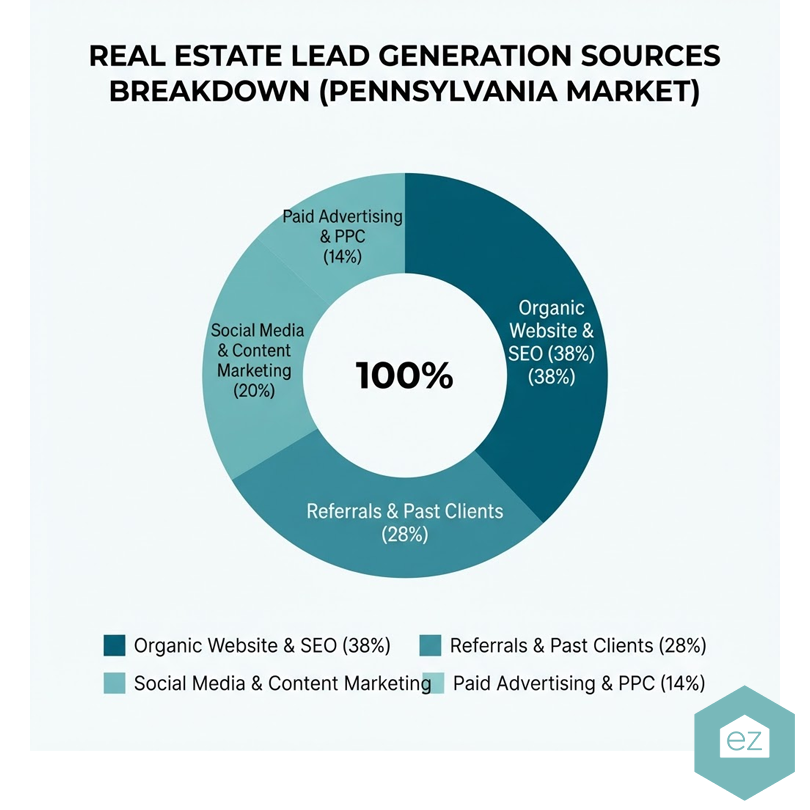
Donut chart showing Pennsylvania real estate leads by source: Organic Website & SEO (38%), Referrals & Past Clients (28%), Social Media & Content Marketing (20%), and Paid Advertising & PPC (14%).

The hardest part of generating Pennsylvania real estate leads is that the listing, not the buyer, is the scarce side of the market. A structurally underbuilt state with two months of supply means more agents are competing for fewer sellers, so the team that consistently surfaces and converts listing opportunities is the team that grows. Three things make that harder here than the national playbooks assume.

First, the market divergence is severe. A circle-prospecting and open-house cadence that fills a pipeline in seven-day Bucks County will starve in a 50-day Pittsburgh submarket, and vice versa. Generic, statewide lead products misfire because they are not tuned to the county or the town. Second, the tax picture is genuinely complicated, from Allegheny’s frozen assessments and falling Common Level Ratio to Philadelphia’s transfer tax and the southeast suburbs’ school-tax burden, and buyers and sellers have real questions an agent is expected to answer. Third, the aging owner base across much of the state is a downsizing and life-event wave that most agents under-work, because staying in front of past clients for years is exactly the thing a busy agent does not have time to do.

So how do agents try to solve the lead problem today? Most start with shared portal leads. The value is obvious, they arrive quickly, but the structure works against the agent: a legacy portal sells the same contact’s details and budget to whoever pays, so an agent is often dialing a name that several competitors are dialing at the same moment, with no relationship and little intent behind it. Others build their own IDX website, which can become a real asset over years but is a slow, maintenance-heavy build that rarely outruns the national platforms. Cold calling, FSBO and expired outreach, circle prospecting, and farming all work, but they are time-heavy and carry rising compliance risk. Predictive-seller tools score a database and guess who might list, which is a probability, not a consented, interested person. Generic all-in-one CRMs are built for everyone and owned by no one locally. Paid social and search ads can produce volume, but quality swings widely and the follow-up structure has to be built and run by the agent.

Every one of those approaches solves a piece of the problem and leaves the core gap open: none of them gives the agent an exclusive, warm, intent-driven connection to a person who already trusts the place they came from. That gap is the mechanism worth fixing.

The remote-work demand most Pennsylvania agents still miss

Here is an edge most agents, teams, and brokers have talked themselves out of: remote and hybrid work did not collapse, and it is still moving buyers into Pennsylvania’s affordable and lifestyle markets. The headlines calling remote work dead are a measurement trick, comparing today against the spring-2020 emergency peak instead of the real pre-pandemic baseline. Measured correctly, work from home has settled at roughly three times its pre-pandemic level and held there.

The numbers come from the institutions that actually count this. Bureau of Labor Statistics figures for the fourth quarter of 2024 show 36.7 million Americans teleworking at least some of the time, a rise from 32.5 million the year before, with the telework rate reaching 23.4%. Gallup’s 2025 read on remote-capable workers puts about 51% in hybrid roles and 28% fully remote, a mix that has held steady since late 2022. And when the Census Bureau’s Business Trends and Outlook Survey asked roughly 150,000 firms where remote work would stand five years out, employers projected close to today’s level. This is a plateau, not a slide.

That stability is a buying signal, and it points straight at Pennsylvania’s smaller and mid-size markets. The USDA Economic Research Service found that rural counties reversed more than a decade of decline starting in 2020, gaining roughly 974,000 net migrants through 2024, concentrated in working-age adults in their late twenties to early forties, the remote-eligible group. In Pennsylvania, the geography positioned to capture that shift is exactly the affordable and lifestyle belt: Pike and Monroe in the Poconos, the Lehigh Valley within reach of New York, Erie on the lake, State College and the surrounding Centre County, the Laurel Highlands, and the Pennsylvania Wilds. A remote buyer can choose those places now in a way they could not a decade ago.

For an agent, this turns into specific guidance a client can use. Remote and hybrid buyers want a home office they can close the door on, and more and more of them want a second workspace in a detached structure or an accessory dwelling unit. They want more square footage and real high-speed broadband, which is not a given in rural Pennsylvania and is worth confirming before a buyer falls in love with a house. The agent who knows which townships have real broadband, and which listings have the space to work from home, is the agent a relocating remote worker keeps. That is local knowledge no shared lead carries.

What an Exclusive County Partnership gives a Pennsylvania team

A real estate agent reviews Pennsylvania real estate leads on a laptop screen while sitting at a table with a couple.

The model that closes the gap is the Exclusive County Partnership from ez Home Search. A single agent, team, or brokerage takes one Pennsylvania county and runs it alone, their brand carried through the consumer home-search experience, and no other partner is allowed to operate on that same ground. The partner pays no fee for each lead and gives up no slice of a commission at closing, so a busy month rewards the partner instead of running up a bill. That one difference in structure, owning the territory rather than renting names off a shared list, is what turns these connections into closings.

It converts because of how the people arrive. ez Home Search is built consumer-first and privacy-first, so a person searching for a home does not have their contact details and budget put up for sale and handed to whoever pays the most. Each one is matched with a single vetted local expert, the partner, and because they trust the experience, they engage more openly. By the time that person reaches the partner, the agent can already read what they have done on the platform: the Lancaster or Lehigh Valley neighborhoods they returned to again and again, the budget band they kept circling, the saved listing they keep reopening. The opening conversation begins on what the person actually wants, so the trust that normally takes weeks is half there before anyone speaks. This is where The Only Confidential Home Search meets the Single Local Expert, and what it produces is the opposite of a cold name pulled off a shared list.

For a Pennsylvania team, several parts of the partnership line up directly with the pains above.

The biggest and least expensive opportunity is the database a partner has already built. With an aging, downsizing owner base across much of the state, the past clients and sphere a team has already earned are full of listings that have not happened yet, and ez Home Search keeps that database active with home-value updates, listing alerts, and a search experience people come back to on their own, all carrying the partner’s brand. Most agents know follow-up matters and still come up short because they lack the time and the material; the platform supplies both, and partners turn past clients back into repeat and referral business at well above the market rate.

A relocating client is worth more to a Pennsylvania agent than most realize. With 41 counties losing population and a steady stream of out-of-state moves, a past client who quietly starts searching another market on a legacy portal is a listing the agent never sees coming. Since ez Home Search reaches every market in the country, that client keeps their search on the partner’s branded platform, and the early signal lets the agent take the listing on the departing home and pass the buy side to an out-of-market agent for a referral fee.

The prize that compounds is recognition. The partner’s brand sits across the search, the alerts, and the market reports the county already uses, and because most sellers contact only one agent before listing, the recognized local name wins the client before any comparison happens.

The partnership also handles the parts of the job that create risk and overhead. Because Pennsylvania is a title-company closing state where the buyer chooses settlement rather than being assigned an attorney, the partner’s vetted network of professionals, the lender they bring in, title, and home services, becomes part of how clients experience the move, and that network runs co-branded inside the platform. On compliance, ezVerify.ai records the person’s opt-in, keeps the proof of it on file, runs each number against a known-litigator database, filters out Do Not Call registrations, and adds detail to every contact before a single call goes out. It handles consent and verification rather than scoring a lead, and it lifts the riskiest part of prospecting off the partner’s plate. The conversion tools, the AVM widget, the home-value pages, the open-house sign-in, all run on the same platform with the partner’s brand, with nothing for the team to build or operate.

Securing a Pennsylvania county before it is claimed

A group of people talking at an Elite Realty Group open house for Pennsylvania real estate leads in front of a suburban home.

Each county belongs to one partner alone, which is both the appeal and the constraint. A good number of Pennsylvania counties have already been claimed, the count rises every month, and after a county is taken, no rival can buy the same branded position at any price. A populous metro county like Montgomery or Allegheny works the same way as a mid-size market like Dauphin, Lehigh, or Erie, because being the name people know counts for just as much in a smaller county as in a big one. The platform is live on day one, so a partner steps onto a national home-search experience millions of people already use with their own brand on it, instead of burning months building a stack. The one question that matters is whether the county a team wants is still open, and you can check that in a few minutes.

The choice a Pennsylvania team actually faces

Step back and the choice comes into focus. The first path is to leave things as they are: keep paying for shared leads that show up cold, land in several agents’ inboxes at once, and reset to zero at the start of every month. The third path is the far end: build and operate the whole machine yourself, the national-grade search, the data, the valuations, the compliance, the follow-up, at a cost in money and years no single team can carry. The second path is the sensible middle, and it is where most growth-minded Pennsylvania teams settle: take your county on a platform that already carries the whole load, with your brand on top.

Be honest about the trade-off. This partnership is not on offer in every county, since each one belongs to a single partner, and what it produces are relationships that grow rather than lead lists that spike and fade. Plan on new connections coming to a deal over roughly 30 to 60 days as trust becomes a transaction, not the same week. The payoff for that patience is ownership: the partners running this model bring past clients back into repeat and referral business at several times the market rate, because the relationships belong to them and the platform keeps them active.

If you want to find out whether your Pennsylvania county is still open, the next move is to check its status and talk through what holding it would mean for your team.

Frequently asked questions

Treat listings as the scarce resource and build your lead generation around the seller side. Pennsylvania’s structural underbuilding, roughly 98,000 units short by one estimate and a projected gap approaching 185,000 by 2035, means buyers chase too few homes, so the agents who grow are the ones who consistently surface sellers. The most reliable source is the database you already own, kept warm with home-value updates and a search experience past clients actually return to, which is exactly what an Exclusive County Partnership runs for you. That beats buying shared buyer leads into a market that does not have enough inventory for them.

Because the markets move at different speeds. Suburban Bucks, Chester, and Montgomery county listings can sell in about a week, so speed and immediate follow-up win, while the Pittsburgh metro sells closer to 50 days, so patient nurturing and value-driven conversations win. A lead tool that does not know the difference wastes effort in both. When you own a specific county, you can tune your cadence to that market instead of running a statewide average that fits neither.

They open both buyer and seller conversations if you understand them. Allegheny County still assesses to a 2012 base year, and its Common Level Ratio fell to 50.14% for 2026, which widens the gap between assessed and market value and changes who benefits from an assessment appeal. With the county weighing reassessment every three years starting in 2028, sellers worry about future tax exposure and buyers want to estimate real carrying cost. An agent who can speak to that is worth keeping, which is the kind of trust that turns a co-branded platform contact into a client.

Position yourself as the local expert these relocating buyers do not yet have. The Lehigh Valley pushed past 708,000 residents on heavy New York and New Jersey in-migration, and Pike County in the Poconos grew 7.3% on the same draw. These buyers do not know Allentown, Bethlehem, or the Monroe County lake communities, so they need guidance, not a cold call. A co-branded national search experience captures them while they are still researching from out of state and surfaces them to you as the one vetted local expert, with their search history already visible.

They make true net-proceeds expertise your differentiator. Philadelphia’s combined realty transfer tax runs around 4.3% to 4.6% of the sale price, against roughly 2% across most of Pennsylvania, and the southeast suburbs carry the highest school taxes in the state. A seller who only sees a price estimate is missing what they will actually keep. The agent who walks them through the real number wins the listing, and a platform that brings an accurate automated valuation (AVM) together with a full comparative market analysis gives you the tools to tell that story credibly.

Serve them as two distinct motions on one platform. Pittsburgh skews both young, with over 23% of the city in its twenties drawn by tech and the health systems, and old, as one of the nation’s oldest large metros. First-time and move-up buyers respond to fast, mobile, activity-driven follow-up, while the downsizing owner base responds to years of steady home-value updates that earn the listing when life changes. When you own the county, you can run both motions without buying two separate lead products.

What works is recognition and relationships, not raw volume. In Erie, State College, and the Harrisburg capital region, buyers and sellers still choose the agent they know, and most contact only one before deciding. The lead source that works is becoming the recognized local name, which is what co-branding across the home-search experience the community already uses builds over time. It compounds in a smaller market faster than paid lead volume ever will, because reputation travels.

That is exactly how the Exclusive County Partnership is built: one team holds the county, their brand runs through the consumer experience, no rival partner works inside it, and there is no per-lead charge. Instead of dialing a name that several agents bought at once, you own the relationships in your territory, and the platform keeps them engaged for years. Only one partner holds each county, so the practical first step is checking whether yours is still available.

06.22.2026

The Ultimate Guide to Mississippi Buyer and Seller Leads: What Works Now

Mississippi was the only state in the country where home prices did not rise in 2024, and most agents read that as a warning. The Federal Housing Finance Agency’s purchase-only index showed Mississippi prices down 0.15% from the end of 2023 to the end of 2024, the single negative reading among all 50 states and DC, against a national average gain of 4.5%. Step back five years and the same state is up 48.4%, so this is a flat year in a market that still builds equity, not a market in trouble. For the agent who wants Mississippi real estate leads that turn into closings, a flat year is the opening: more inventory to list, more room for buyers to negotiate, and a field of competitors who are pulling back exactly when the disciplined ones should lean in.

The mistake is treating Mississippi as one market. It is at least seven. The Gulf Coast runs on tourism and a deepening port. The Memphis suburbs in DeSoto County grow on families and cross-state commuters. The Jackson metro is reshuffling from its urban core into Madison and Rankin. The Golden Triangle is landing billion-dollar industrial plants. Each of those markets generates leads in a different way, and the agents who win them are the ones who stop buying the same recycled names every other agent in the state is buying. This is a guide to where the demand actually is across Mississippi, and to a way of capturing it that does not depend on outspending the agent down the street.

Mississippi’s flat prices and growing inventory hand the advantage to listing-focused agents

A market that stops appreciating rewards agents who win the listing, because price discipline is suddenly the whole game. When prices were climbing double digits, almost any list price eventually looked right. In a flat market, the seller who overprices watches the home sit, go stale, and sell for less than a correct price would have brought, and the agent who can show a defensible number with real data wins both the listing and the referral that follows. Mississippi’s 2024 reading from the FHFA, essentially flat after a 48% five-year run, is exactly that kind of market.

Inventory is loosening at the same time. The count of homes for sale across Mississippi rose through 2024 and months of supply moved back toward balance, with median days on market sitting in the mid-40s to upper-60s depending on the month and the measure. More homes for sale means more sellers who need representation and more buyers with the leverage to actually transact rather than wait. The agent positioned in front of both sides captures more of a larger pool.

Where new homes are going up tells you what kind of opportunity a market offers, not simply how busy it is. Census building-permit data shows the three big growth counties diverging sharply. Harrison County on the Gulf Coast nearly doubled its permits in four years, from 1,110 in 2021 to 2,116 in 2024, the one large county still accelerating. DeSoto County in the Memphis suburbs came well off its 2021 peak to 1,159 permits in 2024, and Madison County, the affluent Jackson suburb everyone calls the growth county, authorized just 552, less than a third of Harrison’s pace. The read for an agent is about the type of business, not the volume of it. The Coast is where new construction and builder relationships are genuinely in play, while in DeSoto and Madison the demand is being met by existing homes changing hands, which makes the listing on that existing stock the prize and the past-client database the place to find it.

None of this is a reason to wait for a hotter market. A flatter market is a more honest one, and it favors the agent who brings data and patience over the one who brought hype. That is a posture ez Home Search is built to support, and it starts with understanding where Mississippians are actually moving.

Where Mississippians are moving: into the suburbs and exurbs, not out of the state

Mississippi’s population barely moved in 2024, and the small story inside that flat number is the one that matters for agents. The state changed by roughly 127 people against a base near 2.95 million, effectively flat. Underneath it, something turned: across 2022 to 2024, about 5,000 more people moved into Mississippi than left, the first multi-year stretch of net inbound migration since the 1990s, with international arrivals offsetting a still-negative domestic balance and a slight natural decrease as deaths edged past births. The headline writers who treat Mississippi as a state people only leave are working from an old script.

Aerial view of the illuminated Mississippi State Capitol in downtown Jackson at dusk
The Mississippi State Capitol in Jackson, the metro where growth is shifting out of Hinds County and into the Madison and Rankin suburbs.

Keep the migration number in proportion. Against more than two million owner-occupied homes in a state with a roughly 70% homeownership rate, a net flow of a few thousand people is a rounding error on transaction volume. Homes sell because owners change jobs, grow families, downsize, divorce, retire, and chase better schools, and that churn runs every year regardless of whether the state’s net migration is slightly positive or slightly negative. Net migration is one current among many, not the tide.

The real movement in Mississippi is internal. In the Jackson metro, Hinds County has lost roughly twice as much population since 2020 as suburban Madison and Rankin counties have gained, a reshuffle within the metro rather than flight from it. Families are trading the urban core for Madison, Ridgeland, Brandon, Flowood, and Pearl, and north of there they are filling the Memphis suburbs of Southaven, Olive Branch, Horn Lake, and Hernando. Every one of those moves is two transactions for the agent positioned correctly: a listing on the home being left and a purchase on the home being bought. A relocating owner is not a lost client; they are a listing and a referral, if you see the move coming. That foresight is a capability, and later in this guide it becomes the heart of how an ez Home Search partner holds onto business other agents never know is walking out the door.

The jobs creating Mississippi buyers and sellers, and the ones the headlines oversell

Mississippi’s most reliable real estate demand comes from health care, not from the factory announcements that make the news. The state’s own economist, the University Research Center, forecast health care and social assistance to add 7,700 jobs in 2024, a 5.7% gain and the largest of any sector, while projecting that manufacturing would lose jobs every year from 2024 through 2026. The University of Mississippi Medical Center in Jackson alone employs about 10,000 people across a roughly two-billion-dollar operation, the kind of steady, recession-resistant payroll that produces a predictable stream of buyers and sellers in the capital metro year after year.

That does not make the big industrial wins irrelevant. They are real, and they reshape specific counties. Amazon Web Services committed $10 billion to data centers in Madison County in 2024, the largest single capital investment in state history, with later expansions raising Amazon’s stated commitment well beyond that figure. In Marshall County, the Amplify Cell Technologies battery plant broke ground in 2024 with roughly 2,000 jobs planned. In Lowndes County, in the Golden Triangle, Steel Dynamics is building a $2.5 billion aluminum mill with about 1,000 jobs at an average wage near $93,000. Older anchors still carry their regions: Ingalls Shipbuilding in Pascagoula employs about 12,000, Nissan in Canton about 5,000, and Toyota in Blue Springs about 2,400.

The way to use this as an agent is to read it correctly. A plant announcement creates a burst of relocation and new-construction demand in one county on a project timeline, and that burst is worth pursuing where it lands. But it is project-specific, and the state economist’s forecast is a caution against treating any one factory as a permanent boom. The broad, lasting demand sits with the health care payrolls, the existing owner base, and the suburban family churn, which is why a lead system built to serve a whole county over years beats one built to chase a single headline.

Even the Gulf Coast, long synonymous with casinos, is building a sturdier base. Coastal casino gross gaming revenue reached about $1.58 billion in 2024, roughly 20% above 2019, and the region is adding something steadier underneath it. In June 2026 the Port of Gulfport cleared a major federal milestone toward deepening its shipping channel from 36 to 46 feet, a roughly $548 million project that anchors a logistics and cold-storage growth thesis beyond tourism. For an agent on the Coast, that means demand that does not rise and fall with the gaming calendar.

White Biloxi lighthouse beside a Mississippi Gulf Coast marina under a blue sky
The Biloxi lighthouse on the Mississippi Gulf Coast, where a deepening port is adding demand that does not rise and fall with the gaming calendar.

Every one of these regional stories rewards the same position: being the agent a county already knows. ez Home Search hands that position to a single partner per Mississippi county, so it is worth finding out early whether yours is still open.

The remote-work buyers most Mississippi agents are not positioned to catch

The most underused buyer signal in Mississippi is the remote worker, because most agents believe a story about remote work that is no longer true. The “remote work is declining” narrative measures today against the spring-2020 emergency peak rather than the real pre-pandemic baseline. Set against that older baseline, work from home now sits at about triple its pre-2020 share and has stayed there. In the fourth quarter of 2024 the Bureau of Labor Statistics put the number of Americans working remotely at least part of each week at 36.7 million, up from 32.5 million the year before. A separate Census Bureau survey of roughly 150,000 firms, its Business Trends and Outlook Survey, found close to a third keeping at least one worker home for a full day, with those same firms expecting the arrangement to hold five years out. The pattern is a plateau, not a retreat.

That national shift lands hardest in exactly the kind of markets Mississippi has in abundance: affordable, mid-size, and lifestyle-rich counties where a national salary stretches into a quality of life a coastal city cannot match. The USDA’s Economic Research Service reported that rural counties across the country added roughly 974,000 more residents than they lost between 2020 and 2024, a swing led by working-age adults from their late twenties into their early forties and a reversal of more than a decade of decline. In Mississippi the geography positioned to capture that is specific: the DeSoto County exurbs within reach of Memphis, Oak Grove and the rest of Lamar County around Hattiesburg, Oxford in Lafayette County, and the smaller Gulf Coast towns from Ocean Springs to Bay St. Louis.

For the agent, the opportunity is twofold. The remote buyer is a buyer no local employer had to recruit, which means they are invisible to agents who only watch the local job market. And they want features the typical Mississippi listing does not lead with: a dedicated or closable home office, a separate structure or accessory dwelling that can serve as a workspace, more square footage to spread out, and genuinely reliable broadband. An agent who learns to surface those features, and to market a county’s affordability and pace to a buyer earning a city salary, is fishing in a pond most of the competition does not even see. It is the clearest example of why knowing your market deeply beats buying leads blindly.

How Mississippi agents find leads today, and where each method hits its ceiling

A woman sits at a desk in a home office, video conferencing on a laptop, with a monitor displaying a real estate website and a sign reading “Mississippi Home Buyers.” She reviews Mississippi real estate leads as she connects with potential clients online.

Most Mississippi agents generate leads with tools that work right up until everyone in the county is using the same one. Each of the common approaches has real value, and each has a ceiling worth naming plainly so you can decide where your time and money actually go.

Shared portal leads are where most agents start, and shared is the operative word. When a person fills out a form on a legacy real estate portal, their contact details and budget can be sold or routed to a list of businesses, or handed to whichever agent pays the most. The name you buy is often one other agents bought too, and a meaningful share of those names never respond at all. You can win on shared leads with speed and grit, but you are renting access to a name you never own, and the bill arrives whether or not the lead was real. Your own IDX website is the honest opposite. You own it outright, but it is a slow asset that takes years and steady spending to rank, and the data and engineering that make a search genuinely useful sit beyond any single team’s budget. The grind tactics, cold calling, circle prospecting, and FSBO and expired farming, still produce business for the agents who work them relentlessly, but they load the entire compliance burden onto you, which in an era of consent lawsuits is a real and growing exposure. Predictive-seller tools score your database and guess who might list, yet a high score is not a relationship, and the work of turning that guess into a signed listing still lands on you. Generic all-in-one CRMs and do-it-yourself content fill the gap on paper and leave you administering software and writing newsletters instead of selling. Paid search and social ads can perform, until the moment you stop paying.

The pattern across all of it is the same. Every one of these is a way to rent attention or buy a name, and the value evaporates the day you stop feeding it. The mechanism that changes the economics is ownership: an exclusive territory, leads you keep, and a consumer experience good enough that people return to it on their own. That is what the Exclusive County Partnership is built to deliver, and it is worth understanding region by region, because the right strategy in Harrison County is not the right strategy in Lafayette or Leflore.

Seven Mississippi markets, seven different lead strategies

Mississippi rewards a regional lead strategy because its regions barely resemble one another. The table below pairs each major region with the trend that should shape how you prospect there, and the sections around it fill in the local color that a generic statewide plan misses.

RegionAnchor marketsThe trend that should shape your lead strategy
Gulf CoastBiloxi, Gulfport, Ocean Springs, Bay St. Louis, D’IbervilleCasino gross gaming revenue near $1.58B in 2024, plus the Port of Gulfport channel deepening; the state’s highest building-permit growth (Harrison County)
Jackson MetroJackson, Madison, Ridgeland, Brandon, Pearl, FlowoodAn intra-metro shift out of Hinds into Madison and Rankin; UMMC health care as the steady demand anchor
DeSoto / North MississippiSouthaven, Olive Branch, Horn Lake, HernandoMemphis-suburb family growth; the state’s largest school district; Memphis-metro prices up only about 1.6%, so affordability holds
Golden TriangleColumbus, Starkville, West PointSteel Dynamics’ $2.5B aluminum mill in Lowndes County and a regional industrial pipeline bringing high-wage jobs
Pine BeltHattiesburg, Petal, LaurelUniversity of Southern Mississippi anchoring mid-size growth and a new innovation park
Tupelo / NortheastTupelo, Saltillo, New Albany, Blue SpringsFurniture and auto manufacturing, including Toyota Blue Springs and an Ashley Furniture expansion in Lee County
The DeltaGreenville, Cleveland, Clarksdale, GreenwoodA value-and-trust market with longstanding affordability and deep local relationships; demand built on reputation, not volume

On the Gulf Coast, demand is the most diversified it has been in a generation. The casinos still drive it, but the deepening port, the cold-storage investment behind it, and the highest new-home permitting in the state mean Harrison and the surrounding counties generate both resale and new-construction leads. It is also where the insurance picture shapes who can actually buy, which is its own section below.

In the Jackson metro, the money is in the suburban ring. Hinds County is shedding population while Madison, Ridgeland, Brandon, and Flowood absorb it, and UMMC’s payroll keeps a floor under the whole metro. Suburban listing leads, plus the reactivation of past clients trading up within the metro, are the highest-return plays here.

DeSoto County and north Mississippi run on families and the Memphis economy next door. This is the clearest family-growth market in the state, and the schools prove it: DeSoto County School District is the largest in Mississippi, with roughly 34,800 to 35,000 students across 42 schools. Many of those households earn their living across the state line in Tennessee, which makes cross-state relocation and commuter buyers a distinct lead source most inland agents never tap.

The Golden Triangle is an industrial growth story. Steel Dynamics’ aluminum mill in Lowndes County and the broader regional pipeline are bringing jobs at wages well above the local norm, and high-wage relocations into Columbus, Starkville, and West Point are the lead opportunity, alongside Mississippi State University’s steady pull on Starkville.

The Pine Belt around Hattiesburg grows on the University of Southern Mississippi and a diversifying mid-size economy, with Petal and the Lamar County suburbs drawing families and the remote workers described earlier. Tupelo and the Northeast carry their manufacturing base, from Toyota in Blue Springs to furniture makers across Lee and Union counties, with steady, affordable demand.

Entrance sign and campus of the University of Southern Mississippi in Hattiesburg
The University of Southern Mississippi anchors mid-size growth across the Pine Belt around Hattiesburg and Petal.

The Delta asks for a different posture entirely. Greenville, Cleveland, Clarksdale, and Greenwood are value markets where deals close on trust and local reputation rather than transaction velocity, and the affordability that defines them makes down-payment assistance and patient relationship-building the right tools. An agent who treats the Delta like the Coast will misread it; an agent who respects what it is can own it for a career.

The Mississippi counties and communities where the transactions actually happen

Most of Mississippi’s transactions concentrate in its ten largest counties, and an agent serious about lead generation should know them by name and by their principal cities. The first table is the population spine of the state. The second reaches past the big metros into the counties where competition is thinner and a recognized local name goes further.

RankCountyApprox. 2024 populationPrincipal city or cities
1Hinds218,500Jackson (state capital), Clinton, Byram
2Harrison210,900Gulfport, Biloxi, D’Iberville, Long Beach, Pass Christian
3DeSoto191,300Southaven, Olive Branch, Horn Lake, Hernando
4Rankin158,900Brandon, Pearl, Flowood, Richland, Florence
5Jackson145,200Pascagoula, Gautier, Ocean Springs, Moss Point
6Madison111,600Madison, Ridgeland, Canton
7Lee83,000Tupelo, Saltillo, Verona
8Forrest78,300Hattiesburg, Petal
9Lauderdale71,500Meridian
10Jones66,500Laurel, Ellisville
CountyRegionCommunities to know
LamarPine BeltPurvis, Sumrall, Lumberton, Oak Grove
LafayetteNorth MississippiOxford, Abbeville, Taylor
LowndesGolden TriangleColumbus, Caledonia, Artesia
Pearl RiverGulf Coast / Pine BeltPicayune, Poplarville
OktibbehaGolden TriangleStarkville, Sturgis, Maben
HancockGulf CoastBay St. Louis, Waveland, Diamondhead
MarshallNorth MississippiHolly Springs, Byhalia
PontotocNortheastPontotoc, Ecru, Sherman, Thaxton
PikeSouthwestMcComb, Magnolia, Summit
UnionNortheastNew Albany, Blue Springs, Myrtle

A place you can name is not a place you own. The reason these counties matter to a lead strategy is that recognition in a specific county is the asset that compounds, and it is the asset the Exclusive County Partnership is built to hand a single agent or team.

What it means to own a Mississippi county with ez Home Search

A real estate agent gestures while showing a living room to two clients. The room, ideal for attracting Mississippi real estate leads, features a fireplace and a “SOLD” sign on the mantle.

With the Exclusive County Partnership, one agent, team, or brokerage becomes the lone ez Home Search partner in a Mississippi county, name on the consumer experience throughout, with no second partner working the same county. You pay no fee for each lead and surrender no slice of the commission at closing. The county is yours, the relationships that run through it are yours, and a heavy month of leads simply means a heavy month of business rather than a heavier bill. That one structural fact is what sets it apart from every shared-lead program in the state.

Why those leads convert comes down to the consumer side. ez Home Search is a national platform organized around one promise, The Only Confidential Home Search, a place where a buyer or seller can search, save, and compare homes without their contact details and budget being sold, recycled, or broadcast to a crowd of businesses they never picked. Rather than going to whoever paid the most, each person is paired with one Single Local Expert, the county partner, chosen because they fit what that person actually needs. By the time they reach you, they are not a cold name you are racing other agents to dial first. Their intent already shows in real activity, the searches they kept running, the neighborhoods they kept returning to, the valuation they pulled, so the trust that usually takes weeks is half-built before the first call. A warm, chosen connection closes at a different rate than a recycled name, and that gap is the entire point.

New business is only half the story. The largest and cheapest opportunity most Mississippi agents already hold is the database in their own CRM, the past clients and sphere whose business they earned once and then quietly let go cold. Survey after survey finds that 88% to 92% of buyers would gladly work with their agent a second time, and yet only about 18% ever return to the one they used, a gap that is pure repeat and referral business draining away. ez Home Search recovers it by keeping those past clients on a co-branded home search they genuinely want to open, tracking their home’s value, following their local market, so the agent stays in view without having to manufacture a reason to reach out. Across the Exclusive County Partners in the program, past clients come back, through repeat deals and referrals, and they do so at a pace 2.5 to 5 times the market rate, often higher. In a flat-price state where capturing the existing-home listing is the high-value move, a reactivated database is the steadiest lead source an agent can build.

The same national reach guards the business an agent would otherwise lose the moment a client moves away. Census data puts the share of Americans who relocate beyond their local market at roughly one in twenty a year, whether over a county line or a state line, and Mississippi’s DeSoto-to-Memphis commuter flow makes those cross-state moves especially routine here. With no presence in the destination, a departing client drifts off to a legacy real estate portal, ties up with someone neither of you knows, and the house they are vacating gets listed by that stranger. Because ez Home Search reaches into every market in the country, the client keeps house-hunting in the new area through the search that still carries the agent’s brand, and that activity is the early tip-off. The agent makes contact before the listing exists, takes the listing on the home being left, and hands the buy-side in the new market to a trusted agent for a referral fee. What was a clean loss turns into two closings.

The riskiest moment in prospecting is the one ez Home Search covers. Federal law counts an agent as a telemarketer from the first cold call or text, and once a recipient challenges consent, it is the caller who has to show that every number on the list agreed to be contacted. ezVerify.ai supplies that proof: it captures the opt-in and keeps the recording, runs each number against a known-litigator database before a single call goes out, screens out Do Not Call registrants, and fills in contact detail the agent would otherwise track down by hand. It is documentation rather than a lead score, the paper trail that answers a consent challenge with evidence instead of an argument. Few legacy real estate portals provide it, and few CRMs do either. The tools that turn interest into closings come pre-built as well. The AVM widget, the QR open-house sign-in, the home-value pages, and the automated ezNurture follow-up all go live from day one because they are part of the national platform, carrying the partner’s brand, with nothing for the agent to assemble or run.

That is what owning a Mississippi county looks like in practice. Whether yours is still open is worth checking before another agent claims it.

Winning seller leads in Mississippi starts with the lowest carrying costs in the country

A man and a woman sit at a small cafe table, reviewing printed documents and a laptop, likely discussing Mississippi real estate leads, with coffee and a pastry beside them. Other people are seated in the background.

The strongest opening line a Mississippi listing agent has is cost, because the state is one of the cheapest places in America to own and to sell a home. Mississippi’s average effective property tax rate sits near 0.58%, well under the national figure of about 1%. Owner-occupied homes are assessed at just 10% of market value, with the homestead exemption shielding the first slice of that assessed value. On top of it, Mississippi levies no state real estate transfer or documentary-stamp tax on a sale, so closing costs carry no percentage-of-price state levy, though recording fees still apply and any local fee should be confirmed. Cheap to own and cheap to sell: that combination earns a listing appointment.

From there the conversion tools do the work. An ez Home Search partner starts a seller conversation with an automated valuation built to be the most accurate available, then turns it into a full comparative market analysis on data that refreshes constantly, which matters more in a flat market than in any other. The common trap is the agent who wins a listing by quoting the highest price and then spends two months walking the seller down to what the home was always worth. In Mississippi’s 2024-style market, that trap is expensive, and the agent who shows a defensible number with the reasoning behind it wins the listing and keeps the relationship. Pair that with the database reactivation and the relocation protection above, and a partner is generating listing leads from new consumers, from past clients trading up within the Jackson suburbs, and from owners preparing a move they have not announced yet.

Winning buyer leads in Mississippi means meeting affordability and insurance head-on

Buyer demand in Mississippi is wide because the math works, and the agent who understands the math captures more of it. The median home value in the state is roughly $169,800, about half the national figure, which is why homeownership runs near 70% and why a national remote salary goes so far here. That affordability is also why down-payment assistance moves the market more than agents expect. The Mississippi Home Corporation, the state housing finance agency, runs programs that materially widen the qualified-buyer pool: Home4All offers up to $25,000 for lower-income first-time buyers, Smart6 provides down-payment help to first-time and repeat buyers alike, and a Delta-specific program in Tunica and Washington counties pairs a mortgage with $14,000 in total assistance. A buyer agent who knows these programs by name converts buyers other agents write off as not ready.

Insurance is the other half of buyer qualification, especially on the Coast. Six coastal and near-coastal counties, Hancock, Harrison, Jackson, Pearl River, Stone, and George, sit in the state’s wind-pool zone, where wind coverage alone can run about 70% of the premium and the Mississippi Windstorm Underwriting Association is the market of last resort. A coastal buyer’s true monthly cost depends on that premium as much as on the mortgage, and the agent who raises it early, qualifies for it honestly, and helps a buyer plan around it closes deals that fall apart for agents who discover the number at the closing table. ez Home Search supports the buyer side with saved searches and activity signals that show when a buyer is getting close, and ezNurture follow-up that keeps the relationship warm until they are ready, so the partner spends time on the buyers most likely to transact.

Mississippi has 82 counties, and each one goes to a single partner

Only one partner holds a Mississippi county, which is the reason the position is worth pursuing and the reason it does not stay open forever. Many of the state’s 82 counties are already claimed, more are taken each month, and once a county is spoken for, no other agent can occupy the same co-branded standing within it. The model works as well in Harrison County as it does in Pontotoc, because a recognized local name carries as much weight in a small market as in a metro. The engine behind it, the search, the valuations, the alerts, the compliance, the follow-up, runs from the day the partnership starts. There is nothing to assemble and nothing to administer; you step onto a platform Mississippians already use, with your name on it.

That confidentiality is not a side feature; it is why the leads convert. People engage more deeply when they know their information is not being sold, and that deeper engagement is what produces the warm, ready connections a partner receives. It is the same reason consumers across the country have moved to private browsers, search engines, and email, and the same instinct companies like Apple, DuckDuckGo, Brave, Proton, 1Password, and Bitwarden built their businesses on. ez Home Search brought that standard to real estate first and remains the platform built around it.

Owning your Mississippi county while it is still open

A couple stands with a real estate agent in front of a house with a “For Sale” sign in the yard. The agent, who specializes in Mississippi real estate leads, holds keys while the couple holds a brochure.

The choice for a Mississippi agent comes down to three paths. You can keep buying shared leads from legacy real estate portals, dialing names other agents bought too and paying whether or not the lead was ever real. You can attempt to assemble the entire machine on your own, the IDX site, the data feeds, the valuations, the compliance layer, the follow-up, none of which a single team can fund at the quality consumers now expect. Or you can hold an entire county on a national platform built for the consumer first, keep every lead it produces, and pay one predictable fee with no per-lead charge and no commission split. The middle path is where most working agents land once they have run the math.

The honest trade-off is that there is only one partner per county. If yours is already claimed, you wait, and the leads this model sends build over a 30 to 60 day window instead of ringing the phone the first afternoon, because warm, chosen relationships are worth more than fast, cold ones. The number that should settle it: across the Exclusive County Partners in the program, past-client reactivation reaches 2.5 to 5 times the market rate. For a flat-price Mississippi market, that gap is the difference between a steady listing pipeline and starting over with strangers every year.

The first move is small and costs you nothing but a few minutes. Check whether your Mississippi county is still available, see what owning it would look like in your market, and decide from there. The county will go to one agent. It may as well be the one who read this far.

Frequently asked questions

On the Mississippi coast, insurability is part of affordability, so it belongs in your lead qualification from the first conversation. Six counties, Hancock, Harrison, Jackson, Pearl River, Stone, and George, sit in the state’s wind-pool zone, where wind coverage alone can be around 70% of the premium and the Mississippi Windstorm Underwriting Association is the market of last resort. A buyer’s real monthly cost depends on that premium, so the agent who raises it early, helps the buyer get a realistic number, and plans around it closes deals that collapse for agents who leave insurance to the end. It also shapes seller leads, because a well-insured, well-documented coastal listing sells more smoothly than one where the wind exposure is a surprise.

You capture them by staying visible across the state line, which most inland Mississippi agents cannot do. A large share of DeSoto County households earn their living in Tennessee, so the buyer searching Southaven or Olive Branch is often relocating from or commuting to Memphis, and their search behavior crosses the border before they ever call an agent. On a national, co-branded platform you stay the source they return to in both markets, their activity signals when they are getting close, and you can refer the Tennessee side of a move to a trusted agent for a referral fee while keeping the Mississippi transaction. DeSoto’s status as home to the state’s largest school district tells you these are family buyers who plant roots once they choose.

Treat each project as a time-boxed relocation campaign in a specific county rather than a permanent boom. The Amazon Web Services investment in Madison County and the Amplify battery plant in Marshall County bring waves of hiring on construction and ramp-up timelines, and the buyers who follow want builder relationships, new-construction inventory, and someone who knows the local schools and commute. An exclusive county position lets you build the employer and builder relationships that feed those buyers to you first, and because the platform tracks activity, you see relocating searchers early. Keep the broader demand in view too: the state economist expects health care, not manufacturing, to be the steadier job engine, so weigh project chasing against that more reliable base of demand.

Shift your energy toward listings and toward pricing credibility, because a flat market punishes overpricing and rewards data. Mississippi was the only state with a slight price decline in 2024 on the FHFA index, even as it remained up about 48% over five years, and inventory loosened over the year. That combination means more sellers need representation and more buyers can actually negotiate, so the agent who wins listings with a defensible comparative market analysis and serves buyers with real leverage captures a larger pool. A lead system that reactivates your existing database and protects relocating clients outperforms one that only chases new names in this kind of market.

Position yourself where the metro is moving, which is out of the urban core and into the suburban ring. Hinds County has lost roughly twice the population since 2020 that Madison and Rankin have gained, so the listing opportunity is concentrated in Madison, Ridgeland, Brandon, Pearl, and Flowood, often from owners trading up within the metro. The highest-return play is to reactivate past clients who bought their first suburban home years ago, since they are the ones most likely to move again inside the same metro. When you own the county co-branded, those past clients keep returning to your home search, and their activity tells you who is preparing to list before they announce it.

Lead with total cost of ownership, because Mississippi wins that comparison decisively. The state’s average effective property tax rate is near 0.58%, well below the national rate of about 1%. Owner-occupied homes are assessed at just 10% of value, with the homestead exemption shielding the first slice of that, and the state charges no real estate transfer or documentary-stamp tax on a sale, though recording fees still apply. For buyers, that means a lower monthly carrying cost than the sticker price suggests, a powerful message for the remote workers and relocating families weighing Mississippi against pricier states. For sellers, low transaction costs make trading up or cashing out equity easier to justify. Put the numbers in your messaging and let the math do the persuading.

06.22.2026

How Georgia agents win real estate leads across a seven-market state

In 2025 the statewide median sale price in Georgia sat flat at $360,000, and in the same twelve months Columbus prices climbed 10.3% while Savannah’s for-sale inventory swelled almost 30%. That is the problem with chasing Georgia real estate leads as if Georgia were one market: the state-wide average describes almost none of the places where you actually list and sell.

Georgia is at least seven markets wearing one state’s name. Metro Atlanta and its exurbs, the Savannah coast and the Golden Isles, the North Georgia mountains, the Augusta cyber corridor, Middle Georgia, the Chattahoochee Valley around Columbus, and the agricultural south each run on their own clock. The agent who wins here is not the one who buys the most shared leads. It is the one who owns a county, knows it cold, and works a platform built to keep past clients close and surface buying intent before the competition sees it. This article lays out what is actually moving Georgia’s markets right now, and the lead strategy that fits a state this varied.

Georgia is several markets, not one

Person using a laptop displaying data analytics dashboards with bar and pie charts on the screen, analyzing Georgia real estate leads for market trends and opportunities.

The single most useful fact about the Georgia housing market is that there is no Georgia housing market, only a collection of local ones moving in different directions. According to the Georgia Association of Realtors’ 2025 annual report, the statewide median sale price finished the year flat at $360,000 while the average rose about 2% to $448,554. Underneath that calm headline, Columbus posted the largest median-price gain in the state at 10.3% and Macon the second-largest at 5.6%, both far ahead of a flat statewide number. On the supply side the spread was just as wide: Savannah’s inventory jumped 29.6% and Macon’s 25.1%, while metro Atlanta moved far more slowly.

The broader picture in 2025 was a market easing toward balance. The Georgia Association of Realtors reported months of supply rising to 3.9, days on market lengthening to 56, and new listings climbing to 211,349 for the year, with sellers still collecting about 95% of original list price. That is a healthier, slower market than the frenzy of a few years earlier, not a falling one. The University of Georgia’s Selig Center for Economic Growth, in its 2026 outlook, described residential real estate as likely to stay soft through 2026, with single-family affordability strained and many owners reluctant to sell and give up a low locked-in mortgage rate.

For an agent, the takeaway is direct. A slower, more balanced market is exactly the environment where shared, low-intent leads stop working and warm, owned relationships start to matter. When fewer homes trade, the agent who already has the trust and the local read wins the listing. The rate-locked owner who will not sell this quarter is not a dead lead; that owner is a seller-nurture relationship you hold until the life event arrives. Georgia in 2025 and 2026 rewards patience and local depth over volume.

Where Georgians are actually moving, and what it means for your pipeline

Georgia is still growing, but the growth is modest, two-sided, and increasingly driven by arrivals from outside the country, which changes where the leads are. Census Bureau estimates for 2025 put Georgia’s gain at roughly 98,500 people, the fourth-largest numeric increase of any state. The components matter more than the headline: net international migration of about 42,600 was the single largest driver, net domestic migration added roughly 27,300, and natural increase (births over deaths) about 28,600.

Put against a state of more than 11 million residents and roughly 48,000 Realtors, a net domestic gain near 27,000 is real but small next to the existing owner base and ordinary turnover. Migration is one driver of transaction volume, not the whole story, and it cuts both ways. The households that arrive are buyers. The households that leave are listings and relocation business you can keep if you see the move coming. A market does not need a population boom to be active; it needs owners who trust someone enough to call them first.

The more important movement in Georgia is happening inside the state. Census data for 2025 shows population shifting from the largest counties toward smaller, outer ones across the country, and metro Atlanta follows the pattern closely. The Atlanta Regional Commission reported the 11-county region adding 64,400 people in a year, with the gains concentrated in the exurbs: Fulton added 18,800 and Gwinnett 15,200 in raw numbers, while Cherokee and Forsyth each grew about 2.4%, the fastest rates in the region. Push the lens wider and three Georgia counties ranked among the fastest-growing in the entire country in 2025: Jackson County up 5.3% along the I-85 corridor, Long County up 5.2% next to Fort Stewart and the coastal growth band, and Dawson County up 4.2% on the GA-400 exurban edge. Metro Atlanta as a whole added 61,953 residents, the third-largest numeric gain of any US metro behind only Houston and Dallas-Fort Worth.

There is a supply story underneath all of it. The Atlanta Regional Commission notes the region issued only 29,482 residential building permits in 2024, below its long-run annual average, which keeps inventory tight and prices firm and acts as a brake on how fast the area can grow. For a listing agent, tight supply plus steady demand is the case for going after seller leads in Georgia harder than buyer leads. The household leaving the urban core for Cherokee, Forsyth, or Dawson is two transactions, a sale and a purchase, and both belong to whoever saw the move first. The agents who see it first are usually the ones who own their county outright, so it is worth checking whether yours is still open before a competitor claims it.

Downtown Atlanta skyline, the core of metro Atlanta's real estate market
Metro Atlanta added more than 60,000 residents in a year, yet its fastest growth is in the exurbs of Cherokee, Forsyth, and Dawson.
RankCounty2024 population (Census ACS 5-year)Principal city
1Fulton1,076,561Atlanta (county seat and state capital)
2Gwinnett979,864Lawrenceville (seat); Peachtree Corners is the largest city
3Cobb775,208Marietta (county seat)
4DeKalb765,351Decatur (county seat); shares part of Atlanta
5Chatham300,879Savannah (county seat)
6Clayton298,924Jonesboro (seat); Forest Park is the largest city
7Cherokee281,032Canton (seat); Woodstock is the largest city
8Forsyth267,287Cumming (county seat)
9Henry249,960McDonough (county seat)
10Hall212,705Gainesville (county seat)

The jobs map behind Georgia’s housing demand

Georgia’s housing demand is anchored by employment spread across many sectors and regions, which is why no single downturn can stall the whole state. The clearest new engine is on the coast. The Hyundai Motor Group Metaplant America in Ellabell, in Bryan County about 25 miles west of Savannah, began producing electric vehicles in late 2024 and grew from roughly 1,400 workers that October to about 3,200 a year later, on a path toward an eventual workforce in the range of 8,000 to 8,500 in the early 2030s. Around it, suppliers have announced more than a dozen new factories representing thousands of additional jobs, and a multibillion-dollar battery joint venture is under construction. That is a housing-demand wave spreading across Bryan, Bulloch, Chatham, Effingham, and Liberty counties.

Historic Savannah, Georgia, anchor of the coastal real estate market
The Port of Savannah and the Hyundai Metaplant are driving coastal Georgia housing demand along the I-16 and I-95 corridors.

The Port of Savannah sits next to it, handling near-record container volume and growing faster than any other container gateway on the US East Coast, which radiates warehouse, distribution, and trucking jobs along the I-16 and I-95 corridors. Coastal Georgia also leans on Gulfstream Aerospace, which employs more than 13,000 people in the Savannah area, and on a deep defense base that includes Fort Stewart near Hinesville, Robins Air Force Base in Houston County, and Fort Eisenhower in Augusta.

Augusta deserves its own line. The region has drawn well over a billion dollars in cyber and defense construction tied to Fort Eisenhower, US Army Cyber Command, and the Georgia Cyber Center, with thousands of military, civilian, and contractor families expected to arrive through 2028. Metro Atlanta carries the white-collar weight, home to 18 Fortune 500 headquarters and a deep financial-services and technology cluster anchored by the world’s busiest airport. Film and television production remains a major Georgia employer, though it is cyclical: direct spending was about $2.6 billion in fiscal 2024, down roughly 37% from the prior year after the 2023 industry strikes, so it is a large but uneven contributor, not a one-way climb. And across South and Middle Georgia, agriculture supports a statewide economic impact above $100 billion, led by poultry, which operates in most of the state’s 159 counties.

The reason this matters for lead generation is simple. Each of these engines creates a different kind of buyer and seller, in a different place, on a different timeline. A relocation strategy built for Hyundai engineers near Savannah looks nothing like one built for cyber contractors in Augusta or finance professionals in Sandy Springs. The agent who knows which engine drives their county can speak to the people moving for it.

A region-by-region read of the state

Georgia’s regions diverge enough that a trend in one barely registers in another, so any serious lead plan starts with the region you actually serve. The table below pairs each major region with one current, sourced trend.

RegionAnchor marketsCurrent trend
Metro AtlantaAtlanta, plus Fulton, Gwinnett, Cobb, DeKalb and the Forsyth, Cherokee, Henry, Paulding exurbsGrowth concentrates in the outer exurbs (Cherokee and Forsyth each up about 2.4% in 2025), while 18 Fortune 500 headquarters sustain white-collar buyer demand (Atlanta Regional Commission; Metro Atlanta Chamber)
Coastal Georgia and the Golden IslesSavannah, Brunswick, plus Bryan, Effingham, Liberty, GlynnTwin engines: the Port of Savannah’s record container volume and the Hyundai Metaplant ramp drive demand across the I-16 and I-95 corridor (Georgia Ports Authority; State of Georgia)
North Georgia mountainsBlue Ridge, Ellijay, Blairsville, DahlonegaTourism and lifestyle demand: a record 174.2 million Georgia visitors spent $45.2 billion in 2024, fueling the mountain second-home and short-term-rental market (Explore Georgia)
Augusta and the CSRAAugusta, Columbia CountyA cyber and defense build-out around Fort Eisenhower and the Georgia Cyber Center is bringing thousands of new residents through 2028 (Cyber City Augusta)
Middle GeorgiaMacon, Warner RobinsAn interstate-logistics and defense base anchored by Robins Air Force Base, with Macon median prices up 5.6% in 2025 (Georgia Association of Realtors; State of Georgia)
Chattahoochee ValleyColumbus, West PointA diversified defense, finance, and manufacturing economy where Columbus posted the state’s largest median-price gain at 10.3% in 2025 (Georgia Association of Realtors)
South GeorgiaValdosta, Tifton, AlbanyAn agriculture and forest-products economy where poultry and row crops anchor a statewide farm impact above $100 billion (University of Georgia CAES)

The practical point is that “best lead sources for Georgia agents” has no single answer. A short-term-rental buyer in Fannin County and a first-time buyer near Robins Air Force Base reach you through different doors, and a campaign tuned to one will misfire on the other.

Riverfront bridge in Augusta, Georgia, center of the CSRA cyber and defense market
Augusta’s cyber and defense build-out around Fort Eisenhower is bringing thousands of new families to the CSRA through 2028.

The remote-work edge most Georgia agents miss

The most underused buyer signal in Georgia right now is durable remote and hybrid work, which the headlines keep calling dead and the data keeps showing alive. The hybrid arrangement has settled in as a permanent feature of knowledge work, not a pandemic holdover. The Bureau of Labor Statistics and Census Bureau business surveys continue to show a large, stable share of employers with regular work-from-home arrangements, and Gallup’s tracking of remote-capable workers finds hybrid schedules holding as the dominant model rather than fading. The return-to-office push made noise; it did not erase the change.

For Georgia, that durability lands in specific geography. When work no longer ties a household to a desk five days a week, the places that win are the affordable, scenic, and mid-size markets a buyer once ruled out for the commute. That describes the North Georgia mountains around Blue Ridge, Ellijay, Blairsville, and Dahlonega, the GA-400 and I-85 exurbs through Dawson, Forsyth, and Jackson counties, and a long list of mid-size county markets from the lake towns around Gainesville to the small cities of Middle Georgia. The fast growth in Dawson and Jackson counties is partly this story: households trading commute minutes for square footage and a lower cost of living.

These buyers also want different homes, and an agent who knows that converts more of them. They look for a dedicated or closable home office, often a second one for two working adults, a separate structure or accessory dwelling unit, more total space, and genuinely fast broadband, which is not a given in every mountain or rural pocket of the state. An agent who can speak to which Fannin County neighborhoods have reliable fiber, or which Forsyth subdivisions were built with a real office instead of a converted bedroom, is having a conversation national portals cannot have. This is the kind of local edge an Exclusive County Partner can work deliberately, and most agents, teams, and brokers in the state have not connected the remote-work trend to their own county inventory.

The property-tax patchwork only a local expert can explain

A man shows a couple real estate photos on a large monitor in a bright office, discussing different rooms of a home while highlighting valuable Georgia real estate leads.

Georgia’s new homestead law has created a county-by-county property-tax puzzle that is tailor-made for an agent who owns local knowledge. In November 2024 Georgia voters approved a statewide floating homestead exemption, enacted as House Bill 581, which took effect on January 1, 2025. It caps the annual growth of a homesteaded property’s taxable value to the rate of inflation, using the 2024 value as the base, so longtime owners are protected from tax bills spiking when assessments jump.

Then the patchwork began. Local governments were allowed to opt out by March 1, 2025, and many did. Data the Georgia Secretary of State shared with the Tax Foundation shows 316 local entities opted out: 47 counties, 141 cities and towns, and 123 school districts. Notably, all five of the largest counties (Fulton, Gwinnett, Cobb, DeKalb, and Chatham) have school systems that opted out, and roughly two-thirds of Georgia counties, representing close to 83% of the population, saw their school system, general government, or both step away from the cap. Some, like Cobb and the city of Marietta, opted out because they already ran their own, more favorable floating exemptions.

For a seller, the detail that matters most is that the cap resets to full market value when a home sells. A buyer purchasing a long-held home can inherit a tax bill far higher than the seller was paying, which changes the math on a move-up and on the timing of a sale. Whether the cap applies at all depends on the specific combination of county, city, and school district, so two neighboring streets can sit under different rules. This is precisely the conversation a single, vetted local expert can own and a statewide portal cannot. A platform that pairs an accurate automated valuation model (AVM) with property-tax intelligence at the state, county, city, and ZIP level lets that expert show an owner what a sale would actually mean for their taxes and their next purchase, in their jurisdiction, not in the abstract.

Counties and communities beyond the metros

Georgia’s lead opportunity runs far past Atlanta, and the counties beyond the big metros are where an exclusive territory is often easiest to dominate. The table below maps ten such counties to real communities inside them, the kind of local specificity that wins both search visibility and client trust.

CountyRegionCommunities
GlynnGolden IslesBrunswick, St. Simons Island, Sea Island, Jekyll Island
BryanSavannah metroPembroke, Richmond Hill, Ellabell, Black Creek
EffinghamSavannah metroSpringfield, Rincon, Guyton, Clyo
LibertyCoastalHinesville, Midway, Walthourville, Riceboro
HallNorth Georgia / Lake LanierGainesville, Flowery Branch, Oakwood, Clermont
FanninNorth Georgia mountainsBlue Ridge, McCaysville, Morganton, Mineral Bluff
WhitfieldNorthwest GeorgiaDalton, Tunnel Hill, Varnell, Cohutta
LowndesSouth GeorgiaValdosta, Hahira, Lake Park, Remerton
BullochSoutheast GeorgiaStatesboro, Brooklet, Portal, Register
HoustonMiddle GeorgiaWarner Robins, Perry, Centerville

(Ellabell and Black Creek in Bryan County are unincorporated communities rather than incorporated cities.)

Local depth can go down to the ZIP. A short-term-rental buyer searching Blue Ridge is looking in 30513, a downsizer eyeing historic Savannah at 31401, a Buckhead move-up buyer at 30326, and a Cumming family at 30040. Augusta’s downtown core sits in 30901 and Columbus’s in 31901. The agent whose content and follow-up speak to that level of specificity reaches people the broad, statewide approach never touches.

The lead playbook Georgia agents run now, and where it runs out

Infographic of Georgia real estate leads conversion funnel showing total leads, engaged prospects, secured appointments, and closed deals with respective percentages.

Most Georgia agents already work several lead sources, and each one earns its keep up to a point before the limits show. It is worth being honest about what works before explaining what works better.

Shared marketplace leads, bought by the month, start fast and need no setup, which is why so many agents in Atlanta, Savannah, and the high-growth exurbs begin there. The catch is structural: the same lead is sold to several agents at once, intent is often low, the cost climbs as more agents compete for the same counties, and you are renting access, not building anything you keep. In a field of roughly 48,000 Georgia Realtors, with national platforms concentrating on fast-growing counties like Forsyth, Cobb, and Fayette, that competition is fierce and getting fiercer.

An IDX website is the opposite trade: you own it, but it is slow to rank and costly to keep current, and in Georgia it carries an extra wrinkle. The state’s MLS structure is fragmented, with FMLS and Georgia MLS both dominating metro Atlanta and separate MLSs covering Savannah, Columbus, Augusta, and other regions, so an agent working across markets often straddles multiple systems, multiplying cost and complexity. Cold calling FSBO and expired listings, circle prospecting, and farming all still produce, but they run into time limits and into consent rules under the federal Telephone Consumer Protection Act (TCPA) and Do Not Call registry. Predictive-seller tools flag who might list, but a high score is not a relationship, and the work of earning the one that converts that score into a signed listing still sits with you. Generic all-in-one CRMs such as Follow Up Boss and BoldTrail store and organize contacts well, but they do not bring you leads. And DIY hyper-local content with geo-targeted ads can work, yet it is labor-intensive and the ad costs keep rising in the counties everyone wants.

None of these is worthless. Each covers one corner of the job, then hands the agent a bill and a login for yet another disconnected tool, and not one of them is somewhere a past client comes back on their own. What changes the result is a single, consumer-first platform the buyer or seller chooses to return to, with that return telling you exactly when they are ready. That is a different kind of lead than a shared cold name, and it is the foundation of the Exclusive County Partnership.

What an Exclusive County Partnership changes

A woman in business attire works at a desk with a laptop displaying Georgia real estate leads and data charts. A sign reads “Georgia Real Estate Leads & Marketing,” while houses are visible outside the window.

The Exclusive County Partnership hands one agent, one team, or one brokerage a whole Georgia county outright, with no rival partner working inside those lines, for one predictable fee that carries no per-lead charge and no cut of your commission. That alone sets it apart from any shared-lead source: a busy month rewards you with closings, never with a fatter bill. The deeper difference, though, is where the leads originate and why they turn into business.

ez Home Search is built consumer-first and privacy-first. It is The Only Confidential Home Search, meaning a person can search, save, and compare homes without their contact details and budget being sold, recycled, or broadcast to a crowd of businesses they never chose. Rather than getting passed around a crowd, every buyer and seller draws one Single Local Expert, the vetted partner who owns that county. Because people trust an experience that respects them, they engage more deeply and share more honestly, and that activity becomes intent you can act on. A contact who picks an old search back up, runs a second home valuation, or keeps returning to a saved listing is telling you they are close, and the partner sees it. The connection you get is warm and chosen, not a cold name dialed against a dozen other agents. The county partners we work with consistently tell us this is the part that surprises them most: the first conversation starts halfway to trust because the person already knows and uses the platform that carries the partner’s brand.

Several supporting beats map directly onto Georgia’s pains. The fastest return for most partners is the database they already own. Plenty of agents let past clients drift, despite repeat and referral work being the least expensive business they will ever earn; ez Home Search holds that database warm through co-branded home search, value updates, and listing alerts people genuinely open. Reactivation of those past clients runs, by our own numbers, to 2.5 to 5 times the market rate and frequently beyond. In a state where households move from the core to Cherokee, Forsyth, and Dawson, or relocate for the military around Hinesville and Augusta, national coverage matters: when a past client starts searching another market, the partner sees the signal early and keeps the listing on the home being left behind instead of losing it to a stranger on a portal. Compliance stops being a thing to dread. Before anyone dials, ezVerify.ai has already logged the opt-in, saved the recording that backs it up, run the number past a known-litigator database, filtered out Do Not Call entries, and filled in the rest of the contact’s detail, so prospecting under the TCPA begins with a paper trail instead of risk. And the conversion tools, the AVM widget, home-value pages, an instant cash-offer option, and automated follow-up through ezNurture, come already built and running, co-branded to the partner, with nothing to assemble.

Securing a Georgia county before it is taken

A donut chart shows Georgia real estate leads by source: 50% referral/direct network, 30% organic search/SEO, and 20% digital ad targeting. Total leads are labeled 100%.

A Georgia county goes to exactly one partner, which is the whole point and also the catch. The state has 159 counties, the second-most in the country, and more of them are claimed each month, taken by agents and teams locking in the ground they want before someone else does. The exclusivity cuts both ways: the county you have in mind may already be gone, and once a capable partner sits on one, no rival can purchase the same co-branded footing for any sum. The platform itself is plug-and-play: you walk onto a home search millions of people already use, branded to you and live from day one, instead of burning months building and wiring a stack of your own. The first move is the simplest one, finding out whether your Georgia county remains available.

The decision in front of you

A Georgia agent is really weighing three routes. Route one keeps you buying shared leads and rebuilding the pipeline from zero every month, fighting over the same cold names as everyone else in a field of 48,000. Route two has you constructing the entire machine on your own, the data and the IDX spanning several Georgia MLSs, the valuations, the consent compliance, the follow-up, a build that eats more time and money than any one team can give and still leaves the parts unconnected. Route three puts your name on a county served by a platform that already runs all of it, holds your past clients close, and surfaces who is about to move.

Be honest about the trade-off. A county belongs to a single partner, so a territory already claimed means waiting for it to free up, and because these leads are built on relationship, they tend to close over roughly 30 to 60 days instead of the afternoon you paid for them. That is what warm, owned, exclusive business costs against a stream of shared cold names. The payoff sits in what the model delivers: through repeat business and referral, partners win back past clients to the tune of 2.5 to 5 times the market rate, converting a database they already held into the steadiest deal source they have. If that is the business you want to build in Georgia, start by checking whether your county remains unclaimed.

Frequently asked questions

HB 581 caps the annual growth of a homesteaded property’s taxable value to inflation, but the cap resets to full market value when a home sells, and many jurisdictions opted out entirely. All five of Georgia’s largest counties have school systems that opted out, and roughly two-thirds of counties saw a school system or general government step away from the cap. For a move-up seller, that means their next home, and the buyer of their current one, may face a very different tax bill than they are paying now, and whether the cap applies depends on the exact county, city, and school district. It is a real reason to talk through timing, and a conversation only a local expert can have accurately street by street.

Because they run on different economies. Columbus, anchored by Fort Moore and a finance and manufacturing base, posted the state’s largest median-price gain at 10.3% in 2025, and Savannah, driven by the port and the Hyundai Metaplant, led the state in inventory growth at 29.6%, while metro Atlanta moved slowly. Listing-lead strategy should follow the local driver: in a fast-appreciating Columbus, equity-rich owners are good candidates to sell, while in a high-supply Savannah, buyers have more choice and sellers need sharper pricing and stronger local marketing to stand out.

Growth in metro Atlanta is concentrating in the outer exurbs. Cherokee and Forsyth each grew about 2.4% in 2025, the fastest rates in the region, and Dawson County grew 4.2%, among the fastest in the entire country. Households are trading the urban core for more space, lower costs, and, in many cases, the room to work from home, often along the GA-400 and I-85 corridors. Each of those moves is two transactions, a sale in the core and a purchase in the exurb, which is why watching for the early search signal lets you keep both sides.

These coastal counties are absorbing a sustained wave of relocating workers, from the Metaplant’s ramp toward several thousand jobs to the suppliers and port-driven logistics employers around it. The play is relocation-focused: be the local expert who understands commute patterns from Richmond Hill, Pembroke, Ellabell, Rincon, and Guyton, the school options, and the new-construction pipeline, and connect with buyers early through a platform they trust rather than competing for them as shared leads after they have already started touring.

Metro Atlanta is served by both FMLS and Georgia MLS, and many agents who work listings across the metro participate in both to maximize exposure and data access, though the right answer depends on exactly where you operate. The broader point for lead generation is that Georgia’s fragmented MLS structure raises the cost and complexity of running your own IDX and data tools across markets, which is one reason a single platform that already spans the state, co-branded to you, removes a real burden.

Mountain buyers are lifestyle-driven and often searching from outside the area, frequently from metro Atlanta, so they reach you through content and tools rather than a yard sign. A record 174.2 million visitors spent $45.2 billion in Georgia in 2024, and much of the mountain market is built on that tourism and second-home demand. To win it, be discoverable for searches tied to specific towns and ZIPs like Blue Ridge’s 30513, speak to rental-income potential and broadband availability, and stay in front of buyers who plan these purchases over months, which favors a platform that nurtures patiently over a one-time shared lead.

Defense markets turn over on orders, not on the open-market clock, so the seller leads come on a predictable rhythm tied to relocations. Around Fort Eisenhower, Augusta is absorbing thousands of incoming cyber and defense families through 2028, and Hinesville’s market moves with Fort Stewart. The opportunity is to be the partner who handles both ends of a military move, the sale of the departing family’s home and the purchase for the arriving one, with the national coverage to keep a client who is transferred out of state. Compliance tools that prove consent matter especially here, where outreach volume is high.

06.22.2026

Unlock More Listings and Clients: Smarter Ways to Find Real Estate Leads in Louisiana

In the summer of 2024, a home in Lafayette Parish was selling in about 18 days while listings across much of north and central Louisiana sat for months. New Orleans lost population in the same stretch that St. Tammany could not build houses fast enough to keep up. If you want better Louisiana real estate leads, the first thing to accept is that there is no single Louisiana market to chase. There are at least nine, and they are moving in different directions at the same time.

That divergence is the opportunity. Agents who treat the state as one market compete for the same New Orleans and Baton Rouge buyers everyone else is paying for. The ones who grow read the parish-level detail, go where demand is forming before the crowd does, and build a position that compounds instead of resetting every month.

What is actually happening across Louisiana’s housing markets

Louisiana’s housing market in 2024 and 2025 was steady, affordable by national standards, and sharply uneven from one region to the next. Statewide, about 38,450 homes sold in 2024, down 2.6% from the year before, at a median price of $245,000, up 2.1% and back to where it sat in 2022, according to the Louisiana REALTORS association. New listings rose 2.7%, the first uptick since 2021, even as the state’s housing affordability index slipped again and now sits roughly 29% below its 2021 level.

Aerial view of the Louisiana State Capitol and grounds in downtown Baton Rouge
Baton Rouge anchors the Capital Region, one of Louisiana’s nine distinct markets.

Underneath those statewide numbers, the spread is what matters for lead generation. Acadiana was clearing homes in roughly 18 days in mid-2024, while softer rural and northern parishes carried listings far longer, so carrying costs and pricing strategy look completely different depending on where an agent works. A team that builds its prospecting around one statewide assumption will misread half the state.

Population tells the same two-sided story. Louisiana gained residents in 2024 for the first time since the 2020 Census, adding roughly 10,000 people. Net domestic out-migration ran about 17,000 for the year, but international in-migration of around 23,000 more than offset it. Set against a state of about 4.6 million people and roughly 1.8 million households, a net domestic move of 17,000 is well under 1% of households, smaller than the normal churn of move-ups, downsizing, job changes, and estate sales that turns over the owner base every year. Two thirds of Louisiana homes are owner-occupied, about 67% of households, which is a large standing base of equity and future listings regardless of which way the migration line points in a given year.

For an agent, that reframes the migration conversation entirely. Every household leaving Louisiana is a listing today and a relocation referral tomorrow, often to Texas or Florida. Every household arriving, whether from abroad, from another state, or from one parish to the next, is a buyer. A parish with net out-migration still has a full, active market on both sides of the closing table.

The table below shows where the people, and the listings, are concentrated. These are the ten most populous parishes and their principal cities.

Table listing Louisiana’s ten most populous parishes—ideal for Louisiana real estate leads—with rank, parish name, cities, and population in a minimalist blue and white layout.

Population estimates from U.S. Census population estimates via World Population Review, 2024 to 2026.

Louisiana’s regions diverge, and so does where the leads are

Each major region of Louisiana runs on a different engine, and the agents who understand which engine is firing know where buyers and sellers will surface next. The October 2025 Louisiana Economic Outlook from Loren C. Scott and Associates ranks the state’s metros by projected job growth, and the ranking maps almost perfectly onto where housing demand is building. An independent LSU forecasting model published in May 2026 projects continued statewide growth as well, including roughly 2.9% house-price appreciation, so the direction is corroborated even where the two models differ on magnitude.

Southwest Louisiana, anchored by Lake Charles in Calcasieu Parish, is tied for the fastest projected job growth in the state. The driver is industrial: Woodside’s $17.5 billion final investment decision for a Louisiana LNG facility, reported as the largest foreign direct investment in state history, sits south of Lake Charles, alongside a planned $3.24 billion methanol plant. Loren Scott notes the Lake Charles economy is still only about 47% recovered from the hurricanes and disruption of the early 2020s, which means this hiring wave lands on a market with real slack to absorb new arrivals.

Oil and gas refinery along the Mississippi River in Baton Rouge, Louisiana
Energy and petrochemicals are one of several sectors driving Louisiana hiring, not the only one.

The Capital Region around Baton Rouge leads the state in absolute job growth, on the strength of a stack of large projects including a major steel mill, an industrial gas plant, and a blue ammonia facility. Growth there has been spilling outward for years. The fastest-growing parishes in the metro are the exurbs, Ascension and Livingston, where suburban listing supply struggles to keep pace with demand in towns like Prairieville, Gonzales, Denham Springs, and Watson.

Acadiana, centered on Lafayette, has the most oil-and-gas workers of any parish and posted its second-busiest homebuilding year on record in 2024, with average sale prices easing about 3% after three straight years of increases as builders used incentives to move inventory, according to local reporting. Northwest Louisiana, the Shreveport and Bossier City market, is pivoting from a legacy energy economy toward technology and cyber along the I-20 corridor, supported by a large Amazon operation and Barksdale Air Force Base. The New Orleans metro set a tourism record in 2024 with 19.08 million visitors and $10.4 billion in direct spending, while Port NOLA-related activity supported more than 340,000 jobs nationally.

Table summarizing Louisiana regions, their anchor metros, key market drivers, and opportunities for Louisiana real estate leads in tourism, job growth, and methanol projects.

The lead opportunity most Louisiana agents are missing in the northeast

While agents fight over the obvious metros, a neutral regional study is forecasting a demand wave in a part of the state most lead vendors ignore. Meta broke ground in December 2024 on its Hyperion data center in Richland Parish, near Holly Ridge, described by the company as its largest data center anywhere. The total investment has been reported across a wide range, so the defensible figures are the ones the principals have stated directly: Meta reported more than $875 million contracted with over 160 Louisiana businesses in the first year, 84% of them local to northeast Louisiana, with the construction workforce peaking around 5,000 and more than 500 permanent jobs once the campus is running. Entergy, building the power supply, cites more than 6,500 jobs to build and support the project and about $49 million in annual wages. By any account, it is one of the largest private investments in Louisiana history.

Aerial view of Monroe, Louisiana along the Ouachita River in the northeast of the state
Monroe and northeast Louisiana are forecast to grow as the Meta data center build-out ripples through Ouachita and Richland Parishes.

What makes this a lead-generation story rather than an economic-development headline is that someone has already done the housing math. A Housing Needs Assessment commissioned by Grow NELA, the region’s economic-development authority, and conducted by John Burns Research and Consulting in June 2025, projects more than 740 net new households in Ouachita and Richland Parishes by 2029 as a direct result of the project, split into roughly 570 renter households and 170 owner households beyond the baseline. The study has annual renter demand more than tripling and homeownership demand growing more than 45%, with target newcomers earning between $50,000 and $150,000. It also notes that about 60% of homes in Ouachita Parish were built before 1990, which points to renovation and new-build activity on top of resale. An independent forecast adds weight: Loren Scott projects the Monroe metro as tied for the fastest-growing in the state, explicitly because of the data center and the power plants going up to serve it.

For an agent or team, that is a rare thing: a structural demand forecast, from a neutral source, for a region almost no national lead platform is targeting. An exclusive position in Ouachita or a neighboring parish is close to open ground. See whether your parish is still open.

Why generating real estate leads is harder in Louisiana than the headlines admit

Louisiana hands agents a variable most states do not, and pretending otherwise helps no one. Homeowners insurance is the single biggest deal-level factor a Louisiana agent manages. The average homeowners premium reached about $4,031 in 2024, well above the national average near $2,423, after at least 11 insurers became insolvent following Hurricane Ida and the storms that followed, and after the state’s insurer of last resort grew roughly tenfold. Insurance cost and availability shape what a buyer can afford, what a seller can realistically ask, and whether a deal closes on time.

The honest update is that the worst has passed. The Louisiana Department of Insurance reported that 2025 was a turning point: homeowners rates rose only about 4.4%, down from 16.2% in 2022, 14% in 2023, and 6.6% in 2024, and it was the first year since 2020 to see more than three homeowners rate decreases filed, with the state’s last-resort insurer even approving a small decrease. That matters for how an agent prospects. A market where insurance is complicated but improving is a market where a knowledgeable local expert is worth more, not less, because buyers and sellers need someone who can walk them through real numbers instead of guessing.

Aerial view of a flooded residential area in the New Orleans, Louisiana region
Flood exposure and insurance cost shape where buyers can close, which makes local expertise a selling advantage.

Flood coverage compounds it. Louisiana has the highest share of federal flood-insurance policies in the country, with more than 20% of homes relying on the program, and premiums swing widely with a home’s elevation relative to the base flood elevation. A FORTIFIED roof and the state’s Fortify Homes grants, worth up to $10,000, can lower the hurricane portion of a premium by a meaningful margin, which turns insurance literacy into a listing advantage for the agent who understands it. Add long days on market in softer parishes and a hurricane season that compresses the transaction calendar, and the result is a market that rewards expertise and punishes the agent who treats every lead the same.

This is also where the usual lead sources show their limits. A shared lead bought from a legacy real estate portal arrives cold, sold to several agents at once, and tells you nothing about whether the buyer can carry the insurance on the home they are asking about. A do-it-yourself listing website is a slow asset that needs traffic it almost never gets. Neither one is built for a market this nuanced.

The remote and hybrid buyers reshaping Louisiana’s affordable markets

There is a buyer pool moving into Louisiana’s more affordable corners that most agents have written off because they believe a headline. The notion that remote work is fading rests on a comparison against the emergency spike of 2020, not against the pre-pandemic norm. Measured against that norm, it settled at a structurally higher plateau and has stayed put. Nationally, the Bureau of Labor Statistics put telework at 36.7 million Americans working from home at least part of the week in late 2024, a step up from the prior year’s 32.5 million. When the Census Bureau polled roughly 150,000 employers, those firms projected about the same remote share a half-decade ahead. And the USDA’s research arm documented a national reversal of more than a decade of rural decline, with those counties netting close to 974,000 movers between 2020 and 2024, weighted toward working-age adults.

A white home framed by trees in a quiet Louisiana neighborhood suited to remote work
Affordable Louisiana markets with space and real broadband are drawing remote and hybrid buyers.

Louisiana has exactly the kind of geography that captures those buyers. The Northshore in St. Tammany, the Acadiana exurbs of Youngsville, Broussard, and Carencro, the Capital Region exurbs in Ascension and Livingston, the I-12 corridor through Hammond and Ponchatoula, and affordable mid-size markets like Monroe and Alexandria all offer more house, more land, and a lower cost of living within reach of a metro. A buyer who no longer commutes five days a week will trade a tight urban lot for space, and that shifts the wish list: room that closes off for a real office, an accessory dwelling or detached structure out back, more square footage overall, and broadband that actually holds a video call.

For an agent, that is a concrete conversation, not a trend piece. An agent who knows which listings have a real work-from-home setup, and which towns pair affordability with the broadband a remote worker needs, has the kind of local fluency that wins the buyer who just earned the freedom to live an hour from the office. It is an edge most teams are not using, because they assume the demand went away. It did not.

How Louisiana agents try to win listings and buyers today

A real estate agent hands brochures to a man and woman on a suburban street beside a car with a “For Sale” sign, generating valuable Louisiana real estate leads.

Most Louisiana agents are working hard with tools that each solve a piece of the problem and leave the rest exposed. It is worth being fair about what each one does before pointing out where it falls short.

Shared portal leads deliver volume and immediacy, and for a brand-new agent they are a way to start conversations. The catch is that the same lead is sold to several agents, arrives without context, and rewards whoever dials fastest rather than whoever serves best. A do-it-yourself IDX website puts an agent’s brand online, but it competes for traffic against platforms spending millions and usually captures very little. Cold calling and door knocking still produce business for the disciplined, yet contact rates keep falling and the hours are brutal. Predictive-seller and home-value tools can flag equity-rich owners in fast-appreciating parishes like Ascension, which is genuinely useful, but a likelihood score and a relationship are two different things, and it still falls to the agent to build the second one that turns a flagged name into a signed listing. Generic all-in-one CRMs organize the work without knowing anything about Louisiana, and paid ads keep working only as long as the budget holds, at a cost per acquisition that climbs every year.

The common thread is that none of these is exclusive, and none of them holds the relationship over time. That is the mechanism behind ez Home Search and the difference an agent feels first. Instead of a cold name sold to a crowd, a partner meets a buyer or seller who came to a confidential, genuinely useful home search, engaged on their own terms, and showed real intent through real activity. The connection is warm because it was chosen, and it holds across years rather than weeks. That is also the honest answer to whether paid real estate leads are worth it. Shared leads from a legacy portal usually are not. An exclusive lead from a platform built to serve the consumer first, with no charge per lead, is a different product entirely.

Lead opportunity reaches well beyond Louisiana’s big metros

The breadth of Louisiana is part of why a parish-level strategy beats a statewide one. Demand is forming in dozens of communities that never make a national lead vendor’s target list. The parishes below, beyond the largest metros, each hold real towns where buyers and sellers are active.

Table listing Louisiana parishes with their regions and major communities—ideal for generating Louisiana real estate leads in St. Tammany, Ascension, Livingston, and more.

Each of these parishes has its own price points, its own dominant employers, and its own pace, which is precisely why a partner who owns one of them can serve it better than a national platform treating Louisiana as a single line on a map.

What an Exclusive County Partnership actually gives a Louisiana agent or team

A person holds a smartphone displaying a Louisiana cottage property listing with a contact form, capturing valuable Louisiana real estate leads. Blurred buildings and plants appear in the background.

The ez Home Search partnership for real estate professionals is the Exclusive County Partnership, which in Louisiana means an entire parish. One agent, team, or brokerage holds that parish, co-branded across the consumer experience, with no competing partner operating inside the territory. Every lead the parish produces belongs to that partner outright. No per-lead charge applies, and nothing is skimmed off the commission once a deal funds, so a heavy month shows up as a heavy month for the partner rather than a heavier invoice.

Why those leads convert traces back to how the person on the other end is treated. The platform runs on The Only Confidential Home Search: a buyer’s or seller’s contact details and budget stay theirs, never auctioned, recirculated, or pushed out to a list of companies they never picked. The match is to a Single Local Expert, the partner, selected because they fit what the person needs and not because they outbid everyone else for the introduction. A search that respects the person earns honest engagement in return, so the partner meets a buyer or seller who already trusts the platform and has shown, through real use, exactly what they are looking for.

Several pieces of the partnership map directly onto Louisiana’s realities. With two thirds of the state’s households owning their homes, the partner’s own past-client database is the cheapest growth available, and ez Home Search keeps it warm with co-branded home-value updates, listing alerts, and market reports, the work most agents never find time to do well. ez Home Search’s own numbers show partners pulling repeat deals and referrals out of that dormant database, running 2.5 to 5 times the market rate, far above what an unworked list returns. Louisiana’s steady out-migration becomes an asset rather than a loss, because national coverage means a client preparing to move to Texas or Florida searches on the partner’s own co-branded platform, which surfaces the move early enough for the partner to win the listing on the home being left behind and earn a referral fee on the purchase in the new market.

The partnership also covers the part of prospecting that quietly carries the most legal risk. Federal law treats an agent who phones or texts a prospect as a telemarketer, and once consent is challenged, it is the caller who has to document that each number consented, exposure that runs $500 a violation and as much as $1,500 when it is willful. ezVerify.ai takes that risk off every opportunity ez Home Search hands over: it confirms the opt-in, holds the recording that backs it up, runs the number past a known-litigator database, screens out registered Do Not Call numbers, and fills in contact detail the agent would otherwise have to dig for. That is compliance and consent baked into the lead itself, not a lead score. The tools that carry interest across to a closing, the home-value pages, the open-house sign-in, the instant cash offer, sit on that same co-branded platform too, none of it for the partner to stand up or babysit. Most opportunities run from first contact to closing inside the 30-to-60-day window a serious agent can plan around.

Only one agent can own each Louisiana parish

A real estate agent discusses options with a couple in a bright living room during an open house, generating Louisiana real estate leads as others tour the home in the background.

The position is exclusive by design, and that is the part worth acting on rather than thinking about. One partner holds a parish, and once it is taken, no competitor can hold the same co-branded position inside it. A good share of Louisiana’s parishes are already spoken for, and the count of claimed territory climbs month over month as agents and teams secure the ground they want. The engine runs from the first day, because it is the same national platform millions of people already use, with the partner’s brand on it, so there is nothing to set up before it starts working. The only real question is whether the parish a partner wants is still available. Check your parish before someone else does.

The real choice facing a Louisiana agent right now

A real estate agent shows Louisiana real estate leads to two clients on dual monitors in a modern office with large windows.

Underneath all the detail, the Louisiana agent’s decision comes down to three real options. The first is to stay put: keep paying for shared leads that land cold and rebuild the pipeline from zero each month, winning on who dials first. Another is to go it alone and build the data, the search experience, the compliance layer, and the national footprint from scratch, a project that swallows years and millions and sits beyond what any single team can pull off. Between those two is the Exclusive County Partnership, where the partner owns a parish, works warmer and self-selected leads, and never pays a fee per lead.

The trade-off is worth naming plainly. Exclusivity means only one partner per parish, so the position is gone the moment someone else takes it, and the engine rewards an agent who works a database and a market consistently rather than expecting overnight results. The proof is concrete. Worked through the platform, a partner’s own past clients reactivate at 2.5 to 5 times the market rate when measured against an unworked database, and those contacts, already sitting in their CRM, become the most dependable pipeline they will ever run in a parish.

The next step is a short one. Check your county or schedule a call, and confirm the parish you have your eye on is still open before a competitor locks it down.

Frequently asked questions

Insurance is the variable most likely to break a Louisiana deal, because the average homeowners premium runs well above the national average and coverage can be hard to bind in coastal and flood-exposed parishes. The cost shapes what a buyer qualifies for and how fast a closing moves. The constructive news is that 2025 was the first year of measurable relief, with homeowners rate increases slowing sharply and the state insurer of last resort approving a decrease. For prospecting, that makes insurance literacy a differentiator: an agent who can explain real premium numbers, FORTIFIED roof discounts, and the Fortify Homes grant program earns trust that a shared-lead competitor cannot, which is exactly the kind of relationship ez Home Search is built to capture and keep.

These three markets run on different engines, so the answer depends on what you sell. New Orleans is driven by tourism, the port, and a constrained urban supply, with population shifting to the Northshore. Baton Rouge leads the state in absolute job growth, with demand spilling into the Ascension and Livingston exurbs. Lafayette pairs an energy economy with one of the fastest sales paces in the state. Rather than spread thin across all three, an exclusive parish position lets you own where your strengths fit, whether that is listings in a tight Capital Region suburb or buyers in Acadiana.

The demand has already been quantified by a neutral source. A Housing Needs Assessment for Grow NELA, conducted by John Burns Research and Consulting, projects more than 740 net new households in Ouachita and Richland Parishes by 2029 tied to the project, with renter demand more than tripling and homeownership demand up more than 45%. An independent forecast ranks the Monroe metro as tied for the fastest-growing in the state because of it. Northeast Louisiana is a region most national lead platforms ignore, which is what makes an exclusive position there worth a serious look now rather than after the wave arrives.

Southwest Louisiana’s hiring wave brings transferees on tight timelines who need a local expert fast, and the agent who reaches them first usually keeps them. A legacy portal sells that same relocating buyer to several agents as a cold lead. ez Home Search runs the opposite play: because the platform puts the consumer first and keeps the search confidential, a buyer studying a move to Calcasieu Parish does it inside the partner’s co-branded experience, so the partner connects with someone exclusive and already warm, their intent plain to see before the first call.

They change it substantially, because flood premiums swing with a home’s elevation relative to the base flood elevation, and Louisiana has the highest share of federal flood-insurance policies in the country. A listing with a FORTIFIED roof or one that qualifies for the state’s Fortify Homes grant can carry a meaningfully lower hurricane premium, which widens the buyer pool and supports the price. An agent who markets that detail clearly, rather than leaving a buyer to discover it during inspection, holds a Louisiana-specific advantage, the kind of local knowledge that turns a confidential ez Home Search connection into a closed deal.

It creates both. Net domestic out-migration ran about 17,000 in the most recent year, but that is well under 1% of the state’s roughly 1.8 million households, smaller than normal annual turnover, and international in-migration pushed the state to its first population gain since 2020. Every departing household is a listing now and a relocation referral later, often to Texas or Florida, and every arrival is a buyer. With nationwide coverage on the platform, a partner catches a client’s out-of-state move while it is still forming, wins the local listing, and collects a referral fee rather than handing the whole relationship to a portal.

Those Ascension and Livingston towns are where Baton Rouge’s growth is going, and inventory there cannot keep up with demand, so the agents who win are the ones who reach owners before they decide to sell. That favors a database-and-reactivation strategy over buying buyer leads. ez Home Search keeps a partner’s past clients engaged with co-branded home-value updates and market reports, then signals when an owner’s activity suggests they are getting close, so the partner has the listing conversation first.

In markets where homes sit longer, consistency comes from owning a confidential, useful home search that people return to, not from dialing more numbers. A co-branded ez Home Search experience keeps buyers, sellers, and long-horizon owners engaged month after month, then flags the ones whose activity says a decision is near, which lets the partner put their hours into warm, opted-in contacts. Paired with ezVerify.ai handling consent and compliance, it replaces the grind of cold calling with outreach to people who already raised their hand.

06.22.2026

Florida Real Estate Leads: A County-Level Playbook for Agents

Florida just posted the largest home-price decline of any state in 2025, and that single headline is sending agents the wrong signal about where the Florida real estate leads actually are. The FHFA House Price Index put the state at minus 2.7% for the year and named Cape Coral-Fort Myers the steepest-falling metro in the country at minus 9.1%. Read only that line and you would think the market is in retreat.

It is not. Florida added 196,680 residents in the year ending July 2025, the second-most of any state, and statewide single-family sales rose for the first time in three years. The mistake most agents make in Florida is treating it as one market. It is at least six, each pulling in a different direction at the same time, and the agents who generate the most listings and buyers here are not the ones chasing the cheapest lead. They are the ones who own a county and work both sides of a market that is turning right now.

Aerial skyline of Miami, Florida, one of the state's six distinct real estate markets
Miami anchors South Florida, one of Florida’s six very different markets, each on its own clock.

Where the Florida real estate market actually stands now

Florida prices went flat, not down, and the froth that defined 2021 and 2022 has drained out. The statewide median for an existing single-family home finished 2025 at $413,990, down just 1.4% for the year, while the condo-townhouse median settled at $310,000 (Florida Realtors, year-end 2025). The single-family median now sits a little under its April 2024 peak and roughly half again above where it stood in March 2020. This is a market that climbed a mountain and is now holding its altitude, not falling off it.

The clearest evidence the speculative premium is gone comes from the FAU/FIU overvaluation index, which measures how far a metro’s prices sit above their own long-run trend. In late 2022, Cape Coral was the most overvalued housing market in America at a 62% premium. By January 2025 the same index had Florida’s metros back in the national middle of the pack: Orlando around 13% over trend, Miami 12.5%, Tampa 11.6%, Cape Coral down to 8%. A normalizing market is not a problem for an agent. It is the moment buyers who were priced out start coming back, and sellers who were holding for a 2022 number finally get realistic.

Three forces are loosening underneath those prices, and each one is a lead in disguise.

Inventory has normalized and split in two. Single-family supply ended 2025 at 4.6 months, a balanced market, while condo-townhouse supply ran to 8.8 months, a buyer’s market (Florida Realtors). The two segments now call for completely different playbooks, which I will come back to.

The affordable bottom of the market has disappeared, which pushes the opportunity up the ladder. In 2014, homes priced under $200,000 made up 49% of all Florida sales and homes over $500,000 just 9%. By 2024 the under-$200,000 share had collapsed to 6% and the over-$500,000 share had climbed to 36% (OPPAGA, 2025). That single shift rewrites a Florida lead strategy: the volume is no longer in starter homes, it is in move-up buyers, equity-rich sellers, and relocations. It also explains why new supply has tilted hard toward rentals. Florida built roughly 77,000 multifamily units in 2024, a 20-year high, while single-family starts turned negative for the first time since the 2006 to 2009 crash (Shimberg Center; Florida EDR).

Money is getting cheaper, too. The documentary stamp tax, the fee Florida collects on real-estate transactions and a clean proxy for deal volume, is forecast to recover to $3.83 billion in fiscal 2025-26, up 3.4% after a brutal two-year drop (Florida EDR). Thirty-year mortgage rates had eased to around 6.2% by December 2025, and state economists flagged that a move to roughly 6% could touch off a wave of refinancing. For an agent, a refinance is a conversation, and a conversation is a future listing.

Then there is migration, which Florida agents tend to either over-celebrate or, lately, over-mourn. The honest version is more useful. Net domestic migration cooled sharply, to 22,517 in the year ending July 2025 from 310,892 in 2022, dropping Florida to eighth among the states. But net international migration led the entire country at 178,674, and that is what carried the state to its second-place population gain (U.S. Census Bureau, 2025). Florida is still growing; the source of the growth simply changed. For lead generation that cuts both ways on purpose: arrivals are buyers, and the people leaving are listings and relocation business an agent can keep if they see the move coming.

A woman in a floral dress snaps a photo with her phone outside a house with a “For Sale” sign, seeking Florida real estate leads on a sunny day.

Most of the state’s transactions concentrate in ten counties. Two details keep your farming and your ad targeting honest: which principal city anchors each county, and where the county seat differs from the largest city.

CountyPrincipal (largest) cityPopulation (2024)Region
Miami-DadeMiami2,774,841South Florida
BrowardFort Lauderdale1,981,888South Florida
HillsboroughTampa1,560,449Tampa Bay
Palm BeachWest Palm Beach1,545,905South Florida
OrangeOrlando1,511,568Central Florida
DuvalJacksonville1,062,593Northeast Florida
PinellasSt. Petersburg (seat: Clearwater)971,218Tampa Bay
LeeCape Coral (seat: Fort Myers)827,016Southwest Florida
PolkLakeland (seat: Bartow)826,090Central Florida
BrevardPalm Bay (seat: Titusville)653,703Space Coast

County populations: Florida Office of Economic and Demographic Research, April 1, 2024.

If your county is on this list, you are competing in a crowded, high-volume market where being the recognized name matters more than being the fastest dialer. If it is not, you may be sitting on an underserved territory where a single strong agent can own the conversation. Either way, the first move is the same: see whether your Florida county is still available.

The two forces reshaping every Florida deal: insurance and condos

Two things make a Florida transaction harder than a transaction almost anywhere else, and both are finally turning in the agent’s favor. Name them early in a client relationship and you look like the local expert you are.

The first is property insurance. Florida premiums remain the most expensive in the nation, on the order of two to three times the national average, and the damage to a deal usually shows up at the worst moment. A lender folds the annual premium into the monthly escrow payment, the higher payment pushes the buyer’s debt-to-income ratio past the loan’s ceiling, and an approved buyer becomes an unapproved one days before closing. The fix is not dramatic, it is procedural: get an insurance quote in hand before the offer, and steer buyers toward wind-mitigated homes with a newer roof and updated systems, which now command a real premium because they are cheaper to insure.

The relief is real and worth telling clients about. After Florida’s 2022 and 2023 tort reforms cut the litigation that drove carriers out, the state-backed insurer Citizens shrank to roughly 430,000 policies by the end of 2025, its lowest count since 2018, and filed for its first average rate decrease in more than a decade, about 2.6% statewide for 2026 (Citizens Property Insurance). Nearly half of its personal-lines customers are in line for cuts around 11.5%. An agent who can explain that insurance is easing, with the numbers, calms the single biggest fear a Florida buyer carries into the deal.

The second force is the condo market, and it is a story unto itself. After the Surfside collapse, Senate Bill 4-D required older buildings to complete milestone structural inspections and forced condo associations to fully fund their reserves, with the first inspection deadline at the end of 2024. The result was a wave of special assessments, many exceeding $100,000 a unit, and a flood of listings. Florida condo inventory rose about 37% year over year, and Broward County hit 9.84 months of supply in January 2025, its highest since the last housing crash (Florida Policy Project). The market split cleanly: newer buildings kept selling while units in buildings 25 years and older stalled. For an agent, that means a condo listing now lives or dies on disclosure. Front-load the reserve study, the inspection status, and any pending assessment, and lean your buyer-side business toward the newer inventory that still moves.

Beachfront condominium towers in Surfside, Miami Beach, Florida
Aging coastal condos like these in Surfside sit at the center of Florida’s SB 4-D reserve and inspection reset.

Taxes are the quiet offset to both. Florida’s Save Our Homes cap holds a homesteaded property’s assessed value to a 3% annual increase, and 2024’s Amendment 5 now indexes the second homestead exemption to inflation, trimming the tax bill a little more each year. This is where ez Home Search’s automated valuation model (AVM), built to be the most accurate available, plus its property-tax depth, earns its keep: it lets a partner show a buyer the true monthly cost of a home, price plus insurance plus taxes, instead of a sticker price that hides two of the three. Buyers who understand the real number make offers that hold together, and offers that hold together are closings.

Check whether your county is open and see the tools your competitors are using.

Florida is six markets, and lead strategy changes with each

The single most useful thing to internalize about Florida is that its regions are on different clocks. A pricing or inventory move that is true in Fort Myers is the opposite of what is happening in Pensacola. Here is the short version of where each region sat in 2025.

RegionAnchor counties2025 trend
South FloridaMiami-Dade, Broward, Palm BeachCondo overhang the dominant story; Broward supply near 10 months; finance and international demand hold the single-family base
Tampa BayHillsborough, Pinellas, PascoShifted to a balanced-to-buyer’s market as inventory rebuilt and days on market lengthened
Central Florida / OrlandoOrange, Osceola, Seminole, LakeFastest sustained growth in the state; Osceola, Lake, and Polk drawing both families and retirees
Northeast Florida / JacksonvilleDuval, St. Johns, Clay, NassauFlipped to a buyer’s market in 2025; active listings nearly doubled year over year
Southwest Florida / GulfLee, Collier, Charlotte, Sarasota, ManateeThe sharpest correction in the state; Cape Coral-Fort Myers was the No. 1 declining U.S. metro
Panhandle / NorthwestEscambia, Okaloosa, Walton, Bay, LeonSplit market: beach metros (Panama City, Destin) softened while military-anchored Pensacola held positive

The jobs map tells you where the durable demand lives, and it is just as varied. South Florida’s “Wall Street South” finance migration is anchoring around projects like Citadel’s roughly $1 billion, 54-story headquarters tower on Brickell, the clearest signal yet that the money is settling in Miami, not visiting. Brevard County rides aerospace and defense on the Space Coast. And Northeast Florida runs on logistics: JAXPORT-related activity supported about 258,800 Florida jobs in 2024, and the port-dependent jobs in the Jacksonville area pay an average of $76,706, well above the statewide average of $60,210 for all occupations (JAXPORT / Martin Associates). Those are not abstractions. They are the household incomes that decide which price bands move in your county, and they tell you whether your next campaign should target a relocating engineer in Melbourne or a port supervisor in Jacksonville.

Aerial view of the river and skyline of Tampa Bay, Florida
Tampa Bay shifted toward a buyer’s market in 2025, the near-opposite of Southwest Florida’s sharp correction the same year.

The practical takeaway is that a statewide lead campaign is almost always weaker than a regional one. The message that converts a cash-heavy luxury buyer in Naples will fall flat on a first-time buyer in Lakeland, and a snowbird seller in Fort Myers needs a different conversation than a relocating family in St. Johns County. The agents winning here localize everything: the ad copy, the saved-search templates, the market updates, and the timing.

The counties and communities beyond Florida’s big metros

A large share of Florida’s growth, and a lot of its still-available lead opportunity, sits outside the ten biggest counties. The interior and the mid-size coastal counties are where master-planned communities are absorbing the buyers priced out of the metros, and where a single agent can still become the name people think of first.

Skyline view of Ocala in Marion County, Florida
Inland markets like Ocala are absorbing buyers priced out of the coasts, often remote workers earning out-of-market salaries.
CountyRegionCommunitiesWhy it draws leads
PolkCentral FloridaLakeland, Winter Haven, BartowAffordable I-4 corridor; logistics jobs and younger families
PascoTampa BayWesley Chapel, Land O’ Lakes, New Port RicheyTampa overflow; value-priced new construction
OsceolaCentral FloridaKissimmee, St. Cloud, CelebrationHigh cost-burden and fast growth; first-time and Hispanic buyer demand
MarionNorth CentralOcala, Belleview, DunnellonRetiree and equestrian draw; affordability relative to the coasts
St. LucieTreasure CoastPort St. Lucie, Fort Pierce, TraditionMaster-planned Tradition; relocation and retirement inflow
SumterCentral FloridaWildwood, Bushnell, The VillagesNation-leading 55-plus growth, now broadening to families
Manatee / SarasotaSouthwest FloridaBradenton, Lakewood Ranch, Wellen Park, VeniceTop-selling master-planned communities in the country
St. JohnsNortheast FloridaSt. Augustine, Ponte Vedra Beach, NocateeHighest incomes in the region; top-selling Nocatee
CharlotteSouthwest FloridaPunta Gorda, Port Charlotte, Babcock RanchSolar-town Babcock Ranch; value vs. Naples and Sarasota
OkaloosaPanhandleDestin, Fort Walton Beach, CrestviewMilitary stability plus Emerald Coast second homes

Two patterns in that table are worth a Florida agent’s attention. The first is the cost-burden map. The counties where the largest share of households spend too much of their income on housing are Miami-Dade at 39%, Osceola at 34%, Broward at 33%, Leon at 32%, and Alachua at 31% (OPPAGA, 2025). High cost burden is exactly where down-payment-assistance programs and patient buyer nurture turn renters into buyers over 12 to 24 months, and where Florida’s Hometown Heroes program alone enabled $2.6 billion in first mortgages for 8,300 households in 2024.

The second is The Villages. Sumter County led the entire state in job growth from 2020 to 2024, up 23%, and the area has been the fastest-growing metro in the country. The lazy assumption is that it is all retirees. It is not anymore: the same region recorded one of the nation’s largest increases in children under 15, which means an agent there now serves both the downsizing retiree and the young family chasing affordability. The buyer base most agents think they understand has quietly doubled.

The inland remote-work edge most Florida agents underplay

Remote work did not collapse, and the agents who believe the headlines are leaving listings on the table in Florida’s interior counties. The “remote work is over” story compares today against the spring-2020 emergency peak, which no one ever expected to last. Measured against the real pre-pandemic baseline, working from home has roughly tripled and held there. The Bureau of Labor Statistics counted 36.7 million Americans teleworking at least part of the time in the fourth quarter of 2024, up from 32.5 million a year earlier. The Census Bureau’s survey of 150,000 firms found employers projecting essentially the same level of remote work five years out, which Stanford economist Nick Bloom summarized as “flat as a pancake.” Gallup’s 2025 data show the split among remote-capable workers holding steady at roughly half hybrid and a quarter fully remote.

That durability shows up on the ground as migration into affordable, lifestyle-rich places, and Florida’s interior is built for it. The USDA found that rural counties nationally gained 974,000 net migrants from 2020 to 2024, concentrated in working-age adults 25 to 44, the remote-eligible group. In Florida, the counties positioned to capture that demand are the affordable inland ones: Polk and its Lakeland-Winter Haven corridor, Pasco north of Tampa, Osceola south of Orlando, Marion around Ocala, and Lake. A buyer earning a Miami or Atlanta salary while living near Ocala is a different, stronger buyer than the local market alone would produce.

For an agent, the edge is knowing what these buyers actually want, because it is specific. A dedicated home office, or a room that closes off for video calls. A separate structure or accessory dwelling unit for a partner who also works from home. More square footage than a commuter would have bought. And real broadband, which in parts of rural Florida is still the deciding factor between two otherwise similar homes. Put “fiber available” and “dedicated office” in the listing and the saved-search alert, and you are speaking directly to a buyer your competitors are not even targeting. This is the quiet counterweight to the migration-cooling story: the people still arriving are often the highest-earning, least price-sensitive buyers in the interior of the state.

What Florida agents do for leads now, and the ceiling each method hits

Man in office sits at desk with a smartphone and tablet showing a house listing, “Florida Realtors” nameplate visible; cityscape behind—capturing top Florida real estate leads.

Most Florida agents are already doing reasonable things to generate leads; the problem is that the best-known methods have structural ceilings, and in a state this competitive the ceiling comes fast. It is worth being fair about what works before naming what does not.

Shared leads from a legacy real estate portal do produce contacts, and for a brand-new agent they can fill a calendar. But the model resells the same buyer or seller to several agents at once, so the work becomes a speed-to-dial contest the moment the lead lands, and the margin erodes every renewal. Your own IDX website is a genuinely smart long-term asset, and some of the best agents in the state have built one; it is also slow and expensive to build, and harder still to rank against established national sites, which is why most solo agents never reach the traffic that justifies the spend. Disciplined agents still cold-call and work a circle-prospecting list, but in Florida that outreach now carries real compliance exposure under the federal Telephone Consumer Protection Act, which puts the burden on whoever dials to prove consent for every single number. A predictive-seller tool ranks a database and flags who might list, which helps, except a ranking is not a relationship, and the agent is left to build the one that converts a flag into a signed listing. Generic all-in-one platforms and do-it-yourself content fill the gaps, at the cost of one more system to run and one more thing to keep current.

The common thread is that every one of these puts the agent at the end of a transaction, competing for a name that other people also have. The mechanism that changes the math is owning the relationship from the first search, not buying it at the end. To rent attention is one business; to own a market is another, and the next section is about the second one.

What changes when you hold an exclusive Florida county

Businesswoman in a suit talks on the phone while noting Florida real estate leads at her desk with a laptop, documents, and business cards by sunny windows.

The Exclusive County Partnership hands one Florida county to a single agent, team, or brokerage, with no competing partner inside that territory, co-branded across a consumer platform people already use. The structure is the point: one predictable fee covers it, with no charge per closed lead and no slice of the commission, so a strong month of new business is a strong month for you and not a bigger invoice. Every buyer and seller in your county is matched to you, not auctioned to the five fastest dialers.

What makes those connections convert is the model underneath them. ez Home Search is The Only Confidential Home Search: a consumer’s contact details and budget are never sold, recycled, or broadcast to a roomful of businesses they did not choose. The partner who holds the county becomes that person’s Single Local Expert. Because the search is private and genuinely useful, people engage honestly and stay for years, and the partner meets them as a warm, chosen connection with real activity behind it rather than a cold name. The county exclusivity partners we work with consistently tell us the same thing: leads that arrive this way convert in the 30-to-60-day window far more often than the recycled leads they used to chase. That is the whole difference between a contact and a client.

Three pieces of the partnership map directly onto the Florida pains already covered.

Relocation is the one Florida agents lose the most money to, and the one national coverage fixes. With one in twenty Americans relocating across a county or state line each year, and Florida’s churn running higher than most because of snowbirds, international buyers, and Canadian owners now selling, a past client planning a move usually wanders onto a legacy portal, ends up with a stranger in the new market, and quietly lists the Florida home with whoever they found there. ez Home Search has national coverage, so that client keeps searching on your co-branded platform, and their activity in another market surfaces as an early signal. You learn about the move while the Florida listing is still in play, not after it is gone.

Database reactivation is the cheapest business most agents ignore. Across the CRM rollouts I have led for organizations serving tens of thousands of agents, the same truth holds everywhere: the contacts an agent already earned outperform any cold source, and they decay the moment follow-up stops. In Florida, where so many owners are rate-locked and not moving this year but will, a co-branded home search and monthly value updates keep that database warm on its own. ez Home Search partners see reactivation run 2.5 to 5 times the market rate, repeat and referral business that would otherwise stay cold.

Compliance is handled rather than feared. ezVerify.ai confirms the opt-in, holds the recording that documents that consent, checks each number against a known-litigator database ahead of any dial, and suppresses anything on the Do Not Call registry, all while filling in the contact details a prospector would otherwise dig up one by one. None of that is a lead score. It is proof, and it turns the riskiest part of prospecting into a call you can make with confidence.

Around those three sit the rest of the system the partner never has to build: the AVM and home-value pages that keep owners coming back, the listing alerts and newsletters that carry your brand, ezNurture for automated follow-up inside the largest agent CRMs, and the conversion tools that work from day one because the platform behind them already runs at national scale. See whether your county is still open.

Securing a Florida county before it is taken

Three people sit at an outdoor café, discussing Florida real estate leads while viewing a website on a tablet. Coffee and pastries rest on the table amid palm trees and stone buildings.

A county belongs to one partner at a time, which is the source of the position’s value and also its only catch. Many of Florida’s counties are already claimed, more are taken every month, and when a county is gone it is gone until that partner steps aside. There is no version of this where every agent in a market can hold it; that is exactly why holding it is worth so much.

The upside is that there is nothing to build. Millions of people already use the platform, your name goes on it, and from the first day the search, the home valuations, the listing alerts, and the automated follow-up are all live. The work that would take a single team years and millions of dollars to assemble is simply there, co-branded to you, the moment the county is yours.

The decision in front of you

A Florida agent serious about leads has three real options in front of them. One is to keep buying shared leads and competing on who dials fastest, which works until the renewal bill arrives and the margin is gone. Another is to build the whole thing yourself, the IDX site, the data, the compliance, the content, the follow-up, which a few elite teams pull off and most agents cannot afford in time or money. Between those sits the Exclusive County Partnership: hold one county, own the relationships from the first search, and let a national platform carry the load. Weigh the three honestly and most agents land on the one in the middle.

Here is the trade-off stated plainly, because it is real. Exclusivity cuts both ways: it locks every competitor out of your county, and it locks you out of any county another partner already holds. When yours is taken, it is taken. That scarcity is the reason the position produces, and the reason waiting has a cost.

The proof is in the number that matters most to a working agent. Run this model and past-client reactivation lands 2.5 to 5 times the market rate. That turns a list of names the partner has already earned into the most dependable source of business in the county. In a state that adds 200,000 residents a year and reshuffles a million more across its six markets, the agents who win are not the ones who buy the most leads. They are the ones who own the county those leads come home to. Check whether yours is still available.

Frequently asked questions

It is improving for the first time in years. After the 2022 and 2023 tort reforms, the state-backed insurer Citizens shrank to about 430,000 policies by the end of 2025 and filed for its first average rate cut in over a decade, roughly 2.6% statewide for 2026, with nearly half of its customers in line for larger reductions. Premiums are still the highest in the nation, so the deal risk has not vanished. The way to protect a closing is to get an insurance quote before the offer rather than during underwriting, because the premium folds into the escrow payment and can push a buyer’s debt-to-income ratio past the loan’s limit. Homes with a newer roof and wind-mitigation features also carry lower premiums, so steering buyers toward them removes a common closing-day surprise.

Senate Bill 4-D, passed after the Surfside collapse, required older buildings to complete structural inspections and forced associations to fully fund their reserves, which produced special assessments, often over $100,000 a unit, and a wave of listings. Florida condo inventory rose about 37% in a year, and Broward County reached nearly ten months of supply in early 2025. To sell a unit with a pending assessment, disclose it up front with the reserve study and inspection status, price it with the assessment factored in rather than hoping a buyer overlooks it, and target cash buyers and investors who can absorb the cost, since financing on a non-warrantable building is the first thing to fall through. Newer buildings without these obligations are still moving at normal speed.

Buyers are moving inland, into Florida’s value markets. As prices on the Gulf Coast corrected, the affordable interior counties along the I-4 corridor and north of the metros absorbed the demand: Polk around Lakeland and Winter Haven, Pasco north of Tampa, Osceola south of Orlando, and Marion around Ocala. These are where new construction is still priced for a first-time or move-up buyer and where remote and hybrid workers earning out-of-market salaries are landing. The Villages area in Sumter County remains a growth standout and now draws families as well as retirees. If your county is on the coast, your leads skew toward equity sellers and relocations; if it is inland, they skew toward first-time and move-up buyers.

People are still arriving; the source changed. Net domestic migration cooled hard, to about 22,500 in the year ending July 2025 from over 310,000 in 2022, which is why the “everyone is leaving Florida” stories took off. But net international migration led the country at nearly 179,000, and the state still added 196,680 residents overall, the second-most of any state. Florida is growing, not emptying. For an agent that means two live pipelines at once: international and out-of-state arrivals on the buy side, and domestic movers leaving on the sell side, the listings you keep only if you see the move coming.

Southwest Florida ran up the fastest in 2021 and 2022, so it had the most froth to give back, and it carries the heaviest insurance and hurricane-risk burden after Hurricane Ian. The FHFA ranked Cape Coral-Fort Myers the single steepest-declining metro in the country in 2025 at minus 9.1%, and Collier and Charlotte counties softened alongside it. For a Southwest Florida agent that correction is a buying opportunity to market to clients who were priced out at the peak, and a reason to coach sellers off 2022 expectations with real comparable data rather than hope. The region’s underlying demand, retirees and second-home buyers, has not gone away.

They are two separate protections that both work in a homesteaded buyer’s favor, and explaining them is an easy way to add value. Save Our Homes caps the annual increase in a homesteaded property’s assessed value at 3%, or the rate of inflation if lower, so a long-term owner’s taxable value rises slowly even when market value jumps. Amendment 5, which voters passed in 2024, now indexes the second $25,000 homestead exemption to inflation, trimming the bill a little more each year. The catch buyers need to hear is that the cap resets when a home changes hands, so a new owner’s first tax bill can be meaningfully higher than the prior owner’s, especially on a home held for many years. Walk a buyer through the real post-sale tax number, alongside the insurance estimate, and you set an offer that survives underwriting.

06.22.2026

Arizona real estate leads: build a system for six markets, not one

In November 2024, Greater Phoenix did something it had not done in more than a decade. The Cromford Market Index, the most-watched local gauge of negotiating power, fell below 90 and tipped the Valley into a buyer’s market for the first time in over ten years. Three hours north, Flagstaff and Sedona barely noticed. Their cash buyers and second-home shoppers kept paying well above what the Valley does. One state was handing two opposite problems to the agents working it.

If you sell real estate in Arizona, that gap is the story behind your leads. Arizona real estate leads do not behave like one market, because Arizona is not one market. A lead engine tuned to the cooling, high-inventory Phoenix core underperforms in the cash-heavy high country, the California-fed river towns, the builder-first exurbs, and the seasonal border economy. The agents who pull steady business out of this state are not the ones buying the same shared names everyone else is dialing. They own a market and a system that surfaces intent wherever it shows up. This article lays out how that works, and why it fits Arizona better than anything you are likely doing now.

Arizona is really six real estate markets, not one

Treat Arizona as one market and you will mis-spend on leads in at least four of them. The state splits into roughly six regions that move on different clocks, different buyers, and different price logic, and the table below is the short version of why a single statewide tactic leaves money on the table.

Aerial view of the Greater Phoenix metro, Arizona
Greater Phoenix anchors one of Arizona’s six distinct markets, each with its own lead dynamics.
Arizona regionWhat is happening with prices and buyers
Greater Phoenix (Maricopa)The median single-family price sat near $452,000 in mid-2024 and stayed roughly flat into 2025, while inventory climbed to its highest level in a decade. The market normalized rather than crashed, and buyers regained negotiating room. (Cromford Report, 2024; KJZZ, 2025)
Phoenix exurbs (Pinal and the West Valley)Pinal was Arizona’s fastest-growing county in 2024 to 2025, up about 3.7 percent, and Buckeye and Queen Creek rank among the fastest-growing cities in the country as buyers chase space and a lower price. (Arizona Commerce Authority, 2025)
Tucson and Southern Arizona (Pima)The Tucson metro median single-family price reached an all-time high near $391,700 in 2024, with the University of Arizona, aerospace and defense, and health care anchoring demand. (University of Arizona MAP Dashboard, 2024)
Northern Arizona high country (Coconino and Yavapai)A recreation and second-home market that trades on scarcity, not affordability. Flagstaff averages well above $700,000 and Sedona medians run far higher, with a large share of cash buyers. (Regional market recaps, 2024)
Colorado River and MohaveArizona’s oldest county by median age, where Lake Havasu City and Bullhead City draw California retirees and vacation-home owners converting to full-time residents at prices below the coast they left. (Census compilation, 2024 to 2026)
Yuma and the borderA seasonal agricultural economy. Yuma supplies more than 90 percent of the country’s winter leafy greens, and farm-labor demand swings hard from November to March, producing a housing and rental cycle unlike anything in metro Phoenix. (University of Arizona Cooperative Extension, 2024 to 2025)

A buyer relocating to Queen Creek for a new build, a Canadian snowbird shopping a Mesa active-adult community in January, a cash buyer closing on a Sedona second home, and a farm-housing owner in Somerton are four entirely different jobs. The lead behaves differently, the timeline is different, and the follow-up that converts it is different. Hold that six-market picture in mind, because every decision about where your leads come from depends on which Arizona you are working.

The forces driving Arizona’s buyers and sellers

A tablet displays a digital marketing dashboard with charts and data; text on screen reads “Digital Marketing for Arizona Listings,” highlighting strategies to generate quality Arizona real estate leads.

Arizona’s demand is broad-based, and that breadth is the reason the lead opportunity is larger than any one headline suggests. Growth here is migration-led: the state added about 96,600 residents between mid-2023 and mid-2024, and births barely outpaced deaths, so nearly all of that gain came from people moving in. Maricopa County ranked number one in the entire country for net migration over that window. (Arizona Office of Economic Opportunity, 2024; US Census Bureau, 2024)

That migration arrives in several forms, and each one is a different lead. Domestic movers, led heavily by Californians, keep flowing toward Maricopa and Pinal. International arrivals are a large and growing share, with roughly 49,000 of metro Phoenix’s 2023 to 2024 gain coming from international newcomers. And inside the state, people keep pushing out from the expensive Valley core to the exurbs, which is why Pinal County and West Valley cities like Buckeye lead the growth charts. (US Census Bureau, 2024; Axios Phoenix, 2025; Arizona Commerce Authority, 2025)

The jobs behind that migration do not sit on a single employer, which matters for where your sellers and buyers will be. Semiconductors and advanced manufacturing anchor a new chapter in the north Valley and the East Valley: TSMC’s north Phoenix campus reached volume production in late 2024 and broke ground on a third fab in 2025, and Intel advanced a roughly $20 billion expansion at its Chandler campus. (Axios Phoenix, 2025; City of Chandler, 2024) Health care is projected to add the most jobs of any sector in Arizona through 2034. Aerospace and defense employs well over 50,000 across Phoenix, Tucson, and Scottsdale, and tourism and hospitality employs roughly 200,000. (Arizona Office of Economic Opportunity, 2024; US Bureau of Labor Statistics, 2024) Arizona also strengthened as a place to start a company, ranking among the top states for entrepreneurship in 2024 and 2025. (Arizona Corporation Commission, 2025)

Commercial district in Chandler, Arizona, near the East Valley semiconductor corridor
Chandler’s employment base, including Intel’s campus, feeds the migration behind Arizona’s housing demand.

For an agent, the takeaway is not the trend itself. It is that demand is arriving from many directions at once, on many timelines, and a lead source that watches only this month’s active shoppers in one metro misses most of it.
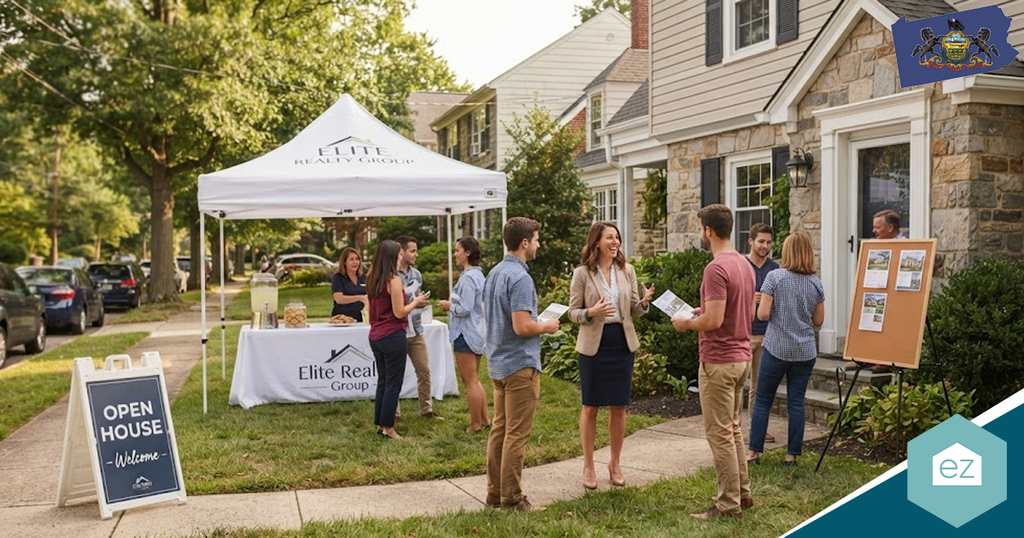
Why a lead engine tuned to one Arizona market breaks in the next

The reason most Arizona lead strategies underperform is that they are built for one phase of one market, and Arizona refuses to hold still. Greater Phoenix flipped from a steep seller’s market to a buyer-leaning, high-inventory market between 2023 and 2025. (Cromford Report, 2024; KJZZ, 2025) An engine tuned to bidding-war urgency in 2022 was selling the wrong message by 2025, and an agent who rebuilt for a buyer’s market will be off again when the cycle turns back.

Then there is the part of Arizona that does not run on the Phoenix clock at all. Snowbirds, retirees, and out-of-state second-home buyers shop on a seasonal, often-cash cycle that can stretch across a year and several visits, much of it from another state. Hundreds of thousands of winter visitors come to metro Phoenix each season, and the active-adult communities, Lake Havasu, Sedona, and the White Mountains all run on this long, low-frequency rhythm. A national shared-lead product that expects a phone call within five minutes handles that buyer poorly, because the buyer is not ready for five months.

Two more structural forces shape where the leads even exist. New construction made up roughly 27 percent of Greater Phoenix single-family sales in the first half of 2024, and the exurban growth in Pinal and the West Valley is builder-led, which means the builder’s sales office often owns the buyer’s first touch before an agent gets a word in. (Cromford Report, 2024) And water policy now decides where new subdivisions can be approved at all: a 2023 groundwater rule paused approvals for fringe developments relying solely on local groundwater, and the legal and regulatory fights over it ran through 2026, reshaping where new-home and land leads are worth chasing. (Arizona Department of Water Resources, 2023 to 2025; Arizona Capitol Times, 2026)

Desert reservoir near Chandler, Arizona
Water policy now helps decide where new subdivisions can be approved across the Phoenix area.

A tactic that fits one of these realities is wrong for the others, and most agents are running one tactic. That is the core problem. The fix is not a better single tactic. It is a system that works across all six markets at once.

How Arizona agents generate leads today, and where each approach runs out

Most Arizona agents already work hard for leads, so this is not a lecture about effort. It is about where each common approach quietly caps out, because the cap is the same in every case: the method puts you in a crowd instead of making you the name a buyer or seller already trusts. Arizona has thousands of licensed agents competing for the same attention, and standing out is the whole game.

Shared portal leads are the default, and they are the clearest example. You buy a name, and so do several other agents, and the lead goes to whoever dials fastest rather than whoever knows the market best. In a normalizing Phoenix market with more inventory and more patient buyers, speed-to-dial matters less and trust matters more, which is exactly what a shared lead cannot give you. Paid search and social ads have the same economics in reverse: you can buy attention, but you rent it, and the cost climbs every time another agent bids on the same Scottsdale or Gilbert keyword.

Communications tower overlooking Phoenix, Arizona
In competitive Valley markets, the trusted local name beats the fastest dialer.

Your own home-search website on an IDX feed is the honest attempt to escape that, and the instinct is right. The trouble is that an IDX feed is a heavy, technical thing to run. Listings have to stay fresh, fast, and accurate across a state that updates constantly, which costs real money, and most solo agents and small teams cannot keep the site current, so it ages into a liability rather than a lead source. Cold calling and circle prospecting still work for the few who do them relentlessly, but they carry real compliance exposure and a low yield per hour, and Arizona’s out-of-state and cash buyers are the hardest to reach by phone. Predictive-seller tools promise to tell you who will list next, and a score can be a useful nudge, but a name that scores high still is not a relationship, and you have to build the one that turns the guess into a signed listing.

Then there are the all-in-one CRMs and the done-for-you content services. Each solves a slice of the problem and adds a system you have to run and pay for, disconnected from anywhere your clients actually spend time. A monthly market email is one thread. A CRM is a place to store contacts. Neither one is a home-search experience your past clients come back to on their own, and that return visit is what actually keeps you top of mind across a snowbird’s year-long decision or a relocating family’s slow plan.

The pattern across all of it is that every approach asks you to win attention you do not own, one campaign at a time. New-lead generation is genuinely valuable, and a strong lead source is worth paying for. The question is whether you are buying a shared name that resets to zero next month or building a position that compounds. That distinction is the entire argument for the model below.

Real estate leads across Arizona’s counties and communities

Wherever you work in Arizona, the lead opportunity is bigger than the metro you live in, and the two tables here map it. The first is the ten most populous counties and the principal city in each, because those carry the bulk of transactions. Arizona has 15 counties in all, and naming them matters, because the growth and the second-home money increasingly sit outside Maricopa and Pima.

Aerial view of a Mesa, Arizona home with a pool
Arizona’s lead opportunity reaches well beyond Maricopa and Pima into all 15 counties.
RankCountyPrincipal cityCounty seat (if different)
1MaricopaPhoenix
2PimaTucson
3PinalMaricopa (city)Florence
4YavapaiPrescott
5MohaveLake Havasu CityKingman
6YumaYuma
7CoconinoFlagstaff
8CochiseSierra VistaBisbee
9NavajoShow LowHolbrook
10ApacheFort Defiance and Window Rock areaSt. Johns

County populations from US Census Bureau estimates, 2024. In Pinal, the City of Maricopa is the largest city and Florence is the county seat; in Apache, St. Johns is the county seat while the largest communities sit in the Fort Defiance and Window Rock area on the Navajo Nation.

Beyond Phoenix and Tucson, the rest of the state is where a county-level position pays off, because most of these markets are underserved by national lead products that only think in big metros. The communities below all sit inside the county listed, and each one is a real place where buyers and sellers are active.

CountyCommunities
PinalCity of Maricopa, Casa Grande, Coolidge, Apache Junction
YavapaiPrescott, Prescott Valley, Cottonwood, Camp Verde
MohaveLake Havasu City, Bullhead City, Kingman, Fort Mohave
YumaYuma, Somerton, San Luis, Wellton
CoconinoFlagstaff, Page, Williams, Tusayan
CochiseSierra Vista, Bisbee, Douglas, Benson
NavajoShow Low, Pinetop-Lakeside, Snowflake, Holbrook
ApacheSt. Johns, Eagar, Springerville, Window Rock
GrahamSafford, Thatcher, Pima, Solomon
GilaPayson, Globe, Miami, Star Valley

Put the prose around those tables and the breadth gets concrete. In the Valley you have Phoenix, Mesa, Chandler, Scottsdale, Gilbert, Glendale, Tempe, Peoria, Surprise, Goodyear, and the fast-rising Buckeye and Queen Creek. Southern Arizona adds Oro Valley, Marana, Sahuarita, and Green Valley around Tucson. The Verde Valley and the Quad Cities cover Prescott, Prescott Valley, Cottonwood, and Camp Verde, the White Mountains run from Show Low and Pinetop-Lakeside down to Payson, and the Colorado River markets center on Lake Havasu City and Bullhead City. Sun City and Sun City West remain core active-adult destinations. No single agent can own all of that, but one agent can own a county, and that is the unit Arizona’s real opportunity is sold in.

The Exclusive County Partnership: own the county, own the leads

ez Home Search sells Arizona agents a different unit than a lead. It is the Exclusive County Partnership: a single agent, team, or brokerage takes a whole county, co-branded across the consumer home-search experience, with no competing partner inside that territory. You are not buying names against five other agents. You are the name the county sees. You pay one predictable fee, never a charge for each lead and never a cut of your commission at closing, so a strong month is a strong month for you, not a bigger invoice.

A residential home in Chandler, Arizona
The Exclusive County Partnership co-brands the entire home-search experience to one local agent.

What makes those leads convert is the model behind them. ez Home Search is built consumer-first and privacy-first as The Only Confidential Home Search. A person can search, save, and compare Arizona homes while their budget and contact details stay theirs, never sold, recycled, or broadcast out to dozens of businesses they did not choose. Instead, each buyer or seller is matched with a Single Local Expert, the county partner, chosen as the right fit rather than handed to whoever paid the most. Because the experience is private and useful, people trust it, and they show real intent through real activity. When one of them reaches you, you are not dialing a cold name. You already know the homes they kept opening, the price range they kept landing on, the search they picked back up. That is why the connections convert, and why the partners we work with consistently see relationships hold across years rather than weeks. Expect that engine to turn interest into closings over the first 30 to 60 days, not overnight, because it is building a real relationship rather than racing a stopwatch.

Now map that to Arizona’s actual pains. In a state where so many buyers arrive from somewhere else, the most expensive lead you have is the one you already earned and then lost. A past client who relocates is the clearest case. When a Phoenix client starts planning a move, or a snowbird who bought through you finally sells the place back home, that activity surfaces on your co-branded platform early enough that you reach out while the listing is still yours to win. During eXp Realty’s growth from 4 countries to 23, the teams I led generated plenty of leads and still lost the ones that mattered, because nothing kept the relationship warm between transactions. National coverage closes that gap: the relocating client stays on your platform instead of drifting to a legacy portal and a stranger, and the home they leave behind stays your listing.

The same machinery reactivates the database you already own, which is the cheapest growth available to any agent and the one most Arizona agents let sit. The co-branded home search, the home-value updates, and the listing alerts keep your past clients and sphere engaged across the long, low-frequency windows that define this state, the snowbird’s year-long decision, the retiree weighing a move from Lake Havasu, the family a year out from upsizing in Gilbert. In our own data, a partner’s repeat and referral business from past clients comes in around 2.5 to 5 times the market rate. You become the recognized name in your county without inventing something to say every month, because the platform does the staying-in-touch for you.

Two more pieces matter in Arizona specifically. Cold outreach to out-of-state and cash buyers by phone carries real compliance risk. ezVerify.ai takes that risk off every opportunity: it confirms the person opted in, keeps a recording that proves it, screens the number against a known-litigator database, drops any Do Not Call number off your list before you dial, and fills in contact detail you would have spent time hunting down. It is consent and confidence on every call, not a lead score. And the conversion tools, the home-value pages, the open-house sign-in, the AVM widget, the instant cash offer, are already built and running on the national platform with your brand on them, so you operate the relationships instead of administering software. Weekly coaching, Shut Up and Dial sessions, and sales-enablement playbooks put real people behind your numbers.

There is a reason this approach is spreading while agents keep leaving the shared-lead model. The companies that built around privacy and trust, Apple, DuckDuckGo, Brave, Proton, 1Password, Bitwarden, did not win on privacy alone. They won by building something people preferred and making trust the difference. ez Home Search is the only real estate platform built that way, and in Arizona, where so many buyers are guarding their information as they move across state lines, that trust is what turns a search into a relationship you keep.

Securing an Arizona county before it is taken

The math of the Exclusive County Partnership is simple and a little uncomfortable: a county has room for exactly one partner, so the position you want is either open or it is not. Many of Arizona’s counties are already claimed, and more are taken each month as agents and teams move to lock down their territory before a competitor does. The model works the same in Maricopa as it does in Mohave or Cochise, because being the trusted local name carries the same weight in a thin market as it does in a crowded one.

What you step into is already built. The platform millions of people use is co-branded to you from day one, the leads and the relationship engine run without setup, and the data and technology behind the valuations and the search, which an individual agent could never assemble for any reasonable cost, simply work. Nothing waits on you to configure it and nothing needs your upkeep. The one open question is whether your county is still unclaimed, and that answer changes month to month.

Three ways to fix your Arizona lead problem

Five professionally dressed people discuss paperwork in an office with regional maps on the wall, strategizing about Arizona real estate leads. Text on the image reads “Teamwork & Conversion Tactics.”.

Strip away the detail and you have three real options for where your Arizona leads come from.

One option is to keep doing what most agents do: buy shared portal leads, bid on the same Scottsdale and Tucson keywords, and dial the same names five other agents just bought, market by market, resetting to zero every month. It works often enough to feel necessary and never compounds into a position you own.

The opposite extreme is to build it all yourself. Assemble the IDX site, the valuation models, the compliance screening, the content engine, and the minute-by-minute data behind it, then pay to keep all of it current forever. A large team might attempt it. The data and engineering alone put it out of reach for almost anyone, and it is a full second business on top of selling homes.

Between those two sits the Exclusive County Partnership. You own a county and a relationship engine that already runs across all six of Arizona’s markets, co-branded to you, for one predictable fee. Here is the honest trade-off: only one partner holds a county, so if a strong agent already claimed yours, you wait for it to open, and the engine converts relationships over the first 30 to 60 days rather than handing you a closing tonight. In exchange, the leads are yours, not shared, and the past clients you already earned keep producing. The single number that captures it: ez Home Search partners pull repeat and referral business from their past clients at a rate of 2.5 to 5 times the market.

If that math fits the way you want to build your business, the next step is small. Check whether your Arizona county is still open, and find out what it would take to hold it before someone else does.

Frequently asked questions

It is shifting, not crashing. The Cromford Market Index fell below 90 in November 2024 for the first time in over a decade, inventory reached its highest level in years, and prices stayed roughly flat rather than falling off a cliff. The Valley simply handed some negotiating power back to buyers. (Cromford Report, 2024; KJZZ, 2025)

For your leads, the change is real. When buyers feel rushed, speed-to-dial wins, which is what shared portal leads reward. In a patient, higher-inventory market, the agent a buyer already trusts wins, and a cold shared name cannot give you that trust. This is the market where owning the county relationship, and being the local name a buyer was already watching homes with, pays off most.

The challenge is structural: new construction was roughly a quarter of Greater Phoenix sales in 2024, the exurbs are builder-led, and a relocating buyer often walks into a model home before they ever choose an agent. (Cromford Report, 2024) If your first contact comes after that, you are already behind.

The way to get ahead of it is to be present while the buyer is still researching from California, which is months earlier. A co-branded ez Home Search experience lets an out-of-state buyer search Maricopa and Pinal confidentially and build a relationship with you, the Single Local Expert, before they are standing in a builder’s office. Their search activity tells you they are getting serious, so you reach out at the right moment rather than hoping to catch them at the door.

They are pushing to the exurbs. Pinal was Arizona’s fastest-growing county in 2024 to 2025, and Buckeye and Queen Creek rank among the fastest-growing cities in the country as buyers trade Valley prices for space. (Arizona Commerce Authority, 2025)

These submarkets are exactly the places national lead products underserve, because those products think in big metros and miss the City of Maricopa or Casa Grande. A county-level partnership covers the whole territory, and because the platform tracks real search activity across those zip codes, you see demand building in Queen Creek or Buckeye and can work it as the recognized local name rather than buying a shared name after the fact.

You stop treating them like five-minute leads. Hundreds of thousands of winter visitors come to metro Phoenix each season, and the active-adult communities, Lake Havasu, Sedona, and the White Mountains all run on a long, often-cash decision window that can stretch across a year and several trips.

That window is a database problem, not a speed problem. The co-branded home search, the home-value updates, and the listing alerts keep an out-of-state buyer engaged for as long as their decision takes, without you having to invent a reason to reach out. When the season turns and they are ready, you are the agent they have been searching with the whole time, which a national shared-lead product expecting an instant phone call could never deliver.

It does, and it pays to watch it closely. A 2023 rule paused approvals for fringe subdivisions relying solely on local groundwater, and the legal and regulatory fights ran through 2026, which shifts where new homes can actually be built around Phoenix. (Arizona Department of Water Resources, 2023 to 2025; Arizona Capitol Times, 2026)

The practical effect is that new-construction and land leads are worth more in areas with secured or alternative water designations and riskier where approvals are frozen. A single new-build tactic is exposed to a rule change like this. A county-wide system that follows the entire market, resale and new build, owner and dreamer, keeps producing no matter which way the water policy breaks.

Tucson runs on a different rhythm, anchored by the University of Arizona, aerospace and defense, and health care, with a median single-family price that reached an all-time high near $391,700 in 2024, well below the Valley. (University of Arizona MAP Dashboard, 2024) A slower, steadier market rewards patience.

That actually favors the relationship model over speed-to-dial. In Pima and the southern counties, the agent who stays present with past clients and sphere, and who shows up as the trusted local name across a longer decision, out-converts the agent buying shared names. Ownership of the county, plus reactivation of the database you already have, fits Tucson’s pace far better than a lead engine built for Phoenix bidding wars.

You compete on relationship and timing, because you will not out-resource them on capital. Greater Phoenix saw close to $9 billion in multifamily transactions in 2024, with institutional and build-to-rent money drawn by the metro’s population growth. (Commercial market analysis, 2024 to 2026) An individual agent cannot match that firepower head-on.

What an agent can do is get to the owner first and stay there. ez Home Search surfaces a homeowner’s activity, a second valuation run, a search picked back up, as an early signal that a sale is coming, and the data refreshes every minute, so you reach a potential seller while that intent is still fresh, well before an investor’s offer letter lands. The advantage is structural: a warm, chosen relationship and earlier intelligence, not a bigger checkbook.

These are scarcity markets. Flagstaff averages well above $700,000 and Sedona medians run far higher, with a large share of cash and out-of-area buyers who are not in a hurry. (Regional market recaps, 2024) The buyer pool is smaller, wealthier, and shopping privately.

That makes confidentiality and trust the whole game. A high-end, often-cash buyer values The Only Confidential Home Search, where their details are not sold or broadcast, and they tend to commit to one expert they trust rather than a crowd. When you hold Coconino or Yavapai as the Single Local Expert, present across a long, low-frequency search, you beat any attempt to buy a shared lead for a market this thin.

06.22.2026

Real estate leads in Alaska: how to own your borough and win more listings

Alaska is one of the most distinctive real estate markets in the country, and one of the hardest to cover well. Home prices have climbed past $450,000 statewide, inventory is tight, and demand is spread across markets as different from one another as Anchorage, the booming Matanuska-Susitna Valley, military Fairbanks, the fishing ports of the Southwest, and a Southeast panhandle you can reach only by air or water.

For an agent or team, the hard part of generating real estate leads in Alaska is rarely a shortage of people who want to buy or sell. It is reaching them first, and staying in front of them consistently, across a state this large and this varied.

The agents who win here are the recognized local name in their borough, the team buyers and sellers think of first and come back to over the years. That position, not a bigger pile of cold leads, is what this article is about. Net out-migration and the churn of military moves are real and worth planning for, but they are one part of this market, not the story.

If you run a team here, the question is not whether the demand exists. It is whether you are the one who reaches it first, and whether you become the name your part of Alaska turns to before another team does.

What is actually happening across Alaska’s housing markets

Alaska’s housing markets are tight, expensive, and pulling in different directions at once, which is exactly why a one-size lead source underperforms here. A few trends set the table for any agent deciding where to spend time and money.

Hillside homes in Alaska backed by a snow-covered mountain, in a market where prices have climbed and inventory stays tight
Hillside homes outside Anchorage. With prices up and new construction thin, every listing relationship in Alaska is worth protecting.

Prices have climbed hard while new supply stayed thin. The average single-family home in Alaska sold for $459,089 in 2024, and the cost of owning a home in the state rose 52% between 2018 and 2024 while rents rose 24% (Alaska Housing Finance Corporation, via Alaska Public Media, 2025). Builders added only about 2,187 housing units in 2024, so the inventory that does come to market moves under real competition. For agents, that scarcity makes listings the prize, and it makes the relationships that produce listings worth protecting.

Population is steady, with a small, persistent net outflow. Alaska grew about 0.3% from 2023 to 2024, as births and more than 4,000 international arrivals slightly outpaced a net loss of roughly 1,163 people to other states (Alaska Department of Labor and Workforce Development, 2025). Net migration has run modestly negative for over a decade, but the numbers are small against a population near 740,000, and the market is not shrinking. The practical point for an agent is narrow: a small share of past clients will eventually move out of state, so it is worth keeping them rather than losing them when they do.

Inside the state, the growth is moving to the Mat-Su. The Matanuska-Susitna Borough has averaged 3.4% annual growth over 25 years against 1.2% for the state, fed largely by households priced out of Anchorage who move north to Wasilla, Palmer, and the Knik-Fairview area (Alaska Business Magazine, 2024). Buyer demand in Southcentral is not disappearing; it is relocating across a borough line, and the agent who can follow it captures it.

The job base is broader than the oil headlines suggest. Alaska added about 7,700 jobs in 2024, led by construction and health care, with oil and gas and federal government also gaining, even as seafood processing pulled manufacturing down (Alaska Department of Labor and Workforce Development; U.S. Bureau of Labor Statistics, 2024 to 2025). On the North Slope, ConocoPhillips’ Willow project is designed to peak near 180,000 barrels a day and is expected to send roughly $1.2 billion in property taxes to the North Slope Borough over time (Alaska Beacon, 2025). Different sectors mean different buyers: a Slope worker on rotation, a Fairbanks soldier, a Kenai nurse, and a Kodiak processor are not the same client.

The tax picture is genuinely unusual, and buyers feel it. Alaska levies no state income tax and no statewide sales tax. Local sales taxes run from 1% to 7% in the municipalities that charge them, and property tax falls in only 15 of the 19 boroughs, averaging 0.94% in 2024, from a low near 0.01% in the Kusilvak Census Area to 1.17% in Anchorage (Tax Foundation; Alaska Office of the State Assessor, 2024). The annual Permanent Fund Dividend, $1,702 per resident in 2024, lands in the fall and gives many households a predictable seasonal lift in buying power (Alaska Department of Revenue, 2024).

The selling season is short and the calendar is unforgiving. Transactions cluster in the brief Alaska summer and thin out through a long winter. A lead system that only works when the sun does will starve a team for half the year, which is one more reason consistency matters more here than raw volume.

Alaska has boroughs, not counties, and they are the size of states

Two men shake hands and a woman smiles outside a wooden house, with a banner reading “Own Your Borough: Hyper-Local Strategies”—an essential approach for generating Alaska real estate leads.

Alaska does not have counties, and any lead plan built for the Lower 48 has to account for that before anything else. The state is divided into 19 organized boroughs and 11 census areas inside the Unorganized Borough, which the U.S. Census Bureau counts as 30 county-equivalents in all (U.S. Census Bureau). Seven of them, including Anchorage, Juneau, and Sitka, are consolidated city-boroughs. The practical point for an agent is scale: a single Alaska borough can be larger than most states, and the North Slope Borough alone is bigger than 39 of them.

That scale changes what “covering your market” even means. Many communities sit off the road system entirely. Juneau, the state capital, is the only capital in the country with no road access at all; you reach it by air or by the Alaska Marine Highway ferry (Travel Alaska). You do not door-knock your way across that kind of geography. It is a structural problem, and it rewards an agent who owns the whole territory rather than one renting a slice of it.

Most of the state’s people, and most of its transactions, concentrate in a short list of boroughs.

RankBorough or census areaPopulation (2024)Principal cities
1Municipality of Anchorage288,976Anchorage (incl. Eagle River, Girdwood)
2Matanuska-Susitna Borough112,988Palmer, Wasilla, Houston
3Fairbanks North Star Borough95,460Fairbanks, North Pole
4Kenai Peninsula Borough60,413Soldotna, Kenai, Homer, Seward
5City and Borough of Juneau31,794Juneau
6Bethel Census Area18,394Bethel
7Ketchikan Gateway Borough13,768Ketchikan
8Kodiak Island Borough12,771Kodiak
9North Slope Borough10,810Utqiagvik, Deadhorse (Prudhoe Bay)
10Nome Census Area9,866Nome

Source: U.S. Census Bureau, 2024 American Community Survey 5-Year Estimates.

Below the top ten, Sitka, the Kusilvak Census Area, the Northwest Arctic Borough, the Southeast Fairbanks Census Area, and the Chugach Census Area each add thousands more residents and their own distinct markets. The geography is wide, but the population is concentrated enough that a focused team can genuinely own a borough’s worth of it.

How Alaska’s regions diverge, and why one lead strategy cannot cover them

Alaska’s regions run on different economies, and that is the clearest argument against a single, shared lead funnel for the whole state. What pulls a buyer into the Mat-Su has nothing to do with what keeps a household in Unalaska or Utqiagvik.

RegionCore boroughs and areasWhat is happening
SouthcentralAnchorage, Mat-Su, Kenai PeninsulaThe state’s population center; growth is shifting to the Mat-Su as Anchorage-priced-out households move north (Alaska Business Magazine, 2024).
InteriorFairbanks North Star, Denali, Southeast FairbanksAnchored by the military at Fort Wainwright and Eielson; permanent-change-of-station moves drive a steady buy, sell, and VA-loan cycle.
Southeast (Panhandle)Juneau, Ketchikan, Sitka, Petersburg, WrangellRecord cruise visitation, near 1.7 million passengers in Juneau in 2025, alongside a resident population projected to fall about 17% by 2050 (KTOO, 2024; Travel Weekly, 2025).
Gulf Coast and KodiakKodiak Island, Chugach (Valdez, Cordova)A fishing and oil-transport economy; Kodiak ranks among the top U.S. fishing ports and Valdez is the marine terminus of the trans-Alaska pipeline.
Southwest and AleutiansAleutians West and East, Bristol Bay, Dillingham, BethelSeafood-dependent; Unalaska’s Port of Dutch Harbor has been the nation’s number-one fishing port by volume for more than 25 years (NOAA Fisheries, 2024).
Arctic and Far NorthNorth Slope, Northwest Arctic, NomeOil and mining fund large boroughs spread across road-less terrain; the Willow project will add North Slope property-tax revenue for decades (Alaska Beacon, 2025).

A shared lead bought from a legacy real estate portal does not know any of this. It arrives the same way in Ketchikan as it does in Wasilla, scored on clicks rather than on whether the person is a relocating soldier, a priced-out Anchorage family, or a Bristol Bay processor thinking about a first home. An agent who knows the region reads those signals instinctively. The trouble is getting in front of the right person in the first place, and doing it consistently across a market this varied.

The Alaska markets most lead sources never reach

The boroughs beyond the main metros are where shared lead sources thin out almost completely, and where a local expert who owns the territory has the clearest advantage. Many of these communities are reachable only by plane or barge, financing works differently, and a national lead vendor has little reason to send anyone there at all.

Borough or census areaCommunities
Kodiak Island BoroughKodiak, Old Harbor, Port Lions, Larsen Bay
Nome Census AreaNome, Unalakleet, Gambell, Savoonga
North Slope BoroughUtqiagvik, Nuiqsut, Point Hope, Kaktovik
Northwest Arctic BoroughKotzebue, Kiana, Noorvik, Selawik
Aleutians West Census AreaUnalaska (Dutch Harbor), Adak, St. Paul, Atka
Aleutians East BoroughSand Point, King Cove, Cold Bay, Akutan
Prince of Wales-Hyder Census AreaCraig, Klawock, Thorne Bay, Hydaburg
Chugach Census AreaValdez, Cordova, Whittier
Southeast Fairbanks Census AreaDelta Junction, Tok, Deltana
Dillingham Census AreaDillingham, Togiak, Aleknagik, Manokotak

These are not throwaway markets. They are homes that get bought, sold, inherited, and refinanced, often by the same families across decades, with far fewer agents competing for the relationship. The barrier has always been reach: no single agent can afford to market across that footprint alone. That is precisely the gap a platform built for the whole state can close. The reach gap is not only about communities inside Alaska, either, because some of the demand now starts well outside it.

Some of Alaska’s buyers have never lived here

A growing share of interest in Alaska real estate comes from people who do not live in the state, and that is a lead segment a borough’s local expert wants to own early.

The established version is the out-of-state land buyer. Alaska has one of the highest shares of seasonal, recreational, and occasional-use homes in the country, around 9% of its housing stock, third behind only Maine and Vermont (U.S. Census Bureau, 2020). Buyers from the Lower 48 come for remote recreational parcels, off-grid cabins, and second homes, drawn by privacy, scenery, and space they cannot find where they live. Most of these purchases are cash, because conventional, FHA, VA, and USDA loans rarely fund a remote, uninhabitable cabin, so the buyers move quickly and the usual mortgage-lead funnels never see them. What they need is a local expert who knows which parcels have real access, water, and resale value, which is exactly what a shared portal lead cannot give them.

The newer version is the one people are starting to talk about: working from Alaska. Other national real estate research, and our own research, show inbound interest in Alaska climbing sharply over the past few years, among the largest jumps in the country, as remote and hybrid workers weigh a cabin with a view against another year of a Lower-48 commute. Satellite internet like Starlink has taken away the old barrier, making it realistic to live and work from places off the road system that had no usable connection a few years ago. The honest read is that this is still mostly interest. Alaska has continued to see more residents leave than arrive in recent years, so the inbound demand has not yet grown enough to offset that out-migration. It is real and it is growing, and it is the kind of early signal a local expert wants to be positioned for before it becomes obvious to everyone.

Neither group is easy to reach with the usual toolkit. A shared portal lead does not surface the Texas buyer quietly researching a fishing cabin, and an IDX brochure does not stay in front of the remote worker who is still a year from deciding. To capture demand that begins outside Alaska, you need a platform that reaches those searchers wherever they are and a recognized local name ready for them when they decide.

How Alaska agents try to win listings today, and where it breaks down

A tablet on a wooden table displays analytics and maps of Alaska. Text overlay reads, “DIGITAL MARKETING FOR ALASKA LISTINGS.” The image highlights innovative strategies to generate Alaska real estate leads.

Most Alaska agents are already working hard at lead generation, and the common methods all do something useful before they hit a ceiling. It is worth being honest about both halves.

Shared leads from legacy portals put names in a pipeline quickly, and for a brand-new agent that can feel like progress. The catch is ownership. Those leads are rented, not owned, often sold to several agents at once, and priced so that a strong month of activity becomes a bigger bill rather than a bigger business. You are paying to compete for a cold name that three other agents are also dialing.

A do-it-yourself IDX website gives a team its own front door, and that instinct is right. The reality is that an IDX site is a slow, expensive asset to build and keep current, the data behind it is costly, and for a market the size of Alaska it rarely earns back what it takes to maintain. It ages into a brochure that updates more slowly than the market it is supposed to track.

Cold calling, circle prospecting, and farming a neighborhood still work, and in Anchorage plenty of agents farm areas like Hillside East, Oceanview, and Rogers Park with real discipline. The limit is time. An agent who prospects by phone also quietly steps into the legal position of a telemarketer, where the burden of proving consent falls on the caller, and a single disputed number can become a costly problem.

Direct mail, sphere texting, predictive-seller tools, generic all-in-one CRMs, and paid ads each solve a sliver of the problem. None of them is a place a past client returns to on their own, and none of them makes you the name your whole sphere thinks of first. They also fade quietly, as phone numbers and email addresses go stale and the list you built last year reaches fewer people this year. That is the gap.

The mechanism that changes the math is not another lead source bolted on top. It is a different model for where leads come from and who owns them. ez Home Search calls it the confidential, Single Local Expert model: instead of a shared cold name scored on clicks, a buyer or seller engages a home-search experience they trust, and is connected to one vetted local expert chosen because they fit, not because they paid the most to be in the rotation. That difference is what the rest of the article is about.

What owning your borough actually changes for an Alaska team

Five business professionals have a discussion in a modern office, with a large map on the wall and documents on the table. A banner reads “Teamwork & Conversion Tactics,” as they strategize fresh approaches for generating Alaska real estate leads.

A capable Alaska team can already do a lot of this on its own. It can stand up an IDX site, run a CRM, mail its farm, and work its referrals. The real questions are whether all of that pencils for a market this small, and whether it adds up to a position no competitor can take. That is what an Exclusive Borough Partnership is built to change, and it is worth being precise about what it changes and what it does not.

The first change is the one a team cannot build for itself, which is exclusivity. The Exclusive Borough Partnership is ez Home Search’s Exclusive County Partnership applied to a state that runs on boroughs and census areas, and it gives one agent, team, or brokerage an entire borough, co-branded across a home-search experience consumers across the country already use, with no competing ez Home Search partner inside it. The opportunities that come through your borough are yours, with no charge per lead and no share of your commission. You are not buying cold names that three other agents are dialing at the same time; you hold the territory.

The second is the connection that model produces: a warm, chosen match with one local expert, not a shared name dialed by everyone at once. Connections that begin that way tend to convert over roughly 30 to 60 days rather than going cold, and ez Home Search’s national coverage carries the advantage in both directions, so you keep the client who moves to the Lower 48 and you are the local name an out-of-state buyer reaches when they start searching your borough from afar. The confidential, one-expert model and that national reach are the parts a team cannot reproduce by buying more leads.

Most of the rest is economics. The home-value updates and listing alerts that keep a past-client database warm, the automated follow-up through ezNurture, the lead-capture tools, and the consent and compliance checks on outreach through ezVerify.ai (opt-in proof, a saved recording, known-litigator and Do Not Call screening, never a lead score) all arrive built, co-branded, and included in one predictable fee. A team could assemble its own versions of these, but for a population the size of a single Lower-48 suburb that rarely pays for itself, and here they are already running on day one, putting the sphere you have already earned back to work without another system to manage.

Before going further, it is worth seeing whether your borough is still available, because only one partner holds each one.

Securing a borough before it is taken

A woman in a suit sits at a desk with business cards and a clock, looking concerned. Text reads, “Why most agents are missing out.” A map is visible in the background, hinting at the challenge of finding quality Alaska real estate leads.

Only one partner can hold a borough, which makes timing part of the decision in Alaska more than almost anywhere. The same exclusivity that protects you once you are in also means the territory you want may already belong to someone else, and more boroughs are claimed every month. Because Alaska’s boroughs are so large, holding one is closer to holding a region than a neighborhood, and the recognized local name in a territory that size is hard for any competitor to dislodge from the outside.

The engine behind it is ready to run the day you start. You step onto a platform that consumers across the country already use, with your brand on it, and the search, the valuations, the alerts, and the follow-up work from day one. Nothing waits on setup, and nothing needs a hand to keep running. For a team that has spent years trying to assemble this piece by piece, the difference is starting with the whole system already built.

The choice an Alaska team is really making

Infographic showing Alaska real estate lead generation data, including population, housing price, Alaska real estate leads sources, conversion tactics, marketing spend, and closed deals trends from 2021 to 2023.

The decision in front of an Alaska brokerage is not whether to generate more leads. It is which of three paths to take. The first is to keep renting shared, cold leads you do not own, competing for each one against several other agents. The second is to build and run your own national-grade search, data, and follow-up stack for a small market, which almost no single team can justify or sustain. The third is to own your borough on a platform that already does all of it, where the leads are yours and the clients you earn keep coming back.

The honest trade-off is real and worth naming. Only one partner holds a borough, so not every team in a market can take this path, and the warm connections it produces convert over 30 to 60 days rather than overnight. That is the cost of leads you own outright and relationships that last across years and moves, instead of cold names you rent by the month.

Here is the proof that matters most: ez Home Search partners reactivate their past clients, by repeat business and referral, at 2.5 to 5 times the market rate. For an Alaska team, that is the difference between starting each year from scratch and compounding the sphere you have already built.

Check whether your Alaska borough is still available, and claim it before another team does.

Frequently asked questions

The move is to stay the source the client searches on after they leave, instead of losing them to a legacy portal the moment they look at homes in the new duty station. On ez Home Search, a relocating client keeps using your co-branded search, and their activity in the new market surfaces to you as an early signal. That lets you reach out before the home they are leaving is listed, win that listing, and refer them onward for a referral fee. Military rotation through Anchorage and Fairbanks is constant, so building this retention into how you work turns a recurring loss into a recurring source of listings.

Most are moving north into the Matanuska-Susitna Borough, to Wasilla, Palmer, and the fast-growing Knik-Fairview area, which has grown far faster than the state for years (Alaska Business Magazine, 2024). To reach them, you hold both the territory they are moving into and the one they are leaving, so the same relationship carries across the borough line. An Exclusive Borough Partnership in the Mat-Su, or in both Anchorage and the Mat-Su, captures that demand instead of handing it to whichever agent the buyer stumbles onto next.

National coverage is what makes this possible. Because ez Home Search works in every state, a past client who leaves Alaska keeps searching on your co-branded platform rather than disappearing onto a legacy portal, and their searches signal that a move is underway. You stay in the relationship, you have the conversation about selling their Alaska home, and you refer them to a vetted agent in their new market. Alaska’s net out-migration is modest but persistent, so a handful of your past clients will leave the state each year (Alaska Department of Labor and Workforce Development, 2025). It is worth keeping those clients, but this is a safeguard, not the whole business.

Shared lead vendors barely serve communities reachable only by plane or barge, which leaves them wide open to an agent who actually owns the territory. A co-branded, statewide search experience reaches those households where a national lead funnel will not, and keeps them engaged with home-value updates and alerts year-round. When you hold the borough rather than buy scattered leads inside it, covering places like the Kenai Peninsula’s smaller communities, Kodiak Island, or the Nome area becomes economically possible for one team.

Yes, and the scale is the point. Alaska’s population concentrates in a short list of boroughs, so a focused team can become the recognized name across one of them, and the National Association of Realtors finds that most sellers contact only one agent before choosing. With ez Home Search running the search, the data, the alerts, and the follow-up, a single team can carry a borough-sized territory without building any of that themselves. Only one partner holds each borough, so the position, once taken, is yours alone.

The answer is a system that keeps relationships warm through the slow months instead of restarting from cold every spring. ez Home Search keeps a partner’s database and sphere engaged year-round with co-branded home-value updates, listing alerts, and a search experience people return to on their own, and ezNurture handles automated follow-up so contacts stay warm through winter. When the short Alaska selling season opens, you are talking to people who have been engaged for months, not chasing names from scratch.

06.22.2026

Tennessee real estate leads: a region-by-region guide for agents and teams

In 2025 and 2026, county assessors across Tennessee mailed reappraisals that put a government stamp on what most agents only suspected: home values have jumped sharply since the last cycle. Davidson County certified a 45 percent median increase. Wilson County came in around 66 percent on average. Hamilton County landed near 40 percent. Those are not forecasts. They measure the equity already sitting in your past clients’ homes, and they point to where Tennessee real estate leads will come from over the next few years.

Tennessee is not one market, and the lead strategy that works in Williamson County is the wrong one in Memphis. The state runs across three Grand Divisions, a dozen distinct metros and micropolitan areas, and price tiers that stretch from the most affordable major metro in the country to seven-figure suburbs south of Nashville. The agents and teams who win here read those differences instead of buying the same shared leads as everyone else.

Aerial view of Tennessee
Tennessee runs across three Grand Divisions and a dozen distinct markets, and each one rewards a different lead strategy.

What is actually happening across the Tennessee market

Tennessee is still growing, but the pace has cooled and the story splits by region. The state reached about 7.23 million residents in 2024, a gain of roughly 79,400 people and one of the fastest growth rates in the country that year, according to the Tennessee State Data Center at the University of Tennessee. Growth then settled to about 63,800 added in the year ending mid-2025. Nearly all of it came from migration rather than births.

That migration is real, and it is worth sizing correctly before building a pipeline around it. Net domestic migration brought about 48,500 new residents in 2024, down from a one-year record near 83,000 in 2022 and settling back toward the state’s pre-pandemic norm. International migration added a second stream that has since receded. Against a state of more than seven million people and millions of households, net migration is one driver among many, not the whole market. National household mobility has fallen to an all-time low, with only about 8.5 percent of households moving in a year, so the pool of active movers is shrinking even as Tennessee captures an outsized share of it.

Movement runs both ways, and both directions are business. Shelby County, home to Memphis, recorded the nation’s largest single-county numeric population loss in 2024, yet that decline was a modest 0.4 percent and the loss was partly offset by births and international arrivals, leaving a full, active market on both sides. Davidson County, the symbol of the state’s boom, actually posted negative net domestic migration in 2024 and grew on international arrivals instead. The headline that everyone is fleeing one city and flooding another does not hold up. Departures are listings and relocation business; arrivals are buyers.

The market itself is normalizing, which changes how leads convert. In Greater Nashville, closed sales held essentially flat in 2025 at about 33,737, while inventory rose roughly 13 percent and homes took around 39 days to sell, according to Greater Nashville REALTORS. In the Knoxville region, price growth cooled to about 2.9 percent for 2025 and active listings passed pre-pandemic levels for the first time, per the East Tennessee REALTORS State of Housing report. More inventory and longer days on market mean sellers need real marketing and buyers have room to be nurtured.

Affordability is the pressure underneath all of it. The Tennessee Housing Development Agency (THDA) estimates that the share of homes sold that a median-income household could afford fell from about 71 percent in 2019 to roughly 32 percent in 2024, as prices rose far faster than incomes over the decade. That squeeze is the structural reason buyers need an agent who can match them to the right county and price tier instead of chasing listings they cannot reach.

Tennessee’s job base is broad, and that breadth steadies the housing market across regions. Health care anchors Middle and East Tennessee through HCA Healthcare and Vanderbilt in Nashville and Ballad Health across the Tri-Cities. Vehicle and advanced manufacturing run the length of the state, from Nissan in Smyrna and General Motors in Spring Hill to Volkswagen in Chattanooga and the Ford manufacturing buildout rising in West Tennessee. Memphis remains one of the world’s leading logistics hubs, built on the FedEx SuperHub and rare five-railroad connectivity. Nashville keeps drawing corporate relocations, including Oracle’s announced headquarters move, alongside its music, tourism, and growing technology base.

That economy is sound but slowing, which favors steady relationship business over chasing a boom. The University of Tennessee’s Boyd Center reported that the state added only about 24,000 jobs in 2025, well below its roughly 60,000 norm, while unemployment held near 3.6 percent and stayed below the national rate. Fifty-four counties ran unemployment under 4 percent, with Williamson, Cheatham, and Sevier counties among the lowest in the state.

Some of the most interesting movement is happening away from the big metros. Tennessee’s 78 rural counties have matched or outpaced the growth rate of its 17 urban counties every year this decade, according to the State Data Center, and the Cookeville micropolitan area ranked fourth in the nation for numeric micropolitan growth in 2025. Underneath the migration is a tax structure that keeps pulling people in: no state income tax on wages and an effective property-tax rate near 0.52 percent, among the lowest in the country, with rates set county by county.

What the market shift means for converting leads

A cooling, higher-inventory market is harder to work with the old playbook, and that is where most lead sources start to show their limits. When homes sold in days and prices only rose, a shared portal lead could convert on momentum alone. With days on market lengthening and affordability tight, the same lead, sold to several agents at once and arriving cold, converts far less often. The buyer needs guidance on which county and price tier actually fit, and the seller needs a real marketing case for a home that no longer sells itself.

The do-it-yourself answer most agents reach for has the same problem from the other side. An IDX website is a slow asset to stand up and a slow one to rank, and it rarely keeps a past client coming back on its own. A generic all-in-one customer relationship management (CRM) system still has to be configured and run. None of these is wrong, and each can produce business. The gap is that they leave the agent assembling and operating the very technology that should be working for them, while the leads that matter most, the ones already in their database, sit untouched.

The equity story is the listing story

The 2025 and 2026 reappraisals are the strongest listing signal Tennessee agents have had in years, and most are not using them. When Davidson County certified a 45 percent median rise in assessed values from its 2021 cycle, and Wilson County reported a 66 percent average increase in its 2026 cycle, those numbers measured equity that homeowners have built without lifting a finger. A rate-locked owner who believes they cannot afford to move is often sitting on far more equity than they realize, and a single conversation about it can turn into a listing.

It helps to explain the mechanics, because the reappraisal frightens owners who do not understand it. Tennessee law requires reappraisals to be revenue-neutral, so the county lowers its certified tax rate to offset the higher values rather than collecting a windfall. Hamilton County, for example, cut its rate to its lowest level since 1941 after its reassessment. A higher assessment is not automatically a higher tax bill; whether an owner’s bill moves depends on whether their value rose more or less than the county median. An agent who can walk an anxious homeowner through that earns trust, and trust is what produces the listing.



This is where ez Home Search turns a market event into a pipeline. The platform’s automated valuation model (AVM) is built to be the most accurate home valuation available, covering any residential property in the country, and a county exclusivity partner’s co-branded home-value pages let past clients track what their home is worth month to month. Pair that with listing-alert newsletters and home-value updates, and the partner stays in front of every owner in their database, no manufactured excuse to make contact required. With the pool of active movers shrinking, reactivating the owners you already know is worth more than chasing the few new ones.

Where Tennessee’s buyers are, tier by tier

Aerial view of Franklin, Tennessee
Williamson County suburbs like Franklin draw buyers priced out of the Nashville core, where listing competition is fiercest.

Buyer demand in Tennessee is best read by price tier, because the three biggest metros sit at very different points. Memphis is the most affordable major metro in the state, Knoxville falls in the middle, and Nashville sits at the top, which means a buyer priced out of one market is often a strong prospect in another. Relocation toward affordability, from Nashville’s core out to its exurbs, or from higher-cost states into Knoxville, Chattanooga, and the Upper Cumberland, is a steady source of buyer leads for the agent positioned to catch it.

Some of those buyers do not look like the statewide average at all. Clarksville and Montgomery County are forming households faster than they are adding people, and the population skews unusually young and cash-ready. According to THDA research, household formation there outpaced population growth, more than a quarter of residents are young adults, and tens of thousands of households earn six figures, even as only about a quarter of homes sold are affordable to a median-income family. That combination, young, higher-income buyers and a shortage of starter homes, is distinct buyer-lead and new-construction territory that has little to do with the Nashville-core story an hour to the south.

Speed and follow-up decide whether those buyers convert, and that is where most agents lose them. A buyer who saves a home, runs a search again, or returns to a listing is signaling intent, and ez Home Search surfaces that activity to the partner so the outreach lands while the interest is live. Behavior-triggered follow-up through ezNurture keeps a buyer warm across the weeks or months between first search and first offer, instead of letting them drift to a legacy portal and a stranger on the other end.

CountyPrincipal cityGrand Division
ShelbyMemphisWest
DavidsonNashvilleMiddle
KnoxKnoxvilleEast
HamiltonChattanoogaEast
RutherfordMurfreesboroMiddle
WilliamsonFranklinMiddle
MontgomeryClarksvilleMiddle
SumnerGallatin (Hendersonville is the largest city)Middle
WilsonLebanon (Mount Juliet is comparably large)Middle
MauryColumbiaMiddle

Tennessee region by region

Downtown Nashville skyline along the river at sunset
Nashville anchors Middle Tennessee, the state’s growth engine, even as sales volume settles into a more balanced market.

Tennessee’s three Grand Divisions behave like three different states, and reading them separately is the difference between a lead strategy that fits and one that misfires. Middle Tennessee is the growth engine, East Tennessee blends research, manufacturing, and lifestyle demand, and West Tennessee runs on logistics and affordability. The table below pairs each region with what is actually moving its market.

In Middle Tennessee, Nashville’s Davidson County added the most residents of any county in the state in 2024 and led again in 2025, with Oracle’s announced headquarters move and a deep health-care base sustaining demand even as sales volume normalizes. The real listing competition, though, is in the exurbs: Williamson, Rutherford, Wilson, Sumner, and Maury counties, where families priced out of the core are buying and where THDA found Greater Nashville’s housing underproduction estimate fell from about 11,000 units in 2023 to essentially none in 2024 as builders caught up.

East Tennessee is where the most overlooked relocation story is forming. Knoxville’s market cooled in 2025, with active listings passing pre-pandemic levels for the first time, even as the Oak Ridge corridor builds toward a multi-decade run of high-wage jobs. Beyond Oak Ridge National Laboratory, Kairos Power began construction on its Hermes reactor near Oak Ridge with federal backing, and announced a second project in partnership with Google and the Tennessee Valley Authority, anchoring a nuclear-energy cluster the Boyd Center now tracks as a major economic driver. Chattanooga adds a manufacturing and logistics base around Volkswagen, the Tri-Cities run on Ballad Health and Eastman in Kingsport, and Sevier County‘s Smoky Mountains tourism feeds one of the South’s busiest second-home and short-term-rental markets.

West Tennessee is the affordability and logistics story, and it is a fuller market than its headlines suggest. Memphis anchors a world-class logistics hub on the FedEx SuperHub and five Class I railroads, and remains the most affordable major metro in the state. Its long-running domestic outflow is offset by births and international arrivals, so the market is active on both the buying and selling side. THDA’s research adds an important wrinkle for agents: in slower-growth metros like Memphis and Cleveland, more than 40 percent of vacant housing is substandard, so the apparent supply overstates what is actually move-in ready, and well-presented listings stand out. Statewide, THDA estimates Tennessee needs about 315,000 new homes by 2035, with Knoxville and Clarksville among the markets furthest behind.

RegionAnchor metro(s)What is moving the market
Middle Tennessee (Nashville Basin)Nashville (Davidson)Davidson led the state in numeric growth in 2024 and 2025; Oracle’s announced headquarters move and a deep health-care base hold demand as sales normalize.
West TennesseeMemphis (Shelby)A world-class logistics hub and the most affordable major metro; a long domestic outflow offset by births and international arrivals leaves a full two-sided market.
East Tennessee (Knoxville)Knoxville (Knox)Price growth cooled near 2.9 percent for 2025 and listings passed pre-pandemic levels; Oak Ridge research and new nuclear projects anchor relocation demand.
East Tennessee (Chattanooga)Chattanooga (Hamilton)A Volkswagen-led manufacturing and logistics base with lower costs and natural amenities; the 2025 reappraisal lifted assessed values around 40 percent.
Tri-Cities (Northeast)Johnson City, Kingsport, BristolA health-care and chemicals economy led by Ballad Health and Eastman; growth cooled to a sustainable pace as buyers shift to lower-cost suburbs.
Upper Cumberland and Cumberland PlateauCookeville (Putnam); Crossville (Cumberland)The Cookeville micropolitan area ranked fourth nationally for numeric growth in 2025; the Plateau draws retirees and lake-and-golf second-home buyers.

The remote-work edge most Tennessee agents miss

Main Street in Cookeville, Tennessee
Cookeville and the Upper Cumberland are among the affordable markets best positioned to capture remote and hybrid buyers.

The trend most agents have written off as dead is one of the steadier buyer-demand drivers in Tennessee’s smaller markets. The headlines about remote work declining measure today against the lockdown peak of 2020, not against the real baseline. Measured correctly, work from home has settled at roughly three times its pre-pandemic level. Late in 2024, telework covered roughly 36.7 million Americans by the Bureau of Labor Statistics count, more than a year earlier, and a U.S. Census Bureau survey reaching about 150,000 firms found employers expecting to hold remote work near today’s levels for years instead of winding it down.

That national shift lands locally as buyer demand in exactly the parts of Tennessee where housing is most affordable. The USDA Economic Research Service found that rural counties nationwide gained about 974,000 net migrants from 2020 to 2024, reversing more than a decade of decline, and that the inflow skews toward working-age adults rather than retirees. In Tennessee, the geography positioned to capture that shift is named and knowable: the Upper Cumberland around Cookeville and Putnam County, the Cumberland Plateau around Crossville, the Smokies-gateway counties of Sevier and Blount, and the suburbs ringing the Tri-Cities. These are the places where a remote salary from a higher-cost state goes furthest.

For an agent, the payoff is in what these buyers want, because it is specific and easy to match. A remote or hybrid buyer puts a premium on a home office that closes off, a detached studio or accessory dwelling unit (ADU) that can hold work or guests, more floor space than a commuter ever needed, and broadband that is genuinely fast. An agent who filters listings for those features, and who can speak to which Plateau or Upper Cumberland communities have reliable internet, is meeting demand most of their competitors have decided is going away. That is an insider edge in a market where the recognized local name wins the client.

Beyond the metros: the counties to watch

A small East Tennessee town nestled in the Great Smoky Mountains
Smaller and mid-size counties, from the Smokies gateway to the Upper Cumberland, are where an agent can become the recognized name early.

The breadth of Tennessee’s growth means the best lead opportunities are not all in the four big metros. A wide set of smaller and mid-size counties is gaining residents on the strength of manufacturing, universities, tourism, and affordability, and each one is a place an agent or team can become the recognized name before the competition arrives. The counties below sit beyond the largest metros, and each carries real communities worth farming.

CountyGrand DivisionCommunitiesWhat is drawing people
MauryMiddleColumbia, Spring Hill, Mount PleasantOne of the fastest-growing counties in the state, with auto manufacturing near Spring Hill.
PutnamMiddle / Upper CumberlandCookeville, Algood, Monterey, BaxterThe core of a top-ranked micropolitan area, anchored by Tennessee Tech University.
BradleyEastCleveland, Charleston, McDonaldA manufacturing base east of Chattanooga that joined the fastest-gaining list.
SevierEastSevierville, Pigeon Forge, GatlinburgA Smoky Mountains tourism economy and a major second-home and short-term-rental market.
BlountEastMaryville, Alcoa, TownsendKnoxville-adjacent manufacturing plus a Smokies gateway at Townsend.
CoffeeMiddleManchester (seat), Tullahoma (largest city), HillsboroAerospace and engineering work near the Arnold Engineering Development Complex.
CumberlandEast / PlateauCrossville, Fairfield Glade, Lake TansiA Cumberland Plateau retirement and lake-and-golf destination.
WashingtonEast / Tri-CitiesJohnson City (largest), Jonesborough (seat), GrayA Tri-Cities anchor that returned to the fastest-gaining list in 2025.
SullivanEast / Tri-CitiesKingsport, Bristol, Blountville (seat)Eastman’s home in Kingsport, plus Bristol’s motorsports and music draw.
RobertsonMiddleSpringfield, White House, GreenbrierA northern Nashville exurb blending agricultural heritage with suburban spillover.

How agents chase Tennessee leads now, and where the effort leaks

Three business professionals in a conference room look at a wall-mounted monitor displaying Tennessee real estate leads.

Most Tennessee agents already work hard at lead generation, and the common methods each deliver something. Shared leads from legacy real estate portals put names in the pipeline. An IDX website captures search traffic. Cold calling and circle prospecting still surface sellers. Predictive-seller tools score a database for likely listings. All-in-one CRMs promise to hold it together, and paid ads on Google, Meta, and YouTube fill the top of the funnel. An agent doing several of these is doing the work.

The limits show up in where the effort leaks. A shared portal lead is sold to several agents at once and can be routed to whoever pays the most, which leaves the agent sprinting against strangers toward a cold contact who never picked them. The IDX site and the ad campaigns run on constant spend and upkeep, and they fall silent the moment the budget does. Predictive tools deliver a name and a score, yet a score is no substitute for a relationship, and building the relationship that converts a guess into a listing still falls to the agent. Every one of these handles a slice of the job and hands the agent the rest to run.

The mechanism that changes the math is exclusivity paired with intent. Rather than a cold name auctioned in a race, ez Home Search introduces a partner to people who already rely on the platform and have signaled genuine intent through what they actually do on it, and it does this without a per-lead charge or a cut of the commission. The difference is not louder marketing. It is a warm, chosen connection in place of a shared cold one.

How holding a county outright resets the math

The Exclusive County Partnership hands a single party, whether an agent, a team, or a brokerage, one Tennessee county to itself, putting that party’s brand across what local consumers see, with no second partner allowed to work the same territory. That single arrangement rewrites the math of lead generation. Nothing is charged per lead and no commission is split, so a heavy month of leads stays a heavy month for the partner instead of turning into a heavier bill. The leads themselves come from a national platform that consumers come to and keep coming back to, drawing buyers and sellers from search, from social, and increasingly from AI assistants that cite ez Home Search when people ask where to look for a home.

Why those connections convert comes down to how they form. ez Home Search rests on The Only Confidential Home Search: a person’s contact details and budget stay private, never resold or blasted to a roomful of businesses the person never picked. Each buyer or seller works with a Single Local Expert, the partner holding that county, matched because they fit what the person needs rather than because they outbid everyone else. When people feel safe, they open up, and that honesty is what warms the connection. The partners holding our Tennessee counties report the same pattern: a relationship like this usually comes together across 30 to 60 days rather than in a single phone call, because so much of the trust is in place before the first conversation.

The partnership is also built to put a partner’s existing database back to work, which is the largest opportunity most agents leave alone. Research consistently shows that the great majority of buyers would use their agent again or refer them, yet only about 18 percent actually return to an agent they have worked with before. That gap is repeat and referral business the partner already earned. Because the people in a partner’s database keep returning to the co-branded home search to follow their value and the market around them, ez Home Search holds their attention and flags the moment any one of them is ready to move. Among the partners we work with, past-client reactivation, whether by repeat business or referral, runs well above the market rate.

National coverage protects the partner when a client moves, which matters in a state with as much in-and-out migration as Tennessee. When a past client starts looking in another part of the country, their searches surface as an early signal on the partner’s own co-branded platform instead of disappearing to a legacy portal. The partner reaches out before the local listing is in play, talks through selling the current home, and hands the client off to a vetted agent in the destination market in exchange for a referral fee. Without that visibility, the relocating client quietly drifts away and the local listing goes to a stranger.

The riskiest part of prospecting, the outreach itself, comes handled. An agent who calls or texts a contact is treated as a telemarketer under federal law, and the day a recipient disputes consent, it is the caller, not the recipient, who must show that each number agreed to be contacted. ezVerify.ai supplies that proof. It captures the opt-in, holds the recording that backs it, checks each number against a known-litigator database before the first dial goes out, suppresses anyone on the Do Not Call registry, and adds detail to the contact that an agent would normally have to dig up. A lead score it is not. What it delivers is documented consent and a cleaner contact on every opportunity, so the partner dials with a confidence the rest of their prospecting list can never offer.

All of the tools that turn interest into deals are already built and running as part of the national platform, co-branded to the partner. An AVM widget, an open-house sign-in page behind a QR code, a home-value page, an instant cash offer for an owner weighing a fast sale, each one goes live the instant the partner spins it up, since ez Home Search powers everything underneath. The partner arrives on a platform that millions of people are already using, carrying their own brand, rather than burning months assembling a stack or years holding one together.

Owning your Tennessee county before someone else does

A woman in a blazer talks on her phone at a desk with an open laptop, a notebook, and a mug while working on Tennessee real estate leads.

A Tennessee county belongs to exactly one partner, and that limit is the whole point. After a county is taken, no rival agent can claim the same co-branded standing, so the appetite for these spots tends to outpace the open territory. A good share of Tennessee’s counties already sit with a partner, and more get spoken for every month, spread across the booming Middle Tennessee exurbs, the East Tennessee research and lifestyle markets, and the affordable metros out west. It plays out the same way in a large metro county like Davidson or Shelby and in a fast-growing micropolitan county like Putnam, since being the name buyers and sellers recognize is worth every bit as much in a small market as in a big one.

The practical advantage is that there is nothing to build. Search, valuations, listing alerts, automated follow-up, and consent screening are all live from day one, co-branded to whoever holds the county. What remains undecided is simply whether the specific county a partner wants has been claimed yet.

Your next move in the Tennessee market

A real estate agent shows a digital tablet to a smiling couple holding a Tennessee real estate leads brochure in a home.

Tennessee agents face a straightforward choice in a market that has clearly shifted. The first option is to keep buying shared leads from legacy portals, sold to several agents at once and routed to whoever pays the most, and to keep re-buying them every month the budget allows. The second is to build the data, the valuations, the search experience, and the consent tooling on your own, a project that runs into the millions and takes years, with the underlying data beyond what almost any one team can reach. A third path runs between those two: take an entire county on a platform already built for the confidential, follow-up-driven model, where the technology is live and the leads are exclusive from the start.

The trade-off is honest. This model rewards consistency and follow-up rather than a one-click miracle, and because only one partner holds a county, if yours is already claimed you will have to wait for it to open. What it returns is the business most agents leave on the table. Our county exclusivity partners bring past clients back, through repeat deals and through referrals, at a rate that runs 2.5 to 5 times what the broader market sees, the cheapest and steadiest business in real estate.

The reappraisals already told you the equity is there. The question is who in your county turns it into listings first. Check whether your Tennessee county is still available, and claim it before a competitor does.

Frequently asked questions

The contrast is real but smaller than the headlines suggest, and both sides are business. Shelby County recorded the nation’s largest single-county population loss in 2024, yet it was a modest 0.4 percent decline partly offset by births and international arrivals, so Memphis remains a full, active market on both the buying and selling side. Middle Tennessee, led by Davidson and its exurbs, keeps growing on migration and corporate relocation. For a West Tennessee agent, departures are listings and relocation-referral business, and Memphis affordability draws buyers priced out elsewhere. For a Middle Tennessee agent, the work is competing for listings in fast-growing suburbs without overpaying for shared leads.

The opening is the equity those owners have built and the database an agent already has. Wilson County’s 2026 reappraisal reported assessed values up about 66 percent on average, and Davidson’s 2025 cycle certified a 45 percent median rise, so owners across the Nashville exurbs are holding far more equity than they realize. An agent who reaches their past clients and sphere with co-branded home-value updates and an accurate valuation, rather than buying the same shared leads as every other agent, wins listings on relationship and timing instead of price per lead.

The Upper Cumberland is one of Tennessee’s clearest growth-and-opportunity stories, and it is still early for most agents. The Cookeville micropolitan area ranked fourth nationally for numeric growth in 2025, and THDA research notes the area’s housing stock is in comparatively good condition even as a meaningful share of households remain lower-income. That mix points to demand for both move-up and entry-level housing across Putnam County communities like Cookeville, Algood, Monterey, and Baxter. An agent who becomes the recognized name there now, ahead of the growth, is positioned far better than one who arrives once the market is crowded.

These markets run on equity, lifestyle, and timing rather than urgency, so the lead strategy is patience plus presence. Sevier County’s Smokies-gateway communities, Sevierville, Pigeon Forge, and Gatlinburg, are a busy second-home and short-term-rental market, while the Cumberland Plateau around Crossville draws retirees and lake-and-golf buyers thanks to no state income tax and low costs. Owners here often hold property for years, so a partner who keeps them on a co-branded platform that tracks their home’s value and the market stays top of mind for the eventual sale or the referral to family and friends considering the same move.

The three metros sit at different price points, so the same lead converts differently in each. Nashville is the priciest and most competitive, where the edge is reaching owners and sphere directly rather than bidding against everyone for shared buyer leads. Knoxville is mid-tier and normalizing, with listings now passing pre-pandemic levels, so buyers have choice and need nurturing while sellers need real marketing. Memphis is the most affordable major metro, where relocation-to-affordability buyers and a steady stream of listings reward an agent who is the recognized local name. A strategy built for one tier will underperform in the others.

East Tennessee’s research and energy corridor is building toward years of high-wage relocation, and that is buyer-lead territory for an agent positioned early. Beyond Oak Ridge National Laboratory, Kairos Power is constructing a reactor near Oak Ridge with federal backing and has announced a second project with Google and the Tennessee Valley Authority, which the Boyd Center now tracks as a major economic driver. Relocating workers arrive needing housing and local guidance, and the agent connected to that flow through a co-branded national platform, where out-of-area searches surface as early signals, reaches them before they land on a legacy portal and a stranger.

They are the strongest listing signal in years, if an agent knows how to use them. Davidson County certified a 45 percent median value increase in its 2025 cycle, Wilson County reported about 66 percent on average in its 2026 cycle, and Hamilton County landed near 40 percent. Because Tennessee reappraisals are revenue-neutral by law, with the certified tax rate lowered to offset higher values, a higher assessment does not automatically mean a higher tax bill. An agent who can explain that to anxious owners, and who shows them the equity they have built with an accurate valuation, turns a confusing tax notice into a listing conversation.

06.22.2026

Real estate leads in Arkansas: how to win in a state that’s really six markets

Arkansas just led the country in inbound migration and ranks as the most affordable state to live in, so demand is here. The harder truth for anyone working the state is that Arkansas real estate leads never come from one place. They come from the Fortune 500 pull in Bentonville, the foreign fighter-jet training mission landing in Fort Smith, the steel mills reshaping the northeast Delta, the lithium fields opening in the south, the suburban shift around Little Rock, and the retiree lakes of the Ouachitas.

That is six different markets, each producing a different kind of buyer and seller, often on a different timeline. The agents who win in Arkansas are not the ones chasing a single lead source. They are the ones running a system that catches each of those engines early, while the buyer or seller is still deciding. This guide breaks down what is driving demand region by region, where the leads actually are, and how to build a pipeline that holds across a state this varied. If you would rather own a county than rent leads in it, that option runs through everything below, and you can check whether your Arkansas county is still open as you read.

What’s driving Arkansas real estate demand right now

Infographic showing Arkansas real estate leads generation data, including top lead sources, conversion tactics, digital ROI charts, and a state market snapshot.

Arkansas is gaining people, and the reasons are stacking up rather than fading. The state posted some of the strongest net inbound migration in the country, with roughly 14,500 more people arriving from other states than leaving in a recent year, and it consistently lands at or near the top of national mover surveys (Atlas Van Lines, 2024). Affordability is the magnet. Arkansas ranks as the most affordable state in the nation for cost of living, and ez Home Search’s own market data shows a statewide median home value still well below the national figure.

Property taxes reinforce the pull. Effective rates run near the bottom ten states nationally, and the homestead property-tax credit climbed from $425 to $500 effective in 2024 and to $600 with the 2026 bills. For a buyer comparing Arkansas against Texas, Tennessee, or the coasts, that gap shows up every month in the payment.

The market itself has rebalanced in buyers’ favor. Inventory expanded through the last year, statewide sales volume cooled, and days on market in the busiest region stretched from the mid-20s into the 35-to-45-day range. For agents, a slightly slower market is not bad news; it is more time to get in front of a buyer or seller before the decision is made. The pressure to win the deal in 48 hours eases, and the value of being the local name a buyer already trusts goes up.

Underneath the statewide numbers, the regions are pulling in different directions. Northwest Arkansas and Central Arkansas are booming. Parts of the Delta and the south are flat or softening. A handful of mid-size markets are being remade by single, very large employers. None of that shows up if you treat Arkansas as one market, which is exactly why so many agents misread it.
How Arkansas’s regions diverge, and the leads each one creates

Real estate demand in Arkansas shifts dramatically from one region to the next, and each region creates a different lead. The smart move is to read your region’s actual driver and match your marketing and follow-up to it, rather than running the same playbook statewide.

Northwest Arkansas is the growth engine. The Fayetteville-Springdale-Rogers metro passed 622,000 people and grew about 2.4% in a single year, ranking among the fastest-growing metros in the country, anchored by three Fortune 500 headquarters: Walmart, Tyson Foods, and J.B. Hunt. That growth has pushed prices up hard. ez Home Search’s data shows the average single-family price in Benton County now runs near $470,000, up sharply over five years, and affordable housing is the concern residents name first. The lead here is the relocating professional and the equity-rich owner, both moving fast.

Central Arkansas is shifting to the suburbs. The six-county Little Rock metro sits around 771,000 people, and the fastest growth is in Faulkner and Saline counties as buyers leave Pulaski County for Conway, Bryant, Benton, and Cabot in search of land, newer construction, and schools. The lead here is the move-up buyer trading a starter home in the city for more house in a growing suburb.

Downtown Little Rock, Arkansas skyline at dusk with the Arkansas River and a steel bridge in the foreground
Central Arkansas demand is moving from the Little Rock core out to the Faulkner and Saline county suburbs.

The River Valley is being remade by a military mission. Ebbing Air National Guard Base in Fort Smith is now the long-term foreign pilot training center for F-16 and F-35 jets flown by Singapore, Poland, Germany, Switzerland, Finland, and others. Officials estimate the impact near a billion dollars a year, with up to 1,500 military staff and their families relocating in. Polish pilots have already trained there, with German and Singaporean personnel arriving through 2026. The lead here is the relocating military family on a clock, the kind of buyer who searches for months before a single boot hits the ground.

A picnic shelter beside a lake with forested hills near Fort Smith, Arkansas in the River Valley
The River Valley around Fort Smith is absorbing an influx of relocating military families tied to the Ebbing training mission.

The northeast Delta is rebuilding on steel. Mississippi County, around Osceola and Blytheville, has become one of the country’s top steel-producing counties, home to Nucor, U.S. Steel’s Big River Steel and its new second mill, and the new Hybar plant. U.S. Steel alone is planning roughly three billion dollars of construction over three years, and total steel employment is heading toward 4,000. An hour west, Jonesboro anchors the region with Arkansas State University and St. Bernards Medical Center and a jobless rate near 3.1%, below state and national levels. The lead here is the new-hire buyer chasing a manufacturing or healthcare paycheck into a market that did not used to draw them.

South Arkansas is opening a lithium frontier. The Smackover formation under Columbia, Lafayette, and Union counties has drawn ExxonMobil, which holds well over 100,000 acres and plans a processing plant near Magnolia, along with a Standard Lithium and Equinor joint venture, both targeting production in the next few years. This is early, but towns like Magnolia and El Dorado are positioned for a wave of energy-sector hiring that south Arkansas has not seen in a generation. The lead here is forward-looking, and the agent who plants a flag now owns the relationship before the boom is priced in.

The Ouachitas run on tourism and retirement. Hot Springs draws buyers with the national park, the lakes, and waterfront homes, and Hot Springs Village remains one of the largest gated retirement communities in the country. The cost of carrying a home sits well below the national average. The lead here is the retiree weighing a move and the second-home buyer, both of whom respond to patience and local knowledge, not pressure.

RegionAnchor county or metroWhat’s driving demand
Northwest ArkansasBenton, Washington (Fayetteville-Springdale-Rogers)Fortune 500 employers (Walmart, Tyson, J.B. Hunt) fueling fast in-migration and rising prices
Central ArkansasPulaski, Faulkner, Saline, Lonoke (Little Rock metro)Demand shifting from the core to suburbs in Conway, Bryant, Benton, and Cabot
Arkansas River ValleySebastian, Crawford, Pope (Fort Smith, Russellville)Ebbing foreign pilot training mission relocating up to 1,500 military families
Northeast Arkansas (Delta)Craighead, Mississippi, GreeneSteel boom in Osceola and Blytheville; Jonesboro healthcare and university hub
South Arkansas (Timberlands)Union, Columbia, LafayetteSmackover lithium investment positioning the region as an energy-minerals hub
OuachitasGarland, Hot Spring (Hot Springs)Tourism, lakes, and retirement demand with strong affordability

Getting consistent buyer leads across Arkansas

Buyer leads in Arkansas come down to one move: match the reason behind the search to a tool that captures and acts on that intent. A relocating Walmart supplier in Bentonville, a retiree eyeing Lake Hamilton, and a Jonesboro nurse buying her first home are three different searches, and the agent who reads them differently wins more of them.

Most of your best buyers are looking long before they call anyone. Out-of-state relocators, military families headed for Fort Smith, and corporate transferees into Northwest Arkansas often start searching months ahead of a move. On a legacy real estate portal, that early activity gets captured, packaged, and sold to several agents at once as a cold name with no context. On ez Home Search, that same activity becomes signal. Saved searches, repeat visits to the same listing, and a second run at a home valuation all feed a behavioral picture of who is getting close, so you reach out when the interest is real rather than working a list in the order it was bought.

That mechanism matters more in a state spread across the ten counties below, because demand is not concentrated in one metro you can blanket with ads. A buyer revisiting listings in Conway every evening is telling you something a cold lead never will. ezNurture, running on the partner’s CRM, keeps the follow-up going on its own, tied to what each buyer actually does, so a part-time interest does not go cold while you are closing someone else.

Street view of the Walmart Museum and Walton
Northwest Arkansas draws relocating professionals who often search for months before they ever contact an agent.
CountyApprox. populationPrincipal cities
Pulaski399,800Little Rock, North Little Rock, Sherwood, Jacksonville, Maumelle
Benton303,600Bentonville, Rogers, Bella Vista, Centerton
Washington256,800Fayetteville, Springdale, Johnson, Farmington
Sebastian128,900Fort Smith, Greenwood, Barling
Faulkner127,700Conway, Greenbrier, Vilonia
Saline127,500Benton, Bryant, Haskell
Craighead113,200Jonesboro, Brookland, Bono
Garland100,000Hot Springs, Hot Springs Village
White77,800Searcy, Beebe, Bald Knob
Lonoke75,300Cabot, Lonoke, Ward

Affordability also changes the buyer conversation by region. In Benton County, where the average home runs near $470,000, you are coaching buyers through a competitive, higher-priced market. Two hours south or east, you are helping a first-time buyer stretch a modest budget into real space. The same generic lead funnel cannot speak to both. A system that knows where the buyer is searching and what they can afford can.

Turning Arkansas homeowners into seller and listing leads

Sellers rarely raise their hand early. They get curious first, and the agents who win the listing are the ones still in front of them when curiosity turns into a decision. The job is to surface seller intent early and stay visible until the timing is right.

Start with value. An automated valuation model, or AVM, paired with monthly home-value updates is a quiet, durable way to stay top of mind with owners who are not ready to list but are watching. In Northwest Arkansas, where Benton County owners have seen large equity gains over the past five years, those updates do real work, because an owner who learns how much equity they are sitting on starts running the math on a move. In the Ouachitas, retirees around Hot Springs and lake owners weighing a downsize respond to the same nudge for a different reason.

Life events and timing add a second layer. Owners thinking about relocating for a new job, settling an estate, or right-sizing in retirement give off signals before a listing ever goes public, and a steady stream of useful, local content keeps you in the conversation when they do.

The largest seller opportunity for most agents is the one already in their database. Repeat and referral business is the cheapest business in real estate, and most agents let it leak away. Research has long shown that the great majority of clients say they would use their agent again, while only a small share actually do, and the gap is follow-up. ez Home Search runs that reactivation for the partner, co-branded and automatic, so past clients keep coming back to a home search that carries your name and you keep surfacing the ones who are getting ready to sell. The county exclusivity partners we work with reactivate past clients at two-and-a-half to five times the market rate, and often higher, because the system never stops working the relationships they already earned.

How Arkansas agents generate leads now, and where it breaks down

Most Arkansas agents are already doing something to generate leads. Each common approach has real merit, and each has a ceiling worth naming plainly.

Shared leads from legacy real estate portals get you volume fast. The problem is what you are buying: the same contact sold to several agents at once, scraped of context, with no proof the person ever asked to hear from anyone. You compete with three other agents to reach a cold name, and you pay again next month. The portals are built to earn ad revenue and resell contacts, which is a fine business for them and a hard one to build a pipeline on.

A well-built IDX website is a genuinely good long-term play, and plenty of strong Arkansas agents run one. The catch is time. Between setup, content, and the wait for search rankings in competitive counties like Benton or Washington, the site often takes a year or more to produce, and the pipeline can dry up long before it pays off.

Cold outreach still works for agents willing to grind: working expired listings and for-sale-by-owners, circle prospecting a neighborhood, farming a zip code. The cost is hours and exposure. The moment you prospect by phone or text, the law treats you like a telemarketer, and if a contact disputes consent, the burden is on you to prove they opted in. Federal complaint volumes run into the millions a year, and a single unproven number can carry a $500 to $1,500 penalty. That risk sits on the agent, not the portal that sold the name.

Predictive-seller tools point you at homeowners who score likely to sell, which is useful, but a score is not a relationship. You still have to build and keep the one that turns a prediction into a listing. Generic all-in-one CRMs are sold as the thing that ties every piece together, and then hand you the work of configuring and running it. Do-it-yourself content and paid ads can both work, and both cost time and money most producing agents do not have to spare.

A diagram of a real estate lead generation funnel showing lead sources, nurturing, and conversion stages
Every lead source has merit; the gap is usually what happens between capture and conversion.

The pattern across all of them is the same. Each solves one slice of the problem and leaves you stitching the rest together, paying per lead, or carrying the compliance risk yourself. The agents pulling ahead in Arkansas are the ones who stopped assembling pieces and started working from one system that owns the whole path, from the first anonymous search to the signed listing.

Remote and hybrid work, plus rural broadband, are opening new Arkansas markets

There is a newer channel feeding Arkansas demand, and it is worth understanding before your competitors do: remote and hybrid work is putting Arkansas markets on the map for buyers who could not have considered them a few years ago. Remote work did not disappear after the pandemic; it settled in. About a quarter of all paid workdays in the country are now done from home, with hybrid schedules of two to three days remote the most common arrangement (Survey of Working Arrangements and Attitudes, Stanford). That figure runs well above the narrower government commute measure, which counts only people whose main way of getting to work is not commuting and misses most hybrid workers and the many smaller, results-first companies that never went back.

For a buyer earning a coastal or big-city salary, that flexibility plus the most affordable housing in the country is a powerful combination, and Arkansas is courting it directly. The state and several of its cities are paying remote workers to move there. Northwest Arkansas’s Life Works Here program offered a $10,000 incentive and a bike, drew more than 66,000 applications from over 115 countries and all 50 states, made around 100 awards, and projected hundreds of millions in new regional earnings, with most applicants having no prior tie to the region. West Memphis offers $10,000 to remote workers who buy a home there, and Fort Smith and Texarkana run their own programs.

What makes the smaller markets newly viable is infrastructure. Arkansas’s federally approved broadband plan will connect roughly 79,000 unserved and underserved locations, with a mix of about three-quarters fiber and a sizable share of low-Earth-orbit satellite service of the Starlink type, with construction starting in 2026, while national broadband coverage has already climbed to nearly every census tract. That is what turns an Ozark county or a Delta small town into a place a remote or hybrid worker can actually live. A hybrid worker within driving range of Memphis, Dallas, Tulsa, or the Northwest Arkansas corridor can now buy more home for less in a county that was off the table before the signal reached it.

A woman in business attire working on a laptop on an outdoor bench overlooking water in Arkansas
Remote and hybrid workers are a fast-growing buyer segment for Arkansas’s small-town and Ozark markets as rural broadband catches up.

For an agent, this is a specific, capturable segment rather than a vague trend. These buyers research from another state for months, they care about internet speed and drive times as much as schools, and they are exactly the kind of early, out-of-area searcher a national platform surfaces and a local portal lead never will. It also gives the lower-volume counties real upside, which is where the next section lives.

Lead opportunities beyond Arkansas’s big metros

The metros get the headlines, and the steadier opportunity for many agents is in the counties beyond them. These are lower-volume, higher-intent markets, the places where one well-known local agent faces little real competition and local authority compounds fastest. A buyer searching Mountain Home or Magnolia is not casually browsing; they have a reason, and there are fewer agents standing between you and them.

The counties below span the state’s regions, from the River Valley to the Ozarks to the lithium-belt south. Each has real communities where listings turn over and out-of-area buyers keep arriving.

CountyRegionCommunities
PopeRiver ValleyRussellville, Atkins, Dover, Pottsville
CrawfordRiver ValleyVan Buren, Alma, Mulberry
GreeneNortheastParagould, Marmaduke, Oak Grove Heights
BaxterNorth-Central / OzarksMountain Home, Gassville, Cotter, Norfork
UnionSouthEl Dorado, Smackover, Norphlet, Strong
ColumbiaSouthMagnolia, Taylor, Emerson, Waldo
IndependenceNorth-CentralBatesville, Southside, Cushman
BooneOzarksHarrison, Bergman, Alpena, Diamond City
CrittendenDeltaWest Memphis, Marion, Earle, Turrell
CarrollOzarksBerryville, Eureka Springs, Green Forest

In a market like Mountain Home or Eureka Springs, the agent who shows up everywhere a local buyer looks becomes the default choice, and in the lithium-belt towns of Union and Columbia counties, being early is the whole game. The challenge in these markets is never intent; it is staying visible and responsive without building your own marketing machine to do it. That is exactly what the right partnership handles for you.

Why the Exclusive County Partnership changes lead generation in Arkansas

Here is the structural difference. The ez Home Search Exclusive County Partnership hands one agent, team, or brokerage a whole Arkansas county outright, with their brand on the consumer experience and no rival partner working the same ground. You are not renting a stream of names. The county is yours. No fee attaches to each lead and no slice of your commission leaves with a closing, so a busy month pays you instead of billing you.

The reason those connections convert is the way they are made. As The Only Confidential Home Search, ez Home Search puts the person ahead of the sale, so a searcher’s contact details and budget never get sold, recycled, or scattered across a crowd of businesses they never chose. The platform then pairs that person with one Single Local Expert, you, picked because you fit what they are after and not because you outbid the field to reach them. People are honest with a search they trust, and that honesty is why a connection made this way lands warm, carries real intent, and tends to convert in 30 to 60 days instead of cooling off like a shared name.

Several of the supporting pieces map directly to how Arkansas actually moves. National coverage protects the listing when a client leaves. Census figures put the share of Americans relocating out of their area each year around one in twenty, and in Arkansas that means military families rotating out of Fort Smith, transplants leaving Northwest Arkansas, and remote workers moving on. When a past client starts searching another market on your co-branded platform, you see the signal early, reach out before the listing is in play, and keep the home you helped them buy as the home you sell. Without that, the client drifts to a legacy portal, connects with a stranger, and the listing is gone before you knew it was moving.

Compliance is handled rather than carried. Before you ever dial, ezVerify.ai has confirmed the person opted in and stored the recording that proves consent, run the number against a known-litigator database, suppressed Do Not Call registrants from the list, and filled in contact detail you would otherwise hunt down yourself. None of that is a lead score; it is documented consent and a layer of protection, so the part of prospecting that carries the most legal risk is settled in advance.

The rest of the engine runs without you building it. Saved searches, listing alerts, home-value tools, co-branded newsletters, and behavioral follow-up through ezNurture all sit on the same platform millions of people already use, carrying your brand. An agent trying to match this alone would bolt together a stack and burn every week keeping it alive, and the engineering and data that power the valuations and the search itself would still sit out of reach. As the partner, you step onto it, and it works from day one. The county exclusivity partners we work with describe the shift the same way: less chasing, more closing, and a local presence no competitor can copy.

Claiming your Arkansas county before someone else does

A couple stands in front of a modern house overlooking a lake, with text reading “OWN YOUR MARKET: HYPER-LOCAL STRATEGIES” in the foreground, exemplifying how Arkansas real estate leads can help buyers find their dream home.

Only one partner holds a county, which is the point and also the constraint. Plenty of Arkansas counties are already spoken for, the list grows every month, and once someone owns a county that co-branded position is closed to every other agent inside it. Demand for exclusivity usually outpaces the counties still open. The arrangement pays off the same in a high-volume metro like Pulaski or Benton and in a rural county, where being the one local name people recognize is an even bigger edge.

The platform is already built, so there is nothing to set up and nothing to run. You are not buying software to configure or a course to implement. You step onto a national platform that already carries traffic, with your brand on it, and the lead capture, follow-up, and reactivation start working immediately. The only real question is whether your county is still open.

A better way to generate real estate leads in Arkansas

Tablet displaying real estate marketing analytics dashboard with charts, graphs, and maps; text reads “Digital Marketing for Arkansas Listings.” Perfect for generating Arkansas real estate leads.

Step back and an Arkansas agent is really choosing among three routes. One is to keep doing what most do: buy shared leads from legacy portals and grind the phones, paying for every name and racing three other agents to a cold contact. That route works right up until you stop paying. At the far end is building the whole machine yourself: an IDX site, a data feed, a CRM, a compliance process, and the content to keep all of it fed, which is expensive, slow, and a second full-time job. In between sits the sensible move: own your county on a platform that already runs, and spend your hours on clients and closings rather than on plumbing.

The trade-off is real and worth saying plainly. The Exclusive County Partnership is not available everywhere, because only one partner holds a county, and it asks you to commit to owning a territory rather than dabbling. In exchange, you stop renting cold names and start compounding a local brand and a database that grows more valuable every year. The single number that captures it: partners reactivate past clients at two-and-a-half to five times the market rate, turning the business they already earned into the steadiest pipeline they have.

Arkansas is a state of many markets at once, and the opportunity is wide open for the agent who decides to own one of them. See whether your Arkansas county is still available, and find out what a consumer-first, privacy-first platform built for the whole state could do for your pipeline. It is, after all, a better way to discover real estate, for the people you serve and for the business you are building.

Frequently asked questions

The relocating professionals coming for Northwest Arkansas’s Fortune 500 employers usually start searching months before they arrive, often from another state. To reach them first, capture that early, out-of-area search activity and follow up on intent signals rather than waiting for a form fill. A national, consumer-first platform surfaces those searchers while they are still planning, where a locally bought portal lead only shows up once the person is already being sold to several agents at once.

Owners who have watched their equity climb are prime seller leads, but most are not ready to raise their hand. Monthly home-value updates and an automated valuation model keep you in front of them, and the moment an owner sees how much equity they are holding, the math on a move starts. Pair those value touches with behavioral follow-up, and you are the agent in the conversation when curiosity becomes a listing.

Incoming military families tied to the Ebbing training mission search on a long horizon and need confidence in a market they have never seen. The agents who win them build visibility early, capture out-of-area searches months ahead of a move, and follow up automatically so the relationship is warm by the time orders are final. National coverage matters here, because these families both arrive from elsewhere and rotate out, and both moments are listing opportunities.

The lithium investment in Union, Columbia, and Lafayette counties is early, which is the advantage. Agents who establish a strong local presence now, around Magnolia, El Dorado, and Smackover, own the relationships before energy-sector hiring prices the market. Hold the county outright, so your brand sits on every search and valuation in the area, and you compound that head start instead of competing for it later.

The steel boom in Osceola and Blytheville is drawing new hires into a market that did not used to attract them, which means a steady flow of out-of-area buyers who need local guidance. Capture them early, while they are still searching from their current home, and follow up on real activity rather than a cold list; that is the difference between being their agent and being one of several they ignore.

Central Arkansas’s growth is in the suburbs, with buyers leaving Little Rock for Conway, Bryant, Benton, and Cabot. To follow that demand, track where your contacts are actually searching, so a Pulaski County owner quietly browsing Saline County listings becomes a move-up lead you reach at the right moment. A system that reads saved searches and repeat visits tells you who is shifting before they call.

Retiree sellers move on their own timeline and respond to patience, not pressure. Home-value updates and steady, useful local content keep you present while an owner weighs whether to sell and downsize, and the trust that builds over months is what earns the listing. Because these markets are smaller, becoming the recognized local name carries even more weight than it does in a metro.

Remote and hybrid workers are a fast-growing segment for Arkansas’s smaller markets, drawn by affordability, relocation incentives, and rural broadband, including Starlink-type satellite service, finally reaching the Ozarks and Delta. These buyers search from out of state for months and weigh internet speed and drive times alongside price. To reach them, capture that early out-of-area search and be the local expert who can answer the questions a relocating remote worker actually asks.

06.22.2026

How to Get Colorado Real Estate Leads in a Flat Market

Woman in an office speaks on the phone while using a laptop and monitor displaying data dashboards; a headset, mug, and Colorado flag are visible, suggesting she’s following up on Colorado real estate leads.

For the better part of a decade, Colorado handed agents appreciation and called it a business. Between 2020 and 2025 the state added residents, drove prices up across nearly every county, and rewarded almost anyone who could open a door. That market is gone. As of early 2026, the statewide median sale price sits around $545,000 and is essentially flat year over year, homes are taking roughly 70 days to sell, and inventory has rebuilt to multi-year highs. For the first time in years, more people are leaving Colorado for other states than arriving from them. If you are searching for Colorado real estate leads the way you did in 2021, you have already noticed that the leads no longer fall out of the sky.

Here is the part most coverage misses. Colorado is not one market that slowed down. It is at least six markets moving in different directions at once, and the agents winning right now are the ones who picked a piece of the state, learned it cold, and built a system that keeps producing whether or not prices are rising.

Denver skyline with the Front Range behind it
Denver and the Front Range core, where flat prices and softening attached-home sales are reshaping where buyers look.

The Colorado market reset: what actually changed under every agent in the state

The conditions every Colorado agent now sells into are slower, more expensive, and more complicated than they were two years ago, and the change runs across price, inventory, migration, demographics, and two structural shocks unique to the state. The Colorado Association of REALTORS described 2025 as the market trading volatility for a more sustainable balance heading into 2026. Read plainly, that means the appreciation that once covered for thin prospecting is no longer there to lean on.

Prices flattened while inventory came back. As of the first quarter of 2026, the statewide median sale price ran roughly $545,000 to $550,000, about 0.9% lower than a year earlier, with active inventory near 4.3 months of supply and average days on market around 70, up from about 66 the year before (Colorado Association of REALTORS, 2025 recap and 2026 outlook, January 13, 2026). A market with more listings and longer selling times is a market where the agent who follows up wins and the agent who waits for the phone to ring does not.

Migration reversed direction and slowed sharply. The Colorado State Demography Office reported that, between July 2024 and June 2025, the state recorded a net domestic migration loss of about 12,100 people, offset by a net international migration gain near 15,356, leaving only small overall growth (Colorado State Demography Office, March 2026 estimates; Colorado Sun, January 29, 2026). Statewide net migration is down roughly 52.5% relative to 2015, and annual population growth of about 0.4% is the lowest in decades. Colorado crossed 6 million residents in the 2025 estimates, but it is now growing through births and international arrivals more than through people moving in from other states.

The owner base is aging and staying put. Colorado’s 65-and-older population rose about 58% between 2010 and 2020, one of the fastest aging rates in the country, and the State Demography Office projects that group to keep expanding by roughly 30% to 35% over the coming decade (Colorado Sun, May 20, 2025; Axios Denver, October 2, 2025). About one in seven Coloradans is 65 or older today. Older owners move less often, and many are sitting on a decade or more of equity in homes they bought before the run-up. That combination, low turnover plus high equity, points the opportunity toward the database an agent already has rather than the trickle of new shoppers.

Two Colorado-specific overlays now sit in nearly every listing conversation. After voters repealed the 1982 Gallagher Amendment in 2020, a spike in assessed values pushed the state into emergency relief and then the bipartisan SB24-233 property-tax overhaul. For the 2025 tax year, the residential assessment rate stepped down to 6.4%, with a permanent partial-value exemption phasing in for following years (Colorado General Assembly, SB24-233; Bell Policy Center, 2024). The second overlay is insurance. Colorado State University research notes more than 321,000 Colorado homes face moderate-or-higher wildfire risk, and homeowners across the state’s wildfire-and-hail zones face premiums well above the national average along with rising non-renewals, which is why Colorado opened a state FAIR Plan to residential applicants in spring 2025 as an insurer of last resort (Colorado State University wildfire-insurance research; Bankrate FAIR Plan explainer, 2025). Buyers and sellers ask about both constantly, and the agent who can speak to them with authority holds an advantage over the one who cannot.

None of this means Colorado is a bad market. It means the easy version of the market is over, and the way agents generate leads has to change with it. Before you spend another dollar on the old playbook, it is worth knowing whether your county is even available to hold. You can check your county in a minute, and the rest of this piece explains why that question matters more than it used to.

Six Colorado markets, not one: where demand actually lives

Three people review a heatmap on a wall-mounted monitor in an office with mountain views. One person points at the screen while the others observe and take notes, analyzing Colorado real estate leads to identify emerging market trends.

Colorado’s regions diverge enough that a lead strategy built for one of them will misfire in the others, so the first move is to see the state as the collection of distinct demand engines it actually is. The table below sets out six regions and the trend defining each as of early 2026. Notice that the employment story is not one anchor but several, with each region running on a different sector, which is exactly why the buyers and sellers behave differently from one to the next.

RegionRepresentative countiesSourced trend (dated)
Denver metro / Front Range coreDenver, Arapahoe County, Jefferson County, Adams County, Douglas County, BroomfieldMedian sale price held roughly flat near $575,000 in Q1 2026, with single-family edging up while condos and townhomes softened, and about 3.5 months of supply. (Colorado Association of REALTORS, Q1 2026)
Northern ColoradoLarimer County, Weld CountyStrongest net in-migration and the most new residential construction in the state; Fort Collins and CSU plus Greeley and Weld’s energy economy drive demand. (Colorado State Demography Office, March 2026)
Pikes Peak regionEl Paso County, Teller CountyColorado Springs remains a relocation magnet for military and cost-conscious buyers from Denver and out of state; sales rose even as the market stayed broadly flat into 2026. (Colorado Springs Gazette, January 2026)
Western Slope / mountain resortsEagle County, Pitkin, Summit County, Routt County, San Miguel, Garfield CountyResort-county median prices rose roughly 71% to 111% from 2020 to 2025, deepening a workforce-housing crisis; a state middle-income housing pilot is funded for 2026 to 2029. (Common Sense Institute; Aspen Times, Summit Daily, 2025 to 2026)
Southern Colorado / PuebloPueblo County, Fremont CountyPueblo’s median runs about 40% below Denver’s and near half the state average, the Front Range’s affordability outlet, with flatter price growth around 1% year over year in 2025. (Grand Junction Sentinel, 2025)
Grand Valley / MesaMesa County, Delta County, Montrose CountyGrand Junction‘s median sat around $447,000, up about 2.9% year over year, against a measured housing deficit and steady out-of-state in-migration since the pandemic. (Common Sense Institute Grand Junction report, 2025)

The Denver metro and Front Range core held roughly flat near $575,000 in the first quarter of 2026, but the average hides a split. Single-family sales edged up while condos and townhomes softened, which means the lead a Denver agent works depends heavily on price point and property type (Colorado Association of REALTORS, Q1 2026). Buyers priced out of the core are not leaving real estate; they are moving outward to exurbs like Parker, Castle Rock, and Highlands Ranch, and the agent who can follow that buyer keeps the relationship instead of handing it off.

Northern Colorado, meaning Larimer and Weld counties, carries the strongest net in-migration and the most new residential construction in the state (Colorado State Demography Office, March 2026). Fort Collins runs on Colorado State University and a deep services economy, while Greeley and the rest of Weld run on energy. Weld County produced more than 80% of Colorado’s oil and roughly half its natural gas in 2024, anchoring the state’s place among the top oil-producing states in the country, and the county streamlined its local permitting with a code effective October 2025 (BizWest, October 3, 2025). New construction and energy paychecks make this the region where listing leads and first-time-buyer demand are growing fastest.

The Pikes Peak region, El Paso and Teller counties, runs on one of the nation’s largest aerospace and defense economies, concentrated in and around Colorado Springs. The Springs hosts hundreds of defense, satellite, cybersecurity, and GPS firms, and expansions continue to add defense jobs across what locals call Aerospace Alley (Colorado Office of Economic Development and International Trade; Governor’s Office, 2025). The buyer here is often a military or defense-industry relocation, frequently on a tight timeline, plus a steady flow of cost-conscious buyers leaving Denver for a lower price point. Springs home sales rose even as the broader market stayed flat into 2026 (Colorado Springs Gazette, January 24, 2026).

The Western Slope and mountain resorts, including Eagle, Pitkin, Summit, Routt, San Miguel, and Garfield, are a different business entirely. From 2020 to 2025, median prices rose about 111% in Eagle County, 98% in Routt, 80% in Pitkin, and roughly 71% in Summit and San Miguel, and across the seven Western Slope resort counties prices have more than doubled since 2012 (Common Sense Institute; Aspen Times, Summit Daily, 2025 to 2026). As of 2025, Aspen-area medians run into the multi-millions and Vail and Steamboat Springs medians exceed roughly $1.2 million. These economies run on tourism and outdoor recreation, the buyer is largely high-net-worth and second-home, and the local workforce-housing crisis is acute enough that the state created a middle-income housing tax-credit pilot funded toward roughly $10 million a year for 2026 to 2029.

Snow-capped Rocky Mountains in Colorado
The Rocky Mountains, the backbone of Colorado’s resort and Western Slope markets.

Southern Colorado and the Grand Valley are the affordability outlets. Pueblo’s median runs about 40% below Denver’s and near half the state average, with flatter price growth around 1% year over year in 2025 (Grand Junction Sentinel, 2025). On the Western Slope’s Grand Valley, Grand Junction’s median sat around $447,000, up about 2.9% year over year, against a documented housing deficit and steady out-of-state in-migration since the pandemic (Common Sense Institute Grand Junction report, 2025). These are the markets a priced-out Front Range buyer studies, and the agent positioned in them inherits demand from the more expensive metros.

The Eastern Plains round out the picture: agricultural, slower-turning, seat-town markets like Sterling, Fort Morgan, and Lamar, where turnover is lower and the recognized local name matters even more because there are fewer agents competing for it.

Garden of the Gods with Pikes Peak behind Colorado Springs
The Pikes Peak region around Colorado Springs, a relocation magnet for military and defense-industry buyers.

Why getting Colorado real estate leads is harder than it was

Colorado real estate leads are harder to generate now because the market stopped doing the agent’s job for them, and the usual places agents go for leads are exactly the ones that struggle in a flat, slower-turning market. When prices climbed every quarter, a thin lead could still close and still pay, because appreciation forgave a slow follow-up and a stale database. Today an agent competes for fewer transactions over longer cycles, and the property-tax and insurance questions above stretch each buyer and seller decision out further still. The margin for a weak lead source has narrowed.

That matters because of where most agents turn first. Shared leads from legacy real estate portals deliver volume, but they arrive cold, with the person’s contact details and budget already captured and sold to whoever paid for them, and no proof the person agreed to be contacted. A self-funded IDX website is a slow-to-rank asset that an individual agent has to pay for and feed for months before it produces, and even then it is not the place millions of people already go to search. Both of those are the approaches most exposed when appreciation stops covering for them, because both depend on either buying volume or waiting out time, and a flat market punishes both.

The agents pulling ahead in Colorado are not working harder versions of the old playbook. They are working a different one, and the next section lays out the honest version of how today’s approaches stack up.

How Colorado agents try to win leads today, and where each one runs out

Laptop displaying a Colorado real estate website sits on a desk next to a brochure and business card, generating valuable Colorado real estate leads, with the Colorado flag in the top right corner.

Most Colorado agents are using one of five approaches to generate leads right now, each with real value and each with a ceiling that the current market makes harder to ignore. Name them honestly, and where ez Home Search fits becomes clear.

Shared portal leads. Bought leads from legacy portals come fast and in volume, which is why so many teams start there. The limit is structural: the lead is a cold name whose contact details and budget were captured and sold to whoever paid the most for them, with no record that the person ever consented to a call or text. You are working a name that was sold rather than one who chose you, and that may not want to hear from you at all.

Building and maintaining an IDX website. A good IDX site is a real asset, and some agents rank well with one. The honest trade-off is that it is slow to rank, expensive to keep current, and entirely self-funded, and a single agent’s site is rarely the source a buyer reaches for when they sit down to search seriously.

Cold calling and door-knocking. Phone and in-person prospecting still works, and Denver-metro coverage is full of teams that grew on it. The cost is time, and there is a second cost most agents underestimate: the law treats an agent as a telemarketer the moment they prospect by phone or text, and without documented consent for each number, every call carries TCPA and Do Not Call exposure. That risk is not theoretical; consumer lawsuits over consent more than doubled in 2025.

Predictive-seller tools. Software that scores a database and guesses who might sell can point an agent in a direction. The trouble is that a high score is not a relationship. The agent still has to build and keep the relationship that turns a guess into a listing, and the tool does not do that part.

Generic all-in-one CRMs, DIY content, and paid ads. These are capable systems, and a disciplined team can run them well. The catch is that the agent configures each one, runs each one, and pays for each one, and the paid-ad output competes with the same ads every other local agent is running in the same county.

Each of these chases the small slice of the market that is active this month. The mechanism behind ez Home Search is different, and it is worth naming plainly. ez Home Search is the consumer-first, privacy-first real estate platform built around two pillars: The Only Confidential Home Search, which keeps a person’s contact details and budget from being sold off, recycled, or pushed out to a crowd of businesses they never chose, and the Single Local Expert, meaning each buyer or seller is matched with one vetted local partner who knows their area. Because the search is confidential and genuinely useful, people trust it, engage more deeply, and come back over years, and that engagement surfaces real intent through real activity. The result for the partner is a warm, chosen connection rather than a shared cold name, which is the difference that decides whether a lead in a flat market is worth working at all.

Winning the seller side in a flat, equity-rich Colorado

The largest seller opportunity in Colorado right now is not finding new listings but reactivating the equity-rich owners an agent already knows, because a flat market and an aging owner base have shifted where the money is. With prices no longer climbing on their own and turnover low, the agent who waits for new sellers to surface is fishing a shrinking pond. The agent who systematically works their own database is fishing where the fish already are.

Start with what a seller wants to know first: what is my home worth, and is now the time. ez Home Search answers the first with an automated valuation model (AVM) built to be the most accurate available, covering any of the more than 80 million US residential properties in its valuation universe, and it lets an owner follow that value month to month and see the equity available. The harder question, the timing, is where the Single Local Expert earns the relationship. A vetted local partner turns the AVM into a full comparative market analysis and gives an honest read on whether the local market favors listing now or waiting, weighed against the family’s own situation. In a flat market, that judgment is worth more than a number on a screen.

The reactivation itself is the part most agents know they should do and rarely do well, because they lack the time and the material. Good reactivation needs a steady stream of content people actually want to open and a home search good enough that past clients return to it on their own, not a generic newsletter that goes to the trash. ez Home Search builds and runs all of it for the partner, co-branded: the listing alerts, the property-value updates, the newsletters, and the search experience itself, at a quality no single agent could produce while also serving clients. Then the outreach fires on real activity, a value run again, a search picked back up, a saved home revisited, rather than a cold guess. The county exclusivity partners ez Home Search works with bring past clients back, through repeat deals or referrals, to 2.5 to 5 times the market rate, and often beyond it.

The property-tax and insurance overlays come back here as a seller-conversation reality the agent can get ahead of. An owner weighing a sale wants to understand how a rising tax bill or a coverage non-renewal affects what their home will fetch and what their next one will cost, and the property-tax depth in ez Home Search lets the partner walk through it with real numbers instead of guesses. The rate-locked owner who has been sitting on a low mortgage is exactly the person who needs that full picture before they will move, and the agent who provides it is the agent who gets the listing.

Winning the buyer side across a state on the move

Buyer leads in Colorado are increasingly about following internal migration, because the buyer priced out of one market is becoming someone else’s client in the next one over. Denver buyers are moving to Colorado Springs, to Northern Colorado, to Pueblo, and to the exurbs, and the agent who can see that movement coming, and follow it, holds an advantage the agent stuck in a single county does not. The table below maps the ten most populous counties and their principal cities, the places where the largest share of Colorado’s buyers are searching and settling.

RankCountyPopulation (2024 ACS 5-yr)Principal city
1El Paso742,999Colorado Springs
2Denver718,877Denver
3Arapahoe659,844Aurora
4Jefferson579,377Lakewood
5Adams530,225Thornton
6Douglas377,150Castle Rock
7Larimer367,368Fort Collins
8Weld350,396Greeley
9Boulder County328,961Boulder
10Pueblo169,356Pueblo

Population figures: U.S. Census Bureau, 2024 American Community Survey 5-Year Estimates (via Colorado Demographics, updated February 2026). Douglas County’s seat is Castle Rock; its largest community is the unincorporated Highlands Ranch.

Affordability sorts the buyer pool by region, and the agent who understands that can read intent faster. A first-time buyer working a Front Range budget is increasingly looking at Aurora, Thornton, the Douglas County exurbs around Castle Rock and Highlands Ranch, or out to Colorado Springs and Greeley, where the same money buys more. An upgrader inside Denver is weighing single-family inventory while the condo and townhome market softens beneath them. A relocation buyer coming into the Pikes Peak region for a defense job is moving on a clock. Each of those buyers leaves a different trail of activity, and reading that trail is where leads turn into closings.

That is the second half of the mechanism. On the co-branded ez Home Search platform, a contact’s behavior shows where they stand. A saved search picked back up, a home saved and revisited, a second valuation run, an alert opened the day it arrives: ez Home Search tracks all of it and surfaces which contacts are getting close, so the agent calls the person whose activity shows it rather than working a list in order. Automated follow-up through ezNurture keeps the relationship warm in between, inside whatever system the team already uses. The connection runs fullest in Follow Up Boss, the biggest CRM in real estate, while it goes deepest of all in Sure Send™. When the agent does reach out, the buyer is not a cold name; the agent already knows the neighborhoods they searched, the price they kept landing on, and the home they kept opening.

Colorado beyond the metros: the whole state is a territory

Pie and bar charts compare Colorado real estate leads by source, showing that online portals lead in volume while referrals lead in conversion; data is segmented to highlight the top Colorado real estate leads.

Most agents and teams chase the biggest counties and the Front Range metros. The wiser ones know the smaller and mid-sized Colorado counties are where the opportunity is hiding: real communities with steady turnover, far less competition for the recognized position, and a market small enough that once you earn its loyalty, you become the name people call for years. Where you are the obvious choice rather than one of many, a single county can turn into life-changing income. ez Home Search covers the entire state, not just the Front Range, so the county you own outright could be any of these. The table below names eight to ten of them, with the real communities inside each.

CountyRegionCommunities
MesaGrand Valley / Western SlopeGrand Junction, Fruita, Palisade, Clifton
GarfieldWestern SlopeGlenwood Springs, Rifle, Carbondale, Silt
La Plata CountySouthwestDurango, Bayfield, Ignacio
EagleMountain resortEagle, Vail, Avon, Edwards, Gypsum
RouttMountain / NorthwestSteamboat Springs, Hayden, Oak Creek, Yampa
SummitMountain resortBreckenridge, Frisco, Dillon, Silverthorne
FremontSouthern / Arkansas ValleyCañon City, Florence, Penrose, Coal Creek
MontroseWestern SlopeMontrose, Olathe, Naturita, Nucla
Chaffee CountyUpper Arkansas ValleySalida, Buena Vista, Poncha Springs
MontezumaFour Corners / SouthwestCortez, Mancos, Dolores

A partner who holds Mesa County owns Grand Junction, Fruita, and Palisade as the recognized name, in a market with a documented housing deficit and steady in-migration. A partner in Eagle or Summit County serves Vail, Avon, Breckenridge, and Frisco, where the high-net-worth and second-home demand is concentrated. A partner in La Plata County holds Durango and the Four Corners gateway. The point is the same in every case: a large metro, a mid-sized market, and a rural county all run on the identical model, because the value is exclusivity and recognition, and those are not a function of population.

The Boulder Flatirons rising above the city
Boulder, anchor of a privacy-aware, tech-and-startup buyer base along the northern Front Range.

What an Exclusive County Partner actually gets in Colorado

An Exclusive County Partner holds one Colorado county outright, with no competing partner inside it, no charge per lead, and no share of the commission when a deal closes, and that structure is the foundation everything else is built on. One agent, team, or brokerage owns the co-branded position across the consumer experience for that county. A strong month of leads is a strong month for the agent, not a bigger invoice, because the model runs on one predictable fee rather than a per-lead meter that punishes success.

The reason those leads and relationships convert comes back to the mechanism named earlier. A partner connected to a person through ez Home Search is not buying a cold name from a list. They are meeting someone who already trusts the platform, has shown real intent through real activity, and arrives with a history the agent can read before the first call. Relationships that start that way tend to last for years, and in a market where the county exclusivity partners ez Home Search works with see leads convert over a 30-to-60-day window rather than a single phone call, the model is built for the longer cycle Colorado now runs on.

Several of the supporting pieces map directly onto the Colorado pains laid out above. Database reactivation is the largest of them, given a flat market and an aging, equity-rich owner base, and ez Home Search runs it for the partner rather than leaving it as one more system to maintain. Relocation listing retention matters in a state where Denver clients are leaving for Colorado Springs, Northern Colorado, Pueblo, or out of state entirely. Because ez Home Search covers the whole country, a client preparing to move searches the new area on the partner’s own co-branded platform, and that activity surfaces as an early signal. The partner reaches out before the listing on the Colorado home is in play, talks through selling it, and keeps the listing they earned instead of losing it to a stranger the client found on a legacy portal.

Recognition as the county name is the piece that compounds. The Exclusive County Partner’s brand sits on the search, the listing alerts, the value updates, and the local market reports, so local buyers and sellers come to associate them with real estate in the area long before anyone picks up the phone. That recognition is one of the hardest things to build in real estate and one of the most valuable to hold.

Compliance and consent answer the cold-call exposure named earlier directly. ezVerify.ai captures each person’s opt-in and the recording that backs it, runs every number against a known-litigator list, filters out the ones on the Do Not Call registry, and rounds out each contact with detail the agent would otherwise spend time tracking down. It is not a lead score; it is the documentation that turns a consent dispute into a closed question instead of an argument. The riskiest part of prospecting is already handled before the partner ever dials.

The rest the partner never has to build or run. The conversion tools, the AVM widget, the open-house sign-in page behind a QR code, the home-value pages, the instant cash offer, all work the moment they are created because ez Home Search runs everything behind them, included in the one fee. And the partner is not left alone with it: coaching and support, weekly sessions, Shut Up and Dial events, and sales-enablement playbooks put real people behind the partner’s production. The incentive runs one direction, since the partnership pays off for ez Home Search only when the partner is closing.

The privacy edge Colorado buyers already expect

Privacy is not a niche preference along Colorado’s Front Range; it is the default expectation of a buyer base shaped by Denver and Boulder’s tech-and-startup culture, and ez Home Search is the one real estate platform built to meet it. Boulder and Denver concentrate remote-services and technology startups, the kind of professionals who already run privacy-respecting browsers, search engines, and password managers in the rest of their digital lives. When that buyer fills out a form on a legacy portal and the calls start within the hour, they recognize the pattern immediately, and they resent it.

The same conviction that built recognizable companies in other industries built ez Home Search in real estate. Apple treats privacy as one of the pillars its products stand on. DuckDuckGo and Brave each reached roughly 100 million users by making privacy the default rather than an upsell. Proton built email it cannot itself read. 1Password and Bitwarden run on architecture where the company cannot read what a customer stores. Not one of these companies sold privacy on its own; each shipped a product people genuinely wanted, then let privacy become the edge that set it apart. ez Home Search runs that same play in a category where it arrived first and still stands alone.

For the partner, the privacy edge is a conversion advantage, not a slogan. The Colorado buyer matched through ez Home Search is matched with one vetted local expert, their information is not sold or broadcast to a crowd, and because they feel safe, they engage more honestly and share more of what they actually need. That deeper engagement is precisely what makes the connection convert better than a name pulled off a shared list, which is the whole reason the consumer-first model produces a stronger partner business underneath it.

Counties are claimed one at a time

Only one partner holds a Colorado county, and once it is taken, no competing agent can hold the same co-branded position, which is why the question of whether your county is still open is time-sensitive. A good share of Colorado’s counties already belong to a partner, and the open ones get spoken for month after month. The model gives the position to a single partner at a time, in large metros, mid-sized markets, and rural counties alike, and the agents wanting an exclusive territory regularly outnumber the counties left to claim.

The engine behind the position is already built and already running. Millions of people already use the platform; the partner steps onto it with their name on it and it works from day one. There is nothing to set up, no IDX site to fund and wait out, no stack to assemble and keep alive. The slow, expensive part of the business, getting in front of buyers and sellers at scale across an entire county, is done. The only open question is whether the county you want is still available, and you can check your county now before someone else does.

The decision in front of you

The decision facing a Colorado agent right now comes down to three paths, and only one of them fits the market the state actually has in 2026.

The first path is to keep buying shared cold leads and running a self-funded DIY stack, the approach the flat market is punishing hardest. It still produces some volume, but every weakness in it, the cold names, the resale, the missing consent proof, the slow-ranking site, costs more now than it did when appreciation covered for it.

The second path is to hold one Colorado county exclusively, with the engine and the follow-up done for you. The leads are warm and chosen, the database reactivation runs on its own, the relocation signals surface before a listing is lost, the consent proof is built in, and the recognized-name advantage compounds every year you hold the county. This is the reasonable path for a working agent or team.

The third path is to try to build the equivalent yourself: the national data, the valuation modeling, the minute-by-minute listing engine, the privacy architecture, the compliance layer, and the marketing reach. That is a multimillion-dollar build, and the data sourcing alone is out of reach for any single team or brokerage. It is not a realistic option, and naming it makes the second path obvious.

There is one honest trade-off worth stating plainly. One partner per county means that if a competing agent claims your county first, you are out until it opens again, and a relationship-led model rewards the agent who works the warm connection rather than the one racing to dial a cold list fastest. If your instinct is to win on volume of dials, this is not built for you. If your instinct is to own a market and work relationships that last, it is.

Here is the one proof point that matters more than a stack of statistics: across the county exclusivity partners ez Home Search works with, past-client reactivation runs to 2.5 to 5 times the market rate, whether the business comes back as a repeat deal or a referral. In a flat, equity-rich, aging Colorado market, that single number is the difference between a hard year and a strong one. Check your county and find out whether the territory you want is still open.

Frequently asked questions

In resort counties like Eagle and Summit, where median prices rose roughly 71% to 111% from 2020 to 2025 and much of the ownership is high-net-worth and second-home, the seller opportunity is about staying connected to owners who do not live locally, not waiting for them to walk into an open house. An owner in Denver, Dallas, or California who bought a place in Vail or Breckenridge still watches its value, and a co-branded ez Home Search experience keeps them returning to track that value and the market around it. When their activity shifts, a second valuation run, a renewed search, the partner sees the signal and reaches out. As an Exclusive County Partner, you own that recognized position across the county, so the out-of-state owner associates you with their resort-market home even though they live somewhere else entirely.

Denver buyers priced out of the metro are moving to Colorado Springs, to Northern Colorado around Fort Collins and Greeley, to Pueblo, and to exurbs like Parker, Castle Rock, and Highlands Ranch, where the same budget buys more. The risk for the Denver agent is losing the listing on the client’s current home the moment they start searching the new area on a legacy portal and connect with a stranger there. National coverage changes that. Because ez Home Search covers the whole country, the relocating client searches Colorado Springs or Fort Collins on your own co-branded platform, and that search surfaces as an early signal. You reach out before the Denver listing is in play, handle the sale of the home they are leaving, and refer them to a trusted agent in the new market for a referral fee, keeping the relationship and the listing you earned.

After voters repealed the Gallagher Amendment in 2020 and the legislature passed SB24-233 in 2024, residential assessment rates and exemptions have been shifting year to year, with the residential rate stepping down to 6.4% for the 2025 tax year and a permanent partial-value exemption phasing in afterward (Colorado General Assembly; Bell Policy Center, 2024). For pricing, it means a buyer is weighing the property tax on top of the mortgage and insurance, and prices adjust to make room for that carrying cost, so an honest tax picture leads to a more accurate list price. ez Home Search lets you look up and compare property taxes by state, county, city, and ZIP, so when a buyer asks what a Castle Rock or Fort Collins home will actually cost to own, you answer with real numbers rather than a guess, and that authority is what turns a tax question into trust.

Colorado State University research notes more than 321,000 Colorado homes face moderate-or-higher wildfire risk, premiums sit well above the national average, and non-renewals have risen enough that the state opened a FAIR Plan to residential applicants in spring 2025 as an insurer of last resort (Colorado State University; Bankrate, 2025). The agents who get ahead of this raise insurance early, before a buyer is surprised at closing, and frame it as part of the true cost of owning rather than a last-minute shock. When you know which areas carry the higher risk and what the coverage realities are, you can guide both sides through it. For the partner working ez Home Search leads, the buyer arrives already engaged and trusting, so the harder conversations, insurance among them, happen inside a relationship rather than with a cold name who walks at the first complication.

The Pikes Peak region runs on one of the nation’s largest aerospace and defense economies, with hundreds of defense, satellite, and cybersecurity firms around Colorado Springs and ongoing expansions adding jobs (Colorado Office of Economic Development and International Trade; Governor’s Office, 2025), so the buyer is frequently a relocation on a tight timeline. Shared portal leads are a poor fit for that buyer, because a relocating professional comparing markets does not want their contact details sold off the moment they start looking; they want one trusted guide who already understands the area. As an Exclusive County Partner in El Paso County, your brand is on the search the relocating buyer uses to study Briargate, downtown, and the rest of the Springs before they arrive, and the activity signals tell you when they are getting serious. You meet a warm, chosen connection at the moment they are ready, not a cold name in a race.

Northern Colorado carries the strongest net in-migration and the most new residential construction in the state, with Weld County producing more than 80% of Colorado’s oil in 2024 and Greeley and Fort Collins anchoring the demand (Colorado State Demography Office, March 2026; BizWest, October 3, 2025). In a growth market like this, listing leads come from being the recognized name before the seller decides to move, which is exactly what the Exclusive County Partnership builds. Your brand sits on the co-branded search, the value updates, and the listing alerts across the county, so the energy-sector household watching their equity in Windsor or Greeley, or the family in a new Erie or Firestone build deciding whether to trade up, comes back to your platform on their own. When their activity shows they are close, ez Home Search surfaces it, and the affordable-market buyers studying nearby Grand Junction or Pueblo are reachable the same way, through your owned position rather than a cold name bought from a shared portal list.

With Colorado’s 65-and-older population among the fastest-growing in the country and turnover low, the biggest and cheapest return available is the database you already own, not the trickle of new shoppers. Most agents know this and still let the database sit, because good reactivation needs content people actually open and a home search they return to on their own, and few agents have the time to build either. ez Home Search runs it for you, co-branded: the value updates, the listing alerts, the newsletters, and the search experience, all at a quality you could not produce alone. The outreach fires on real activity rather than a cold guess, and the county exclusivity partners ez Home Search works with see their past clients return, through repeat business or a referral, at a clip of 2.5 to 5 times the market rate. In an aging, equity-rich market, that database is the most dependable business you have.

When inventory is high and homes take roughly 70 days to sell (Colorado Association of REALTORS, 2026), the win goes to the agent with warm relationships and a steady pipeline, not the one making the most cold dials, and cold calling carries real TCPA and Do Not Call exposure besides. The alternative is a lead source built on consent and intent rather than volume. ez Home Search delivers people who already trust the platform, have shown real activity, and arrive with a history you can read, and ezVerify.ai confirms each one opted in and keeps the recording that proves it before you ever reach out. That lets you spend your hours on people who are real, expecting to hear from you, and getting close to a decision, instead of dialing a list and hoping. In a slower market, working warm connections is both the safer path and the one that actually produces.

Union Station in downtown Denver, Colorado
Union Station anchors Denver’s LoDo district.
Telluride, Colorado framed by the San Juan Mountains
Telluride, a Western Slope resort town in San Miguel County.
Pueblo, Colorado
Pueblo, southern Colorado’s affordability outlet.
The Denver Performing Arts Complex
The Denver Performing Arts Complex downtown.
Downtown Breckenridge, Colorado at night
Breckenridge, in the Summit County high country.
Fort Collins, Colorado on a sunny day
Fort Collins, the hub of Northern Colorado.
The Big Blue Bear sculpture in downtown Denver
Denver’s Big Blue Bear, a downtown landmark.
Colorado Springs on a sunny day
Colorado Springs, the Pikes Peak region’s relocation magnet.
Colorado mountain scenery
Colorado’s outdoors, a year-round draw for buyers.