

Alaska is one of the most distinctive real estate markets in the country, and one of the hardest to cover well. Home prices have climbed past $450,000 statewide, inventory is tight, and demand is spread across markets as different from one another as Anchorage, the booming Matanuska-Susitna Valley, military Fairbanks, the fishing ports of the Southwest, and a Southeast panhandle you can reach only by air or water.
For an agent or team, the hard part of generating real estate leads in Alaska is rarely a shortage of people who want to buy or sell. It is reaching them first, and staying in front of them consistently, across a state this large and this varied.
The agents who win here are the recognized local name in their borough, the team buyers and sellers think of first and come back to over the years. That position, not a bigger pile of cold leads, is what this article is about. Net out-migration and the churn of military moves are real and worth planning for, but they are one part of this market, not the story.
If you run a team here, the question is not whether the demand exists. It is whether you are the one who reaches it first, and whether you become the name your part of Alaska turns to before another team does.
What is actually happening across Alaska’s housing markets
Alaska’s housing markets are tight, expensive, and pulling in different directions at once, which is exactly why a one-size lead source underperforms here. A few trends set the table for any agent deciding where to spend time and money.
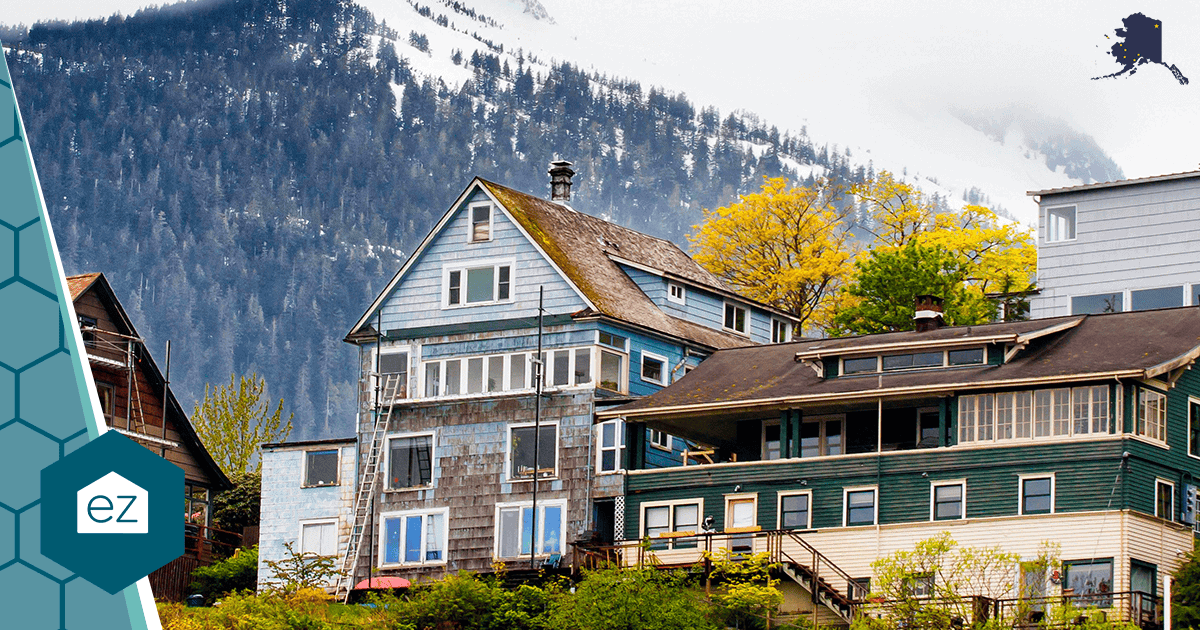
Prices have climbed hard while new supply stayed thin. The average single-family home in Alaska sold for $459,089 in 2024, and the cost of owning a home in the state rose 52% between 2018 and 2024 while rents rose 24% (Alaska Housing Finance Corporation, via Alaska Public Media, 2025). Builders added only about 2,187 housing units in 2024, so the inventory that does come to market moves under real competition. For agents, that scarcity makes listings the prize, and it makes the relationships that produce listings worth protecting.
Population is steady, with a small, persistent net outflow. Alaska grew about 0.3% from 2023 to 2024, as births and more than 4,000 international arrivals slightly outpaced a net loss of roughly 1,163 people to other states (Alaska Department of Labor and Workforce Development, 2025). Net migration has run modestly negative for over a decade, but the numbers are small against a population near 740,000, and the market is not shrinking. The practical point for an agent is narrow: a small share of past clients will eventually move out of state, so it is worth keeping them rather than losing them when they do.
Inside the state, the growth is moving to the Mat-Su. The Matanuska-Susitna Borough has averaged 3.4% annual growth over 25 years against 1.2% for the state, fed largely by households priced out of Anchorage who move north to Wasilla, Palmer, and the Knik-Fairview area (Alaska Business Magazine, 2024). Buyer demand in Southcentral is not disappearing; it is relocating across a borough line, and the agent who can follow it captures it.
The job base is broader than the oil headlines suggest. Alaska added about 7,700 jobs in 2024, led by construction and health care, with oil and gas and federal government also gaining, even as seafood processing pulled manufacturing down (Alaska Department of Labor and Workforce Development; U.S. Bureau of Labor Statistics, 2024 to 2025). On the North Slope, ConocoPhillips’ Willow project is designed to peak near 180,000 barrels a day and is expected to send roughly $1.2 billion in property taxes to the North Slope Borough over time (Alaska Beacon, 2025). Different sectors mean different buyers: a Slope worker on rotation, a Fairbanks soldier, a Kenai nurse, and a Kodiak processor are not the same client.
The tax picture is genuinely unusual, and buyers feel it. Alaska levies no state income tax and no statewide sales tax. Local sales taxes run from 1% to 7% in the municipalities that charge them, and property tax falls in only 15 of the 19 boroughs, averaging 0.94% in 2024, from a low near 0.01% in the Kusilvak Census Area to 1.17% in Anchorage (Tax Foundation; Alaska Office of the State Assessor, 2024). The annual Permanent Fund Dividend, $1,702 per resident in 2024, lands in the fall and gives many households a predictable seasonal lift in buying power (Alaska Department of Revenue, 2024).
The selling season is short and the calendar is unforgiving. Transactions cluster in the brief Alaska summer and thin out through a long winter. A lead system that only works when the sun does will starve a team for half the year, which is one more reason consistency matters more here than raw volume.
Alaska has boroughs, not counties, and they are the size of states

Alaska does not have counties, and any lead plan built for the Lower 48 has to account for that before anything else. The state is divided into 19 organized boroughs and 11 census areas inside the Unorganized Borough, which the U.S. Census Bureau counts as 30 county-equivalents in all (U.S. Census Bureau). Seven of them, including Anchorage, Juneau, and Sitka, are consolidated city-boroughs. The practical point for an agent is scale: a single Alaska borough can be larger than most states, and the North Slope Borough alone is bigger than 39 of them.
That scale changes what “covering your market” even means. Many communities sit off the road system entirely. Juneau, the state capital, is the only capital in the country with no road access at all; you reach it by air or by the Alaska Marine Highway ferry (Travel Alaska). You do not door-knock your way across that kind of geography. It is a structural problem, and it rewards an agent who owns the whole territory rather than one renting a slice of it.
Most of the state’s people, and most of its transactions, concentrate in a short list of boroughs.
| Rank | Borough or census area | Population (2024) | Principal cities |
|---|---|---|---|
| 1 | Municipality of Anchorage | 288,976 | Anchorage (incl. Eagle River, Girdwood) |
| 2 | Matanuska-Susitna Borough | 112,988 | Palmer, Wasilla, Houston |
| 3 | Fairbanks North Star Borough | 95,460 | Fairbanks, North Pole |
| 4 | Kenai Peninsula Borough | 60,413 | Soldotna, Kenai, Homer, Seward |
| 5 | City and Borough of Juneau | 31,794 | Juneau |
| 6 | Bethel Census Area | 18,394 | Bethel |
| 7 | Ketchikan Gateway Borough | 13,768 | Ketchikan |
| 8 | Kodiak Island Borough | 12,771 | Kodiak |
| 9 | North Slope Borough | 10,810 | Utqiagvik, Deadhorse (Prudhoe Bay) |
| 10 | Nome Census Area | 9,866 | Nome |
Source: U.S. Census Bureau, 2024 American Community Survey 5-Year Estimates.
Below the top ten, Sitka, the Kusilvak Census Area, the Northwest Arctic Borough, the Southeast Fairbanks Census Area, and the Chugach Census Area each add thousands more residents and their own distinct markets. The geography is wide, but the population is concentrated enough that a focused team can genuinely own a borough’s worth of it.
How Alaska’s regions diverge, and why one lead strategy cannot cover them
Alaska’s regions run on different economies, and that is the clearest argument against a single, shared lead funnel for the whole state. What pulls a buyer into the Mat-Su has nothing to do with what keeps a household in Unalaska or Utqiagvik.
| Region | Core boroughs and areas | What is happening |
|---|---|---|
| Southcentral | Anchorage, Mat-Su, Kenai Peninsula | The state’s population center; growth is shifting to the Mat-Su as Anchorage-priced-out households move north (Alaska Business Magazine, 2024). |
| Interior | Fairbanks North Star, Denali, Southeast Fairbanks | Anchored by the military at Fort Wainwright and Eielson; permanent-change-of-station moves drive a steady buy, sell, and VA-loan cycle. |
| Southeast (Panhandle) | Juneau, Ketchikan, Sitka, Petersburg, Wrangell | Record cruise visitation, near 1.7 million passengers in Juneau in 2025, alongside a resident population projected to fall about 17% by 2050 (KTOO, 2024; Travel Weekly, 2025). |
| Gulf Coast and Kodiak | Kodiak Island, Chugach (Valdez, Cordova) | A fishing and oil-transport economy; Kodiak ranks among the top U.S. fishing ports and Valdez is the marine terminus of the trans-Alaska pipeline. |
| Southwest and Aleutians | Aleutians West and East, Bristol Bay, Dillingham, Bethel | Seafood-dependent; Unalaska’s Port of Dutch Harbor has been the nation’s number-one fishing port by volume for more than 25 years (NOAA Fisheries, 2024). |
| Arctic and Far North | North Slope, Northwest Arctic, Nome | Oil and mining fund large boroughs spread across road-less terrain; the Willow project will add North Slope property-tax revenue for decades (Alaska Beacon, 2025). |
A shared lead bought from a legacy real estate portal does not know any of this. It arrives the same way in Ketchikan as it does in Wasilla, scored on clicks rather than on whether the person is a relocating soldier, a priced-out Anchorage family, or a Bristol Bay processor thinking about a first home. An agent who knows the region reads those signals instinctively. The trouble is getting in front of the right person in the first place, and doing it consistently across a market this varied.
The Alaska markets most lead sources never reach
The boroughs beyond the main metros are where shared lead sources thin out almost completely, and where a local expert who owns the territory has the clearest advantage. Many of these communities are reachable only by plane or barge, financing works differently, and a national lead vendor has little reason to send anyone there at all.
| Borough or census area | Communities |
|---|---|
| Kodiak Island Borough | Kodiak, Old Harbor, Port Lions, Larsen Bay |
| Nome Census Area | Nome, Unalakleet, Gambell, Savoonga |
| North Slope Borough | Utqiagvik, Nuiqsut, Point Hope, Kaktovik |
| Northwest Arctic Borough | Kotzebue, Kiana, Noorvik, Selawik |
| Aleutians West Census Area | Unalaska (Dutch Harbor), Adak, St. Paul, Atka |
| Aleutians East Borough | Sand Point, King Cove, Cold Bay, Akutan |
| Prince of Wales-Hyder Census Area | Craig, Klawock, Thorne Bay, Hydaburg |
| Chugach Census Area | Valdez, Cordova, Whittier |
| Southeast Fairbanks Census Area | Delta Junction, Tok, Deltana |
| Dillingham Census Area | Dillingham, Togiak, Aleknagik, Manokotak |
These are not throwaway markets. They are homes that get bought, sold, inherited, and refinanced, often by the same families across decades, with far fewer agents competing for the relationship. The barrier has always been reach: no single agent can afford to market across that footprint alone. That is precisely the gap a platform built for the whole state can close. The reach gap is not only about communities inside Alaska, either, because some of the demand now starts well outside it.
Some of Alaska’s buyers have never lived here
A growing share of interest in Alaska real estate comes from people who do not live in the state, and that is a lead segment a borough’s local expert wants to own early.
The established version is the out-of-state land buyer. Alaska has one of the highest shares of seasonal, recreational, and occasional-use homes in the country, around 9% of its housing stock, third behind only Maine and Vermont (U.S. Census Bureau, 2020). Buyers from the Lower 48 come for remote recreational parcels, off-grid cabins, and second homes, drawn by privacy, scenery, and space they cannot find where they live. Most of these purchases are cash, because conventional, FHA, VA, and USDA loans rarely fund a remote, uninhabitable cabin, so the buyers move quickly and the usual mortgage-lead funnels never see them. What they need is a local expert who knows which parcels have real access, water, and resale value, which is exactly what a shared portal lead cannot give them.
The newer version is the one people are starting to talk about: working from Alaska. Other national real estate research, and our own research, show inbound interest in Alaska climbing sharply over the past few years, among the largest jumps in the country, as remote and hybrid workers weigh a cabin with a view against another year of a Lower-48 commute. Satellite internet like Starlink has taken away the old barrier, making it realistic to live and work from places off the road system that had no usable connection a few years ago. The honest read is that this is still mostly interest. Alaska has continued to see more residents leave than arrive in recent years, so the inbound demand has not yet grown enough to offset that out-migration. It is real and it is growing, and it is the kind of early signal a local expert wants to be positioned for before it becomes obvious to everyone.
Neither group is easy to reach with the usual toolkit. A shared portal lead does not surface the Texas buyer quietly researching a fishing cabin, and an IDX brochure does not stay in front of the remote worker who is still a year from deciding. To capture demand that begins outside Alaska, you need a platform that reaches those searchers wherever they are and a recognized local name ready for them when they decide.
How Alaska agents try to win listings today, and where it breaks down
Most Alaska agents are already working hard at lead generation, and the common methods all do something useful before they hit a ceiling. It is worth being honest about both halves.
Shared leads from legacy portals put names in a pipeline quickly, and for a brand-new agent that can feel like progress. The catch is ownership. Those leads are rented, not owned, often sold to several agents at once, and priced so that a strong month of activity becomes a bigger bill rather than a bigger business. You are paying to compete for a cold name that three other agents are also dialing.
A do-it-yourself IDX website gives a team its own front door, and that instinct is right. The reality is that an IDX site is a slow, expensive asset to build and keep current, the data behind it is costly, and for a market the size of Alaska it rarely earns back what it takes to maintain. It ages into a brochure that updates more slowly than the market it is supposed to track.
Cold calling, circle prospecting, and farming a neighborhood still work, and in Anchorage plenty of agents farm areas like Hillside East, Oceanview, and Rogers Park with real discipline. The limit is time. An agent who prospects by phone also quietly steps into the legal position of a telemarketer, where the burden of proving consent falls on the caller, and a single disputed number can become a costly problem.
Direct mail, sphere texting, predictive-seller tools, generic all-in-one CRMs, and paid ads each solve a sliver of the problem. None of them is a place a past client returns to on their own, and none of them makes you the name your whole sphere thinks of first. They also fade quietly, as phone numbers and email addresses go stale and the list you built last year reaches fewer people this year. That is the gap.
The mechanism that changes the math is not another lead source bolted on top. It is a different model for where leads come from and who owns them. ez Home Search calls it the confidential, Single Local Expert model: instead of a shared cold name scored on clicks, a buyer or seller engages a home-search experience they trust, and is connected to one vetted local expert chosen because they fit, not because they paid the most to be in the rotation. That difference is what the rest of the article is about.
What owning your borough actually changes for an Alaska team

A capable Alaska team can already do a lot of this on its own. It can stand up an IDX site, run a CRM, mail its farm, and work its referrals. The real questions are whether all of that pencils for a market this small, and whether it adds up to a position no competitor can take. That is what an Exclusive Borough Partnership is built to change, and it is worth being precise about what it changes and what it does not.
The first change is the one a team cannot build for itself, which is exclusivity. The Exclusive Borough Partnership is ez Home Search’s Exclusive County Partnership applied to a state that runs on boroughs and census areas, and it gives one agent, team, or brokerage an entire borough, co-branded across a home-search experience consumers across the country already use, with no competing ez Home Search partner inside it. The opportunities that come through your borough are yours, with no charge per lead and no share of your commission. You are not buying cold names that three other agents are dialing at the same time; you hold the territory.
The second is the connection that model produces: a warm, chosen match with one local expert, not a shared name dialed by everyone at once. Connections that begin that way tend to convert over roughly 30 to 60 days rather than going cold, and ez Home Search’s national coverage carries the advantage in both directions, so you keep the client who moves to the Lower 48 and you are the local name an out-of-state buyer reaches when they start searching your borough from afar. The confidential, one-expert model and that national reach are the parts a team cannot reproduce by buying more leads.
Most of the rest is economics. The home-value updates and listing alerts that keep a past-client database warm, the automated follow-up through ezNurture, the lead-capture tools, and the consent and compliance checks on outreach through ezVerify.ai (opt-in proof, a saved recording, known-litigator and Do Not Call screening, never a lead score) all arrive built, co-branded, and included in one predictable fee. A team could assemble its own versions of these, but for a population the size of a single Lower-48 suburb that rarely pays for itself, and here they are already running on day one, putting the sphere you have already earned back to work without another system to manage.
Before going further, it is worth seeing whether your borough is still available, because only one partner holds each one.
Securing a borough before it is taken
Only one partner can hold a borough, which makes timing part of the decision in Alaska more than almost anywhere. The same exclusivity that protects you once you are in also means the territory you want may already belong to someone else, and more boroughs are claimed every month. Because Alaska’s boroughs are so large, holding one is closer to holding a region than a neighborhood, and the recognized local name in a territory that size is hard for any competitor to dislodge from the outside.
The engine behind it is ready to run the day you start. You step onto a platform that consumers across the country already use, with your brand on it, and the search, the valuations, the alerts, and the follow-up work from day one. Nothing waits on setup, and nothing needs a hand to keep running. For a team that has spent years trying to assemble this piece by piece, the difference is starting with the whole system already built.
The choice an Alaska team is really making
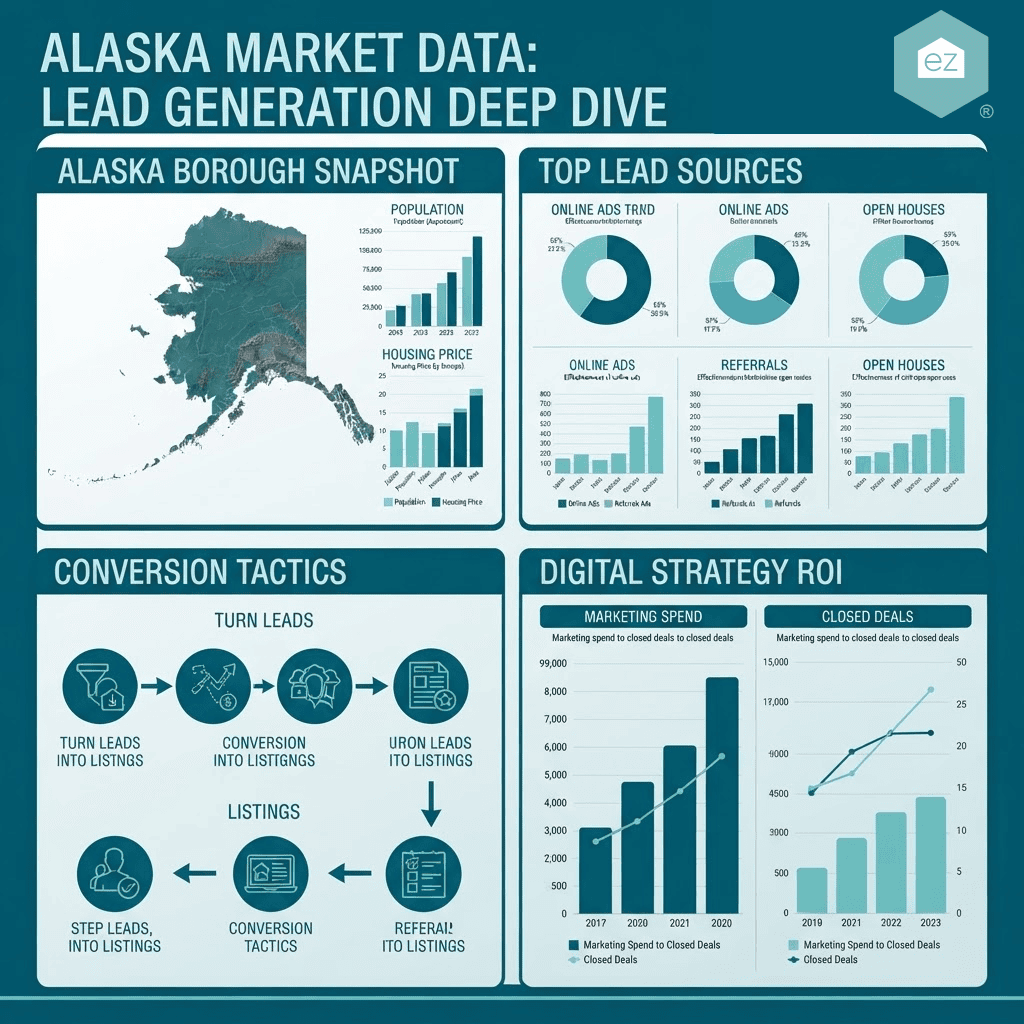
The decision in front of an Alaska brokerage is not whether to generate more leads. It is which of three paths to take. The first is to keep renting shared, cold leads you do not own, competing for each one against several other agents. The second is to build and run your own national-grade search, data, and follow-up stack for a small market, which almost no single team can justify or sustain. The third is to own your borough on a platform that already does all of it, where the leads are yours and the clients you earn keep coming back.
The honest trade-off is real and worth naming. Only one partner holds a borough, so not every team in a market can take this path, and the warm connections it produces convert over 30 to 60 days rather than overnight. That is the cost of leads you own outright and relationships that last across years and moves, instead of cold names you rent by the month.
Here is the proof that matters most: ez Home Search partners reactivate their past clients, by repeat business and referral, at 2.5 to 5 times the market rate. For an Alaska team, that is the difference between starting each year from scratch and compounding the sphere you have already built.
Check whether your Alaska borough is still available, and claim it before another team does.
Frequently asked questions
How can an Alaska agent keep a client who gets PCS orders out of JBER or Fort Wainwright?
The move is to stay the source the client searches on after they leave, instead of losing them to a legacy portal the moment they look at homes in the new duty station. On ez Home Search, a relocating client keeps using your co-branded search, and their activity in the new market surfaces to you as an early signal. That lets you reach out before the home they are leaving is listed, win that listing, and refer them onward for a referral fee. Military rotation through Anchorage and Fairbanks is constant, so building this retention into how you work turns a recurring loss into a recurring source of listings.
Where are buyers priced out of Anchorage moving, and how do agents reach them in the Mat-Su?
Most are moving north into the Matanuska-Susitna Borough, to Wasilla, Palmer, and the fast-growing Knik-Fairview area, which has grown far faster than the state for years (Alaska Business Magazine, 2024). To reach them, you hold both the territory they are moving into and the one they are leaving, so the same relationship carries across the borough line. An Exclusive Borough Partnership in the Mat-Su, or in both Anchorage and the Mat-Su, captures that demand instead of handing it to whichever agent the buyer stumbles onto next.
How do you stay in front of an Alaska past client who relocates to the Lower 48?
National coverage is what makes this possible. Because ez Home Search works in every state, a past client who leaves Alaska keeps searching on your co-branded platform rather than disappearing onto a legacy portal, and their searches signal that a move is underway. You stay in the relationship, you have the conversation about selling their Alaska home, and you refer them to a vetted agent in their new market. Alaska’s net out-migration is modest but persistent, so a handful of your past clients will leave the state each year (Alaska Department of Labor and Workforce Development, 2025). It is worth keeping those clients, but this is a safeguard, not the whole business.
What is the best way to generate listing leads across boroughs and bush communities with no road connection?
Shared lead vendors barely serve communities reachable only by plane or barge, which leaves them wide open to an agent who actually owns the territory. A co-branded, statewide search experience reaches those households where a national lead funnel will not, and keeps them engaged with home-value updates and alerts year-round. When you hold the borough rather than buy scattered leads inside it, covering places like the Kenai Peninsula’s smaller communities, Kodiak Island, or the Nome area becomes economically possible for one team.
Can one agent or team realistically own lead generation for an entire Alaska borough the size of a small state?
Yes, and the scale is the point. Alaska’s population concentrates in a short list of boroughs, so a focused team can become the recognized name across one of them, and the National Association of Realtors finds that most sellers contact only one agent before choosing. With ez Home Search running the search, the data, the alerts, and the follow-up, a single team can carry a borough-sized territory without building any of that themselves. Only one partner holds each borough, so the position, once taken, is yours alone.
How should an Anchorage or Fairbanks team handle the short summer selling season and the long winter slowdown?
The answer is a system that keeps relationships warm through the slow months instead of restarting from cold every spring. ez Home Search keeps a partner’s database and sphere engaged year-round with co-branded home-value updates, listing alerts, and a search experience people return to on their own, and ezNurture handles automated follow-up so contacts stay warm through winter. When the short Alaska selling season opens, you are talking to people who have been engaged for months, not chasing names from scratch.

Kurt Uhlir is a recognized leader in marketing, growth, and innovation, having helped scale companies and technologies used by millions every day—including at brands like eXp Realty, Sideqik, Vitrue, Oracle, Garmin, Facebook, Meta, Apple, and more. He’s trained tens of thousands of professionals on how to build trust, lead with service, and help clients make wise, informed decisions. At ez Home Search and Sure Send, his focus is on helping high-performing business owners, team leaders, and individual sales leaders grow their businesses through exclusive market access, privacy-first lead systems, and conversion-focused enablement tools.