

Florida just posted the largest home-price decline of any state in 2025, and that single headline is sending agents the wrong signal about where the Florida real estate leads actually are. The FHFA House Price Index put the state at minus 2.7% for the year and named Cape Coral-Fort Myers the steepest-falling metro in the country at minus 9.1%. Read only that line and you would think the market is in retreat.
It is not. Florida added 196,680 residents in the year ending July 2025, the second-most of any state, and statewide single-family sales rose for the first time in three years. The mistake most agents make in Florida is treating it as one market. It is at least six, each pulling in a different direction at the same time, and the agents who generate the most listings and buyers here are not the ones chasing the cheapest lead. They are the ones who own a county and work both sides of a market that is turning right now.

Where the Florida real estate market actually stands now
Florida prices went flat, not down, and the froth that defined 2021 and 2022 has drained out. The statewide median for an existing single-family home finished 2025 at $413,990, down just 1.4% for the year, while the condo-townhouse median settled at $310,000 (Florida Realtors, year-end 2025). The single-family median now sits a little under its April 2024 peak and roughly half again above where it stood in March 2020. This is a market that climbed a mountain and is now holding its altitude, not falling off it.
The clearest evidence the speculative premium is gone comes from the FAU/FIU overvaluation index, which measures how far a metro’s prices sit above their own long-run trend. In late 2022, Cape Coral was the most overvalued housing market in America at a 62% premium. By January 2025 the same index had Florida’s metros back in the national middle of the pack: Orlando around 13% over trend, Miami 12.5%, Tampa 11.6%, Cape Coral down to 8%. A normalizing market is not a problem for an agent. It is the moment buyers who were priced out start coming back, and sellers who were holding for a 2022 number finally get realistic.
Three forces are loosening underneath those prices, and each one is a lead in disguise.
Inventory has normalized and split in two. Single-family supply ended 2025 at 4.6 months, a balanced market, while condo-townhouse supply ran to 8.8 months, a buyer’s market (Florida Realtors). The two segments now call for completely different playbooks, which I will come back to.
The affordable bottom of the market has disappeared, which pushes the opportunity up the ladder. In 2014, homes priced under $200,000 made up 49% of all Florida sales and homes over $500,000 just 9%. By 2024 the under-$200,000 share had collapsed to 6% and the over-$500,000 share had climbed to 36% (OPPAGA, 2025). That single shift rewrites a Florida lead strategy: the volume is no longer in starter homes, it is in move-up buyers, equity-rich sellers, and relocations. It also explains why new supply has tilted hard toward rentals. Florida built roughly 77,000 multifamily units in 2024, a 20-year high, while single-family starts turned negative for the first time since the 2006 to 2009 crash (Shimberg Center; Florida EDR).
Money is getting cheaper, too. The documentary stamp tax, the fee Florida collects on real-estate transactions and a clean proxy for deal volume, is forecast to recover to $3.83 billion in fiscal 2025-26, up 3.4% after a brutal two-year drop (Florida EDR). Thirty-year mortgage rates had eased to around 6.2% by December 2025, and state economists flagged that a move to roughly 6% could touch off a wave of refinancing. For an agent, a refinance is a conversation, and a conversation is a future listing.
Then there is migration, which Florida agents tend to either over-celebrate or, lately, over-mourn. The honest version is more useful. Net domestic migration cooled sharply, to 22,517 in the year ending July 2025 from 310,892 in 2022, dropping Florida to eighth among the states. But net international migration led the entire country at 178,674, and that is what carried the state to its second-place population gain (U.S. Census Bureau, 2025). Florida is still growing; the source of the growth simply changed. For lead generation that cuts both ways on purpose: arrivals are buyers, and the people leaving are listings and relocation business an agent can keep if they see the move coming.
Florida’s ten largest counties and where the people are
Most of the state’s transactions concentrate in ten counties. Two details keep your farming and your ad targeting honest: which principal city anchors each county, and where the county seat differs from the largest city.
| County | Principal (largest) city | Population (2024) | Region |
|---|---|---|---|
| Miami-Dade | Miami | 2,774,841 | South Florida |
| Broward | Fort Lauderdale | 1,981,888 | South Florida |
| Hillsborough | Tampa | 1,560,449 | Tampa Bay |
| Palm Beach | West Palm Beach | 1,545,905 | South Florida |
| Orange | Orlando | 1,511,568 | Central Florida |
| Duval | Jacksonville | 1,062,593 | Northeast Florida |
| Pinellas | St. Petersburg (seat: Clearwater) | 971,218 | Tampa Bay |
| Lee | Cape Coral (seat: Fort Myers) | 827,016 | Southwest Florida |
| Polk | Lakeland (seat: Bartow) | 826,090 | Central Florida |
| Brevard | Palm Bay (seat: Titusville) | 653,703 | Space Coast |
County populations: Florida Office of Economic and Demographic Research, April 1, 2024.
If your county is on this list, you are competing in a crowded, high-volume market where being the recognized name matters more than being the fastest dialer. If it is not, you may be sitting on an underserved territory where a single strong agent can own the conversation. Either way, the first move is the same: see whether your Florida county is still available.
The two forces reshaping every Florida deal: insurance and condos
Two things make a Florida transaction harder than a transaction almost anywhere else, and both are finally turning in the agent’s favor. Name them early in a client relationship and you look like the local expert you are.
The first is property insurance. Florida premiums remain the most expensive in the nation, on the order of two to three times the national average, and the damage to a deal usually shows up at the worst moment. A lender folds the annual premium into the monthly escrow payment, the higher payment pushes the buyer’s debt-to-income ratio past the loan’s ceiling, and an approved buyer becomes an unapproved one days before closing. The fix is not dramatic, it is procedural: get an insurance quote in hand before the offer, and steer buyers toward wind-mitigated homes with a newer roof and updated systems, which now command a real premium because they are cheaper to insure.
The relief is real and worth telling clients about. After Florida’s 2022 and 2023 tort reforms cut the litigation that drove carriers out, the state-backed insurer Citizens shrank to roughly 430,000 policies by the end of 2025, its lowest count since 2018, and filed for its first average rate decrease in more than a decade, about 2.6% statewide for 2026 (Citizens Property Insurance). Nearly half of its personal-lines customers are in line for cuts around 11.5%. An agent who can explain that insurance is easing, with the numbers, calms the single biggest fear a Florida buyer carries into the deal.
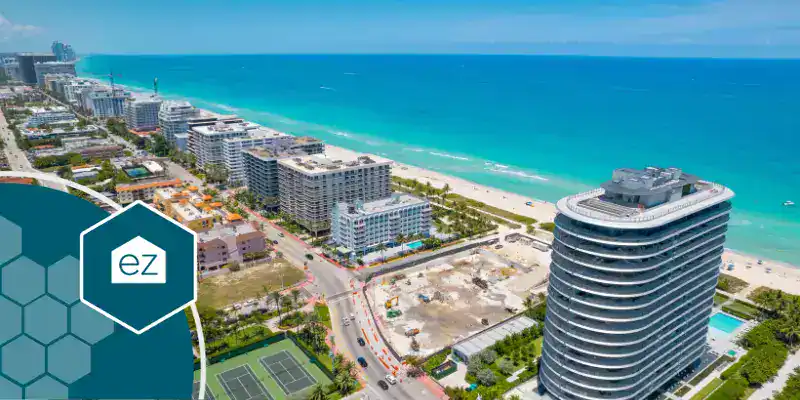
The second force is the condo market, and it is a story unto itself. After the Surfside collapse, Senate Bill 4-D required older buildings to complete milestone structural inspections and forced condo associations to fully fund their reserves, with the first inspection deadline at the end of 2024. The result was a wave of special assessments, many exceeding $100,000 a unit, and a flood of listings. Florida condo inventory rose about 37% year over year, and Broward County hit 9.84 months of supply in January 2025, its highest since the last housing crash (Florida Policy Project). The market split cleanly: newer buildings kept selling while units in buildings 25 years and older stalled. For an agent, that means a condo listing now lives or dies on disclosure. Front-load the reserve study, the inspection status, and any pending assessment, and lean your buyer-side business toward the newer inventory that still moves.
Taxes are the quiet offset to both. Florida’s Save Our Homes cap holds a homesteaded property’s assessed value to a 3% annual increase, and 2024’s Amendment 5 now indexes the second homestead exemption to inflation, trimming the tax bill a little more each year. This is where ez Home Search’s automated valuation model (AVM), built to be the most accurate available, plus its property-tax depth, earns its keep: it lets a partner show a buyer the true monthly cost of a home, price plus insurance plus taxes, instead of a sticker price that hides two of the three. Buyers who understand the real number make offers that hold together, and offers that hold together are closings.
Check whether your county is open and see the tools your competitors are using.
Florida is six markets, and lead strategy changes with each
The single most useful thing to internalize about Florida is that its regions are on different clocks. A pricing or inventory move that is true in Fort Myers is the opposite of what is happening in Pensacola. Here is the short version of where each region sat in 2025.
| Region | Anchor counties | 2025 trend |
|---|---|---|
| South Florida | Miami-Dade, Broward, Palm Beach | Condo overhang the dominant story; Broward supply near 10 months; finance and international demand hold the single-family base |
| Tampa Bay | Hillsborough, Pinellas, Pasco | Shifted to a balanced-to-buyer’s market as inventory rebuilt and days on market lengthened |
| Central Florida / Orlando | Orange, Osceola, Seminole, Lake | Fastest sustained growth in the state; Osceola, Lake, and Polk drawing both families and retirees |
| Northeast Florida / Jacksonville | Duval, St. Johns, Clay, Nassau | Flipped to a buyer’s market in 2025; active listings nearly doubled year over year |
| Southwest Florida / Gulf | Lee, Collier, Charlotte, Sarasota, Manatee | The sharpest correction in the state; Cape Coral-Fort Myers was the No. 1 declining U.S. metro |
| Panhandle / Northwest | Escambia, Okaloosa, Walton, Bay, Leon | Split market: beach metros (Panama City, Destin) softened while military-anchored Pensacola held positive |
The jobs map tells you where the durable demand lives, and it is just as varied. South Florida’s “Wall Street South” finance migration is anchoring around projects like Citadel’s roughly $1 billion, 54-story headquarters tower on Brickell, the clearest signal yet that the money is settling in Miami, not visiting. Brevard County rides aerospace and defense on the Space Coast. And Northeast Florida runs on logistics: JAXPORT-related activity supported about 258,800 Florida jobs in 2024, and the port-dependent jobs in the Jacksonville area pay an average of $76,706, well above the statewide average of $60,210 for all occupations (JAXPORT / Martin Associates). Those are not abstractions. They are the household incomes that decide which price bands move in your county, and they tell you whether your next campaign should target a relocating engineer in Melbourne or a port supervisor in Jacksonville.

The practical takeaway is that a statewide lead campaign is almost always weaker than a regional one. The message that converts a cash-heavy luxury buyer in Naples will fall flat on a first-time buyer in Lakeland, and a snowbird seller in Fort Myers needs a different conversation than a relocating family in St. Johns County. The agents winning here localize everything: the ad copy, the saved-search templates, the market updates, and the timing.
The counties and communities beyond Florida’s big metros
A large share of Florida’s growth, and a lot of its still-available lead opportunity, sits outside the ten biggest counties. The interior and the mid-size coastal counties are where master-planned communities are absorbing the buyers priced out of the metros, and where a single agent can still become the name people think of first.
| County | Region | Communities | Why it draws leads |
|---|---|---|---|
| Polk | Central Florida | Lakeland, Winter Haven, Bartow | Affordable I-4 corridor; logistics jobs and younger families |
| Pasco | Tampa Bay | Wesley Chapel, Land O’ Lakes, New Port Richey | Tampa overflow; value-priced new construction |
| Osceola | Central Florida | Kissimmee, St. Cloud, Celebration | High cost-burden and fast growth; first-time and Hispanic buyer demand |
| Marion | North Central | Ocala, Belleview, Dunnellon | Retiree and equestrian draw; affordability relative to the coasts |
| St. Lucie | Treasure Coast | Port St. Lucie, Fort Pierce, Tradition | Master-planned Tradition; relocation and retirement inflow |
| Sumter | Central Florida | Wildwood, Bushnell, The Villages | Nation-leading 55-plus growth, now broadening to families |
| Manatee / Sarasota | Southwest Florida | Bradenton, Lakewood Ranch, Wellen Park, Venice | Top-selling master-planned communities in the country |
| St. Johns | Northeast Florida | St. Augustine, Ponte Vedra Beach, Nocatee | Highest incomes in the region; top-selling Nocatee |
| Charlotte | Southwest Florida | Punta Gorda, Port Charlotte, Babcock Ranch | Solar-town Babcock Ranch; value vs. Naples and Sarasota |
| Okaloosa | Panhandle | Destin, Fort Walton Beach, Crestview | Military stability plus Emerald Coast second homes |
Two patterns in that table are worth a Florida agent’s attention. The first is the cost-burden map. The counties where the largest share of households spend too much of their income on housing are Miami-Dade at 39%, Osceola at 34%, Broward at 33%, Leon at 32%, and Alachua at 31% (OPPAGA, 2025). High cost burden is exactly where down-payment-assistance programs and patient buyer nurture turn renters into buyers over 12 to 24 months, and where Florida’s Hometown Heroes program alone enabled $2.6 billion in first mortgages for 8,300 households in 2024.
The second is The Villages. Sumter County led the entire state in job growth from 2020 to 2024, up 23%, and the area has been the fastest-growing metro in the country. The lazy assumption is that it is all retirees. It is not anymore: the same region recorded one of the nation’s largest increases in children under 15, which means an agent there now serves both the downsizing retiree and the young family chasing affordability. The buyer base most agents think they understand has quietly doubled.
The inland remote-work edge most Florida agents underplay
Remote work did not collapse, and the agents who believe the headlines are leaving listings on the table in Florida’s interior counties. The “remote work is over” story compares today against the spring-2020 emergency peak, which no one ever expected to last. Measured against the real pre-pandemic baseline, working from home has roughly tripled and held there. The Bureau of Labor Statistics counted 36.7 million Americans teleworking at least part of the time in the fourth quarter of 2024, up from 32.5 million a year earlier. The Census Bureau’s survey of 150,000 firms found employers projecting essentially the same level of remote work five years out, which Stanford economist Nick Bloom summarized as “flat as a pancake.” Gallup’s 2025 data show the split among remote-capable workers holding steady at roughly half hybrid and a quarter fully remote.
That durability shows up on the ground as migration into affordable, lifestyle-rich places, and Florida’s interior is built for it. The USDA found that rural counties nationally gained 974,000 net migrants from 2020 to 2024, concentrated in working-age adults 25 to 44, the remote-eligible group. In Florida, the counties positioned to capture that demand are the affordable inland ones: Polk and its Lakeland-Winter Haven corridor, Pasco north of Tampa, Osceola south of Orlando, Marion around Ocala, and Lake. A buyer earning a Miami or Atlanta salary while living near Ocala is a different, stronger buyer than the local market alone would produce.
For an agent, the edge is knowing what these buyers actually want, because it is specific. A dedicated home office, or a room that closes off for video calls. A separate structure or accessory dwelling unit for a partner who also works from home. More square footage than a commuter would have bought. And real broadband, which in parts of rural Florida is still the deciding factor between two otherwise similar homes. Put “fiber available” and “dedicated office” in the listing and the saved-search alert, and you are speaking directly to a buyer your competitors are not even targeting. This is the quiet counterweight to the migration-cooling story: the people still arriving are often the highest-earning, least price-sensitive buyers in the interior of the state.
What Florida agents do for leads now, and the ceiling each method hits

Most Florida agents are already doing reasonable things to generate leads; the problem is that the best-known methods have structural ceilings, and in a state this competitive the ceiling comes fast. It is worth being fair about what works before naming what does not.
Shared leads from a legacy real estate portal do produce contacts, and for a brand-new agent they can fill a calendar. But the model resells the same buyer or seller to several agents at once, so the work becomes a speed-to-dial contest the moment the lead lands, and the margin erodes every renewal. Your own IDX website is a genuinely smart long-term asset, and some of the best agents in the state have built one; it is also slow and expensive to build, and harder still to rank against established national sites, which is why most solo agents never reach the traffic that justifies the spend. Disciplined agents still cold-call and work a circle-prospecting list, but in Florida that outreach now carries real compliance exposure under the federal Telephone Consumer Protection Act, which puts the burden on whoever dials to prove consent for every single number. A predictive-seller tool ranks a database and flags who might list, which helps, except a ranking is not a relationship, and the agent is left to build the one that converts a flag into a signed listing. Generic all-in-one platforms and do-it-yourself content fill the gaps, at the cost of one more system to run and one more thing to keep current.
The common thread is that every one of these puts the agent at the end of a transaction, competing for a name that other people also have. The mechanism that changes the math is owning the relationship from the first search, not buying it at the end. To rent attention is one business; to own a market is another, and the next section is about the second one.
What changes when you hold an exclusive Florida county

The Exclusive County Partnership hands one Florida county to a single agent, team, or brokerage, with no competing partner inside that territory, co-branded across a consumer platform people already use. The structure is the point: one predictable fee covers it, with no charge per closed lead and no slice of the commission, so a strong month of new business is a strong month for you and not a bigger invoice. Every buyer and seller in your county is matched to you, not auctioned to the five fastest dialers.
What makes those connections convert is the model underneath them. ez Home Search is The Only Confidential Home Search: a consumer’s contact details and budget are never sold, recycled, or broadcast to a roomful of businesses they did not choose. The partner who holds the county becomes that person’s Single Local Expert. Because the search is private and genuinely useful, people engage honestly and stay for years, and the partner meets them as a warm, chosen connection with real activity behind it rather than a cold name. The county exclusivity partners we work with consistently tell us the same thing: leads that arrive this way convert in the 30-to-60-day window far more often than the recycled leads they used to chase. That is the whole difference between a contact and a client.
Three pieces of the partnership map directly onto the Florida pains already covered.
Relocation is the one Florida agents lose the most money to, and the one national coverage fixes. With one in twenty Americans relocating across a county or state line each year, and Florida’s churn running higher than most because of snowbirds, international buyers, and Canadian owners now selling, a past client planning a move usually wanders onto a legacy portal, ends up with a stranger in the new market, and quietly lists the Florida home with whoever they found there. ez Home Search has national coverage, so that client keeps searching on your co-branded platform, and their activity in another market surfaces as an early signal. You learn about the move while the Florida listing is still in play, not after it is gone.
Database reactivation is the cheapest business most agents ignore. Across the CRM rollouts I have led for organizations serving tens of thousands of agents, the same truth holds everywhere: the contacts an agent already earned outperform any cold source, and they decay the moment follow-up stops. In Florida, where so many owners are rate-locked and not moving this year but will, a co-branded home search and monthly value updates keep that database warm on its own. ez Home Search partners see reactivation run 2.5 to 5 times the market rate, repeat and referral business that would otherwise stay cold.
Compliance is handled rather than feared. ezVerify.ai confirms the opt-in, holds the recording that documents that consent, checks each number against a known-litigator database ahead of any dial, and suppresses anything on the Do Not Call registry, all while filling in the contact details a prospector would otherwise dig up one by one. None of that is a lead score. It is proof, and it turns the riskiest part of prospecting into a call you can make with confidence.
Around those three sit the rest of the system the partner never has to build: the AVM and home-value pages that keep owners coming back, the listing alerts and newsletters that carry your brand, ezNurture for automated follow-up inside the largest agent CRMs, and the conversion tools that work from day one because the platform behind them already runs at national scale. See whether your county is still open.
Securing a Florida county before it is taken
A county belongs to one partner at a time, which is the source of the position’s value and also its only catch. Many of Florida’s counties are already claimed, more are taken every month, and when a county is gone it is gone until that partner steps aside. There is no version of this where every agent in a market can hold it; that is exactly why holding it is worth so much.
The upside is that there is nothing to build. Millions of people already use the platform, your name goes on it, and from the first day the search, the home valuations, the listing alerts, and the automated follow-up are all live. The work that would take a single team years and millions of dollars to assemble is simply there, co-branded to you, the moment the county is yours.
The decision in front of you
A Florida agent serious about leads has three real options in front of them. One is to keep buying shared leads and competing on who dials fastest, which works until the renewal bill arrives and the margin is gone. Another is to build the whole thing yourself, the IDX site, the data, the compliance, the content, the follow-up, which a few elite teams pull off and most agents cannot afford in time or money. Between those sits the Exclusive County Partnership: hold one county, own the relationships from the first search, and let a national platform carry the load. Weigh the three honestly and most agents land on the one in the middle.
Here is the trade-off stated plainly, because it is real. Exclusivity cuts both ways: it locks every competitor out of your county, and it locks you out of any county another partner already holds. When yours is taken, it is taken. That scarcity is the reason the position produces, and the reason waiting has a cost.
The proof is in the number that matters most to a working agent. Run this model and past-client reactivation lands 2.5 to 5 times the market rate. That turns a list of names the partner has already earned into the most dependable source of business in the county. In a state that adds 200,000 residents a year and reshuffles a million more across its six markets, the agents who win are not the ones who buy the most leads. They are the ones who own the county those leads come home to. Check whether yours is still available.
Frequently asked questions
Is Florida’s home-insurance crisis easing in 2026, and how do I stop a high premium from killing my buyer’s closing?
It is improving for the first time in years. After the 2022 and 2023 tort reforms, the state-backed insurer Citizens shrank to about 430,000 policies by the end of 2025 and filed for its first average rate cut in over a decade, roughly 2.6% statewide for 2026, with nearly half of its customers in line for larger reductions. Premiums are still the highest in the nation, so the deal risk has not vanished. The way to protect a closing is to get an insurance quote before the offer rather than during underwriting, because the premium folds into the escrow payment and can push a buyer’s debt-to-income ratio past the loan’s limit. Homes with a newer roof and wind-mitigation features also carry lower premiums, so steering buyers toward them removes a common closing-day surprise.
Why are there so many condos for sale in South Florida right now, and how do I sell one with a pending special assessment?
Senate Bill 4-D, passed after the Surfside collapse, required older buildings to complete structural inspections and forced associations to fully fund their reserves, which produced special assessments, often over $100,000 a unit, and a wave of listings. Florida condo inventory rose about 37% in a year, and Broward County reached nearly ten months of supply in early 2025. To sell a unit with a pending assessment, disclose it up front with the reserve study and inspection status, price it with the assessment factored in rather than hoping a buyer overlooks it, and target cash buyers and investors who can absorb the cost, since financing on a non-warrantable building is the first thing to fall through. Newer buildings without these obligations are still moving at normal speed.
Where in Florida are buyers actually purchasing now that the coasts have cooled?
Buyers are moving inland, into Florida’s value markets. As prices on the Gulf Coast corrected, the affordable interior counties along the I-4 corridor and north of the metros absorbed the demand: Polk around Lakeland and Winter Haven, Pasco north of Tampa, Osceola south of Orlando, and Marion around Ocala. These are where new construction is still priced for a first-time or move-up buyer and where remote and hybrid workers earning out-of-market salaries are landing. The Villages area in Sumter County remains a growth standout and now draws families as well as retirees. If your county is on the coast, your leads skew toward equity sellers and relocations; if it is inland, they skew toward first-time and move-up buyers.
Are people still moving to Florida, or is migration reversing?
People are still arriving; the source changed. Net domestic migration cooled hard, to about 22,500 in the year ending July 2025 from over 310,000 in 2022, which is why the “everyone is leaving Florida” stories took off. But net international migration led the country at nearly 179,000, and the state still added 196,680 residents overall, the second-most of any state. Florida is growing, not emptying. For an agent that means two live pipelines at once: international and out-of-state arrivals on the buy side, and domestic movers leaving on the sell side, the listings you keep only if you see the move coming.
Why did Cape Coral and Southwest Florida prices fall so much more than the rest of the state?
Southwest Florida ran up the fastest in 2021 and 2022, so it had the most froth to give back, and it carries the heaviest insurance and hurricane-risk burden after Hurricane Ian. The FHFA ranked Cape Coral-Fort Myers the single steepest-declining metro in the country in 2025 at minus 9.1%, and Collier and Charlotte counties softened alongside it. For a Southwest Florida agent that correction is a buying opportunity to market to clients who were priced out at the peak, and a reason to coach sellers off 2022 expectations with real comparable data rather than hope. The region’s underlying demand, retirees and second-home buyers, has not gone away.
How do the Save Our Homes cap and the new Amendment 5 homestead change affect what I tell buyers about future property taxes?
They are two separate protections that both work in a homesteaded buyer’s favor, and explaining them is an easy way to add value. Save Our Homes caps the annual increase in a homesteaded property’s assessed value at 3%, or the rate of inflation if lower, so a long-term owner’s taxable value rises slowly even when market value jumps. Amendment 5, which voters passed in 2024, now indexes the second $25,000 homestead exemption to inflation, trimming the bill a little more each year. The catch buyers need to hear is that the cap resets when a home changes hands, so a new owner’s first tax bill can be meaningfully higher than the prior owner’s, especially on a home held for many years. Walk a buyer through the real post-sale tax number, alongside the insurance estimate, and you set an offer that survives underwriting.






Kurt Uhlir is a recognized leader in marketing, growth, and innovation, having helped scale companies and technologies used by millions every day—including at brands like eXp Realty, Sideqik, Vitrue, Oracle, Garmin, Facebook, Meta, Apple, and more. He’s trained tens of thousands of professionals on how to build trust, lead with service, and help clients make wise, informed decisions. At ez Home Search and Sure Send, his focus is on helping high-performing business owners, team leaders, and individual sales leaders grow their businesses through exclusive market access, privacy-first lead systems, and conversion-focused enablement tools.