

Puerto Rico has averaged about 10,700 home sales a year since 2014, according to the Office of the Commissioner of Financial Institutions. Census figures for 2020 to 2024 put the island at 1,290,866 households with 67.9% of them owner-occupied, which works out to roughly 876,000 owner households. Divide one into the other and fewer than two owners in a hundred sell in a given year.
Every agent on the island is competing for those two. Almost nobody is working the other ninety-eight. That is why most sources of Puerto Rico real estate leads underperform here: they find people who are already shopping, and on this island almost nobody is.
Rising prices in Puerto Rico have not produced more sales
Volume has not followed price at any point in the last decade. The Office of the Commissioner of Financial Institutions, or OCIF, recorded 11,259 units in 2022, 10,811 in 2023, and 9,995 in 2024, a three-year step down of 17%, 4%, and 7.5% off the stimulus-era peak, then a 2.5% recovery to 10,247 units worth $2.44 billion in 2025. The Federal Housing Finance Agency’s purchase-only index, over that same stretch, rose 14.95% year over year in the fourth quarter of 2025 and 13.41% in that quarter alone. The price line is steep. The volume line is nearly flat.
Residential foreclosures fell 41.6% to 684 units in 2025, after falling 49.4% across 2024. Existing homes made up 92.0% of all transactions in 2025. No single industry carries the payrolls underneath any of it: BLS nonfarm figures for November 2025 put Government at 198,500 jobs, Trade, Transportation and Utilities at 192,900, and Professional and Business Services at 135,900, against a labor force near 1.239 million. DDEC’s 2025 profiles credit pharmaceuticals with 76.6% of exports and tourism with more than 68,000 jobs.
Most market commentary misses that steadiness because it runs two different measures together. Volume is a flow, the count of deals closed over a period. Inventory is a stock, the homes listed at one moment. A tight inventory number says nothing about how many homes changed hands, and the two get read as the same signal constantly.
Why a rate cut will not shake a single listing loose in Puerto Rico
Half of Puerto Rico’s mortgage-free homeowners carry $180 a month or less in owner costs, counting property taxes, insurance, utilities, and any association fees, per the Census Bureau’s 2020 to 2024 American Community Survey. The national median on the same measure is $638. That figure is the most important number on this page for anyone trying to generate seller leads. An owner at $180 a month has no payment to escape, no refinance to chase, and no rate headline that means anything to them.
OCIF puts commercial bank loans secured by family residential property at $11.20 billion at the end of 2025, against $14.39 billion in 2015. Mortgage debt has been draining out of Puerto Rico homeownership for a decade, leaving an owner base with deep equity and almost no carrying cost.
The same Census survey puts owner-occupancy at 67.9% against 65.2% nationally, 94.1% of residents in the same home as a year earlier against roughly 87% nationally, and 26.0% of the population aged 65 and over against roughly 18% nationally. Older, settled, and paid off is a profile that does not respond to market timing.
These owners still move, and the trigger is never the rate. A parent dies and the house passes to three siblings. A couple in their seventies decides the stairs have become a problem. A child gets to a down payment and the parents help. A second property in Cabo Rojo turns from a pleasure into an errand. ez Home Search puts the share of people actively buying or selling at 5% to 10% at any moment, and Puerto Rico sits at the low end of that range. The agent who shows up when the life event lands is the agent who was already there for years.
That is a multi-year position, and it becomes available one municipio at a time. Check whether yours is still open.
The agent who works listings only is forfeiting four clients in five
The National Association of Realtors put first-time buyers at 21% of purchases in the 2025 edition of its Profile of Home Buyers and Sellers, and that is the lowest share since the survey began tracking in 1981. It is a national figure and no clean Puerto Rico equivalent exists, so read it as the anchor it is. Roughly four out of five people buying a home are selling one as part of the same move.
Most agents run those two halves as separate campaigns anyway. One markets “list with me” to owners. The other buys buyer leads. Both are talking to the same person at different points in one move, and the agent who only farms for listings meets that person eighteen months late, after some buyer’s agent has already earned the listing.
Puerto Rico’s own numbers push the point harder than the national ones do. An owner base at 67.9% ownership that stays in place at 94.1% a year does not produce many pure sellers. When someone here finally moves, they are almost always selling and buying in a single act, which means the listing and the purchase were decided together, months before either one showed up as activity.
On any one home the buyer and the seller are different people. Across a move, they are usually the same person, and the sequence runs buy-side first: dreaming, gathering numbers, then planning, long before anything looks like a transaction. ez Home Search reads which side is live from real behavior. A valuation checked twice means the seller conversation is open. Saved searches and opened alerts mean the buy side is moving. The automated valuation model, an AVM, keeps a current number in front of an owner every month, so a quiet browser becomes a listing two years out with the same partner holding both ends.
Which municipio you hold decides whether you work one market or five
Puerto Rico has 78 municipios, the Census Bureau treats each one as a county equivalent, and some of them sit against five neighbors while others stand alone. ez Home Search covers 3,144 counties and county equivalents, so the Exclusive County Partnership here assigns one partner per municipio. One more thing trips up mainland readers: a municipio and its seat almost always share a name, so Ponce the city sits inside Ponce the municipio.
| Municipio | Population, US Census Bureau estimate | Seat | Communities |
|---|---|---|---|
| San Juan | 332,454 | San Juan | Old San Juan, Condado, Santurce, Hato Rey, Río Piedras |
| Bayamón | 181,152 | Bayamón | Santa Juanita, Hermanas Dávila |
| Carolina | 150,679 | Carolina | Isla Verde, Country Club, Villa Carolina |
| Ponce | 129,659 | Ponce | Ponce Playa, La Guancha, Villa Flores |
| Caguas | 124,628 | Caguas | Turabo, Bairoa, Borinquen |
| Guaynabo | 89,405 | Guaynabo | Garden Hills, Torrimar, Frailes |
| Arecibo | 85,971 | Arecibo | Hato Arriba, Islote, Sabana Hoyos |
| Toa Baja | 71,332 | Toa Baja | Levittown, Sabana Seca, Candelaria |
| Mayagüez | 69,044 | Mayagüez | Sultana, Guanajibo, Algarrobos |
| Trujillo Alto | 66,816 | Trujillo Alto | La Gloria, Carraízo |
San Juan, Bayamón, Carolina, Caguas, Guaynabo, and Trujillo Alto sit inside one continuous metropolitan area. A partner holding any one of them works a dense position with the next municipio a few minutes away, and buyers cross those lines all day for work and schools without thinking about it. Ponce, Arecibo, and Mayagüez are the opposite case. Each anchors its own region with no comparable market next door, which makes the recognized name there harder to challenge and slower to lose.
One island, six markets that do not share a playbook
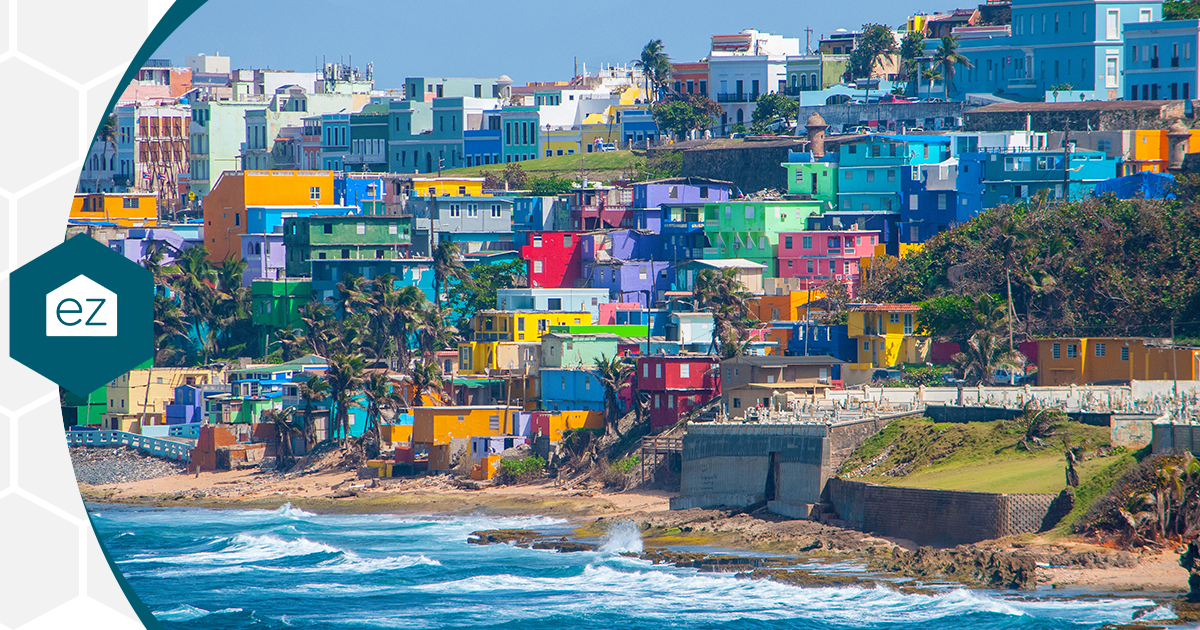
The Puerto Rico Tourism Company sorts all 78 municipios into six regions, and the Census numbers behind them describe six different demand pictures. Porta Capital is the San Juan metro. Porta Atlántico runs the north coast, Porta del Sol the west in a north and a south group, Porta Caribe the south, Porta del Mar the east and the offshore municipios, and Porta Cordillera the central mountains.
| Region | Municipios | What the Census data shows |
|---|---|---|
| Porta Capital (metro) | 10, including San Juan, Bayamón, Carolina, Caguas, Guaynabo, Trujillo Alto, Cataño | Six of the ten most populous municipios sit here |
| Porta Atlántico (north coast) | 11, including Arecibo, Toa Baja, Vega Baja, Dorado, Manatí, Toa Alta | Arecibo at 85,971 and Toa Baja at 71,332 rank in the ten largest; Vega Baja at 53,709 and Dorado at 35,867 carry the rest of the corridor |
| Porta del Sol (west) | 19, including Mayagüez, Aguadilla, Rincón, Isabela, Cabo Rojo, Aguada, Moca, San Germán | Rincón grew from 15,187 residents in the 2020 Census to 15,625 by July 2024, with smaller gains in Isabela and Moca |
| Porta Caribe (south) | 11, including Ponce, Juana Díaz, Guayama, Salinas, Coamo, Santa Isabel | Ponce at 129,659 is the largest municipio outside the metro |
| Porta del Mar (east and offshore) | 15, including Humacao, Fajardo, Río Grande, Luquillo, Naguabo, Vieques, Culebra | No municipio in the ten largest; Humacao at 49,616 leads it, and Vieques and Culebra are reached by ferry or air |
| Porta Cordillera (central mountains) | 12, including Utuado, Jayuya, Adjuntas, Orocovis, Barranquitas, Aibonito, Comerío | No municipio in the ten largest, and three of the island’s few gainers sit here: Barranquitas, Naranjito, Aibonito |
Six of the ten most populous municipios are in Porta Capital, while every municipio that added residents between the 2020 Census and the July 2024 estimates sits in the west or the mountains. The volume is in the metro and the movement is not. Puerto Rico’s population fell over that period, driven mainly by natural decrease: Census components of change for 2024 to 2025 show deaths outnumbering births by roughly 14,900, several times the size of the net migration figure.
A partner in Guaynabo and a partner in Aibonito are running two different businesses. One works a market where buyers arrive from three adjacent municipios and price levels sit far above the island’s $131,500 median owner-occupied value. The other works a market of under 25,000 residents where an arriving household is a meaningful event and the settled owner of thirty years is the listing. Neither is served by the same prospecting calendar or the same script.

A small municipio takes less to own and gives it back longer
Sixty-eight of Puerto Rico’s 78 municipios sit outside the ten largest, and an exclusive position pays back faster in those than anywhere on the island. Utuado and Aibonito each hold fewer residents than one large mainland suburb, so the number of households a partner has to reach before they are the name people think of runs to a few tens of thousands, not a few hundred thousand.
| Municipio | Population, US Census Bureau estimate | Region | Communities |
|---|---|---|---|
| Vega Baja | 53,709 | Porta Atlántico | Puerto Nuevo, Cabo Caribe, Almirante Norte |
| Humacao | 49,616 | Porta del Mar | Palmas del Mar, Punta Santiago, Buena Vista |
| Cabo Rojo | 46,820 | Porta del Sol | Boquerón, Joyuda, Puerto Real |
| Juana Díaz | 46,045 | Porta Caribe | Sabana Llana, Guayabal, Collores |
| Isabela | 43,033 | Porta del Sol | Jobos, Bajura, Guerrero |
| Dorado | 35,867 | Porta Atlántico | Dorado Beach, Higuillar, Mameyal |
| Fajardo | 31,043 | Porta del Mar | Puerto Real, Sardinera, Las Croabas |
| Utuado | 27,155 | Porta Cordillera | Caguana, Don Alonso, Ángeles |
| Aibonito | 24,751 | Porta Cordillera | Asomante, Llanos, Robles |
| Rincón | 15,625 | Porta del Sol | Puntas, Córcega, Ensenada |
ez Home Search built the Exclusive County Partnership to work the same way in large metros, mid-sized markets, and rural areas, because the name an owner already knows decides the listing at any scale. What changes is the cost of earning it. In San Juan an agent competes for attention against everyone else on the island. In Aibonito the position belongs to whoever holds it and does the work.
Six municipios recorded population gains between the 2020 Census and the July 2024 estimates: Rincón, up 2.9% from 15,187 to 15,625, with smaller gains in Isabela, Moca, Barranquitas, Naranjito, and Aibonito. Three of the six are in the table above. Those are small numbers, and they land differently at small scale, because an arriving household in a municipio of 20,000 changes the local market in a way the same household never would in Bayamón.
The mistake is reading a small municipio as a small opportunity. Where fewer than two owners in a hundred sell in a given year, a territory earns its value across a decade of the same name reaching the same owners. Twelve months of transactions is the wrong measuring stick.
Remote work did not die, and it is buying homes in Rincón
In the fourth quarter of 2024, 36.7 million Americans worked at least partly from home, per the Bureau of Labor Statistics, against 32.5 million in the same quarter a year before, and the national telework rate climbed from 20.7% to 23.4% over those twelve months. A Census Bureau survey covering about 150,000 US firms, fielded from November 2024 through January 2025, found 31.2% had someone working a full day from home, and those employers projected the same level five years out. Both figures are national. Headlines calling remote work finished are measuring against spring 2020 instead of against the years before it.
Puerto Rico converts that trend into buyers for a reason that is legal rather than promotional. Puerto Rico is a US jurisdiction, so someone employed by a mainland company can move there and stay on US payroll, keep US banking, and hold professional licenses that still apply. Census figures for 2020 to 2024 put 80.6% of Puerto Rico households on a broadband subscription.
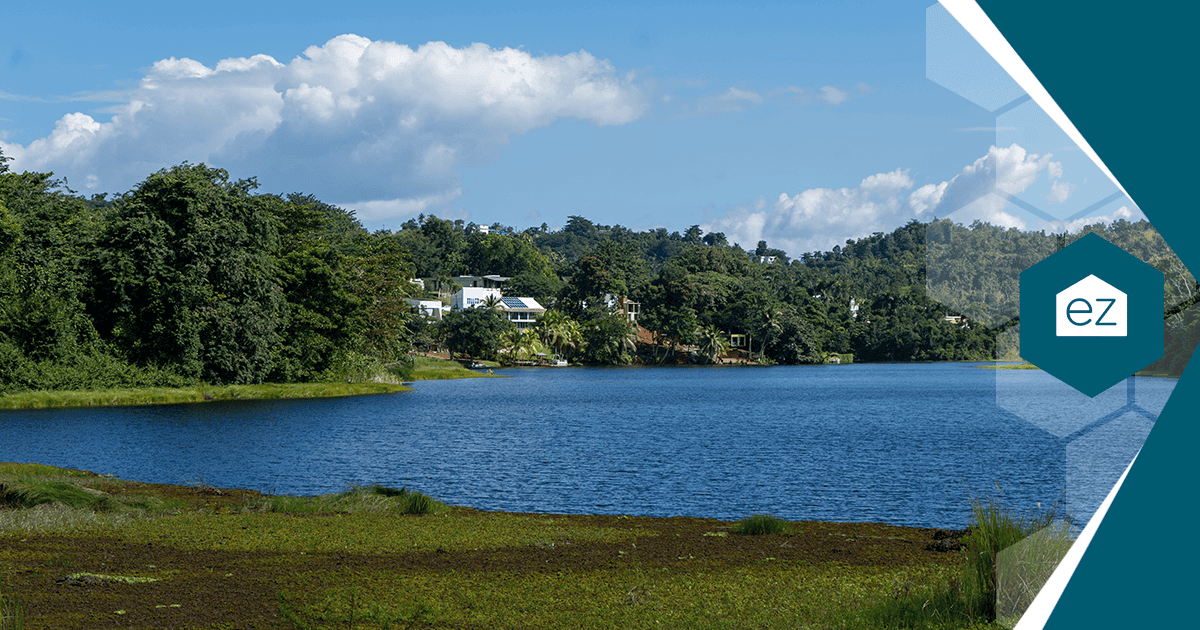
Porta del Sol holds the west coast municipios this buyer looks at first, including Rincón, Isabela, Cabo Rojo, and Aguadilla. Porta del Mar holds the east, including Humacao and Palmas del Mar, Fajardo, and the offshore municipios of Vieques and Culebra. Porta Cordillera holds the mountain municipios, where the same buyer trades ocean access for land. Rincón is where the pattern already shows up in Census data rather than in anecdote.
An agent who knows what this buyer needs can qualify one on a single call. The office comes first, either a room that closes or an accessory dwelling unit, meaning a small second structure on the same lot. Square footage matters next, because a mainland salary buys more of it here. Generator and solar backup come up early, since the work does not pause when the power does. Broadband is the question that ends showings, so bring a tested answer to the tour rather than the number on the listing sheet.
Most agents on the island are not working this buyer at all, which is exactly why the position is available. It takes one conversation to find out whether your municipio is still open.
Mainland arrivals come for the tax treatment and stay for something else
Pew Research Center’s analysis of Census American Community Survey and Puerto Rico Community Survey data found 38,486 people moving from the mainland to Puerto Rico in 2024, against 25,151 moving the other way, a net gain of 13,335. Set the arrivals against roughly 10,700 homes sold in an average year and the inbound flow runs more than three and a half times the island’s entire annual transaction count. The caveats matter: that counts people rather than households, many arrivals rent for a year or more, and a meaningful share are Puerto Ricans coming home. Across the twenty years from 2005 to 2024 the series runs the other direction, toward the mainland, so 2024 is one year inside a long trend and the 25,151 departures are listings in somebody’s market.
Section 933 of the Internal Revenue Code is the federal mechanism, and it is broader than most agents realize. A bona fide resident of Puerto Rico excludes Puerto Rico-source income from US federal gross income, and that applies to bona fide residents generally, not only to people holding a tax decree. The Section 937(a) tests are 183 days of physical presence in the tax year, no tax home outside Puerto Rico, and no closer connection to the United States or a foreign country. Whether a remote worker’s services income counts as Puerto Rico-source is the piece the IRS examines most closely, per Holland & Knight’s November 2025 analysis, and IRS Publication 1321 covers the exclusion itself.
Act 60 is the narrower instrument, a Puerto Rico decree layered on top. It sets 0% on passive income for existing decree holders and 4% for new applicants, and the legislature extended it through December 31, 2055. The requirement an agent should know: a decree holder has to show evidence of buying Puerto Rico real estate as a primary residence within two years of receiving the decree. More than 4,000 grandfathered holders against an owner base near 876,000 households is half a percent, concentrated in Dorado, Guaynabo, Condado, Palmas del Mar, and Rincón. Residency and income-sourcing questions belong with a Puerto Rico tax attorney or CPA.
Every competing page stops at the tax math, and that is where it gets the buyer wrong. Cody Hilbun, a friend of mine from CEO Netweavers, moved his family to Puerto Rico for the tax treatment and still runs Bespoke Capital from there. What he brings up is the community around him and the life his family has built there. I have watched more than dozen friends and colleagues make this same move, and the story repeats every time.
An arriving buyer treated as a transaction closes once and disappears. Treated as a new long-term resident, the same person becomes a repeat client, a second-property buyer, the name their colleagues call when they weigh the same move, and eventually a seller and a buyer again. The commission on the first purchase is the smallest piece of that relationship.
Three things stall Puerto Rico closings that no mainland agent has handled
The Financial Oversight and Management Board for Puerto Rico reported in May 2023 that CRIM, the Centro de Recaudación de Ingresos Municipales, had notified roughly 240,000 properties that were not properly registered, a step it projected would add about $90 million a year in municipal revenue. The same Board recorded about $217 million in past-due property taxes collected under CRIM’s fiscal 2022 relief program. As of that 2023 reporting, a large share of the island’s housing stock carried a registry problem, and at the listing appointment that means an unrecorded addition, a second structure, or a pool can surface mid-sale and put the closing date in question.
Puerto Rico tax practitioners consistently describe assessed values as anchored to a 1957 valuation baseline, with structures built after 1957 assessed as though built then. That is practitioner consensus and it is presented here as consensus, because no single government publication states it outright. The consequence is what an agent can use: on the mainland, a reassessment notice landing in a homeowner’s mail is one of the most dependable listing conversations of the year, and in Puerto Rico that trigger does not exist. Nothing in the tax system tells a Puerto Rico owner what their home is worth.
A Puerto Rico government estimate reported in 2018 put more than half of the island’s houses in the informal category, meaning built without permits and lacking clear title, and the Puerto Rico Department of Housing runs a federally funded Title Clearance Program that registers rightful owners in the Property Registry. Treat that as workflow. A seller may need succession filings and title work finished before the home can transfer, and the agent who raises it at the listing appointment looks like a professional while the agent who finds it during escrow looks like a problem.
The Federal Housing Finance Agency publishes one house price index for all of Puerto Rico rather than a series per metro, which San Juan, Ponce, and Mayagüez all share. An owner in Isabela who asks what homes in Isabela have done over five years cannot be answered from a federal figure, because no federal figure for Isabela exists. That answer comes from local transaction data and a valuation built on it, which is the part an individual agent cannot assemble alone.
What Puerto Rico agents do for leads, and what each approach leaves on the table

Six approaches cover most of the island: shared leads from legacy portals, an IDX site of the agent’s own, cold calling and door knocking, predictive-seller software, an all-in-one CRM the agent configures, and paid social ads. Plenty of agents also farm a single barrio or urbanización by hand, which on this island is often the most productive of the lot. Each of these closes business for someone. Each also has a limit worth naming before an agent spends another year on it.
Shared portal leads deliver volume, and volume matters when an agent needs at-bats. The catch sits in the word shared: the same person’s contact details and budget go to several agents at once. With roughly 10,700 homes changing hands in an average year across a small island, winning on dial speed against three agents who bought the same name is an expensive way to earn a client. An IDX site avoids that entirely and builds an asset the agent owns, which is why so many build one, and it is slow. Search traffic has to be earned in a small island search universe, and the site produces little for a year or two while the bill arrives monthly.
Predictive-seller software does one thing well, which is rank a database by who looks likeliest to list, and what it returns is a name and a score. In Puerto Rico that gap is wider than anywhere on the mainland, because the relationship has to survive years in which the owner does nothing. A score does not survive that. An all-in-one CRM organizes the contacts an agent already has and produces none, and DIY social and paid ads run while the spend holds and stop the week it does not.
An agent prospecting by phone or text falls under the Telephone Consumer Protection Act as a telemarketer from the first dial, and almost nobody prices that exposure. Do Not Call complaints to the FTC ran past 2.6 million in fiscal 2025. When a recipient disputes consent, proof is the caller’s to produce. Each unproven call or text carries $500, a willful violation carries $1,500, and no ceiling caps what the total can reach. ezVerify.ai handles that on every opportunity ez Home Search sends. It captures the opt-in and the recording behind it, checks each number against a known-litigator database, fills in contact detail an agent would otherwise chase down, and screens out every number listed on the Do Not Call registry. All of it happens before the agent dials.
A partner’s contacts search on a co-branded ez Home Search experience, and their behavior shows who is close: an old search picked back up, a valuation run a second time, a saved home revisited, alerts opened the day they arrive. That activity lands in the CRM the team already runs, fullest in Follow Up Boss, where ezNurture handles the automated follow-up. The agent calls the contact whose own behavior says now. A list worked in order is guesswork with better formatting.
One partner per municipio, and what that partner actually gets
The Exclusive County Partnership gives a whole municipio to one agent, one team, or one brokerage, co-branded through the consumer experience, with no second partner working inside it. The terms are one predictable fee, no per-lead charge, and no cut of the commission. A strong month of opportunities is a strong month for the partner and not a bigger invoice.
Between 88% and 92% of buyers, asked directly, say they would hire their agent again or refer them. About 18% follow through. That gap is the biggest piece of the partnership on this island, because reactivating a database is the direct answer to the 98%. Roughly 41% of an agent’s business comes from repeat clients and referrals, and among the most experienced it is the majority, while ez Home Search partners reactivate past clients, through repeat business or referral, hitting 2.5 to 5 times the market rate. What makes that possible is a database that stops decaying. Each year 15% to 22% of email addresses go dead and up to one person in ten changes their phone number, and because a partner’s past clients keep using the co-branded search and the value updates, current details keep coming back in.
Valuation carries more weight in Puerto Rico than it does on the mainland. An assessment anchored to 1957 tells an owner nothing, and the federal price index has no municipio-level series to point them to. A co-branded home-value page that gives an owner an accurate number month after month is the one place they can get an honest answer, and it is the strongest reactivation thread a partner has, because owners check their value long before they call an agent.
About 2.1% of Americans move to a different state in a year, per Census figures, and roughly another 3% move to a different county inside their own. That is on the order of one in twenty people relocating past the area one agent serves, and in Puerto Rico the move is usually to the mainland. The purchase goes to an agent there. The home being left behind is a listing in the partner’s own municipio, and because the client searches the mainland on the partner’s platform, the partner sees the move coming and has the seller conversation before the listing is in play.
Recognition converts because most people never comparison-shop an agent. The National Association of Realtors, in its Profile of Home Buyers and Sellers, finds 81% of sellers contacting only one agent before choosing, 77% of repeat buyers interviewing only one, and reputation as the single most important factor for 35% of sellers. In a municipio of 25,000 people, being the name that comes to mind wins the client before any comparison happens.
Underneath all of it sits The Only Confidential Home Search, ez Home Search’s way of delivering A Better Way To Discover Real Estate. Nobody sells, resells, recycles, or broadcasts a person’s budget or their contact details to businesses they never chose. Their information goes to one vetted local expert, the Single Local Expert behind their experience, and they know who that is. Most people work through the biggest financial decision of their lives without telling anyone, often for months, and they will not do that work on a platform where one search becomes weeks of phone calls. On an island where owners stay put for years, the partner who stays present across that wait is the partner who gets the call when it ends.
Deciding whether a Puerto Rico municipio partnership fits
An agent on this island has three real paths. The first is the one almost everyone is on: keep competing for the roughly 10,700 homes that change hands in a year against every other agent doing the same, and watch the cost of each client climb as more of them bid for the same active shopper. The second is to hold one municipio and spend several years becoming the name its owners already know, so that when they move, and most eventually do, the call comes to one place. The third is to build the equivalent alone: a consumer platform, the data behind it, a valuation engine, a compliance layer, and content that keeps a database warm. That path costs millions and the data sourcing behind the valuations sits out of reach of any single team or brokerage, which is why almost nobody finishes it.
Opportunities from ez Home Search convert in 30 to 60 days, so business starts moving inside a quarter. The compounding takes years, and the value is in how many owners know one agent’s name ten years out. An agent who needs closings in the next 60 days and has no interest in the decade after that should not sign for that reason alone.
ez Home Search partners reactivate past clients, through repeat business or referral, hitting 2.5 to 5 times the market rate. Everything else on this page describes the opportunity. That number describes what a partner does with it.
If your municipio is still open, that is worth finding out before someone else asks. One partner holds a territory, and the position is claimed municipio by municipio.
Fewer than two owners in a hundred sell in a given year. Whoever is known to the other ninety-eight owns the decade.
Frequently asked questions
How do I generate listings in a municipio where roughly 94% of homeowners stay put in a given year?
Stop working the 6% and start owning the relationship with everyone else. Census data for 2020 to 2024 puts 94.1% of Puerto Rico residents at the same address a year earlier. Listings here come from life events instead of market timing: a death in the family, a downsizing, a child buying a first home, a second property that has become a burden. The agent who is already the source of an owner’s home value hears about those first, because that owner has been checking the value for years.
What does an exclusive county partnership mean in Puerto Rico, where there are municipios instead of counties?
The Census Bureau treats Puerto Rico’s 78 municipios as county-equivalents, and ez Home Search coverage runs across 3,144 counties and county equivalents, so the Exclusive County Partnership assigns one partner per municipio. One agent, team, or brokerage holds that territory, co-branded through the consumer experience, with no second partner inside it. The terms are one predictable fee, no per-lead charge, and no cut of the commission.
How should I handle a seller whose home is still recorded in a deceased parent’s name?
Raise it at the listing appointment and get documents moving before you talk about price, because succession filings and title work take calendar time no closing date will wait for. This is common enough here to plan for. A Puerto Rico government estimate reported in 2018 put more than half the island’s houses in the informal category, built without permits and lacking clear title, and the Puerto Rico Department of Housing runs a federally funded Title Clearance Program that registers rightful owners in the Property Registry. The partner who has held the relationship for years starts that conversation before a buyer is waiting on it.
Where can I get municipio-level price data when FHFA publishes only one index for all of Puerto Rico?
The Federal Housing Finance Agency publishes a single territory-wide index that San Juan, Ponce, and Mayagüez all share, so a municipio-level answer has to be built from local transaction data and a valuation model running on it. That is what an ez Home Search partner puts in front of an owner: an accurate AVM figure for that specific property, refreshed month to month, plus a full comparative market analysis from the Single Local Expert when the owner wants the reasoning behind the number.
How do I work Act 60 relocation buyers without building my whole business on them?
Treat them as one lane. More than 4,000 existing decree holders is roughly half a percent of an owner base near 876,000 households, concentrated in Dorado, Guaynabo, Condado, Palmas del Mar, and Rincón. What makes the lane worth staffing is the clock: a decree holder has to show evidence of buying Puerto Rico real estate as a primary residence within two years of receiving the decree. Send residency and income-sourcing questions to a Puerto Rico tax attorney or CPA and keep your side on the transaction and the local knowledge.
Should I run my listings and follow-up in Spanish, English, or both?
Both, split by who you are talking to. Census figures for 2020 to 2024 show 95.5% of Puerto Rico residents speaking a language other than English at home, while mainland relocation buyers and decree holders largely operate in English. Local seller outreach and neighborhood material should be Spanish-first; relocation and remote-work buyers need English. The activity signals coming off a co-branded platform tell you which side of a person’s move is live regardless of the language the conversation happens in.
What do I say to an owner whose housing cost is $180 a month and who sees no reason to move?
Nothing about moving. Census data for 2020 to 2024 puts the median monthly owner cost without a mortgage at $180 here, and an owner carrying that number will not be moved by a rate headline. Be useful about the asset instead: what the home is worth, how much equity has built up, what the tax picture looks like, and what that equity would buy in another municipio or on the mainland. Then be the name on file when the reason to move arrives.
Which municipios outside the San Juan metro are actually gaining residents?
Six municipios recorded gains between the 2020 Census and the July 2024 estimates. Rincón led them, up 2.9% from 15,187 to 15,625, with smaller gains in Isabela, Moca, Barranquitas, Naranjito, and Aibonito. Nearly every other municipio recorded a decrease. The gains are small in absolute terms, and in a municipio of 20,000 people a steady trickle of arriving households changes the local market in a way the same number never would in Bayamón.




Kurt Uhlir is a recognized leader in marketing, growth, and innovation, having helped scale companies and technologies used by millions every day—including at brands like eXp Realty, Sideqik, Vitrue, Oracle, Garmin, Facebook, Meta, Apple, and more. He’s trained tens of thousands of professionals on how to build trust, lead with service, and help clients make wise, informed decisions. At ez Home Search and Sure Send, his focus is on helping high-performing business owners, team leaders, and individual sales leaders grow their businesses through exclusive market access, privacy-first lead systems, and conversion-focused enablement tools.