

Most people who will buy and sell homes in Utah already live there. Utah’s growth in 2025 ran 57% from natural change, births minus deaths, and 43% from net migration, arrivals minus departures. That added 44,351 residents to reach 3,551,150 (Utah Population Committee, Kem C. Gardner Policy Institute, December 2025). Births carried the majority for the first time this decade.
That decides where the budget for Utah real estate leads goes. Your county’s next listing belongs to a current owner. Presence with those owners compounds. Ads aimed at newcomers cost more per conversation.
Where those owners sit changes by county, and so does the lead source that reaches them. Tooele County and Salt Lake County reward different campaigns. The name those owners already know gets the call.
The listing drought Utah’s own housing data says never happened
Utah agents widely believe the state has too few homes for sale. Utah’s own Kem C. Gardner Policy Institute documented that belief twice, in 2018 and in 2025, and the data contradicted it both times. In 2018, 72.9% of residential listings sold statewide against a historic average of 55%, and the institute wrote that “Realtors, almost universally, complain of a scarcity of listings, but the data show relatively high levels of listings in recent years” (The Year in Charts: Utah’s Housing Market 2018). The same institute reviewed 2024 and found the recovery in listings “runs counter to the expectation of a listing drought” (Kem C. Gardner Policy Institute, July 2025). Both times, agents read fast sales as a sign that sellers had stopped coming.
The prediction made sense at the time. More than 70% of Utah mortgage borrowers hold a rate below 5% (Kem C. Gardner Policy Institute, July 2025), so the accepted view held that owners would keep those cheap loans, stay put, and cost agents the seller side. The average number of homes for sale in a month ran 8,871 in 2016, fell to a record low of 2,978 in 2021, then climbed to 8,800 in 2024, the highest since 2016 and back inside the pre-2020 range of roughly 8,000 to 9,000 (UtahRealEstate.com via Kem C. Gardner Policy Institute, July 2025). The 2021 low was one year out of nine.
Homes in Utah do sell fast. Median days on market, the typical time between listing and going under contract, was 34 in 2024 against a long-term average of 44, after bottoming at 7 days in 2021 (Kem C. Gardner Policy Institute, July 2025).
Active listings are a stock, meaning the homes sitting on the market on a given day. Closed sales are a flow, meaning the homes that change hands over time. When buyers absorb homes quickly, the count on any one day stays well below the number of sellers who came to market across the year. Utah agents have been reading that gap as a shortage.
The number of homes actually sold each year has moved through a normal cycle. Statewide sales of existing homes sat near 45,000 a year across 2016 to 2018, spiked to 53,401 in 2020, contracted to 35,007 in 2023, then rose 7.6% to 37,660 in 2024 (UtahRealEstate.com via Kem C. Gardner Policy Institute, July 2025). Salt Lake County sales climbed again in the second quarter of 2026. A campaign built on the idea that owners have stopped selling aims at a problem the data does not show. Owners in your county are already buying and selling. Build the campaign that makes you the name they already know on the day they decide to list.
What is actually happening across Utah’s housing market

No single trend describes Utah.
Population, jobs, prices, construction and county sales counts each move on their own clock, and several of them moved in different directions at once in 2025 and 2026. An agent who picks a farm area or buys leads off one statewide number pays for activity that is happening in some other part of the state.
Utah’s growth slowed, and almost every county still gained
Utah’s population rose 1.26% in the year to July 1, 2025, after 1.46% in 2024 and 1.65% in 2023, and 24 of 29 counties grew (Utah Population Committee, Kem C. Gardner Policy Institute, December 2025). Tooele and Iron led at 3.0% each, while five ended the year with fewer residents: Daggett, Piute, Garfield, Wayne and San Juan. Summit County gained two people. Growth slowed for a second straight year while almost every county still added residents.
Net migration accounted for 19,233 of that gain, about 0.54% of Utah’s 3,551,150 residents. It cuts both ways for an agent’s pipeline. Departing households are listings and relocation business. Arriving households are buyers who need someone local.
Utah’s job growth is spread across industries, and some are shrinking
Utah employers added 26,300 jobs in the year to June 2026, up 1.5%, and unemployment sat at 3.6% once normal seasonal swings are stripped out (Utah Department of Workforce Services, June 2026). Professional and business services took 11,800 of those jobs, education and health services 5,800 and construction 3,400, while information shed 1,100 positions, manufacturing 400 and natural resources 300. Silicon Slopes, the tech corridor running south from Salt Lake City through Utah County, is not carrying this alone. The gains and the losses sit in different counties, so two Utah markets inside that one statewide figure can feel nothing alike. Utah ranked first among states in job growth from 2010 to 2024, up 47.5%, and second in population growth, up 26.8% (US Bureau of Labor Statistics and US Census Bureau).
Prices sit near their 2022 peak, and price growth has slowed
Utah’s median sales price across all housing types, the midpoint with half of sales closing above it and half below, was $506,500 in 2024, up 3.6% and just under the 2022 high of $510,000 (Kem C. Gardner Policy Institute, July 2025). That run from $355,000 in 2020 was 44%. Utah ranked ninth most expensive state for single-family homes in 2024, and the Federal Housing Finance Agency, which tracks prices by following repeat sales of the same houses, put Utah’s 1991 to 2024 increase at 651.1%, the largest of any state (NAR and FHFA, via Kem C. Gardner Policy Institute, July 2025).
Statewide price growth settled near 1% by early 2025. Salt Lake County’s median single-family price reached $645,000 in the second quarter of 2026, up 4.88%, with homes typically closing 2% to 3% below the asking price (Salt Lake Board of Realtors, 2026). Prices are holding near the 2022 peak, statewide growth is close to flat, and a Salt Lake County buyer still has room to negotiate.
Condos and townhomes are a record share of Utah sales and construction
Condominiums, townhomes and twin homes were 28% of Utah homes sold in 2024 and 28.5% of permitted units, both records through 2024, while single-family housing fell to 48.5% of permits against roughly three-quarters twenty years earlier (Kem C. Gardner Policy Institute, July 2025). Permitted units are the approvals builders pull from a city or county before construction starts, which is how the state counts the new housing on its way.
Construction moved through a full cycle. Total permits ran 40,144 units in 2021 and 21,966 in 2024, and apartments alone accounted for 9,683 permitted units in 2025, a total only 2021 and 2022 have beaten (2026 Economic Report to the Governor). A first-time buyer who cannot afford a detached house buys a condo or a townhome, then lists it and buys up five to eight years later.
The biggest sales gains came in Utah’s more affordable counties
The three largest 2024 sales increases among Utah’s larger counties came in affordable places next to expensive ones: Iron up 45.9%, Tooele up 20.5% and Box Elder up 14.8% (Kem C. Gardner Policy Institute, July 2025). The institute reads that as buyers willing to “drive till they qualify,” industry shorthand for moving further from the job center until the monthly payment fits what a lender will approve. Tooele and Iron sit on both lists, fastest population growth and biggest sales gains. Builders went the same way, pulling a rising share of their permits outside the metro counties.
Ten counties hold most of Utah’s population, and these are the places inside them.
| County | Population (July 1, 2025) | Principal cities and communities |
|---|---|---|
| Salt Lake | 1,240,937 | Salt Lake City, West Valley City, West Jordan, Sandy, South Jordan |
| Utah | 765,515 | Provo, Orem, Lehi, Eagle Mountain, Saratoga Springs, American Fork |
| Davis | 381,339 | Layton, Bountiful, Clearfield, Kaysville, Syracuse, Farmington |
| Weber | 272,929 | Ogden, Roy, North Ogden, South Ogden, Riverdale |
| Washington | 209,129 | St. George, Washington, Hurricane, Ivins, Santa Clara |
| Cache | 145,865 | Logan, North Logan, Smithfield, Hyrum, Providence |
| Tooele | 84,320 | Tooele, Grantsville, Stansbury Park, Erda |
| Iron | 69,939 | Cedar City, Enoch, Parowan, Brian Head |
| Box Elder | 62,911 | Brigham City, Tremonton, Perry, Willard |
| Summit | 43,303 | Park City, Coalville, Kamas, Oakley |
Table 1. Utah’s ten most populous counties and the principal cities and communities inside them. Population estimates as of July 1, 2025 (Utah Population Committee, Kem C. Gardner Policy Institute, December 2025).
Salt Lake County’s median kept climbing through 2026 while Daggett and Piute counties ended 2025 with fewer residents, and both describe the same state. A campaign built for Iron County, where sales rose by nearly half in 2024, and one built for Summit County, which added two residents, are not the same campaign. Check your county before you buy the lead.
ez Home Search works with a single partner in each Utah county. Before next year’s budget is set, find out whether yours is still unclaimed.
Most Utah buyers have a home to sell first
Most people buying a home in Utah are also selling one. The sale pays for the purchase, so they start shopping for the next house long before they list the one they own. Two common agent habits ignore that. One agent asks a vendor for listings. Another buys buyer leads. Each habit pays for half of one customer.
First-time buyers have fallen to 21% of purchases in the 2025 Profile of Home Buyers and Sellers from the National Association of Realtors, the lowest reading in a national series tracked since 1981, and the typical first-time buyer is 40. Roughly four in five buyers already own a home they must sell to buy the next one. The distinction matters. Look at one house in Sandy or Spanish Fork and you see two separate people, one selling and one buying. Across one household’s own move, that household does both jobs, selling the home it lives in and buying the next one within a few months.
Utah homeownership stands at 70.2% against a national 65.2% (US Census Bureau, 2024), so more Utah buyers come to a purchase with a home to sell. Younger renters keep the pipeline full. Utah’s population is 14.8% aged 25 to 34 against 13.5% nationally (US Census Bureau via the Kem C. Gardner Policy Institute, 2023), and one in three Utah renting households is headed by someone in that band (2026 Economic Report to the Governor).
Every Utah county holds three kinds of clients. First-timers need help with affordability and with how the process works. The largest group is buying and selling at the same time, and those clients need equity and timing handled as one move, because the sale funds the purchase and the closings have to line up. A small seller-only group covers estates and owners moving in with family.
An agent can watch for behavior that shows which side is live. A valuation check, an equity question, or a visit to a home-value page starts the seller conversation, because each one shows an owner pricing the house they already have. Saved searches, opened alerts, or a booked tour show the buyer side is active. Both signals come from the same person. For most households the two sides appear months apart, and ez Home Search reads that shift so the partner starts the right conversation on time.
The early stage of a move stays private. A Utah owner holding a mortgage under 5% thinks about the move for months or years before any agent hears about it. The agent who watches their own database catches that valuation check months earlier and earns both halves of the move from one client.
A statewide Utah average describes almost no local market
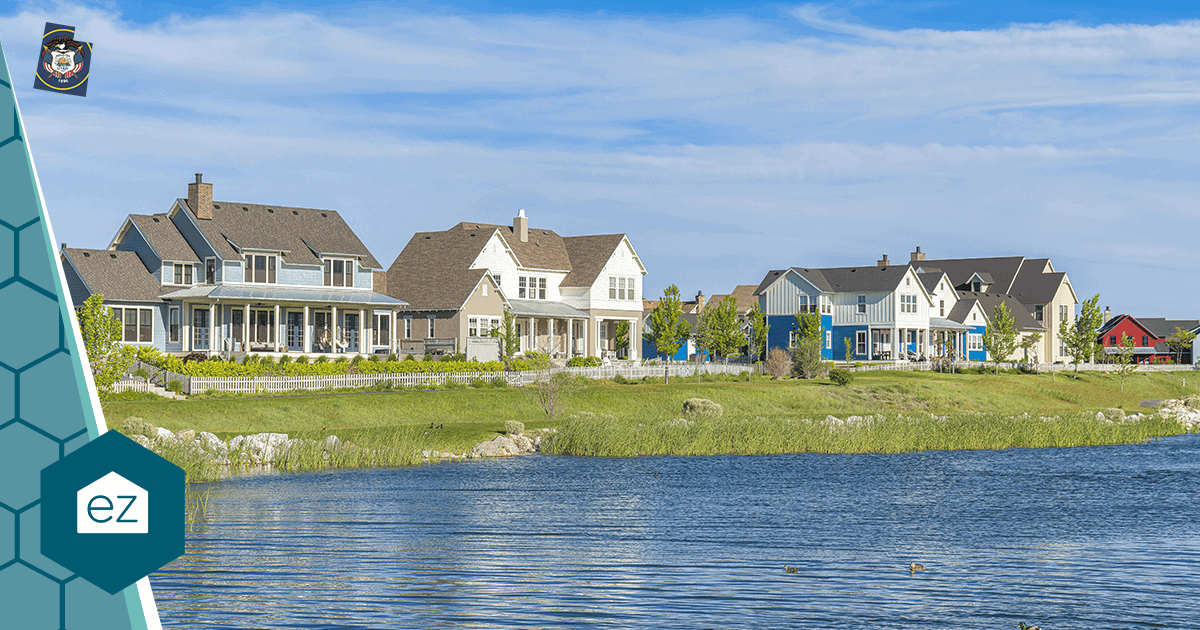
Utah’s counties post very different prices, growth rates and sales results, so one statewide figure misleads almost every client who hears it. Summit County’s 2024 median single-family price was $1,635,000, with Wasatch County next behind it. Carbon County‘s median was $250,000. Across all housing types, the state came in at $506,500 (Kem C. Gardner Policy Institute, July 2025). A seller in Park City and a seller in Price both hear that state number as wrong about their own house. They are right.
Population splits just as widely across the state. Utah County added 15,914 residents in 2025, about 36% of everything Utah gained, and 60% of that came from births rather than from people moving in. Southwest Utah grew fastest at 2.38%, and 85% of that gain came from net migration rather than from births (Utah Population Committee, Kem C. Gardner Policy Institute, December 2025). Twenty-four of 29 counties added people. Five did not.
Two of those county figures deserve caution. Grand County’s 2024 median single-family price came in 13.9% below 2023, and Summit County’s population held flat in 2025 (Kem C. Gardner Policy Institute, July 2025; Utah Population Committee, December 2025). Both are single-year readings in small markets, where a handful of sales or one new building can swing the number. Neither is a trend. Neither belongs in a client conversation as one.
Those numbers change who an agent’s next client is. Each region’s next transaction starts with a different kind of person. Southwest Utah fills with people who have just arrived and know no local agent, so the first agent they meet carries unusual weight. Utah County’s growth comes from births, so the households who will list there already live there and can be reached today. Counties growing more slowly turn over inside an owner base that is already in place, so past clients and neighbors carry the pipeline.
The six regions below each run on a trend of their own.
| Region | Counties | Sourced trend |
|---|---|---|
| Wasatch Front | Salt Lake, Utah, Davis, Weber | Utah County added the most residents of any county in 2025, 15,914, about 36% of all statewide growth, and 60% of that was natural change (Utah Population Committee, Kem C. Gardner Policy Institute, December 2025). Salt Lake County’s Q2 2026 median single-family price reached a record $645,000 on sales up 4.62% year over year (Salt Lake Board of Realtors, 2026). |
| Wasatch Back | Summit, Wasatch | Summit and Wasatch are the state’s two most expensive markets. Summit County’s 2024 median single-family price was $1,635,000 and Wasatch County’s was $992,750. Summit’s population was flat in 2025, up two residents, while Wasatch grew 2.0% (Kem C. Gardner Policy Institute, July 2025; Utah Population Committee, Kem C. Gardner Policy Institute, December 2025). |
| Northern Utah and Cache Valley | Cache, Box Elder, Rich | Box Elder existing home sales rose 14.8% in 2024, among the state’s largest increases, on a median single-family price of $449,900. Cache County grew 1.66% in 2025 to 145,865 residents (Kem C. Gardner Policy Institute, July 2025; Utah Population Committee, Kem C. Gardner Policy Institute, December 2025). |
| Southwest Utah | Washington, Iron, Kane, Garfield, Beaver | Southwest Utah was the state’s fastest-growing region in 2025, up 2.38%, with 85% of that growth from net migration. Iron County posted the largest sales increase of any large county in 2024, up 45.9% (Utah Population Committee, Kem C. Gardner Policy Institute, December 2025; Kem C. Gardner Policy Institute, July 2025). |
| Uintah Basin and Castle Country | Duchesne, Uintah, Daggett, Carbon, Emery | This region holds Utah’s most affordable housing. Carbon County’s 2024 median single-family price of $250,000 was the lowest in the state, and Uintah’s $330,000 changed least of any county, up 0.3%. Carbon added 160 permitted units in 2024, one of only seven counties with an increase over 100 (Kem C. Gardner Policy Institute, July 2025). |
| Central and Southeastern Utah | Sanpete, Sevier, Millard, Juab, Piute, Wayne, Grand, San Juan | Grand County grew 2.11% in 2025 and posted the second-largest permit increase in the state, up 274 units on a single 184-unit apartment project, while its 2024 median single-family price came in 13.9% lower than 2023 at $525,000, the largest one-year price decline of any county in Utah (Utah Population Committee, Kem C. Gardner Policy Institute, December 2025; Kem C. Gardner Policy Institute, July 2025). |
Table 2 lists Utah’s six regions and one sourced trend for each.
A Utah client wants their own region’s number. They can tell within a sentence whether you know it. The agent who has it wins the appointment against the one reciting the state median.
Two changes are reshaping the Salt Lake and Utah county line, and both have deadlines
Two changes are landing at once between southern Salt Lake County and northern Utah County. The school district that serves the fastest-building county in Utah is splitting into three separate districts, and a development on more than 600 acres of old state prison land is adding thousands of homes beside it. Both deadlines are fixed. An agent who starts these conversations in 2028 is late.
The corridor between the two counties is called Point of the Mountain. The development on the old prison land inside it carries a separate name, The Point.
The Point broke ground on Phase I on June 29, 2026, a $2.3 billion project on the former Utah State Prison site in Draper. Phase I carries more than 3,300 multifamily units, roughly 400 of them affordable, and the River District adds 800 to 900 owner-occupied homes, per the Point of the Mountain State Land Authority, the state agency that oversees the site. The first buildings are expected to open in 2028. Those homes become resale business for whoever is already the recognized name there.
Utah County voters chose at the November 2024 general election to break up Alpine School District, the largest in the state, and the three districts replacing it become operational July 1, 2027. A district split changes which schools a family’s children attend and which local tax rate pays for them, and two similar homes on opposite sides of a new line can sell for different prices because of it. One new district covers Eagle Mountain and Saratoga Springs, another covers Lehi, American Fork, Highland and Alpine, and a third covers the south end of the county. Boards were seated in November 2025 and the boundary maps were approved in March 2026, per KSL, KUER and the Salt Lake Tribune. The three districts still go by working names.
Both changes land on the same cities. Eagle Mountain, Saratoga Springs and Lehi permitted 3,946 residential units in 2024, 18% of every residential unit permitted in Utah that year and the highest share on record, with Eagle Mountain first in the state at 1,556 units, per the Kem C. Gardner Policy Institute (July 2025).
Every family buying in these cities faces that school question on a deadline. ez Home Search publishes school and real estate reports from the state down through the county, the district and the individual school, with an ez rating on every school and prices by ZIP and neighborhood inside a district. Those dates are public. The agent who has been answering the question for years before July 1, 2027 is the one these families call.
Utah taxes the same house two different ways, and most agents never bring it up
Utah taxes a house its owner lives in on 55% of market value and a second home on 100%, at the same rate, because the primary residential exemption in Utah Code 59-2-103 removes 45% of the home’s fair market value from the taxable base. Occupancy decides which applies. The Utah State Tax Commission sets the test at 183 consecutive days as a primary domicile, one exemption per household statewide. Second homes, cabins, vacation properties and short-term rentals do not qualify. A long-term rental qualifies when the tenant lives there as their primary residence.
The Utah State Tax Commission calls the system Truth in Taxation: each taxing entity’s certified tax rate, the rate that funds its budget, is recalculated annually to collect the prior year’s revenue plus revenue from new construction. Rates fall as values rise.
Dejan Eskic and Moira Dillow of the Kem C. Gardner Policy Institute measured short-term rentals at 1.9% of Utah’s residential units in 2023. The October 2024 study broke shares by place. Park City stood at 41.7% of housing units, unincorporated Summit County at 25.7%, Grand County at 18.7%, Washington County at 4.3% and Salt Lake County at 1.1%. Summit, Salt Lake and Washington counties together held over 60% of every short-term rental listing in the state. Eskic cautioned that short-term rentals are “a piece of it, but it’s not the main piece” of affordability, and that most Summit County units were likely second homes already.
Second homes are common in Summit, Wasatch, Washington, Grand, Kane and Rich counties, where a real share of the stock belongs to owners who live elsewhere. No local agent is farming them. Exemption status sits on the parcel record at the county assessor’s office, beside the mailing address the tax notice goes to. An agent can pull it without buying anything. One question opens the conversation: whether the house carries the exemption, and what the bill does if its use changes. ez Home Search publishes property-tax data by state, county, city and ZIP, and a rising tax bill holds down the sale price because the buyer carries it on top of the mortgage. Those owner names are public, and the agent who pulls the list gets the first conversation with people nobody else is calling.
Remote work still drives demand in Utah’s smaller counties

Remote and hybrid work did not go away. The share of Americans who telework, meaning they work from home at least part of the week, has not fallen back. That holds buyer demand in place in the Utah counties people move to for space and price. The US Bureau of Labor Statistics counted 36.7 million teleworkers in the fourth quarter of 2024, 23.4% of everyone employed, up from 32.5 million and 20.7% a year earlier. Employers at roughly 150,000 businesses told the US Census Bureau they expect as much work from home five years out as they have now. Both figures are national.
Utah’s building permits mark the destination. Rural counties, meaning everything outside Utah’s nine metro counties, took 17.1% of the state’s permitted residential units in 2024, up from 11.8% in 2021 (Kem C. Gardner Policy Institute, July 2025). Builders put the housing where the buyers went. Tooele, Iron, Washington, Grand, Wasatch and Cache counties all grew faster than Utah as a whole in 2025 (Utah Population Committee, December 2025).
One Utah law makes those markets easier to work. An internal accessory dwelling unit is a self-contained apartment built inside an existing house, usually in the basement. Utah Code 10-9a-530, created by HB 82 in 2021, requires cities to allow at least one inside a detached single-family home in most residential zones. It fits inside the walls the house already has, and it rents to tenants staying 30 consecutive days or more. Cities keep limits. They may require the owner to live in the house, add one off-street parking stall, and exclude up to 25% of their residential land (Utah Legislature; Utah League of Cities and Towns).
Remote buyers in these counties shop a short list: an office with a door that closes, more space than the same money buys along the Wasatch Front, the Ogden to Provo corridor where most Utahns live, and internet fast enough for video calls all day. Two seller conversations follow. Ask any owner in Tooele, Iron or Box Elder County what a basement unit, legal in most Utah cities under HB 82, adds to their appraisal. Then ask every seller with a spare bedroom whether it is staged as an office, because in these counties the office sells the house.
What Utah agents do for listings now, and what each approach costs to keep running
Most Utah agents run four or five of the approaches below. Each produces business, and each carries a bill.
Shared leads from legacy real estate portals produce real volume. One name reaches several agents at once. The consumer chose none of them. An IDX website, the feed that puts live MLS listings on an agent’s own site, is genuinely useful, and it pays off slowly. It needs traffic the agent buys or earns, it competes for the same Utah keywords as national platforms spending far more, and upkeep lands on the agent’s week.
Cold calls work for operators who run them relentlessly. Lists of homes for sale by owner, the FSBO lists, work the same way, and so do expired listings and circle prospecting, where an agent calls every homeowner around a recent sale. Each carries consent-proof exposure that few agents price. Predictive-seller scoring, software that ranks a database by who it guesses will sell, narrows the list. A high score is not a relationship.
Generic all-in-one CRMs are capable. The agent administers them, and the upkeep sits on the team’s calendar. A past client does not return to a CRM on their own. DIY content and paid ads produce while they stay funded and staffed. Geographic farming comes closest to what Utah’s structure rewards, and it is capped at what one person can mail and doorknock, a neighborhood rather than a county.
Utah adds its own friction. Agents here often prospect against a scarcity story the state’s data does not support. The relationship that wins a listing starts long before the owner decides to sell, because more than seven in ten Utah borrowers hold a mortgage under 5% and will weigh that rate before they move. Affordability moves clients from Salt Lake into Tooele and Washington into Iron. St. George, Park City and Heber leak second-home and relocation business to agents in other states.
ez Home Search runs a different structure. One partner holds a county, nothing is billed per lead, and no commission is split. The connection exists because the consumer chose a single vetted local expert rather than because an agent outbid someone, and those opportunities convert in 30 to 60 days.
Consent is where prospecting gets expensive. Under federal law an agent prospecting by phone or by text counts as a telemarketer. If the person called later disputes ever having agreed to hear from anyone, a private suit puts the burden on the caller to show proof for every number dialed. Do Not Call complaints to the FTC passed 2.6 million in fiscal year 2025. A call or text without that proof is worth $500 to the person on the other end, $1,500 if a court finds the violation willful, and there is no ceiling on the total. Those are national numbers. On an ez Home Search opportunity that work is already done. ezVerify.ai establishes the opt-in and keeps the proof of it on record. It runs each number against a known-litigator database, drops anything sitting on the Do Not Call registry, then completes the contact record before the agent dials. The agent makes the call with that exposure already removed.
None of it is complicated. Every item on that list has an owner, and for most Utah agents it is you: the traffic, the weekly content, the site, the data, the proof of consent, and all of it again next month.
ez Home Search runs that entire stack for one partner per Utah county, and you can check whether yours is still open.
The Utah counties most agents never work
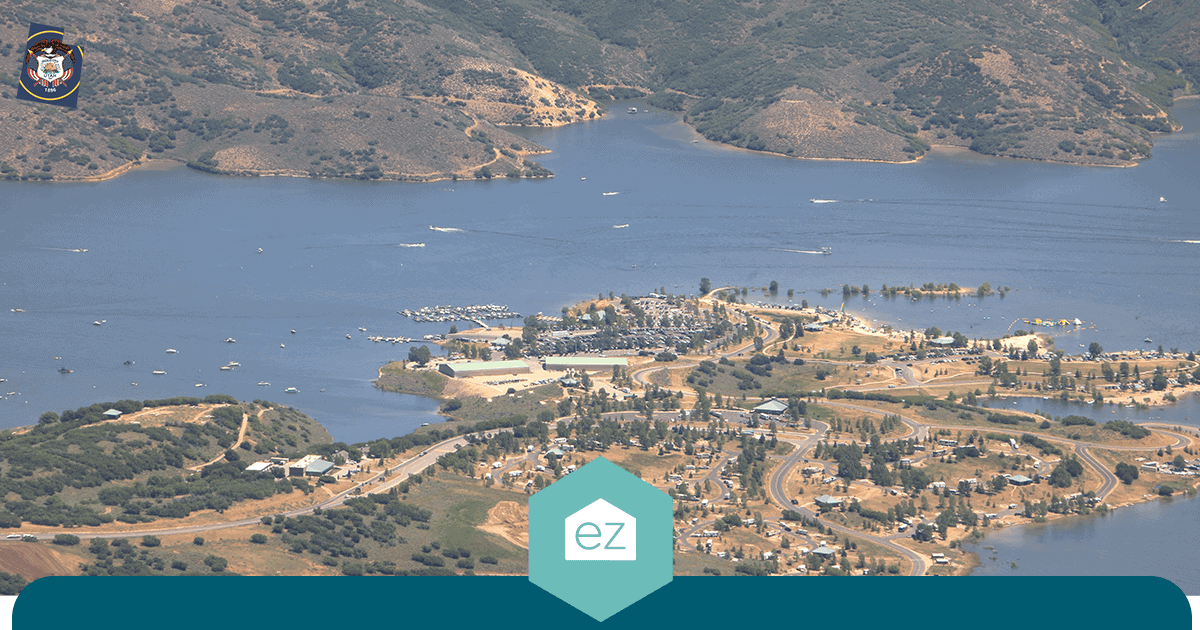
Utah has 29 counties, and agent marketing concentrates on six or seven. The rest run real housing markets a business can be built on. The state’s own research institute publishes the numbers. Most agents never look.
An agent builds the recognized name with one platform and one weekly follow-up routine, and that cost holds whether a market closes a few hundred homes a year or several thousand. What changes is the denominator. The same routine covers a small county and only a sliver of the Wasatch Front, and that share is what shows up in revenue.
Carbon County posted Utah’s lowest median single-family price in 2024, $250,000, and permits there went from 57 units in 2023 to 217 the next year. Uintah County closed 283 single-family transactions at $330,000, the smallest one-year price change in the state (Kem C. Gardner Policy Institute, July 2025). Steadiness like that can be planned against.
Sanpete, Sevier, Millard and Juab run their own corridor through central Utah. Moab anchors Grand County to the south.
Every one of these holds named towns where Utah households live and eventually list. None of it is guesswork. An agent can check their own against the table below.
| County | Population (2025) | Communities |
|---|---|---|
| Sanpete | 31,454 | Ephraim, Manti, Mount Pleasant, Gunnison |
| Sevier | 22,118 | Richfield, Salina, Monroe, Aurora |
| Carbon | 20,539 | Price, Helper, Wellington, East Carbon |
| Duchesne | 20,266 | Roosevelt, Duchesne, Myton, Altamont |
| Uintah | 36,634 | Vernal, Naples, Ballard, Jensen |
| San Juan | 14,998 | Blanding, Monticello, Bluff, Mexican Hat |
| Grand | 10,105 | Moab, Castle Valley, Spanish Valley, Thompson Springs |
| Millard | 13,715 | Delta, Fillmore, Hinckley, Oak City |
| Juab | 13,364 | Nephi, Mona, Levan, Eureka |
| Kane | 8,481 | Kanab, Orderville, Glendale, Big Water |
| Wasatch | 39,588 | Heber City, Midway, Charleston, Hideout |
| Morgan | 13,341 | Morgan, Mountain Green, Croydon, Peterson |
Utah counties beyond the largest metro markets, with communities in each. Population estimates are for July 1, 2025 (Utah Population Committee, Kem C. Gardner Policy Institute, December 2025).
Salt Lake County recorded 8,339 single-family sales in 2024. Carbon County recorded 225 (Kem C. Gardner Policy Institute, July 2025). Recognition costs the same in both places and returns a far larger share of the smaller one. Each of these markets is still open to whoever decides to be its known name.
What an Exclusive County Partnership gives a Utah agent
One agent, team or brokerage becomes the only ez Home Search partner in an entire Utah county, and no second partner ever operates inside that territory. That county’s residents already use the home search, the listing alerts, the home value updates, the local market reports, and every one of them carries the agent’s name alongside ez Home Search’s. The partner pays one predictable fee, with nothing per lead and no share of a closing, so a heavy month lands in their income rather than on their invoice.
The person who reaches that partner already trusts the platform, and their activity there has shown real intent. The partner opens the first conversation knowing the neighborhoods that person searched, the price range they kept landing on, and the homes they kept reopening. Two promises earn that trust, the Single Local Expert and The Only Confidential Home Search, and through them ez Home Search delivers on A Better Way To Discover Real Estate. ez Home Search does not sell, resell, recycle or broadcast that person’s contact details and budget across a list of businesses they never asked to hear from. Their information does go somewhere, and they know where: to the one vetted local expert serving their county.
The bigger return is already sitting in the partner’s own database. Reactivation means getting past clients and sphere back into contact and back into transactions, and most agents leave it alone. Under an ez Home Search partner, reactivation hits 2.5 to 5 times the market rate. Multiply that against the base an agent already has. Repeat and referral run roughly 41% of an agent’s business across all agents, and more leaks away: 88% to 92% of buyers would hire their agent a second time, and about 18% actually do.
Utah gives that asset a long shelf life. The Kem C. Gardner Policy Institute puts more than 70% of Utah mortgage borrowers below 5%, and an owner sitting on a rate like that is years away from listing. Contact details decay in the meantime. Email addresses go stale at 15% to 22% a year, and up to one in ten people swap a phone number. The search carrying the partner’s name captures each new address and number as those clients return.
A past client who moves away takes a local listing with them unless the partner sees it coming. Census figures put interstate moves at about 2.1% of Americans a year, with roughly another 3% relocating to a different county without leaving the state. In Utah that math has addresses. The Salt Lake County client priced into Tooele searches that market long before anyone hears about it, and so does the Park City owner shopping a second home. Those searches surface on the partner’s platform as an early signal, and the local listing stays with the agent who earned it.
One partner becomes the county’s recognized name, and recognition settles more listings than agents expect. National Association of Realtors research finds 81% of sellers contact a single agent and 77% of repeat buyers interview a single one, with reputation ranking first for 35% of sellers. Most Utah sellers decide before they compare.
Every conversion tool behind this is built and running under the partner’s name, including the automated follow-up that fires when a contact picks a search back up. The partner builds none of it and runs none of it. Their hours go where only their hours can go, across the table from a Utah family making the biggest financial decision of their lives.
Only one agent can hold each Utah county
ez Home Search partners with one agent, team, or brokerage in each Utah county, and that partner is the only one the platform works with inside those county lines. The position holds for as long as the partnership runs. No second partner is added later, and no competing partner is placed alongside the first. Demand for county exclusivity runs ahead of the 29 counties Utah has, so many are held and more are taken as time passes.
Salt Lake County and Sanpete County sit at opposite ends of Utah’s transaction volume, and one partner holds each of them on the same terms. The known local name does the same work in a small county that it does in a large one. On the Wasatch Front, a single county covers a market deep enough to build a team around. In a rural county, that same position reaches a large share of the households who will move there.
The platform is built and running before any partner signs, and millions of people already use it. A new partner launches nothing. The partner’s brand goes onto a home search that works on day one, and the county position starts producing from there. ez Home Search runs the search itself, the listing alerts, the valuation updates, and the follow-up beneath that partner’s name.
One agent holds each Utah county, and the day that agent signs, the county is off the table for every other agent in the state.
Choosing how to spend the next twelve months in Utah
Three ways to spend the next twelve months sit in front of a Utah agent. Each carries a different bill.
You can keep buying shared leads. The name you pay for lands in several inboxes at once, and the consumer chose none of you.
You can build the whole thing yourself. That means the search experience, the valuation data, the listing alerts, the market reports and the weekly follow-up that has to keep running for years, a stack that costs millions to assemble and keep alive; in the marketing technology rollouts I have specified for organizations that serve real estate professionals, the valuation data is where the budget breaks.
You can hold one Utah county on ez Home Search, where one agent, team or brokerage carries the county co-branded through the consumer experience and no competing partner works the same households. The consumer traffic and the relationships are already in place, the fee is flat rather than billed by the lead or taken out of the closing, and reactivation of past clients through repeat business and referral clears 2.5 to 5 times the market rate on that database.
The cost is time. Relationships set the pace here, and nothing arrives on demand. An opportunity converts in 30 to 60 days rather than the week it lands, and a reactivated database pays out across years rather than inside one quarter. An agent who needs closings this week should buy something faster.
Check whether your Utah county is still open.
The people who will list in Utah already live here. The only question is whose name is on the search they already use.
Frequently asked questions
Does Utah really have too few homes for sale?
No. A single day’s count misses most of the year’s sellers, because homes sell and get replaced faster than the screen refreshes. Average monthly active listings reached 8,800 in 2024, the highest level since 2016 (UtahRealEstate.com via the Kem C. Gardner Policy Institute, July 2025). Median days on market ran 34 against a 44-day long-term average, so homes clear fast and new ones replace them. Gardner described the same gap in 2018, so treat it as the standing Utah pattern. Prospect the owners who are transacting.
Utah’s growth now comes more from births than from people moving in. What does that change about how I generate leads?
It moves your spend toward the households already in your market instead of newcomers. Utah added 44,351 residents in the year to July 1, 2025, and 57% of that came from natural change rather than net migration, the first time this decade (Utah Population Committee, Kem C. Gardner Policy Institute, December 2025). Babies do not buy houses, but the families raising them outgrow their house and move up later. Work your database, your past clients and the neighborhoods you already serve.
How do I keep a Salt Lake County client who is getting priced out into Tooele County?
You follow that client into Tooele County instead of handing them to another agent. Tooele County posted 20.5% sales growth in 2024 (Kem C. Gardner Policy Institute, July 2025) and 3.0% population growth in 2025 (Utah Population Committee, December 2025), so learn Tooele City, Grantsville and Stansbury Park well enough to price a house in each. The larger risk sits at the other end of the move: whoever sells the Salt Lake County home they are leaving takes the listing side of the same deal. ez Home Search covers the whole country on your co-branded search, so a client searching Tooele addresses still reaches you first.
Are Iron and Tooele counties worth working, or is the volume still in Salt Lake and Utah counties?
Both are worth working, for different reasons. Salt Lake County closed 2,334 single-family sales in the second quarter of 2026 at a record $645,000 median (Salt Lake Board of Realtors, July 2026), so the volume still sits on the Wasatch Front. Iron County sales rose 45.9% in 2024 and Tooele 20.5%, the two largest increases in the state (Kem C. Gardner Policy Institute, July 2025). You can become a known name in Cedar City for a fraction of what the same recognition costs you in Sandy.
How does Utah’s primary residential exemption change the conversation with an owner thinking about turning a house into a rental or a second home?
The tax rate on the house does not change, but the share of its value that gets taxed does. Utah Code 59-2-103 removes 45% of fair market value from the taxable base on a qualifying primary residence, so that home is taxed on 55% of its value. A second home or a short-term rental gets no exemption and is taxed on 100% at the same rate (Utah State Tax Commission). A long-term rental still qualifies when the tenant lives there as their primary residence. Run the bill both ways before the owner decides.
Eagle Mountain, Saratoga Springs and Lehi are building faster than anywhere else in Utah. How does an established agent compete in a city that is mostly new construction?
The builder captures the first sale on a new house, so your business is the resale and everything after it. Those three cities permitted 3,946 residential units in 2024, 18% of every unit permitted in the state that year and the highest share on record, led by Eagle Mountain at 1,556 (Kem C. Gardner Policy Institute, July 2025). Utah County voters also split Alpine School District in November 2024, and it dissolves into three districts on July 1, 2027. Every family there will ask which district covers their address, and the agent who can answer gets the appointment.
With more than seven in ten Utah owners holding a mortgage under 5%, how do I start a listing conversation that does not die on the rate?
Open on their equity and on what the next house costs, because the owner is deciding whether to move rather than whether to refinance. Life events set the timing. Utah sales rose 7.6% in 2024 with those low rates already in place (Kem C. Gardner Policy Institute, July 2025), which is the state’s own evidence that a cheap mortgage does not stop a move. ez Home Search puts home-value updates and market reports in front of them under your name for that stretch.
Nearly three in ten Utah homes sold are condos, townhomes or twin homes. How do I turn that first-time attached-housing buyer into a move-up listing later?
The equity that buyer builds in a condo or townhome becomes the down payment on their next house, so stay in front of them until they are ready to spend it. Condominiums, townhomes and twin homes were 28% of Utah sales in 2024, the highest share on record (Kem C. Gardner Policy Institute, July 2025), and that buyer becomes a move-up seller in five to eight years. Send them their home value every month. ez Home Search shows you, under your own brand, the moment a past client reopens a search or runs a second valuation.






Kurt Uhlir is a recognized leader in marketing, growth, and innovation, having helped scale companies and technologies used by millions every day—including at brands like eXp Realty, Sideqik, Vitrue, Oracle, Garmin, Facebook, Meta, Apple, and more. He’s trained tens of thousands of professionals on how to build trust, lead with service, and help clients make wise, informed decisions. At ez Home Search and Sure Send, his focus is on helping high-performing business owners, team leaders, and individual sales leaders grow their businesses through exclusive market access, privacy-first lead systems, and conversion-focused enablement tools.