

Oklahoma real estate leads behave one way in the Oklahoma City metro and another way in the southeast, and the gap is wider than most agents assume. In 2025 the Oklahoma City metro sub-market carried 3.3 months of supply and sold homes in 47 days, according to the Oklahoma City Metropolitan Association of REALTORS® annual report on the MLSOK marketplace. In May 2025 the southeastern sub-market covering Pittsburg, Le Flore, Pushmataha and four neighboring counties carried 8.96 months and an average of 75 days, per the monthly inventory analysis compiled from Greater Tulsa Association of REALTORS® data. Both readings describe one state in one year. A house in the southeast takes about half again as long to sell, and the supply behind it would take nearly three times as long to clear.
A pipeline built on one of those numbers misfires on the other. Follow-up cadence lands too early or too late. Ad budgets burn through before a lead is anywhere near ready, and the pricing conversation an agent opens with a seller starts from a premise the local data does not support.
Which of the 77 you work should change what you buy, when you follow up, and what you tell a seller.
Most Oklahoma buyers are selling something first
Roughly four in five people buying a home already own one, which means the buyer riding around with you on Saturday is a listing you have not asked for yet. The National Association of REALTORS® put first-time buyers at 21% of purchases nationally by mid-2025. That is the national figure. No clean Oklahoma-specific first-time-buyer share was available to check it against, so treat the four in five as directional rather than exact.
Most agents run the two halves of one move as two campaigns. One group markets “list with me” and treats buyer work as the consolation prize. The other buys buyer leads by the hundred and waits for a listing to fall out of the pipeline. Both are working the same person twice, badly.
Be precise about what the number means. On any single house in Edmond or Bartlesville, one person buys and a different person sells. Across a move they are usually the same person, working one side and then the other, and they almost always start on the buy side. A homeowner in Yukon studies what their money buys in Piedmont for months before they call anyone about listing. The agent who only chases listings hands those months to whoever the person met while shopping, and that agent earns the listing at the end of them.
The three groups need three different approaches.
- First-time buyers are about one in five. They have no home to sell, so they need affordability math, plain explanation and confidence. Equity conversations mean nothing to them yet.
- The buyer and seller majority is roughly four in five. They need the equity in the home they are leaving, the timing between the two sides, and both halves handled as one move rather than two files.
- Seller-only owners are the minority. That group covers estates, landlords exiting and owners moving in with family, and it is real business in a smaller pool.
A good pipeline reads which side is live rather than guessing. A valuation run a second time, an equity question, a visit to a home-value page: the seller conversation is open. Saved searches picked back up, alerts opened the day they arrive, a tour finally booked: the buyer side is moving. For most Oklahomans it is both, in sequence, and the platform behind the agent should follow that shift instead of picking a lane on their behalf.
Which side moves first varies by county. A Canadian County move at 47 days on market and a Pittsburg County move at 75 are not the same transaction, and they should not get the same follow-up sequence.
What is actually happening across Oklahoma
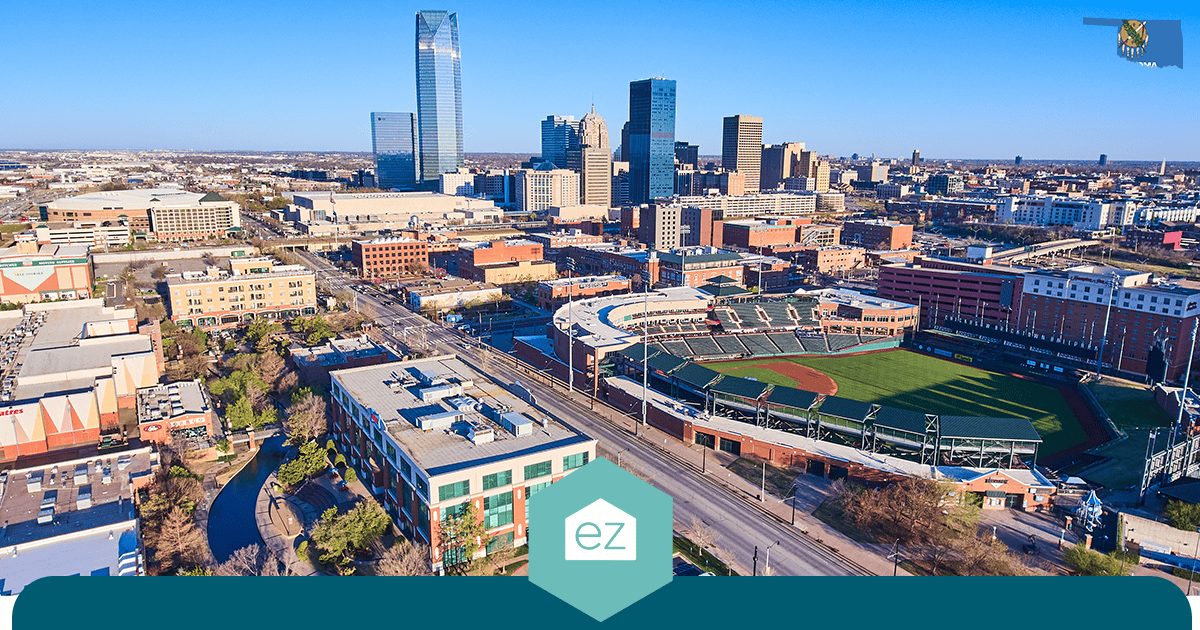
Several things are moving at once, and no single one of them explains the state. Start with the market itself.
The market is steady and the shelves are full. Closed sales in the Oklahoma City-area REALTOR® marketplace have run between about 22,300 and 29,800 every year since 2015, averaging roughly 24,831. In 2025 they came in at 24,083, up two years running from the 2023 low. That series is the Oklahoma City Metropolitan Association of REALTORS® count for the MLSOK marketplace, not a statewide figure. Inventory carries the more useful signal. The same marketplace ended 2025 with 7,894 homes for sale, the highest year-end count in eleven years and above the 6,573 of 2015, on 34,003 new listings. Homes still sold in 51 days against 63 in 2015, and the median price moved from $156,000 to $262,900 across the decade.
More people are arriving, from different places and for different reasons. Oklahoma reached about 4,088,380 residents in 2025, up 25,530 on the year and 24th nationally, with growth concentrated in urban and suburban counties. Owasso grew fastest among cities, up 3.5% to nearly 43,000. Net domestic in-migration was 10,534 in 2025, ninth-highest in the country, which is about a quarter of one percent of the population and sits alongside 51,694 international arrivals since 2020. That is modest, and it runs both directions: arrivals are buyers, departures are listings and referral fees. Who arrives matters more than how many. More than 32,000 Texans moved in during 2023, close to 30% of them Generation Z, drawn by housing costs roughly 30% below Texas. Of about 6,300 Coloradans, 38% were Baby Boomers.
Health care is where the job growth sits. Oklahoma added 18,500 nonfarm jobs in 2024, and education and health services supplied 11,700 of them, with health care and social assistance alone at 10,500, according to the Oklahoma Employment Security Commission. Construction added 3,100 and leisure and hospitality 3,200. Unemployment held at 3.1% in July 2025. Energy employment fell from 49,546 in January 2025 to 47,582 a year later, though mining, quarrying and oil and gas extraction was still the single largest contributor to the state’s first-quarter 2025 earnings growth at 1.10 percentage points, with construction second at 0.65 (BEA figures via OESC). The sector now employs fewer people and still produces more income growth than almost anything else in Oklahoma.
Aerospace and defense pay wages in four different counties. More than 120,000 Oklahomans work in aerospace and defense, and the sector produces close to $44 billion in annual activity supporting 206,000 jobs, per the Oklahoma Department of Commerce. Tinker Air Force Base is the largest single-site employer in the state at more than 26,000 people. American Airlines runs the world’s largest single-site commercial aircraft maintenance operation at Tulsa International. Fort Sill generates $1.5 billion and 20,000 jobs in Lawton, and Vance Air Force Base sustains 3,000 jobs and $400 million in Enid.
Tribal nations anchor the eastern half. Oklahoma’s tribal nations contributed $23.4 billion to the state economy in 2023, employing more than 55,000 Oklahomans directly and supporting close to 140,000 jobs on more than $7.8 billion in wages, according to United for Oklahoma and the Oklahoma Indian Gaming Association in June 2025. The Choctaw Nation alone accounts for $4.1 billion and 26,917 jobs, and the Cherokee Nation for roughly $3.1 billion and 14,500 employees.
The newest capital is landing in small towns. Google announced a $9 billion, two-year Oklahoma investment at its Pryor campus on August 13, 2025: expansion at Pryor in Mayes County, a new Stillwater campus in Payne County with phase one targeted for 2027, and two campuses in Muskogee County near Summit and Council Hill.
One number holds the rest together. Homeownership statewide ran 66.8% in 2024, 1.2 points above the national rate, and it ranged from 72.3% in Enid to 59.1% in Lawton. Thirteen points of spread sit inside one state.
Six regions, six different jobs for an agent
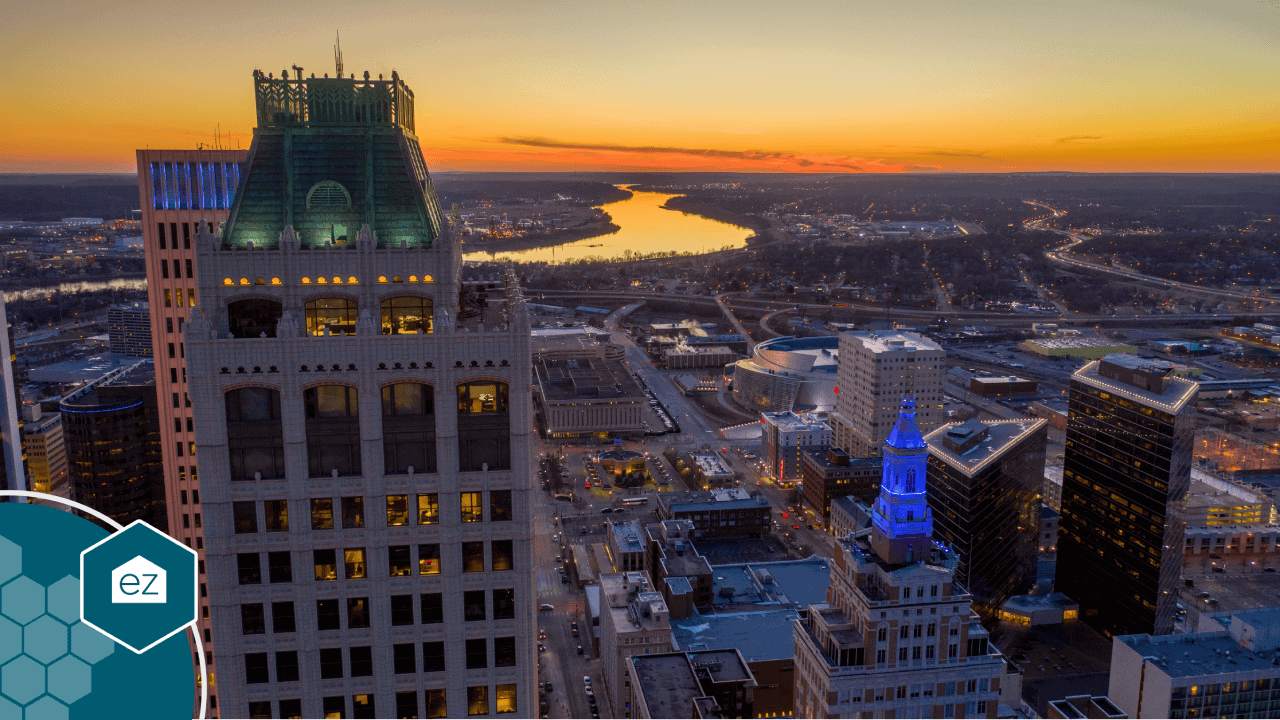
Oklahoma’s own tourism department splits the state into six regions, and each one hands an agent a different lead generation problem to solve. They are Green Country in the northeast, Frontier Country in the center, Great Plains Country in the southwest, Chickasaw Country in the south central, Choctaw Country in the southeast, and Red Carpet Country across the northwest and the panhandle. Oklahomans use these names. That makes them a more useful unit for planning a marketing budget than a state line drawn around 77 counties with almost nothing in common.
Green Country brings in people who picked the region deliberately and arrived carrying an income earned somewhere else, so the agent there is reaching someone researching a place before they ever look at a house. Frontier Country publishes its numbers every January, which means every competing agent in Oklahoma City, Edmond and Norman opens the same report on the same morning. Nobody wins that on information. The edge goes to whoever already owns the relationship when the report comes out.
Great Plains Country runs on a military calendar. Fort Sill moves families on orders rather than on impulse, Lawton carries the lowest metro homeownership rate in the state, and the same houses trade again and again on a schedule an agent can learn in a year. Chickasaw Country asks something else entirely, because the growth in McClain County and the wage base anchored around Ada, Ardmore and Durant put steady buying power into towns that no statewide lead product prices correctly.
The clock runs slowest in Choctaw Country. Homes there take roughly half again as long to sell as homes in the Oklahoma City metro, so a follow-up sequence built for a fast metro sale runs out before the seller is ready to talk. Red Carpet Country sits at the other end, with the highest metro homeownership rate in the state and a resident base that has been in place for years, which makes it a long-tenure market where the reason to call has to be worth the owner’s time.
An agent who plans a year of lead generation off a statewide average is planning for a place that does not exist.
| Region | Where | Anchor markets | The trend that shapes lead generation there |
|---|---|---|---|
| Green Country | Northeast | Tulsa, Broken Arrow, Owasso, Bartlesville, Muskogee, Claremore, Bixby, Jenks, Tahlequah, Pryor | Tulsa Remote has drawn 3,475 remote workers, 70% of whom still live in Tulsa (Tulsa Remote 2024 Economic Impact Report); Google’s $9 billion Oklahoma investment expands the Pryor campus in Mayes County and adds two Muskogee County campuses near Summit and Council Hill (Google, August 2025; Oklahoma Business Voice, November 2025) |
| Frontier Country | Central | Oklahoma City, Edmond, Norman, Moore, Yukon, Mustang, Guthrie, Stillwater, Shawnee, El Reno | The Oklahoma City-area association’s MLSOK marketplace closed 24,083 sales in 2025 while year-end active listings rose 27.7% to 7,894, the highest count in eleven years (OKCMAR 2025 annual report). Marketplace figures, not a statewide count |
| Great Plains Country | Southwest | Lawton, Altus, Duncan, Elk City, Weatherford, Clinton, Anadarko | Fort Sill generates $1.5 billion and 20,000 jobs in the Lawton economy (Lawton Economic Development Corporation); Lawton has Oklahoma’s lowest metro homeownership rate at 59.1% (Census, via USAFacts, 2024) |
| Chickasaw Country | South central | Ardmore, Ada, Sulphur, Pauls Valley, Madill, Marietta, Tishomingo, Purcell | Oklahoma’s tribal nations contributed $23.4 billion and supported nearly 140,000 jobs statewide in 2023 (United for Oklahoma and the Oklahoma Indian Gaming Association, June 2025); McClain County grew 15.11% since 2020, second fastest in the state |
| Choctaw Country | Southeast | Durant, McAlester, Idabel, Broken Bow, Poteau, Atoka, Hugo, Antlers | The Choctaw Nation generated a $4.1 billion impact supporting 26,917 jobs in fiscal 2023 (Tribal Business News); the region’s REALTOR® sub-market ran 8.96 months of supply and 74.54 average days on market in May 2025 (RE STATS, from Greater Tulsa Association of REALTORS® data) |
| Red Carpet Country | Northwest and panhandle | Enid, Woodward, Ponca City, Alva, Guymon, Blackwell, Fairview | Vance Air Force Base sustains 3,000 jobs and $400 million in Enid (Oklahoma Department of Commerce); Enid has Oklahoma’s highest metro homeownership rate at 72.3% (Census, via USAFacts, 2024) |
The ten counties where most Oklahoma transactions happen
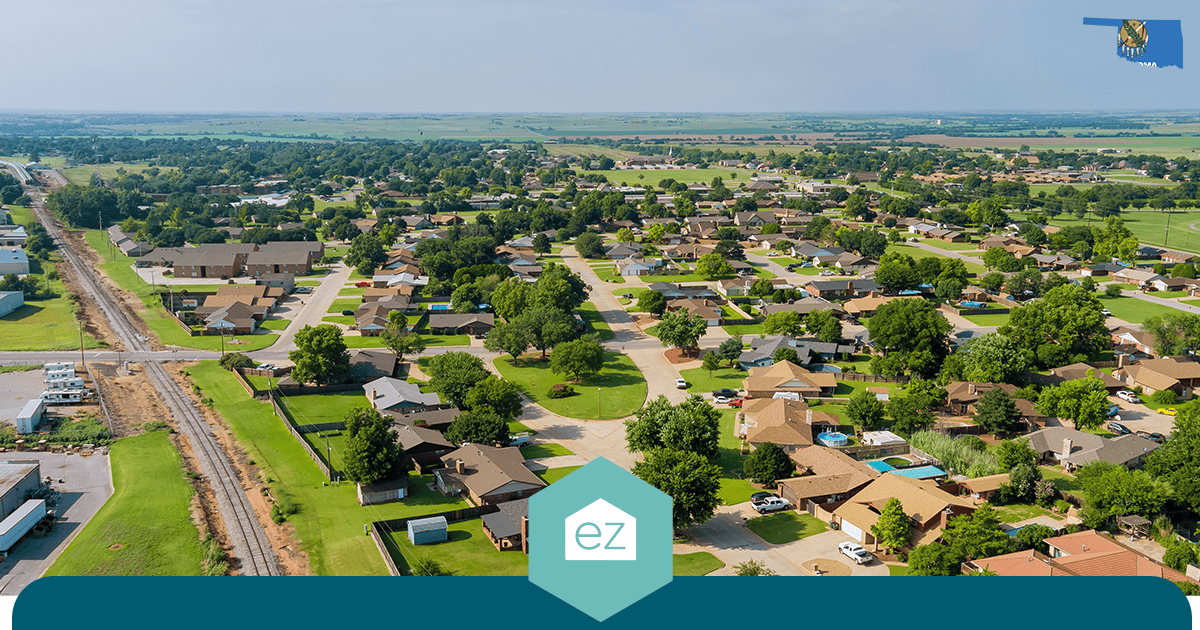
Ten of Oklahoma’s 77 counties carry the bulk of the state’s residential transactions, and Oklahoma County and Tulsa County alone hold roughly a third of everyone who lives here. Add Cleveland, Canadian, Comanche, Rogers, Wagoner, Payne, Creek and Pottawatomie and an agent has covered most of the deal volume in the state without leaving the top ten.
That ranking is not the same as an opportunity ranking, and treating it as one is how agents end up bidding against each other for the same names. The counties expanding fastest sit next to the large ones rather than inside them. Canadian County, home to El Reno, Yukon and Mustang, has grown 24.16% since 2020. McClain County has grown 15.11% and Logan County 12.45%, and neither of those two makes the top ten by size at all. Growth rates and transaction counts point at different maps.
An agent working Oklahoma County is competing with the largest concentration of licensees in the state for a market whose numbers get published every year. An agent working Wagoner or Pottawatomie County is competing with far fewer people for a household base that is still expanding. Both are real businesses. They are not the same business, and the lead generation budget that fits one will not fit the other.
| County | County seat | Other principal cities |
|---|---|---|
| Oklahoma | Oklahoma City | Edmond, Midwest City, Del City, Bethany, Warr Acres, Choctaw |
| Tulsa | Tulsa | Broken Arrow, Owasso, Bixby, Jenks, Sand Springs, Collinsville, Glenpool |
| Cleveland | Norman | Moore, Noble, Lexington |
| Canadian | El Reno | Yukon, Mustang, Piedmont, Union City |
| Comanche | Lawton | Cache, Elgin, Sterling, Fletcher |
| Rogers | Claremore | Catoosa, Chelsea, Inola, Oologah, Verdigris, with Owasso extending into the county |
| Wagoner | Wagoner | Coweta, Porter, Okay, with Broken Arrow extending into the county |
| Payne | Stillwater | Cushing, Perkins, Yale, Glencoe |
| Creek | Sapulpa | Bristow, Kiefer, Mounds, Drumright, Kellyville |
| Pottawatomie | Shawnee | Tecumseh, McLoud, Earlsboro, Asher |
The Oklahoma outside the two metros

Outside the Oklahoma City and Tulsa metros, the sales cycle stretches. Where the association numbers are published, homes take roughly half again as long to sell, and that is a pipeline design question rather than a reason to write those counties off. In 2025 the Oklahoma City metro sub-market carried 3.3 months of supply, sold homes in 47 days and returned 98.3% of list price (OKCMAR 2025 annual report). In May 2025 the REALTOR® sub-market covering Haskell, Latimer, Le Flore, McIntosh, Pittsburg, Pushmataha and Sequoyah counties carried 8.96 months of supply, averaged 74.54 days on market and returned 94.77% of list price (RE STATS monthly inventory analysis, compiled from Greater Tulsa Association of REALTORS® data). One state, one year, and the second market needs nearly triple the time to absorb what it has.
An agent who moves a marketing budget from one of those to the other without changing anything else will watch the cost per closing rise and never learn why. Follow-up sequences run out. Ad spend keeps buying clicks for a house that has not sold yet. Seller pricing conversations get set against a metro number the seller’s own county never produces.
The divergence does not stop at the metro line either. Inside the Oklahoma City marketplace in 2025, closed sales rose 17.0% in the 73044 area and fell 14.4% in Midwest City, while median price rose 31.9% in 73142 and fell 9.9% in 73089 (OKCMAR 2025 annual report). Two ZIP codes in one metro moved 40 points apart on price. The county is the right planning unit across most of Oklahoma, and inside the metro even a county line paints too broadly.
There is a business consequence in the slower counties that most agents read backward. A longer sales cycle punishes whoever is renting attention and rewards whoever owns the relationship, because the person paying per lead pays again every month the house sits while the person who is already the recognized local name simply stays in the conversation. County exclusivity is worth more in a county running 75 days than in one running 47, not less. The slow markets are where a per lead budget bleeds and where a held territory compounds.
If you work one of these counties, the first thing worth knowing is whether anyone else has already claimed it. Check whether your Oklahoma county is still open.
| County | Seat | Other communities |
|---|---|---|
| Bryan | Durant | Calera, Caddo, Colbert |
| Carter | Ardmore | Healdton, Wilson, Lone Grove |
| Pittsburg | McAlester | Krebs, Hartshorne, Kiowa |
| Le Flore | Poteau | Heavener, Spiro, Talihina |
| McCurtain | Idabel | Broken Bow, Valliant, Wright City |
| Garfield | Enid | Covington, Garber, Waukomis |
| Washington | Bartlesville | Dewey, Ochelata, Ramona |
| Delaware | Jay | Grove, Kansas, Colcord |
| Mayes | Pryor | Chouteau, Salina, Locust Grove |
| Muskogee | Muskogee | Fort Gibson, Warner, Council Hill, Summit |
The remote-work buyer most Oklahoma agents stopped looking for
The buyer who works from home and can therefore live almost anywhere is still moving, and Oklahoma has spent the past two years making far more of its counties livable for that person. Most agents quit chasing this buyer around 2023, when the return-to-office headlines started. The headlines were about a few very large employers. The measured national numbers went the other way.
Bureau of Labor Statistics telework figures reached 36.7 million Americans in the fourth quarter of 2024, a rise from 32.5 million twelve months earlier, and the telework rate moved from 20.7% to 23.4%. A Census Bureau survey of about 150,000 firms, fielded from November 2024 into January 2025, found that employers expect roughly as much work from home five years ahead as they had at the time they answered. Both are national figures. So is the third one that matters most for Oklahoma: the USDA Economic Research Service finds rural counties gained 974,000 net migrants between 2020 and 2024, concentrated among working-age adults between 25 and 44 rather than retirees.
Oklahoma’s own contribution is the part almost nobody has priced in. The Oklahoma Broadband Governing Board has awarded roughly $525 million in grants, more than $840 million once provider matching funds are counted, across more than 180 projects. At least one of those projects is slated in 59 of the state’s 77 counties, with more than 69,000 homes and businesses approved for service (Oklahoma Broadband Office, July 30, 2025). The detail runs to the county. Pine Telephone is running $58.8 million of fiber across Choctaw, Latimer, Le Flore and McCurtain counties, connecting 1,512 homes and businesses, including virtually every home and business in the Choctaw County town of Grant. Atlas Broadband won $17.1 million across Rogers, Osage, Nowata and Tulsa counties. Hilliary is connecting 2,007 locations across eleven counties from Atoka and Comanche to Pittsburg and Washita.
Tulsa proved the demand side locally. The W.E. Upjohn Institute found that Tulsa Remote returns more than $4 in benefits for every $1 spent and creates jobs six times more efficiently than comparable business tax incentives, with 58% to 70% of participants representing genuine program-induced moves against “but for” rates typically below 25% for business incentives (Economic Innovation Group and SSTI, 2025). Brookings found in 2022 that participants gained about $26,500 in real annual income after moving.
A county that could not support a remote worker three years ago can support one now. That buyer shops for things the local listing description usually leaves out: an office that shuts, a detached building or accessory dwelling unit to work from, more square footage than a city budget bought, and a connection fast enough to hold video calls all day. The counties getting fiber are the counties most agents have already written off.
Why lead generation is harder in Oklahoma, and why it gets harder as you grow
Lead generation is harder in Oklahoma than the national advice accounts for, and it gets harder as an agent adds people. Three forces drive that: the state’s own numbers refuse to support one playbook, most of what an agent can buy captures demand that already exists rather than creating any, and the informal system that carries a solo agent starts failing at three agents and breaks at ten.
Start with the numbers, because they set the terms. An agent who builds a system around 47 days on market and 3.3 months of supply has built a system that misfires in a county running 75 days and 8.96 months. Follow-up cadence keys off the sales cycle. So does ad budget pacing, the pricing conversation with a seller, and the cash flow planning behind both. Within the Oklahoma City marketplace alone, 2025 closed sales rose 17.0% in the 73044 area and fell 14.4% in Midwest City (OKCMAR 2025 annual report), so even a metro-wide assumption breaks before it reaches the county line.
The second reason is the one most agents never name. Almost everything on the market reaches a person who has already started looking. Shared leads, paid search, social ads and portal placement all work the same way at the root: they find someone whose search is already underway. That group is small in any county at any moment, and every agent nearby is bidding for the same slice of it. The far larger group has not started looking yet, will move eventually, and can only be reached by something that runs in the background for months without an agent having to think about it. That gap explains a pattern I have watched play out at company after company that sells to agents: the lead budget rises every year while the pipeline stays flat.
Third, what works for one agent stops working at three. A solo agent’s pipeline runs on memory and relationships. That is a system with one point of failure and no documentation, and it holds up fine until volume arrives. Growth is the pressure that exposes it, and the cracks show in the same places every time. Leads route to whoever answers first rather than whoever is right for the client. Follow-up quality varies by person. The database fragments across individual phones and inboxes, and nobody owns the contacts that went cold.
The database problem has a size, and Oklahoma’s own tenure numbers set it. NAR reports a national median of 11 years in the home before an owner sells, so the average past client is years away from listing and the contact record decays the entire time. A meaningful share of email addresses stop working every year, on the order of 15% to 22%, and roughly one homeowner in ten changes a phone number. A list that looked complete in 2023 is partly unreachable now, and the past clients who slip off it are usually the ones most worth keeping.
Consistency is a property of the system an agent runs, and no amount of effort inside a single month substitutes for one. Each of those three problems has a practical answer, and most of them are worth trying before anyone buys anything.
What Oklahoma agents do today, and how to do each one better
Oklahoma agents run about seven plays to generate business, and every one of them can be improved without spending another dollar. Each also has a ceiling worth knowing before the budget goes in.
- Shared leads from legacy portals and lead marketplaces. Better version: buy at the smallest geography the source will sell you, and measure cost per closing county by county, because cost per lead hides the answer. A blended number that averages a 47-day county with a 75-day county describes neither, and it buries which half of the spend is working. The ceiling is structural. That same name still reaches several agents, so the purchase is a race for the first callback.
- Paid search and social with retargeting. Better version: run a separate campaign per county and pace the budget against that county’s actual days on market rather than a statewide assumption. Put the money behind a home-value or neighborhood-report offer. A listing carousel captures a browser; a value offer captures an owner. The ceiling: it produces while the budget runs and stops producing the day the budget stops.
- An IDX website. Better version: give people a reason to come back, with saved-search alerts and a monthly value update, and publish for the actual towns in the county. Pages about Chouteau and Locust Grove face almost no competition; pages about the metro face all of it. The ceiling, stated plainly: this takes longer than the vendors suggest, and a self-hosted site cannot match minute-level listing refresh, so the alert lands after the tour is already booked.
- Cold calling, circle prospecting and door knocking. Better version: work from a trigger instead of a list. Oklahoma supplies real ones, including a PCS cycle at Tinker, Fort Sill, Vance or Altus, a plant or campus announcement in a small county, and the long-tenure owner whose assessed value has drifted away from the market, which the next section covers. The ceiling is consent exposure, and it is serious enough to have its own section further down.
- Predictive-seller scoring. Better version: let the score decide who gets called first, then still make the call yourself, and pair every scored name with a reason the homeowner would recognize as useful. The ceiling: a score is a guess about a name, and the relationship behind that guess is still the agent’s to build.
- A CRM plus content the agent writes. Better version: pick one repeating asset the agent will genuinely sustain, a county market note or a monthly value-update email, automate its distribution, and resist adding a second and a third channel. The ceiling: the agent ends up operating software when they should be serving clients, and output falls off in a busy month, which is exactly the month the pipeline needed it.
- Referrals and past clients. Better version: treat the database as an owned asset, rebuild it with current contact details, and give yourself a standing reason to stay in touch that does not depend on remembering. The ceiling: keeping a list current by hand does not scale, and an 11-year median tenure means the payoff arrives years after the work.
Every one of those is worth doing better. The mechanism ez Home Search runs has a different shape. It is a confidential home search a person returns to over years, with intent read from their own activity. The consumer chooses the connection, and one partner holds the entire county, with no per-name auction anywhere in it. Opportunities that arrive this way typically convert in 30 to 60 days, because the person already trusts the platform their agent’s brand sits on. What we hear from the county exclusivity partners running this model in markets like Ardmore and Claremore is that the difference shows up on the first call, when the agent already knows which neighborhoods the person has been searching and which homes they keep coming back to.
Before the next budget cycle, find out whether your county is even available. See whether the Oklahoma county you work is still unclaimed.
Reasons to call an Oklahoma owner who is not moving

The best reason to call an Oklahoma homeowner who has no plans to move is that their county has been telling them something about their house that stopped being true years ago. People sell because of a job, a divorce, a death, a birth or a retirement. No tax provision has ever made anyone move, and any agent who pitches one as a motive will be seen through immediately. What a trigger does is earn the agent a place in the conversation before the job offer or the diagnosis arrives.
Oklahoma hands agents a good one. Article 10, Section 8B of the Oklahoma Constitution caps the annual increase in a property’s fair cash value at 3% for homestead property and agricultural land, and at 5% for everything else (Oklahoma Constitution, via Wagoner County and the Tulsa County Assessor’s Property Taxation 101). Alongside it sit the $1,000 standard homestead exemption and the Senior Valuation Limitation, which for a qualifying owner aged 65 or older locks the taxable fair cash value in place. That last one is widely misunderstood, including by the people who have it: the limitation holds the value, and it does not freeze the tax bill itself. The income test runs off a county-level HUD figure that resets every year, so the threshold in Tulsa County differs from the one in Garfield County.
Over ten years that cap compounds into a real gap. NAR reports a national median of 11 years in the home before an owner sells. Across that same stretch, the median sale price in the Oklahoma City-area marketplace moved from $156,000 in 2015 to $262,900 in 2025 (OKCMAR annual reports). An owner who has been in place since 2014 has watched a capped number arrive in the mail every year while the market did something else entirely. The figure in their head is the assessment, and it is the wrong number by a wide margin.
That is a reason to make contact, and it holds whether or not the owner is thinking about selling at all. An accurate automated valuation model (AVM), a co-branded home-value page and a monthly value update turn that gap into a conversation an agent never has to invent. A proposal to lower the caps to 1.75% for homes and agricultural land and 4% for other property has been put to Oklahoma voters, which is worth knowing and is not yet law.
One agent, one Oklahoma county, every lead in it

The Exclusive County Partnership hands one agent, team or brokerage an entire Oklahoma county. The consumer experience carries that partner’s brand. No second partner works the territory, nothing is billed per name, and the commission on a closing stays whole. A partner in Canadian County holds Canadian County. That does not mean a ZIP code inside it, a shared queue with three other agents in Yukon, or a monthly invoice that swells the month the leads finally show up.
The difference is what comes attached to the opportunity. Someone arriving through ez Home Search carries a record the agent can read: which homes they kept opening, which neighborhoods they returned to week after week, where their price kept settling, and the valuation they ran a second time. The first call starts where a normal first call ends. That is why these opportunities typically convert in 30 to 60 days, and why the relationships behind them tend to run for years rather than a single closing.
The reach behind it is the part no single agent in Bartlesville or Durant could assemble alone, and that is not a knock on anyone’s ambition. The proprietary automated valuation model covers more than 90 million US residential properties in the public-records and valuation universe. The proprietary ez rating covers more than 160,000 schools nationwide. Listing data refreshes every minute around the clock, against a category norm measured in days. A platform like that costs millions of dollars and years of engineering before the first consumer ever sees a page, and the partner receives it already running, with their name on it.
Most lead sources chase the people who are shopping this month, which in any Oklahoma county is a small fraction of the households in it. The rest are watching their equity, saving homes they cannot buy yet, and sitting a year or two from a move they have not mentioned to anyone. The largest and cheapest return available to a partner sits inside that group, in the database they already own. That same 11-year median tenure means a past client is usually years from listing while their contact record decays out of sight, with email addresses failing at a steady rate every year and phone numbers turning over for about one owner in ten. ez Home Search keeps those records current because the people in them keep coming back to the co-branded search, and partner reactivation of past clients runs 2.5 to 5 times the market rate.
None of it works without the consumer trusting the platform first, which is the point of the two promises underneath it. The Only Confidential Home Search means the budget and the contact information a person enters stay out of the resale market, never recycled and never pushed to a list of businesses they did not pick. The Single Local Expert means one vetted partner who works that county is matched to them, picked as the right fit for what they need. Held together, those two promises are what ez Home Search means when it says A Better Way To Discover Real Estate, and they are why a buyer in Owasso or Enid engages honestly enough for an agent to be useful.
Own the county and you stop renting attention in it.
When an Oklahoma client moves to Texas, you should hear it first
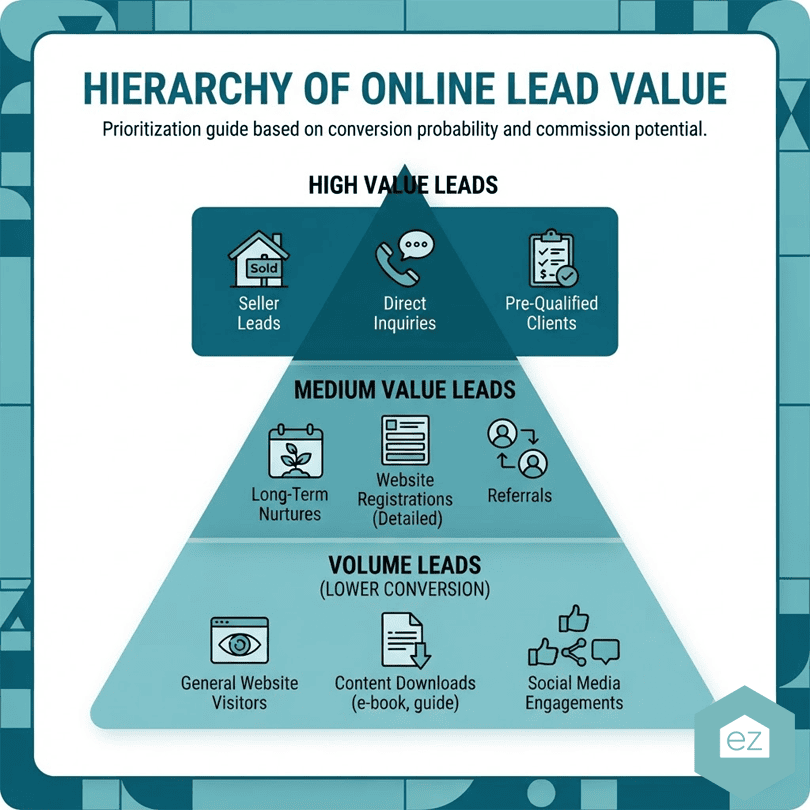
An agent should learn about a client’s move to Texas from the client’s own search activity, months before a listing agreement is signed with somebody else. Texas is Oklahoma’s largest source of new residents, sending more than 32,000 people north in 2023 alone, and it is also one of the most common places Oklahomans go. The traffic runs both ways every year, in every metro in the state.
Name the loss precisely, because most agents mourn the wrong half of it. The purchase in Dallas or Houston was never available to an Oklahoma agent, license limits being what they are. The deal that was genuinely theirs is the house in Edmond, Bixby or Broken Arrow that the client is about to list. That one leaves too, and it leaves for a specific reason: while pricing the new market, the client met an agent on a legacy portal, and the person who answered a question about Frisco is the person who ends up recommending a listing agent back home.
The scale is steady enough to plan around. Census figures put annual state-to-state moves at about 2.1% of Americans, and another 3% or so move to a different county inside their own state. Roughly one person in twenty relocates past the area a single agent or team serves, every year, and every one of them owns or rents a home they are leaving behind.
National coverage closes the gap. The platform runs in all 50 states, so a client pricing Dallas does it on their own agent’s co-branded platform instead of leaving for a portal, and those searches surface to the agent as an early signal. The agent calls before the move is public, handles the sale of the Oklahoma home, and refers the Texas purchase to a vetted agent there for a referral fee. The client moves. The relationship does not.
Proof of consent on every Oklahoma opportunity

Every opportunity ez Home Search sends an Oklahoma partner arrives with documented consent already attached, which removes the single largest legal exposure in prospecting. Most agents never learn that the law treats them as telemarketers the moment they pick up a phone or send a text to someone who has not asked to hear from them. Circle prospecting in Edmond and door-to-door follow-up calls in Lawton sit squarely inside that definition.
The part that surprises people is where the burden lands. If a recipient disputes consent, that person does not have to prove they never agreed. The caller has to produce proof of consent for the number dialed. Every call or text made without that proof exposes the caller to $500, a willful violation runs to $1,500, and no ceiling sits on the total across a campaign. Do Not Call complaints reaching the Federal Trade Commission passed 2.6 million in fiscal year 2025, though federal enforcement is not the exposure that finds a working agent. The exposure that reaches an agent or a ten-person team is the private lawsuit, which any consumer can file on their own and which plaintiffs’ firms increasingly file as class actions.
ezVerify.ai handles that before an Oklahoma partner ever dials. It confirms the person opted in and keeps a recording that proves it, cross-references the number against the national Do Not Call registry, screens it against a known-litigator database, and supplies contact detail the agent would otherwise spend an afternoon chasing. Scoring tools guess which homeowner might sell. This one documents which person agreed to be contacted, which is a different job entirely.
What changes day to day is the confidence. The riskiest task on an agent’s calendar is the outreach, and here it is documented before the call is placed.
Seventy-seven counties, and they are not all still open
Oklahoma has 77 counties, one Exclusive County Partner apiece, and several of them are claimed every month. There is no waiting list that reopens a territory once a partner is in it, because the whole value of the position depends on nobody else holding it. An agent who has been thinking about this for a quarter may find their county spoken for by someone who thought about it for a week.
The operational lift surprises agents who have been burned by a software rollout, because there is almost none. A partner joins a platform that millions of people already use, carrying their own brand across it, and it produces from the first day. Nothing needs configuring, no system needs an administrator, no integrations need sequencing, and no six-week onboarding stands between the partner and the first opportunity.
The model does the same work in Osage County that it does in Oklahoma County, and that is the part small-market agents tend to doubt. The recognized local name matters at least as much in a rural county as in a metro, because of how people choose an agent. The National Association of Realtors finds that 81% of sellers choose without ever contacting a second agent, and that 77% of repeat buyers interview only one. Most clients never run a comparison at all. They call the name they already associate with real estate where they live, and that name gets decided long before anyone picks up a phone.
That name is available in each Oklahoma county exactly once.
What an Oklahoma agent should do about this
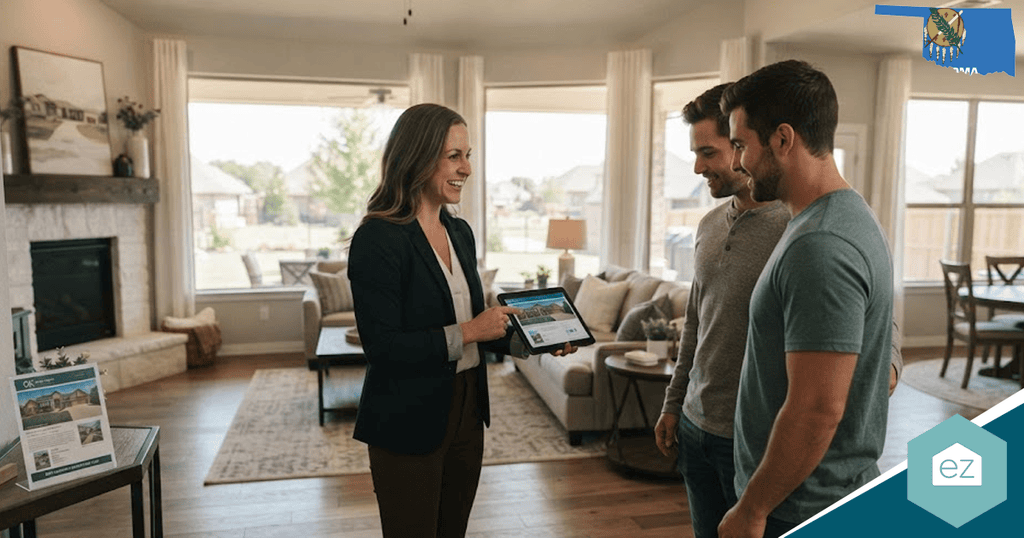
An Oklahoma agent has three real paths from here, and only one of them changes the arithmetic. The first path is the status quo, which means buying more shared leads priced as though Bartlesville and Edmond were the same market and competing on how fast you can dial. It still produces closings. It also produces a cost per closing that rises every year while the pipeline stays where it was.
The second is to hold one Oklahoma county outright and let the platform work the entire homeownership lifecycle inside it, from the dreamer saving homes in Jenks to the owner in Ponca City who has been in place since 2013 and has no idea what their house is worth.
The third is to build the equivalent yourself. That means national data ingestion, a valuation model accurate enough to send an owner every month, listing data that refreshes by the minute, a compliance layer that documents consent, and a co-branded content engine that keeps running during your busy season. It costs millions of dollars and takes years, and no single team or brokerage in Oklahoma is going to get there.
The trade-off in the second path deserves stating plainly, because it is the one that makes agents hesitate. County exclusivity is a flat fee, and a flat fee does not shrink in a slow month the way a lead budget does. The database reactivation that drives most of the return compounds over quarters, so the first ninety days feel quieter than the second year. That is the honest shape of it.
One number is worth carrying out of this. Partner reactivation of past clients, through repeat business and referral, runs 2.5 to 5 times the market rate. Those are clients the agent already earned once and would otherwise never see again.
Find out where your county stands before someone else does.
Every Oklahoma county already has a name people call first. In most of the 77, that name is still being decided.
Frequently asked questions
Homes in southeastern counties like Pittsburg, Le Flore and Pushmataha sit for about 75 days against 47 in the Oklahoma City metro. Is a county down there worth building a pipeline in?
Yes, provided the pipeline is built for that clock rather than borrowed from a metro. The REALTOR® sub-market covering those counties ran 8.96 months of supply and 74.54 average days on market in May 2025 (RE STATS, from Greater Tulsa Association of REALTORS® data), so nurture sequences need to run longer and ad pacing needs to stretch.
The other half of that math favors you. Fewer agents are competing for each listing, and the agent who is already the recognized name does not have to win an auction every time a house comes up. The clock that costs a per-lead buyer another month of spend costs a county partner nothing.
The Oklahoma City-area MLS ended 2025 with more homes on the market than any year since 2015. Does that mean more listing opportunity, or more competition?
Both, and the two show up in different places. The MLSOK marketplace ended 2025 with 7,894 active listings, the highest count in eleven years, along with 34,003 new listings, and it still closed 24,083 sales in 51 days on average against 63 days back in 2015 (OKCMAR annual reports). More sellers came to market and the market absorbed them.
The opportunity is at the seller level, since every one of those listings started with an owner who chose someone. The competition is at the individual listing level, where more choice means pricing and presentation matter more than they did in 2021.
Google is building data centers in Pryor, Stillwater and Muskogee County. Is that real housing demand for an agent in Mayes, Payne or Muskogee County, or just construction traffic?
Both, in sequence, and the sequence is what an agent should plan around. Google announced a $9 billion Oklahoma investment on August 13, 2025, expanding the Pryor campus in Mayes County, adding a Stillwater campus with phase one targeted for 2027, and siting two Muskogee County campuses near Summit and Council Hill.
Construction phases bring rental demand and temporary residents. Operations phases bring salaried households that buy. The second wave lands years after the announcement, which means the agent who becomes the known name in Pryor or Council Hill during the construction years is the one who meets the operations hires.
Oklahoma caps how fast a home’s taxable value can rise. Is that a useful reason to reach out to a long-time owner, or is it a gimmick?
It is useful, as long as it is used as a reason to make contact and never as a claimed motive to sell. Article 10, Section 8B of the Oklahoma Constitution caps annual growth in fair cash value at 3% for homestead property, so an owner who has been in place a decade has been reading a number that drifted away from the market years ago.
It holds up because the owner can verify it themselves. Any conversation that starts with information a homeowner can check is a different conversation from one that starts with a pitch.
More than 32,000 Texans moved to Oklahoma in a single year and close to 30% were Gen Z, while most of the Coloradans arriving were Boomers. Should I work those two buyers the same way?
No, and treating them alike is how an agent loses both. Of the 32,000-plus Texans who came in 2023, close to 30% were Generation Z, drawn largely by housing costs around 30% below Texas (Greater Oklahoma City Economic Development, April 2025). Of roughly 6,300 Coloradans, 38% were Baby Boomers.
The Gen Z arrival is usually making a first purchase and needs affordability math, financing guidance and patience. The Boomer arrival is usually moving equity, often shopping single-level homes near medical care, and moves fast when the right property appears. They search different counties at different price points and they respond to entirely different outreach.
Tinker, Fort Sill and Vance move people on a schedule. How do I get in front of a military seller in Midwest City, Lawton or Enid before the orders turn into a listing?
Be present before the orders exist, because once they arrive the seller has weeks and calls whoever is already familiar. Tinker Air Force Base alone employs more than 26,000 people, and the base-adjacent ZIP codes in Midwest City, Lawton and Enid turn over the same houses repeatedly.
The practical move is a standing value relationship: a monthly home-value update on the property they bought when they arrived, so the number is already in hand when the assignment changes. A service member who has watched their equity for two years does not need a listing presentation. They need a call returned the same day.





Kurt Uhlir is a recognized leader in marketing, growth, and innovation, having helped scale companies and technologies used by millions every day—including at brands like eXp Realty, Sideqik, Vitrue, Oracle, Garmin, Facebook, Meta, Apple, and more. He’s trained tens of thousands of professionals on how to build trust, lead with service, and help clients make wise, informed decisions. At ez Home Search and Sure Send, his focus is on helping high-performing business owners, team leaders, and individual sales leaders grow their businesses through exclusive market access, privacy-first lead systems, and conversion-focused enablement tools.