

South Carolina has grown faster than almost any state, and most of your next deals already live here
South Carolina has been among the country’s fastest-growing states through the 2020s, and in the years ending July 2024 and July 2025 no state grew faster. Across that whole run, the large majority of its home sales have come from people who already lived here. That gap is the opportunity. It is where South Carolina real estate leads are won and lost, and most of the marketing an agent gets pitched points the other way.
Those arrivals matter. In the year ending July 2025 the state added 79,958 residents, the fastest percentage growth in the nation, according to US Census Bureau estimates. In that same year South Carolina closed 91,372 homes. The state holds about 2.12 million households at a homeownership rate of 71.9%, per the Census Bureau’s American Community Survey, which puts roughly 1.52 million owner-occupied households already living here. Even if every arriving household bought a home immediately, newcomers would account for a modest share of the year’s transactions.
Set those figures side by side and the priority changes. Arrivals are the upside. The households already here are the business, and they are the ones an agent can reach first.
Most South Carolina buyers are also sellers, and the state’s listing supply proves it
Most people buying a home in South Carolina are selling one in the same move. First-time buyers are a minority of purchases nationally, and South Carolina’s homeownership rate of 71.9% sits well above the national 65.2%, so the share of buyers here who already hold a house is, if anything, higher. That turns the most common lead-generation mistake in this state into a structural one: treating buyers and sellers as two separate markets. Watch how budget gets allocated. One line goes to listing leads because listings are the prize, another goes to cheap buyer leads because volume is volume, and the two campaigns run as though they were chasing different people.
They are usually chasing the same person at two moments in one move.
The national numbers set the scale. First-time buyers accounted for 21% of purchases as of mid-2025, near the low end of a long slide, and the typical first-time buyer had reached age 40, according to the National Association of REALTORS. The median age of all buyers was 59, and the median owner stayed 11 years before selling. Read that first figure the other way and four in five buyers already hold a house. The ratio is directional rather than exact, because some of them have already closed the sale, some keep the old place as a rental, and some pay cash. Any one closing has a buyer on one side and a seller on the other, two different names. Follow either of them through a full move and the same name shows up on both sides.
Homeowners in South Carolina are listing in rising numbers. New listings across the state rose from 108,948 in 2023 to 120,180 in 2024 and then 131,223 in 2025, the highest count of the ten years from 2016 through 2025, according to South Carolina REALTORS. Those listings came out of a base of roughly 1.52 million owner-occupied households. The sellers are here. The open question is who reaches them before they raise a hand.
That timing problem is what ez Home Search was built for. The platform watches what a person actually does and answers the side of the move that is live. Someone running a valuation or sitting on a home-value page has opened the seller conversation. Someone saving searches and booking tours has started the buy side. Both signals arrive long before either person looks like a prospect to anyone else, because owning a home moves through dreaming, gathering information, and planning well before it looks like a transaction. One spouse will check the value of the house a dozen times before saying a word to the other. The Only Confidential Home Search is what makes that safe: a person explores, saves, and compares while their contact details and their budget stay out of the hands of businesses they never picked, and one Single Local Expert is who they meet instead. The promise ez Home Search makes is A Better Way To Discover Real Estate. Confidentiality is a large part of how it keeps that promise.
The automated valuation model, or AVM, keeps that expert present through the whole stretch. Values land monthly. Equity becomes visible. The buyer an agent met two years ago becomes the listing no competitor saw coming.
What is driving South Carolina’s housing demand
South Carolina’s housing demand runs on several independent engines. No single number explains it. An agent who plans around one of them plans badly, because the engine they picked can stall while the others keep running.
Start with people. The state added 79,958 residents in the year ending July 2025, with 66,622 of that coming from people moving in from other states, while births exceeded deaths by 564, the first natural increase in five years. International migration stayed a minor factor, per US Census Bureau estimates. Size it honestly. Divide that net gain by South Carolina’s average household size and it lands somewhere on the order of 27,000 households, set against roughly 1.52 million owner-occupied households already in the state, so in-migration is a genuine tailwind rather than the main event. It also cuts both ways for an agent. Arrivals are buyers, and the South Carolinians leaving or moving across county lines are listings and relocation business.
Growth is concentrated. Jasper County grew 6.0% in that same year, the fastest rate of any county in the nation, and carried the fastest-growing housing stock in the country for a second consecutive year at 8.3%. Berkeley County grew 3.3% and Horry County 3.2%, with Horry adding 13,244 people, the largest county gain anywhere in the state. Nine of the 46 counties lost population and the other 37 gained. Household formation is the figure that maps most directly onto housing demand, and South Carolina’s household count rose 16.4% between 2010 and 2021 against 11.3% nationally, according to the 2023 Palmetto State Housing Study from the University of South Carolina’s Darla Moore School of Business.
Jobs are the second engine, and they are spread across sectors. Nonfarm employment reached 2,417,300 in December 2025, up 1.4% year over year, and the state set an all-time high of 2,532,080 residents working in March 2026, with health care, private education, and accommodation and food services leading the gains, per the SC Department of Employment and Workforce. New manufacturing keeps arriving on top of that base. Blythewood landed a Scout Motors plant sized at about 4,000 jobs, and a $25 million workforce training center for it opened there in April 2026. Florence County secured an AESC battery plant whose announced investment passed $2 billion, aimed at roughly 2,000 employees. Both sit alongside the long-standing BMW presence in Spartanburg County and Boeing in North Charleston. Freight follows the factories. SC Ports moved 2.6 million twenty-foot equivalent units in fiscal 2025, up 3%, and Inland Port Greer cleared 200,000 rail moves in a twelve-month period for the first time at 205,523, while Inland Port Dillon handled 33,838.
Two slower forces sit underneath. Tourism reached a record $31 billion in economic impact in 2025, roughly $1 billion above the prior high, on figures from the SC Department of Parks, Recreation and Tourism. It lands unevenly. The College of Charleston’s Office of Tourism Analysis put Charleston at $14 billion, up 7%, while Greenville reported $2.5 billion and Myrtle Beach reported a dip of about 3% in occupancy. The state is also aging in a way that reshapes listing supply. Residents 65 and older went from 13.7% of the population in 2010 to 18.1% in 2020, and the South Carolina Revenue and Fiscal Affairs Office projected in February 2025 that this group would overtake the under-18 population in 2027 and reach 21.4% of the state by 2030.
The price bands are pulling apart. Sales above $1 million rose 12.1% to 5,074 in 2025 and are up 39.6% since 2023, while the tier under $150,000 fell 3.3% to 5,274. Two opposite ends of the market now close within a couple of hundred sales of each other. Market time hardly varied between them, running 70 to 77 days from the bottom band to the top.
All of it lands county by county, and one partner holds each county. Check whether yours is still open.
South Carolina’s supply came back, and that changes what a listing costs to win
Start with what the market actually does, measured across a decade instead of a quarter. South Carolina closed 86,017 homes in 2016 and 91,372 in 2025, and it averaged 95,658 closings a year over those ten years, per South Carolina REALTORS. Volume spiked to 116,419 in 2021, fell to a ten-year low of 87,500 in 2023, then rose in both 2024 and 2025. Read whole, that series describes a market fluctuating around roughly 95,000 sales a year, and it is the baseline every other number on this page sits against.
Against that baseline, South Carolina is building and listing at a materially higher rate than it did before the pandemic, and the practical result for an agent is that listings are easier to find and harder to win. The state authorized 45,510 new private housing units in 2025 against 35,618 in 2019, an increase of 27.8%, and it cleared 41,000 units in every year from 2020 through 2025, according to US Census Bureau building-permit data. The six-year run is the story. Any single year inside it is just a data point.
Existing supply followed the same path. Active listings at the end of 2025 stood at 27,641, above the 26,627 available at the end of 2019 and up roughly 157% from the 2021 low of 10,755. Inventory is back near normal. What South Carolina has is neither a glut nor a shortage, but a return to the conditions agents worked in before 2020.
What changed is how much work a listing takes. Days on market went from 48 in 2021 to 72 in 2025, and sellers received 97.9% of list price in 2025 against 99.5% in 2021. Neither figure describes a weak market. Both describe conditions where an agent’s pricing judgment shows up in the result again. A seller who hired on the highest number quoted in 2021 often got away with it. A seller who does that in a 72-day market spends two months walking the price back down, and the comparative market analysis an agent brings to the listing appointment, the CMA, carries more weight than it has in years.
The entry tier moved furthest. Homes selling under $100,000 have declined roughly 14.8% a year since 2014, and in 2022 they fell below 5% of statewide sales for the first time, per the 2023 Palmetto State Housing Study. That shift varies sharply by region. In 2022, sub-$100,000 sales still made up 22.1% of closings in the Central Carolina area and 14.2% in the Pee Dee, against 1.2% around Charleston and 0.8% around Hilton Head. An agent working entry-level buyers in Lake City and one working them in Bluffton hold the same license and run different businesses.
One cost comes with all of that supply. More listings worth pursuing means more competition for each one, and no lead source removes that. Reach does not settle it. The listing goes to the name the seller already had in mind when the conversation started.
How South Carolina’s regions diverge, and what that means for where you spend

South Carolina’s regions do not move together, and they have not for years, which is why one statewide lead plan underserves most of them. In 2025 the spread between the state’s fastest and slowest regions looked like this.
South Carolina regional market activity, 2025
| Region | Counties covered | Closed sales | Change | Median price | Days on market |
|---|---|---|---|---|---|
| The Upstate (Greater Greenville) | Greenville, Laurens | 17,869 | up 8.5% | $319,900 | 53 |
| Spartanburg | Spartanburg, Cherokee, Union | 6,831 | up 12.9% | $292,900 | 45 |
| The Midlands (Greater Columbia) | Richland, Lexington, Kershaw, Newberry, Fairfield | 13,733 | up 4.0% | $278,877 | 50 |
| The Lowcountry (Charleston Trident) | Charleston, Berkeley, Dorchester, Colleton | 17,776 | down 1.7% | $426,708 | 50 |
| The Grand Strand (Coastal Carolinas) | Horry, Georgetown | 16,128 | up 1.5% | $328,000 | 126 |
| The Charlotte border (Piedmont) | York, Lancaster, Chester | 6,643 | up 7.4% | $399,990 | 52 |
Source: South Carolina REALTORS, 2025 Annual Report on the South Carolina Housing Market.
Read the day counts first. They govern how a pipeline has to be built more than any other number in the table. The Spartanburg area moved homes in 45 days in 2025 while the Grand Strand took 126. An agent in Spartanburg, Boiling Springs, or Duncan works a cycle short enough that a lead going quiet for three weeks is a lost deal. An agent in Myrtle Beach, North Myrtle Beach, or Surfside Beach carries the same seller across four months, which is longer than most lead sources are built to sustain.
The Upstate carried the volume growth. Greater Greenville closed 17,869 homes in 2025, up 8.5%, and Spartanburg added 12.9%, the largest percentage gain of any area in the state. Greenville, Greer, and Simpsonville anchor the first. Spartanburg and Boiling Springs anchor the second. The Midlands sat mid-pack on every measure, with 13,733 closings around Columbia, Lexington, and Blythewood at a median of $278,877.
The Lowcountry moved down on volume and up on price. Charleston Trident closed 17,776 homes in 2025, a decline of 1.7%, at a median of $426,708, with inventory up 25.0% across Charleston, Mount Pleasant, North Charleston, and Summerville. More inventory at a higher price is a listing-side opening for an agent who is already known there. The Grand Strand held close to flat at 16,128 closings, up 1.5%, on a median of $328,000 that slipped 0.6%, which is what happens when condos are 30.5% of everything that sells. In the Pee Dee, condos are 3.9%. Conway and Florence are about 70 miles apart and are not the same business.
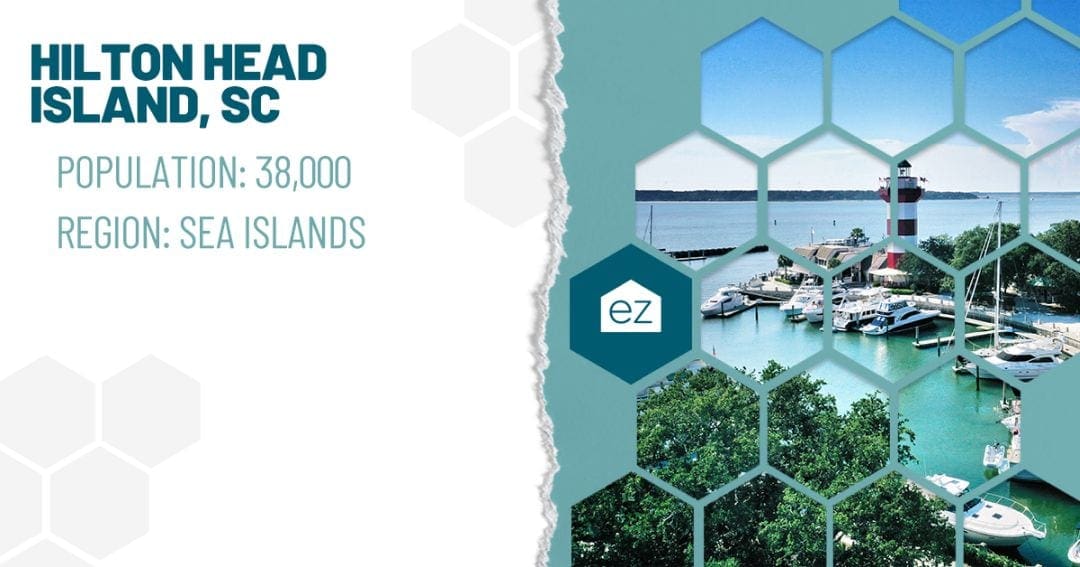
The Piedmont posted the fastest price growth in the state in 2025, ahead of both Charleston and Greenville. That band of York, Lancaster, and Chester counties works as Charlotte’s southern suburbs, and its median rose 4.3% to $399,990 on 6,643 closings with inventory up 30.0%. Rock Hill, Fort Mill, Tega Cay, and Indian Land are the names to know there. At the top of the price range, the Hilton Head area held the state’s highest median at $545,000 while the Beaufort area grew closings 11.9%, and at the other end the Pee Dee ran a median of $229,900.
A statewide average describes none of these places.
Where South Carolina’s people live, and why the county is the unit that matters
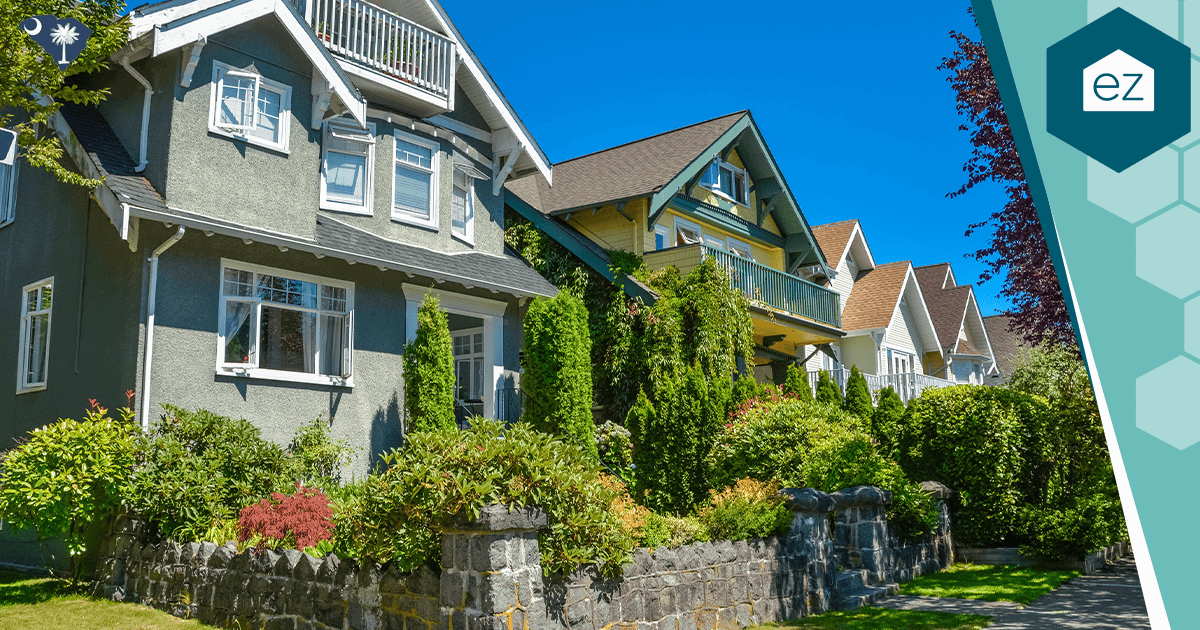
South Carolina has about 5.6 million residents and only seven municipalities holding more than 50,000 people, which tells an agent more about how to organize a business here than most market statistics do. The seven are Charleston at 154,338, Columbia at 139,643, North Charleston at 119,913, Mount Pleasant at 93,993, Rock Hill at 75,259, Greenville at 74,371, and Summerville at roughly 51,900, per US Census Bureau estimates. Add them up and they hold about 12.7% of the state. At the other end of the scale, South Carolina’s 20 smallest incorporated towns each have fewer than 150 residents, according to the South Carolina Revenue and Fiscal Affairs Office.
That distribution is stable. It has shifted slowly for decades and will not change much in the next several years, which makes it one of the few things about this market an agent can build a decade-long plan around.
Population here concentrates by county rather than by city. About 90% of South Carolinians live in half of the state’s 46 counties, per the 2023 Palmetto State Housing Study, and inside those counties a great many of them live in named communities that have no city government at all. Cane Bay and Nexton sit in Berkeley County, Indian Land in Lancaster County, Carolina Forest in Horry County, and Murrells Inlet in Georgetown County. Not one of those is a municipality. Every one of them is a place a buyer names when asked where they want to live, and none of them appears on a list of South Carolina cities.
County-level recognition is therefore what decides who gets the call. The ten largest counties carry the bulk of the state’s transactions, and in four of them the largest city is not the county seat, a distinction worth knowing before an agent decides where to plant a brand.
The ten most populous South Carolina counties and their principal cities
| County | Population | Principal city | Note |
|---|---|---|---|
| Greenville | 548,166 | Greenville | County seat and largest city |
| Richland | 422,117 | Columbia | County seat and state capital |
| Charleston | 420,264 | Charleston | County seat and largest city |
| Horry | 383,016 | Myrtle Beach | Largest city; Conway is the county seat |
| Spartanburg | 347,852 | Spartanburg | County seat and largest city |
| Lexington | 304,887 | Lexington | County seat and largest municipality |
| York | 293,673 | Rock Hill | Largest city; York is the county seat |
| Berkeley | 246,802 | Goose Creek | Largest city; Moncks Corner is the county seat |
| Anderson | 210,478 | Anderson | County seat and largest city |
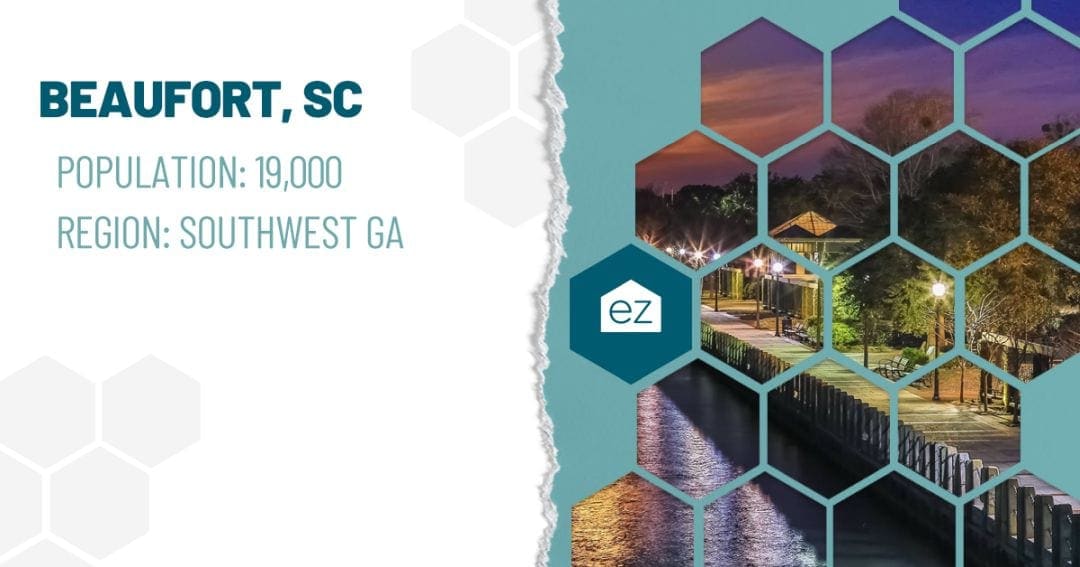
| Beaufort | 195,289 | Hilton Head Island | Largest municipality; Beaufort is the county seat |
Source: US Census Bureau, 2024 American Community Survey 5-Year Estimates.
A brand that covers a county reaches the metro, the small towns, and every unincorporated community between them. A brand that covers a city reaches a fraction of the people who will buy and sell there.
The counties past the metros, where the local name still wins
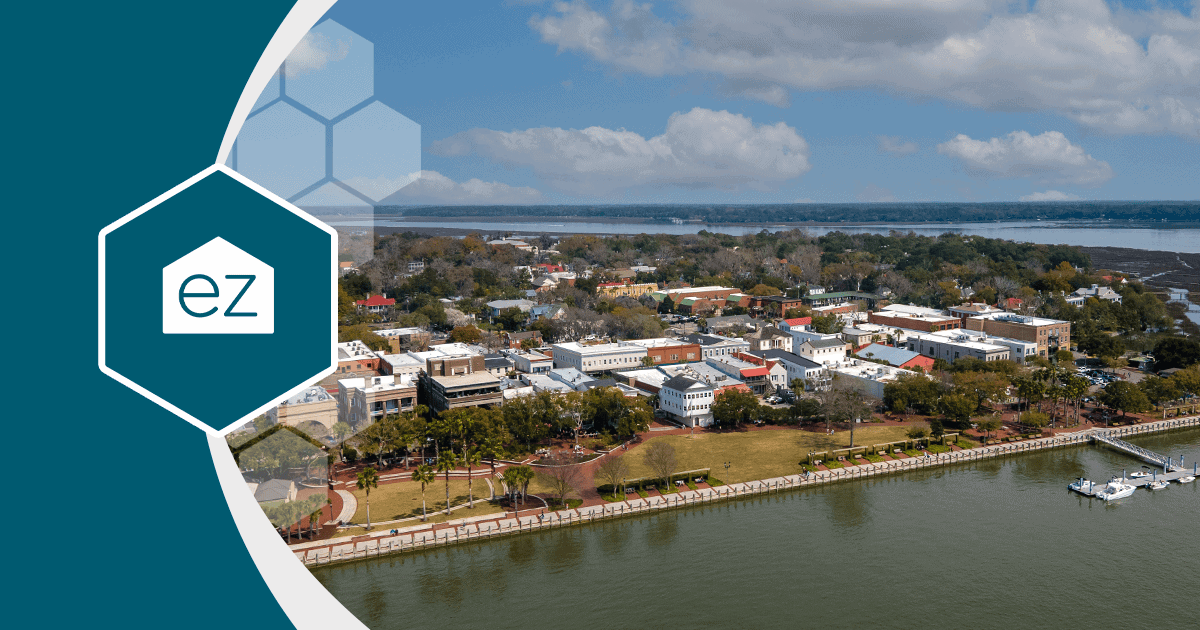
The fastest-growing county in the United States in the year ending July 2025 sat in South Carolina, a long way from Charleston or Greenville. Jasper County grew 6.0%, adding 2,195 people, and carried the fastest-growing housing stock in the country for a second consecutive year at 8.3%, per the South Carolina Department of Employment and Workforce. Ridgeland is the county seat and Hardeeville is the largest community. Neither one shows up on a list of South Carolina’s biggest cities, and one partner holding Jasper County holds both.
Lancaster County shows the same pattern from another direction. The 29707 ZIP code covering most of Indian Land went from roughly 32,800 residents at the 2020 Census to about 37,600 by 2024. It sits in Lancaster County’s panhandle, directly south of Charlotte and Ballantyne, close enough that a household can work on one side of the state line and buy on the other. Indian Land has no municipal government. It has a ZIP code, school attendance zones, and a fast-growing base of owners who, at the national median tenure of 11 years, will be listing those houses well inside the next decade.
The Pee Dee gets dismissed more often than the numbers justify. Inland Port Dillon handled 33,838 rail moves in fiscal 2025, which makes Dillon County a working freight node, and Florence County anchors a real market across Florence, Lake City, and Timmonsville, where Honda South Carolina Manufacturing operates. Median prices there ran $229,900 in 2025. That is a lower price point, and it turns over steadily.
South Carolina counties beyond the big metros
| County | Communities | Note |
|---|---|---|
| Dorchester | Summerville, St. George, Ridgeville, Harleyville, Reevesville | St. George is the county seat; Summerville is far larger and extends into Berkeley County |
| Aiken | Aiken, North Augusta, New Ellenton, Wagener, Jackson | North Augusta sits on the Savannah River opposite Augusta, Georgia |
| Florence | Florence, Lake City, Timmonsville, Johnsonville, Pamplico | Timmonsville hosts Honda South Carolina Manufacturing |
| Pickens | Easley, Clemson, Pickens, Liberty, Central | Pickens is the county seat; Easley is the largest city |
| Lancaster | Lancaster, Indian Land, Kershaw, Van Wyck, Heath Springs | Indian Land is unincorporated and sits against the Charlotte line |
| Oconee | Seneca, Walhalla, Westminster, Salem, West Union | Walhalla is the county seat; Seneca is the largest city |
| Georgetown | Georgetown, Pawleys Island, Murrells Inlet, Litchfield Beach, Andrews | Marketed as the Hammock Coast |
| Kershaw | Camden, Lugoff, Elgin, Bethune, Cassatt | Camden is the county seat |
| Jasper | Ridgeland, Hardeeville, Tillman, Levy, Coosawhatchie | Ridgeland is the county seat; Hardeeville is the largest community |
Source: county government sites, the South Carolina Association of Counties directory, and US Census Bureau municipality records.
Recognition in places like these compounds faster than it does in a metro, because there is less noise competing for it. An agent needs fewer impressions to own the name in Oconee County than in Greenville County. There is no second place for that position.
The remote-work buyer most South Carolina agents are not working
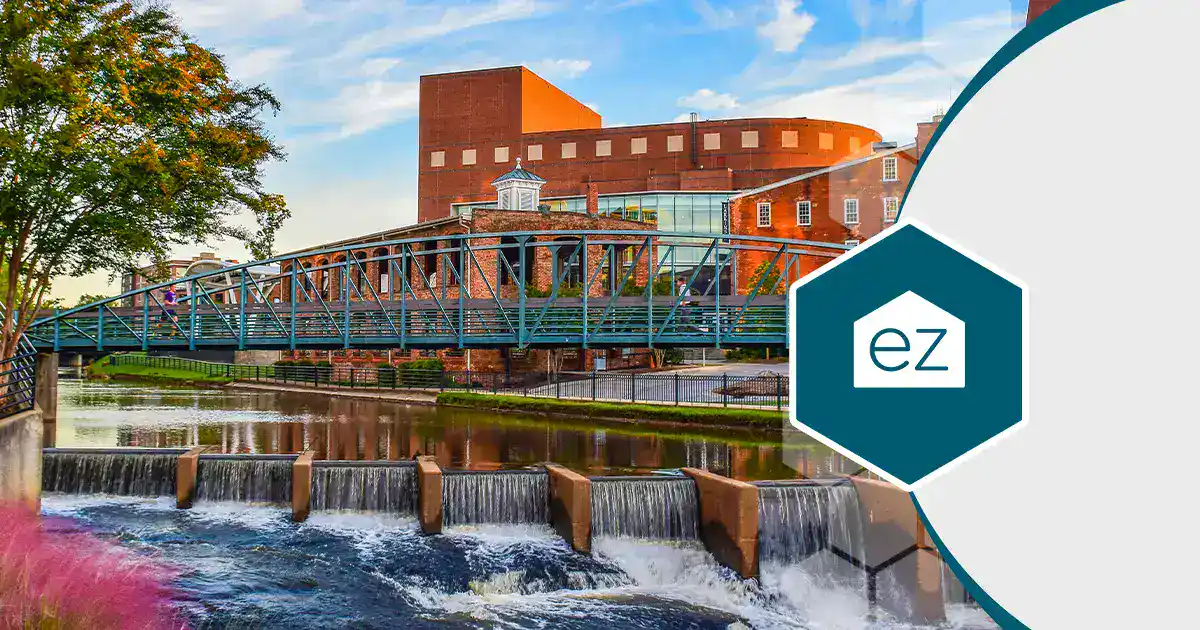
Remote work has not gone anywhere. An agent who reads the return-to-office headlines and stops there gives up business in exactly the South Carolina counties where it costs the least to win. Count the people instead. The Bureau of Labor Statistics recorded 36.7 million teleworkers in the final quarter of 2024, up from 32.5 million in the same period of 2023, and the national telework rate over that span went from 20.7% to 23.4%. Both measures rose.
The employer side reads steadier still. The US Census Bureau’s Business Trends and Outlook Survey reached roughly 150,000 American firms from November 2024 through January 2025. Of those firms, 31.2% said someone on the payroll worked a whole day from home, and when the same firms were asked to look five years out, their projection came back at essentially the level they already ran. Whatever a handful of large-company announcements suggest, the employer base is not planning a retreat.
The finding that touches this state directly comes from the USDA Economic Research Service. Its migration work shows rural counties across the country taking in a net 974,000 movers over 2020 through 2024, which ended better than a decade of losses, and it shows the arrivals weighted toward people aged 25 to 44 rather than toward retirees. All of that is a national count. The kind of county it describes is the kind South Carolina has in quantity: Oconee and Pickens in the Upstate, Laurens in the Lakelands, Newberry and Kershaw in the Midlands, Georgetown along the Hammock Coast, and Colleton and Jasper in the Lowcountry.
What this changes at the listing appointment is concrete. A buyer whose paycheck comes from Charlotte, Atlanta, or a company with no office anywhere shops against criteria a purely local move never produces. A door that shuts on a working space is worth money to them. They will ask whether the lot carries a detached structure, or an accessory dwelling unit, the ADU, before anyone gets to the kitchen. Square footage beats walk-to-town. And a house can lose them over its internet service, which partners tell us most listing descriptions in these counties never mention at all.
An agent who leads a Walhalla or Newberry listing with the office, the ADU, and the internet service is answering a buyer almost nobody else in that county is writing for. That edge compounds when one agent holds the whole county. See whether yours is still open.
What South Carolina agents do for leads, and where each approach runs out

Most South Carolina agents run some combination of seven things. Every one of them works, up to a point. Shared leads bought from legacy portals put names in a pipeline immediately, which is why they stay the default. An IDX website builds an asset the agent owns outright. Cold calling and circle prospecting still produce listings for anyone willing to do the reps. Predictive-seller software surfaces households worth a look. A general-purpose CRM keeps follow-up from falling on the floor. Paid ads and self-produced content put a name in front of people quickly. FSBO and expired farming, open houses, and referral cultivation are the oldest dependable sources in the business, and they are still dependable.
The limits are no secret either. A legacy portal sells the same shared lead to several agents, so the opening conversation becomes a sprint against everyone else who bought that name. An IDX site takes years to earn its ranking and needs feeding every week to keep it, which makes it a slow asset rather than a fast one. Predictive software hands over a score, and a score is not a relationship. A general-purpose CRM is a system the agent has to configure, administer, and keep populated, which is unpaid work stacked on top of the paid work. Ads and content stop producing the week the spend stops.
What makes those limits bite harder in South Carolina is the shape of the state.
Time comes first. A 45-day Spartanburg-area market and a 126-day Grand Strand market do not run on the same pipeline. A lead source tuned to a 45-day cycle starves an agent working a 126-day one, because the follow-up sequence runs dry three months before the client is ready to move.
Reach is the second problem. A meaningful share of coastal owners do not live in South Carolina at all, which is what a 30.5% condo share on the Grand Strand tends to look like from the ownership side. A phone-first prospecting habit reaches that owner worse than anyone else in the state, and every one of those calls still has to clear TCPA consent and the Do Not Call registry.
Economics is the third. Under the rules effective August 17, 2024, sellers no longer automatically pay the buyer’s agent fee, and an agent needs a signed written agreement with a buyer before touring a home. A cold, unqualified buyer lead now costs a conversation and a signature before a single showing. The price of a bad lead went up.
Relationships are the fourth and the largest. South Carolina absorbs tens of thousands of arrivals a year who have no local agent and no local lender. The National Association of REALTORS puts the share of sellers who contact a single agent before choosing at 81%. Most of those arrivals never comparison shop. One name is already familiar to them, and the rest of the market may as well not exist.
ez Home Search answers all four with a single mechanism. A county’s buyers and sellers use a home search that carries the partner’s brand, for years, which turns their own activity into the timing signal and keeps the partner’s name in front of them the entire time. Nobody else is sold that same name. The person arrives already knowing whose platform they have been using, which is why the first call starts somewhere other than the beginning.
What an Exclusive County Partnership changes in a South Carolina county
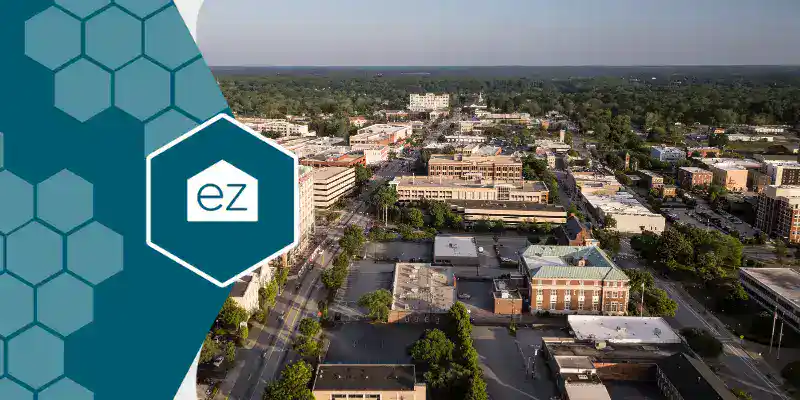
One agent, team, or brokerage takes an entire South Carolina county under an Exclusive County Partnership. Their brand rides the consumer experience across that territory, and no competing partner operates inside the county lines. Leads are not priced individually and closings are not split, so a heavy month pays the partner more without costing them more. That structure is the point. Everything else follows from it.
Start with what arrives. Someone who lands with a partner through ez Home Search brings a readable history: the neighborhoods they went back to, the price band they kept circling, the homes they saved, the second time they ran a valuation. The opening conversation can start with what that person actually wants. Weeks of trust-building are already half done before a word is spoken, and partners typically convert those connections within 30 to 60 days.
The database a partner already owns is the larger opportunity, and most agents let it sit. Repeat and referral business is the least expensive business an agent will ever win, and it leaks for one reason: time. It takes two things to hold a past client, a steady stream of material worth opening and a home search good enough that they come back to it on their own. Almost nobody manages both while also serving live clients. ez Home Search runs the whole apparatus co-branded to the partner, with ezNurture handling automated follow-up inside the CRM the partner already uses, and its partners reactivate past clients, by repeat sale or referral, at 2.5 to 5 times what the market produces on its own.
A database also erodes on its own. Email addresses die off at something like 15% to 22% a year, and a tenth of the people on any list will change a phone number over the same stretch, so a database that looked complete twelve months earlier already has holes in it. That erosion stops when the people on the list keep using a co-branded search, because their current email and phone come back through the platform as they change them.
Relocation is the other leak, and South Carolina has more of it than most states. Census figures show about 2.1% of Americans changing states in a given year and roughly 3% more moving between counties inside their own state. Stay in touch with a client for a decade and those odds add up. A Beaufort County retiree or a Horry County second-home owner who starts shopping a new market does it inside the partner’s co-branded platform, so the move shows up as a signal months early. The partner makes the call while the listing is still theirs to win, and the home they sold that client is the home they list.
Recognition converts all of it. Among repeat buyers, 77% interview a single agent, and reputation ranks as the top factor for 35% of sellers, ahead of anything else they weigh, per the National Association of REALTORS. In a state with seven cities above 50,000 people, that recognition gets earned at the county level or nowhere.
Compliance sits underneath the whole thing. Before an agent dials, ezVerify.ai has already checked the number against a database of known litigators, dropped every number sitting on the Do Not Call registry, established that the person opted in, kept the recording that proves it, and filled out the contact detail an agent would otherwise go hunting for. None of it functions as a lead score. What it produces is documentation, and documentation is what decides a TCPA consent dispute.
The conversion tools show up built and running, because each one belongs to the national platform and simply carries the partner’s name: an AVM widget for their site, a home-value page, an open-house page behind a QR code that signs visitors in, and an instant cash offer for an owner deciding whether to sell fast. Weekly coaching sessions, Shut Up and Dial events, and sales enablement playbooks add people to the partner’s results, which is more than any software does on its own.
None of it happens overnight. A county compounds over quarters, and the partners who do best bring their existing database in on day one instead of waiting for the platform to hand them strangers.
Only one partner holds a South Carolina county
South Carolina has 46 counties and one partner position in each of them. Some are already held. More get claimed every month, and once a county is taken there is no second slot behind it. The position is worth what it is worth precisely because no competing partner operates inside the same lines.
Size is not the variable. Greenville County holds 548,166 residents and Oconee County holds a small fraction of that, and being the recognized local name is worth as much in the smaller one. It may be worth more, since a county with less competition for attention takes fewer impressions to own and holds the position longer once it is established.
What a partner steps into is already running. It works from day one. The listing alerts, the home-value updates, the local market reports, the compliance layer, and the search experience itself all sit inside a national platform used by millions of people, and they carry the partner’s brand from the first week. Nothing needs configuring and nothing needs administering. An agent assembling the equivalent would either buy an all-in-one system and spend months standing it up, or bolt a stack together and spend every week keeping it alive, and on either path the data and the engineering underneath the valuations and the search would stay beyond reach.
Some South Carolina counties are open and some are not, and which is which changes month to month.
Deciding where your South Carolina lead budget goes
Three paths are open to a South Carolina agent or team, and the money goes to one of them whether or not the choice gets made deliberately.
The first is to go on buying shared leads and racing the other agents who bought the same name that morning. It produces volume. It also produces a pipeline the agent never owns, and the price climbs as more agents in Greenville, Charleston, and Myrtle Beach bid for the same inventory.
The second is to build the whole apparatus in house: the search experience, the valuation model, the school and tax data, the alert infrastructure, the consent and compliance layer. Teams do try this. The data sourcing alone sits beyond what any single brokerage funds, and the engineering never reaches a finish line.
The third is to hold a county. That means one partner in one territory, with no charge per lead, no commission split, and a co-branded platform running the follow-up agents never find time for.
Here is the trade-off, stated plainly. A county partnership is a commitment to work a territory, not a switch to flip off after a slow month, and the compounding shows up across quarters. An agent who needs leads this week should buy leads this week.
One number is worth more than the rest of this page. Past clients return to an ez Home Search partner at 2.5 to 5 times the market’s own rate, arriving as repeat business or as a referral. That is business already earned once, and silence is the only thing that takes it away.
Every county in South Carolina will have one recognized name in it a few years from now. Find out whether yours is still unclaimed.
Frequently asked questions
South Carolina’s Upstate and Lowcountry markets do not move together. Does one statewide lead strategy still work here?
It works only with adjustment. In 2025 Spartanburg grew closings 12.9% while Charleston Trident declined 1.7%, and the two carry different price points, different inventory levels, and different buyer profiles. A statewide campaign spends the same dollar against both and gets uneven returns.
The practical fix is to run the plan at county level, which is also how ez Home Search assigns territory. One partner holds one county and works it on that county’s terms.
Condos are roughly a third of Grand Strand sales and a small fraction of Pee Dee sales. How should that change where I spend?
It should change nearly everything about your follow-up. Condos were 30.5% of Grand Strand closings in 2025 and 3.9% in the Pee Dee. A coastal condo buyer is frequently a second-home or investment buyer living out of state, so phone-first prospecting reaches them poorly while platform activity and email reach them well. A Pee Dee agent is mostly serving primary-residence buyers who live a few miles away. The license is the same and the playbook should not be.
Market time on the Grand Strand runs months longer than around Spartanburg. How do I keep a pipeline warm across a gap that wide?
Build the sequence for the longer market and let the shorter one finish early. The gap in 2025 ran 45 days in the Spartanburg area against 126 on the Grand Strand. Most lead-nurture sequences run 30 to 90 days and then stop, which drops a Grand Strand seller out of the sequence before they ever list.
A search experience the client keeps using on their own behaves differently from a drip campaign, because the engagement continues even in the weeks when the agent has nothing new to say.
How does South Carolina’s 4% legal residence versus 6% assessment ratio change the way I follow up with second-home buyers?
It hands you a reason to call that has nothing to do with asking for the listing. South Carolina assesses an owner-occupied legal residence at 4% of fair market value and non-owner-occupied residential property at 6%, which puts 50% more taxable value on the same house. The 4% rate is not automatic. The owner must apply with the county assessor and can hold it on only one property at a time.
Plenty of second-home buyers do not learn this until after closing, and owners who later convert a property to a primary residence have to file for it themselves. An agent who raises it early becomes useful before they are needed.
Are Charlotte-area buyers landing in Indian Land, Fort Mill, and Tega Cay worth targeting as a South Carolina agent?
Yes, and the numbers support it. The Piedmont region of York, Lancaster, and Chester counties posted the fastest median price growth in the state in 2025 at 4.3%, reaching $399,990, with inventory up 30.0%. The 29707 ZIP code around Indian Land counted roughly 32,800 residents at the 2020 Census and about 37,600 by 2024.
These buyers work in North Carolina and buy in South Carolina, so they arrive with no local relationships at all. That is the exact situation where a recognized county name wins the client without a comparison ever happening.
Blythewood and Florence County have landed multi-thousand-job manufacturing plants. How early should a Midlands or Pee Dee agent start working that relocation demand?
Start earlier than feels natural. Blythewood in Richland County landed a Scout Motors plant sized at about 4,000 jobs, and Florence County landed an AESC battery plant whose announced investment passed $2 billion. Scout Motors targeted its first vehicles for 2027 while hiring its first 200 to 400 floor workers by the end of 2026, which is the shape of every plant timeline: the households arrive well before the line runs.
Those households research schools, property taxes, and neighborhoods long before they contact anybody. You reach them during that research stage, well ahead of the transaction, and that is the whole advantage of a platform people use privately for months.
South Carolina has led the nation in population growth. Should new arrivals be where most of my marketing goes?
No, and the arithmetic is not close. South Carolina added 79,958 residents in the year ending July 2025, with 66,622 of that from domestic migration, which works out to something on the order of 27,000 households at the state’s average household size. In that same year the state closed 91,372 homes against roughly 1.52 million owner-occupied households.
Arrivals are genuine business and they are a minority of it. Most of the year’s transactions came from people who already lived here, which is why reactivating a database outperforms buying new leads for most partners who try both.
South Carolina’s 65-plus population is on track to outnumber its under-18 population. What does that mean for a Beaufort or Horry County listing pipeline?
It means your listing pipeline is being assembled by people who have not decided anything yet. The South Carolina Revenue and Fiscal Affairs Office projected in February 2025 that residents 65 and older would pass those under 18 in 2027, and Beaufort and Horry counties concentrate that shift.
There is a tax argument to have with those owners well before a listing conversation. Under the rules in force for the 2025 tax year, a $15,000 deduction opens against any South Carolina income beginning in the year a resident turns 65, on top of a retirement-income deduction of up to $10,000; military retirement income is deducted in full, and Social Security is not taxed by the state at all, per the South Carolina Department of Revenue. Very few owners arrive knowing all of that.
An owner in their late sixties weighing whether to stay, modify, or sell works through that decision across years. They will not open it by calling an agent. They will open it by checking what the house is worth, and the agent whose brand sits on that valuation is the one they call.




Kurt Uhlir is a recognized leader in marketing, growth, and innovation, having helped scale companies and technologies used by millions every day—including at brands like eXp Realty, Sideqik, Vitrue, Oracle, Garmin, Facebook, Meta, Apple, and more. He’s trained tens of thousands of professionals on how to build trust, lead with service, and help clients make wise, informed decisions. At ez Home Search and Sure Send, his focus is on helping high-performing business owners, team leaders, and individual sales leaders grow their businesses through exclusive market access, privacy-first lead systems, and conversion-focused enablement tools.