

Vermont’s population slipped in 2024 and again in 2025, and the number of Vermont households rose in both of those same years. The Legislature’s nonpartisan Joint Fiscal Office stated it flatly in May 2026: population down, households up. That gap is the most useful fact available to anyone working Vermont real estate leads, because a household is what signs a listing agreement. A person is not.
The arithmetic behind the population headline is mostly about age. Across the year ending July 2025 the state recorded 4,979 births against 6,748 deaths. Net migration over the same stretch came out 103 people short, with 623 arrivals from other countries set against a net loss of 726 to other states. Widen the window and the direction reverses. From April 2020 through July 2025 Vermont added 1,568 residents, because net migration of 10,279 more than covered a natural decline of 8,669.
The line worth building a business on sits underneath the headline. Vermont holds roughly 193,000 owner households, and about three in every hundred of them sell in any given year. Those owners are the market. Even in the slowest recent year they produced 5,759 sales, which dwarfs anything migration did in either direction.
Ten trends shaping the Vermont housing market
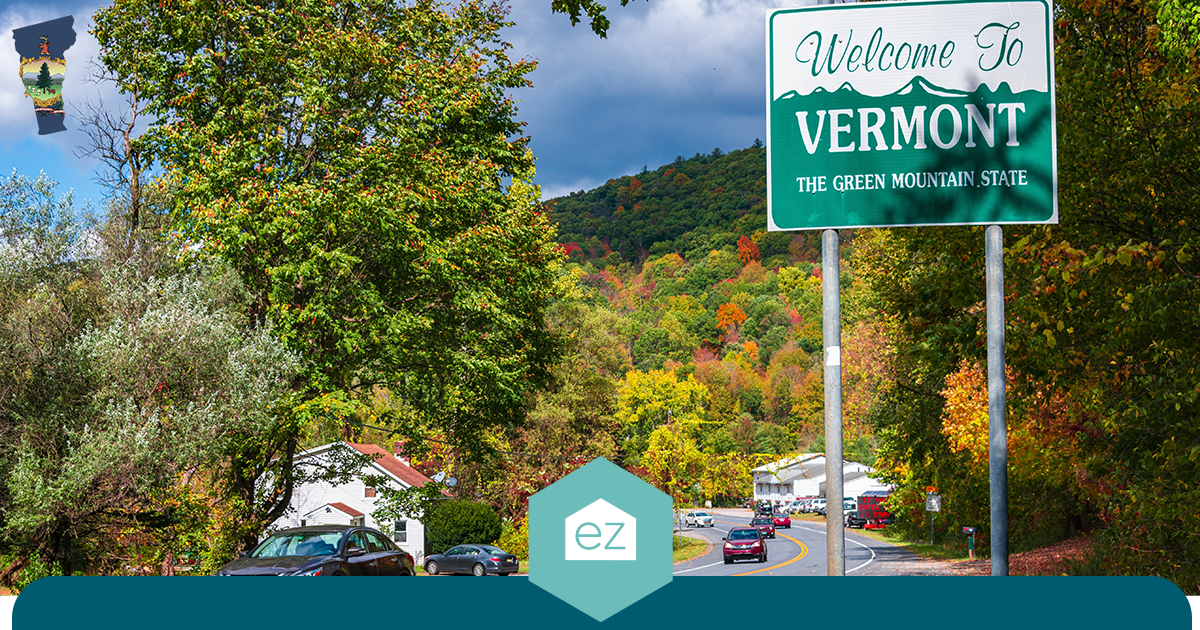
Vermont’s market is steady, and the ten forces below are what move it.
Sales volume fluctuates; it does not fall. Primary home sales cleared 8,000 in each of 2019, 2020, and 2021, slid to 5,759 in 2023, the lowest annual total since 2012, then rose about 9% in 2024 and rose again through 2025. The source is Property Transfer Tax records, which capture every residential title transfer recorded in Vermont, so that series is a census of sales rather than a survey.
Prices climbed straight through the sales trough. The statewide median primary home went from $309,000 in 2022 to $325,000 in 2023, roughly $353,000 in 2024, and roughly $370,000 by mid-2025. Apart from a slight dip in Lamoille County, no Vermont county posted an annual median decline between 2019 and 2023.
Inventory loosened without volume falling. Those are two different measurements, and treating them as one is the most common error in market commentary. Listings ran more than 8% above the prior year through August 2025, and months of supply sat near 2.6 against a balanced level of four to six. Stock on the market is a snapshot. Sales are a flow.
Migration is small in both directions. Net migration swung from a loss of 1,458 in 2016 to a gain of 5,250 in 2021 and back to a loss of 726 to other states by 2025. Set against 273,000 households, a few hundred people is a rounding error. Departures are listings and relocation referrals. Arrivals are buyers.
Employment spreads across sectors rather than one anchor. Health care and social assistance added about 500 jobs in 2025 and remains the largest and fastest-growing sector, driven by the age profile below. Manufacturing contributes roughly $3B to state GDP at an average wage of $71,831, about 11.4% above the statewide average for all jobs. Professional and technical services and tourism round out the Department of Labor’s leading growth sectors.
A lot of Vermont buyers work for themselves. Census figures counted 65,028 nonemployer establishments in Vermont in 2023, meaning businesses with an owner and no payroll, against 20,841 that do employ someone. About three in four Vermont businesses have no employees. Statewide that works out to one owner-run business for every four households. That is a large slice of your buyer pool. Those owners prove income with tax returns and profit-and-loss statements rather than pay stubs, so the financing conversation with them has to start earlier than it does with a salaried buyer.
The owner base is old and getting older. Residents 65 and over make up 24.1% of Vermont, and the median age of 43.2 ranks third oldest in the country. Of the 16,000 to 17,000 new owner households the Vermont Housing Finance Agency projects through 2029, more than 12,000 will be headed by someone past 65.
Households keep shrinking while the homes do not. Every net household added between 2010 and 2022 was a one or two person household, and the count of larger households fell over the same stretch. Yet 68% of Vermont owner households hold one or two people while only 26% of the homes here have two bedrooms or fewer.
The stock is old and new construction is expensive. More than a quarter of Vermont homes predate 1940, against 12% nationally, and the median new home price rose from $365,569 in 2019 to $616,500 in 2023.
Land-use law is being rewritten around housing. Act 47 of 2023 raised the Act 250 review threshold from 10 to 25 units in downtowns and village centers and barred local bans on multi-family housing, accessory dwellings, and parking minimums in those areas. Act 181 of 2024 replaced Act 250’s size-based triggers with location-based tiers on a five-year schedule.
One more thing is worth knowing before you plan against any of it. Vermont is the only state in the country without regular official population projections, a gap the Census Bureau’s own listing of state projection programs confirms. The number people quote loudest is the one Vermont measures least.
Most Vermont buyers are also sellers, and most of them start as buyers
About four buyers in five are carrying a house they intend to sell in order to fund the next one, so an agent running a listing campaign and a buyer-lead campaign is often running one campaign twice. Most agents work a single side anyway. They market “list with me” to owners, or they buy cold buyer names, and one move gets split into two campaigns aimed at two imagined customers.
The national numbers show how large that miss is. The National Association of Realtors runs a Profile of Home Buyers and Sellers each year, and the 2025 edition put the first-time buyer share at 21%, the lowest reading since the survey began in 1981. Repeat buyers made up the other 79%. That first-time buyer was 40 years old at the median, an all-time high in the series, against 62 for the typical repeat buyer, and 30% of all buyers paid cash.
Vermont has no clean state-level first-time-buyer series, and saying so is better than inventing one. What Vermont does have points the same way, harder. Nearly 73% of Vermont households own their home, the third highest rate in the country against roughly 65% nationally. The share of Vermont homeowners carrying a mortgage eased from 63% in 2017 to 61% in 2022, consistent with older owners retiring loans and with cash purchases. Younger buyers are gaining ground rather than disappearing: homeownership among Vermonters aged 25 to 34 reached 48.9% in 2022, up 7% over the 2017 estimate and the highest that age group had recorded since 2007.
Put those together and the Vermont buyer sitting across from you is usually holding a house.
That changes what counts as a lead. Someone who runs a home valuation, returns to a home-value page, or asks what their equity would cover has opened the seller conversation, whatever they typed into a search bar first. Someone whose saved searches wake up and who books a tour has opened the buyer side. Most people do both, in sequence, across months or years. ez Home Search reads that activity and serves whichever side is live, and the automated valuation model (AVM) keeps an owner coming back to check their number long before they are ready to list, so the buyer you help now becomes the listing you earn later.
The arithmetic underneath is patient rather than thin. About three in every hundred Vermont owner households sell in a given year. The other ninety-seven are standing in front of a decision they have not made yet, and the whole job is to be there before they make it.
Anyone who wants to build on that base has one question to settle first: whether their Vermont county is still open.
Roughly one in six Vermont homes belongs to someone who lives somewhere else
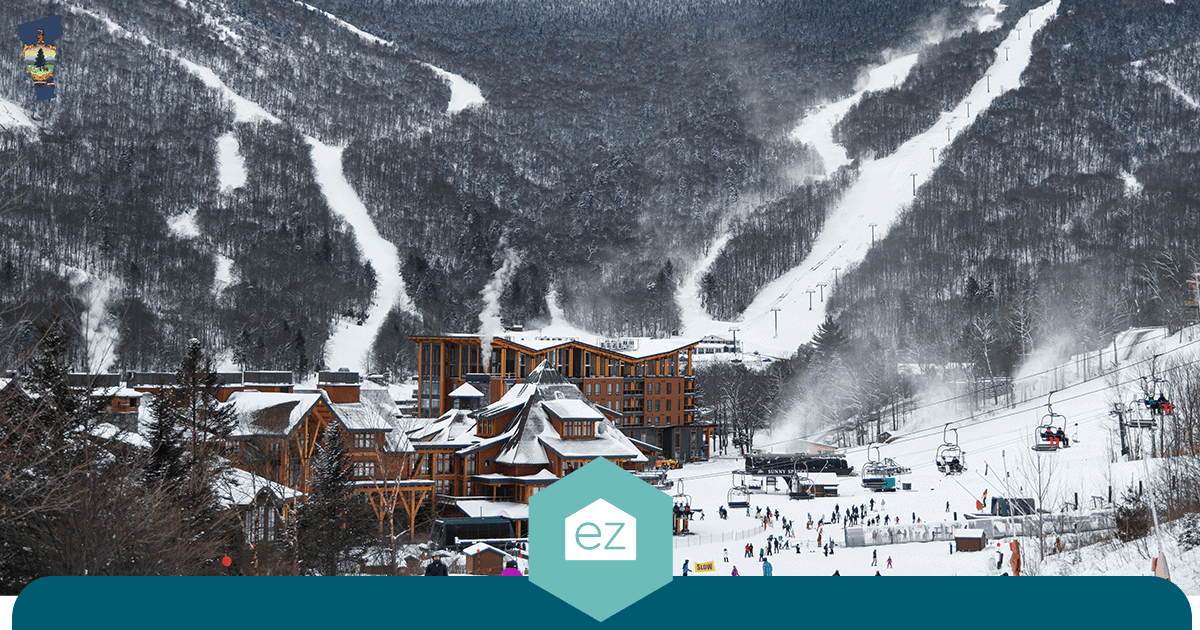
Seasonal, occasional-use, and vacation homes account for between 15% and 17% of Vermont’s housing stock depending on the Census vintage, which works out to roughly 50,000 homes and the second highest share of any state. Maine ranks first and New Hampshire third, and Vermont has sat inside the national top three since the Census Bureau started counting in 1940. Vermont’s own share has held high across that span: 9% in 1950, 15% in 1980, 17% in 1990, and roughly 15% in the most recent estimates.
That one fact explains a recurring data problem. Three quarters of every Vermont home the Census Bureau files as “vacant” is one of these, which is why national rankings occasionally announce that Vermont leads the country in empty houses. Those houses are not empty. They belong to somebody who sleeps elsewhere most of the year.
Two official sources count them and the counts disagree by design. The Census Bureau classifies a home by how its occupants use it. Vermont’s property Grand List classifies by the building’s physical characteristics, things like whether it has insulation or a heat source, so a comfortable year-round second home is not a “seasonal property” on the Grand List at all. Neither count is wrong. They answer different questions, and an agent quoting one at a listing appointment should know which one they are holding.
The geography is lopsided. Seasonal homes make up 38% of the housing stock in Essex County and 37% in Grand Isle County, the two highest shares in Vermont, against 3% in Chittenden County, the lowest. At the town level the concentration sits where you would guess. Stowe, Killington, Ludlow, West Dover, and Warren lead Vermont both for seasonal homes and for short-term rental listings. The Vermont Housing Finance Agency’s analysis put roughly 2.5% of all Vermont homes as listed short-term rentals at some point in an average month before 2020, with about 1.4% listed consistently. That level dipped and has since returned.
The consequence for lead generation is uncomfortable. A meaningful share of the Vermont listing pool belongs to a person you cannot door-knock, cannot farm, cannot meet at an open house, and cannot reach with a postcard drop, because they are in another state for most of the year. They still sell eventually. They sell to somebody. The agent who wins that listing is the one whose name stayed in front of them the entire time they were away.
How Vermont’s six regions diverge, and what that changes about your marketing
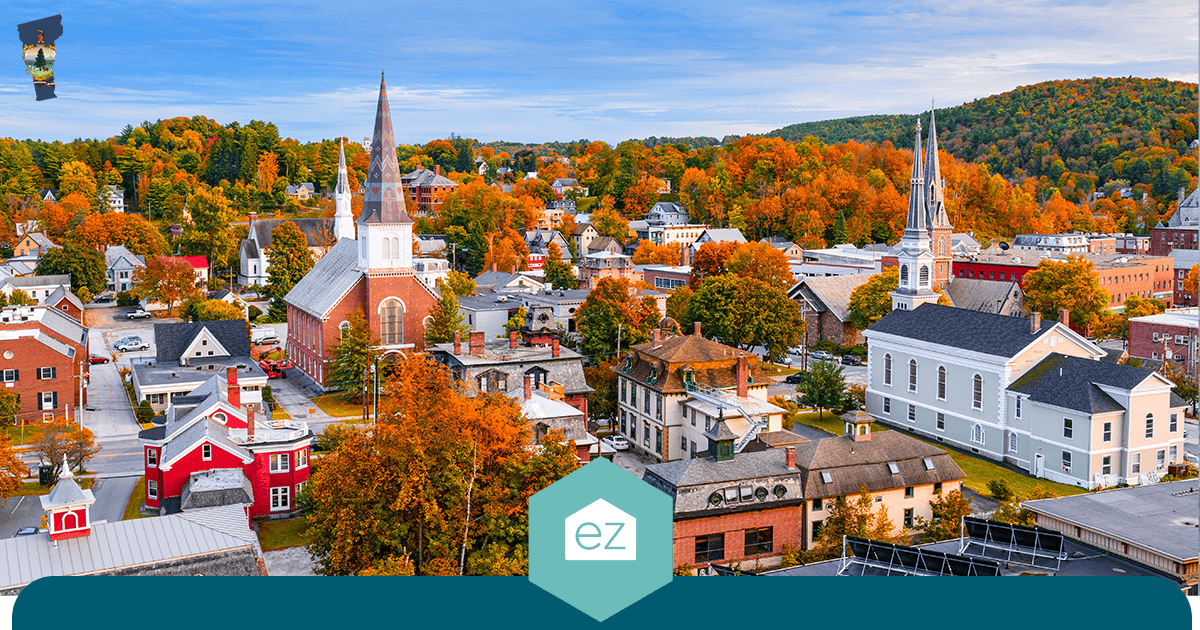
The costliest Vermont county has run about two and a half times the cheapest one in both of the recent years the county comparison covers, which is why a single marketing message cannot serve the whole map. In 2023 the median primary home sold for $185,000 in Essex County and $460,500 in Chittenden County. In 2024 that same pair read $200,000 and $500,000. The levels move. The ratio barely does.
The rest of the 2023 spread, from Property Transfer Tax records, fills in between those two poles: Lamoille at $390,000, Addison at $350,000, Washington at $325,000, Grand Isle at $320,500, Bennington and Windsor at $310,000 each, Windham at $299,000, Franklin at $282,000, Rutland at $275,000, Orleans at $240,000, Orange at $232,284, and Caledonia at $225,000. Only three Vermont counties, Caledonia, Orleans, and Essex, sat inside the affordable band on the Vermont Housing Finance Agency’s home-price-to-income ratio in 2022, a measure that sets a county’s median home price against its median household income.
| Region | Counties | What the data shows |
|---|---|---|
| Greater Burlington | Chittenden | Vermont’s highest prices and its lowest seasonal-home share at 3%. Holds 31% of the state’s rental stock, and 36% of its own homes are rentals, both the highest in Vermont. |
| Northwest Vermont and the Champlain Islands | Franklin, Grand Isle | Franklin is the affordable commuter alternative to Chittenden, with a single-family median near $400,000 in 2025 on rising unit sales. Grand Isle carries the second-highest seasonal-home share at 37%. |
| Addison County and the middle Champlain Valley | Addison | A $350,000 median primary home in 2023, with Middlebury anchoring year-round demand and Vergennes, one of Vermont’s 10 incorporated cities, serving as a second center. |
| Central Vermont and the resort corridor | Washington, Lamoille, Orange | Lamoille held Vermont’s second-highest county median in 2023 at $390,000, lifted by Stowe. Washington County single-family sales rose 16% in 2025. Orange County stayed among the most affordable at $232,284. |
| The Northeast Kingdom | Caledonia, Orleans, Essex | Vermont’s most affordable region, and the only one where every county sat inside the affordable price-to-income range in 2022. Essex also carries Vermont’s highest seasonal-home share at 38%. |
| Southern Vermont and the Upper Valley | Rutland, Windsor, Windham, Bennington | Most of Vermont’s roughly 50,000 seasonal homes sit in these four counties. Medians in 2023 ran from $275,000 in Rutland to $310,000 in Windsor and Bennington. |
County single-family figures for 2025 come from Vermont MLS reporting; the median primary-home figures come from Property Transfer Tax records published by the Vermont Housing Finance Agency. The two measure different things, which is why they do not match.
Chittenden County earns its own note, because it behaves unlike the rest of Vermont. Apartment construction there reached 824 units in 2024, more than twice the annual pace of any year in the prior two decades, and roughly 570 more units finished in 2025 with about 550 projected for 2026. Rental vacancy moved from under 1%, where it sat for more than a year beginning in December 2021, up to about 3% by June 2025. That matters to a buyer’s agent. Renters who are no longer scrambling for a unit are renters with room to plan a purchase.
Every Vermont county, and the towns where the transactions happen
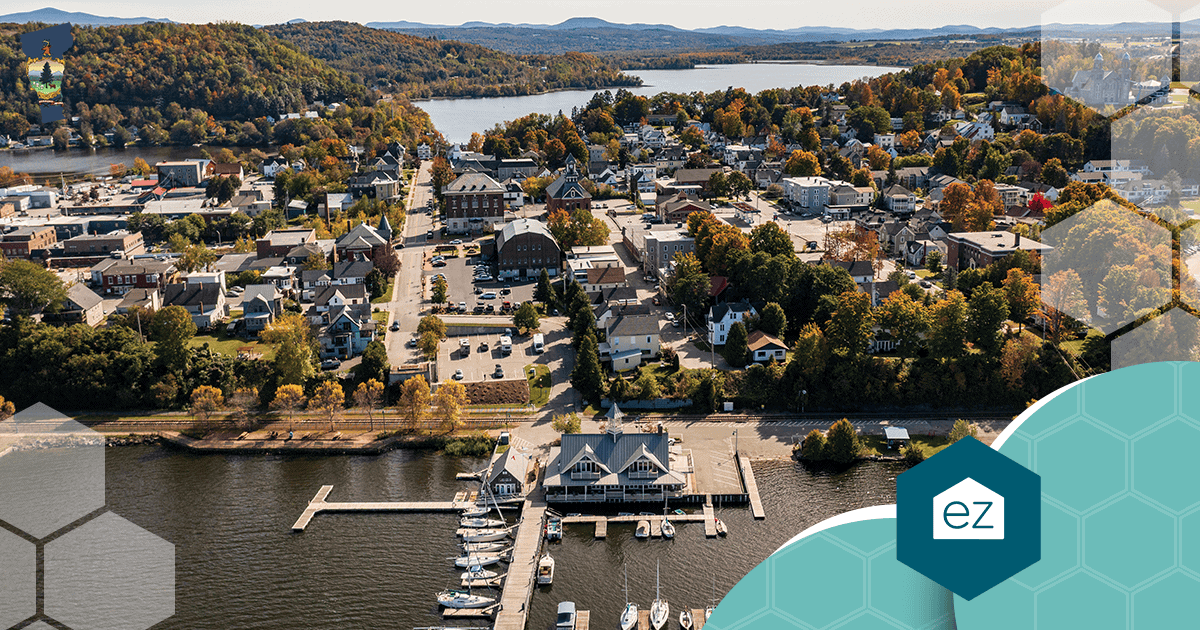
Almost all Vermont business gets written in towns and villages rather than cities. The state has 14 counties and only 10 incorporated cities, because a Vermont municipality becomes a city by petitioning the Legislature rather than by crossing a population threshold. That makes town-level knowledge most of the job here, in a way it never is somewhere with three big cities and a ring of suburbs. County seats are called shire towns, and Bennington County is the only one with two of them, Manchester in the north and Bennington in the south.
| County | Population | Shire town | Principal centers |
|---|---|---|---|
| Chittenden | 169,758 | Burlington | Burlington, South Burlington, Essex Junction, Colchester |
| Rutland | 60,425 | Rutland | Rutland City, Killington, Castleton |
| Washington | 60,017 | Montpelier | Montpelier, Barre City, Waterbury |
| Windsor | 57,990 | Woodstock | White River Junction, Springfield, Woodstock |
| Franklin | 50,638 | St. Albans | St. Albans City, Swanton, Georgia |
| Windham | 45,923 | Newfane | Brattleboro, Wilmington, Bellows Falls |
| Addison | 37,664 | Middlebury | Middlebury, Vergennes, Bristol |
| Bennington | 37,269 | Bennington and Manchester | Bennington, Manchester, Arlington |
| Caledonia | 30,475 | St. Johnsbury | St. Johnsbury, Lyndon |
| Orange | 29,761 | Chelsea | Randolph, Williamstown, Bradford |
Populations are Census American Community Survey 2024 five-year estimates. Chittenden County alone holds more than a quarter of everyone in Vermont.
Two of those rows carry a detail worth keeping straight at a listing appointment. Orange County’s shire town is Chelsea, but its largest town is Randolph, at roughly 5,012 people. Montpelier, the shire town of Washington County, is the smallest state capital in the country.
Outside the Burlington area, the towns below are where a great deal of Vermont business gets written.
| County | Communities |
|---|---|
| Rutland | Brandon, Fair Haven, Poultney, West Rutland |
| Washington | Northfield, Waitsfield, Warren, Moretown |
| Windsor | Ludlow, Norwich, Chester, Hartland |
| Franklin | Fairfax, Enosburg Falls, Richford, Highgate |
| Windham | Putney, Dover, Londonderry, Dummerston |
| Addison | Ferrisburgh, Starksboro, Leicester, Weybridge |
| Bennington | Dorset, Pownal, Winhall |
| Caledonia | Danville, Hardwick, Barnet |
| Orleans | Newport City, Derby, Barton, Craftsbury |
| Lamoille | Stowe, Morrisville, Hyde Park, Johnson |
That leaves the two smallest counties, and neither should be written off. Grand Isle County, at 7,450 people across North Hero, South Hero, Grand Isle, Alburgh, and Isle La Motte, sits on Lake Champlain inside a commutable distance of Burlington, and 37% of its homes belong to someone using them seasonally. Essex County, at 5,982, runs from Guildhall, a shire town of roughly 257 people, out to Lunenburg, its largest town at about 1,273, plus Concord, Canaan, and Brighton. Essex is the most affordable county in Vermont and the one with the highest seasonal-home share. Small counties are still whole counties, and in this model a whole county is the unit.
Vermont ranks seventh in the nation for working from home
Vermont’s work-from-home share reached 15.96% in 2024, up from 7.04% in 2019, which places it seventh among all states and the District of Columbia, ahead of Virginia, Utah, Maryland, and Massachusetts. Both figures are Census Bureau numbers, from the American Community Survey one-year estimates, table B08006. For the second least populous state in the country, that is an unusual position to hold, and most agents working here have no idea they hold it.
It is also the trend everyone has been told is finished. The federal evidence says otherwise.
In 2026 the Bureau of Labor Statistics published a study built on the National Longitudinal Survey of Youth 1979, tracking one cohort through four decades of working life, the longest continuous look at remote work any federal agency has put out. The finding that matters here: workers reporting no telework, or only a minimal amount of it, never came back to their pre-pandemic share of the workforce, which BLS read as a structural move toward broader telework. Separately, the Census Bureau’s Business Trends and Outlook Survey put the question to roughly 150,000 firms, and those employers put their five-year forecast for remote work at roughly the level they were already running.
For a Vermont agent the useful question skips past whether remote work holds and lands on which parts of the state are positioned to take the demand.
The answer follows the fiber. Communications Union Districts, which are governed by their member towns, have been building it where private carriers did not. Otter Creek’s completed build reached 3,626 locations in the Rutland County region, 1,278 of which were addresses with no service at all. DVFiber reached nearly 5,000 locations in southeastern Vermont, 4,290 of them previously unserved or underserved, with roughly 60 more miles running through West Brattleboro, Dummerston, Marlboro, Newfane, and Guilford targeted for completion in August 2026. Federal approval released $93 million of Vermont’s roughly $229 million broadband allocation to keep that work moving.
Statewide, 89.7% of Vermont households hold a broadband subscription and 43.8% of adults 25 and over hold a bachelor’s degree or higher. That combination, in the Northeast Kingdom or Rutland County or the Windham County towns named above, is what a remote buyer needs in place before a purchase is even thinkable.
It changes what they ask you for, too. They want a workroom with a door on it, or an outbuilding or accessory dwelling unit set apart from the main house, and more square footage than a commute-radius budget used to allow, on a connection that carries a video call through a Tuesday afternoon. A listing presentation that speaks to none of that is selling the house the way houses sold in 2015.
If you would rather have that demand pointed at you than at whoever happens to rank for the town name, it is worth finding out whether your county is still open.
The seven ways Vermont agents fill a pipeline, and where each one stops
Vermont’s lead-generation problem starts with a ratio. The Vermont Association of Realtors serves more than 2,000 members, and statewide primary-home sales have run from roughly 5,800 in the slowest recent year to above 8,000 in the busiest, across the past decade. Divide one into the other. There is no version of that arithmetic in which an agent here can afford to lose a past client, and no version in which raw volume covers a weak conversion rate.
Every approach below works. Each one also has a point where it stops.
Shared leads from legacy portals deliver volume immediately, with nothing to build. They also deliver the same person to several agents at once, cold and unverified, priced either per lead or as a slice of the commission if a deal ever closes. You are paying for an introduction and racing three other people to it.
An IDX website you build and run yourself produces something you own, which matters more than most agents credit. It is also slow to rank, and the data underneath it is the part a single team cannot buy. Accurate valuations, school-level detail, and property-tax comparison across 14 counties sit at the infrastructure layer, well below anything a website theme can add.
Cold calling and circle prospecting still work on the resident owner who picks up. They do nothing whatsoever about the absentee owners described earlier, who hold a large share of Vermont’s listing pool. They also carry consent exposure, which the next section covers.
Predictive seller scoring tells you that a name has a high probability of selling. It does not hand you a relationship with that name, and the agent who already has one will get the listing regardless of what the model said.
All-in-one CRMs promise the entire stack in a single login. What arrives is a configuration project, an administration burden, and a system that stays only as good as the hours you keep feeding it.
Done-for-you content and newsletters fill an inbox. They are another subscription to administer, parked away from anywhere your clients spend their time, and nobody goes back to a newsletter the way they go back to a home search.
Paid advertising scales with spend and stops with spend. Vermont adds a second problem: outside Chittenden County the audience pools are often too thin to optimize against reliably, so you pay metro prices for rural reach.
The pattern across all seven is the same. Each one either rents you a stranger or asks you to build the platform yourself, and the platform is the expensive half. The alternative is to work from behavior. Someone who already knows you runs a valuation, reopens a search they abandoned in March, or returns to the same three saved homes inside a week. A model can guess at a stranger. This is a person telling you they are moving.
What Vermont’s flood disclosure rule and property tax changes give you to talk about
Two pieces of Vermont law changed what a listing conversation sounds like here, and each of them hands you a reason to call an owner.
The first is Act 121 of 2024, the Flood Safety Act. A seller has to disclose flood risk in writing, in a separate document attached to the contract rather than buried inside it. The disclosure covers any flooding or flood damage that occurred while they owned the property, whether the property sits in a FEMA-mapped special or moderate flood hazard area, and whether they carry flood insurance or are federally required to carry it. The teeth are the part to know: a buyer who never receives that disclosure can terminate before the transfer of title or occupancy, and can sue for damages and reasonable attorney’s fees. This is a standing obligation on residential sales in Vermont, not a form that expires.
The second is Act 73 of 2025, which rewrote how Vermont funds education. It created a separate property tax class for second homes and moved the system away from income sensitivity and toward a homestead exemption. The numbers moved with it. Vermont capped the fiscal 2026 education property tax increase at 1.1% against a projected 5.9%. For fiscal 2027 the average homestead education tax rate, which is charged per $100 of assessed property value, is projected at $1.54, down from $1.59. Total homestead taxes are still forecast to rise 4.6%, because assessed values climbed more than the rate fell. The Department of Taxes owes a homestead exemption design by December 15, 2026.
Whatever an owner concludes about any of that, they are thinking about it. A property tax bill that moves is one of the few things that reliably starts a homeowner wondering what the house is worth.
A third compliance surface sits underneath all of it, and most agents never see it coming. Start prospecting by phone or by text, and the law files you under telemarketer. Should the person on the other end dispute consent, proof is yours to produce, for every number dialed. ezVerify.ai covers that side. It captures the opt-in and stores the proof, screens numbers against a known-litigator database before anyone dials, clears out Do Not Call registrations, and supplies contact detail you would otherwise spend an afternoon chasing down. Its job is consent and compliance rather than scoring, and the documentation exists before anyone disputes anything, which is the only moment documentation can help.
What an Exclusive County Partnership does in a state with 14 counties

A single Vermont county belongs to a single agent, team, or brokerage. Their brand rides the search experience the county’s buyers and sellers already use, and nobody else holds that position inside the territory. The cost is one predictable fee, with no per-lead billing and no cut taken out of a closing, so a busy month pays the partner rather than the invoice.
Those connections convert because of what sits underneath them. By the time someone reaches an ez Home Search partner, they have been searching on a platform that does not sell their contact details and budget to a list of businesses they never chose. A Single Local Expert was picked for them on fit, ahead of any question of who bid most to reach them. They also arrive carrying a history you can read: the price band they kept returning to, the neighborhoods they searched over and over, the valuation they ran twice inside a month. Trust that normally takes weeks is half built before the first call.
Four parts of that matter more in Vermont than they would somewhere larger.
The database you already own is the highest-return asset in the business, and in Vermont that is not close. With roughly 193,000 owner households here and only a few thousand primary-home sales in a year, the past clients you already earned outweigh anything you could buy. Most agents leave that asset sitting. ez Home Search partners reactivate those past clients, through repeat business and through referral, delivering 2.5 to 5 times the market rate, well past that in plenty of cases, because a home search wearing the partner’s own brand is somewhere a past client returns without being prompted.
The listing a departing client leaves behind is the part that gets lost. Census figures show roughly 2.1% of Americans crossing a state line in a year, with about another 3% moving to a different county without leaving their state. Across the years you stay in touch with a client, those odds accumulate. The house they leave behind is a listing that should be yours, and it usually goes instead to whoever they met on a legacy portal while shopping their new market. National coverage means they shop that new market on your own platform, and the searches they run there surface as an early signal that a move has started.
Recognition across a whole county is worth more than most agents price it at. Research from the National Association of Realtors puts numbers on it. Sellers overwhelmingly stop at one agent, 81% of them, before they choose. Repeat buyers interview a single agent 77% of the time, and 35% of sellers rank reputation above every other factor. Most of the time no comparison happens at all, and the recognized name has already won. In a 14-county state, that position is reachable in a way it never is in a state carrying a hundred of them.
The conversion tools you never build or operate arrive already running. You get a valuation widget for your own site, a QR-code open-house page that signs visitors in as they arrive, a home-value page, a fast cash offer for the owner weighing whether to skip the open market, plus the listing alerts and the local market reports. The follow-up runs off the same record of activity, and in Follow Up Boss, ezNurture handles the automated outreach. All of it sits on ez Home Search’s national platform with your name on it, inside the same one fee.
Underneath every piece of that sits the reason people engage deeply enough for any of it to work. The Only Confidential Home Search means a searcher’s contact details and spending power stay out of the resale market entirely, never handed on, never rented again, never broadcast across a row of businesses the person did not choose. That is the whole of it, and it is what ez Home Search means by A Better Way To Discover Real Estate. Apple, DuckDuckGo, Brave, Proton, 1Password, and Bitwarden each grew a business on that same premise inside their own categories. What we hear from county exclusivity partners is that clients raise it themselves, without being asked.
Why county position in Vermont is scarcer than it looks
Vermont has 14 counties, and that is the entire supply. Some states hold more counties inside a single metropolitan area than Vermont has altogether, and only one agent, team, or brokerage holds each one. That map does not grow.
The distribution tightens it further. Chittenden County alone accounts for more than a quarter of everyone in Vermont, which leaves the other 13 counties splitting the rest between them. Counties are claimed continuously, with more spoken for each month, so the picture looks different from one quarter to the next.
Size is not the sorting mechanism most agents expect. The model behaves the same in a county of 169,758 people and a county of 5,982, because a small market rewards the recognized local name every bit as heavily as a large one does. In Vermont’s smaller counties it is also reachable, and that is the part that stops being true in a metro of two million. A team that would spend a decade and more money than it has trying to become the known name across a large county can become the known name across a Vermont county and keep it.
Everything you step into is already built and already running. The search, the listing alerts, the valuations, the market reports, and your brand across all of it sit on a platform millions of people already use. Your name goes on it, and day one is a working day.
The decision in front of a Vermont agent
The path most Vermont agents are already on is to keep buying shared leads, keep paying per name or per closing, and hope volume covers a thin conversion rate. In a market producing a few thousand primary-home sales a year against more than 2,000 Realtors, volume is the one thing that will not show up to rescue it.
The second path is to build the whole apparatus yourself. That means an IDX site that ranks, a valuation engine accurate enough to put your name on, school and property-tax data across 14 counties, listing alerts people open on a Tuesday, a content operation that runs every week without you, and consent documentation that survives a dispute. Every piece of it is buildable. Assembled, it is a technology company, and you already have a full-time job showing houses.
The third path is to take the county and let a platform that already exists run underneath your name.
The honest cost of that third path is worth stating before you weigh it. County exclusivity is a commitment rather than a trial, and the two effects that matter most, reactivating the database you own and becoming the recognized name across a county, compound over quarters instead of landing in week one. The reasonable short-term expectation is 30 to 60 days to convert an opportunity into a client. If what you need is this month rescued, look elsewhere first.
What the third path does deliver is the return no outside lead source can sell you. Repeat and referral business through an ez Home Search partner posts 2.5 to 5 times the market rate. Business the partner earned once comes back a second and a third time, in a state where the same 193,000 owner households will be trading houses with each other for the next thirty years.
Vermont has 14 counties. Find out whether yours is still open.
Frequently asked questions
A Vermont county averages about 46,000 people. Is countywide brand recognition realistic for one agent or team at that size?
Yes, and it is the main structural reason this model fits Vermont. Several Vermont counties hold fewer than 30,000 people. One strong team can realistically become the name people associate with real estate across a territory that size, which stops being true in a county of a million. The catch is supply. There are 14 counties, one partner each, and no more being made.
Vermont’s population fell in 2024 and 2025 while its household count rose. Which of those two numbers should my marketing plan follow?
Follow the household count, every time. Homes are bought and sold by households, and in Vermont the two lines moved in opposite directions. Primary-home sales cleared 8,000 a year from 2019 through 2021, fell to 5,759 in 2023 as rates climbed, then rose about 9% in 2024 and rose again through 2025. The Joint Fiscal Office found the household count rising in both of the years the population dipped. Plan against the number that signs the paperwork.
Roughly one in six Vermont homes is a seasonal or vacation property. How do I reach owners who live out of state?
Not with the tools built for residents. Every one of them assumes the owner is nearby, whether that is door-knocking, farming, an open house, or a postcard drop, and 38% of Essex County’s housing stock and 37% of Grand Isle’s belongs to somebody who is not. What reaches them is a home search and a monthly value update they already use, carrying your brand, arriving wherever they spend the rest of the year. Seasonal owners still watch what the Vermont property is worth, and that watching is your opening.
In 2024 the median primary home sold for about $200,000 in Essex County and $500,000 in Chittenden County. How should my marketing differ between the Northeast Kingdom and the Burlington area?
The price gap is the smaller difference. The buyer is the bigger one. Around Burlington you are frequently working a move inside the county, with a rental market that loosened to roughly 3% vacancy by June 2025 releasing first-time buyers into the market. In Caledonia, Orleans, and Essex, the three counties whose price-to-income ratios sat inside the affordable range in 2022, you are more often working affordability, remote-work arrivals, and seasonal owners deciding to convert to full time. A message tuned for South Burlington reads as irrelevant in Newport.
What does Vermont’s Act 121 flood disclosure requirement change about how I list a property?
It adds a written step you cannot skip and a liability if you do. Your seller has to disclose, in a separate document attached to the contract, any flooding or flood damage during their ownership, whether the property sits in a FEMA-mapped special or moderate flood hazard area, and whether flood insurance is carried or federally required.
A buyer who never receives that disclosure can terminate before the transfer of title or occupancy, and can sue for damages and reasonable attorney’s fees. Build it into your listing intake rather than into the closing scramble.
Vermont homeowners are asking about the Act 73 education property tax changes. Can I use property tax questions to open listing conversations?
Yes, and it is one of the steadier openers Vermont hands you. Act 73 of 2025 created a separate tax class for second homes and shifted the system toward a homestead exemption. The fiscal 2026 education property tax increase was capped at 1.1%, and fiscal 2027 homestead taxes are forecast to rise 4.6% even with the average rate projected down to $1.54 from $1.59.
Owners notice a bill that moves. A conversation about what the change does to their carrying cost turns naturally into a conversation about what the house is worth.
Vermont’s owners are among the oldest in the country and only about 3% of them sell in a given year. How do I stay present for the rest?
You do not do it by calling them. You stay in front of them by owning something they return to on their own: a home search carrying your name, a monthly value update on their own property, and local market reports worth opening. That keeps you present without you having to invent something to say every month.
Then the activity does the sorting. When one of those owners runs a second valuation or reopens a search they abandoned, that behavior tells you which of the 97% just moved into the 3%.
Fiber is reaching rural Vermont through Communications Union Districts. Does better broadband change buyer demand in places like Rutland County or southeastern Windham County?
Yes, and you can trace it to where the fiber landed. Otter Creek’s completed build reached 3,626 locations in the Rutland County region, 1,278 of which had no service at all. DVFiber reached nearly 5,000 locations in southeastern Vermont, with roughly 60 more miles running through West Brattleboro, Dummerston, Marlboro, Newfane, and Guilford targeted for August 2026.
A household that cannot hold a video call cannot seriously consider a house in that town. Vermont already ranks seventh nationally for working from home, at 15.96% in 2024 against 7.04% in 2019, and the towns getting service last are the ones with the most ground left to gain.





Kurt Uhlir is a recognized leader in marketing, growth, and innovation, having helped scale companies and technologies used by millions every day—including at brands like eXp Realty, Sideqik, Vitrue, Oracle, Garmin, Facebook, Meta, Apple, and more. He’s trained tens of thousands of professionals on how to build trust, lead with service, and help clients make wise, informed decisions. At ez Home Search and Sure Send, his focus is on helping high-performing business owners, team leaders, and individual sales leaders grow their businesses through exclusive market access, privacy-first lead systems, and conversion-focused enablement tools.