

Ask a room of New Jersey agents about lead generation and you will hear the same complaint: there is nothing to list. Then look at the record. New Jersey closed about 86,440 homes in 2025, and even 2023, the slowest year of the rate shock, still cleared 84,305. The pandemic-era boom ran far higher, with single-family and condo sales alone topping 120,000 in 2021, until mortgage rates climbed and froze most owners in place. What agents read as scarcity is that lock-in at work, and the transactions are still there for whoever goes after them.
You can see the lock-in in three numbers. The average New Jersey owner is sitting on a mortgage near 4%, only about two months’ worth of homes are for sale at any given time, and the ones that do list sell fast. That is a supply problem, not a demand problem. Tens of thousands of homes still change hands every year, and somebody lists every one of them.
New Jersey is also several markets running at once. North Jersey, Central Jersey, the Shore, South Jersey, and the Skylands each run on a different engine, and they reward different plays. The agents who grow here work the volume the complainers walk right past instead of waiting for inventory to loosen.
The New Jersey housing market, trend by trend, and what each one means for agents

New Jersey is really several markets at once, and a handful of forces are pushing them in different directions. Start with sales volume, because that is where the gap between the complaint and the reality is widest. About 86,440 homes closed statewide in 2025. The rate-shock low of 2023 still cleared 84,305, and the 2020 and 2021 boom ran far higher, with single-family and condo sales alone topping 120,000 in 2021. Read together, those numbers mark a reset from an unusual high, not a market that fell apart.
Prices kept climbing while supply stayed tight. The statewide median across all property types reached $525,000 in 2025, up 5.4% year over year, according to New Jersey Realtors. Single-family homes ran to a $585,000 median, up 6.4%; condos and townhomes to $422,000; the 55-plus adult communities to $370,000. Homes sold at about 101.5% of list, single-family closer to 102.2%, and the typical listing went under contract in roughly 39 days. Two months of supply is a real seller’s market, and it held all year.
The rate lock-in explains why listings feel scarce. The average existing New Jersey owner holds a mortgage near 4%, market analyst Jeff Otteau has noted in coverage of the state, after rates peaked around 7.8%. That is a strong reason to stay put rather than sell and re-borrow at a higher cost. Single-family inventory fell about 7.3% year over year. Fewer owners list, the ones who do sell fast, and the transactions keep coming. The market feels tight and stays busy at the same time.
Affordability bites hard, and fewer New Jersey families own their homes than in most states. A large share of households put more than 30% of their income toward housing, and the state’s homeownership rate sits around 63%, on Census figures: 64.2% in 2022, 62.9% in 2024, and about 63.7% in 2025, below the national mid-60s. That wide renter base is a pipeline of future first-time buyers, people who need years of steady guidance before they ever sign, and the agent who shows up early is the one they call.
Job growth nearly stalled in 2025, and different industries moved in opposite directions. New Jersey added only about 5,100 jobs across 2025 while unemployment rose to 5.2%, on state Department of Labor data. Private education and health services carried the year with roughly 29,000 new positions. Trade, transportation and warehousing shed about 5,600, manufacturing 4,800, and professional and business services another 4,800. Layoff announcements ran high on top of that, roughly 16,000 for the year and the most since 2020, with WARN filings from Verizon at 1,319 positions, Anheuser-Busch in Newark, and Intercept Pharmaceuticals in Morristown among them, as tracked by researchers at Rutgers. Those are gross announcements, not net losses, and payrolls still grew. For an agent, that kind of churn is movement, and movement is transactions.
Household growth is concentrated in a few places. New Jersey added about 260,000 residents from 2020 to 2025, close to 3%, on Census estimates. Ocean County led every county in the state, up 36,418 residents, or 5.7%, since 2020, with Lakewood the fastest-growing municipality on a wave of young families. Growth like that clusters buyers into a handful of towns, and concentration is exactly what a single local expert can own.
New-business formation is still running hot. Application filings across the Northeast, New Jersey included, remain well above their pre-2020 levels, on Census Business Formation Statistics. Every new solo shop and small firm is a household that now wants a home office and a little more room, and that demand shows up first in the state’s more affordable counties.
Put those six trends together and the takeaway is simple. New Jersey is busy, expensive, and uneven, and an agent who works it as one market will misread most of it.
The tight-inventory story hides how much New Jersey actually sells
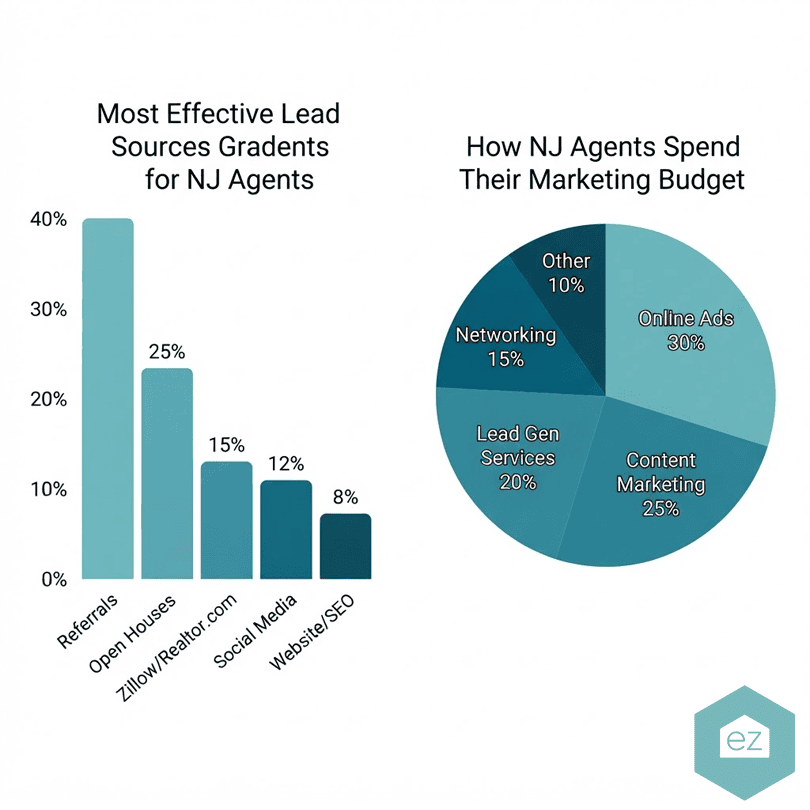
The most expensive mistake a New Jersey agent makes is believing the no-inventory story and working a smaller market than the one in front of them. Even in its slowest recent year, 2023, the state still closed 84,305 homes. The trouble is crowding: most agents chase the same visible listings while the far larger pool of owners who are ready to move, though they have not raised a hand yet, goes unworked.
Competition is part of it. New Jersey is one of the densest states in the country, and its commuter metros around New York and Philadelphia carry more agents per available listing than almost anywhere. When everyone chases the same handful of new listings, the economics on those leads collapse, and the agent who paid the most to reach a seller usually meets four others who did the same.
The common answer is to build an owned asset, and an IDX website is a reasonable one. It is also slow. A new site takes months or years to rank, costs real money to keep current, and, for most agents, is not a place a past client ever returns to on their own. It waits for traffic that a search engine sends somewhere else.
Agents rent traffic instead, and that is where the shared lead comes in. A legacy portal collects a buyer’s or a seller’s details, sells that same name to several agents at once, then bills for it again the next month. The name arrives cold, with no history and no relationship behind it. In a market where the median home runs $525,000, paying again and again for a contact five other people also bought is a hard way to build a business. What an agent feels as scarcity is usually something else: the lack of a system that surfaces sellers before they raise a hand.
How New Jersey agents try to win today, and where each approach runs out
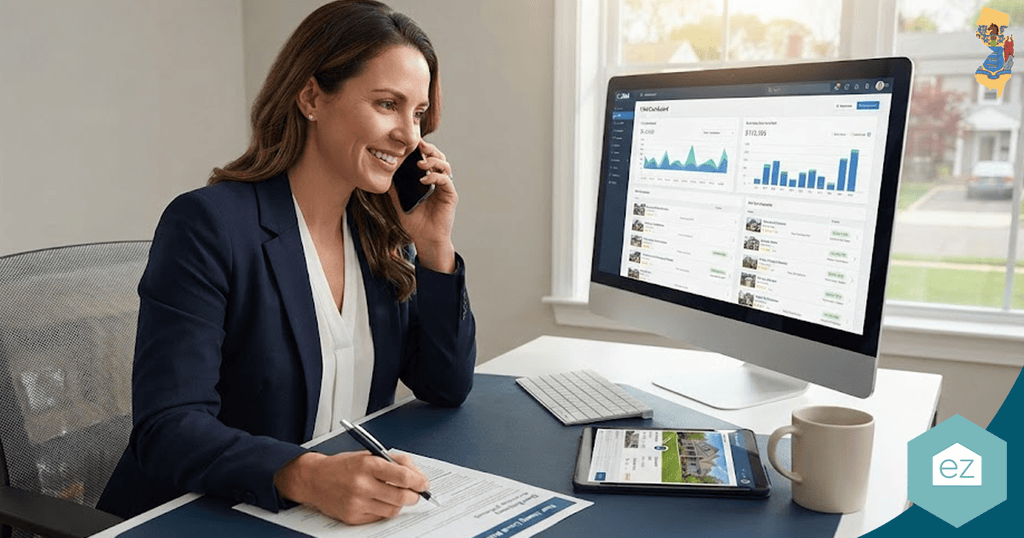
Every New Jersey agent already runs some mix of six approaches, and each does one thing well before it stops short. The fastest way to see the gap they share is to name them plainly.
Shared portal leads deliver instant volume, which is their real appeal when inventory is thin. The catch is built in. The same contact is sold to several agents at once, arrives with no record of what the person actually wants, and costs the same whether or not it ever closes. In a $525,000 market, a cold name bought five ways is an expensive first hello.
An IDX website the agent builds and maintains gives them an owned asset, which matters. It is also slow to rank, costly to keep current, and rarely the place a past client comes back to, so it tends to produce a trickle rather than a stream.
Cold calling for-sale-by-owner and expired listings, and circle prospecting, still works for agents with the discipline to do it. It also runs straight into the TCPA and the Do Not Call registry, where the burden of proving consent sits on the caller, and it burns hours a busy agent does not have.
Predictive-seller tools score a database and flag who might list next. A score is useful, but a score is not a relationship. The agent still has to build the trust that turns a name at the top of a list into a signed listing, and the tool does none of that work.
Generic all-in-one CRMs organize contacts and automate reminders, which every team needs. What they do not do is generate consumer engagement or bring anyone back on their own. They manage the relationships an agent already has rather than creating the next one.
Do-it-yourself content and paid ads can build reach over time. Each is also another system to run and pay for, set apart from wherever clients actually spend their attention, and most agents cannot hold the quality up while also selling houses.
Put the six side by side and the same gap shows through all of them. None is a place a past client returns to on their own, and none reliably surfaces the seller before a competitor does. That is the specific problem worth solving, and it is worth checking whether your New Jersey county is still open before another agent solves it there first.
In New Jersey, the buyer is almost always the seller too
Most New Jersey lead strategies split one person into two campaigns, and that split costs them listings. The fix starts with a number. Nationally, first-time buyers fell to about 21% of purchases in the 2025 NAR Profile of Home Buyers and Sellers, a record low, with the median buyer now 40 years old. No clean New Jersey figure exists, so treat that national number as the anchor, and assume the state’s prices and taxes make it unlikely the local first-time share runs any higher. Roughly four in five New Jersey buyers already own a home they must sell before they can move into the next.
For that owner the sale and the purchase are a single move handled by one person, yet the standard playbook treats them as two people. An agent markets “list with me” to sellers on one track and buys cold buyer leads on another, and the four in five who are both fall through the seam between the two.
There are really three groups here, and they need different things. The first-timer, about one in five, has no home to sell and needs affordability, education, and confidence. The dual majority, about four in five, is trading up, down, or across, and needs the equity in the current home, the timing between the two sides, and the next purchase handled as one connected move. The seller-only owner, the estate or the exiting landlord, is the minority.
The whole trick is reading which side is live. On the platform behind ez Home Search, a valuation check or a visit to a home-value page signals that the seller conversation is open, while saved searches, opened alerts, and a booked tour signal that the buyer side is moving. For most people it is both, in sequence, and the technology follows the shift instead of guessing. It also reaches the person early, through the early months of dreaming, gathering information, and planning, well before they raise a hand on a listing. The agent who is already there when the move becomes real does not have to win the client. They already have them.
The seller conversation most New Jersey agents are not having

New Jersey gives agents three strong reasons to open a seller conversation this year, and the newest arrived in 2025. Each starts from a number, and each goes better when that number is honest.
Start with the automated valuation model, or AVM, an estimate of what a home is worth built from data rather than a hopeful guess. The common trap in a tight market is the agent who wins a listing by quoting the highest price, then spends two months walking the seller back down to what the home was always worth. A seller who begins with an accurate valuation, and a full comparative market analysis built on the same data that refreshes through the day, lists at a price that actually sells. On ez Home Search, an owner can follow that value month to month, which keeps the seller relationship warm through the years the lock-in keeps them in place.
Then there are the taxes, and New Jersey’s are the highest in the country. The average residential property-tax bill topped $10,000 for the first time, reaching $10,095 in 2024, and Essex County owners average closer to $14,000. A rising bill does more than annoy a homeowner. It caps what a buyer will pay, because the buyer shoulders that tax bill along with the mortgage, so prices adjust to make room for it. That makes the tax line a real reason an owner weighs selling, and an opening most agents never work.
The third reason is brand new. In a 2025 change, New Jersey’s “mansion” fee on home sales over $1 million became a graduated rate and shifted from the buyer to the seller. For contracts signed on or after July 10, 2025, the seller pays 1% from $1 million to $2 million, then 2%, 2.5%, 3%, and 3.5% at $3.5 million and above, according to New Jersey Realtors and legal guidance on the amendment. Any owner selling a million-dollar home in Bergen, Monmouth, Hudson, or along the Shore now needs real net-proceeds math before listing, not after. That is exactly the conversation a single vetted local expert, working from the AVM and a current market read, is built to have.
Put the valuation, the tax picture, and the new fee together and a New Jersey owner has three concrete reasons to talk to an agent this year. The listing-alert newsletters and home-value updates that carry the agent’s own brand keep those reasons in front of the owner month after month, so the agent is the name in mind when the owner finally moves.
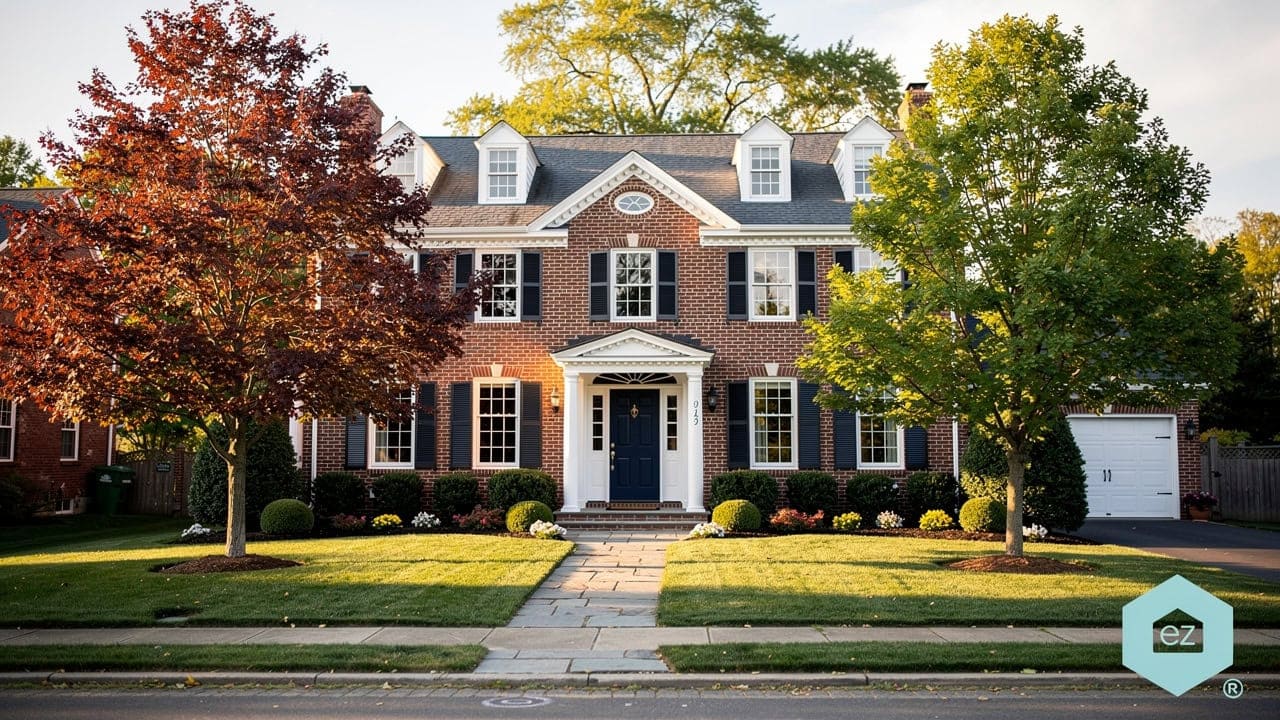
Where New Jersey’s regions pull apart
A lead strategy that works in Hoboken can fall flat in Vineland, because New Jersey’s regions run on different engines. The table reads the state as six of them, each with the force that drives it.
| Region (counties) | What drives it |
|---|---|
| Gateway / North Jersey (Bergen, Hudson, Essex, Passaic, Union) | The densest and priciest core, built around the New York commute, with the highest property taxes in the state; Jersey City and Hoboken lead the condo and townhome tier. |
| Central Jersey (Middlesex, Somerset, Mercer) | The Princeton and Route 1 life-sciences and research corridor, feeding steady professional-buyer demand around New Brunswick and Edison. |
| Jersey Shore (Monmouth, Ocean) | Primary homes, second homes, and 55-plus communities; Ocean County is the fastest-growing county in the state, up 5.7% since 2020. |
| Southern Shore / Greater Atlantic City (Atlantic, Cape May) | A tourism and seasonal economy; Cape May was the only county in the state to lose population from 2020 to 2025, which reads as a relocation and second-home market rather than a fading one. |
| South Jersey / Delaware River (Camden, Gloucester, Burlington, Salem) | The more affordable Philadelphia-commuter side, with steadier prices than the north and a clear inland-versus-shore split. |
| Skylands / Northwest (Sussex, Warren, Hunterdon) | A rural and exurban lakes-and-space market, the most affordable corner of North Jersey and a fit for space-seeking buyers. |
North Jersey is where the density and the money concentrate, and where the tax bills bite hardest. It also holds the entry tier, because Jersey City and Hoboken carry the condo and townhome market for buyers priced out of a single-family home. Central Jersey runs on the Princeton and Route 1 corridor, where life-sciences and research employers keep a steady stream of professional buyers moving through New Brunswick and Edison. The Shore blends primary homes, second homes, and 55-plus communities, and it holds the state’s growth story in Ocean County.
South Jersey is the more affordable, Philadelphia-facing side, where prices move more slowly than in the north and the inland towns sell differently than the beach ones. The Skylands, up in the northwest, is the rural and exurban corner, the most affordable stretch of North Jersey and a natural fit for buyers chasing space.
The Southern Shore deserves a note, because it is the one region the headlines misread. Cape May was the only one of New Jersey’s 21 counties to lose population between 2020 and 2025, down about 1,900 residents, while the other 18 gained and Ocean led them all. On its face that looks like decline. In practice a second-home and retirement market like Cape May stays active as a relocation and listing market, full of owners weighing a sale and buyers arriving from somewhere else. Departures are listings. Arrivals are buyers. The agent who reads the county that way works both sides of a market a competitor already wrote off.
New Jersey county by county: where the people and the listings are
New Jersey packs more than nine million people into 21 counties, and the ten largest hold the bulk of the transactions. The table names them with their principal cities.
| County | Approx. population | Principal cities |
|---|---|---|
| Bergen | 962,000 | Hackensack, Teaneck, Fort Lee, Paramus |
| Middlesex | 871,000 | Edison, Woodbridge, New Brunswick, Perth Amboy |
| Essex | 863,000 | Newark, East Orange, Bloomfield, Montclair |
| Hudson | 718,000 | Jersey City, Hoboken, Bayonne, Union City |
| Ocean | 654,000 | Lakewood, Toms River, Jackson, Brick |
| Monmouth | 645,000 | Middletown, Long Branch, Freehold, Red Bank |
| Union | 579,000 | Elizabeth, Union, Plainfield, Westfield |
| Camden | 527,000 | Camden, Cherry Hill, Gloucester Township |
| Passaic | 521,000 | Paterson, Clifton, Passaic, Wayne |
| Morris | 515,000 | Parsippany-Troy Hills, Morristown, Dover |
Population figures from the U.S. Census Bureau, 2024 American Community Survey.
Read the concentration and the strategy follows. The four North Jersey counties near the top, Bergen, Essex, Hudson, and Passaic, together with Union, are the densest and most competitive ground in the state, where brand recognition matters more than raw hustle because so many agents work the same towns. Middlesex anchors Central Jersey and the Route 1 job corridor. Ocean is the outlier and the opportunity, the fastest-growing county in the state, where household formation around Lakewood, Toms River, and Jackson is minting new buyers faster than anywhere else. Monmouth pairs the Shore with an affluent commuter base, and Camden carries South Jersey toward Philadelphia.
Beyond the ten, Burlington, Mercer, Somerset, Gloucester, and Atlantic each clear a quarter-million residents and move real volume of their own. The lesson for an agent choosing where to plant a flag is plain. The biggest county is not always the best territory, because the biggest county is also the most crowded.
The counties beyond the big metros still move real volume
New Jersey’s mid-size and rural counties are where an exclusive partner can own a market without fighting fifty agents for every listing. The ten counties in the table sit outside the biggest metros, and each still turns over real volume across a handful of real communities.
| County | Communities |
|---|---|
| Somerset | Franklin, Bridgewater, Somerville, Hillsborough |
| Mercer | Trenton, Princeton, Hamilton, Ewing |
| Burlington | Mount Holly, Marlton, Moorestown, Willingboro |
| Gloucester | Woodbury, Washington Township, Deptford, Glassboro |
| Atlantic | Atlantic City, Hamilton Township, Egg Harbor Township, Mays Landing |
| Cumberland | Vineland, Bridgeton, Millville |
| Sussex | Newton, Vernon, Sparta, Hopatcong |
| Hunterdon | Flemington, Clinton, Raritan Township, Lambertville |
| Warren | Belvidere, Phillipsburg, Hackettstown, Washington |
| Cape May | Cape May Court House, Ocean City, Wildwood, Stone Harbor |
The strategy point is the crowding. In Bergen or Essex, a new agent is one of thousands, and the cost to stand out is enormous. In Hunterdon, Warren, Sussex, or Cumberland, the same effort buys a recognized local name far faster, because fewer competitors are spending against you. Somerset and Mercer carry the Central Jersey professional base and the Princeton halo. Burlington and Gloucester ride the Philadelphia commute. Atlantic and Cape May run on the shore and the seasons. Each is a market where becoming the known name is a matter of a year or two rather than a decade, and where the volume is steady enough to build a business on.
If your county is one of these, the only question that matters is whether it is still open, because a single partner holds it. It is worth checking your county before a competitor does.
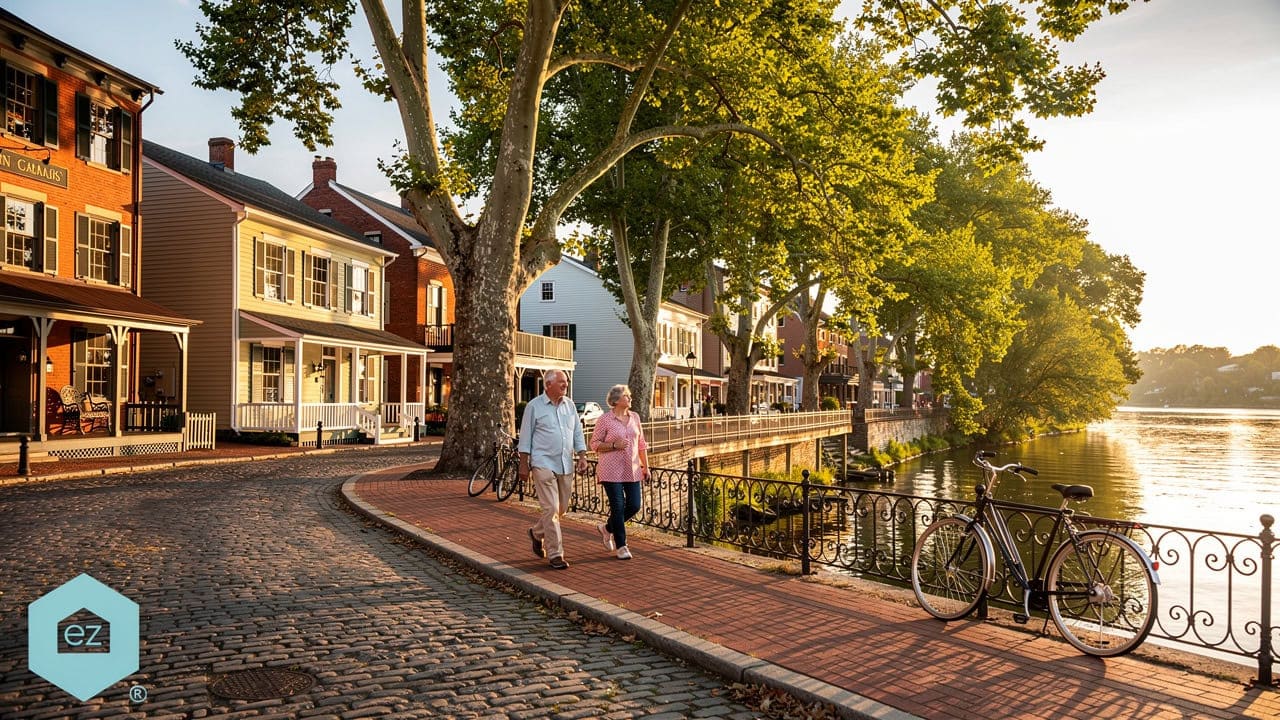
The remote-work edge most New Jersey agents miss
The trend the headlines keep calling dead is a lasting buying signal in New Jersey’s affordable counties, and most agents are not using it. The “remote work is declining” story measures today against the spring-2020 emergency peak instead of the far lower level that came before it. Look at the national numbers a different way and the picture is a plateau. Work from home has run near a quarter of the country’s paid workdays and stayed at that level since 2023. In late 2024 the Bureau of Labor Statistics put the count of Americans teleworking at least part of the time at 36.7 million, higher than a year earlier. A Census Bureau study of 150,000 firms found close to a third keeping at least one person on a home workday, with those employers projecting the same share half a decade out. The pullback everyone talks about already ran its course, back before 2023, and what is left is the steady baseline.
That national shift lands hardest in the parts of New Jersey with room and a lower price. A hybrid worker who commutes into New York or Philadelphia only a couple of days a week can trade a cramped, high-tax town for space in the Skylands, across Sussex, Warren, and Hunterdon, or in the more affordable South Jersey counties. The same lasting demand shows up in the state’s rising business formation, where every new solo firm is a household that now needs a place to work at home. Nationally, the USDA found rural counties reversed a decade of decline and gained about 974,000 net movers from 2020 to 2024, concentrated in working-age adults, which is exactly the buyer a smaller New Jersey county wants to attract.
For an agent, this turns into a client conversation. Remote and hybrid buyers now shop for specific features, and the agent who names them first wins the search. They want a dedicated or closable home office instead of a corner of the dining room. They want a separate structure or an accessory dwelling unit for a studio or a second earner. They want more square footage, and they want real broadband, which in the rural northwest is a make-or-break line worth checking before an offer. An agent who farms Hunterdon or Warren with listings framed around those features, on a platform that surfaces the buyers already searching for them, is working a steady tailwind most of the competition has written off as finished.
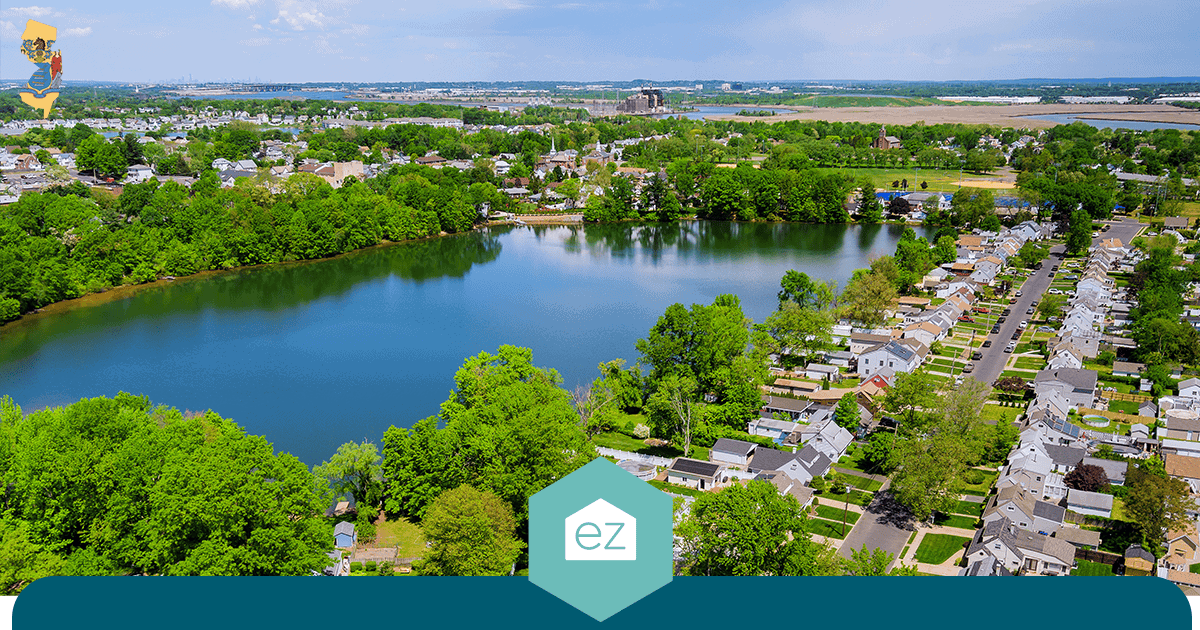
When a New Jersey client relocates, the listing does not have to walk away
Every year a slice of New Jersey owners move out of state, and the agent who helped them buy usually learns about it only after the listing is gone. The flow is steady and modest. New Jersey has long run net domestic out-migration, historically around 53,000 residents a year through the 2010s, offset by international arrivals of roughly 32,000 a year, and by 2023 and 2024 the net turned positive again. Departures skew toward Pennsylvania, Florida, and the Carolinas. Set against a state of more than nine million people and a large, stable base of owners, that flow is ordinary churn, and it cuts both ways.
Here is how it usually goes wrong. A past client starts thinking about a move to another state, opens a legacy portal to see what their money buys there, and connects with a stranger attached to a listing in the new market. The home they still own in New Jersey, the listing the original agent earned, then lists with that new contact. The agent who spent years on the relationship finds out after it is gone.
National coverage changes the picture. Because ez Home Search covers the whole country on the partner’s own co-branded platform, a client planning a move searches the new market on the agent’s site rather than leaving for a portal. Those out-of-state searches show up early, a signal that the move is starting, and the agent can step in before the listing is in play, talk through selling the current home, and refer the client to a vetted agent in the new market for a referral fee. A relocating client stops being a silent, total loss and becomes two paydays: the local listing kept, and a referral earned. Even a professional caught in one of the year’s larger New Jersey layoffs, weighing a move for the next job, stays visible instead of vanishing.
What ez Home Search gives a New Jersey county partner
ez Home Search hands one agent, team, or brokerage an entire New Jersey county, co-branded across the consumer experience, with no competing partner working inside it. This is the Exclusive County Partnership. The partner owns the leads, pays no charge per lead, and gives up no share of the commission when a deal closes. In a market where a single portal name can cost a small fortune and still arrive shared five ways, that structure alone changes the math.
The leads convert because they arrive warm. A person who reaches a partner through ez Home Search already trusts the platform and arrives with a history the agent can read: the towns they searched, the price band they kept landing on, the valuation they ran, the tour they finally booked. The connection is confidential and routed to a single vetted local expert rather than sold to a crowd, so the first conversation opens on what the person came in wanting. The county exclusivity partners we work with consistently report that these connections tend to close on a timeline measured in the first 30 to 60 days, because the trust that usually takes weeks to build is already half there.
The larger win sits in a database the partner already controls. Most teams pour their effort into new names while their past clients and sphere go cold, which in a lock-in market is an expensive habit, since those owners are staying put for years and staying reachable. ez Home Search reactivates that database for the partner, co-branded and done for them, and our own data shows partners reactivate past clients, by repeat business and referral, at 2.5 to 5 times the market rate. An Essex County owner watching a $14,000 tax bill, an Ocean County family who bought near Lakewood two years ago, a Bergen owner now facing the new seller-paid fee on a million-dollar sale: each stays engaged with a home search and a value update that carries the agent’s name, so the agent is already there when the move becomes real.
Everything that turns that interest into a deal is built and run for the partner. The search, the listing alerts, the home-value pages, the automated follow-up through ezNurture: none of it is a system the agent has to assemble or keep alive. And the riskiest part of the job, the outreach, comes handled. ezVerify.ai confirms a person opted in, keeps the recording that documents it, checks each number against a known-litigator database, and suppresses Do Not Call numbers before the agent ever dials, which answers the TCPA exposure that makes cold calling so dangerous in the first place. ezVerify.ai is a consent-and-compliance tool, not a lead score. On top of the platform, ez Home Search puts real people to work on the partner’s results with weekly coaching and sales enablement, because the partnership only pays off when the partner does.
The confidential search behind the leads
New Jersey is a high-income, privacy-aware state, and the reason ez Home Search’s leads arrive warm is the same reason people trust the platform in the first place. That trust rests on what the company calls The Only Confidential Home Search, and it is how ez Home Search brings A Better Way To Discover Real Estate to life. A person can search, save, and compare homes without their contact details and budget being sold, recycled, or broadcast to a crowd of businesses they never chose. Instead of being passed to a dozen strangers, they are matched with a single vetted local expert, while the wider trusted network stays theirs to reach only when they choose to.
The privacy is the mechanism behind everything earlier in this article. Because people feel safe, they engage honestly and share what is really going on in their move, and that honest engagement is what makes their eventual connection to an agent convert. The privacy is what produces the warm lead.
New Jersey buyers already live this way in the rest of their digital lives. They have watched a single form turn into weeks of calls, and they have moved to the private option everywhere else. The most valuable companies in technology were built on the same bet: Apple made privacy a core promise, DuckDuckGo and Brave grew by refusing to track, and Proton, 1Password, and Bitwarden sell architecture where the company itself cannot read what a customer stores. ez Home Search brought that standard to real estate, and in this state it is exactly what the consumer, and the agent who serves them, want.
Securing your New Jersey county
Only one partner holds each New Jersey county, and the map fills in month by month. That is the whole point of the model and also its constraint. Many of the state’s 21 counties are already claimed, more are taken every month, and once a county is held, no competing agent can take the same co-branded position inside it, no matter how much they spend.
The upside for the partner who moves is that there is nothing to build. The platform millions of people already use carries their name from the first day, with nothing to assemble, no data to chase down, and no months of setup before the first lead arrives. An agent steps onto a running system, co-branded to them, and it works immediately across the county they hold.
Which county is open changes constantly, so the only way to know is to check. If your market is one you would want to own before a competitor does, the time to look is while it may still be available.
The decision a New Jersey agent actually faces
Strip away the noise and a New Jersey agent has just three ways to source business. The first is the status quo: keep renting cold, shared names from a legacy portal that resells the same person five ways and bills again the next month. It works just well enough to keep paying for, and it never compounds. The third is the opposite extreme: build the whole national data-and-marketing engine yourself, the search, the valuations, the follow-up, the compliance, which would cost millions and years and is out of reach for any single team. Between them sits the reasonable path: hold your county on a platform that already runs all of it, co-branded to you, for one predictable fee.
Price and fit are not the hard part here. The one thing that can keep you out is availability: one partner holds each county, and yours may already be taken. Whether the model pays off is not in question. The county exclusivity partners we work with reactivate their past clients, by repeat business and referral, at 2.5 to 5 times the market rate, on top of the new business the platform brings.
New Jersey has plenty of transactions. What it lacks is agents who work the whole market instead of fighting over the visible slice of it. Check whether your New Jersey county is still open, and find out what it means to be the only name on the home search your entire county already uses.
Frequently asked questions
With New Jersey inventory near two months of supply and most owners locked into sub-4% mortgages, how do agents surface listing opportunities?
By working the owners who are not yet on the market. Inventory is tight because owners are staying put, not because they have stopped moving, and life events, tax bills, and equity changes still push a steady share of them to sell every year. The agents who win those listings stay in front of past clients and their sphere with a home search and value updates the owner actually returns to, so they are the name in mind when the move becomes real. ez Home Search runs that reactivation for a county partner, co-branded and automated, which is how partners list homes their competitors never saw coming.
New Jersey homeowners who leave mostly head to Pennsylvania, Florida, and the Carolinas. How does an agent keep the listing on the home a relocating client is selling?
By seeing the move before it happens. When a past client searches Pennsylvania or Florida on the agent’s own co-branded ez Home Search platform rather than a legacy portal, those out-of-state searches show up as an early signal, and the agent can reach out before the current home is listed, win that listing, and refer the client to a vetted agent in the new market, earning a referral fee on the move. Without that national reach, the same client ends up connecting with a stranger on a portal, and the local listing is gone.
Average property-tax bills top $10,000 statewide and about $14,000 in Essex County. How can an agent turn tax-bill anxiety into seller conversations?
Make the tax line part of the pricing conversation. A rising bill caps what buyers will pay and is a real reason owners weigh selling, especially in high-tax North Jersey. An agent who pairs an accurate home valuation with a clear read of how taxes affect the sale gives the owner both a reason to act and a reason to trust the advice. On ez Home Search, the automated valuation model and the home-value pages keep that number in front of the owner month after month.
The 2025 mansion-tax change now charges New Jersey sellers on homes over $1 million. How should an agent handle a high-end listing in Bergen or Monmouth County?
By running the net-proceeds math up front. As of the 2025 change, the seller pays a graduated fee that starts at 1% over $1 million and rises to 3.5% above $3.5 million, so a luxury seller needs to know their true take-home before they list, not at closing. An agent who walks a Bergen or Monmouth seller through the valuation, the fee, and the timing is having a conversation most competitors do not yet know to start.
Ocean County is the fastest-growing county in New Jersey around Lakewood and Toms River. How do agents reach the young families driving that growth?
Get in early, and stay local. Ocean County added more residents than any county in the state from 2020 to 2025, and growth like that concentrates first-time and move-up buyers in a handful of towns. A county partner whose brand sits on the search those families already use builds recognition faster than any ad campaign, and ez Home Search reads their activity so the agent reaches them when they are actually ready to buy.
Do the lead sources that work in dense North Jersey also work in South Jersey and the Shore, or should agents work them differently?
Differently. North Jersey is a high-tax, high-competition commuter market where brand recognition wins; South Jersey is a more affordable Philadelphia-facing market; the Shore mixes primary homes, second homes, and 55-plus communities. The tactics that surface a Hoboken condo buyer are not the ones that reach a Cape May second-home buyer. The one thing that works everywhere is owning the county and serving whichever side of the move is live, which is what the Exclusive County Partnership is built to do.
New Jersey’s 55-plus adult-community market in Ocean and Monmouth counties is one of the few segments adding inventory. What is the best way for a team to serve those downsizers?
Treat the downsizer as a buyer and a seller at once, because they almost always are. The adult-community median sat around $370,000 in 2025 and listings there grew while the rest of the market tightened, so these owners are selling a longtime home and buying the next one in a single move. A team that handles both sides, with the equity math and the timing in one place, serves them far better than two separate agents, and ez Home Search keeps both sides on one record of activity.
How do agents in the Princeton and Route 1 corridor reach relocating professionals moving into Central Jersey?
Be visible before the relocation starts. The life-sciences and research employers along Route 1 bring a steady stream of professional buyers into Middlesex, Somerset, and Mercer counties, often from out of state and often before they have chosen an agent. A county partner whose brand is on the region’s home search, with the school, tax, and neighborhood detail those buyers need, becomes the local name they find first. ez Home Search surfaces that activity so the agent connects while the search is still live.



Kurt Uhlir is a recognized leader in marketing, growth, and innovation, having helped scale companies and technologies used by millions every day—including at brands like eXp Realty, Sideqik, Vitrue, Oracle, Garmin, Facebook, Meta, Apple, and more. He’s trained tens of thousands of professionals on how to build trust, lead with service, and help clients make wise, informed decisions. At ez Home Search and Sure Send, his focus is on helping high-performing business owners, team leaders, and individual sales leaders grow their businesses through exclusive market access, privacy-first lead systems, and conversion-focused enablement tools.