

South Dakota’s next buyers already own a home here
The family that will list with you in the next 9 to 18 months already lives in your county. They are not thinking about it. They have a mortgage, a third grader, and a kitchen they keep meaning to redo.
That is not a guess. It changes how you should think about South Dakota real estate leads, because this state ranks fourth in the nation for growth that comes from births rather than arrivals, running about 2.0 children per woman against 1.6 nationally. Nearly seven in ten South Dakota households own their home, better than three points above the national rate. Net migration adds about half a percent a year, so very little of your future business is driving in from out of state.
Most lead products are built on the opposite assumption. However they charge you, per lead, at closing, or out of the commission, they all decide who counts as a lead at the same moment: when somebody raises a hand on a form. That moment is late. By then the household has run their own numbers, argued about school districts with their spouse, and usually decided who they are calling.
That hand raise is also the whole product. A legacy portal lead does not co-market with you, does not build your name across the county, and does not go back to the people already sitting in your database.
The work that pays here is being the name they already know on the Tuesday a job offer lands, a parent gets sick, or a second baby makes the house too small. You cannot buy that from a list. The rest of this page is where it comes from instead.
What is happening across South Dakota, and what it means for your pipeline
Six things are moving in South Dakota at once, and they pull in different directions. Know all six and you can defend next quarter’s budget instead of guessing at it.

Purchase lending has risen three years running. Federal mortgage disclosure data put home-purchase loans written statewide at 9,289 in 2023, then 9,543 in 2024, then 9,881 in 2025, after a run that peaked at 14,048 in 2021 (Consumer Financial Protection Bureau, HMDA, retrieved August 2026). The 2022 to 2023 fall tracks the jump in mortgage rates rather than anything local. Cash buyers never appear in these numbers at all, so real closings run higher than the series shows. If you cut your marketing in 2023 and never turned it back on, you are budgeting against a market that stopped existing three years ago.
Prices reset, then held. Real median listing prices moved from about $296,000 in 2018 to about $390,000 in 2024, easing to roughly $379,000 in 2025 (Dakota Institute, June 2026). Over that stretch South Dakota passed both Nebraska and North Dakota and now sits second in the region behind Minnesota. It also gave back the least from its peak, 2.3 percent, against Nebraska at 8.6, Minnesota at 6.7, and Iowa at 11.8. When a seller tells you they missed the top of the market, you can show them how little of it this state actually surrendered.
South Dakota builds more housing per person than any neighbor. The state issued 6.49 residential building permits per 1,000 residents in 2024, ahead of Nebraska at 5.22, Iowa at 3.88, Minnesota at 3.61, and North Dakota at 2.92 (Dakota Institute, June 2026, from Census Bureau permit data). Every one of those new builds is a competitor for your buyer and a listing from whoever is vacating an older house to move into it. Most agents chase the first half and let the second walk.
Growth is steady, and more of the arrivals come from further away. The state added 7,984 residents between July 2024 and July 2025, a gain of 0.86 percent, with net migration contributing 0.57 points and births over deaths the other 0.28 (Dakota Institute, June 2026, from Census estimates). For the second year running, more of that net inflow came from outside the country than from other states. Those buyers need escrow, well testing, and winter explained to them, and the agent who does that patiently gets the next three families from the same workplace.
No single industry carries this state. December 2024 nonfarm employment ran 91,000 in trade, transportation and utilities; 83,900 in government; 78,500 in private education and health services; 50,800 in leisure and hospitality; 42,900 in manufacturing; and 31,800 in construction, with statewide unemployment at 2.0 percent on a June 2026 labor force of 488,700 (South Dakota Department of Labor and Regulation, with the Bureau of Labor Statistics). A single plant closing does not take your year with it. It also means no single employer list gets you the county.
Movement runs both directions, and both directions are business. Forty of South Dakota’s 66 counties recorded more people leaving for other states than arriving from them in 2024 to 2025, while Lincoln, Lawrence, and Campbell counties each drew net inflows above two percent of their population (Dakota Institute, June 2026). Read that the right way. A household leaving your county still owns a house in it, which is a listing plus a referral fee from the agent on the other end. A household arriving is a buyer who needs someone who knows which streets flood and which school boundary is about to move. Work one direction and you are working half your county.
Four in five of your buyers are also your sellers
Ask ten South Dakota agents what they want and the answers split two ways: get me listings, or get me buyer leads. Both camps are chasing the same households, and both are paying for them twice.
Start with the arithmetic. The National Association of Realtors put first-time buyers at 21 percent of purchases in its 2025 Profile of Home Buyers and Sellers. No year has come in lower since the association began counting in 1981, and the median first-time buyer reached a record age of 40. Roughly four in five buyers, then, already own a house. Most are selling one to fund the next.
Two different people sit on either side of any one closing table. Follow a single household across a whole move, though, and they play both parts, usually inside the same ninety days. What throws most agents off is the order. They behave like a buyer months before they behave like a seller. They browse at night. They run numbers in a spreadsheet nobody sees. They talk to a lender. The call to an agent lands near the end of that sequence.
South Dakota has more of that household than almost anywhere. Owner-occupancy statewide ran 69.3 percent in 2024, better than three points above the national rate (USAFacts, from Census Bureau data). By county the 2020 Census puts Hanson at 83 percent and Todd just under half, with Minnehaha and Pennington in the mid-60s (Dakota Institute, June 2026). Whatever your county’s number is, that is the share of your market that is a future seller currently living as a neighbor.
An automated valuation model, the tool that estimates a home’s worth from public records and recent sales, is the thread that holds a relationship together between moves. A homeowner checks their value once in a quiet year and thinks nothing of it. Then they check it three times in a month, save two listings in a school district they have never searched before, and reopen a search they abandoned in the spring. Nobody fills out a form during any of that. The household is deciding anyway, months before anyone raises a hand.
Reach them there and the buyer you helped this year becomes the listing you take in four.
See whether your South Dakota county is still open.
Ten counties hold most of South Dakota, and two of them trip up outsiders
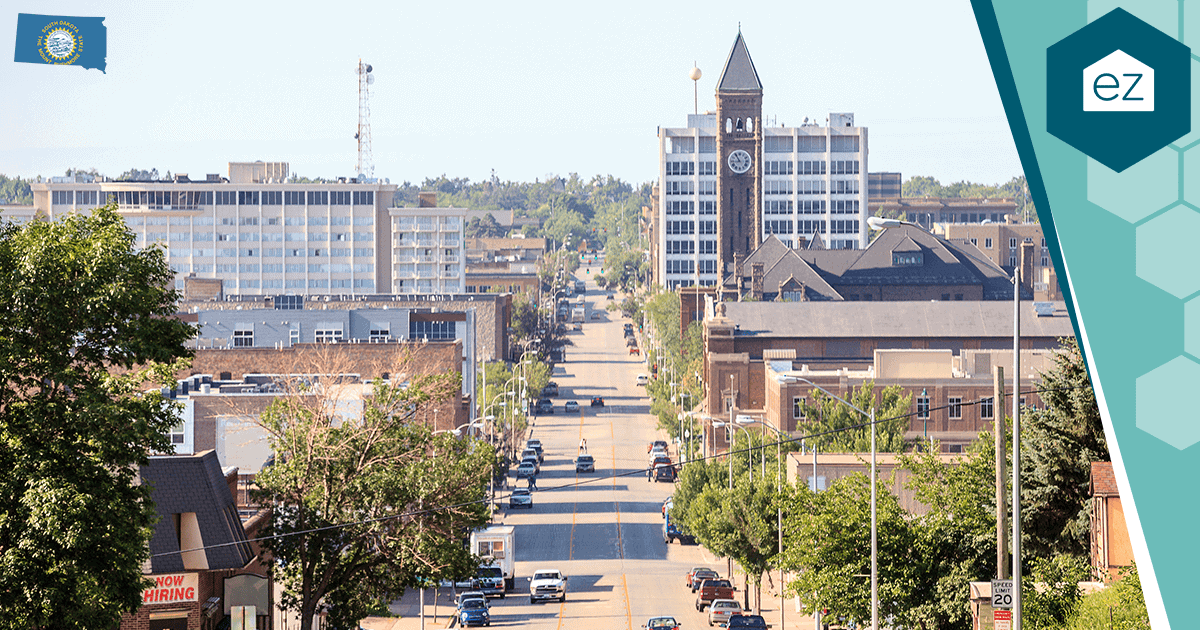
Most South Dakotans live in ten of the state’s 66 counties, and the principal city inside each one is where an agent’s name has to be known first. Find yours, then read the two groups below, because they call for two different playbooks.
| County | Population | Principal city |
|---|---|---|
| Minnehaha | 206,930 | Sioux Falls |
| Pennington | 115,903 | Rapid City |
| Lincoln | 73,238 | Harrisburg |
| Brown | 37,733 | Aberdeen |
| Brookings | 35,980 | Brookings |
| Meade | 30,954 | Sturgis |
| Codington | 28,971 | Watertown |
| Lawrence | 28,053 | Spearfish |
| Yankton | 23,517 | Yankton |
| Davison | 19,922 | Mitchell |
County populations from the U.S. Census Bureau Population Estimates Program.
Two of those pairings deserve a note, because getting either one wrong marks you as an outsider inside thirty seconds of a listing appointment. Canton is the Lincoln County seat, Harrisburg is the largest city lying wholly within the county, and Sioux Falls itself spills across the line into Lincoln. In Lawrence County the seat is Deadwood while the largest city is Spearfish.
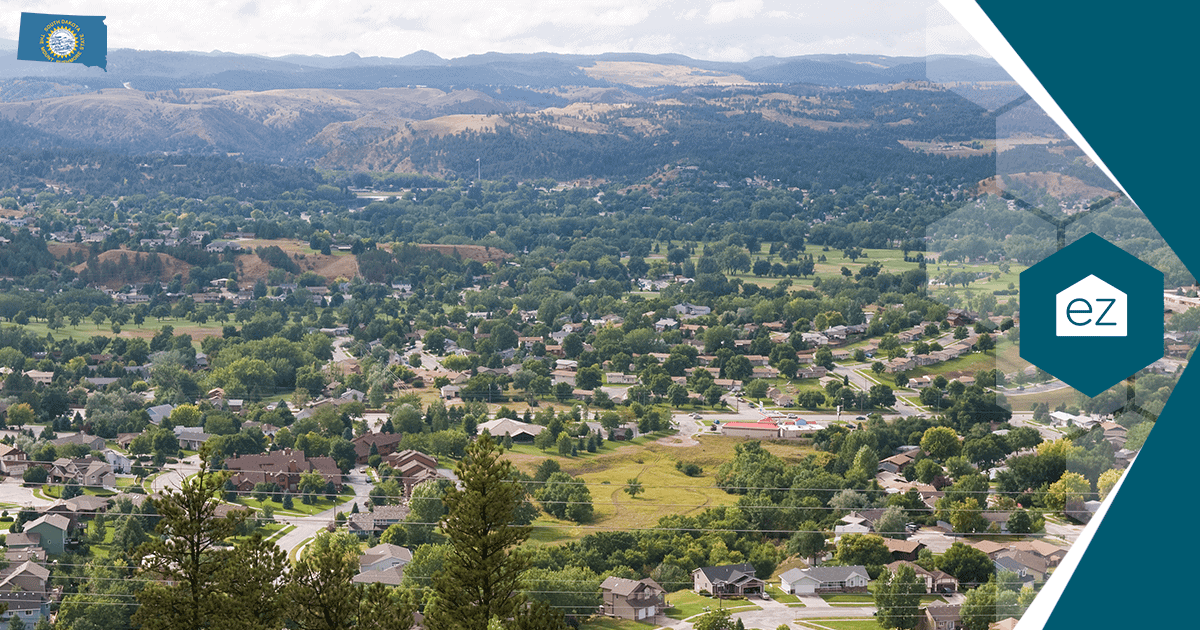
The first group is growing fast, and the fastest movers are small. Between 2020 and 2025, Harrisburg went from 6,845 residents to 10,405 and Tea from 5,698 to 8,019. Box Elder added roughly 2,000 and Spearfish roughly 1,900. Sioux Falls itself climbed past 213,000 and Rapid City past 80,000, while Brookings reached 25,355 and Watertown 23,736. In these markets your competition is a builder, and your listing comes from whoever is leaving an older house behind.
The second group held roughly flat, and the obvious conclusion about it is the wrong one. Aberdeen eased from 28,424 to 27,961. Pierre and Madison each slipped about 1.5 percent, Sturgis 2.5 percent, Dell Rapids 3.2 percent. Vermillion finished flat at 11,720 and Mitchell added 79.
Flat population with high ownership is not a dead market. It is a market where every deal comes from turnover instead of arrivals. Brown County holds roughly 37,700 people and most of them own their homes. Those owners still get married, get promoted, get transferred, inherit a house from a parent, and decide one spring that the yard has become too much. What a flat county takes away is the easy tailwind. What it hands back is a smaller field of competing agents and a database that can realistically cover the whole county, which is a trade plenty of agents in Sioux Falls would make tomorrow.
There are really six South Dakotas, and the demand driver in each
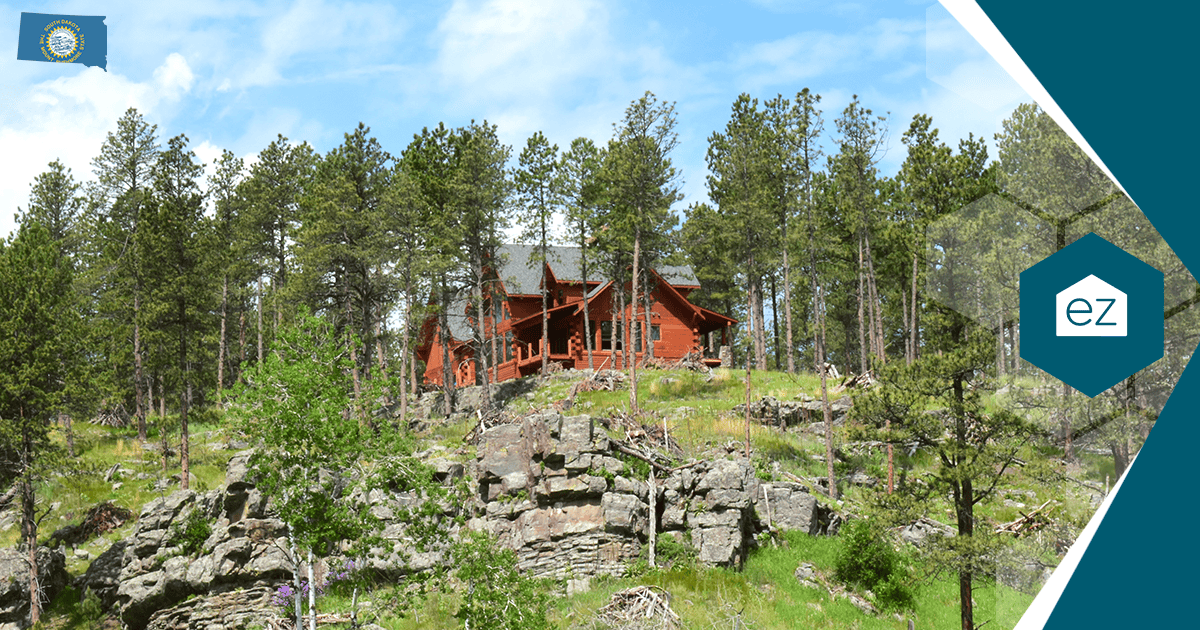
South Dakota is six regional markets wearing one state’s name, and what generates demand differs in every one of them.
| Region | Representative counties | What is driving demand |
|---|---|---|
| Sioux Falls metro | Minnehaha, Lincoln, McCook, Turner | Minnehaha and Lincoln together produced about two-thirds of the state’s entire 2024 to 2025 population increase; Harrisburg grew 52 percent and Tea 40.7 percent from 2020 to 2025 |
| Black Hills and Badlands | Lawrence, Custer, Butte, Fall River | Lawrence County added 750 residents with a net inflow above two percent of its population, and Spearfish grew 15.6 percent from 2020 to 2025 |
| Rapid City and the Ellsworth corridor | Pennington, Meade | Elevate Rapid City projects demand for 10,175 homes between 2025 and 2030 tied to the Ellsworth mission |
| Glacial Lakes and Prairies | Codington, Brown, Day, Roberts, Grant, Marshall, Hamlin, Deuel | Watertown grew 4.7 percent from 2020 to 2025 while Aberdeen eased 1.6 percent, the widest split between two regional centers in the state |
| James River Valley and central east | Beadle, Davison, Hanson, Sanborn, Spink, Lake | Beadle County recorded the state’s largest net domestic outflow in 2024 to 2025, nearly offset by one of its largest international inflows |
| Missouri River and southeast | Hughes, Stanley, Brule, Charles Mix, Yankton, Clay, Union, Bon Homme | Union County carries one of the two highest median household incomes in South Dakota, above $100,000 in 2024 |
The Rapid City numbers deserve their own paragraph, because they are the most concrete forecast any agent in this state gets to work with. One of those six comes with a number the others do not have. The Rapid City area is projected to need 10,175 homes between 2025 and 2030, split as 2,410 inside the city and 7,765 across the surrounding region. That figure is public, and almost nobody in the business has read it, because it sits in the minutes of a legislative committee. Tom Johnson, chief executive of Elevate Rapid City, gave it to the South Dakota Legislature’s Select Committee on Ellsworth Air Force Base in October 2024, against a projected gain of 8,137 residents and 3,360 households. The area had already added 7,142 residents and 2,262 households between 2020 and 2024.
The rest of that testimony explains where the demand comes from. Colonel Derek Oakley, commander of the 28th Bomb Wing, told the same committee the base expects to add 4,064 people by fiscal year 2041: 1,664 active military, 915 spouses, and 1,485 children. Box Elder officials put their city at 14,512 residents excluding the base, up 21.9 percent since 2022, with more than $27 million spent on housing and more than 366 family lots and 461 multi-family units built or underway. Johnson also noted Ellsworth is the ninth largest employer in the state, with a 2023 economic impact of $886.8 million and roughly 8,200 jobs created across the region.
Take the ten-thousand-home number into your next listing appointment. A seller in Rapid Valley deciding whether to wait one more year is weighing a hunch against a forecast that runs on a federal construction schedule, and you are the only person in the room who can tell them the difference.
Income sorts the state differently than population does. Lincoln and Union counties both cleared $100,000 in median household income in 2024, the two highest in South Dakota, with Lincoln covering southern Sioux Falls and Union sitting on the suburban Sioux City side (Dakota Institute, June 2026). Among the smaller counties the range runs from roughly $57,000 in Walworth to about $88,000 in Stanley, and every metropolitan-area county sits at or above the state median. Set your farming budget against the county you work, not the state average.
The remote work demand most South Dakota agents are not counting on
Most agents have written off remote work. The numbers say they wrote it off about three years too early, and South Dakota is where that mistake costs the most.

Nationally, 13.3 percent of American workers worked from home in 2024, against 5.7 percent in 2019. That is more than double, five years on. It is also down from 13.8 percent in 2023, and the peak came in 2021, so what you are looking at is a level that rose, overshot, and settled high.
South Dakota’s own number is where this gets interesting for you. Eight percent of South Dakota workers worked from home in 2024, up from 6.1 percent in 2019 (Census Bureau, American Community Survey one-year estimates). That is a third more than before the pandemic, and it still ranks near the bottom of the fifty states. National employers now hire remotely as routine. This state has caught very little of it, which puts most of that hiring in front of South Dakota rather than behind it.
Some of it is already here. When I gave the keynote for R-CALF a few years back, the conversation that stayed with me was not the policy discussion. It was how many ranchers described a son, a daughter, or a spouse already doing knowledge work from the house, and how they had remodeled part of the place to make it work. One had carved an office out of a spare bedroom. Another had wired a corner of the shop for two monitors and a decent connection. Nobody in that room would have described themselves as living in a remote-work household, and a good number of them were.
Ask about it directly. Buyers with remote-capable jobs want a room with a door that closes rather than a corner of the living room. Two careers under one roof turn into a question about what else sits on the lot, an accessory dwelling unit or a building that can be finished. Square footage that used to be a preference has become a requirement. And they will want to know whether the internet delivers what the listing claims, which across much of western South Dakota is worth answering before the showing.
The agent raising those questions in Spearfish or Watertown today is the one who sounds informed when the hiring catches up.
The lead sources South Dakota agents use, and what each one returns
Every lead source in this state works up to a point, and knowing exactly where each one stops is worth more than a subscription to any of them.
Shared leads buy you speed and very little else. A shared lead from a legacy portal puts a name in your database this afternoon, which is the one thing no other channel does on demand. What arrives with it is the other three or four agents who bought the same name, and a person who never chose you and knows it. In Sioux Falls that math sometimes still clears. In a county of nine thousand it rarely does, because the price was set against metro volume and your volume is not metro volume.
Your own front door is the most defensible asset here, and the slowest. An IDX site, a content library, and a paid search budget eventually produce business you own outright, with nobody able to reprice it or resell it to the agent across town. It is also the slowest route on this list. You are funding a two-year runway and administering software the whole time. Partners we work with who tried this route first tend to describe the same experience: it worked, and it took longer and cost more than the pitch suggested.
The phone still converts here, and it carries the most legal exposure. Cold calling, circle prospecting, and outreach to owners selling on their own or coming off an expired listing all still convert here, particularly outside the metros where people answer unknown numbers. The exposure is consent. Pick up the phone to prospect, or send a text, and federal law counts you as a telemarketer. If the person on the other end disputes consent, proving it is the caller’s job, and each unproven contact carries $500, rising to $1,500 where the violation was willful, with no ceiling on the total. Predictive-seller software narrows who you dial, which genuinely helps. A high score is still a guess about a stranger, and you are the one who has to build the relationship the score predicted.
Nothing converts better than owning the ground, and nothing scales worse. Open houses, sphere work, and geographic farming beat every other channel on this list for conversion rate. They also stop scaling at the edge of your drive time, and in West River terms that edge arrives fast.
Four things about South Dakota make all of this harder than a national playbook assumes.
Territory out west is measured in hours, so a lead with no context attached costs you half a day to qualify. In Harrisburg, Tea, and Box Elder, where growth is fastest, the builder reaches the buyer first and you are negotiating for position after the fact. Families relocating for the Ellsworth mission move on a schedule set by orders, and they start researching from three states away. And an acreage or agricultural-status property changes the financing path completely, which is knowledge no lead vendor includes and every one of those sellers assumes you already have.
There is a fifth approach, and it is the one everything above has been circling. Call it activity-based timing. Instead of paying for a name at the moment somebody raises a hand, you watch what households in your county do inside a home search they trust: a search picked back up after four quiet months, a second valuation run in three weeks, a saved home opened again. That behavior shows up months before a form does. Whether you can see it is a separate question, and it is the one the rest of this page answers.
Find out whether your county is still available.
What South Dakota homeowners want to know before they list
Three questions come up before any South Dakota homeowner will talk seriously about listing, and an agent who can answer all three earns the appointment.
What is my equity worth today. An automated valuation model gives the number, and the number is only the opening. The follow-up question is what that equity buys in the neighborhood they are considering, which in this state often means comparing a paid-off house in Aberdeen against a mortgage in Sioux Falls. Sellers who run their own valuation monthly for two years are not idly curious. They are building the confidence to move, and when they do, they call whoever’s name has been on that valuation the whole time.
What will my taxes do to me. South Dakota changed this answer in 2025, and the change breaks into three pieces depending on who is asking.
For every owner-occupied home, Senate Bill 216 caps assessment growth at 3 percent countywide for five tax years, covering taxes payable from 2027 through 2031. It was signed March 13, 2025 and took effect that July.
For the owner weighing a kitchen before they sell, improvements worth less than 40 percent of the home’s value no longer push the assessment up. That answers a question you have probably been asked and could not answer cleanly before.
For older and disabled homeowners, the assessment freeze got considerably wider. The income limit for a multi-person household went from $45,000 to $65,000, and the maximum eligible home value from $300,000 to $500,000.
That last one is a call list. Every owner in your county sitting between the old thresholds and the new ones just became eligible for something they almost certainly do not know exists, and the person who tells them is the person they remember.
Am I selling into a market that will hold. The answer is better than most agents assume. Median inflation-adjusted purchase loan amounts in South Dakota rose from about $224,000 in 2018 to about $267,000 in 2021 and roughly $272,000 in 2024, while every neighboring state peaked and then fell back (Dakota Institute, June 2026). Federal disclosure data carry it further: the average purchase loan written in this state reached roughly $328,200 in 2025, the highest in the available series. Those federal figures are approximate, because loan amounts get rounded to midpoints before publication.
Then give them the other half. Those same loan amounts climbed 21 percent between 2018 and 2024 while median homebuyer income rose about 10 percent. Buyers are stretching further than they used to, which is why a well-priced listing moves and an ambitious one sits.
None of these three conversations requires a transaction to be underway. That is the point of having them. A homeowner who hears from you about an assessment freeze in a year they had no plans to move is a homeowner who already has an agent when the plans change.
These 10 counties bring the best ROI
Ten counties outside Minnehaha and Pennington carry enough population and enough named communities to build a business on. If yours is on this list, the communities beside it are your farm.
| County | Communities |
|---|---|
| Lawrence | Spearfish, Deadwood, Lead, Whitewood |
| Custer | Custer, Hermosa, Fairburn, Pringle |
| Butte | Belle Fourche, Newell, Nisland, Vale |
| Union | North Sioux City, Dakota Dunes, Elk Point, Alcester |
| Clay | Vermillion, Wakonda, Meckling |
| Hughes | Pierre, Blunt, Harrold |
| Beadle | Huron, Wolsey, Wessington, Hitchcock |
| Roberts | Sisseton, Wilmot, New Effington, Rosholt |
| Hamlin | Hayti, Estelline, Castlewood, Bryant |
| Lake | Madison, Wentworth, Chester, Ramona |
State money is moving into these places, and it is easy to miss because it gets announced through housing agencies rather than through anything an agent reads. In December 2025, South Dakota Housing awarded $59.4 million toward building and rehabilitating rental housing across the state.
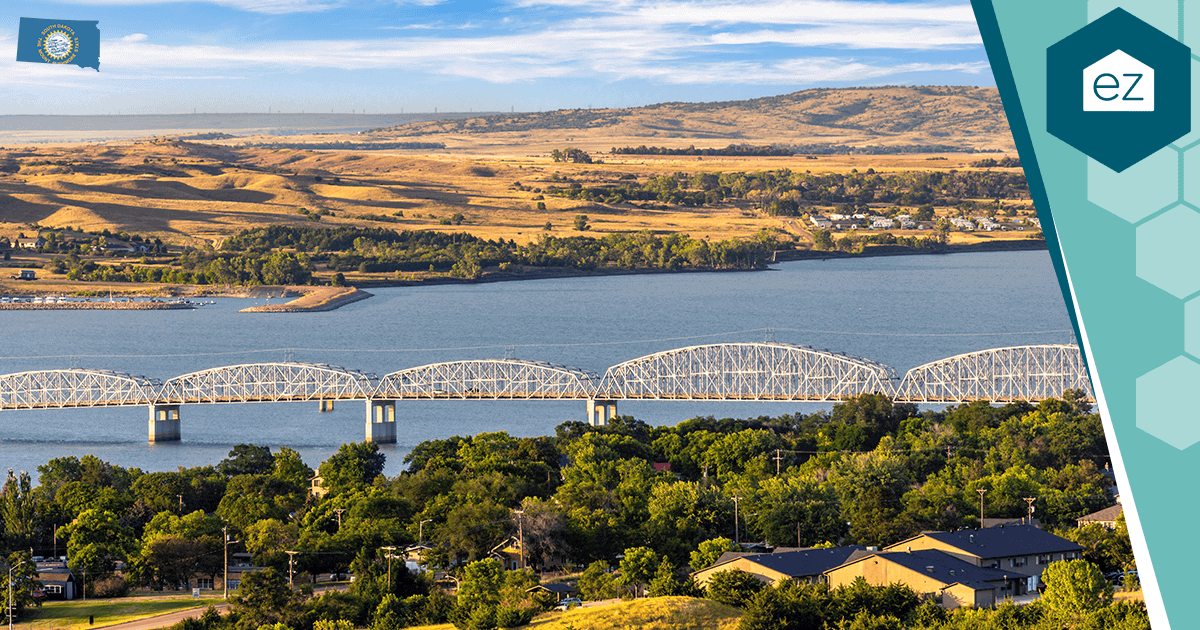
Those awards land in specific towns. Fall River Health Services received $1,159,089 for infrastructure supporting 35 single-family lots and 36 multifamily units in Hot Springs. A separate award of $1,016,691 went to infrastructure supporting 236 multifamily units in Vermillion.
Two hundred thirty-six units land hard in a city of 11,720. That is a rental base that turns into first-time buyers inside five years, landlords who will want a second opinion before they buy the next building, and trades workers who need somewhere to live while they put it up. Hot Springs is smaller still, and 35 new lots there will move what comparable sales look like across Fall River County.
An agent watching Vermillion knew about that award the week it was announced. An agent buying leads statewide will find out when the listings appear.
What staying present with every homeowner in your county actually takes
Go back through the last eight sections and add up what they actually ask of you.
You need a home search that pulls past clients back without a reminder. You need a valuation that refreshes every month on every home in your database. Your listing alerts have to be fast enough to matter in a competitive week, your newsletter has to be worth opening, and activity signals have to surface inside the CRM your team already runs. And every number has to carry proof of consent before anyone dials it.
Price the second one by itself. A valuation that updates monthly on every house in your county needs current public records, recent sales, and a model that holds up when a seller challenges the number in front of you. That is a data contract before it is software, and the data contract is where most agents stop reading.
Now add the other five. Then add the person who keeps all six running on the Thursday you are at a closing.
That is the arithmetic, and it is why most agents who try this get three of the six going and maintain those badly. The problem is not effort. It is a full-time technology job sitting on top of a full-time sales job, and one person cannot hold both.
The Exclusive County Partnership from ez Home Search is the other route. One county goes to one agent, team, or brokerage. The consumer experience carries their brand, and nobody else holds that territory. The leads are yours to keep. Nothing is billed per lead, and no share of your commission is taken at closing. A strong month stays entirely yours.
The conversion rate traces back to how the consumer side was built. ez Home Search is The Only Confidential Home Search: nobody sells, recycles, or broadcasts a searcher’s contact details and budget to businesses they never picked, and each of them is paired with a Single Local Expert who knows the area. That pillar is how ez Home Search makes good on A Better Way To Discover Real Estate. Someone who searched in confidence and chose their own expert arrives warm rather than cornered, and our partners typically convert those connections inside 30 to 60 days.
Four pieces of that partnership matter most in this state.
Your database becomes the business. In Aberdeen, Pierre, and every county where growth comes from turnover, the people you already know are the pipeline. Between 88 and 92 percent of buyers say they would hire the same agent again. About 18 percent come back. Repeat and referral work makes up roughly 41 percent of the average agent’s volume. Reactivation for ez Home Search partners runs 2.5 to 5 times the market rate, and the mechanism is dull on purpose: the co-branded search, the monthly values, and the alerts hold the relationship open without the agent needing to think of something to say.
Departures stop being losses. Forty of South Dakota’s 66 counties recorded negative net domestic migration in 2024 to 2025. Every one of those households owns a house in the county they are leaving. Because coverage is national, a client shopping Denver or the Twin Cities does it on your platform, and you see the move coming in time to win the listing rather than hearing about it afterward.
One name wins before the comparison starts. The Profile of Home Buyers and Sellers puts the share of sellers who reach out to a single agent before deciding at 81 percent, with 77 percent of repeat buyers interviewing just one. When a single co-branded name sits on the home search a county already uses, that behavior runs in your favor.
The riskiest call becomes the safest one. ezVerify.ai captures the opt-in, stores the recording that proves it, checks each number against a known-litigator database, drops anyone listed on Do Not Call, and fills in the rest of the contact record. What that produces is a paper trail rather than a lead score, and a consent dispute is decided on the paper trail.
Why the model works the same in Hamlin County as in Minnehaha
The instinct says county exclusivity only pays in a big county. Run the numbers and it often works the other way.
Compare the two positions honestly. A Minnehaha partner has far more transactions within reach. They also have hundreds of competing agents, a database that covers a sliver of the county, and a farming budget that has to stretch across an entire metro.
A Hamlin County partner has fewer transactions available. Hamlin is small enough to miss the state’s ten most populous, covering Hayti, Estelline, Castlewood, and Bryant. That partner can also become known by name to a real share of every household in the county inside two years, for a fraction of the spend, in a market where owner-occupancy runs well above the statewide 69.3 percent, as it does across most of this state’s rural counties.
Recognition is the asset in both places, and the research is the same in both places. Most sellers contact one agent before choosing. Most repeat buyers interview only one. That position is worth as much in a county that size as in one holding 206,000 people, and it costs far less to reach.
One partner holds a county at a time. A good many of South Dakota’s 66 counties have already gone, and the list shortens month by month.
What a partner steps into is already built and already running. Search, monthly valuations, alerts, and the follow-up engine all belong to the national ez Home Search platform, co-branded to them. Nobody has to configure it and nobody has to administer it, so it produces from the first week rather than the first year.
It takes about a minute to check whether your county is open, and it commits you to nothing.
The decision in front of you
Every South Dakota agent solves the same problem, which is how to be known to a household before that household needs you. There are three ways to do it, and they differ mainly in what you own at the end of a year.
The first is to keep buying shared names in whichever metro everyone else is bidding on. It produces something every month, it never compounds, and the cost per closing climbs as more agents buy into the same pool. Plenty of good agents run this way for years and never build an asset they own.
The second is to build the engine yourself. You already priced that a few sections ago. Every piece is achievable alone, and the problem is the assembly and the upkeep, not the ambition.
The third is to hold a single county on a platform that already runs every piece of it, co-branded to you, with nothing charged per lead and no cut of your commission.
Here is the trade-off, because you would find it anyway. County exclusivity asks you to commit to a territory before you have seen a year of what it produces, at a flat fee whether the month is strong or slow. In a state with real seasonality and a Sturgis window that scrambles three counties every August, some months will feel like you are paying for quiet. The partners who do best with this know they are buying a position rather than a monthly lead count, and they judge it across a year.
Sixty-four of South Dakota’s 66 counties sit outside the two metros where most agents are looking. Some are already held. Some are not.
The first step is much smaller than the decision. Nothing gets signed while you find out which one yours is.
South Dakota’s next buyers are already living in your county, paying their mortgages, checking their home values, and waiting for something in their lives to change. One agent gets to be the name they already know when it does.
Find out today whether your county is spoken for.
Frequently asked questions
How do I reach families relocating for the Ellsworth mission before they land in Box Elder or Rapid City?
Families relocating for Ellsworth start house-hunting from wherever they are stationed now, often months before their orders are final, and they search nationally rather than locally. That gap is your window. A family in Georgia researching Box Elder schools and commute times is invisible to any lead source that only watches your local market.
National coverage is what makes them visible. When someone searches Box Elder, Rapid City, or Summerset from three states away on a platform carrying your name, their activity reaches you while they are still deciding. Douglas School District already enrolls 1,041 military-connected students out of 2,816, and district leadership has projected another 1,500 arriving over fifteen years, with roughly three quarters of them at elementary age. Those are families who need four bedrooms and a yard, and they are choosing an agent long before they arrive.
Where do seller leads come from in the Sioux Falls metro when so much of the growth is new construction in Harrisburg and Tea?
Seller leads in the Sioux Falls metro come from the households moving into the new construction. Harrisburg grew 52 percent between 2020 and 2025 and Tea grew 40.7 percent, and the families filling those builds are overwhelmingly leaving an existing home somewhere in Minnehaha or Lincoln County.
Builders capture the buy side. The sale of the home they are vacating is unclaimed, and it usually goes to whoever the household was already talking to. When one of your contacts starts searching new construction in Harrisburg, that tells you a listing is coming in that household two to six months out.
Does South Dakota’s owner-occupied assessment cap change what homeowners want to know before they list?
South Dakota’s owner-occupied assessment cap changes the listing conversation more than most agents have noticed. Senate Bill 216 holds assessment growth to 3 percent countywide for five tax years, covering taxes payable from 2027 through 2031, and it exempts improvements worth under 40 percent of a home’s value from pushing an assessment up.
Two practical consequences follow. An owner weighing a renovation before selling now has a clearer answer about what it does to their tax bill. And the widened assessment freeze for older and disabled homeowners, which raised the multi-person income limit from $45,000 to $65,000 and the eligible home value from $300,000 to $500,000, made a large group of South Dakota owners newly eligible for relief they may not know exists. That is a genuine reason to call people who are not thinking about moving.
How do I build a pipeline in Aberdeen or Pierre when the population there is not growing?
You build a pipeline in Aberdeen or Pierre out of moves that have nothing to do with population. In a market where the household count is flat, roughly the same number of houses change hands every year anyway, and they change hands for reasons that never appear in a growth statistic.
Work the list of reasons instead. Estates come up constantly, and the heirs usually live somewhere else and need someone local they can trust. People marry and divorce. Retirements turn a four-bedroom into a burden. Employers transfer people without anyone leaving the county. Adult children move a parent closer to them. None of that shows up in a census estimate, and all of it is knowable if you are the name those families already have.
The advantage in a flat county is that the list is finite. You can genuinely know most of it. An agent in Sioux Falls cannot say that about their market at any price.
What makes a Black Hills acreage or agricultural-status lead different from a Rapid City city lead?
The financing and the diligence are different, and the buyer usually does not know that yet. A property over roughly ten acres, or one carrying agricultural status, often falls outside conventional lending and needs a portfolio lender. Rural properties on private well and septic add inspection steps, timelines, and costs that a city buyer never encounters.
That gap is an opportunity. A buyer looking at land near Custer, Hermosa, or Whitewood who reaches an agent that already knows which lenders write these loans has found their agent on the first call. No lead vendor supplies that knowledge, and every seller of an acreage property expects you to have it.
How does the Sturgis Rally window change lead timing in Meade, Lawrence, and Pennington counties?
The Sturgis Rally compresses and distorts a full month of activity across Meade, Lawrence, and Pennington counties, and national tools do not model it at all. Showings get difficult across Meade and northern Pennington counties during the rally, inventory that would otherwise list waits, and short-term rental economics pull some owners out of the selling decision entirely for the season.
Plan around it rather than through it. The weeks before and after the rally carry unusual attention on the region from people who visited and started imagining living there, which is a genuine buyer source in Spearfish, Belle Fourche, and Sturgis itself. Activity signals matter more here than in any other South Dakota market, because a visitor who saved three homes in August and comes back to them in November is telling you something a seasonal listing count never will.




Kurt Uhlir is a recognized leader in marketing, growth, and innovation, having helped scale companies and technologies used by millions every day—including at brands like eXp Realty, Sideqik, Vitrue, Oracle, Garmin, Facebook, Meta, Apple, and more. He’s trained tens of thousands of professionals on how to build trust, lead with service, and help clients make wise, informed decisions. At ez Home Search and Sure Send, his focus is on helping high-performing business owners, team leaders, and individual sales leaders grow their businesses through exclusive market access, privacy-first lead systems, and conversion-focused enablement tools.