

Statewide averages make Nebraska look like one slow, flat housing market, and any agent buying Nebraska real estate leads off that picture is working the wrong problem. Prices across the state rose about 3.6% in the year through the fourth quarter of 2025, well ahead of the 1.8% national pace, yet homes in the metros sell against barely two months of inventory even as 43 of the state’s 93 counties lost population. Both of those things are true because Nebraska holds at least six distinct markets under that single statewide number, each with its own prices, its own buyers, and its own kind of scarce supply. The Omaha metro, Lincoln, the Tri-Cities along the I-80 corridor, the northeast, the Panhandle, and the Sandhills each move on their own schedule, and an agent who prices, farms, and spends off one state figure will be wrong in most of them. The place to start is simple: know which of the six you are standing in before you spend a dollar chasing leads in it.
What is actually happening across Nebraska right now
The honest read on Nebraska is a state that grows slowly, appreciates faster than the country, and pushes almost all of that growth into a few eastern metros while much of the rest of the map holds flat or thins out. The price data shows the appreciation plainly. The state’s FHFA House Price Index reached 541.90 in the fourth quarter of 2025, up from 523.27 a year earlier, about 3.6% against a national rate near 1.8%. That is steady mid-single-digit growth, with no boom and no bust in it.
The population numbers fill in the rest of the story. Nebraska crossed 2 million residents in the Census Bureau’s Vintage 2025 count, reaching an estimated 2,018,006, a gain of about 0.6%. Most of that increase came from international migration, which added 6,599 people in the year through mid-2025 even after slowing by roughly half from the year before. Domestic migration ran slightly negative at 366 people, an improvement from a loss of 1,498 the prior year and a rounding error against 2 million residents and a natural increase of 6,136 births over deaths. For an agent, the households that leave are listings and relocation-referral business, and the ones that arrive, mostly from abroad and from moves within the state, are buyers. Both sides of that ledger are active at once.
Almost all of the movement concentrates in the east. The eight-county Omaha metro passed 1,001,010 residents, topping a million for the first time, and the Lincoln metro reached 350,626. Those two metros are where most of the state’s transactions close, and where the shortage of homes to sell runs tightest.
A broad job base holds the whole picture up. Nebraska’s unemployment rate ran near 3.0% against 4.1% nationally, and it rests on no single employer: healthcare systems such as Nebraska Medicine and Bryan Health, finance and insurance names including Berkshire Hathaway and Mutual of Omaha, Offutt Air Force Base and US Strategic Command, Union Pacific’s logistics operation, Kawasaki’s manufacturing plant in Lincoln, and food processing across the state. Because a buyer’s income here rarely depends on one factory staying open, demand holds steadier than it does in a one-industry town.
One cost works against all of that strength. Nebraska’s property taxes rank among the highest in the country, and they shape every listing price and every affordability conversation in the state, which is why they earn a section of their own below.
The ten counties where most of this activity happens show how plural the state really is:
| County | Principal city | County population (2024 ACS) |
|---|---|---|
| Douglas | Omaha | 590,736 |
| Lancaster | Lincoln | 326,696 |
| Sarpy | Bellevue (also Papillion, La Vista, Gretna) | 197,389 |
| Hall | Grand Island | 62,536 |
| Buffalo | Kearney | 50,579 |
| Dodge | Fremont | 37,351 |
| Scotts Bluff | Scottsbluff (also Gering) | 35,843 |
| Madison | Norfolk (county seat is Madison) | 35,532 |
| Platte | Columbus | 34,716 |
| Lincoln | North Platte | 33,802 |
Lincoln County, home to North Platte, is a separate place from the city of Lincoln in Lancaster County. The two are easy to confuse and worth keeping straight in any farm plan.
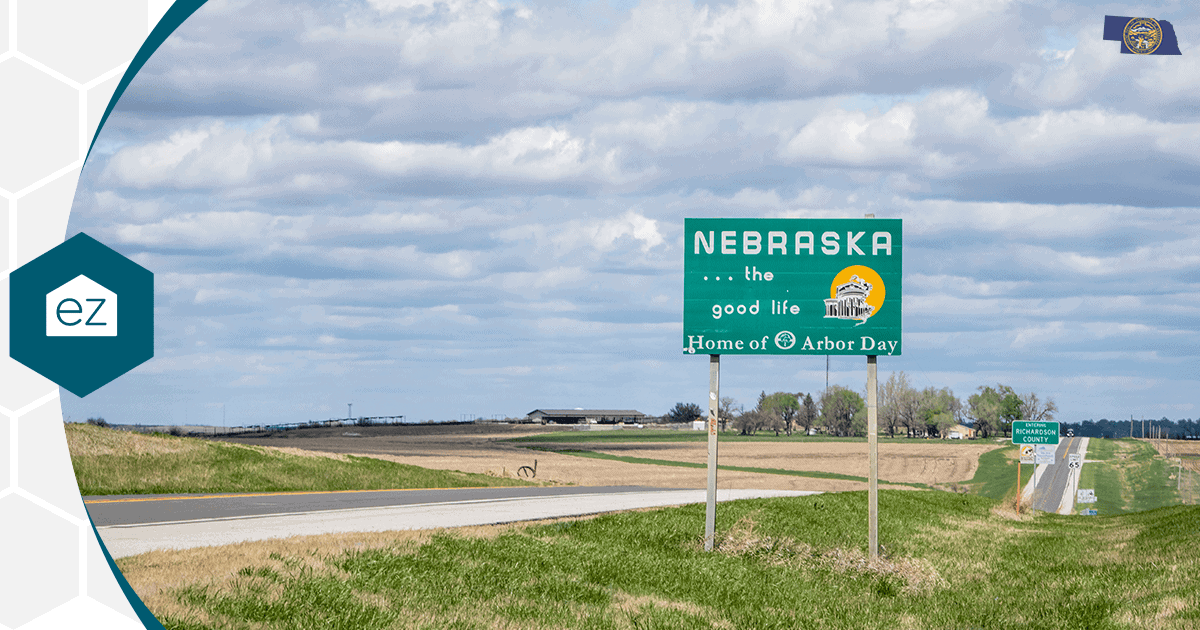
Why the Nebraska market is tighter than the flat-state headline suggests
The squeeze in Nebraska’s metros sits in existing homes rather than new construction, and that distinction changes what a lead budget should chase. In the Omaha area, existing-home supply sat around 2.1 months in September 2025 and dropped as low as 1.3 months in January 2025, according to Great Plains Regional MLS. Six months is the line between a buyer’s and a seller’s market, so the resale side is running at roughly a third of balanced. New construction carried about 6.1 months of supply over the same stretch, which means the homes buyers most want, existing homes in established neighborhoods, are exactly the ones running shortest.
How fast homes move confirms the shortage. Existing homes in the Omaha metro sold in about 18 days at 98.6% of list price, with a median close near $300,000 (Great Plains Regional MLS, September 2025). A market where homes clear in under three weeks and close within a point and a half of asking is not soft by any reading.
The shortage traces to a building gap that has run for years, not a single slow season. Douglas County needs roughly 3,700 new housing units a year to keep pace with its growth, yet the metro has cleared 3,000 permits only twice in a decade, in 2017 and 2021, reaching 3,371 in 2024 (City of Omaha 2025 Affordable Housing Report, corroborated by Census single-family permit data). Every year the region builds under that mark, the deficit compounds and lands squarely on the resale market. What does get built leans away from starter homes: of 16,143 residential permits from 2020 through 2024, about 41% were single-family and 53% multifamily, per the same Omaha report.
For anyone spending on leads, the math points one way. Buyer demand in the Omaha and Lincoln metros is plentiful and cheap to reach, while listings are the scarce asset. An agent who pours a budget into shared buyer leads is buying the abundant side of the market and starving on the side that actually pays, because there are never enough homes to show the buyers already in hand. The move that works in a supply-starved market is to own the seller relationship early, before a listing exists, so you are the name a homeowner already trusts when they finally decide to sell.
That is the argument for owning a county instead of renting cold names inside it. See whether your Nebraska county is still open.
Where Nebraska’s buyers and sellers actually are

Demand in Nebraska concentrates in the eastern metros and along the I-80 corridor, while the western half of the state trades at a slower, steadier pace. The six regions rarely compete for the same buyer, so a lead plan works best when it matches the region an agent actually covers.
The Omaha metro anchors the eastern end and carries the most weight. It passed a million residents in 2024, lifted by international migration and by suburban expansion in Sarpy County, and its neighborhoods run the full range, from Dundee and Benson near the core to Elkhorn and Millard on the western edge. Lincoln is the second market and grows on a different base: state government, the University of Nebraska, healthcare, and Kawasaki’s manufacturing plant, with demand pushing outward from the Haymarket and Near South toward Waverly and Hickman.
Through the middle of the state, the market follows the I-80 corridor. Grand Island, Hastings, and Kearney, the Tri-Cities, are steady mid-size markets built on food processing, healthcare, and logistics, and they carry some of the lowest unemployment in the country. Farther northeast, around Norfolk, Columbus, and South Sioux City, manufacturing and meatpacking pull international migration into Dakota and Dodge counties. The western half trades on a slower clock. The Panhandle around Scottsbluff and Gering runs on irrigated agriculture, sugar beets, dry beans, and cattle, and it holds steady regional-hub demand even as thinly populated counties like Sioux lose ground. The Sandhills, cattle country covering roughly a quarter of the state, turn over rarely and off tiny population bases, where a county like Blaine can post the state’s fastest percentage growth on a handful of people.
Migration fits inside that regional picture and needs to be read at its real size. Nebraska’s net domestic migration came to a loss of 366 people in the latest estimate, small enough against 2 million residents that it moves no market on its own. What matters is who is moving and in which direction. A household leaving the state is two opportunities for an agent, a relocation referral and a listing on the home being sold here, while the arrivals, mostly international plus a steady flow of in-state movers, are buyers. That inflow lands hardest in Sarpy County, which grew 2.2% to lead every large county in the state on the strength of domestic in-movers into Bellevue, Papillion, La Vista, and Gretna. A net-outflow headline and the fastest-growing large county in Nebraska hold true at the same moment, which is exactly why a statewide figure is the wrong tool for deciding where to work.
| Region | Anchor markets | What is driving it |
|---|---|---|
| Omaha metro (east) | Omaha, Bellevue, Papillion, Gretna, Elkhorn | Passed 1 million residents in 2024; growth from international migration and suburban Sarpy expansion |
| Lincoln metro (southeast) | Lincoln, Waverly, Hickman | 350,626 residents, up 1.2%; anchored by state government, the University, healthcare, and Kawasaki manufacturing |
| Central / Tri-Cities (I-80 corridor) | Grand Island, Hastings, Kearney | Food processing, healthcare, and I-80 logistics; steady mid-size markets with very low unemployment |
| Northeast | Norfolk, Columbus, South Sioux City | Manufacturing and meatpacking, plus international migration into Dakota and Dodge counties |
| Panhandle (west) | Scottsbluff, Gering, Sidney | Sugar beets, dry beans, and cattle; stable regional-hub demand even as Sioux County fell 4.5% |
| Sandhills / north-central | Valentine, Broken Bow, Ord | Cattle ranching, 500,000-plus beef cattle in the region; sparse, tiny-base counties, some growing off small numbers (Blaine up 5.3%) |
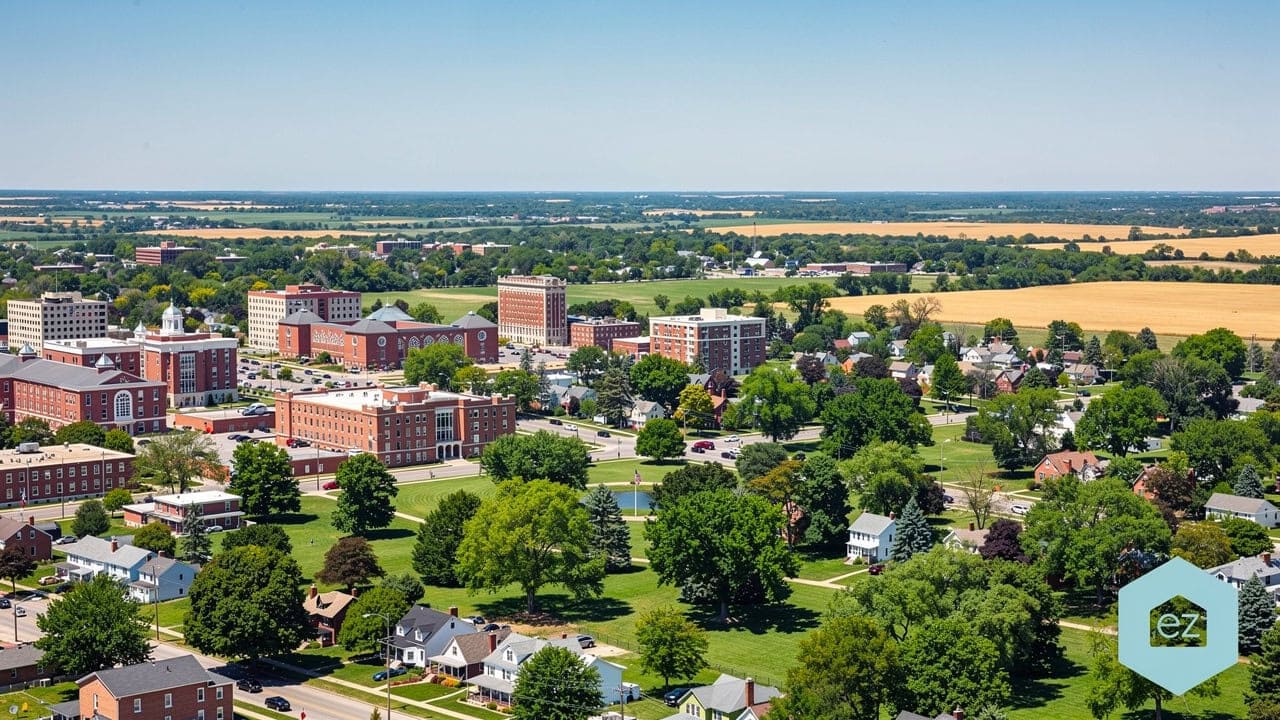
The Nebraska growth corridor most agents under-farm
The clearest signal of where Nebraska families are actually landing is school enrollment, and it points straight at western Omaha and Sarpy County. A population estimate only tells you a county grew; enrollment tells you that households with children, the ones who buy three- and four-bedroom homes and stay for a decade, picked a specific set of neighborhoods. In Nebraska that data draws a hard line through a handful of districts most agents drive right past.
Gretna Public Schools, in Sarpy County, enrolled 7,013 students in 2024-25, up by roughly 1,500 over five years, and district leaders have said publicly they expect enrollment could eventually double (Nebraska Department of Education; 3 News Now). Bennington, in northwest Douglas County, enrolled 4,381 and projects it will pass 6,000 by the end of the decade, and neighboring Elkhorn reached 11,653. Those figures put all three among the fastest-growing districts in the state, on the very ground where Sarpy County posted its 2.2% population gain.
Lay the enrollment map over the migration map and they point to one target: the Gretna, Papillion, Bennington, and Elkhorn corridor along the western and southwestern edge of the metro. New households are forming there faster than new construction can keep up, so a listing that reaches the market already has buyers waiting on it. A farm built on that corridor is a farm built where the demand is being created rather than where it used to sit.
The metro corridor is not the only ground worth owning. Nebraska’s mid-size counties hold real communities an agent can farm well beyond Omaha and Lincoln:
| County | Communities |
|---|---|
| Adams | Hastings, Juniata, Kenesaw, Ayr |
| Dawson | Lexington, Gothenburg, Cozad, Overton |
| Dakota | Dakota City, South Sioux City, Homer, Emerson |
| Gage | Beatrice, Wymore, Adams, Odell |
| Saunders | Wahoo, Ashland, Yutan, Ceresco |
| Cass | Plattsmouth, Louisville, Weeping Water, Elmwood |
| Seward | Seward, Milford, Utica, Staplehurst |
| Otoe | Nebraska City, Syracuse, Unadilla, Talmage |
| Saline | Crete, Wilber, Friend, Dorchester |
| Washington | Blair, Fort Calhoun, Arlington, Kennard |
How Nebraska’s property taxes change every pricing conversation
Nebraska’s property taxes are the fourth-highest in the country, which makes pricing a home here a tax conversation as much as a comparable-sales conversation. The effective rate on owner-occupied homes runs about 1.43 to 1.44%, against a national average near 0.91% (Tax Foundation). On a $300,000 home, that gap works out to roughly $1,600 a year in extra carrying cost, every year, and buyers price it in whether or not the seller does.
The bigger complication is how those bills have moved. Residential assessments across Nebraska rose about 50% from 2017 to 2023 while actual tax bills rose about 40% (Tax Foundation and Platte Institute), because a bill climbs on rising valuation even when the rate holds flat. That is how a homeowner can watch their taxes go up in a year with no rate increase at all. The Legislature answered with LB 34, a school-district property tax relief measure worth about $750 million in fiscal 2025 and roughly $4.9 billion over five years, which eases the pressure without taking it out of the pricing math.
For a seller, the starting number decides almost everything that follows. The common trap is hiring whichever agent quotes the highest price, then spending the next two months getting walked back down to what the home was always worth, with the most valuable early weeks on market already gone. The better path starts from a number the data supports. ez Home Search begins with an automated valuation model (AVM) built to be the most accurate available anywhere and layers in property-tax detail down to the county and ZIP code, so the seller sees both the price and the tax load a buyer will weigh against it. From there the Single Local Expert turns that AVM into a full comparative market analysis, separates the repairs that move the price from the ones that waste money, and gives an honest read on whether the moment favors listing now or waiting.
That same tax detail works for the buyer, who in Nebraska is usually the same person. Run through the AVM and an affordability calculator, the county and ZIP tax picture shows the true cost of owning a specific home instead of the number on the listing. A seller who prices with the tax burden in view and a buyer who offers with it in view are two halves of one honest transaction, working from the same data. In a state where the tax line sits this heavy, the agent who can explain it is the one who wins the listing.
Most Nebraska agents work one side of a buyer who is also a seller
Most agents pick a side. They run a “list with me” campaign to sellers, or they buy cold buyer leads, and they treat the two halves of one move as if they were two different people. That choice costs them, because about four in five of the buyers they chase already own a home they have to sell before they can buy the next one.
The number that proves it is the first-time-buyer share. Nationally, first-time buyers fell to about 24% of purchases, roughly one in five and a record low (NAR). No clean Nebraska-specific figure surfaced in the research, so the national rate is the honest anchor, and the state’s relative affordability likely supports first-time activity at least that high. Read it the other way and the point is plain: about four in five buyers are also sellers, trading up, down, or across in a single move.
That splits the market into three groups, each served differently. First-time buyers, the one in five, have no home to sell and need affordability, education, and confidence. The dual majority, the four in five, need the equity from the home they are leaving, the timing between the two sides, and the next purchase handled as one move. Seller-only owners, an estate, a landlord exiting, someone moving in with family, are the true minority.
The edge comes from reading which side is live and serving that one first. A valuation check, an equity question, or a repeat visit to a home-value page means the seller conversation is open. Saved searches, alerts opened the day they arrive, and a booked tour mean the buyer side is moving. For most people the two run in sequence, and ez Home Search follows that movement rather than guessing at it, reaching the person early in the private dream, gather, and plan stages, well before they raise a hand for anyone else. The agent already in place when the move surfaces is the one who wins both sides of it.
The remote-work edge most Nebraska agents miss

The shift to remote and hybrid knowledge work that headlines keep calling dead has not reversed. Nationally, remote and hybrid work sits at roughly three times its pre-pandemic level, which makes it a live buying signal for Nebraska’s affordable mid-size and lifestyle counties. The decline story mostly rests on a measurement trick, holding the emergency peak of 2020 up against today instead of lining today up against the years that came before.
The national data has held steady rather than fallen. The Bureau of Labor Statistics put the number of Americans teleworking at least part of the time at 36.7 million in the fourth quarter of 2024, up from 32.5 million a year earlier, with the telework rate climbing to 23.4%. On the employer side, the Census Bureau’s Business Trends and Outlook Survey, which reached roughly 150,000 firms in the biggest business-side count of its kind, found companies projecting close to the same level of remote work five years out as they run today. Those employers are building around it rather than winding it down, and the pattern has held nationally since 2023.
What most agents miss is where that shift lands in Nebraska. Once a knowledge job no longer ties a household to a coastal metro, the state’s affordable mid-size markets turn into live options: Buffalo County around Kearney, Hall County around Grand Island, Madison County around Norfolk, and Platte County around Columbus, along with the Cass and Saunders County exurbs between Omaha and Lincoln and the recreation markets of the Panhandle. Nationally, the USDA found that rural counties reversed a decade of decline and gained about 974,000 net migrants from 2020 to 2024, concentrated in the working-age adults a remote job frees to move. Nebraska’s mid-size and lifestyle counties are set up to catch a share of that.
For an agent, that adds up to lasting demand in exactly the markets where existing inventory is already thin, the mix that moves prices and rewards whoever is the recognized local name. It also shifts what these buyers want in a home, and the agent who hears it early wins the conversation. A remote or hybrid buyer asks for a dedicated or closable home office, sometimes a separate structure or ADU for a second person working from home, more square footage to hold both, and rural broadband that can carry a full day of video calls. A Kearney or Norfolk agent who leads with those features, and who already holds the relationship before the search goes active, is the one who closes the remote buyer moving in.
How Nebraska agents try to win leads today, and where it breaks
Every common lead tactic in Nebraska works up to a point, and most of them hit the same wall in a market where listings, not buyers, are the scarce asset. Each one earns its place, and each one runs into a real limit.
Shared buyer leads from legacy portals are fast to switch on and fill a pipeline quickly. They are also cold, sold to several agents at once, and aimed at the abundant side of a metro market where the real shortage is homes to sell. A buyer you win but share with three competitors, in a market carrying two months of inventory, is the wrong thing to spend on.
An IDX website the agent builds and keeps up is an asset they own, which is the right instinct. The catch is that it ranks slowly, costs real money to feed with content, and sits years away from competing with the national sites for the searches that matter. Cold calling FSBOs and expired listings still turns up business, and it carries the compliance exposure most agents underestimate, because the law treats a prospecting call as telemarketing and puts the burden of proving consent on the caller. Predictive-seller software rates the names in a database and guesses which owners may be close to listing, yet a high score is not the same as a relationship, and the agent is still the one who has to build the trust that turns a guess into a signed listing. Generic all-in-one CRMs promise to hold it together and become one more system to configure and run. DIY newsletters and paid Google and Meta ads can both work, and both spike while the spend is on and fade when it stops.
Underneath all of them runs the same limit. Each one buys a moment of attention or a cold name, and none holds the relationship across the years a person actually moves through, from dreaming to gathering to planning to acting. The mechanism ez Home Search runs on closes exactly that gap: a confidential, relationship-first funnel that surfaces intent from real activity on a platform the consumer already trusts, rather than a cold name rented from a portal. A past client watching their home value, a dreamer saving homes in Elkhorn, a household running a second valuation in Gretna, all of that is visible, and the follow-up fires on the activity while the interest is still live. Where the other tactics chase whoever is shopping today, this funnel keeps the relationship through the quiet years before and after, which is where the listings actually come from.
What an Exclusive County Partnership gives a Nebraska team

The Exclusive County Partnership hands one agent, team, or brokerage an entire Nebraska county, co-branded across the consumer experience, with no competing partner working inside it. One flat fee holds the whole thing together. There is no charge per lead and no share of the commission when a deal closes, so a strong month is a strong month for the partner and not a bigger invoice.
The territory is worth holding because of the kind of connection it produces. A person who comes to a partner by way of ez Home Search arrives as more than a cold name off a list. They chose a platform they trust, searched on their own terms, and showed real intent through real activity, so the relationship holds across years rather than weeks. That is the payoff of The Only Confidential Home Search: a person’s contact details and budget are never sold, recycled, or broadcast to a crowd of businesses they never chose. Because they can engage honestly, ez Home Search matches each of them to one vetted local expert instead of auctioning them to whoever paid the most to reach them. That is ez Home Search delivering on the idea at the heart of its brand, A Better Way To Discover Real Estate. That promise is also why the leads convert. Warm, chosen connections close at a rate shared cold names never reach.
For a Nebraska team, that engine goes to work on the pains this market actually creates, starting with the book of business the partner has already built. Most agents pour their energy into chasing new deals and let past clients and their sphere go quiet, so the most valuable asset they own sits idle. ez Home Search puts it back to work: past clients return to a co-branded search to track their home’s value and watch the market around them, and the follow-up fires on that real activity rather than a generic monthly blast. Put the database back in motion and reactivation runs at 2.5 to 5 times the market rate, whether the business comes back as a repeat deal or a referral. In a metro where listings are the scarce asset, a reactivated past client who is ready to sell is worth more than any cold buyer lead.
Relocation is the quiet loss the platform is built to catch. When a past client leaves Nebraska, and the state’s small net domestic outflow means a steady trickle do, the agent usually loses both the referral and the listing on the home being sold here, because the move was never visible. On a co-branded national platform, that client keeps searching the new market inside the agent’s own branded experience, and those searches show up early as a signal that a move is underway. The partner sees it, makes contact before the listing comes into play, talks through selling the Nebraska home, and keeps the listing they earned.
Recognition builds on top of all of it. NAR’s research finds that 81% of sellers contact only one agent before choosing, so the recognized name in a county has effectively won the client before any comparison even starts. The partnership carries the partner’s brand across the search, the alerts, and the home-value updates the county already uses, which builds that recognition faster than any single team could manage on its own.
Two supporting pieces close the loop. ezVerify.ai confirms every opportunity has opted in and keeps the recording that proves it. It checks each phone number against a known-litigator database, drops numbers on the Do Not Call registry, and fills in detail on the contact, taking the riskiest step in prospecting off the agent’s plate before the first dial, and it does all of that as proof of consent, not a lead score. Every conversion tool already runs on the national platform, co-branded to the partner, with nothing to configure and nothing to maintain: the AVM widget, the open-house sign-in behind a QR code, the home-value pages, and the instant cash offer.
If that is the position you want in your county, see whether it is still open.
Only one partner can hold each Nebraska county, and many are already taken
A single partner holds each Nebraska county, and once it is taken, it is closed to every other agent inside it. The state has 93 counties, a good share are already spoken for, and more are claimed every month, so the position an agent wants is not always open by the time they decide to ask. That scarcity is the point of exclusivity: it is worth holding because no competitor can buy the same co-branded ground, no matter how much they spend.
The model works the same in Douglas County as it does in a rural county of a few thousand households, because the recognized local name carries weight in a small market just as it does in a metro. The partner claims a county with no build-out, standing up no technology stack and waiting on no new website to climb the rankings; they step onto a platform millions of people already use, now carrying their own name, and it works from day one. The only thing left to settle is whether the county is still open.
The decision a Nebraska agent actually faces
The choice in Nebraska comes down to three ways to spend the next year of lead budget. The first is the status quo: keep buying shared, cold buyer leads and working them against a two-month supply of homes, which starves exactly where this market is tight. The second is to build all of it in-house, the data, the valuations, the confidential search, and the follow-up engine, a stack that runs into the millions of dollars and the years of engineering no single team can realistically assemble. The third sits between them: own your county and the confidential, relationship-first funnel that comes with it, for one flat fee, and let the platform millions already use carry your name.
The honest trade-off is time. A relationship-and-database engine compounds slowly at first and then faster, so on reactivation most partners see real momentum in the 30 to 60 day range, and it keeps building quarter over quarter as past clients re-engage and their referrals follow. An agent who needs a spike this week should buy ads. An agent building a business that grows every year should own the county.
If one number should decide it, this is the one: a partner’s past clients come back at 2.5 to 5 times the market rate, a level the open market rarely matches. That is business the agent already earned once, now returning at a multiple, on ground no competitor can hold beside them.
Only one partner holds each Nebraska county. The next step is a single question: check whether yours is still open.
Frequently asked questions
Why do Omaha and Lincoln home prices keep climbing while dozens of Nebraska counties are losing population?
Nebraska behaves like several markets at once, which is why both facts are true. Growth and the housing shortage concentrate in the eastern metros while population thins across many rural counties, and the two do not cancel out. Omaha and Lincoln keep appreciating because demand there outruns a tight supply of existing homes, roughly two months’ worth, even as 43 of the state’s 93 counties lost population. Prices track local supply and demand, not a statewide average. For an agent, the opportunity is defined by which county you stand in, and the metros where prices climb are also where listings are scarcest and most valuable to win.
How do Nebraska’s property taxes, now the fourth highest in the country, change what I should price a listing at?
They cap what a buyer can pay. With an effective rate around 1.43 to 1.44% against 0.91% nationally, a Nebraska buyer carries a heavier annual cost on top of the mortgage, and offers adjust downward to make room for it. A seller who prices to the sticker without accounting for the tax burden watches the home sit. ez Home Search keeps an accurate valuation and the county and ZIP tax detail together in one place, so you can price to a number the market will actually meet and walk the seller through why.
Which Sarpy County suburbs and western Omaha exurbs are growing fastest for an agent deciding where to farm?
Follow the school districts. Gretna, in Sarpy County, enrolled 7,013 students in 2024-25, and its leaders expect enrollment could eventually double. Bennington reached 4,381 and projects it will pass 6,000 by the end of the decade, while neighboring Elkhorn has reached 11,653. Together those districts trace the Gretna, Papillion, Bennington, and Elkhorn corridor along the western and southwestern edge of the metro, the same ground where Sarpy County posted the state’s fastest large-county growth. That corridor is where households with children are forming, and where a listing already has buyers waiting on it.
How can an agent in Grand Island, Kearney, or Hastings compete with larger Omaha and Lincoln teams for online buyers and sellers?
You do not win the Tri-Cities by outbidding the metro teams for ad impressions, and trying to is a losing fight. The edge in these markets is ownership, not spend. An Exclusive County Partnership makes one agent the co-branded name across the home search the county already uses, for one flat fee with no charge per lead, so a Kearney or Grand Island agent competes on being the recognized local expert instead of on advertising budget. In a market that runs on reputation and referrals, owning the county beats renting clicks.
Offutt Air Force Base rotates families out of the Bellevue and Papillion area on a set cycle. How do I hold the listing when a past client gets orders out of Nebraska?
Catch the move before it surfaces. An agent usually loses that listing by never seeing it coming. The household starts searching the next duty station on some other site, connects with an agent there, and mentions the Sarpy County home they still need to sell. That agent refers the listing to a local competitor of yours for a referral fee, and the home you helped the family buy ends up selling with someone else. On a co-branded national platform, that family keeps browsing the new base area inside your own branded experience, and the searches they run show up as an early signal. You make contact before the home hits the market, take the listing on the Bellevue or Papillion property yourself, and refer the family onward to a trusted agent at the new posting for a referral fee. The relationship travels with the move rather than ending at the state line.
Is there enough for-sale inventory in the Omaha and Lincoln metros to build a buyer-based business right now?
There are plenty of buyers; the constraint is homes to show them. Existing-home supply in the Omaha metro has run around two months and dipped as low as 1.3, well under the six months of a balanced market. A business built only on buyer leads will stall on the listing side, because there are not enough homes for the buyers you already have. The steadier move is to own the seller relationship early, so you are generating listings instead of fighting over the handful on the market. ez Home Search is built precisely to surface those seller conversations before a home is ever listed.
How do I generate seller leads in slower Panhandle and central Nebraska markets like Scottsbluff or North Platte?
In slower markets the game is patience and presence, not volume. Homeowners in Scottsbluff, Gering, or North Platte move less often, so the agent who wins the listing is the one already in front of them when the time finally comes, months or years out. That means keeping past clients and local owners engaged with something they actually use: a co-branded home search where they watch their home’s value and the regional market, with follow-up that fires when their activity shows interest. A reactivated database, which ez Home Search runs for the partner, produces steadier seller leads in a thin market than any cold-calling campaign, and without the compliance risk.

Kurt Uhlir is a recognized leader in marketing, growth, and innovation, having helped scale companies and technologies used by millions every day—including at brands like eXp Realty, Sideqik, Vitrue, Oracle, Garmin, Facebook, Meta, Apple, and more. He’s trained tens of thousands of professionals on how to build trust, lead with service, and help clients make wise, informed decisions. At ez Home Search and Sure Send, his focus is on helping high-performing business owners, team leaders, and individual sales leaders grow their businesses through exclusive market access, privacy-first lead systems, and conversion-focused enablement tools.