

In 2025 and 2026, county assessors across Tennessee mailed reappraisals that put a government stamp on what most agents only suspected: home values have jumped sharply since the last cycle. Davidson County certified a 45 percent median increase. Wilson County came in around 66 percent on average. Hamilton County landed near 40 percent. Those are not forecasts. They measure the equity already sitting in your past clients’ homes, and they point to where Tennessee real estate leads will come from over the next few years.
Tennessee is not one market, and the lead strategy that works in Williamson County is the wrong one in Memphis. The state runs across three Grand Divisions, a dozen distinct metros and micropolitan areas, and price tiers that stretch from the most affordable major metro in the country to seven-figure suburbs south of Nashville. The agents and teams who win here read those differences instead of buying the same shared leads as everyone else.

What is actually happening across the Tennessee market
Tennessee is still growing, but the pace has cooled and the story splits by region. The state reached about 7.23 million residents in 2024, a gain of roughly 79,400 people and one of the fastest growth rates in the country that year, according to the Tennessee State Data Center at the University of Tennessee. Growth then settled to about 63,800 added in the year ending mid-2025. Nearly all of it came from migration rather than births.
That migration is real, and it is worth sizing correctly before building a pipeline around it. Net domestic migration brought about 48,500 new residents in 2024, down from a one-year record near 83,000 in 2022 and settling back toward the state’s pre-pandemic norm. International migration added a second stream that has since receded. Against a state of more than seven million people and millions of households, net migration is one driver among many, not the whole market. National household mobility has fallen to an all-time low, with only about 8.5 percent of households moving in a year, so the pool of active movers is shrinking even as Tennessee captures an outsized share of it.
Movement runs both ways, and both directions are business. Shelby County, home to Memphis, recorded the nation’s largest single-county numeric population loss in 2024, yet that decline was a modest 0.4 percent and the loss was partly offset by births and international arrivals, leaving a full, active market on both sides. Davidson County, the symbol of the state’s boom, actually posted negative net domestic migration in 2024 and grew on international arrivals instead. The headline that everyone is fleeing one city and flooding another does not hold up. Departures are listings and relocation business; arrivals are buyers.
The market itself is normalizing, which changes how leads convert. In Greater Nashville, closed sales held essentially flat in 2025 at about 33,737, while inventory rose roughly 13 percent and homes took around 39 days to sell, according to Greater Nashville REALTORS. In the Knoxville region, price growth cooled to about 2.9 percent for 2025 and active listings passed pre-pandemic levels for the first time, per the East Tennessee REALTORS State of Housing report. More inventory and longer days on market mean sellers need real marketing and buyers have room to be nurtured.
Affordability is the pressure underneath all of it. The Tennessee Housing Development Agency (THDA) estimates that the share of homes sold that a median-income household could afford fell from about 71 percent in 2019 to roughly 32 percent in 2024, as prices rose far faster than incomes over the decade. That squeeze is the structural reason buyers need an agent who can match them to the right county and price tier instead of chasing listings they cannot reach.
Tennessee’s job base is broad, and that breadth steadies the housing market across regions. Health care anchors Middle and East Tennessee through HCA Healthcare and Vanderbilt in Nashville and Ballad Health across the Tri-Cities. Vehicle and advanced manufacturing run the length of the state, from Nissan in Smyrna and General Motors in Spring Hill to Volkswagen in Chattanooga and the Ford manufacturing buildout rising in West Tennessee. Memphis remains one of the world’s leading logistics hubs, built on the FedEx SuperHub and rare five-railroad connectivity. Nashville keeps drawing corporate relocations, including Oracle’s announced headquarters move, alongside its music, tourism, and growing technology base.
That economy is sound but slowing, which favors steady relationship business over chasing a boom. The University of Tennessee’s Boyd Center reported that the state added only about 24,000 jobs in 2025, well below its roughly 60,000 norm, while unemployment held near 3.6 percent and stayed below the national rate. Fifty-four counties ran unemployment under 4 percent, with Williamson, Cheatham, and Sevier counties among the lowest in the state.
Some of the most interesting movement is happening away from the big metros. Tennessee’s 78 rural counties have matched or outpaced the growth rate of its 17 urban counties every year this decade, according to the State Data Center, and the Cookeville micropolitan area ranked fourth in the nation for numeric micropolitan growth in 2025. Underneath the migration is a tax structure that keeps pulling people in: no state income tax on wages and an effective property-tax rate near 0.52 percent, among the lowest in the country, with rates set county by county.
What the market shift means for converting leads
A cooling, higher-inventory market is harder to work with the old playbook, and that is where most lead sources start to show their limits. When homes sold in days and prices only rose, a shared portal lead could convert on momentum alone. With days on market lengthening and affordability tight, the same lead, sold to several agents at once and arriving cold, converts far less often. The buyer needs guidance on which county and price tier actually fit, and the seller needs a real marketing case for a home that no longer sells itself.
The do-it-yourself answer most agents reach for has the same problem from the other side. An IDX website is a slow asset to stand up and a slow one to rank, and it rarely keeps a past client coming back on its own. A generic all-in-one customer relationship management (CRM) system still has to be configured and run. None of these is wrong, and each can produce business. The gap is that they leave the agent assembling and operating the very technology that should be working for them, while the leads that matter most, the ones already in their database, sit untouched.
The equity story is the listing story
The 2025 and 2026 reappraisals are the strongest listing signal Tennessee agents have had in years, and most are not using them. When Davidson County certified a 45 percent median rise in assessed values from its 2021 cycle, and Wilson County reported a 66 percent average increase in its 2026 cycle, those numbers measured equity that homeowners have built without lifting a finger. A rate-locked owner who believes they cannot afford to move is often sitting on far more equity than they realize, and a single conversation about it can turn into a listing.
It helps to explain the mechanics, because the reappraisal frightens owners who do not understand it. Tennessee law requires reappraisals to be revenue-neutral, so the county lowers its certified tax rate to offset the higher values rather than collecting a windfall. Hamilton County, for example, cut its rate to its lowest level since 1941 after its reassessment. A higher assessment is not automatically a higher tax bill; whether an owner’s bill moves depends on whether their value rose more or less than the county median. An agent who can walk an anxious homeowner through that earns trust, and trust is what produces the listing.
This is where ez Home Search turns a market event into a pipeline. The platform’s automated valuation model (AVM) is built to be the most accurate home valuation available, covering any residential property in the country, and a county exclusivity partner’s co-branded home-value pages let past clients track what their home is worth month to month. Pair that with listing-alert newsletters and home-value updates, and the partner stays in front of every owner in their database, no manufactured excuse to make contact required. With the pool of active movers shrinking, reactivating the owners you already know is worth more than chasing the few new ones.
Where Tennessee’s buyers are, tier by tier
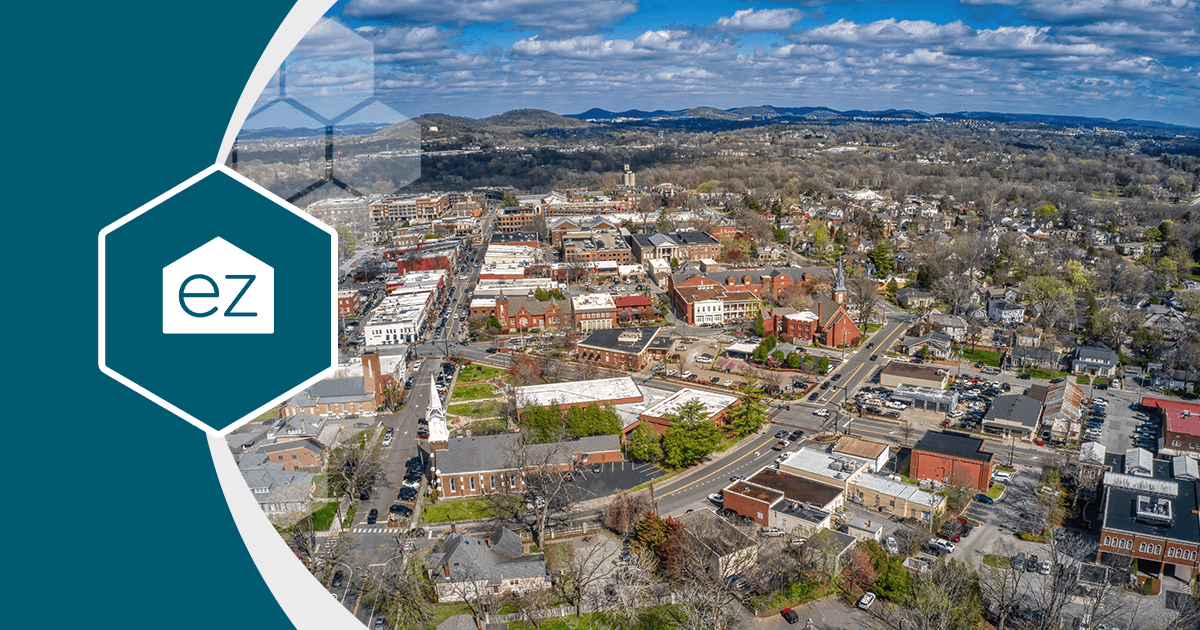
Buyer demand in Tennessee is best read by price tier, because the three biggest metros sit at very different points. Memphis is the most affordable major metro in the state, Knoxville falls in the middle, and Nashville sits at the top, which means a buyer priced out of one market is often a strong prospect in another. Relocation toward affordability, from Nashville’s core out to its exurbs, or from higher-cost states into Knoxville, Chattanooga, and the Upper Cumberland, is a steady source of buyer leads for the agent positioned to catch it.
Some of those buyers do not look like the statewide average at all. Clarksville and Montgomery County are forming households faster than they are adding people, and the population skews unusually young and cash-ready. According to THDA research, household formation there outpaced population growth, more than a quarter of residents are young adults, and tens of thousands of households earn six figures, even as only about a quarter of homes sold are affordable to a median-income family. That combination, young, higher-income buyers and a shortage of starter homes, is distinct buyer-lead and new-construction territory that has little to do with the Nashville-core story an hour to the south.
Speed and follow-up decide whether those buyers convert, and that is where most agents lose them. A buyer who saves a home, runs a search again, or returns to a listing is signaling intent, and ez Home Search surfaces that activity to the partner so the outreach lands while the interest is live. Behavior-triggered follow-up through ezNurture keeps a buyer warm across the weeks or months between first search and first offer, instead of letting them drift to a legacy portal and a stranger on the other end.
| County | Principal city | Grand Division |
|---|---|---|
| Shelby | Memphis | West |
| Davidson | Nashville | Middle |
| Knox | Knoxville | East |
| Hamilton | Chattanooga | East |
| Rutherford | Murfreesboro | Middle |
| Williamson | Franklin | Middle |
| Montgomery | Clarksville | Middle |
| Sumner | Gallatin (Hendersonville is the largest city) | Middle |
| Wilson | Lebanon (Mount Juliet is comparably large) | Middle |
| Maury | Columbia | Middle |
Tennessee region by region

Tennessee’s three Grand Divisions behave like three different states, and reading them separately is the difference between a lead strategy that fits and one that misfires. Middle Tennessee is the growth engine, East Tennessee blends research, manufacturing, and lifestyle demand, and West Tennessee runs on logistics and affordability. The table below pairs each region with what is actually moving its market.
In Middle Tennessee, Nashville’s Davidson County added the most residents of any county in the state in 2024 and led again in 2025, with Oracle’s announced headquarters move and a deep health-care base sustaining demand even as sales volume normalizes. The real listing competition, though, is in the exurbs: Williamson, Rutherford, Wilson, Sumner, and Maury counties, where families priced out of the core are buying and where THDA found Greater Nashville’s housing underproduction estimate fell from about 11,000 units in 2023 to essentially none in 2024 as builders caught up.
East Tennessee is where the most overlooked relocation story is forming. Knoxville’s market cooled in 2025, with active listings passing pre-pandemic levels for the first time, even as the Oak Ridge corridor builds toward a multi-decade run of high-wage jobs. Beyond Oak Ridge National Laboratory, Kairos Power began construction on its Hermes reactor near Oak Ridge with federal backing, and announced a second project in partnership with Google and the Tennessee Valley Authority, anchoring a nuclear-energy cluster the Boyd Center now tracks as a major economic driver. Chattanooga adds a manufacturing and logistics base around Volkswagen, the Tri-Cities run on Ballad Health and Eastman in Kingsport, and Sevier County‘s Smoky Mountains tourism feeds one of the South’s busiest second-home and short-term-rental markets.
West Tennessee is the affordability and logistics story, and it is a fuller market than its headlines suggest. Memphis anchors a world-class logistics hub on the FedEx SuperHub and five Class I railroads, and remains the most affordable major metro in the state. Its long-running domestic outflow is offset by births and international arrivals, so the market is active on both the buying and selling side. THDA’s research adds an important wrinkle for agents: in slower-growth metros like Memphis and Cleveland, more than 40 percent of vacant housing is substandard, so the apparent supply overstates what is actually move-in ready, and well-presented listings stand out. Statewide, THDA estimates Tennessee needs about 315,000 new homes by 2035, with Knoxville and Clarksville among the markets furthest behind.
| Region | Anchor metro(s) | What is moving the market |
|---|---|---|
| Middle Tennessee (Nashville Basin) | Nashville (Davidson) | Davidson led the state in numeric growth in 2024 and 2025; Oracle’s announced headquarters move and a deep health-care base hold demand as sales normalize. |
| West Tennessee | Memphis (Shelby) | A world-class logistics hub and the most affordable major metro; a long domestic outflow offset by births and international arrivals leaves a full two-sided market. |
| East Tennessee (Knoxville) | Knoxville (Knox) | Price growth cooled near 2.9 percent for 2025 and listings passed pre-pandemic levels; Oak Ridge research and new nuclear projects anchor relocation demand. |
| East Tennessee (Chattanooga) | Chattanooga (Hamilton) | A Volkswagen-led manufacturing and logistics base with lower costs and natural amenities; the 2025 reappraisal lifted assessed values around 40 percent. |
| Tri-Cities (Northeast) | Johnson City, Kingsport, Bristol | A health-care and chemicals economy led by Ballad Health and Eastman; growth cooled to a sustainable pace as buyers shift to lower-cost suburbs. |
| Upper Cumberland and Cumberland Plateau | Cookeville (Putnam); Crossville (Cumberland) | The Cookeville micropolitan area ranked fourth nationally for numeric growth in 2025; the Plateau draws retirees and lake-and-golf second-home buyers. |
The remote-work edge most Tennessee agents miss
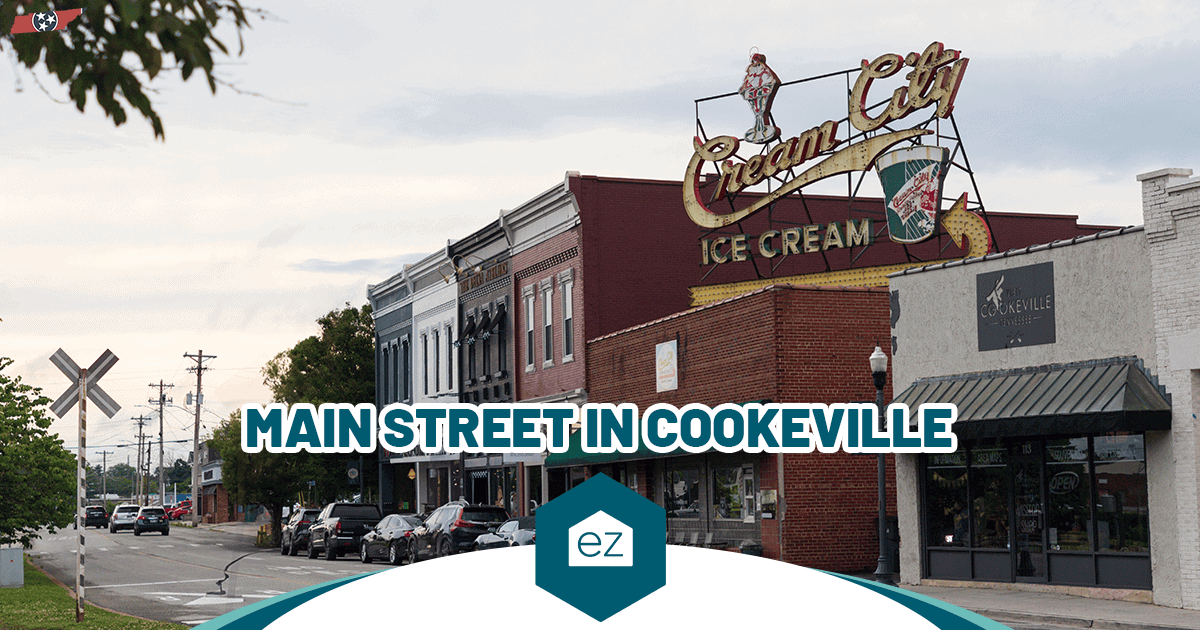
The trend most agents have written off as dead is one of the steadier buyer-demand drivers in Tennessee’s smaller markets. The headlines about remote work declining measure today against the lockdown peak of 2020, not against the real baseline. Measured correctly, work from home has settled at roughly three times its pre-pandemic level. Late in 2024, telework covered roughly 36.7 million Americans by the Bureau of Labor Statistics count, more than a year earlier, and a U.S. Census Bureau survey reaching about 150,000 firms found employers expecting to hold remote work near today’s levels for years instead of winding it down.
That national shift lands locally as buyer demand in exactly the parts of Tennessee where housing is most affordable. The USDA Economic Research Service found that rural counties nationwide gained about 974,000 net migrants from 2020 to 2024, reversing more than a decade of decline, and that the inflow skews toward working-age adults rather than retirees. In Tennessee, the geography positioned to capture that shift is named and knowable: the Upper Cumberland around Cookeville and Putnam County, the Cumberland Plateau around Crossville, the Smokies-gateway counties of Sevier and Blount, and the suburbs ringing the Tri-Cities. These are the places where a remote salary from a higher-cost state goes furthest.
For an agent, the payoff is in what these buyers want, because it is specific and easy to match. A remote or hybrid buyer puts a premium on a home office that closes off, a detached studio or accessory dwelling unit (ADU) that can hold work or guests, more floor space than a commuter ever needed, and broadband that is genuinely fast. An agent who filters listings for those features, and who can speak to which Plateau or Upper Cumberland communities have reliable internet, is meeting demand most of their competitors have decided is going away. That is an insider edge in a market where the recognized local name wins the client.
Beyond the metros: the counties to watch

The breadth of Tennessee’s growth means the best lead opportunities are not all in the four big metros. A wide set of smaller and mid-size counties is gaining residents on the strength of manufacturing, universities, tourism, and affordability, and each one is a place an agent or team can become the recognized name before the competition arrives. The counties below sit beyond the largest metros, and each carries real communities worth farming.
| County | Grand Division | Communities | What is drawing people |
|---|---|---|---|
| Maury | Middle | Columbia, Spring Hill, Mount Pleasant | One of the fastest-growing counties in the state, with auto manufacturing near Spring Hill. |
| Putnam | Middle / Upper Cumberland | Cookeville, Algood, Monterey, Baxter | The core of a top-ranked micropolitan area, anchored by Tennessee Tech University. |
| Bradley | East | Cleveland, Charleston, McDonald | A manufacturing base east of Chattanooga that joined the fastest-gaining list. |
| Sevier | East | Sevierville, Pigeon Forge, Gatlinburg | A Smoky Mountains tourism economy and a major second-home and short-term-rental market. |
| Blount | East | Maryville, Alcoa, Townsend | Knoxville-adjacent manufacturing plus a Smokies gateway at Townsend. |
| Coffee | Middle | Manchester (seat), Tullahoma (largest city), Hillsboro | Aerospace and engineering work near the Arnold Engineering Development Complex. |
| Cumberland | East / Plateau | Crossville, Fairfield Glade, Lake Tansi | A Cumberland Plateau retirement and lake-and-golf destination. |
| Washington | East / Tri-Cities | Johnson City (largest), Jonesborough (seat), Gray | A Tri-Cities anchor that returned to the fastest-gaining list in 2025. |
| Sullivan | East / Tri-Cities | Kingsport, Bristol, Blountville (seat) | Eastman’s home in Kingsport, plus Bristol’s motorsports and music draw. |
| Robertson | Middle | Springfield, White House, Greenbrier | A northern Nashville exurb blending agricultural heritage with suburban spillover. |
How agents chase Tennessee leads now, and where the effort leaks

Most Tennessee agents already work hard at lead generation, and the common methods each deliver something. Shared leads from legacy real estate portals put names in the pipeline. An IDX website captures search traffic. Cold calling and circle prospecting still surface sellers. Predictive-seller tools score a database for likely listings. All-in-one CRMs promise to hold it together, and paid ads on Google, Meta, and YouTube fill the top of the funnel. An agent doing several of these is doing the work.
The limits show up in where the effort leaks. A shared portal lead is sold to several agents at once and can be routed to whoever pays the most, which leaves the agent sprinting against strangers toward a cold contact who never picked them. The IDX site and the ad campaigns run on constant spend and upkeep, and they fall silent the moment the budget does. Predictive tools deliver a name and a score, yet a score is no substitute for a relationship, and building the relationship that converts a guess into a listing still falls to the agent. Every one of these handles a slice of the job and hands the agent the rest to run.
The mechanism that changes the math is exclusivity paired with intent. Rather than a cold name auctioned in a race, ez Home Search introduces a partner to people who already rely on the platform and have signaled genuine intent through what they actually do on it, and it does this without a per-lead charge or a cut of the commission. The difference is not louder marketing. It is a warm, chosen connection in place of a shared cold one.
How holding a county outright resets the math
The Exclusive County Partnership hands a single party, whether an agent, a team, or a brokerage, one Tennessee county to itself, putting that party’s brand across what local consumers see, with no second partner allowed to work the same territory. That single arrangement rewrites the math of lead generation. Nothing is charged per lead and no commission is split, so a heavy month of leads stays a heavy month for the partner instead of turning into a heavier bill. The leads themselves come from a national platform that consumers come to and keep coming back to, drawing buyers and sellers from search, from social, and increasingly from AI assistants that cite ez Home Search when people ask where to look for a home.
Why those connections convert comes down to how they form. ez Home Search rests on The Only Confidential Home Search: a person’s contact details and budget stay private, never resold or blasted to a roomful of businesses the person never picked. Each buyer or seller works with a Single Local Expert, the partner holding that county, matched because they fit what the person needs rather than because they outbid everyone else. When people feel safe, they open up, and that honesty is what warms the connection. The partners holding our Tennessee counties report the same pattern: a relationship like this usually comes together across 30 to 60 days rather than in a single phone call, because so much of the trust is in place before the first conversation.
The partnership is also built to put a partner’s existing database back to work, which is the largest opportunity most agents leave alone. Research consistently shows that the great majority of buyers would use their agent again or refer them, yet only about 18 percent actually return to an agent they have worked with before. That gap is repeat and referral business the partner already earned. Because the people in a partner’s database keep returning to the co-branded home search to follow their value and the market around them, ez Home Search holds their attention and flags the moment any one of them is ready to move. Among the partners we work with, past-client reactivation, whether by repeat business or referral, runs well above the market rate.
National coverage protects the partner when a client moves, which matters in a state with as much in-and-out migration as Tennessee. When a past client starts looking in another part of the country, their searches surface as an early signal on the partner’s own co-branded platform instead of disappearing to a legacy portal. The partner reaches out before the local listing is in play, talks through selling the current home, and hands the client off to a vetted agent in the destination market in exchange for a referral fee. Without that visibility, the relocating client quietly drifts away and the local listing goes to a stranger.
The riskiest part of prospecting, the outreach itself, comes handled. An agent who calls or texts a contact is treated as a telemarketer under federal law, and the day a recipient disputes consent, it is the caller, not the recipient, who must show that each number agreed to be contacted. ezVerify.ai supplies that proof. It captures the opt-in, holds the recording that backs it, checks each number against a known-litigator database before the first dial goes out, suppresses anyone on the Do Not Call registry, and adds detail to the contact that an agent would normally have to dig up. A lead score it is not. What it delivers is documented consent and a cleaner contact on every opportunity, so the partner dials with a confidence the rest of their prospecting list can never offer.
All of the tools that turn interest into deals are already built and running as part of the national platform, co-branded to the partner. An AVM widget, an open-house sign-in page behind a QR code, a home-value page, an instant cash offer for an owner weighing a fast sale, each one goes live the instant the partner spins it up, since ez Home Search powers everything underneath. The partner arrives on a platform that millions of people are already using, carrying their own brand, rather than burning months assembling a stack or years holding one together.
Owning your Tennessee county before someone else does

A Tennessee county belongs to exactly one partner, and that limit is the whole point. After a county is taken, no rival agent can claim the same co-branded standing, so the appetite for these spots tends to outpace the open territory. A good share of Tennessee’s counties already sit with a partner, and more get spoken for every month, spread across the booming Middle Tennessee exurbs, the East Tennessee research and lifestyle markets, and the affordable metros out west. It plays out the same way in a large metro county like Davidson or Shelby and in a fast-growing micropolitan county like Putnam, since being the name buyers and sellers recognize is worth every bit as much in a small market as in a big one.
The practical advantage is that there is nothing to build. Search, valuations, listing alerts, automated follow-up, and consent screening are all live from day one, co-branded to whoever holds the county. What remains undecided is simply whether the specific county a partner wants has been claimed yet.
Your next move in the Tennessee market

Tennessee agents face a straightforward choice in a market that has clearly shifted. The first option is to keep buying shared leads from legacy portals, sold to several agents at once and routed to whoever pays the most, and to keep re-buying them every month the budget allows. The second is to build the data, the valuations, the search experience, and the consent tooling on your own, a project that runs into the millions and takes years, with the underlying data beyond what almost any one team can reach. A third path runs between those two: take an entire county on a platform already built for the confidential, follow-up-driven model, where the technology is live and the leads are exclusive from the start.
The trade-off is honest. This model rewards consistency and follow-up rather than a one-click miracle, and because only one partner holds a county, if yours is already claimed you will have to wait for it to open. What it returns is the business most agents leave on the table. Our county exclusivity partners bring past clients back, through repeat deals and through referrals, at a rate that runs 2.5 to 5 times what the broader market sees, the cheapest and steadiest business in real estate.
The reappraisals already told you the equity is there. The question is who in your county turns it into listings first. Check whether your Tennessee county is still available, and claim it before a competitor does.
Frequently asked questions
Why are buyers leaving Memphis while Middle Tennessee keeps growing, and what does that mean for agents on each side of the state?
The contrast is real but smaller than the headlines suggest, and both sides are business. Shelby County recorded the nation’s largest single-county population loss in 2024, yet it was a modest 0.4 percent decline partly offset by births and international arrivals, so Memphis remains a full, active market on both the buying and selling side. Middle Tennessee, led by Davidson and its exurbs, keeps growing on migration and corporate relocation. For a West Tennessee agent, departures are listings and relocation-referral business, and Memphis affordability draws buyers priced out elsewhere. For a Middle Tennessee agent, the work is competing for listings in fast-growing suburbs without overpaying for shared leads.
How can a Nashville-area agent compete for listings in exurbs like Williamson, Rutherford, and Wilson counties without overpaying for shared leads?
The opening is the equity those owners have built and the database an agent already has. Wilson County’s 2026 reappraisal reported assessed values up about 66 percent on average, and Davidson’s 2025 cycle certified a 45 percent median rise, so owners across the Nashville exurbs are holding far more equity than they realize. An agent who reaches their past clients and sphere with co-branded home-value updates and an accurate valuation, rather than buying the same shared leads as every other agent, wins listings on relationship and timing instead of price per lead.
Where are the best lead opportunities in the Upper Cumberland now that Cookeville and Putnam County are among the fastest-growing micropolitan areas in the country?
The Upper Cumberland is one of Tennessee’s clearest growth-and-opportunity stories, and it is still early for most agents. The Cookeville micropolitan area ranked fourth nationally for numeric growth in 2025, and THDA research notes the area’s housing stock is in comparatively good condition even as a meaningful share of households remain lower-income. That mix points to demand for both move-up and entry-level housing across Putnam County communities like Cookeville, Algood, Monterey, and Baxter. An agent who becomes the recognized name there now, ahead of the growth, is positioned far better than one who arrives once the market is crowded.
What is the best way to get seller and listing leads in East Tennessee’s Smoky Mountains and Cumberland Plateau second-home and retiree markets?
These markets run on equity, lifestyle, and timing rather than urgency, so the lead strategy is patience plus presence. Sevier County’s Smokies-gateway communities, Sevierville, Pigeon Forge, and Gatlinburg, are a busy second-home and short-term-rental market, while the Cumberland Plateau around Crossville draws retirees and lake-and-golf buyers thanks to no state income tax and low costs. Owners here often hold property for years, so a partner who keeps them on a co-branded platform that tracks their home’s value and the market stays top of mind for the eventual sale or the referral to family and friends considering the same move.
How should a Tennessee agent’s lead strategy differ across Memphis, Knoxville, and Nashville price tiers?
The three metros sit at different price points, so the same lead converts differently in each. Nashville is the priciest and most competitive, where the edge is reaching owners and sphere directly rather than bidding against everyone for shared buyer leads. Knoxville is mid-tier and normalizing, with listings now passing pre-pandemic levels, so buyers have choice and need nurturing while sellers need real marketing. Memphis is the most affordable major metro, where relocation-to-affordability buyers and a steady stream of listings reward an agent who is the recognized local name. A strategy built for one tier will underperform in the others.
How can a Knoxville or Oak Ridge agent turn relocation tied to the national lab and the new nuclear projects into buyer and listing leads?
East Tennessee’s research and energy corridor is building toward years of high-wage relocation, and that is buyer-lead territory for an agent positioned early. Beyond Oak Ridge National Laboratory, Kairos Power is constructing a reactor near Oak Ridge with federal backing and has announced a second project with Google and the Tennessee Valley Authority, which the Boyd Center now tracks as a major economic driver. Relocating workers arrive needing housing and local guidance, and the agent connected to that flow through a co-branded national platform, where out-of-area searches surface as early signals, reaches them before they land on a legacy portal and a stranger.
What do the 2025 and 2026 county reappraisals mean for Tennessee agents trying to win listings?
They are the strongest listing signal in years, if an agent knows how to use them. Davidson County certified a 45 percent median value increase in its 2025 cycle, Wilson County reported about 66 percent on average in its 2026 cycle, and Hamilton County landed near 40 percent. Because Tennessee reappraisals are revenue-neutral by law, with the certified tax rate lowered to offset higher values, a higher assessment does not automatically mean a higher tax bill. An agent who can explain that to anxious owners, and who shows them the equity they have built with an accurate valuation, turns a confusing tax notice into a listing conversation.











Kurt Uhlir is a recognized leader in marketing, growth, and innovation, having helped scale companies and technologies used by millions every day—including at brands like eXp Realty, Sideqik, Vitrue, Oracle, Garmin, Facebook, Meta, Apple, and more. He’s trained tens of thousands of professionals on how to build trust, lead with service, and help clients make wise, informed decisions. At ez Home Search and Sure Send, his focus is on helping high-performing business owners, team leaders, and individual sales leaders grow their businesses through exclusive market access, privacy-first lead systems, and conversion-focused enablement tools.