

For the first time in over a century, the most real estate leads in Alabama are not coming from Birmingham. Huntsville passed it to become the state’s largest city, Madison County is closing on Mobile County for second place, Baldwin County on the coast is one of the fastest-growing metros in the entire country, and a band of rural counties is quietly losing people every year. Alabama does not have one center of gravity anymore, and that is the single most important thing for any agent, team, or brokerage trying to decide where to spend on leads. A statewide plan that treats Alabama as one market spends money where the growth used to be.
The agents winning here are the ones who pick a county, become the name people there already know, and follow buyers and sellers as the state’s markets pull apart. The ones struggling are renting the same shared leads everyone else is calling. This is where the demand actually sits in Alabama, and how to own a piece of it instead of bidding for scraps of it.
What’s driving Alabama real estate demand right now
Alabama’s demand is migration-led and spread across more industries than most agents account for. The state added 40,026 residents between mid-2023 and mid-2024 even though it recorded more deaths than births that year. Every bit of that growth came from people moving in: net migration of 41,791, about 62% from elsewhere in the United States and 38% from abroad, according to the University of Alabama Center for Business and Economic Research using Census data. Alabama recently ranked around the ninth most moved-to state in the country, per the Alabama Association of Realtors. People are choosing Alabama, and they are not all landing in the same place.

The jobs pulling them in run across sectors, which is why the demand holds steady instead of rising and falling with one employer. North Alabama is anchored by aerospace and defense: Redstone Arsenal in Huntsville generates an economic impact above $36.2 billion a year and accounts for roughly 58% of the Tennessee Valley’s gross regional product, per the City of Huntsville and local reporting. Automakers built a second engine for the state: Hyundai in Montgomery directly employs around 4,200 and supports more than 40,000 jobs statewide, Mercedes-Benz near Vance has invested over $7 billion since 1995, and Toyota’s Huntsville engine plant passed $1.7 billion in investment after a 2024 expansion, according to the Alabama Department of Commerce and Business Alabama. Mobile added a third Airbus final assembly line in October 2025 and is expanding Austal’s shipyard by more than a thousand jobs. Birmingham runs on health care and research, where the University of Alabama at Birmingham is the state’s single largest employer at nearly 28,000 people and a $12.1 billion annual impact.
That breadth shows up in the labor numbers. Alabama’s unemployment rate held below 3% across the back half of 2025 and sat at 2.7% as of March 2026, among the lowest in the nation, per the Alabama Department of Labor. New business formation has run hot too, with roughly 65% startup growth between 2019 and 2023, putting Alabama among the three fastest-growing states for new business applications, according to Census Business Formation Statistics. Each of those self-employed founders and remote workers is a buyer who can live where they want.
Prices have followed the demand. Alabama’s statewide median sales price reached a record $233,969 in 2025, up about 11% over the prior year against a national gain near 1.7%, while inventory recovered to roughly 4.7 months of supply, per the Alabama Association of Realtors. A market drifting back toward balance is one where pricing guidance matters again, and where a seller wants a real number rather than a hopeful one. And the whole state still sits well under the national median home price, which the National Association of Realtors reported near $396,900 in early 2025. Add the lowest per-capita property taxes in the country, with homes assessed at just 10% of value and an effective rate near 0.4% per the Tax Foundation, and Alabama reads as affordable to anyone moving in from a higher-cost state. That affordability is a lead magnet most Alabama agents underuse.
Where the leads are: Alabama’s markets diverge by region
The clearest way to read Alabama lead demand is by region, because the six big ones are moving in different directions. North Alabama is the growth leader, the Gulf Coast is a retiree and second-home magnet, and the rural Black Belt is shrinking. An agent who knows which region they are farming knows what kind of lead to expect before the phone rings.

| Region | Main metros and counties | What’s happening |
|---|---|---|
| North Alabama / Tennessee Valley | Huntsville, Madison, Decatur, Athens (Madison, Limestone, Morgan) | The Huntsville metro led every Alabama metro for growth, adding 13,603 people in 2023–2024, with Madison County alone gaining 9,464, the most of any county in the state. (UA CBER, 2025.) |
| Birmingham / Central | Birmingham, Hoover (Jefferson, Shelby, St. Clair) | The Birmingham metro added 6,382 people and was the only Alabama metro where international in-migration outpaced domestic; the suburbs grew while the core city’s population dipped. (UA CBER, 2025.) |
| Gulf Coast | Mobile; Daphne, Fairhope, Foley (Mobile, Baldwin) | Baldwin County ranked the sixth fastest-growing metro in the country for 2023–2024, adding more than 8,000 residents, roughly 97% from migration and skewing toward retirees 65 and older. (US Census, 2024.) |
| River Region | Montgomery, Prattville, Wetumpka (Montgomery, Autauga, Elmore) | The Montgomery metro grew modestly and stays anchored by Hyundai, which supports more than 40,000 jobs statewide. (UA CBER, 2025; Alabama Department of Commerce.) |
| East Alabama | Auburn, Opelika (Lee) | The Auburn-Opelika metro grew by 3,388, almost all from migration, and Lee County led the state in capital investment and job creation in 2024. (UA CBER, 2025; Auburn IDB.) |
| Wiregrass / Black Belt | Dothan (Houston); rural Black Belt counties | The Dothan area kept growing while many rural Black Belt counties lost population, with poverty above 30% and roughly 8% of farms lost between 2017 and 2022. (US Census; Alabama Reflector, 2024.) |

The practical read for lead generation is that the buyer in Huntsville is often relocating for an aerospace or defense job and moving fast, the buyer in Baldwin County is frequently a retiree or second-home shopper from out of state, and the seller in a stalled rural county needs a reason to believe their home will move at all. Auburn-Opelika brings a college-town mix of investors, parents buying for students, and manufacturing transfers. One lead script does not fit all six.
The counties and communities Alabama agents compete in
Alabama’s competition is county by county, so it helps to see where the people actually are. The ten most populous counties hold the metros, but the principal city is not always the obvious one, and that detail matters when you set up a farm. Hoover is the largest city in the Birmingham suburbs, yet it sits across both Jefferson and Shelby counties, so Alabaster is the largest city wholly inside Shelby. Auburn is the largest city in Lee County even though Opelika is the county seat. An agent who names the right place sounds local; one who names the wrong one sounds like an out-of-market caller.
| Rank | County | Population (2024) | Principal city |
|---|---|---|---|
| 1 | Jefferson | 667,755 | Birmingham |
| 2 | Mobile | 412,590 | Mobile |
| 3 | Madison | 405,718 | Huntsville (now Alabama’s largest city) |
| 4 | Baldwin | 246,989 | Daphne (Foley and Fairhope close behind) |
| 5 | Tuscaloosa | 237,552 | Tuscaloosa |
| 6 | Shelby | 230,211 | Alabaster (Hoover is larger but spans two counties) |
| 7 | Montgomery | 226,718 | Montgomery |
| 8 | Lee | 181,134 | Auburn (Opelika is the county seat) |
| 9 | Morgan | 124,471 | Decatur |
| 10 | Calhoun | 116,090 | Anniston (Oxford is a close neighbor) |
The metros get the attention, but a lot of Alabama’s steady, lower-competition lead volume sits in the counties beyond them. These are places where becoming the recognized name takes less spend and holds longer.
| County | Communities |
|---|---|
| Limestone | Athens, Ardmore, Mooresville |
| Etowah | Gadsden, Rainbow City, Attalla, Southside |
| Houston | Dothan, Ashford, Columbia, Webb |
| Marshall | Albertville, Guntersville, Boaz, Arab |
| St. Clair | Pell City, Moody, Springville, Odenville |
| Cullman | Cullman, Hanceville, Good Hope, Holly Pond |
| Elmore | Wetumpka, Millbrook, Tallassee, Eclectic |
| Autauga | Prattville, Autaugaville, Billingsley |
| Walker | Jasper, Cordova, Sumiton, Carbon Hill |
| Talladega | Talladega, Sylacauga, Childersburg, Lincoln |
Inside the metros, the demand concentrates in named pockets. Over-the-mountain Birmingham means Mountain Brook, Vestavia Hills, and Homewood, where move-up listings cluster. Huntsville’s growth runs through Madison, Hampton Cove, and the Village of Providence. Mobile’s activity centers on Spring Hill, Midtown, and West Mobile, and the coast means Fairhope, Daphne, and Spanish Fort on the Eastern Shore plus Gulf Shores and Orange Beach on the water. An agent who knows those names, and farms one of them well, beats a thin statewide presence every time.
Turning Alabama homeowners into listing leads
Listing leads in Alabama start with equity, and a lot of Alabama owners are sitting on more of it than they realize. The automated valuation model, or AVM, that ez Home Search runs is built to be the most accurate available, and it gives an owner a real current value and a clear view of the equity they have available. In a state with some of the lowest property taxes in the country, owners carry less drag on what they can afford to do next, which makes the move-up and downsize math work earlier than it does in high-tax states. The owner who can see their equity month to month is the owner who calls when a life event makes it time to sell.
The trick is staying in front of those owners across the years they are not selling, because most listing leads are not in the market today. ez Home Search keeps them engaged with co-branded home-value updates, listing-alert newsletters, and home-value pages that carry the partner’s name, so a past client watches their value on the agent’s platform rather than drifting to a legacy portal. When the market tilts back toward balance, as Alabama’s roughly 4.7 months of supply shows it is doing, sellers need honest pricing guidance instead of an inflated number meant to win the listing, and the partner who has been the steady source of value updates is the one who gets that call first.
Reaching Alabama’s buyers, most of whom are moving in
Alabama’s buyer leads are increasingly relocation leads, and relocation runs on two engines: employers and the military. The automakers and aerospace plants move people in constantly, from Mazda Toyota and Toyota in the Huntsville area to Mercedes near Tuscaloosa, Hyundai in Montgomery, and Airbus in Mobile. The military adds a steady, predictable flow through Redstone Arsenal in Huntsville, Maxwell-Gunter Air Force Base in Montgomery, and Fort Novosel, the Army’s aviation home in the Wiregrass. Those buyers move on orders and timelines, often sight-unseen, and they reward the agent who is already visible and ready when the transfer lands.
Affordability shapes the rest. First-time buyers priced out elsewhere find Alabama reachable, retirees stretch a fixed income further on the coast, and investors run the numbers on a market where the entry price is low and the rental demand near the bases and plants is real. With ez Match, a buyer says what they want in plain words and ez Home Search returns matches from across the whole state, while the platform tracks the moves that signal readiness: an old search reopened, a saved home looked at again, an alert opened the morning it lands. ezNurture handles the automated follow-up so the agent reaches a buyer while the interest is live rather than after it has cooled. The agent does not start cold either, because the buyer arrives with a history the agent can read.
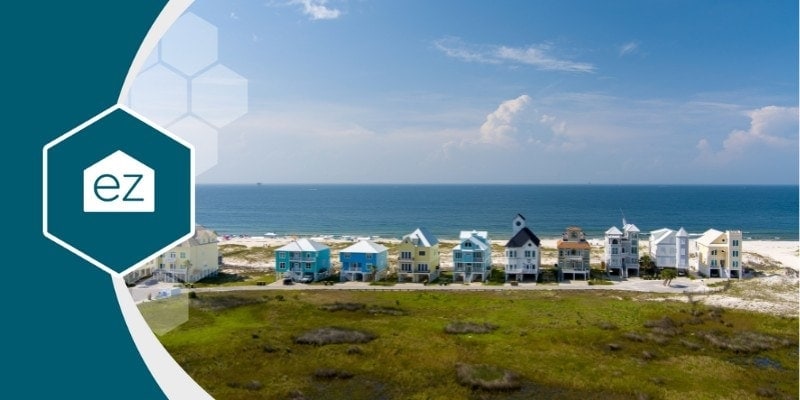
The coastal buyer deserves special mention. Baldwin County’s growth is almost entirely migration, much of it retirees and second-home shoppers, and a chunk of the coastal market is short-term-rental investment in Gulf Shores and Orange Beach. That buyer needs an agent fluent in rental math and seasonal demand, not a family-home script, and they are often shopping a market they do not know well from a distance. National coverage lets that out-of-state buyer study Baldwin County as closely as their home market, on the local agent’s co-branded platform, before they ever visit.
How Alabama agents generate leads today, and where it breaks
Most Alabama agents generate leads the same handful of ways, and each one works until it doesn’t. Shared leads from legacy portals put a name in the agent’s hands, but it is the same name three or four other agents bought, the person is cold, and the bill arrives whether or not anyone closes. An IDX website the agent builds and maintains becomes a slow asset, one that rarely refreshes fast enough to matter and almost never wakes a past client back up on its own. Cold calling expired and for-sale-by-owner listings, circle prospecting, and farming all produce business, but they eat hours and carry real consent exposure under the laws that treat a prospecting agent as a telemarketer. Predictive-seller software ranks a database and guesses who might list next, yet a ranking does not amount to a relationship, and the work of turning a guess into a signed Alabama listing still depends on the agent who earns the trust behind it.
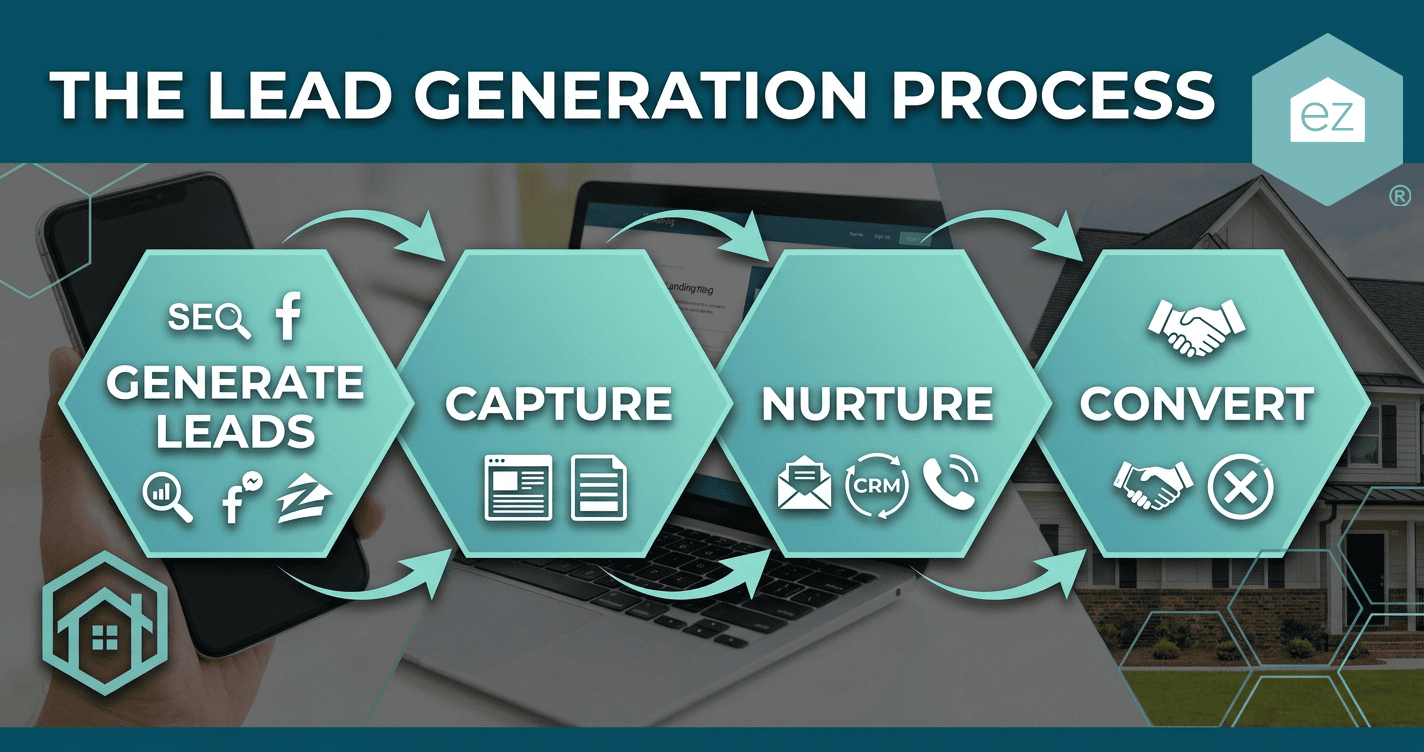
The deeper problem is that all of these chase the small slice of Alabama that is active this month and ignore the much larger group that will be active later. The reason ez Home Search leads convert differently comes down to a single mechanism: the connection is confidential, intent-and-activity-driven, and routed to one vetted local expert rather than sold to a crowd. A person searches in a clean, private place, and because they trust it, they engage honestly and come back over years. When their activity shows they are getting close, the partner who owns that county is the one introduced, warm and chosen, not the fourth caller on a shared list. That difference is why the partners ez Home Search works with consistently report leads that convert in the 30 to 60 day range rather than the long cold slog of bought lists. New leads are the headline benefit, and they are exclusive, owned by the partner, with no charge per lead.
What the Exclusive County Partnership gives an Alabama partner
The Exclusive County Partnership makes one agent, team, or brokerage the single ez Home Search partner for an entire Alabama county, co-branded across the consumer experience. No competing partner operates inside that territory, nothing is charged for each lead, and the commission on a closed deal stays entirely with the partner. That structure is the foundation, and several pieces of it map directly to how Alabama actually works.
Relocation retention is the one Alabama agents lose the most to without realizing it. In a state full of military transfers and corporate moves, past clients relocate out of the market at a steady clip, and roughly one in twenty Americans moves past their local area every year. When that happens, the agent usually loses both the referral to the new market and the listing the client leaves behind, because the client opens a legacy portal to see what their budget buys somewhere else and connects with a stranger there. National coverage closes that gap: a client getting ready to move keeps running searches on the partner’s co-branded platform, and the out-of-area activity surfaces while there is still time to act on it. The partner gets in front of the move before the Alabama listing is in play, wins the home the client is leaving, and refers the purchase for a fee. The house the partner once helped that client buy is the house the partner now lists.

Database reactivation is the largest and cheapest opportunity most partners have, and ez Home Search runs it for them. Across many studies, somewhere between 88% and 92% of buyers say they would happily use their agent again, while only about 18% ever do, and roughly 41% of a typical agent’s deals trace back to repeat clients and referrals. The partners ez Home Search works with put past clients back to work through repeat deals and referrals. Their reactivation runs 2.5 to 5 times the market rate, an edge that holds because the co-branded home search pulls those clients back month after month and the outreach triggers on something a client actually did rather than a cold hunch. In a polycentric state where no single metro hands an agent recognition, being the name your county already knows is what wins the client before any comparison starts, and the research shows 81% of sellers contact only one agent before they choose.
Two more pieces matter in Alabama specifically. ezVerify.ai captures proof that a person opted in, holds the recording that backs it up, checks each number against a known-litigator database, and clears Do Not Call numbers before a single dial, which takes the consent risk out of the prospecting Alabama agents run every day. The conversion tools sit on the same footing: the AVM widgets, home-value pages, open-house sign-ins, and instant cash-offer tools all live on ez Home Search’s national platform under the partner’s brand, with nothing for the partner to build, configure, or maintain. Weekly coaching and Shut Up and Dial sessions come with it, since the partnership only pays off for ez Home Search when the partner is winning.

How Alabama county exclusivity works
County exclusivity is simple: one partner holds a county, and once it is taken, it is gone for everyone else. Many of Alabama’s counties are already claimed, and more get locked down every month as agents and teams secure their territory ahead of a competitor. A large metro like Jefferson or Madison, a mid-sized county like Calhoun or Etowah, a coastal county like Baldwin: the model runs the same way in each, because being the name a market trusts counts for just as much in a small county as in a big one. A partner steps onto a platform Alabamians already use, with their own brand on it, and it works from the first day rather than after months of setup. The only question worth answering quickly is whether your county is still open.
The decision in front of an Alabama agent
Every Alabama agent is really choosing among three paths. The first is the status quo: keep renting shared leads against every other agent in your market, paying per name and starting cold each time. The second is to build the whole machine yourself, the data, the search, the valuations, the compliance, and the follow-up, which costs millions and years and is out of reach for any single team. The third sits between them: own your Alabama county through ez Home Search, put your brand on a platform people already use, and pay a single predictable fee that never bills you per lead. Most agents who look honestly at the three land on the third.
It comes with one real trade-off worth naming plainly. Exclusivity runs one partner to a county, so the territory is genuinely gone once another agent claims it, and the biggest returns, the reactivated database and the relocation listings you stop losing, build over the life of the partnership rather than landing in the first month. That is the honest cost of a model built to last instead of spike. The single proof point that matters most: ez Home Search partners see past clients come back at 2.5 to 5 times the market rate. A database the partner already owns becomes the steadiest business they have.
The next step is the easy part. Check whether your Alabama county is still available, and book a call to see what owning it would look like for your business.
Frequently asked questions
Why is Huntsville now producing more buyer and listing leads than Birmingham for Alabama agents?
Huntsville passed Birmingham to become Alabama’s largest city, and the Huntsville metro led the entire state in growth, adding 13,603 people in a single year while Madison County gained more residents than any county in Alabama. The aerospace, defense, and automotive jobs around Redstone Arsenal and the Mazda Toyota and Toyota plants keep pulling in relocating buyers. For an agent deciding where to concentrate, North Alabama is now where the largest share of fresh demand is landing.
How do I get listing leads in Baldwin County’s coastal, retiree, and short-term-rental market?
Baldwin County is one of the fastest-growing metros in the country, and roughly 97% of that growth is migration, much of it retirees and second-home buyers, plus a strong short-term-rental investment market in Gulf Shores and Orange Beach. Listing leads here come from staying visible to out-of-state owners and investors who watch their coastal property’s value from a distance, which a co-branded home search with home-value updates does well. The agent who is the steady local source when a seasonal owner decides to sell wins the listing.
What relocation leads should I expect from Alabama’s aerospace, auto, and military employers?
Expect a steady flow of buyers moving on employer and military timelines: aerospace and defense around Huntsville’s Redstone Arsenal, automotive transfers from Hyundai in Montgomery, Mercedes near Tuscaloosa, Toyota and Mazda Toyota in the Huntsville area, and Airbus in Mobile, plus military moves through Maxwell-Gunter and Fort Novosel. These buyers often shop from out of state and move fast, so the agent who is already visible and set up for relocation, with national coverage to serve the move in both directions, captures them.
How do Alabama’s low property taxes help me attract out-of-state and retiree leads?
Alabama has some of the lowest property taxes in the country, with homes assessed at just 10% of value and an effective rate near 0.4%, plus exemptions that benefit owners 65 and older. For a buyer relocating from a higher-tax state, that difference can be thousands of dollars a year, and it is a concrete affordability message most Alabama agents leave on the table. Pair that tax advantage with the true cost of owning a specific home, run through the AVM and the affordability tools, and an out-of-state shopper turns into a serious buyer.
Which Alabama metros are growing and which are stalling, so I can target lead spend?
Huntsville and Baldwin County are the clear growth leaders, Auburn-Opelika is growing fast off a smaller base, Birmingham is growing in its suburbs while the core city dips, Montgomery is flatter, and many rural Black Belt counties are losing population. For lead spend, that means concentrating where net new residents are arriving rather than spreading evenly across a map. A county-level read beats a statewide average every time, because Alabama’s averages hide how differently its regions are moving.
How do I generate seller leads in Birmingham’s over-the-mountain suburbs like Mountain Brook and Vestavia Hills?
The over-the-mountain suburbs, Mountain Brook, Vestavia Hills, and Homewood, hold a concentration of higher-value, move-up listings, and sellers there choose on reputation and recognition more than on a cold pitch. An agent who becomes the known name in one of those communities, with co-branded home-value updates reaching owners year-round, is the one who surfaces the listing when a family decides to move up or relocate. It is a farm worth owning deeply rather than touching lightly.
How do I keep the Alabama listing when a Redstone, Fort Novosel, or automaker transfer takes my client out of state?
The listing slips away when a relocating client opens a legacy portal to shop the new market and connects with a stranger there, who then ends up with the home the client is leaving in Alabama. With national coverage that does not happen: the client keeps shopping the new area on your co-branded platform, and the searches they run there tip you off to the move early. You step in before the listing is on the market, win the Alabama home, and refer the purchase to an agent in the new market for a fee.
What’s the best way to reach Wiregrass and Gulf Coast buyers from outside the Birmingham-Huntsville corridor?
The Wiregrass around Dothan and the Gulf Coast around Mobile and Baldwin are distinct markets that a Birmingham or Huntsville lead strategy usually misses, with their own employers, from Fort Novosel’s aviation community to Mobile’s aerospace and shipbuilding, and their own buyer profiles. To reach them an agent needs a local presence in those counties rather than a statewide net, which is exactly what county exclusivity provides. Hold Houston County or a Baldwin County position, and your brand sits where those buyers already search.





Kurt Uhlir is a recognized leader in marketing, growth, and innovation, having helped scale companies and technologies used by millions every day—including at brands like eXp Realty, Sideqik, Vitrue, Oracle, Garmin, Facebook, Meta, Apple, and more. He’s trained tens of thousands of professionals on how to build trust, lead with service, and help clients make wise, informed decisions. At ez Home Search and Sure Send, his focus is on helping high-performing business owners, team leaders, and individual sales leaders grow their businesses through exclusive market access, privacy-first lead systems, and conversion-focused enablement tools.