

Texas added 563,000 people in a single year and still turned into a buyer’s market. That is the contradiction Texas agents keep working inside. The statewide median price sat near $330,000 in late 2025, inventory climbed past four and a half months of supply, and more than two-thirds of closed sales in the final stretch of the year carried price cuts. The demand is real and the growth is real, yet the leads feel harder to convert than they did two years ago. The reason is not a shortage of people. It is that Texas real estate leads behave differently in six distinct markets, and most lead sources treat the state as one flat list.
The Texas market is six markets, not one
The first thing to understand about generating leads in Texas is that there is no single Texas market to generate them in. Price direction, buyer profile, and the dominant industry change completely as you move across the state, and a strategy tuned for one region underperforms in the next.
Start with price, because 2025 split the state in two. Austin corrected sharply, falling roughly 22% from its pandemic peak to about $440,000 by mid-year after a run-up that had pushed prices up nearly 60% between 2020 and 2022. Dallas-Fort Worth, backed by a broader employment base, held far steadier and gave back only around 7% from its peak, with the most stable major-metro prices in the state. The same year and the same state produced two very different conversations with a seller.
Migration is the trend everyone quotes and the one most often misread. Texas led the country in numeric population growth, reaching 31.29 million people in mid-2024. Break that growth into its parts and the picture gets more useful than the headline. Natural increase, births over deaths, added 158,753 residents, the most of any state. Net domestic migration added 85,267, the result of roughly 612,000 people moving in and 478,000 moving out. Net international migration added 319,569, the third-highest in the nation, and it is now the single largest source of the state’s growth. Set against an owner base of millions of existing Texas households, none of these flows is the whole story. Each one is a lead source. The 478,000 who left are listings and relocation business. The arrivals, domestic and international, are buyers.
Employment is where Texas refuses to be reduced to a single anchor. The oil and gas industry still supports roughly 476,000 direct jobs across the state, paying an average wage near $133,000, with most of that production running out of the Permian Basin. Houston pairs that energy base with the largest medical complex in the world at the Texas Medical Center and with Port Houston, which ranks first in the country in foreign tonnage and supports about 1.3 million jobs. Health care has become one of the fastest-growing employment sectors in the state. Semiconductors and advanced manufacturing are landing new plants and the suppliers that follow them. And Dallas-Fort Worth keeps absorbing corporate relocations from companies like Toyota, JPMorgan Chase, Goldman Sachs, and Caterpillar. Texas also files close to 500,000 new business applications a year, which feeds household formation on top of everything else.
The table below frames the six regions an agent has to think in. Each one carries a different lead dynamic, and the rest of this article comes back to them.
| Region | Anchor markets | What drives leads here |
|---|---|---|
| Dallas-Fort Worth Metroplex | Dallas, Fort Worth, Plano, Arlington | Corporate relocations and the most stable prices in the state |
| Greater Houston and the Gulf Coast | Houston, Sugar Land, The Woodlands | International migration, the Texas Medical Center, and Port Houston |
| Central Texas | Austin, Round Rock, Georgetown | A corrected, buyer-friendly tech market |
| San Antonio and South Central | San Antonio, New Braunfels, Seguin | Military, health care, and affordability relative to Austin |
| Rio Grande Valley and South Texas | McAllen, Edinburg, Brownsville | The most affordable region and a first-time-buyer magnet |
| West Texas and the Permian Basin | Midland, Odessa | Energy wages and some of the lowest unemployment in Texas |

Property taxes are a Texas lead engine, not just a line item
Property tax is the most underused lead source in Texas, and it is sitting in plain sight. Texas has no state income tax, which every agent knows how to sell. What gets less attention is the other half of that trade: the average effective property tax rate in Texas runs around 1.3% of a home’s value, among the ten highest in the country, against a national average closer to 0.9%. The median Texas homeowner pays roughly $4,000 a year in property taxes, more than the national median even though Texas home values often sit below it. (Treat those figures as directional and current to recent Census-based reporting rather than a fixed number.)
That single fact generates conversations all year. Proposition 4, approved in November 2023, raised the school-district homestead exemption from $40,000 to $100,000, and the legislature has moved to push it higher still. Every homeowner in the state has a reason to ask what their exemption is worth, whether their appraisal is fair, and what their true monthly cost of owning will be once taxes are counted. Most agents answer those questions one at a time, reactively, when a client happens to call.
The agents who win here turn the question into a recurring touchpoint. A buyer weighing two towns wants to see how the tax bill changes the real cost of each, not just the sticker price. A seller needs to understand how a rising tax bill can quietly hold down what buyers will pay, because the buyer has to carry those taxes on top of the mortgage. Behind ez Home Search sits an automated valuation model (AVM) engineered for the highest accuracy on the market, and it is tied to property-tax figures broken out by state, county, city, and ZIP, so an agent helping a homeowner can settle the true-cost question with real numbers rather than a guess. That is a reason for a past client to come back every year, which is exactly what a lead source in a high-tax state should be built to do.
If that kind of recurring, county-wide advantage is what you want, the move is to check whether your Texas county is still open.
What lead generation looks like region by region
Lead generation in Texas works best when it matches the region’s actual economy, and the six markets reward very different moves.
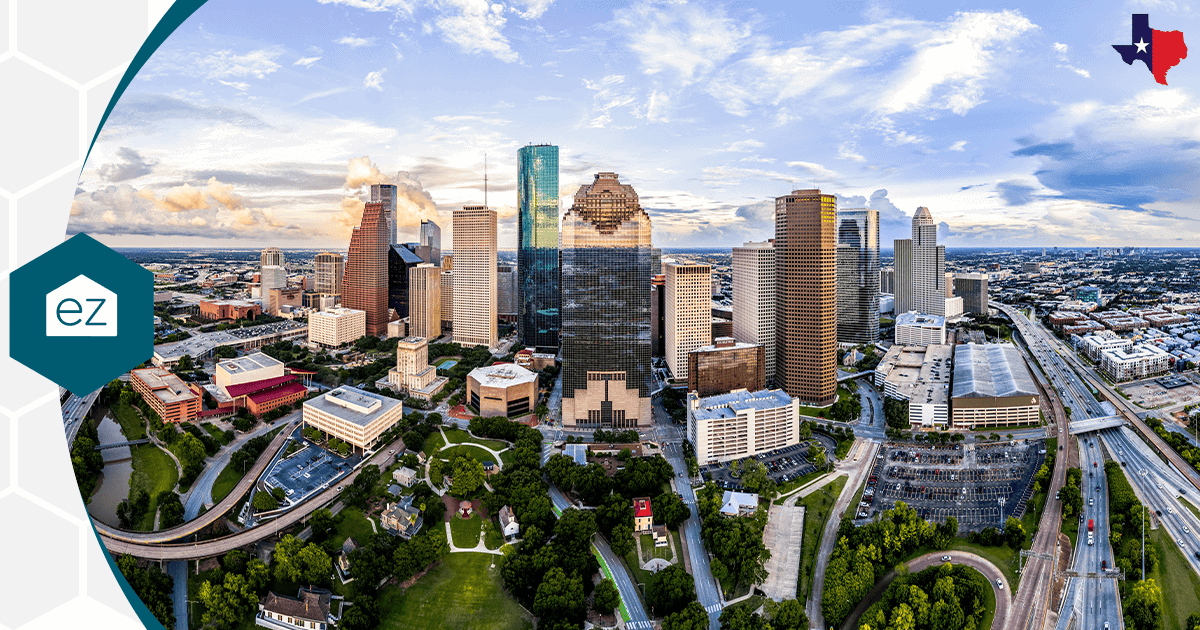
In Dallas-Fort Worth, the steadiest opportunity is relocation. The corporate campuses moving into the metro arrive with a pipeline of high-income buyers who do not know the difference between Prosper and Celina yet, and the agent positioned as the local authority before they land is the one who wins them. In Greater Houston, international migration now drives the majority of growth in the metro, the medical center and the port keep the employment base diversified, and the lead work is as much about being findable and trusted as it is about prospecting.
Central Texas is the correction story. Austin agents are working a market that gave back a fifth of its peak value, which means buyers have leverage they have not had in years and sellers need honest pricing more than optimism. The lead that converts here is the one that arrives already trusting the source. San Antonio and the South Central counties around it stay comparatively affordable, which keeps a steady base of move-up and military-driven demand that does not swing the way Austin does. The Rio Grande Valley is the affordability magnet, with Hidalgo County home values still well below the state median and a homeownership rate above the national average, so the work skews toward first-time buyers, investors, and value-driven relocations. And West Texas runs on energy, where Midland-Odessa wages jumped almost 10% in a single year and unemployment sits near the bottom of the state, producing buyers with income and urgency when production is strong.
No shared lead list knows which of those six conversations it is dropping an agent into. That is the gap that costs agents money, and it is the gap a county-level model is built to close.
The remote-work edge most Texas agents miss
The most overlooked buyer demand in Texas comes from remote and hybrid workers, and the headlines have the trend backwards. The story that remote work is collapsing is not what the primary data shows. By the Bureau of Labor Statistics’ own count, the number of Americans doing at least some of their work remotely reached 36.7 million in the fourth quarter of 2024, a jump from 32.5 million the year before, and the telework rate climbed to 23.4% over that stretch. The Census Bureau’s Business Trends and Outlook Survey, which covers 150,000 firms, found that employers expect their work-from-home levels in 2029 to look almost exactly like they do today. This is a settled, structural share of how the country works, not a fad on its way out.

For a national figure that is interesting. For a Texas agent it is a buying signal, because Texas owns the kind of geography that captures it. When a knowledge worker no longer has to live within a commute of a downtown office, the affordable exurbs and lifestyle markets win. That points straight at the Hill Country around Comal and Hays counties, the Rio Grande Valley, the smaller and mid-size counties along the I-35 and I-45 corridors, and the East Texas and Panhandle markets that have never competed on a daily commute. These are the places a remote buyer can afford more house and more land, and they are exactly where most agents are not positioning themselves as the local expert.
The remote buyer also wants specific things, and the agent who knows that lists and sells faster. They want a home office they can dedicate or close off, and frequently a second workspace on top of it. They want a separate structure or an accessory dwelling unit (ADU) that can serve as an office or a guest space. They want more square footage and real broadband, which is not a given in rural Texas and is worth confirming before a buyer falls for a property. An agent who can speak to all of that, and who is already the recognized name in one of these growth counties, meets that demand instead of chasing it.
Where Texas buyers are actually moving
Texas growth is moving to the exurbs faster than to the urban cores, and the county map shows exactly where. Kaufman County, east of Dallas, was the fastest-growing county in the state and the second-fastest in the entire country between 2023 and 2024. Liberty and Montgomery counties on the Houston side both ranked among the nation’s top ten. Over a longer window, Kaufman, Rockwall, Comal, Ellis, and Chambers have all posted some of the highest growth rates in the country. These are not bedroom suburbs anymore. They are absorbing both the blue-collar and white-collar jobs spreading out along the interstate corridors, and they are where listings and buyers are multiplying.
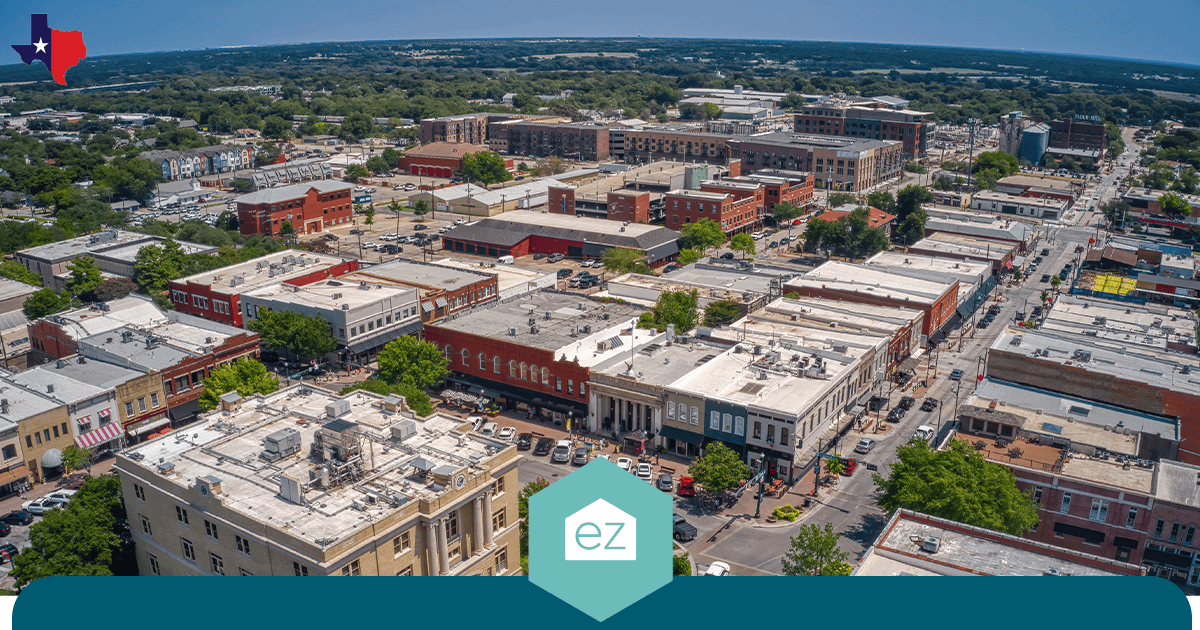
The counties below sit beyond the big metros and are carrying a large share of the state’s growth. For an agent, each community in this table is a place where being the known local name is still winnable.
| County | Region | Communities |
|---|---|---|
| Kaufman | DFW exurbs, east | Forney, Terrell, Kaufman, Crandall |
| Rockwall | DFW exurbs, northeast | Rockwall, Royse City, Fate, Heath |
| Ellis | DFW exurbs, south | Waxahachie, Midlothian, Ennis, Red Oak |
| Parker | DFW exurbs, west | Weatherford, Aledo, Willow Park, Springtown |
| Comal | Austin-San Antonio corridor | New Braunfels, Bulverde, Garden Ridge, Canyon Lake |
| Hays | Austin metro, south | San Marcos, Kyle, Buda, Dripping Springs |
| Guadalupe | San Antonio metro, east | Seguin, Schertz, Cibolo, Marion |
| Montgomery | Houston exurbs, north | Conroe, The Woodlands, Magnolia, Willis |
| Liberty | Houston exurbs, east | Liberty, Cleveland, Dayton, Hardin |
| Caldwell | Austin exurbs, southeast | Lockhart, Luling, Martindale, Maxwell |
The lead sources Texas agents lean on, and the ceiling each one hits
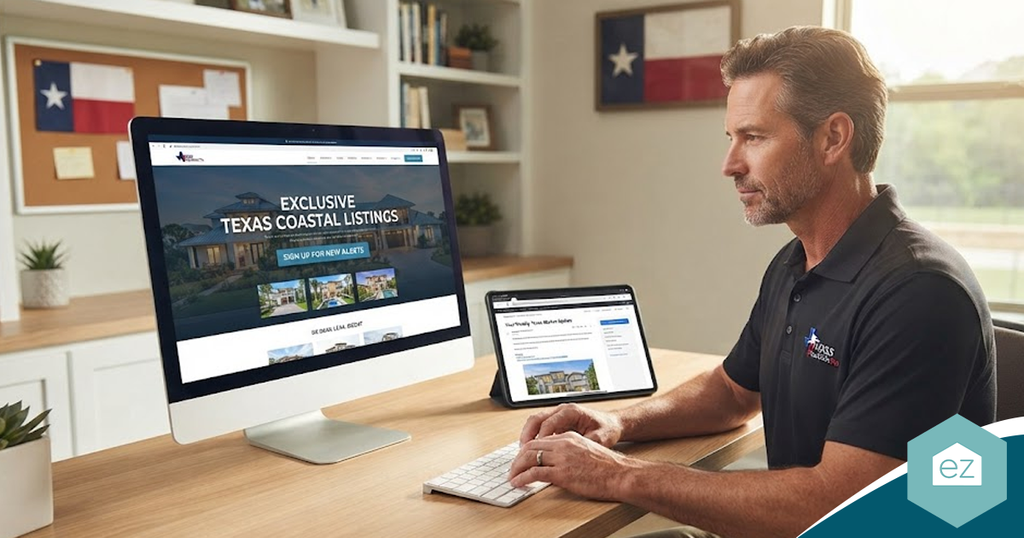
The typical Texas agent already runs several lead sources at once, and each delivers something real until it reaches a natural limit. None of them is worthless. The problem is that they never add up to a system.
Shared portal leads are the most common starting point. They turn on quickly and they put names in front of an agent fast. The ceiling is built into the model: on a legacy real estate portal, one person’s contact information and budget can end up sold or handed to whichever business pays the most, which leaves the agent as one of several people dialing the same cold name and racing to connect first instead of earning trust.
A self-built IDX website is the opposite trade. It is an owned asset, which counts for something, but it is slow and expensive to keep current and to rank, and a single team rarely reaches the data depth or the minute-by-minute freshness that buyers now expect.
Cold calling expired and for-sale-by-owner listings still works for the agents willing to grind it out. The catch is the consent exposure under the Telephone Consumer Protection Act (TCPA). If a contact is challenged, the burden falls on the person who placed the call, not the one who received it, to prove the number had agreed to hear from them.
That exposure is not theoretical, and the math is what makes it dangerous. Every call or text an agent cannot prove consent for carries a penalty of $500, rising to $1,500 for a willful violation, with nothing capping the total. A ten-agent team that runs 3,000 calls in one campaign and cannot document consent for 2,000 of them is looking at exposure that starts near $1 million and climbs toward $3 million, and these claims increasingly arrive as class actions.
Predictive-seller tools rank a database and estimate who might list, which can help an agent decide where to spend the week, but a ranking is only a guess about a person, and someone still has to do the work of building the relationship that actually produces the listing. Generic all-in-one CRMs are capable, yet they leave the agent configuring and running the system instead of working clients. DIY content and paid ads work when they are sustained, and most agents cannot sustain them while also serving the clients they already have.
ez Home Search is built on a different mechanism. Instead of selling the same lead to a crowd, it runs The Only Confidential Home Search, where the contact information and budget of the person searching are never sold, recycled, or pushed out to a list of businesses, and it pairs each buyer or seller with a Single Local Expert in their county. The connection an agent gets is warm and chosen, driven by the person’s real activity on the platform rather than a name bought off a list. When a contact reopens a search they had set aside, pulls a fresh valuation, or circles back to a home they saved, that is intent the agent can move on. That is the difference between a cold name and a warm, ready conversation, and it is why these connections convert.
That warm, county-level model is what an Exclusive County Partner runs in Texas, and you can see whether your county is still available.
The ten counties below carry most of the state’s population, and they anchor the major-metro side of any Texas lead strategy.
| Rank | County | Principal city |
|---|---|---|
| 1 | Harris | Houston |
| 2 | Dallas | Dallas |
| 3 | Tarrant | Fort Worth |
| 4 | Bexar | San Antonio |
| 5 | Travis | Austin |
| 6 | Collin | Plano |
| 7 | Denton | Denton |
| 8 | Fort Bend | Sugar Land |
| 9 | Hidalgo | McAllen |
| 10 | El Paso | El Paso |
What an Exclusive County Partner gets in Texas
The Exclusive County Partnership hands one Texas county to a single partner, whether that is a solo agent, a team, or a brokerage, and no rival partner operates inside the same lines. That is the core of the model. The partner’s brand sits across the consumer experience the county already uses, leads belong to the partner with no charge per lead and no share of the commission at closing, and the territory is theirs alone. In a state with one of the largest agent populations in the country, being the single recognized name in a county is worth more than any volume of shared names.
The model is built around the work that actually grows a Texas business, and most of it is not chasing strangers. The largest and cheapest opportunity is the database a partner already owns. Research consistently finds that the great majority of buyers and sellers would use their agent again, yet only a small fraction actually do, because follow-up is where almost everyone falls short. For the partner, ez Home Search reactivates that database, co-branded and handled for them, and our own numbers show partners win repeat and referral business from past clients at a rate that runs 2.5 to 5 times the broader market. When transaction volume tightens, that revived business becomes the most dependable revenue a Texas agent can count on.
Relocation retention matters more in Texas than almost anywhere, because so many people move both into and out of the state. When a past client starts looking in another market, that usually means the home they own in the agent’s county is about to become a listing. On a legacy portal, the client drifts to a stranger and the agent learns about the move after the listing is gone. Since the ez Home Search platform reaches every market in the country, that client keeps searching on the agent’s co-branded version of it, and the early signal lets the agent win the listing they earned and refer the client out for a fee instead of losing both.
The compliance exposure from cold outreach is carried by the platform, not dropped on the partner. Before a Texas partner ever dials, ezVerify.ai has already confirmed the person agreed to be contacted, saved the recording that documents it, run the number past a known-litigator list, filtered out anything on the Do Not Call registry, and added the background detail an agent would normally have to dig up. That is documented consent and a shield, not a probability score on whether someone might list. Alongside it, the partner gets the conversion tools already built and running as part of the national platform, plus weekly coaching and sales support, none of which the partner has to assemble or operate.
A strong team could try to build some of this on its own. Doing so means assembling and running a stack that costs millions and still cannot match the data behind the valuations and the search. The partner skips that and steps onto a platform that already works, with their name on it.
Why Texas counties go fast

Texas has 254 counties, and only one partner can hold each one. That math is the whole reason availability moves. As partners claim territory, the open counties in the strongest markets close first, and more are taken every month. A partner cannot hold a county that someone else has already secured, which is why the agents who want one tend to ask early, before a competitor down the road does. Everything behind the partnership is plug-and-play, so a partner who secures a county is running on a platform millions of people already use from day one, not waiting months for a build.
The decision: three ways to handle Texas leads
When an agent or team sits down to decide how to handle Texas leads, the choice comes down to three options.
Option one is to keep paying for shared portal leads and fighting everyone else over the same cold name, which fills the pipeline with low-trust contacts and hands the deal to whoever connects first.
Option two is to build and operate the entire stack in-house, the IDX site, the CRM, the content, the compliance, a path that is doable, costly, and a constant drain on hours that should go to clients.
Option three is to hold your county on a platform that already exists, where the leads belong to you, the connections arrive warm, and the follow-up runs in the background.
There is one honest trade-off to name. County exclusivity means only one partner per county, so the opportunity belongs to whoever asks first, and the leads convert over 30 to 60 days rather than overnight, because warm relationships are built, not flipped. What you get for that patience is the steadiest business in real estate: a reactivated database producing repeat and referral business at several times the market rate, in a county where you are the recognized name. If that is the position you want in your market, the next step is simple. Check whether your Texas county is still open.
Frequently asked questions
After a sharp price correction in Austin, how should agents there change their lead generation?
When a market like Austin corrects hard from a pandemic-era peak, the lead that converts is the one that already trusts the source before the first call. Optimistic pricing does not work when buyers have leverage and inventory is up, so the agents winning here lead with honest data and become the local name buyers and sellers come to on their own. A platform that brings warm, activity-driven connections instead of cold shared names fits a corrected market better than speed-to-dial ever will.
How does Texas’s higher homestead exemption change the conversations agents have with sellers and buyers?
Proposition 4 raised the school-district homestead exemption from $40,000 to $100,000, and the legislature has moved to push it higher, which gives every homeowner a fresh reason to ask what their exemption and their true cost of owning actually are. That is a recurring touchpoint, not a one-time talking point. An agent who can show a buyer how the exemption and the tax bill change the real monthly cost, or show a seller how taxes affect what buyers will pay, has a reason to stay in front of clients all year.
Texas has no state income tax but some of the highest property taxes in the country. How can agents turn property-tax season into a lead source?
Property-tax season is a built-in reason to reach out, because the average effective rate in Texas runs around 1.3% of value and the median bill is roughly $4,000 a year. Appraisal notices, protest deadlines, and exemption questions hit every homeowner on a schedule. An agent armed with an accurate valuation and property-tax detail by county and ZIP can answer those questions with data, which turns a stressful annual event into a relationship touchpoint that produces listings.
Where are Texas buyers actually moving?
The growth is moving to the exurbs faster than to the city centers. Kaufman and Rockwall east of Dallas, Ellis and Parker on the other sides of the Metroplex, Comal and Hays along the I-35 corridor, and Montgomery and Liberty north and east of Houston are among the fastest-growing counties in the state and the country. These markets are absorbing jobs and households spreading out from the metros, and being the known local name in one of them is still winnable in a way it no longer is in the urban core.
How do the best lead sources differ between a Permian Basin market like Midland-Odessa and an affordable Rio Grande Valley market like McAllen?
They serve almost opposite buyers. Midland-Odessa runs on energy, where strong production brings high wages, urgency, and move-up demand, so timing the outreach to the cycle matters. McAllen and the Rio Grande Valley compete on affordability, with home values well below the state median and a first-time-buyer and investor base that responds to value and patient guidance. A single shared-lead approach cannot tell which market it is in. A county-level model that knows the local activity can.
With international migration now the largest source of Texas’s population growth, how can agents reach those buyers?
International arrivals now drive the majority of growth in metros like Houston, and they reach an agent through trust and presence rather than a cold call. An agent reaches these buyers by being the established, trusted local name on a platform they already use, not by making a cold call to someone choosing where to plant roots. The connection is warm because the buyer came to the source, which is the opposite of being one of several agents handed the same purchased name.
When Texas inventory climbs and the market favors buyers, where do the strongest seller and listing leads come from?
The strongest seller leads come from the database an agent already owns and from owners watching their equity and taxes, not from cold lists. When transactions thin out, reactivating past clients and sphere is the cheapest and steadiest business available, and the signals that a homeowner is ready show up in their activity: a valuation run again, a saved home revisited, a search picked back up. An agent who is already the co-branded source those owners return to sees those signals first.
How can a Dallas-Fort Worth team capture relocation business from corporate moves like Toyota, JPMorgan Chase, and Goldman Sachs?
Relocation business goes to the team that is established as the local authority before the employee arrives. Corporate moves into the Metroplex bring waves of high-income buyers who do not yet know the difference between one suburb and the next, and they search the new market long before they call anyone. A team whose brand is on the platform those buyers use, with national coverage so the move surfaces as a signal, reaches them early and keeps both sides of the transaction.













Kurt Uhlir is a recognized leader in marketing, growth, and innovation, having helped scale companies and technologies used by millions every day—including at brands like eXp Realty, Sideqik, Vitrue, Oracle, Garmin, Facebook, Meta, Apple, and more. He’s trained tens of thousands of professionals on how to build trust, lead with service, and help clients make wise, informed decisions. At ez Home Search and Sure Send, his focus is on helping high-performing business owners, team leaders, and individual sales leaders grow their businesses through exclusive market access, privacy-first lead systems, and conversion-focused enablement tools.