

Virginia law requires every home to be assessed at 100% of its fair market value. In the Virginia Department of Taxation’s Assessment/Sales Ratio Study for tax year 2024, the statewide median came in at 75.17%, down from 83.25% the year before, and only eight of Virginia’s 95 counties and six of its 38 independent cities landed inside the 90% to 110% band assessors treat as acceptable.
Read that as a homeowner rather than as an assessor. The number in your client’s kitchen drawer is roughly three quarters of what the house would fetch.
Virginia real estate leads begin in that gap. Somebody in that house eventually looks up what it is worth, and the year they look is rarely the year they list. By the time most agents in the Commonwealth hear about it, the search already happened, the plan is already made, and another name was answering the question first.
Virginia’s market is working fine. Agents lose on timing, and the loss compounds every year they keep entering late.
Virginia’s growth moved, and most of the people who moved were already here
Between the 2020 Census and July 2025, Virginia added 248,714 residents to reach 8.88 million, and net migration accounted for 170,326 of that gain against 78,388 from births outnumbering deaths, according to the Weldon Cooper Center for Public Service at the University of Virginia. Migration was the larger share. It was not a large number.
Size it the way an agent should. Roughly 34,000 net arrivals a year, in a state whose closed home sales ran 122,051 in 2017, peaked at 154,340 in 2021, and dropped to 98,464 in 2023. Sales then rose in each of the next two years to 103,722 in 2025, and the first half of 2026 ran 5.5% ahead of the same stretch a year earlier, per Virginia REALTORS. Across those ten years the line traces a rate cycle that has already turned twice. Interstate movement sits at the edge of that market rather than at the center of it. In 2024 about 265,500 people moved into Virginia from elsewhere in the country and nearly 264,000 moved out, close to a wash, with Maryland, Florida, North Carolina, California, and New York sending the most and Florida, North Carolina, Maryland, California, and Texas receiving the most (Virginia REALTORS, May 2026).
Both directions are business. Every person leaving Virginia lives in a home here first, so a departure is a listing plus a referral into the receiving market. Every person arriving is a buyer who does not yet know a single agent’s name. An agent who reads out-migration as loss is reading half the ledger.
The internal movement matters more than either flow.
Of Virginia’s 133 counties and independent cities, 119 posted positive net migration between 2020 and 2025 and 93 grew outright. Growth was that widely spread. Where it concentrated is the useful part: the four fastest-growing localities in the state, New Kent County at 21.5%, Goochland County at 15.0%, Louisa County at 12.8%, and Chesterfield County at 10.1%, all sit in or beside the Richmond metro. Chesterfield added 36,753 people across those five years, more in raw numbers than any other Virginia locality and ahead of Loudoun County‘s 25,720. Fairfax County, the largest locality in the Commonwealth and its economic engine for decades, lost 2,795 over the same span.
The same pattern shows up region after region. People move out of the expensive metropolitan core and into the counties beside it. They are Virginians already. They own homes already. They will sell one to buy the next.
Household formation points the same direction. Virginia public K-12 enrollment fell by 14,939 students in fall 2025, a 1.2% drop and the second largest single-year loss in three decades, and the Weldon Cooper Center’s projections expect enrollment across the state’s 131 school divisions to decline about 3%, to 1.172 million students, by fall 2030. Migration is not the driver. Virginia births peaked at 108,416 in 2007 and have fallen in most years since, with 2024 births running 14,422 below that peak.

Fewer new households form each year. The households that already exist move among themselves more than they used to. That changes an agent’s arithmetic from catching arrivals to holding relationships with owners who will move two, three, and four times inside Virginia over the next twenty years.
Here is where those households are concentrated. Note how many of the ten largest are independent cities rather than counties, which is a Virginia problem all its own and one worth coming back to.
| Locality | Population | Principal cities and communities |
|---|---|---|
| Fairfax County | 1,147,837 | Reston, Tysons, McLean, Annandale, Centreville |
| Prince William County | 488,880 | Woodbridge, Dale City, Gainesville, Haymarket |
| Virginia Beach (independent city) | 456,349 | Hilltop, Kempsville, Great Neck, Sandbridge |
| Loudoun County | 432,998 | Leesburg, Ashburn, Sterling, Purcellville |
| Chesterfield County | 377,869 | Midlothian, Chester, Bon Air, Chesterfield Court House |
| Henrico County | 335,744 | Glen Allen, Short Pump, Highland Springs, Sandston |
| Chesapeake (independent city) | 252,583 | Great Bridge, Western Branch, Deep Creek, Hickory |
| Arlington County | 236,254 | Rosslyn, Clarendon, Ballston, National Landing |
| Norfolk (independent city) | 233,596 | Ghent, Ocean View, Larchmont, Downtown |
| Richmond (independent city) | 229,359 | The Fan, Church Hill, Northside, Southside |
Population figures: 2024 American Community Survey 5-Year Estimates, US Census Bureau.
Virginia’s job market is doing several things at once
Virginia’s economy does not run on one industry, and a lead-generation plan built off a single headline covers a fraction of the state. In the year to June 2026, Virginia Works recorded federal government employment down 19,000 to 170,700 and Professional and Business Services, the sector most exposed to federal contracting, down 20,500 to 788,500, with total nonfarm employment off 43,600 and unemployment at 3.7%. Those are real losses. They are also concentrated in one corner of the map.
Across the same twelve months, Education and Health Services added 4,600 jobs to reach 631,000, state government added 4,200, and local government added 13,900.
The expansions are not evenly spread either. Where they sit is where an agent should be paying attention. In July 2026 the Navy awarded $76.6 billion for nine Virginia-class and five Columbia-class submarines to General Dynamics and HII, whose Newport News Shipbuilding yard anchors the Peninsula. Those are decade-long build programs. They hire on that horizon and they hold. The Port of Virginia has been dredging its channels to the deepest depths on the US East Coast, with terminal expansion running toward 2027, and an economic impact study by the College of William & Mary’s Raymond A. Mason School of Business ties port activity to nearly 437,000 jobs and roughly 11% of total employment in the Commonwealth. Two hours up Interstate 81, the Virginia Inland Port at Front Royal in Warren County supports more than 10,000 jobs and close to $1 billion in regional investment, with a $15 million program rebuilding its rail operation and container yard.

Manufacturing added its own anchors. Eli Lilly committed in 2025 to a $5 billion plant at West Creek in Goochland County with 650 permanent positions, and Merck broke ground the same year on a $3 billion expansion at Elkton in Rockingham County.
Two facts belong side by side. CNBC ranked Virginia third among America’s Top States for Business in 2026. Cardinal News reported that same summer that Virginia had ranked 48th nationally in job growth over the prior twelve months. A state can carry an excellent business climate and a slow hiring year at once, and the counties where those two facts land are rarely the same counties.
That is the practical takeaway for anyone buying leads by metro. A prospecting map drawn around federal employment misses Newport News, Front Royal, Goochland, and Elkton entirely, and it misses them in the years those places are hiring hardest.
Most Virginia buyers are also sellers, and most agents work only one side
Two requests dominate brokerage meetings across the Commonwealth. Get me listings. Buy me buyer leads. The two halves of one person’s move get worked as two different customers in two different campaigns, and the cost of that split is most of the business.
First-time buyers account for roughly one purchase in five nationally, per NAR’s Profile of Home Buyers and Sellers. That is the national figure, named as such, because no clean Virginia series exists to stand in for it. It still sets the shape. The other four in five arrive at a closing table already holding a deed, and that deed has to move before the purchase can happen. Look at one house and you see two households, one leaving and one arriving. Follow one household through a move and you see the same people doing both jobs in sequence.
Virginia’s own numbers fit that shape. The Commonwealth’s homeownership rate stood at 69.6% in 2025, and among households aged 75 to 84 it reached 82.9%, per Virginia REALTORS. Set that owner base against the 103,722 homes sold statewide in 2025 and the arithmetic is plain. The overwhelming majority of Virginia owners did not sell that year, and did not sell the year before it. They are the pool every listing you will ever take comes out of.
What changed underneath all of it is price against pay. Between 2012 and 2024, in inflation-adjusted dollars, Virginia’s median household income rose 9% while its median home price rose 23%, and the median home moved from 3.8 times median household income to 4.3 times, according to Virginia REALTORS in March 2026. Twelve years of that gap is why a Virginia move-up decision now turns on equity rather than on income, and why the owner who has never run the equity number is the owner most likely to sit still.
Three groups sit inside that owner base. The one-in-five first-time buyer runs on affordability and education, because there is no equity behind them yet. The four-in-five majority is working two transactions off one calendar, and what they want from an agent is a read on what the current house frees up, a sequence that does not leave them carrying two mortgages, and one person holding both ends of it. Estates, landlords stepping out of a rental, and owners moving in with family make up the smallest group, and they are the only Virginia owners who genuinely sell without buying.
ez Home Search watches what a person actually does and works whichever half of the move has woken up. Somebody who runs a valuation twice in a month, opens the equity view, or keeps landing back on their own home-value page has started the selling conversation in their own head. Somebody saving listings, opening alerts the morning they land, and asking to see a house has started the buying half. The same person does both, months apart, and the platform tracks the handoff instead of guessing at it. Each of them is matched with a Single Local Expert, one vetted agent for the whole move rather than a different name on each side of it.
This is where the assessment number from the top of this article earns its keep. The automated valuation model, or AVM, behind an ez Home Search partner’s co-branded home-value page does specific work in Virginia. It corrects a figure the Commonwealth’s own study put at roughly 75 cents on the dollar at the median in tax year 2024, and the corrected number is one a Virginia owner checks unprompted, month after month, with your name sitting beside it.
One more group is sitting in plain sight. Virginia’s largest graduating class was replaced in fall 2025 by the smallest ninth grade class since 2001. Those parents are the Commonwealth’s most immediate downsizing cohort, and almost none of them have raised a hand.
Remote work in Virginia grew for four decades before anyone called it remote work
Remote work has been rising in Virginia and nationally for forty years. Headlines calling it finished are reading one year against a four-decade slope.
The Bureau of Labor Statistics published a Monthly Labor Review study in 2026 following the National Longitudinal Survey of Youth 1979 cohort across their entire working lives, the longest continuous view of telework any federal statistical agency has produced. In the 1980s, when typewriters were still common in American offices, a job permitting telework was hard to find. Adoption then climbed incrementally, decade over decade, long before 2020. After the swing between 2020 and 2022, the share of workers reporting no telework or minimal telework never returned to its pre-pandemic level, which BLS reads as a structural shift toward wider telework adoption. Census figures trace the same slope from the other side. Roughly 0.7% of the American workforce primarily worked from home in 1980, and about 3% did by 2017. It more than quadrupled before COVID-19 existed.
Virginia rode that slope harder than most states did. In the Census Bureau’s American Community Survey one-year estimates, the share of Virginia workers who primarily work from home moved from 5.76% in 2019 to 15.82% in 2024, a gain of 10.06 percentage points and one of the four largest increases recorded in the country. That ranked Virginia eighth nationally in 2024. In Arlington County the 2024 rate ran above 35%.
Employers formalized the arrangement rather than retreating from it. The SHRM 2024 Employee Benefits Survey, conducted among more than 4,500 US human resources professionals, found 63% of employers offering hybrid work as a formal benefit and 70% rating flexible work as very or extremely important, a share that has held steady since 2022.
That reshaped Virginia’s map. Between 2019 and 2022, the number of Virginians living outside Northern Virginia while working for Washington-area employers rose by nearly 24,000, roughly the headcount of the Pentagon, according to Census LEHD data analyzed by the Weldon Cooper Center. Those households bought in Frederick and Shenandoah counties, in Rockingham and Augusta, in Louisa and Goochland and New Kent, in Montgomery and Pulaski, along the Northern Neck and the Middle Peninsula, and out on the Eastern Shore. Freddie Mac’s August 2024 Outlook found that four of the ten US metro areas with the largest post-pandemic price increases sit along Interstate 81 between Bristol and Knoxville.
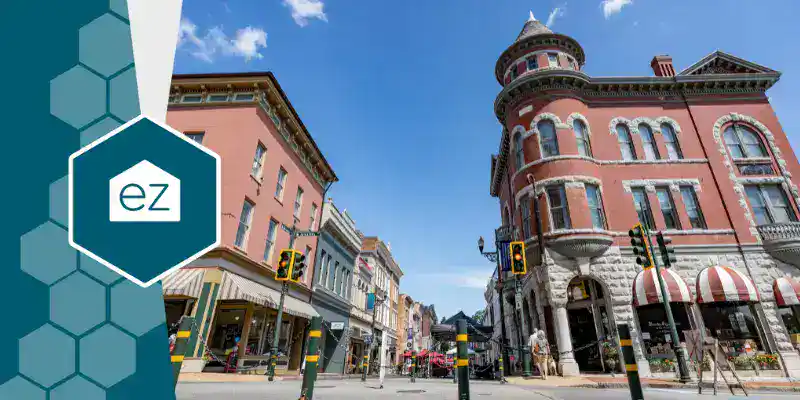
For an agent, that is a buying signal with a shopping list attached. These buyers walk a house looking for one room they can shut the door on, a shed or garage or accessory dwelling unit they could finish into an office, floor plans a five-day commuter never needed, and internet service that holds a video call at nine in the morning. Ask about the work setup on the first call. You will learn more about their timeline in ninety seconds than any lead score will tell you in a month.
In most of those Virginia counties, no competing agent has built the recognized local position yet.
Seven Virginia regions, seven different lead conversations
Virginia does not have a housing market. It has seven of them, and an agent who reads a statewide number as the local story will misprice both their effort and their expectations.
Northern Virginia is the region the headlines describe worst. Fairfax County has lost population in every year since the 2020 Census, and in June 2026 the Northern Virginia Association of Realtors still forecast single-family detached price growth of 1.5% to 3.5% for that year alongside growth in unit sales, on the grounds that the regional workforce leans toward contractors and private technology and defense employers rather than civilian federal payrolls. Over the same decade, Loudoun County cut its real property tax rate in all ten years from tax year 2016, when it stood at $1.145 per $100 of assessed value, to tax year 2026, when it reached $0.805. A homeowner there watched the rate fall for ten straight years while the assessment climbed. That is a conversation worth having, and most agents are not having it.
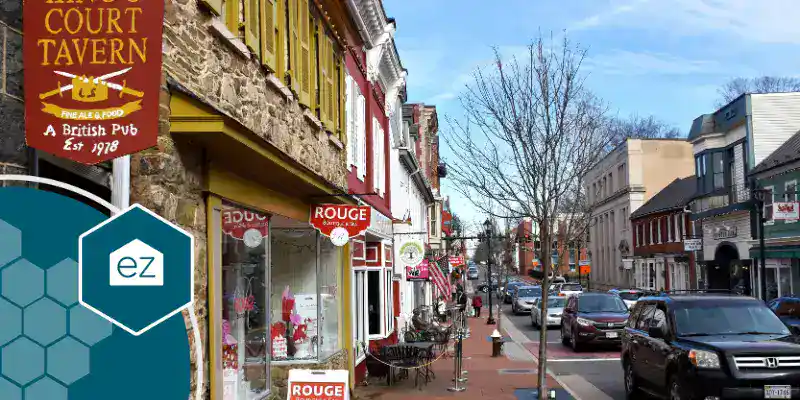
Greater Richmond is where the growth went. New Kent, Goochland, Louisa, and Chesterfield are the four fastest-growing localities in the Commonwealth, all of them in or beside the metro. New Kent also carries the most accurate assessments in Virginia, at 98.92% of sale price in tax year 2024 against a statewide median of 75.17%, so the home-value conversation there starts from a different place than it does two counties over.
Hampton Roads rewards patience. Virginia Beach has been losing population since 2020, and that loss slowed from 6,505 to 5,462 between one round of estimates and the next, driven by births outnumbering deaths rather than by any change in who is moving. Underneath it sits the port with the deepest channels on the US East Coast and a submarine build program measured in decades. Add the PCS cycle, which puts military buyers and sellers on orders instead of on seasons, and the timing problem in this region is sharper than anywhere else in the state.
The Shenandoah Valley keeps getting revised upward. Staunton’s measured growth since 2020 moved from 0.9% to 4.2% between two rounds of Weldon Cooper Center estimates, and Waynesboro’s from 3.3% to 7.9%. Merck broke ground on a $3 billion expansion at Elkton in 2025, and the inland port at Front Royal keeps pulling warehouse and logistics work into Warren County.
Roanoke and the New River Valley turned a corner. Roanoke, Salem, Radford, and Martinsville were each listed as losing population in one round of estimates and gaining it in the next. One honest note belongs here. The Census Bureau and the Weldon Cooper Center disagree about Roanoke’s direction because they use different methods, and telling a client that plainly builds more trust than picking whichever number flatters the pitch.

Southwest Virginia reversed a fifty-year pattern. Net domestic migration moved from a loss of roughly 1,300 people a year through the 2010s to a gain of roughly 1,300 a year after 2020, and new business applications filed by Virginians rose 70% in the region between 2019 and 2023, second among the state’s regions.
Southside and Central Virginia turned around late and are still turning. Danville’s population had fallen since 1990, reversed, and then accelerated to 1.4% growth since 2020. Lynchburg’s measured growth was revised upward from 1.7% to 3.0% across the same two rounds of estimates.
The distance between the ends of that list is measurable. Median household income in Loudoun County runs roughly four times what it runs in Buchanan County, and the Weldon Cooper Center’s finding is that no other state carries a larger income gap between two of its own counties. One playbook will not serve both ends of that.
| Region | Anchor localities | The trend an agent should know |
|---|---|---|
| Northern Virginia | Fairfax, Loudoun, Prince William, Arlington, Alexandria | Fairfax has lost population every year since 2020, yet NVAR forecast 1.5% to 3.5% single-family price growth for 2026 |
| Greater Richmond | Chesterfield, Henrico, Hanover, New Kent, Goochland, Louisa | The state’s four fastest-growing localities sit here; Chesterfield added 36,753 people from 2020 to 2025 |
| Hampton Roads | Virginia Beach, Chesapeake, Norfolk, Suffolk, Newport News, Hampton, York, James City | Virginia Beach’s population loss slowed on births rather than migration, alongside port and shipbuilding expansion |
| Shenandoah Valley | Frederick, Rockingham, Augusta, Shenandoah, Warren, Winchester, Harrisonburg, Staunton, Waynesboro | Staunton’s growth since 2020 was revised from 0.9% to 4.2% and Waynesboro’s from 3.3% to 7.9% |
| Roanoke and New River Valley | Roanoke County, Salem, Montgomery, Pulaski, Radford, Botetourt, Franklin | Roanoke, Salem, Radford, and Martinsville flipped from losing population to gaining it between estimate rounds |
| Southwest Virginia | Washington, Wise, Tazewell, Smyth, Wythe, Russell, Scott, Lee, Bristol | Net domestic migration reversed to roughly +1,300 a year after 2020, the highest in half a century |
| Southside and Central | Danville, Pittsylvania, Halifax, Henry, Mecklenburg, Albemarle, Charlottesville, Lynchburg | Danville reversed a decline running since 1990 and reached 1.4% growth since 2020 |
Population and migration figures: Weldon Cooper Center for Public Service, 2025 Virginia Population Estimates. Forecast figures: Northern Virginia Association of Realtors, June 2026.
What Virginia agents are already doing, and what each approach costs
Everything on the list below works. The honest problem is that each approach carries a cost the pitch leaves out, and in Virginia those costs stack in a particular order.
Referrals are the strongest asset an agent has. NAR’s research finds more buyers and sellers find their agent through a referral than through any other source. The cost is scheduling. Referrals arrive when they arrive, and an agent who has been out of a past client’s inbox for four years does not get the call when that client’s neighbor asks for a name.
Farming and community sponsorship build the recognized local name, which is exactly the right goal. They also take years and a budget, and one agent cannot cover a county of 400,000 people on foot.
Shared portal leads put a name in your CRM this week. That same name usually lands in several CRMs the same week, and the person on the other end fields calls from strangers. Legacy portals sell the name because the model earns more from the sale than from the outcome.
Your own IDX site is a real asset. It compounds, which means it pays years after you fund it, and you fund the content, the search engine work, the technical maintenance, and the data feed for every one of those years. Ask any Virginia team lead what year one cost against what year one produced.
Cold calling and dialer campaigns reach people nothing else reaches. They also drop the agent squarely inside telemarketing law. Start prospecting by phone or by text and the burden of showing consent moves onto you, not onto the person who says they never agreed. Every call or text you cannot document becomes a $500 claim, or a $1,500 claim where the violation is found willful, and Virginia agents have no statutory ceiling standing between them and that arithmetic.
Predictive-seller scoring sorts a database by who looks likeliest to list. The score is a probability attached to a stranger, and somebody still has to earn the conversation that turns a probability into a signed listing agreement.
Home-value tools send an automated estimate every month. In Virginia that thread is more useful than in most states, given how far assessments run below sale prices. One thread does not make a system.
Done-for-you content services fill an inbox. They are also one more subscription to run, disconnected from anywhere the client already spends time.
Paid search and social produce volume on demand. They stop producing the day the card stops charging.
What ez Home Search does differently has a name and a logic underneath it. The consumer side runs confidentially, which means a Virginian can search, save homes, and pull a valuation on their own house without that activity turning their name, their price range, and their phone number into inventory for businesses they never picked. People who are not being resold use the thing honestly, and they use it for years. Years of honest use is what makes the signal readable: a dormant search that wakes up, a second valuation on the same address, a saved home someone keeps returning to, a tour finally requested. And because a Virginia county carries exactly one ez Home Search partner, that person arrives at you instead of at a rotating panel of bidders.
Two honest notes belong with that. The conversion window ez Home Search sees typically runs 30 to 60 days from the first connection rather than the first week. And a partner does not reach every owner in the county on day one; the position compounds as the co-branded experience works its way through the county’s households.
On the compliance question, ezVerify.ai does the part a dialer never could. It confirms each opt-in and keeps the recording of it, so a disputed consent meets a file instead of an argument. It runs every number against a known-litigator database and checks it against Do Not Call registrations before anyone dials. That is proof and screening, and nothing else. ezVerify.ai does not score the lead, and the position does not require it to.
The Virginia counties that do not show up in a lead-source pitch
Lead pricing follows population, so the counties where an exclusive position is cheapest to build and fastest to compound are the ones nobody is pitching you. Virginia has a lot of them.
Frederick County wraps around Winchester and runs north to the West Virginia line, holding Stephens City, Middletown, Gore, and Star Tannery. Next door in Rockingham sit Bridgewater, Broadway, Timberville, and Elkton, where Merck is spending $3 billion. Augusta County takes in Verona, Stuarts Draft, Fishersville, and Craigsville. Bedford stretches from the town of Bedford east to Forest, then south to Moneta and Huddleston on Smith Mountain Lake. Warrenton, Bealeton, The Plains, and Marshall are all Fauquier. Further south, Pittsylvania County runs from Chatham through Gretna, Hurt, and Blairs, while Franklin covers Rocky Mount, Boones Mill, Ferrum, and Union Hall. Abingdon, Glade Spring, Damascus, and Meadowview sit in Washington County. Louisa, among the fastest-growing counties in the Commonwealth, holds the town of Louisa plus Mineral, Trevilians, and Bumpass on Lake Anna. Out on the Eastern Shore, Accomack runs from Accomac through Onancock and Chincoteague to Parksley.
None of those is a small market to the person who lives there.
Something is shifting across several of them at once. Data center development, which began in Loudoun County, has spread into Louisa, Pittsylvania, and Wise counties among others, and Virginia’s 2026 General Assembly session was dominated by bills on where those facilities can be sited and on how the cost of new transmission and generation gets allocated among electricity customers. For an agent, that is a carrying-cost question and a land-use question, and both come up at a kitchen table long before anyone lists. A buyer weighing two counties wants to know what the monthly bill looks like and what is being built half a mile away. Most agents cannot answer either one. The agent who can is the agent who gets called back.
The county exclusivity model does not weight itself toward the big metros. It runs the same way in Fairfax County and in Accomack County, since being the first name people think of in a market of 33,000 is worth what it is worth in a market of 1.1 million, and getting there takes far less time in the smaller one.
| County | Population | Communities |
|---|---|---|
| Frederick County | 95,008 | Stephens City, Middletown, Gore, Star Tannery |
| Rockingham County | 85,600 | Bridgewater, Broadway, Timberville, Elkton |
| Bedford County | 80,894 | Bedford, Forest, Moneta, Huddleston |
| Augusta County | 78,033 | Verona, Stuarts Draft, Fishersville, Craigsville |
| Fauquier County | 74,577 | Warrenton, Bealeton, The Plains, Marshall |
| Pittsylvania County | 59,856 | Chatham, Gretna, Hurt, Blairs |
| Franklin County | 55,130 | Rocky Mount, Boones Mill, Ferrum, Union Hall |
| Washington County | 53,926 | Abingdon, Glade Spring, Damascus, Meadowview |
| Louisa County | 39,980 | Louisa, Mineral, Trevilians, Bumpass |
| Accomack County | 33,335 | Accomac, Onancock, Chincoteague, Parksley |
Population figures: 2024 American Community Survey 5-Year Estimates, US Census Bureau.
Virginia has 95 counties and 38 independent cities, and the difference matters
Virginia is the one state where the independent city is the rule rather than the exception, and that changes what a county territory contains. The Commonwealth is divided into 95 counties and 38 independent cities, 133 localities in all. An independent city belongs to no county. It is its own county equivalent, with its own government, its own tax rate, its own assessor, and its own set of public records.
The consequences are not academic. Winchester is the county seat of Frederick County and sits outside Frederick County. Harrisonburg does the same for Rockingham, Staunton for Augusta, and the City of Fairfax for Fairfax County, which surrounds that city on every side. Falls Church is an independent city too, bordered by Fairfax County along most of its edge and by Arlington County along the rest. Manassas and Manassas Park sit inside the outline of Prince William County without belonging to it, and they border each other. Virginia Beach, Chesapeake, Norfolk, and Richmond belong to no county whatsoever, and four of the ten most populous localities in the Commonwealth are independent cities.
For an agent buying leads or drawing a farm territory, that matters twice. A vendor selling you “Frederick County, VA” is not selling you Winchester, which is a separate locality with a separate market. And an agent who works both is working two tax rates, two assessment schedules, and two sets of recorded sales.
The second point compounds. Virginia reassessment cycles run from annual to every six years, and 31 localities reassessed annually as of the Department of Taxation’s tax year 2024 study. The accuracy of the number a homeowner is holding therefore depends on which of the 133 localities they live in, and the distance between assessed value and market value is wider in some Virginia markets than in others for reasons that have nothing to do with the housing market itself.
Any county exclusivity agreement in Virginia has to be read against that map. It is the first question worth asking about a territory here, and it is a question most national lead vendors have never had to answer.
What ez Home Search builds for the partner who holds a Virginia county
The Exclusive County Partnership puts an entire Virginia county in the hands of one agent, or one team, or one brokerage, sets that partner’s brand across the consumer experience, and keeps every rival partner off the same ground. The price is a single fee a partner can put in a budget. Nothing is charged against a lead, and nothing is taken out of the commission at the closing table, which means a heavy month lands in revenue rather than on an invoice.
Why those connections convert differently is a question about how the consumer side was built. The Only Confidential Home Search is the answer. A Virginian can look at houses, keep a list, compare two neighborhoods, and check what their own place is worth, and none of it turns their name and their price range into something a stranger bought. One vetted Single Local Expert takes it from there, disclosed, so the homeowner knows who holds their information and when it went. That design carries a name at ez Home Search: A Better Way To Discover Real Estate, delivered through a confidential search. It is why the private part of a Virginia family’s decision happens here, months ahead of anything they would risk somewhere that returns one search as a run of unsolicited calls.
The biggest return waiting for a Virginia partner sits in the list they already own, ahead of anything new the partnership brings in. Ask buyers after a closing and 88% to 92% will say they would use that agent again or point a friend toward them. About 18% actually do come back when the next purchase arrives. The distance between those two numbers is revenue an agent earned once and then let go. Repeat and referral work runs near 41% of the average agent’s volume and more than half of a veteran’s. Reactivation among ez Home Search partners, whether the past client buys again or refers someone, lands near 2.5 to 5 times the market rate. Plenty of Virginia partners run past that.
Even a well-kept database erodes while nobody is looking at it. Email addresses go dead at a rate of 15% to 22% a year, and as many as one homeowner in ten changes a phone number over the same span. The co-branded search, the valuation updates, and the listing alerts keep those same people logging in, which is how ez Home Search refreshes an address and a number the moment either one changes.
The home-value page is where all of this plays hardest in Virginia. An owner who has been told by the county what their home is worth, and who can see a maintained valuation with your name beside it saying something different, has a reason to come back every month. In tax year 2024 the Commonwealth’s own study put the median Virginia assessment at roughly 75 cents on the dollar of sale price. That gap is a standing invitation to a conversation, and it renews itself on every assessment cycle.
Relocation is the other leak worth closing. About 2.1% of Americans cross a state line in a given year and roughly another 3% relocate to a different county inside the same state, per Census figures, which puts one person in twenty outside the ground a single agent covers. A Virginia REALTORS member survey published in May 2026 found 15% of responding members saying their most recent client sold in order to move out of state. National coverage is what closes that leak. The client shopping Raleigh or Tampa does it on your co-branded platform, the search reads as an early signal, and the house they are giving up in Loudoun or Chesterfield stays a listing you take rather than one you find out about later.
The conversion tools arrive built and running. The search, the listing alerts, the home-value pages, an AVM widget for the partner’s own site, an open-house page that signs visitors in from a QR code, and a cash offer for any owner weighing a fast sale against the open market are all there on day one. Nothing needs configuring and nothing needs administering. Every bit of that activity lands in the CRM a team is already using. It goes furthest in Follow Up Boss, where saved homes and search history show up on the contact record and ezNurture runs the follow-up automatically, and furthest of all in Sure Send™. BoldTrail and the rest carry whatever their integrations will support.
The position compounds on its own. NAR’s Profile of Home Buyers and Sellers finds 81% of sellers reaching out to a single agent and stopping there. Among repeat buyers, 77% interview one agent and no more. Reputation ranks first for 35% of sellers at the moment the decision gets made. Most Virginians never run a comparison at all, which makes being the county’s recognized name the whole of the contest.
Only one partner holds a Virginia county
Exclusivity is the part of this with a clock on it. Virginia has 133 counties and independent cities. Each one goes to a single ez Home Search partner, and the count of unclaimed territories drops every month. Nobody can honestly tell you every Virginia county is open.
What makes the position lasting is that a competitor cannot buy their way into it. They can outspend you on advertising in Chesterfield or Rockingham or Washington County any month they choose. They cannot take the co-branded position on the search experience that county’s own residents are already using, because it belongs to one partner, and in that county you are the partner.
The other half of it is that the position works from day one. Nobody has to build a platform, hire a developer, or sit through two quarters waiting for a content program to compound. The partner arrives on a national platform millions of people are already using and finds their own brand sitting on the search, the listing alerts, the home-value updates, and the local market reports. The engineering, the data, and the consumer demand were all in place before that partner arrived, and all of it keeps running afterward.
The footprint can also grow. As counties open, an existing partner can take on additional territory, and everything the partnership already provides extends to that new ground without anyone starting over.
What a Virginia agent decides next
Three roads lead out of the timing problem this article opened with.
Most Virginia agents are already on the first one. Buy shared leads, work them hard, and rebuild the funnel next quarter when the campaign burns out. It produces closings. It also drops to zero the month the card stops charging, and everyone you did not close goes cold and stays cold.
The second road runs through the county itself. One partner holds one territory, on a platform that was running long before that partner signed, with a co-branded position no competitor inside the county can buy.
The third road is to build the whole thing in-house. You would need a confidential search experience, a valuation model accurate enough to correct a county assessment, listing data that refreshes fast enough to matter, alert infrastructure, a content program people actually open, and a consent and screening layer that survives a dispute. That is a multi-million-dollar engineering and data problem long before it becomes a marketing problem, and sourcing the data is on its own beyond what almost any Virginia team or brokerage can reach. Plenty of teams try. Most of them wind up operating the stack instead of operating the business.
The second road has an honest cost, and it belongs on the table before anyone picks it. A county exclusivity partnership is a position you hold and work. It does not produce closings in week one. The conversion window ez Home Search sees typically runs 30 to 60 days from the first connection, and database reactivation compounds across quarters rather than across days. If you need business by Friday, buy leads. If you want the county in three years, this is the move.
One number in this article carries more weight than the rest. An ez Home Search partner watches old clients circle back, buying a second home or handing over a name, at a pace running 2.5 to 5 times the market rate. Nobody in that group had to be found, because every one of them already knows the name and already said they would use it again.
The assessment notice sitting in your future client’s kitchen drawer says one thing. In tax year 2024 the Commonwealth’s own study put that number at roughly 75 cents on the dollar. Someone is going to tell that Virginia homeowner what their house is worth, and the only question worth your attention is whether it is you or a stranger.
Find out whether your Virginia county is still open.
Frequently asked questions
Virginia has 38 independent cities that are not part of any county. How does that change a county-based territory?
It changes what you are buying. An independent city is its own county equivalent in Virginia, so a territory drawn on a county line stops at that line. Frederick County does not include Winchester. Rockingham does not include Harrisonburg. Augusta does not include Staunton or Waynesboro. Fairfax County does not include the City of Fairfax or Falls Church.
For an ez Home Search partner, that is a question to settle at the start rather than discover later. It also cuts in your favor. An independent city is a territory in its own right, and in several Virginia markets the city and the county around it are two distinct opportunities with different price points, different tax rates, and different assessment schedules. A partner who understands the split can hold the piece that fits their business instead of paying for a map that does not match the market.
Federal employment in Virginia fell by 19,000 jobs in the year to June 2026. Is Northern Virginia still worth a lead-generation budget?
Yes, and the housing data is the reason. Virginia Works recorded that decline in federal government employment, and in June of that same year the Northern Virginia Association of Realtors forecast single-family detached price growth of 1.5% to 3.5% alongside growth in unit sales. Its reasoning was that the regional workforce leans toward contractors and private technology and defense employers rather than civilian federal payrolls, and that the region’s for-sale inventory, which counts homes on the market at a moment rather than homes that change hands over a year, loosens slowly.
What shifts in a period like that is who is moving and when. Employment disruption produces relocations, downsizes, and dual-income households rethinking a mortgage, and those decisions get made privately across months. An agent visible only at the raised-hand moment sees none of it. By the time that household acts, the advantage already sits with whichever agent they had come to trust.
New Kent, Goochland, Louisa, and Chesterfield are Virginia’s fastest-growing counties. Are those buyers coming from out of state?
Mostly not. All four sit in or beside the Richmond metro, and Virginia’s growth pattern since 2020 has been internal movement out of expensive metropolitan cores and into the counties next door. Statewide, the interstate flows were close to a wash in 2024, with roughly 265,500 people arriving from elsewhere in the country and nearly 264,000 leaving.
That shapes how you prospect. A buyer arriving from another state knows no agent at all. A buyer moving from Henrico to Goochland already knows one, or is one conversation away from being reminded of one. Competition in Virginia’s fastest-growing counties is a relationship competition, and it begins well before the search does.
Virginia Beach has lost population since 2020. Does that mean fewer listings there?
No. The Weldon Cooper Center’s estimates revised Virginia Beach’s loss since 2020 from 6,505 down to 5,462 between two rounds, and the improvement came from births outnumbering deaths rather than from any change in who is moving.
People moving out of Virginia Beach are people listing homes in Virginia Beach. Net out-migration is a listing-supply story first, and it comes paired with relocation business: the client leaving still owns a house in your market, and the referral into their new market is yours if you see the move coming. What loses both is hearing about it after the listing is signed. Hampton Roads adds its own timing layer, because PCS orders put military buyers and sellers on a schedule that has nothing to do with the selling season.
Virginia property tax rates run from $0.33 per $100 in Lunenburg County to $1.405 in Manassas Park. How does that spread show up in a lead conversation?
It shows up in what a buyer can afford and in what a seller can get. Property taxes are carried monthly on top of the mortgage and the insurance, so a wide rate spread between two neighboring Virginia localities changes the payment on an identical price, and the market corrects for that in what the house eventually sells for. A seller in a high-rate locality is competing against that arithmetic whether anyone names it or not.
The assessment gap is the other half. In tax year 2024 the Virginia Department of Taxation put the statewide median assessment at 75.17% of sale price, with only eight of 95 counties and six of 38 cities inside the range assessors treat as acceptable. An agent who can explain both the rate and the assessment gap for a specific Virginia locality is having a conversation almost no one else in that market is having.
Southwest Virginia is attracting more new residents than it has in fifty years. Which counties there justify a lead-generation spend?
Start where people are choosing to go. Look at Washington County around Abingdon, Montgomery and Pulaski in the New River Valley, Wythe and Smyth along the Interstate 81 corridor, and Wise County, where new investment has been announced. The regional shift is documented rather than anecdotal. Net domestic migration reversed from a loss of roughly 1,300 people a year through the 2010s to a gain of roughly 1,300 a year after 2020, with only two counties in the region still losing more people than they gained. New business applications filed by Virginians rose 70% across the region between 2019 and 2023.
The case for spending there is competitive as much as demographic. These are markets where no competitor has locked up the recognized local name, where lead costs have not been bid to metro levels, and where one partner holding the county can become the default answer in a couple of years rather than a decade.










Kurt Uhlir is a recognized leader in marketing, growth, and innovation, having helped scale companies and technologies used by millions every day—including at brands like eXp Realty, Sideqik, Vitrue, Oracle, Garmin, Facebook, Meta, Apple, and more. He’s trained tens of thousands of professionals on how to build trust, lead with service, and help clients make wise, informed decisions. At ez Home Search and Sure Send, his focus is on helping high-performing business owners, team leaders, and individual sales leaders grow their businesses through exclusive market access, privacy-first lead systems, and conversion-focused enablement tools.