07.10.2025

Step-by-Step Guide to Creating a Real Estate Content Calendar

Why Every Agent Needs a Calendar

A real estate content calendar is your master plan for what to post, where to post it, and whenso you stay visible without scrambling for lastminute ideas.

Core pieces of a real estate content calendar

  • Content pillars market updates, listings, testimonials, local events
  • Posting schedule exact dates/times per platform
  • Formats video, image, carousel, written
  • Seasonal hooks holidays, market cycles, community happenings
  • Performance tracking metrics that tie directly to leads

Why bother? Because consistency wins. Social algorithms reward accounts that post regularly, and prospects remember the agents who keep showing up. Research shows 90% of agents use Facebook and 59% use Instagram, yet only a fraction post on a true schedulethats the gap you can exploit.

What consistency delivers

  • Lead quality: nurtured followers convert up to 3x better than cold leads.
  • Brand authority: steady, useful posts position you as the local expert.
  • Pipeline growth: every piece of content keeps you topofmind for referrals and repeat business.

I have coached over 100,000 agents and business operators nationwide how to grow their businesses through proven, modern marketing strategies. Let’s walk through a content calendar that will work for you.

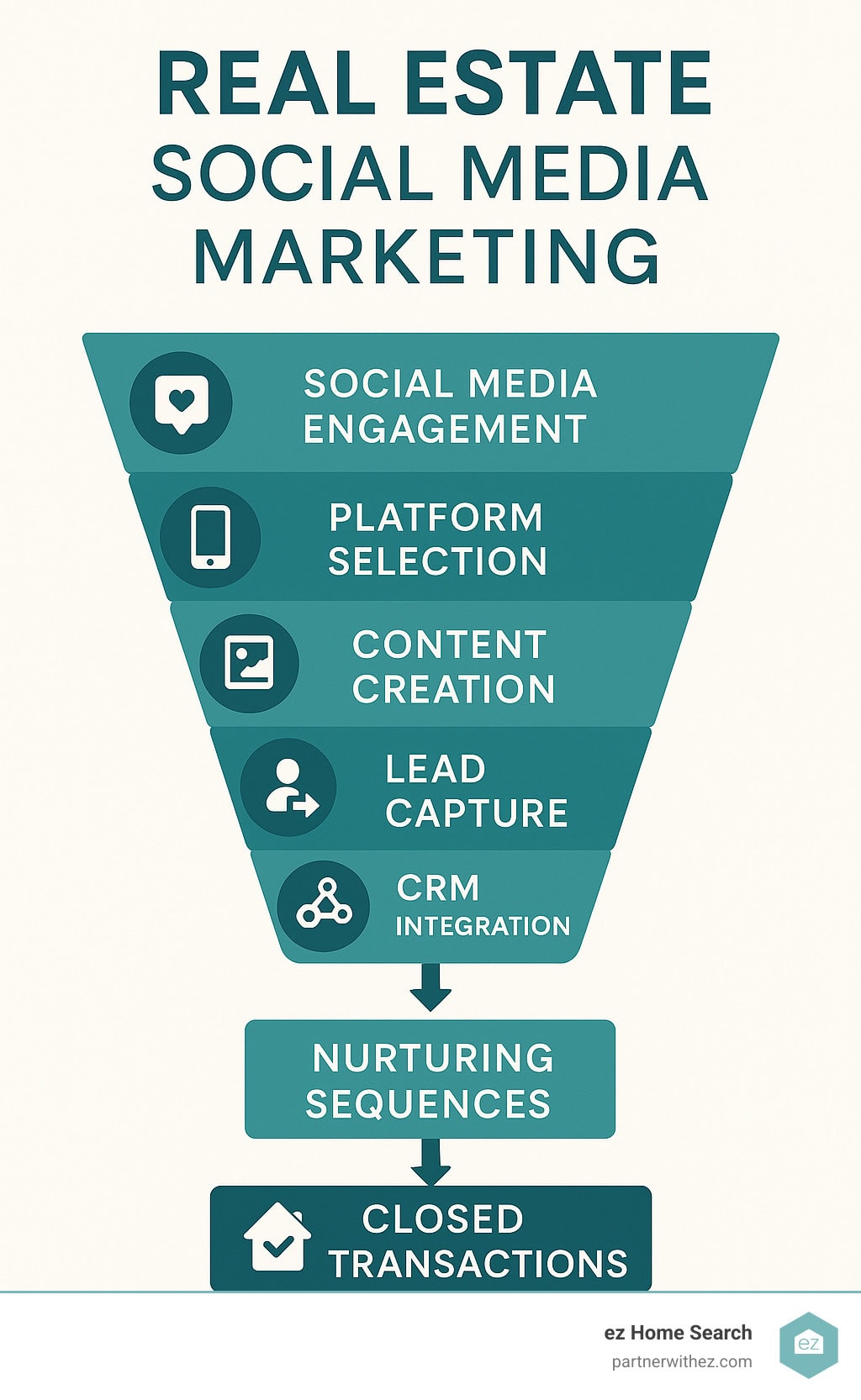
Infographic showing real estate content calendar workflow with content pillars, scheduling timeline, posting frequency across platforms, and performance tracking metrics - real estate content calendar infographic

Agents who stick to a calendar report 40% more referrals and significantly higher conversion rates. Ready to build yours? Lets go.

Real Estate Content Calendar: Step-by-Step Build

Building your first real estate content calendar might feel overwhelming, but it’s actually simpler than you think. The key is approaching it strategically, just like you would when pricing a home or planning an open house. According to the latest research on agent tech, successful agents are embracing technology to streamline their marketing while keeping those authentic connections that matter most.

Here’s what I’ve learned after helping hundreds of agents build their content systems: the agents who succeed aren’t necessarily the most creative ones—they’re the most consistent ones. They understand that content planning is a business strategy, not just a social media activity.

What is a Real Estate Content Calendar?

Think of your real estate content calendar as your marketing GPS. Just like you wouldn’t drive to a listing appointment without directions, you shouldn’t approach content creation without a clear roadmap telling you exactly what to post, when to post it, and where to share it for maximum impact.

Your calendar becomes the structure that transforms random posting into purposeful marketing. It includes your monthly themes that align with market seasons, weekly content pillars that rotate your messaging focus, and daily posting slots with specific content types mapped to each platform.

The magic happens in your posting cadence. Quality absolutely trumps quantity. Rather than overwhelming your audience with daily posts that dilute your message, focus on 2-3 high-quality pieces per week. This frequency keeps you visible without burning out your creative energy or your audience’s attention span.

Most importantly, your calendar creates accountability. By planning content in advance, you eliminate the “I’ll post something later” mentality that leads to those dreaded content gaps.

Creating Your Real Estate Content Calendar in 5 Steps

Step 1: Brainstorm Your Content Themes

Start by identifying your core content pillars—think of these as the foundation of your marketing house. The most effective agents focus on market updates and data analysis to establish expertise, property listings and virtual tours to showcase inventory, client success stories to build trust, local community insights to demonstrate neighborhood knowledge, educational content to nurture prospects, and personal brand moments to show the human behind the business card.

Your themes should reflect both your expertise and your audience’s needs. If you’re known for luxury properties, lean into high-end market analysis. If you’re the go-to agent for first-time buyers, prioritize educational content about the buying process.

Step 2: Map Important Dates

This is where seasonality becomes your secret weapon. Create a master calendar that captures seasonal market trends—remember that spring buying season peaks between April and June when over 16,500 existing homes sell daily. Mark local events and festivals that bring your community together, national holidays that affect market timing, industry-specific dates like National Homeownership Month in June, and your own personal and business milestones.

Step 3: Batch Create Your Content

Here’s where efficiency becomes your best friend. Instead of creating content daily (which leads to burnout and inconsistency), dedicate specific time blocks for batch creation. Many successful agents swear by “Content Sundays”—spending 2-3 hours planning and creating a full week’s worth of posts.

Batching allows you to get into a creative flow state, maintain consistent quality, and free up your weekdays for what matters most: working with clients and generating leads.

Step 4: Schedule and Distribute

This is where the Followr, Vista Social, and Marky AI really shines. Their scheduling tools integrate seamlessly with major social media channels, letting you plan your content distribution while tracking engagement and lead generation metrics in real-time. You maintain authenticity while gaining the consistency that algorithms reward.

The beauty of proper scheduling is that your content works for you even when you’re showing homes, negotiating contracts, or taking a well-deserved weekend off.

Step 5: Review and Optimize

Your calendar isn’t a “set it and forget it” system. Schedule monthly reviews to identify your highest-performing content types and adjust your strategy accordingly. Track meaningful metrics like engagement rates, reach, and most importantly, leads generated from your content efforts.

Pay attention to which posts spark conversations, which ones get shared, and which ones actually result in phone calls or email inquiries. This data becomes the foundation for refining your approach and doubling down on what works best for your specific market and audience.

Content Pillars, Cadence & Creative Ideas

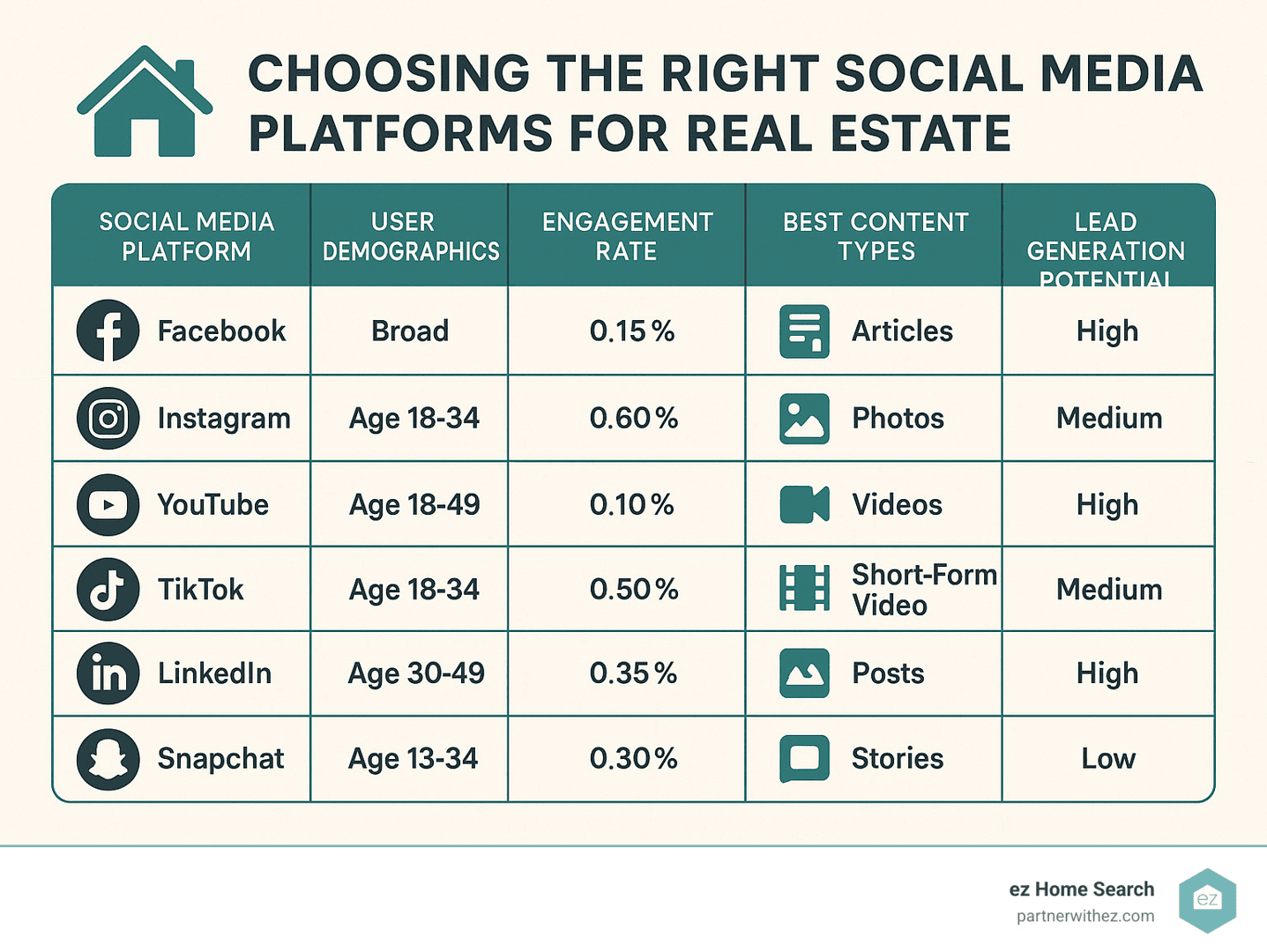
Weekly content pillar grid showing different themes for each day of the week - real estate content calendar

Building a successful real estate content calendar is like constructing a house—you need a solid foundation of content pillars to support everything else. The magic happens when you balance educational content that builds trust with timely market updates that demonstrate your expertise, all while letting your personality shine through.

Think of content pillars as your go-to themes that never go out of style. They’re the backbone of your calendar, giving you direction when you’re staring at a blank social media post wondering what to share today. The best agents I’ve worked with at ez Home Search have mastered this balance, creating content that feels both professional and genuinely helpful.

Essential Content Pillars for Agents

Market data and analysis should be your bread and butter content. You’re not just sharing numbers—you’re translating what those statistics mean for real people making life-changing decisions. When you post monthly market reports or price trend analysis, you’re positioning yourself as the local expert who understands the bigger picture.

Educational tutorials address the questions keeping your prospects up at night. Whether it’s explaining closing costs, explaining first-time buyer programs, or walking through the selling process, this content builds genuine trust. People remember the agent who taught them something valuable, not the one who just posted pretty house photos every day.

Social proof through testimonials and client success stories provides the credibility that closes deals. Video testimonials perform exceptionally well because they feel authentic and personal. Always get proper permissions and respect privacy preferences—your clients’ trust is more valuable than any single post.

Community spotlights set you apart from agents who only talk about houses. When you highlight local businesses, schools, events, and neighborhood amenities, you’re showing prospects what life actually looks like in your area. You become the community connector, not just the house seller.

30 Post Ideas to Keep Audiences Engaged

Creating engaging content doesn’t have to feel like pulling teeth. The key is developing a mix of educational, entertaining, and inspiring posts that keep your audience coming back for more.

Weekly series create anticipation and consistency. Market Mondays give you a reliable slot for sharing updates and statistics. AMA Wednesdays let you answer real questions from your audience in real-time, building that personal connection that converts followers into clients. Fun Facts Fridays about your local area keep things light while showcasing your neighborhood knowledge.

Interactive content like “Guess the Rent” games or “This or That” polls between properties get people engaging with your posts instead of just scrolling past them. These simple interactions help the algorithm show your content to more people, expanding your reach organically.

Seasonal themes keep your content fresh and relevant. Spring market updates tap into the busy buying season when activity heats up. Independence Day content highlighting local events, your communities history, and things going well in the country. Find the good (there is always some) and highlight it.

Educational series that break down complex topics into bite-sized pieces build long-term trust. First-time buyer tips, home maintenance checklists, and mortgage myth-busting content positions you as the helpful expert rather than the pushy salesperson. Before-and-after staging photos and moving hacks provide genuine value that people save and share.

Behind-the-scenes content humanizes your brand and builds personal connections. Day-in-the-life videos, team member spotlights, and community involvement posts show the person behind the professional headshot. People buy from people they like and trust.

Property-focused content like virtual tour previews, just sold celebrations (with client permission), and neighborhood walkthrough videos showcase your active business while providing valuable information to prospects researching your market.

Content ApproachTime InvestmentPersonalizationLead QualityScalability
Manual CreationHighHighHighLow
Template-BasedMediumMediumMediumMedium
AI-PoweredLowHighHighHigh

When someone engages with your educational content about first-time buying, the system can automatically nurture them with relevant follow-up information through ezNurture, turning social media engagement into qualified prospects.

Consistency beats perfection every time. It’s better to post three quality pieces per week regularly than to post daily for two weeks and then disappear for a month. Your real estate content calendar should feel sustainable for your schedule while providing genuine value to your audience.

Tools, Templates & AI Automation

The right tools can transform your real estate content calendar from a time-consuming chore into an efficient, lead-generating machine. After working with hundreds of agents, I’ve seen how the right technology stack can free up hours each week while actually improving your content quality and consistency.

Free & Paid Tools to Plan and Schedule

Starting Simple with Google Sheets:
You don’t need fancy software to begin organizing your content strategy. A simple Google Sheets template can work wonders for mapping out your monthly themes, tracking posting schedules, and monitoring which content types perform best. Create columns for your posting date, platform, content type, caption ideas, and performance notes. This basic approach costs nothing and gives you a solid foundation to build upon.

Point Solution Advantage:
Here’s where things get exciting. The platforms I mentioned above go far beyond basic scheduling tools. Instead of posting content into the void and hoping for the best, you can see exactly which posts are driving real prospects to your business.

How AI Streamlines the Process

Smart Caption Generation:
Gone are the days of staring at a blank screen wondering what to write. AI-powered content creation can generate months of caption ideas based on your market area, specialties, and target audience. The technology analyzes what’s working in your local market and suggests content that resonates with your specific community.

This doesn’t mean your content becomes robotic or generic. Instead, AI handles the heavy lifting of brainstorming and structure, leaving you free to add your personal voice and local expertise.

Visual Content Creation:
Creating eye-catching graphics used to require design skills or expensive software. Now AI can generate property highlight graphics, market update visuals, and branded social media images in minutes. This is particularly valuable for busy agents who need professional-looking content but don’t have time to learn design software or budget for a graphic designer.

MLS Integration Magic:
Advanced platforms can automatically pull listing data and create social media posts featuring new properties, price changes, and status updates. This automation ensures you never miss promoting a new listing while maintaining consistent market presence. The system can even generate virtual tour previews and property highlight reels without manual intervention.

Bulk Scheduling Intelligence:
The real power comes from AI-improved scheduling that optimizes posting times based on your audience’s engagement patterns. You can plan and queue months of content in a single planning session, with the system automatically adjusting for platform-specific best practices and time zone considerations.

As Preston Guyton, our CEO, puts it: “The agents who succeed in today’s market are those who leverage technology to scale their marketing efforts without losing the personal touch that builds lasting client relationships.”

Measuring Success, Optimization & FAQs

Infographic displaying key performance metrics for real estate content calendars including engagement rates, lead conversion, and ROI tracking - real estate content calendar infographic

Creating a real estate content calendar is step one; step two is proving it works. Track results like you track compswith real numbers, not gut feelings.

Tracking & Tweaking Your Calendar

  1. Start with revenue metrics. How many contacts, showings, and closings came from specific posts?
  2. Dig into true engagement. Comments, shares, and clickthrough rates matter more than raw likes. They signal intent.
  3. Run a 30day review. Identify top performers, note themes, and replicate success next month.

Frequently Asked Questions

How often should I post?

2- 4 highvalue posts per week across all platforms is plenty for most agents. Quality beats quantity, and consistency beats both.

Which platforms matter most?

Focus on where your clients actually are: Facebook for broad reach, Instagram for visual storytelling, LinkedIn for luxury and referral partners. Master two before adding more.

How do I stand out?

Go hyperlocal and videofirst. Share neighborhood insights, quick market takes, and real client stories in your own voicethe combo most agents still skip.

Content marketing isn’t about sellingit’s about serving. Provide value first and the sales follow.

Conclusion & Next Steps

Building and maintaining a real estate content calendar isn’t just about posting pretty pictures of houses—it’s about creating a systematic approach that turns your social media presence into a reliable lead generation machine. The agents who consistently close more deals aren’t necessarily the ones with the biggest budgets or flashiest marketing materials. They’re the ones who show up consistently with valuable content that builds trust over time.

Throughout this guide, we’ve walked through the essential elements that make content calendars work: strategic planning, consistent execution, and continuous optimization. The beauty of this approach is that it compounds over time. Each post builds on the last, creating a digital presence that positions you as the go-to expert in your market.

Your content calendar should work as hard as you do. That means every post should serve a purpose—whether it’s educating potential clients, showcasing your local expertise, or nurturing existing relationships for future referrals. When you approach content creation with this mindset, you’ll find that your real estate content calendar becomes less of a chore and more of a powerful business tool.

The technology landscape has made this easier than ever before. With AI-powered content creation and automated scheduling, you can plan months of content in advance while maintaining that personal touch that makes you memorable. The key is finding tools that integrate with your existing workflow rather than creating more work for you.

When you combine a strategic real estate content calendar with our integrated platform, you get something powerful: content that not only engages your audience but also feeds directly into your sales pipeline. Your posts aren’t just broadcasting into the void—they’re working with our behavioral tracking and CRM integration to identify and nurture real prospects.

The privacy-first approach matters more than ever. Today’s consumers are increasingly concerned about how their data is used. Our platform respects that concern while still providing you with the insights you need to serve them better. It’s a win-win that builds trust from the very first interaction.

Ready to put your content calendar to work? The difference between having a plan and executing it consistently is often having the right support system. Our weekly coaching and sales enablement help ensure you’re not just creating content, but creating content that converts.

Whether you’re a team leader looking to scale your marketing efforts, a loan officer wanting warmer referrals, or a home service professional seeking targeted exposure, ez Home Search provides the territory protection and technology integration that amplifies every piece of content you create.

Your future clients are already searching online, scrolling through social media, and evaluating their options. Make sure your strategic, consistent content is there to guide them when they’re ready to make their move. Learn more about our exclusive growth tools and find how county-based exclusivity can transform lead generation into a true growth engine.

The best time to start was yesterday. The second best time is right now.

07.03.2025

Best Leads for Real Estate Agents: Complete Guide to High-Converting Lead Sources to Boost Your GCI

The difference between top-producing real estate agents and struggling ones often comes down to one critical factor: lead quality. While many real estate professionals chase quantity over quality, buying hundreds of cheap leads that waste time and marketing budget, successful agents focus on high-converting real estate leads that actually turn into closed transactions. Top agents use digital marketing and targeted marketing campaigns to attract potential clients, ensuring their business thrives in a competitive market. A strong online presence is crucial for attracting real estate leads, as 97% of real estate searches start online.

The real estate industry has evolved beyond generic lead generation companies that resell recycled contact lists. Online platforms now play a crucial role in sourcing and evaluating lead quality. Today’s top agents leverage data-driven platforms that provide exclusive leads enriched with behavioral signals, predictive analytics, and real-time engagement data. Generating real estate leads requires a marketing strategy to collect personal contact information from prospects. Many real estate professionals diversify their lead generation methods for a well-rounded approach. This comprehensive guide reveals the lead generation strategies that actually work, helping you build a sustainable real estate business based on qualified leads rather than cold prospects.

An aerial view of a vibrant neighborhood in Roswell, GA, is depicted, with homes and greenery visible below. Overlaying the image is the text, "Best Leads for Real Estate Agents: Complete Guide to High-Converting Lead Sources to Boost Your GCI," emphasizing the importance of lead generation strategies in the real estate industry.

What Are the Best Real Estate Leads for Agents?

The best real estate leads share four critical characteristics: high intent, exclusivity, accurate targeting, and actionable behavioral data. These aren’t random names from purchased lists—they’re potential clients who have demonstrated clear buying or selling intent through their online behavior and engagement patterns. High quality leads and warm leads are especially valuable because they represent prospective clients who are more likely to convert into actual clients.

Buyer Leads from High-Intent Platforms

Buyer leads generated from property search platforms consistently outperform other lead sources because they capture users actively looking for homes. These platforms connect agents with prospective buyers by showcasing extensive property listings, increasing visibility and attracting those ready to take the next step. These prospects have moved beyond casual browsing and are taking concrete steps toward purchasing, such as requesting property showings, saving specific listings, or using mortgage calculators.

High-quality buyer leads typically convert within 30-90 days, making them ideal for new agents who need to generate real estate transactions quickly. The key is sourcing these leads from platforms that track user behavior rather than just collecting contact information.

Seller Leads Through Predictive Analytics

Predictive analytics platforms represent the cutting edge of real estate lead generation, using data science to identify homeowners likely to sell before they actively list their properties. These systems analyze factors like homeownership duration, local market activity, demographic changes, and online behavior to predict selling intent. By leveraging smart data and real-time data, agents can efficiently identify predictive sellers—homeowners most likely to list soon—by accessing actionable insights and contact information from anywhere, even by searching specific locations such as zip codes.

For example, we have data on all 80,000,000 residential properties in the United States at ez Home Search. This includes information such as mortgage amounts, equity, interest rates on current loan, time in house, etc. Imagine how this helps us enrich the data provided to our county exclusivity partners and ez Connect agents.

The results speak for themselves: predictive seller leads achieve conversion rates up to 13% compared to the industry average of 4%. This dramatic improvement comes from reaching homeowners during their consideration phase rather than after they’ve already chosen an agent.

Exclusive vs. Shared Lead Quality

Lead exclusivity dramatically impacts conversion rates and agent ROI. Exclusive leads, sold to only one agent, eliminate direct competition and allow for thoughtful nurturing rather than aggressive pursuit. While these leads cost $25-50 each compared to $12-20 for shared leads, the investment pays off through higher conversion rates and less time pressure. Exclusive leads are also more likely to be hot leads—highly interested prospects ready to convert—significantly increasing the chances of quick transactions.

Shared leads require immediate response—often within minutes—because multiple agents receive the same contact information simultaneously. This creates a race-to-the-phone scenario that favors agents with dedicated lead management systems and rapid response protocols.

Geographic Targeting for Market Penetration

Hyper local leads consistently outperform broad national campaigns because they allow agents to build genuine expertise and market presence in specific neighborhoods. By focusing on geographic-targeted lead generation, agents can target leads that fit their ideal client profile within those neighborhoods, maximizing their market presence and improving conversion rates. Geographic-targeted lead generation enables agents to become the go-to expert for particular areas, increasing referral business and repeat clients over time.

This approach works particularly well when combined with consistent marketing efforts like direct mail, community events, and local sponsorships that reinforce an agent’s presence in target markets.

Top Lead Generation Platforms for Real Estate Agents

Premium Lead Generation Services

Modern lead generation platforms offer integrated solutions that combine website technology, customer relationship management, and artificial intelligence to maximize conversion rates. These comprehensive systems justify higher costs through superior lead quality and automated nurturing capabilities.

CINC delivers geo-targeted leads through sophisticated pay-per-click advertising combined with behavioral tracking and AI-powered follow-up. Their micro-niche targeting leverages data from over 50,000 agents to identify the most promising prospects in specific markets. At $899 per month for solo agents and $1,500 for teams, CINC requires a significant investment but provides the tools necessary for serious market penetration, including automated marketing features that nurture leads through drip campaigns and personalized communications.

Market Leader claims to guarantee exclusive leads that are targeted by ZIP code. While it starts at $189 per month, expect to pay much more. Their integrated marketing tools help agents maintain consistent communication with prospects through automated campaigns and personalized follow-up sequences. The Leads Direct service integrates seamlessly with their CRM to streamline lead management, making it easier for agents to track and convert opportunities. So, you are really choosing a tech stack, not simply a lead source.

Ylopo combines AI-powered video ads with 24/7 lead qualification, starting at $395 per month plus ad spend. Their system emphasizes behavioral lead scoring to identify prospects most likely to transact, allowing agents to prioritize their time effectively. Ylopo also offers automated marketing tools that nurture leads, helping agents stay top of mind with potential clients. Ylopo uses dynamic home search and AI-powered video ads to generate real estate leads.

ez Home Search represents the next generation of privacy-first, conversion-optimized platforms. Offering county exclusivity with full co-branding across their national search website and mobile app, ez Home Search provides detailed behavioral data integration and TCPA-compliant lead generation. The platform helps agents generate listings through advanced targeting, increasing their client base and business growth. Their pricing varies by market but includes comprehensive nurture campaigns and advanced lead scoring.

Budget-Friendly Lead Sources

Newer agents or those testing lead generation strategies can start with more affordable platforms that still provide essential automation and customer relationship management capabilities. Buying leads and paid leads can be a cost-effective way for new agents to quickly build their pipeline, especially when combined with organic methods for best results.

Zurple at $149 per month automates lead nurturing through branded landing pages and email sequences, making it ideal for agents who want to test paid lead generation or buying leads without major upfront investment.

RealGeeks provides end-to-end solutions including website design, customer relationship management, and lead capture for $399 per month. This platform offers good value for small teams or individual agents seeking comprehensive functionality at moderate cost. Real Geeks provides an all-in-one lead generation solution suitable for solo agents, teams, and brokerages.

RedX focuses on cold leads from public records and MLS data at $60 per month per product. While these leads require more extensive nurturing, they provide cost-effective access to FSBOs, expired listings, and pre-foreclosure properties for agents willing to invest time in cultivation, and also offer the option to purchase leads directly.

zBuyer offers both shared leads at $12 each and exclusive leads at $25, with a minimum monthly spend of $400. This flexibility allows agents to test different lead types, including the ability to purchase leads directly from the platform, and adjust their strategy based on results.

Types of Real Estate Leads by Quality and Intent

High-Intent Leads

The hottest leads come from prospects actively searching for properties or agents, demonstrating immediate transaction intent through their behavior.

Google PPC leads capture users searching for specific home-buying or selling terms, representing the highest intent possible. These prospects have moved beyond casual interest and are actively seeking professional assistance.

Platform inquiries from IDX searches or listing portals show prospects engaging with specific properties, indicating serious buying consideration. These leads often convert quickly because they’ve already identified potential homes or neighborhoods.

ez Home Search inquiries provide comprehensive behavioral signals including property search history, engagement patterns, and lead scoring data. This enriched information allows agents to customize their approach based on each prospect’s demonstrated interests and timeline.

Open houses remain valuable for capturing qualified leads, especially when enhanced with digital business cards, QR code sign-ins, or an interest form that attendees fill out to express their intent and provide contact information for follow-up. This ensures you can nurture high-intent prospects after the event.

Client referrals consistently deliver the highest conversion rates due to the trust factor inherent in personal recommendations. Referral leads are considered the most valuable due to their high conversion potential. Top agents report that referrals and repeat business account for 41% of all transactions.

Medium-Intent Leads

These prospects show interest but may be 6-12 months from transacting, requiring consistent nurturing to convert effectively. It is essential to nurture leads over time using strategies like targeted email campaigns and segmentation, ensuring prospects remain engaged until they are ready to transact.

Social media ads on Facebook and Instagram can capture prospects in early consideration phases, particularly when offering valuable content like market reports or home valuation tools.

Website contact forms from SEO-driven traffic represent medium intent, as prospects have taken time to research and submit their information but may not be ready for immediate action.

Email subscribers who engage with market updates and property alerts demonstrate ongoing interest and can be nurtured through automated campaigns until they’re ready to transact.

Home valuation requests indicate homeowners considering selling within the next year, making them excellent prospects for patient cultivation and market education.

Low-Intent Leads

While requiring extensive nurturing, these leads can provide value for agents with strong follow-up systems and long-term perspective, especially when trying to find leads among low-intent prospects.

Purchased lists from lead generation companies often contain recycled or outdated information, requiring persistent effort to find leads and identify viable prospects.

Cold calling prospects from public records, expired listings, or FSBO properties can yield results but demand significant time investment and thick skin for rejection.

Social media followers who engage with content but haven’t expressed specific interest require long-term relationship building through valuable content and consistent presence.

A marketing funnel diagram for real estate marketing services, illustrating lead generation, nurturing, and conversion steps, with performance metrics for PPC, email, landing pages, and social ads on the right.

Lead Generation Strategies for Different Agent Types

New Agents (0-2 Years Experience)

New agents should prioritize affordable platforms that include comprehensive training and automation to reduce the learning curve while building their pipeline. Additionally, new agents can buy real estate leads from reputable platforms to jumpstart their business and quickly connect with potential clients.

Starting with buyer leads provides faster transaction cycles and quicker commission income, helping establish cash flow and build confidence. Platforms like Zurple ($149/month) or RealGeeks ($399/month) offer essential automation without overwhelming complexity.

Local networking through community events, referral partnerships with lenders and title companies, and strategic open house hosting help build relationships that generate long-term referral business. Many real estate professionals underestimate the power of face-to-face networking in an increasingly digital world.

Experienced Agents (3+ Years)

Established agents can justify investment in predictive analytics platforms like Smartzip ($500/month) to identify potential sellers before they actively list their properties, if that is not part of your tech stack. This proactive approach provides competitive advantages in inventory-constrained markets, helping experienced agents win listings and focus on generating listings in competitive environments. Smartzip uses predictive analytics to identify likely sellers six to 12 months in advance.

Exclusive leads become more cost-effective as agents develop efficient conversion systems and can afford higher lead costs in exchange for reduced competition. Niche specialization in luxury homes, investment properties, or specific geographic areas supports premium pricing and higher transaction values.

Strategic partnerships with other real estate industry professionals and branded lead magnets like market reports establish authority and generate inbound interest from high-quality prospects.

Top Producing Teams

High-volume teams benefit from advanced AI-driven platforms like CINC ($899/month), Ylopo ($395/month plus ad spend), or ez Home Search’s county exclusivity programs that provide scalable, highly targeted lead generation. Top teams prioritize listing leads to maximize transaction volume, focusing on high-quality, exclusive, and motivated seller opportunities.

Multi-channel approaches combining digital advertising, geographic farming, and traditional marketing create comprehensive market presence. Advanced behavioral tracking and lead scoring help teams prioritize their efforts on the most promising opportunities.

Team structure enables rapid response protocols essential for converting shared leads while maintaining high-touch service standards that justify premium fees.

Lead Quality Factors to Evaluate

Lead Source and Generation Method

The method used to generate leads in real estate directly impacts their conversion potential. Strategies to generate leads—such as online advertising, AI-powered tools, CRM integration, and social media campaigns—can determine the quality and readiness of prospects. Leads from high-traffic, real estate-specific platforms with verified opt-in consent consistently outperform generic purchased lists or cold contact databases.

Freshness critically affects conversion rates—leads contacted within 24 hours of registration convert up to five times better than older leads due to reduced competition and higher prospect recall. This makes real-time lead delivery systems essential for maximizing return on investment.

TCPA compliance protects agents from legal risk while ensuring prospects have genuinely consented to receive communication. Only work with platforms that maintain robust consent protocols and can provide documentation of opt-in procedures.

Lead Information and Qualification

Complete contact records including verified phone numbers, email addresses, and property details represent the minimum standard for quality leads. Phone calls play a crucial role in verifying lead information and establishing initial contact, ensuring that the data is accurate and the lead is genuinely interested. Superior sources also capture motivation indicators, transaction timelines, price ranges, and financing status.

Behavioral signals such as multiple property views, repeat website visits, or use of advanced search filters provide valuable insights for prioritizing follow-up efforts. These engagement patterns often predict conversion better than demographic information alone.

Automated data enrichment tools can validate and append missing information, improving lead quality and enabling more effective nurturing campaigns through integrated customer relationship management systems.

Cost Analysis and ROI for Real Estate Leads

Lead Pricing Models

Understanding different pricing structures helps agents select platforms that align with their business model and risk tolerance.

Pay-per-lead remains the most common model, with costs ranging from $12 for shared, lower-quality leads to $50+ for exclusive, high-intent prospects. Agents can buy leads individually or in bulk depending on their budget and goals. This model provides predictable costs but requires careful tracking to ensure positive ROI.

Monthly subscriptions typically range from $149-$899 and bundle guaranteed lead volume with technology tools and customer relationship management systems. These platforms work best for agents who can consistently nurture large lead volumes.

Pay-at-closing models eliminate upfront investment but take significant commission percentages (often 35% or more), making them expensive for successful agents but attractive for those testing new markets or lacking marketing budgets.

Hybrid models combine base fees with performance charges, allowing agents to scale investment based on results while maintaining some predictable costs.

Expected Conversion Rates and ROI

Industry-wide conversion rates average 2-5% from purchased leads to closed transactions, but top agents using sophisticated nurturing systems achieve 8-12% conversion through systematic follow-up and value-added service. The ultimate goal of lead generation is closing deals efficiently, making every step in the process critical to success.

Average commissions of $8,000-$12,000 per transaction provide substantial margins for lead acquisition when conversion rates exceed 2%. At $25 per lead with 2% conversion, agents invest $2,500 per closing while earning $8,000+ in commission.

Maximizing ROI requires diligent tracking of lead sources, costs, conversion rates, and lifetime value through centralized customer relationship management systems that capture the complete prospect journey.

A flowchart illustrating automated mortgage lead nurturing, showing steps from incoming leads to analytics, with icons for each process.

Lead Nurturing and Conversion Best Practices

Immediate Response Protocols

Speed to lead represents the most critical factor in conversion success. Contacting prospects within five minutes increases conversion probability by up to 9x compared to slower response times, making rapid follow-up systems essential for competitive advantage.

Automated responses through text messaging and email provide instant acknowledgment while setting expectations for personal follow-up. These automated systems ensure no leads fall through cracks during busy periods or after-hours inquiries.

Pre-built scripts tailored to specific lead types—buyer, seller, relocation, luxury—ensure consistent, effective communication while reducing the stress of cold calling. Many real estate professionals underestimate how much preparation improves phone call outcomes.

Long-term Follow-up Systems

Systematic nurture campaigns maintain agent visibility and build trust through valuable content delivery. Market reports, property alerts, and educational guides position agents as knowledgeable advisors rather than pushy salespeople.

Customer relationship management automation schedules follow-up activities, tracks communication history, and flags engagement spikes that indicate buying or selling readiness. This systematic approach prevents prospects from being forgotten while identifying the optimal time for direct outreach.

Progressive profiling gradually builds comprehensive prospect records through ongoing interaction, enabling increasingly personalized communication that demonstrates genuine interest in client success rather than just commission income.

Technology and Tools for Lead Management

Essential CRM Features

Modern customer relationship management systems must seamlessly import leads from multiple sources while maintaining organized contact records and communication history. This integration prevents leads from being lost between platforms or forgotten in busy periods.

Multi-channel communication capabilities including email, SMS, and phone integration enable agents to reach prospects through their preferred communication methods while maintaining consistent messaging across all touchpoints.

Lead scoring based on engagement patterns, profile completeness, and behavioral signals helps agents prioritize their time on prospects most likely to convert, improving efficiency and reducing frustration with unqualified leads.

MLS and IDX integration provides seamless property search functionality and automated listing alerts that keep prospects engaged between personal conversations, maintaining top-of-mind awareness without constant agent effort.

Advanced Lead Generation Tools

AI chatbots qualify website visitors through automated conversation flows, capturing contact information and basic requirements while scheduling appointments for qualified prospects. These tools work 24/7 to capture leads that might otherwise be lost outside business hours.

Video email platforms add personal touches to automated nurture sequences, increasing engagement rates and building stronger relationships than text-only communication. Many agents find video messages differentiate them from competitors using generic email templates.

Social media automation tools maintain consistent content delivery and audience engagement across multiple platforms without requiring daily manual posting. This consistency builds brand awareness and positions agents as active market participants.

Analytics dashboards aggregate data from multiple lead sources, providing clear visibility into which channels generate the highest quality prospects and best return on investment for ongoing optimization.

Avoiding Common Lead Generation Mistakes

Quality vs Quantity Pitfalls

Many agents focus on lead volume rather than lead quality, purchasing hundreds of cheap contacts that consume time without generating transactions. This approach often leads to frustration and abandonment of lead generation efforts entirely.

Failing to verify lead sources and compliance protocols exposes agents to TCPA violations and potential fines while damaging their professional reputation. Always confirm that lead providers maintain proper opt-in procedures and consent documentation.

Neglecting existing pipeline in favor of constantly purchasing new leads wastes the investment already made in prospect development. Many successful transactions come from leads that were nurtured for months before converting.

Poor return on investment tracking allows ineffective strategies to continue while successful approaches may be abandoned due to lack of visibility into actual results.

A funnel infographic shows multi-channel follow-up methods for real estate expired listings: phone call, email, text message, social media, and direct mail, leading to a listing appointment.

Follow-up and Conversion Errors

Delayed response times allow competitors to capture even high-quality prospects, making speed-to-lead protocols essential for conversion success. The difference between immediate and delayed follow-up often determines whether prospects engage or move to other agents.

Generic, impersonal communication fails to build the trust and rapport necessary for major financial decisions like real estate transactions. Prospects can easily detect form letters and automated responses that lack genuine personalization.

Inconsistent follow-up allows qualified prospects to lose interest or work with more attentive agents. Systematic nurture campaigns prevent leads from falling through cracks while maintaining professional presence.

Lack of clear value proposition leads to commoditization where prospects choose agents based solely on commission rates rather than expertise and service quality. Differentiation through specialized knowledge and superior service commands premium fees.

Comparison: Traditional vs Modern Lead Systems

The real estate industry has evolved significantly from basic contact lists to sophisticated, privacy-first platforms that provide comprehensive behavioral data and automated nurturing capabilities.

AttributeTraditional PlatformsModern Conversion-Optimized Systems
Lead QualityMixed/Low (often recycled)High (exclusive, intent-driven, behavioral data)
ComplianceOften unclear; TCPA risksRobust consent, privacy-by-design
TechnologyBasic CRM, limited automationAI-powered nurturing, multi-channel automation
TransparencyLimited source/intent dataFull behavioral signals, lead scoring, ROI tracking
Conversion Rates1-3% typical5-12% possible with best practices
Cost StructurePer-lead or subscriptionExclusivity pricing, bundled AI nurture

Modern platforms like ez Home Search represent this evolution, offering county exclusivity, comprehensive behavioral tracking, and automated nurture campaigns that traditional lead generation companies cannot match. These systems prioritize lead quality over quantity while providing the technology infrastructure necessary for efficient conversion.

The shift toward privacy-first, conversion-optimized systems reflects both regulatory requirements and consumer preferences for transparency and control over their personal information. Agents using these advanced platforms often find their prospects more receptive and trusting, leading to higher conversion rates and more successful long-term relationships.

Conclusion

The best leads for real estate agents in 2025 combine high intent, exclusive access, and rich behavioral data that enables personalized, effective nurturing. Rather than competing for shared leads or purchasing recycled contact lists, successful agents invest in platforms that provide genuine exclusivity and sophisticated tracking capabilities.

Quality consistently outperforms quantity in real estate lead generation. A smaller number of exclusive, well-qualified prospects will generate more transactions and higher commissions than hundreds of shared or outdated contacts. The key lies in selecting platforms that prioritize lead quality, maintain robust compliance protocols, and provide the technology infrastructure necessary for efficient conversion.

Modern real estate professionals who embrace data-driven lead generation strategies, implement rapid response protocols, and maintain systematic nurture campaigns position themselves for sustained success in an increasingly competitive market. The investment in superior lead sources and conversion systems pays dividends through higher transaction volumes, increased commissions, and stronger client relationships that generate referral business for years to come.

Consider evaluating your current lead sources against the quality factors outlined in this guide. If you’re relying on outdated platforms or generic lead generation companies, exploring privacy-first, conversion-optimized systems could dramatically improve your ROI while building a more sustainable real estate business based on genuine client relationships rather than aggressive pursuit of shared prospects.

06.26.2025

Real Estate PPC: How It Differs From Other Industries and How to Gain Momentum

Why Real Estate PPC is Changing Lead Generation

Real estate PPC (pay-per-click) advertising is a digital marketing strategy where real estate professionals pay each time someone clicks their online ads to generate leads from motivated buyers and sellers actively searching for property services.

Quick Real Estate PPC Overview:

  • What it is: Online advertising where you pay only when prospects click your ads
  • Where it runs: Google Ads, Facebook/Instagram, Bing, YouTube
  • Typical cost: $10-$20 per lead, with ROI potential of 1000%+ for optimized campaigns
  • Best for: Capturing high-intent searchers ready to buy or sell
  • Timeline: Leads within 24 hours, deals typically close 3-6 months after launch

Unlike other industries where PPC targets broad consumer interests, real estate PPC focuses on capturing people at critical life moments. When someone searches “homes for sale in Denver” or “sell my house fast,” they’re not casually browsing—they’re actively making one of the biggest financial decisions of their lives.

This intent-driven nature makes real estate one of the highest-converting PPC verticals. Research shows real estate Google search ads achieve a 4.23% conversion rate, significantly outpacing the 3.75% average across all industries.

But here’s what makes real estate PPC truly different: it’s hyper-local. A plumber might serve a 50-mile radius, but real estate is neighborhood-specific. Your PPC campaigns need surgical precision to target the right zip codes, school districts, and even individual streets where you have expertise.

The challenge? Most real estate professionals waste thousands on poorly targeted campaigns that generate low-quality leads shared with multiple agents.

The solution lies in understanding how real estate PPC differs from other industries and building campaigns that capture exclusive, high-intent prospects.

Real Estate PPC Process: From Search Intent to Conversion - showing search query leading to targeted ad, optimized landing page, CRM integration, and closed transaction with timeline and cost metrics - real estate ppc infographic

Why Paid Search Matters in Housing

The real estate industry has fundamentally shifted online. Over 95% of homebuyers now start their search on the internet, with Google handling billions of property-related searches monthly. This massive search volume creates unprecedented opportunities for agents who understand how to capture motivated prospects at the exact moment they’re ready to buy or sell.

What makes real estate search behavior unique is the urgency factor. Unlike shopping for consumer products where people might browse for weeks, real estate searches often indicate immediate need. Someone typing “sell my house fast in Phoenix” isn’t casually exploring—they’re likely facing a job relocation, divorce, or financial situation requiring quick action.

This urgency translates into higher conversion rates and better ROI. The predictable pipeline aspect is equally compelling. Once you identify your cost per lead and average conversion rate, you can forecast monthly deal volume with remarkable accuracy.

Mastering Real Estate PPC Fundamentals

Think of real estate PPC as a digital auction that happens millions of times per day. Every time someone searches for “homes for sale in Austin” or “sell my house fast,” platforms like Google instantly run an auction to determine which ads appear. The beauty of this system? You only pay when someone actually clicks your ad, making it completely performance-based.

The major platforms each play different roles in your lead generation strategy. Google Ads captures people actively searching for properties or real estate services—these are your highest-intent prospects. Facebook and Instagram Ads work differently, targeting people based on life events and demographics. Bing Ads deserves attention despite handling less search volume, often delivering higher-quality leads at lower costs due to reduced competition.

What makes real estate PPC unique is the geographic precision required. While an online retailer might target entire states, real estate campaigns need surgical accuracy. A buyer searching downtown versus the suburbs has completely different needs, budgets, and timelines.

This geographic focus extends to your keyword strategy. Broad terms like “real estate agent” are expensive and ineffective. Successful campaigns target location-specific searches: “Realtor in Plano Texas,” “luxury condos Miami Beach,” or “sell house fast Dallas.” The more specific your keywords, the more qualified your leads.

The Mechanics Behind Each Click

Understanding how the auction works helps you compete smarter, not just harder. When someone searches a keyword you’re bidding on, the platform evaluates two key factors in milliseconds.

Your Max Bid represents the maximum you’ll pay for a click, but you rarely pay that full amount. The auction system only charges enough to beat the next highest bidder, often saving you money.

Quality Score acts like a multiplier on your bid, evaluating how relevant your ad is to the searcher’s intent. This levels the playing field dramatically. A solo agent with highly relevant ads can outrank a large brokerage with bigger budgets but generic messaging.

These factors combine to determine your Ad Rank—both whether your ad shows and where it appears. The system rewards relevance over raw spending power, which is fantastic news for individual agents and smaller teams.

Cost & ROI Benchmarks

Real estate PPC costs vary dramatically based on market competition and keyword specificity. Buyer leads typically cost less to generate than seller leads, simply because there are more people searching to buy than sell at any given time.

Motivated seller keywords command premium prices because of their conversion potential. Monthly budget planning requires realistic expectations. Most successful campaigns start with meaningful monthly investments that allow for proper testing and refinement.

The ROI potential can be exceptional when campaigns are properly managed. Market competition directly impacts your costs, while seasonality creates both challenges and opportunities. Follow-up quality makes or breaks your ROI—research shows that calling leads within five minutes increases conversion likelihood by 21 times compared to waiting just 30 minutes.

Benefits vs Drawbacks

Real estate PPC offers advantages that make it particularly valuable for property professionals looking to scale quickly. The instant traffic generation sets it apart from SEO or referral marketing—you can launch campaigns and start receiving leads within 24 hours.

The precise targeting capabilities give you unprecedented control over your audience, while measurable ROI provides clear accountability for every dollar spent. Scalability means successful campaigns can expand to new markets or increased budgets for proportional growth.

However, challenges include the fact that you’re essentially renting your audience—stop paying and lead flow stops immediately. The learning curve is steeper than most agents expect, and lead quality variance can be significant compared to referrals without proper follow-up systems.

Setting Up & Optimizing Your Campaigns

Building successful real estate PPC campaigns starts with understanding that your prospects aren’t just looking for any property—they’re searching for their next home in very specific neighborhoods. This reality shapes everything from your keyword strategy to your landing page design.

The foundation of any winning campaign is thorough keyword research that captures both buyer and seller intent at different stages of their journey. Start with location-based keywords that combine your service area with relevant terms. Think “homes for sale in downtown Phoenix” or “Scottsdale luxury real estate agent.”

Match types control how broadly your keywords trigger ads. Exact match gives you maximum control, phrase match offers balance between control and opportunity, and broad match can work but often leads to irrelevant traffic. For real estate, we recommend starting with exact and phrase match to maintain tight control.

Negative keywords prevent wasted spend on irrelevant clicks. Create comprehensive lists excluding terms like “jobs,” “careers,” “internships,” or competing cities where you don’t operate.

Your ad copy needs to directly address what the searcher wants. Instead of “Best Realtor in Town,” try “Sell Your Austin Home in 30 Days – Free Market Analysis” or “Find Your Dream Home in Westlake – 15+ Years Neighborhood Expertise.”

High-Intent Keyword Framework for Real Estate PPC

The most profitable keywords in real estate PPC capture people at specific moments in their buying or selling journey. High-intent buyer keywords target people actively looking at properties right now, including “homes for sale in [city]” and “[neighborhood] real estate listings.”

Motivated seller keywords can be even more valuable, targeting people with urgent needs through terms like “sell my house fast [city]” or “cash for houses [area].” Service-specific keywords help you capture prospects looking for particular expertise.

The real opportunity often lies in long-tail variations that are less competitive but highly specific. Instead of fighting for expensive broad terms, target queries like “3 bedroom homes under $400k in north Austin.”

Building Landing Pages That Convert

Your landing page is where PPC clicks either become leads or become expensive disappointments. Sending traffic to your homepage is like inviting someone to dinner and serving them a menu instead of food.

Mobile optimization isn’t optional—over 60% of real estate searches happen on phones. Video content can dramatically boost conversion rates through property tours or neighborhood highlights. Your calls-to-action should guide visitors toward the next logical step with action-oriented language.

optimized real estate landing page with property photos, agent bio, clear CTA buttons, and mobile-responsive design - real estate ppc

CRM integration ensures no lead falls through the cracks, while social proof helps unfamiliar prospects trust you enough to share their contact information. Lead magnets give people a reason to provide their contact information beyond just “call me for more info.”

Ongoing Optimization Routines

Launching your real estate PPC campaigns is just the beginning. Daily monitoring keeps campaigns healthy and prevents budget waste. Weekly bid adjustments help you double down on what’s working and reduce spend on what isn’t.

Monthly audits provide the big-picture view of campaign performance, while quarterly strategy reviews help you adapt to seasonal trends and market changes. A/B testing should be ongoing across every element of your campaigns.

The latest research on search campaigns from Google provides current best practices and feature updates that can give you an edge over competitors.

Comparing PPC to Other Lead Generation Channels

Understanding how real estate PPC fits within your overall marketing strategy requires comparing it to other lead generation methods. Each channel has distinct advantages, costs, and timelines that serve different business needs.

ChannelCost RangeSpeed to ResultsScalabilityLead Quality
PPC$10-$50 per lead24-48 hoursHighMedium-High
SEO$500-$2,000/month3-6 monthsMediumHigh
Direct Mail$0.50-$2 per piece2-4 weeksHighMedium
Referrals$0 direct costOngoingLowVery High
Social Media$5-$25 per lead1-2 weeksMediumMedium

SEO offers incredible long-term value but demands patience. Referrals remain the gold standard for lead quality but are unpredictable. Direct mail still works well for motivated seller campaigns, while social media advertising shines when targeting life events and demographics.

The smartest real estate agents don’t choose just one channel. They build an omnichannel approach, where each method supports the others. Attribution modeling becomes crucial when running multiple channels simultaneously.

When to Prioritize Real Estate PPC

Certain situations make real estate PPC your best lead generation strategy. Market launches represent perfect PPC opportunities when you’re entering a new area without established relationships. Inventory surges during hot markets require rapid response that PPC can provide.

Niche targeting works exceptionally well with PPC’s precise controls, whether you specialize in luxury properties, first-time buyers, or investment properties. Seasonal opportunities like spring buying season can be captured with temporary campaigns, while testing new markets becomes less risky with PPC’s ability to quickly assess demand.

Ready to find how exclusive territory protection can transform your lead generation beyond traditional PPC competition? Explore partnership opportunities with ez Home Search and see why county-based exclusivity is changing how top agents generate and convert leads.

Managing Campaigns: In-House vs Agency

Deciding whether to manage your real estate PPC campaigns yourself or partner with a specialized agency is one of the most important choices you’ll make. Self-management appeals to many agents because it offers complete control and eliminates ongoing agency fees, but effective campaign management requires significant time and expertise.

Time investment for proper campaign management typically demands 10-15 hours weekly. The learning curve can be particularly steep and expensive, with common mistakes potentially wasting thousands in ad spend.

Professional agency management typically costs a monthly fee plus a percentage of ad spend, but experienced agencies often improve campaign performance enough to justify their fees through better ROI and time savings.

Advantages of a Specialized Real Estate PPC Agency

Data depth represents one of the biggest advantages of working with specialized agencies. While individual agents manage one or two campaigns, agencies oversee hundreds across different markets. Dedicated account management ensures consistent attention and optimization.

Faster optimization comes from recognizing patterns across multiple campaigns. Compliance knowledge becomes increasingly crucial as advertising regulations change. Advanced features like remarketing often require technical expertise to implement effectively.

Google Premier Partner status provides agencies access to beta features and dedicated platform support that individual advertisers don’t receive.

Deciding What’s Right for You

Team size significantly influences the right choice. Solo agents often benefit more from agency partnerships, while larger teams with dedicated marketing staff might justify bringing PPC management in-house.

Budget and goals determine the complexity required for success. Technology integration becomes crucial for teams using multiple software platforms. The decision isn’t permanent—many successful agents start with agency management to learn best practices, then transition as they grow.

Common Mistakes to Avoid

Even seasoned real estate agents can stumble into costly real estate PPC pitfalls that drain budgets faster than expected. Most of these mistakes are completely avoidable once you know what to watch for.

Bidding without negative keywords wastes precious budget on irrelevant clicks from people searching for real estate jobs, internships, or properties in cities you don’t serve. Always build comprehensive negative keyword lists.

Ignoring mobile optimization is practically campaign suicide when over 60% of real estate searches happen on smartphones. Sending ads to your homepage kills trust instantly—create dedicated landing pages that match each ad’s specific offer.

Slow follow-up response might be the most expensive mistake of all. Research shows that calling leads within five minutes increases conversion likelihood by 21 times compared to waiting just 30 minutes.

Skipping remarketing campaigns is like letting interested prospects walk out and never following up. Under-funding campaigns prevents proper optimization and competitive positioning. Ignoring Quality Score means choosing to pay premium prices when discounts are available.

Broad match keywords without monitoring can drain budgets on irrelevant searches. Forgetting geographic targeting leads to clicks from areas where you can’t provide service. Not tracking phone calls misses a huge piece of the conversion puzzle since many prospects prefer calling for high-value decisions.

Frequently Asked Questions about Real Estate PPC

How much does a typical campaign cost?

The investment for real estate PPC campaigns depends heavily on your market competition. Most successful agents budget between $900-$2,000 monthly for ad spend. Buyer leads typically cost $10-$20 each, while seller leads run higher at $25-$50 per lead due to their higher value and motivation level.

Market competition plays a huge role in costs. Running campaigns in major metropolitan areas costs significantly more than smaller markets, though smaller markets offer better value with lower search volume.

How long before PPC leads close a transaction?

Most real estate PPC leads close deals within 3-6 months after first contact, though this timeline varies based on lead quality and follow-up effectiveness. Buyer leads typically move faster than seller leads since they’re actively searching for properties.

Lead intent level matters enormously—the more specific their search, the closer they are to transacting. Follow-up quality can dramatically accelerate the timeline, while market conditions and financing readiness also influence conversion speed.

Should I run real estate ppc on Bing as well as Google?

Absolutely. Higher-income demographics make Bing users ideal real estate prospects, with nearly 38% having household incomes over $100,000. Lower competition means you’ll often pay less per click and get better ad positions.

Bing handles over 5 billion searches monthly and powers about 35% of desktop searches in the U.S. Easy campaign setup makes testing Bing almost effortless since you can import Google Ads campaigns directly.

real estate agent reviewing PPC campaign performance on laptop with multiple platform dashboards visible - real estate ppc

Conclusion & Next Steps

The landscape of real estate PPC has evolved far beyond simple keyword bidding and generic ad campaigns. Today’s most successful agents understand that true PPC mastery requires surgical precision in targeting, lightning-fast follow-up systems, and the ability to nurture leads through increasingly longer sales cycles.

What separates the agents achieving exceptional ROI from those burning through budgets isn’t just their advertising skills—it’s their entire approach to lead generation. They’ve moved beyond competing with dozens of other agents for the same shared leads and instead focus on creating exclusive relationships with motivated prospects.

The challenge with traditional PPC platforms isn’t the technology or targeting capabilities. It’s the fundamental problem of lead competition. When the same prospect receives calls from five different agents within minutes, it becomes a race to the bottom based on pressure tactics rather than relationship building.

This is where the future of real estate lead generation is heading: exclusive territory protection combined with privacy-first consumer experiences. Instead of prospects being bombarded by multiple agents, they’re matched with a single local expert who can focus on providing genuine value.

At ez Home Search, we’ve eliminated the core problem plaguing traditional real estate PPC by providing county-based exclusivity to our partners. When a motivated buyer or seller expresses interest in your market area, you’re the only agent who receives that opportunity. No competition, no race to call first, no shared leads.

Our integrated platform combines the targeting power of PPC with the relationship-building advantages of exclusive partnerships. Partners receive access to high-conversion landing pages, real-time behavioral tracking, and CRM-integrated nurture systems that maintain engagement throughout extended sales cycles.

The technology backbone includes automated home valuations, cash offer tools, and TCPA-compliant verification through ezVerify.ai—all designed to create seamless experiences for both agents and consumers. Weekly coaching sessions help partners maximize their conversion rates while done-for-you SEO support builds long-term organic visibility.

Whether you’re a real estate team seeking predictable monthly deal flow, a loan officer looking for warm referral opportunities, or a home service company wanting targeted local exposure, our platform delivers the territory protection and conversion tools needed to scale without the waste of traditional advertising.

The future belongs to agents who recognize that exclusive relationships trump competitive bidding wars every time. When you can focus on serving clients rather than chasing leads, everyone wins—especially your bottom line.

Ready to find how county exclusivity can transform your real estate business and eliminate the competition that’s costing you deals? Explore partnership opportunities with ez Home Search and see why exclusive territory access is revolutionizing how top agents generate and convert leads.

06.26.2025

The Ultimate Guide to PPC ROAS Average Benchmarks in Real Estate

Why Real Estate PPC Campaigns Often Fail to Deliver

PPC ROAS average real estate campaigns typically achieve a 1.40 return on ad spend, meaning agents earn $1.40 for every dollar spent on paid advertising. However, top-performing real estate teams target a 3:1 ROAS or higher to ensure profitability after commission splits and operational costs.

Quick ROAS Benchmarks for Real Estate:

  • Industry Average: 1.40 (140% return)
  • Target for Profitability: 3.00+ (300% return)
  • Google Ads Baseline: 2.00 (200% return)
  • Facebook Ads (Offline Services): 2.71 (271% return)
  • Break-Even Formula: 1 ÷ profit margin percentage

The challenge with real estate PPC isn’t just low returns—it’s the 4-6 month sales cycle that makes tracking true ROI complex. Many agents struggle because they’re competing for the same leads on platforms like Zillow Premier Agent and Movoto, driving up costs while diluting conversion rates.

Unlike other industries where customers buy immediately, real estate requires sustained nurturing and multiple touchpoints. This extended timeline means your ROAS calculations must account for long-term attribution, not just immediate conversions.

I’m Kurt Uhlir, and while I’ve helped direct PPC campaigns for national brokerages and real estate teams across the country, my experience goes far beyond real estate. Over my career, I’ve led marketing and paid media strategies for dozens of companies, investing tens of millions of dollars to drive remarkable growth. My approach to optimizing PPC ROAS average real estate is shaped by this broad perspective—combining proven tactics from multiple industries to help teams achieve sustainable, high-impact results.

Infographic showing ROAS calculation formula with real estate commission breakdown, displaying revenue from ad spend divided by total ad cost equals ROAS percentage, with examples of 1.40 industry average versus 3.00+ target ROAS for profitable real estate campaigns - ppc roas average real estate infographic

What Is ROAS & Why It Matters for Real Estate PPC

ROAS (Return on Ad Spend) is your advertising efficiency scorecard—it shows exactly how much revenue you generate for every dollar spent on ads. The formula couldn’t be simpler: Revenue from ads ÷ Cost of ads = ROAS.

Let’s say you invest $1,000 in Google Ads and close deals worth $3,000 in commission revenue. Your ROAS would be 3.0, or 300%. That means every advertising dollar returned three dollars to your business.

But here’s where many agents get confused: ROAS isn’t the same as ROI (Return on Investment). While ROAS focuses purely on advertising spend efficiency, ROI includes all your business costs—commission splits, transaction coordinators, CRM subscriptions, office rent, and more. In real estate, this distinction can make or break your profitability calculations.

Think about it this way: a 3.0 ROAS might look fantastic until you factor in a 50% commission split, 30% in operational costs, and additional marketing expenses. Suddenly, that “profitable” campaign might barely break even.

The 4-6 month sales cycle in real estate makes tracking your PPC ROAS average real estate performance particularly tricky. Unlike an online store where customers buy immediately, your leads need months of nurturing through multiple touchpoints. That person who clicked your ad in January might not close until June—but they’re still a direct result of your advertising investment.

Buyer and seller funnels behave like completely different animals. Seller campaigns typically cost more because everyone’s fighting for those high-value keywords. You might pay $5-$65 per click for terms like “sell my house fast” because the commission potential is enormous. Buyer campaigns often deliver cheaper clicks at $0.50-$5, but the conversion timeline stretches longer.

Smart agents use attribution models that capture the full lead lifecycle. We recommend tracking conversions over a 12-month window to catch those slow-burning leads who convert months after their first contact. This approach reveals the true performance of your campaigns instead of just measuring immediate form submissions.

The lifetime value of a real estate client extends far beyond a single transaction. A satisfied buyer today becomes tomorrow’s seller, refers friends and family, and potentially generates multiple deals over the years. This reality means your ROAS calculations should account for long-term relationship value, not just the initial commission check.

Understanding the PPC ROAS Average in Real Estate

The PPC ROAS average in real estate sits at a disappointing 1.40, meaning most agents earn just $1.40 for every dollar spent on paid advertising. This benchmark comes from analyzing thousands of real estate advertising accounts, and frankly, it explains why so many agents feel like they’re throwing money into a digital black hole.

Here’s the reality check: while other industries are crushing it with their advertising returns, real estate consistently underperforms. The contrast becomes stark when you compare PPC performance to SEO results in our industry—real estate SEO delivers an impressive 15.10 ROAS compared to that measly 1.40 for paid ads.

IndustryPPC/SEM ROASSEO ROAS
Real Estate1.4015.10
E-commerce2.053.65
B2B Services1.854.20
Healthcare1.655.80
Legal1.258.90

The math behind these struggles becomes clearer when you look at the cost structure. Real estate Google Ads average $2.37 per click with a cost per action hitting $116.61. Factor in the industry’s 2.47% conversion rate, and you can see why profitability feels elusive for most agents running traditional PPC campaigns.

Seasonality throws another wrench into the works. Fourth-quarter campaigns often see costs spike 20-60% as competition heats up, while first-quarter typically offers better value when buyers are motivated by New Year resolutions and tax planning. Market cycles—whether we’re in a bull market, correction, or recovery phase—can swing lead costs dramatically, making consistent ROAS planning challenging.

The impact of inflation has been particularly brutal for real estate PPC. As mortgage rates climbed and buyer purchasing power decreased, the same ad spend that generated qualified leads in 2021 now produces fewer conversions at higher costs. Many agents finded their target ROAS needed adjustment just to maintain the same lead quality.

PPC ROAS Average Real Estate vs National Benchmarks

While Google Ads delivers an average 200% return across all industries, the Search Network can achieve up to 800% returns in well-optimized campaigns. Real estate’s 1.40 average falls embarrassingly short of these benchmarks, highlighting the unique challenges our industry faces with long sales cycles and high-consideration purchases.

Facebook Ads tells a different story. The platform’s average ROAS for offline services—which includes real estate—reaches 2.71, significantly outperforming Google’s real estate results. This suggests social media platforms may offer better PPC ROAS average real estate potential, especially for brand awareness and lead nurturing campaigns where visual storytelling shines.

The cross-industry analysis reveals a pattern: businesses with higher transaction values and extended sales cycles typically struggle with lower ROAS on paid advertising. Real estate fits this profile perfectly, with median home prices exceeding $420,000 and commission structures of 5-6% creating high-stakes decisions that buyers and sellers don’t take lightly.

Consider this example from a major market: if agents in your area are competing for the same leads through platforms with shared lead distribution, you’re essentially bidding against each other while the platform profits. This competition inflation drives up costs while diluting conversion quality—a double hit to your ROAS performance.

Calculating Your Own PPC ROAS Average Real Estate Break-Even

Your break-even ROAS depends entirely on your profit margins, and the formula is refreshingly simple: 1 ÷ profit margin = break-even ROAS. If your profit margin after all expenses sits at 25%, your break-even ROAS needs to hit 4.0 just to cover costs.

Let’s walk through real commission math using a typical scenario. Say your market’s average home price is $350,000 with a 3% buyer’s agent commission, generating $10,500 gross commission. After a 50% broker split, you’re left with $5,250. Subtract marketing costs, overhead, and taxes—roughly 30% or $1,575—and your net profit becomes $3,675, creating a 35% profit margin.

This means you need at least $2.86 in commission revenue for every advertising dollar spent just to break even. For healthy profitability and business growth, targeting a 3:1 ROAS or higher becomes essential, not optional.

Most modern CRM systems can track revenue attribution when configured properly. Set up conversion values in Google Ads based on your average commission to get accurate ROAS reporting. For leads that don’t convert immediately—which describes most real estate leads—use offline conversion tracking to capture that crucial long-term attribution that makes or breaks your campaign analysis.

The key insight here? Your PPC ROAS average in real estate will always look better when you’re working with exclusive leads rather than shared ones, simply because you’re not competing with other agents for the same prospect’s attention after they’ve already expressed interest.

Factors That Drive or Drain ROAS

Several key factors can make or break your PPC ROAS average real estate performance. After managing millions in ad spend for real estate teams, we’ve identified the specific elements that consistently separate profitable campaigns from money pits.

The numbers tell a sobering story right from the start. With an average cost per click of $2.37 and cost per action hitting $116.61, every decision in your campaign setup matters. But here’s where it gets interesting—these averages mask huge variations based on how you approach your targeting and optimization.

Keyword intent makes all the difference. While buyer-focused terms like “homes for sale” might cost you $0.50-$5 per click, investor keywords like “we buy houses” can skyrocket to $65 per click. The agents who understand this distinction and match their budgets accordingly see dramatically better returns.

Your Quality Score acts like a multiplier for everything else. When Google rates your ads, landing pages, and click-through rates highly, you can see cost reductions of 20-30% compared to competitors running similar campaigns. We’ve tracked clients who improved their Quality Score from 5 to 8 and watched their costs drop by 25% while their ad visibility increased.

Geographic precision separates the pros from the amateurs. One of our Beverly Hills clients was burning through budget with broad “Beverly Hills homes” targeting until we switched to street-level campaigns. The result? A 40% reduction in cost per lead by reaching people who were serious about specific neighborhoods rather than casual browsers.

Your landing page performance directly impacts both conversion rates and Quality Score. Pages that load in under 3 seconds consistently see 30% higher conversion rates than slower alternatives. More importantly, landing pages that match your ad copy and offer immediate value—like instant home valuations or neighborhood market reports—vastly outperform generic IDX search pages that leave visitors wondering what to do next.

Market competition levels create another layer of complexity. High-competition markets like Los Angeles, New York, and Miami can see cost-per-clicks that are 200-350% above national averages. Understanding your local competitive landscape helps set realistic ROAS expectations and prevents budget shock.

Automation tools like Google Performance Max can improve ROAS when you have sufficient conversion data to train the algorithms. However, manual bidding often provides better control for newer advertisers who need to understand which keywords and audiences actually convert before handing over the keys to automation.

The seasonal nature of real estate adds another wrinkle. Market trends during bull markets, bear markets, and recovery periods can swing lead costs dramatically, affecting your ROAS calculations month to month. Smart agents adjust their expectations and budgets based on these predictable cycles.

optimized real estate landing page with heatmap overlay - ppc roas average real estate

Proven Strategies to Boost Real Estate PPC ROAS

After managing millions in real estate advertising spend, we’ve identified specific strategies that consistently improve PPC ROAS average real estate performance. These tactics focus on attracting higher-intent prospects while reducing acquisition costs.

Long-Tail Keyword Strategy:
Instead of competing for expensive broad terms like “real estate agent,” target long-tail keywords like “3 bedroom homes for sale in [neighborhood]” or “best schools near [zip code].” These keywords typically cost 50-70% less while attracting prospects with specific intent. Our research shows long-tail keywords often deliver 2-3x higher conversion rates.

Remarketing Campaign Optimization:
Remarketing to website visitors costs significantly less—often $0.66-$1.23 per click compared to $2.37 for cold traffic. Create specific remarketing audiences for people who viewed listings, used your home valuation tool, or downloaded market reports. Database remarketing can achieve costs as low as $2-$3 per lead over time.

AI-Powered Bidding with Conversion Data:
Once you have sufficient conversion data (typically 30+ conversions per month), automated bidding strategies like Target ROAS or Target CPA can optimize performance. However, ensure your conversion tracking captures the full customer journey, not just form submissions.

Strategic Ad Extensions:
Use sitelink extensions to highlight specific services like “Free Home Valuation,” “Market Analysis,” or “Buyer Representation.” Location extensions help local prospects find your office, while callout extensions can highlight unique value propositions like “No Upfront Fees” or “Local Market Expert.”

Testimonial-Driven Creative:
Real estate is a trust-based business. Ad copy featuring specific client testimonials or success stories typically outperform generic property descriptions. For example, “Sold 15% Above Asking Price – See How” generates more clicks than “Homes for Sale in [City].”

Curated Neighborhood Reviews:
Create landing pages featuring curated reviews of specific neighborhoods, school districts, and local amenities. These pages help buyers and sellers make location decisions while positioning you as the local market expert. Prospects researching “best family neighborhoods in [city]” represent high-intent traffic perfect for conversion.

High-Conversion Landing Page Elements:
Our highest-performing real estate landing pages include:

  • Immediate value offer (home valuation, market report)
  • Clear benefit statements focused on the prospect’s goals
  • Simple, mobile-optimized forms with minimal required fields
  • Social proof through client testimonials and recent sales
  • Local market data and neighborhood insights

Lead Nurturing Integration:
Connect your PPC campaigns to automated nurturing sequences through tools like ezNurture or Follow Up Boss. Leads that enter proper nurturing workflows convert at 2-3x higher rates than those receiving only initial contact attempts.

Bid Adjustments for Performance:
Analyze performance by time of day, day of week, and device type. Many real estate searches happen during evening hours and weekends when prospects have time to research. Increase bids during high-conversion periods and reduce them during low-performance times.

Infographic displaying real estate PPC optimization strategies with conversion rate improvements, showing before and after ROAS percentages for different campaign types including remarketing, long-tail keywords, and landing page optimization - ppc roas average real estate infographic

Common Mistakes to Avoid

The most successful real estate agents learn from others’ mistakes rather than making them all personally. After reviewing hundreds of underperforming campaigns, we’ve identified the critical errors that consistently drain PPC ROAS average real estate performance.

Break-even calculations get ignored far too often. Many agents get excited about generating leads without understanding their true profitability threshold. If your profit margin after all expenses is 25%, you need a 4:1 ROAS just to break even. Those campaigns showing 2:1 returns might feel successful, but they’re actually costing you money with every click.

Branded keyword traffic creates misleading ROAS data. When someone searches for your name or brokerage, they were probably going to contact you anyway. These branded clicks often show impressive ROAS numbers but don’t represent true advertising effectiveness. Focus your ROAS measurements on non-branded traffic to understand how well your ads actually work at attracting new prospects.

Weak attribution tracking leaves you flying blind. Most agents only count form submissions as conversions, completely missing phone calls, walk-ins, and those crucial long-term conversions that happen months later. Without comprehensive tracking that includes offline conversions, call monitoring, and CRM integration, you’re optimizing campaigns based on maybe 30% of your actual results.

Generic IDX home pages waste advertising dollars. Sending expensive PPC traffic to basic property search pages is like inviting guests to dinner and serving them a phone book. These pages typically convert poorly because they don’t offer immediate value or capture visitor information effectively. I often see conversion rates double when agents switch from individual IDX pages to Area Based Community (ABC) Pages or dedicated landing pages with specific offers (e.g. what is my home worth).

Negative keywords get completely overlooked. Without proper negative keywords, your “real estate” ads show up for searches like “real estate jobs,” “real estate license,” and “real estate school.” These irrelevant clicks drain budgets faster than a leaky faucet. Adding negatives like “jobs,” “salary,” “license,” and “career” prevents wasted spend on job seekers researching the industry rather than buying or selling homes.

A/B testing never happens after launch. Many agents set up campaigns and treat them like “set it and forget it” crockpots. The reality is that small improvements in headlines, ad copy, or landing pages compound over time. Testing different approaches continuously can improve your ROAS by 20-50% over six months.

Seasonal budget planning goes out the window. Real estate follows predictable patterns—spring and summer bring higher search volumes and competition, while winter typically slows down. Under-budgeting during peak seasons means missing opportunities when prospects are most active. Conversely, maintaining high spend during slow periods without adjusting expectations wastes resources that could be better used elsewhere.

The good news? These mistakes are completely avoidable once you know what to watch for. Most agents make these errors because they’re trying to manage complex PPC campaigns while also serving clients, showing homes, and handling transactions. That’s exactly why ez Home Search provides done-for-you marketing support alongside our exclusive county partnerships—so you can focus on what you do best while we handle the technical optimization details.

Frequently Asked Questions about Real Estate PPC ROAS

What is a “good” ROAS for real estate investors vs agents?

The answer depends entirely on your business model and profit margins. Real estate investors typically need higher ROAS targets—often 5:1 or better—because they’re calculating returns on actual property purchases, not just commission income.

When investors buy properties directly, they face renovation costs, holding periods, carrying costs, and market risks that traditional agents don’t encounter. Their ROAS calculations must account for the total acquisition cost plus improvement expenses, not just the initial marketing spend.

Traditional agents can often achieve profitability with 3:1 ROAS because their primary investment is time and marketing, with much lower overhead per transaction. However, agents need to factor in commission splits, transaction coordinators, and ongoing CRM costs when calculating their true break-even point.

The transaction frequency also differs significantly. Investors might close fewer deals but with substantially higher profit margins per transaction. Agents typically have lower per-deal margins but can handle higher transaction volumes, making consistent lead flow more critical to their success.

How often should I review campaigns to maintain target ROAS?

Daily monitoring is essential for budget pacing and catching major issues, but avoid making frequent adjustments that prevent Google’s algorithms from optimizing properly. We recommend checking spend levels and conversion activity each morning to ensure campaigns are performing as expected.

Weekly optimization sessions work best for meaningful improvements. Review keyword performance, adjust bids based on conversion data, and analyze which ad variations are driving the best PPC ROAS average real estate results. This frequency allows enough data to accumulate while keeping campaigns responsive to market changes.

Monthly deep dives should focus on attribution analysis, conversion path reviews, and seasonal trend identification. Look at which campaigns delivered the highest ROAS over the full month, and identify patterns in lead quality and conversion timing.

For seasonal markets, increase your monitoring during peak periods like spring and summer when competition intensifies and costs fluctuate more dramatically. Set up automated alerts for significant ROAS drops or budget overspend to catch problems before they impact your monthly performance.

Which platform—Google or Facebook—delivers higher ROAS for listings?

The data shows interesting differences between platforms. Facebook Ads for offline services average 2.71 ROAS compared to Google’s real estate average of 1.40, but the story is more nuanced than these numbers suggest.

Google excels for capturing immediate search intent. When someone searches “homes for sale in [city]” or “real estate agent near me,” they’re often ready to take action. These high-intent searches typically convert faster, even though the cost per click might be higher.

Facebook performs better for brand awareness and nurturing campaigns. The platform’s detailed targeting options let you reach people based on life events, demographics, and interests—perfect for catching prospects before they start actively searching. Facebook’s strength lies in building relationships during the longer real estate sales cycle.

The most successful teams use both platforms strategically rather than choosing one over the other. Google captures the bottom-of-funnel traffic when prospects are ready to buy or sell, while Facebook builds awareness and nurtures prospects through the 4-6 month decision process.

At ez Home Search, we’ve seen our partners achieve the best results by combining both platforms with our exclusive county territories and high-conversion landing pages. This integrated approach eliminates the lead competition that typically drains ROAS performance on traditional real estate platforms.

Conclusion & Next Steps

Mastering profitable PPC ROAS average real estate campaigns starts with understanding that the industry’s 1.40 benchmark simply isn’t enough for most agents to stay profitable. The math is straightforward—with typical commission splits and operational costs, you need at least 3:1 ROAS to build a sustainable business.

The real challenge isn’t just improving your advertising performance. It’s breaking free from the fundamental problem that keeps most real estate PPC campaigns stuck in mediocrity: lead competition. When multiple agents bid against each other for the same prospects, everyone’s costs go up while conversion rates plummet.

This is exactly why we built ez Home Search differently. Instead of forcing you to compete in expensive bidding wars, our county-based exclusivity gives you sole access to high-intent consumers in your territory. No more wondering if your lead is also talking to three other agents. No more inflated CPCs because everyone’s fighting for the same keywords.

Our privacy-first platform transforms how ROAS works in real estate marketing. When you’re the only expert matched with qualified prospects, your conversion rates naturally improve while your acquisition costs drop. It’s simple economics—eliminate the competition, and the math starts working in your favor.

Travis McClure, our Chief Operating Officer, puts it perfectly: “Most agents fail at PPC because they’re playing a rigged game. County exclusivity changes the rules entirely.” Instead of optimizing around industry averages that barely break even, our partners consistently achieve the 3:1 ROAS they need because they’re not sharing their prospects with competitors.

Whether you’re currently struggling with low ROAS from traditional PPC campaigns or looking to scale your lead generation profitably, the solution isn’t just better optimization—it’s better positioning. Our integrated ecosystem of high-conversion landing pages, behavioral tracking, and CRM nurturing tools works because it’s built around exclusivity, not competition.

Ready to stop competing for leads and start owning your market? Find how our county exclusivity partnerships can deliver the predictable lead flow and ROAS performance your business deserves.

real estate team analyzing ROAS dashboard with performance metrics - ppc roas average real estate

06.26.2025

The Best Real Estate Ads to Actually Grow Your Business

Why Real Estate Ads Are Essential for Growing Your Business

Real estate ads are promotional materials designed to market properties, agents, and brokerage services across digital and traditional channels. Here’s what you need to know:

What are real estate ads?

  • Text, image, or video content promoting listings, agents, or services
  • Used on social media, Google, print, outdoor signage, and promotional items
  • Designed to generate leads, build brand awareness, and drive sales

Most used platforms:

  • Facebook & Instagram – Visual storytelling and local targeting
  • Google Ads – Capturing search intent with keywords
  • Zillow – 48% of all real estate search traffic
  • Print & outdoor – Local market penetration and brand recall
  • Social media platforms (e.g., Facebook, Instagram, LinkedIn, YouTube) – Essential for outreach, engagement, branding, and lead generation

Key benefits:

  • Generate new client leads (65% of realtor business comes from new clients)
  • Build credibility (75% judge businesses by website design; optimizing your Google Business Profile also helps establish trust and local authority)
  • Reach online buyers (92% start house hunting online)

The real estate advertising landscape has evolved dramatically. While buyers once relied on newspaper classifieds and yard signs, today’s consumers expect sophisticated digital experiences that showcase properties through high-quality photos, virtual tours, and targeted messaging. Digital advertising has transformed the real estate business by making a strong online presence and visibility on search engines essential for attracting clients and staying competitive.

Successful real estate advertising requires strategic audience targeting, compelling copy that addresses buyer pain points, and understanding how different platforms serve different stages of the buying journey. Real estate ads play a crucial role in guiding buyers through the home buying process, especially as most buyers start their search online. Whether you’re promoting a luxury listing or building your personal brand as a trusted local expert, the right advertising approach can transform your lead generation and business growth.

Infographic showing the real estate advertising funnel from awareness through social media ads and Google search to lead capture via home valuation forms and buyer consultations, ending with closed transactions - real estate ads infographic

What You’ll Learn

In this comprehensive guide, we’ll walk you through everything you need to know about creating real estate ads that actually convert. You’ll find how to set realistic advertising goals that align with your business objectives, establish budgets that maximize your return on investment, and craft ad copy that speaks directly to your target audience’s needs and desires.

We’ll also cover the design fundamentals that make ads stand out in crowded feeds, from choosing the right visuals to creating compelling calls-to-action that drive immediate response. By the end of this article, you’ll have a complete framework for launching your first successful real estate advertising campaign.

Why Real Estate Ads Matter for New Agents

Starting out in real estate feels like trying to break into an exclusive club where everyone already knows each other. You watch established agents effortlessly close deals while you’re still figuring out how to get your first client to return your calls. Here’s the encouraging truth: those successful agents aren’t just coasting on relationships—65% of new business still comes from marketing and lead generation efforts, not just referrals. Developing a comprehensive marketing plan and exploring creative real estate marketing ideas can help new agents stand out, attract new leads, and build a strong foundation for success.

This means you’re not as far behind as you think. Even top-performing agents rely heavily on real estate ads to keep their pipelines full. Investing time in generating leads and consistently seeking new leads is essential for building a successful business.

The Business Case Behind Real Estate Ads

Most successful agents invest around 10% of their commission income back into marketing and advertising. Before you panic about that percentage, consider this: closing just one additional transaction per quarter from your advertising efforts typically covers your entire annual marketing budget.

The key is focusing on pipeline growth rather than just immediate conversions. Real estate is a relationship business with long sales cycles. Someone who sees your ad today might not be ready to buy for six months, but when they are ready, you want to be the agent they remember and trust. Well-structured ad campaigns and comprehensive marketing campaigns are designed to attract qualified leads and nurture potential clients over time, ensuring your brand stays top-of-mind throughout their decision-making process.

This is where county exclusivity becomes a business-changer. When you’re not competing with multiple agents for the same leads, your conversion rates improve dramatically. Instead of racing against five other agents to contact the same prospect, you become the single trusted expert for buyers and sellers in your territory.

Real Estate Ads & Consumer Behavior

Understanding how today’s buyers and sellers behave online is crucial for creating effective real estate ads. The home buying journey has fundamentally changed, with mobile search dominating how people find properties and research agents.

Virtual tours have moved from nice-to-have to absolutely essential. Buyers want to experience properties remotely before deciding whether to schedule an in-person showing. Providing easy access to property listings and high quality images helps attract potential buyers and enhances the digital experience, making it more likely that they will engage with your ads and consider your properties. This shift actually benefits newer agents who invest in quality virtual tour technology—you can compete with established agents by offering superior digital experiences.

People don’t just want to see pretty pictures of houses—they want to envision their future lifestyle. They’re asking questions like “Will my kids be happy here?” or “Can I see myself entertaining friends in this space?” Your advertising should help them answer these deeper questions, not just showcase square footage and amenities.

Laying the Groundwork: Developing Your Real Estate Marketing Strategy (NEW)

Laying the Groundwork: Developing Your Real Estate Marketing Strategy

Main Types of Real Estate Ads & Best Platforms

The world of real estate ads offers more options than ever before, and that’s both exciting and overwhelming. The good news? You don’t need to master every platform to succeed. Understanding where each type of advertising works best helps you invest your time and budget wisely. Real estate professionals can advertise across multiple platforms using targeted ad campaigns and a strong social media strategy to generate more leads and stand out in a competitive market.

Comparison table showing cost per thousand impressions and average cost per lead across Facebook, Google, Instagram, and print advertising platforms - real estate ads infographic

Facebook and Instagram remain the heavyweights of real estate advertising, offering incredibly detailed targeting options. You can reach first-time homebuyers in their late twenties, empty nesters considering downsizing, or luxury buyers based on their income and lifestyle interests.

Carousel ads have become particularly effective for showcasing multiple property photos or highlighting different aspects of your services. Google Ads capture people at the moment they’re actively searching. When someone types “homes for sale near me” or “best real estate agent in [city],” your search ads can appear right at the top of their results.

Dynamic retargeting shows specific properties to people who have already visited your website or viewed similar listings. It’s like having a gentle reminder system that keeps your inventory top-of-mind as buyers continue their search. You can also use lead magnets, such as free guides or checklists, to capture contact information from interested prospects during this process.

Traditional Channels Still Winning

Don’t count out traditional real estate ads just yet. Direct mail postcards achieve something digital ads can’t: physical presence in someone’s home. When designed thoughtfully, they provide lasting value through market insights, neighborhood updates, or helpful homeowner tips.

Integrating physical world marketing tactics, such as partnering with local businesses for co-branded mailers or event promotions, and contributing to local magazines, can further enhance your reach and credibility. These traditional channels are also effective for promoting open house events and open houses, helping to attract more visitors and generate buzz in the community.

Outdoor advertising builds brand recognition over time through consistent exposure. Billboards, transit ads, and even bench advertisements create familiarity that pays dividends when someone eventually needs real estate services.

They may seem old school, but they still work, especially when used with an appropriate density in a given area and or used in conjunction with PPC.

Platform Quick Picks for Beginners

If you’re just starting with real estate ads, resist the urge to be everywhere at once. Master one or two platforms before expanding your efforts. For each campaign, consider creating a dedicated landing page to maximize conversions by highlighting specific property features or offers.

Facebook offers the most sophisticated targeting options available. Instagram shines when you have high-quality visual content and want to showcase the lifestyle aspects of properties and neighborhoods. Google Ads should be your priority if you want to capture immediate search intent, and leveraging google maps integration can improve your digital presence, making it easier for clients to find your business location and new listings.

Zillow deserves special attention since it captures 48% of all real estate search traffic. While competition can be intense and there are many downfalls that cause agents to move off of it, the sheer volume of traffic could justify the investment, especially in competitive markets where visibility matters most. We of course started ez Home Search because there is a better way to discover real estate…and millions of homeowners agree.

Creating real estate ads that actually convert isn’t about luck—it’s about understanding what makes people stop scrolling and take action. The difference between ads that generate quality leads and those that drain your budget often comes down to mastering a few key fundamentals in copy and design.

Split-test comparison showing two different headline approaches for the same property listing - real estate ads

Headline Formulas for Real Estate Ads

Your headline is make-or-break territory. Eye catching headlines and catchy real estate ads are essential to attract attention and drive engagement in a crowded market. Benefit-focused headlines address what your audience really wants. Instead of “New Listing Available,” try “Skip the Bidding Wars – Exclusive Off-Market Homes Available Now.”

Question-based headlines work because they engage readers personally. “Tired of Losing Out on Your Dream Home?” makes people pause and think about their own situation. Location-specific headlines perform exceptionally well because they instantly filter your audience.

Writing Copy That Sells (Not Just Tells)

The secret to compelling ad copy is focusing on benefits rather than features. Your prospects don’t really care about “4 bedrooms, 3 bathrooms.” They care about having space for their growing family, a home office for remote work, or guest rooms for visiting relatives.

Second-person language creates immediate connection. “You,” “your,” and “imagine” are powerful words that help prospects visualize themselves in the space. “Imagine hosting holiday dinners in this chef’s kitchen” hits differently than “Large kitchen with granite countertops.” Sharing your own story in your ad copy can help increase engagement and build trust with potential customers by making your message more relatable and authentic.

Curated reviews add tremendous credibility to your advertising efforts. Highlighting testimonials from satisfied clients, especially those that mention specific results or unique experiences, builds trust with prospects who don’t know you yet. Similarly, curated reviews of neighborhoods, school districts, and local amenities help buyers understand why your market area is special.

Design Best Practices

Visual elements often determine whether people stop scrolling or keep moving past your ads. Professional photography isn’t optional—it’s the foundation of effective real estate advertising.

3-photo rule suggests using no more than three images in carousel ads to avoid overwhelming viewers. Whitespace is your best friend in ad design. Cluttered layouts with too much text or competing visual elements perform poorly because they’re difficult to process quickly.

For video ads, you have about 15 seconds to make your point, and the first 3 seconds are crucial. Start with your most compelling visual or an intriguing question that makes viewers want to keep watching.

Legal & Compliance Checklist

Real estate ads must comply with Fair Housing Act requirements, which means avoiding any language or imagery that could suggest discrimination based on familial status, religion, race, or other protected characteristics.

Always include clear contact information and your license number when required by state regulations. This builds credibility while ensuring compliance. Keep detailed records of all advertising content and performance metrics—this documentation helps with compliance audits and provides valuable data for optimizing future campaigns.

Launching a Real Estate Ad Campaign: Step-by-Step (NEW)

Creating High-Converting Landing Pages for Real Estate Ads (NEW)

Boosting Visibility: Real Estate SEO Essentials (NEW)

Targeting, Storytelling & Personalization in Real Estate Ads

The days of one-size-fits-all marketing are over. Today’s most successful real estate ads speak directly to specific buyer types, addressing their unique concerns and dreams. Real estate professionals and real estate teams now use targeted lists—such as curated home listings, neighborhood guides, and resource collections—to connect with specific buyer segments and deliver more relevant content. When you try to appeal to everyone, you end up connecting with no one.

Buyer persona board showing different target audiences including first-time buyers, luxury buyers, downsizers, and investors with their specific characteristics and needs - real estate ads

Using Data to Segment Audiences

First-time homebuyers often feel overwhelmed by the entire process. They need education, reassurance, and clear guidance. Your real estate ads targeting this group should focus on removing barriers and building confidence.

Luxury buyers expect a completely different approach. They want sophistication, exclusivity, and attention to detail that matches their lifestyle.

Downsizers are typically motivated by lifestyle changes—less maintenance, better location, or financial optimization.

Real estate investors care most about numbers, potential returns, and market trends.

Storytelling Framework

The most compelling real estate ads follow a simple but powerful structure: problem, solution, vision. Start by acknowledging the problem your prospect faces. “Tired of losing out in bidding wars?” immediately connects with frustrated buyers.

Present your solution clearly and specifically. Instead of generic promises, offer concrete value: “Our exclusive buyer program gives you access to off-market properties before they hit the MLS.”

Paint a clear vision of their desired outcome. Help them imagine success: “Picture yourself getting the keys to your dream home without competing against ten other offers.”

Curated reviews of agents and brokerages add tremendous credibility to your advertising. When prospects see testimonials that mention specific results—”Sarah helped us close in just three weeks”—they start to trust your expertise. Similarly, curated reviews of locations help buyers make informed decisions about school districts, commute patterns, and neighborhood character.

Leveraging Video & Interactive Formats

Video has become essential for effective real estate ads. Virtual tours have evolved from nice-to-have to absolutely expected. Even simple smartphone videos walking through properties often outperform professional photo galleries.

Interactive formats like buyer quizzes create engagement while collecting valuable lead information. “What Type of Home Matches Your Lifestyle?” provides immediate value to prospects while helping you understand their needs and preferences.

The key with video is capturing attention within the first three seconds. Start with your most compelling visual, an intriguing question, or a bold statement that makes viewers want to keep watching.

Measuring Success & Common Mistakes to Avoid

Creating effective real estate ads requires ongoing measurement and optimization. The most successful agents track specific metrics that indicate campaign performance and make data-driven adjustments to improve results over time. Tracking online reviews and maintaining a strong reputation is also crucial for attracting prospective clients, as many potential customers check reviews before reaching out.

Dashboard showing key real estate advertising metrics including click-through rates, cost per lead, conversion rates, and return on ad spend - real estate ads

Industry benchmarks, as well as data and resources provided by the national association, can help agents measure their success and compare their performance to others in the field.

Tracking & Reporting Tools

Click-through rate (CTR) tells you how compelling your real estate ads are to your target audience. Real estate ads typically achieve CTRs between 1-3%, with higher rates indicating you’ve struck the right chord with your messaging.

Cost per lead varies dramatically across platforms and markets, but tracking this metric helps you make smart budget decisions. What matters more than the initial cost is understanding which leads actually convert to appointments and closed transactions.

Conversion tracking from lead to appointment to closing is where the real insights live. Google Analytics integration with your website shows exactly how ad traffic behaves after clicking through. Meta Ads Manager provides comprehensive reporting for Facebook and Instagram campaigns.

Common Mistakes to Avoid

Missing or weak calls-to-action represent the biggest missed opportunity in real estate ads. Every single ad should tell prospects exactly what to do next with crystal-clear language like “Schedule Your Free Market Analysis.”

Overcrowded design happens when agents try to cram too much information into limited space. The most effective ads focus on one primary message, with supporting details available on dedicated landing pages.

Ignoring compliance requirements can result in serious professional consequences. Fair Housing Act violations and state-specific advertising regulation failures aren’t just costly—they can damage your reputation permanently.

Wrong audience targeting burns through budgets faster than almost anything else. Showing luxury home ads to first-time buyer audiences wastes money and frustrates prospects with irrelevant content.

Neglecting curated reviews from satisfied clients represents a massive credibility gap. Prospects want to see evidence that other buyers and sellers had positive experiences working with you.

Optimizing for Continuous Improvement

Split testing should become a regular part of your real estate ads strategy, but focus on testing one element at a time. Budget reallocation based on actual performance data ensures you’re investing in channels that deliver results.

As Preston Guyton, our CEO and founder, often reminds partners: “The agents who succeed long-term are the ones who treat their advertising like a laboratory, always testing and refining based on real data rather than assumptions.”

Frequently Asked Questions About Real Estate Ads

Starting your first real estate ads campaign can feel overwhelming, especially when you’re trying to balance budget constraints with the need to generate leads quickly. These are the questions I hear most often from new agents who want to make their advertising dollars count.

How can I generate more qualified leads with my real estate ads?

To attract more qualified leads, consider using targeted marketing strategies such as direct mail campaigns and digital ads focused on your ideal client profile. Offering a free home valuation as a lead magnet on your landing pages or ads is a proven way to engage potential home sellers and encourage them to provide their contact information. This approach not only provides value but also helps you connect with prospects who are more likely to convert.

How does engaging with the local community and promoting local events help my real estate business?

Building relationships within the local community and sharing information about local events—like restaurant openings, holiday celebrations, and neighborhood activities—can establish your expertise and trustworthiness in the area. Highlighting your involvement in the local community through your ads and content makes your brand more relatable and authoritative, helping you attract both local buyers and sellers.

How much should beginners budget for real estate ads?

The standard recommendation is to invest approximately 10% of your commission income on marketing and advertising. For new agents, this typically translates to starting with $500-1,000 per month and scaling up as your business grows and generates more revenue.

Here’s the reality though—spreading a small budget across multiple platforms usually leads to weak performance everywhere. It’s far better to run effective campaigns on Facebook and Google than to create underwhelming campaigns across five different channels. Focus your initial efforts on mastering one or two platforms before expanding.

Your market’s competitiveness plays a huge role in determining realistic budget needs. Expensive markets with intense agent competition require larger advertising investments than smaller cities where you’re competing with fewer professionals. Don’t get discouraged if your budget seems small compared to established agents—consistent, targeted advertising often outperforms big budgets with poor strategy.

Consider starting with county-based exclusivity through platforms that eliminate lead competition. When you’re not bidding against multiple agents for the same prospects, your advertising dollars work harder and convert better. This approach lets smaller budgets compete effectively with larger advertising spends.

Which platform delivers the fastest leads?

Google Ads typically generate the fastest leads because they capture people with immediate search intent. When someone types “realtor near me” or “homes for sale in [city],” they’re actively looking for help right now. This high-intent traffic often translates to quick phone calls and email inquiries.

Facebook and Instagram work differently—they build relationships over time through repeated exposure to your content and expertise. While social media leads might take longer to initially contact you, they often convert at higher rates because they’ve had more opportunity to know, like, and trust you before reaching out.

Zillow can provide fast leads since it captures 48% of all real estate search traffic, but success requires aggressive follow-up systems and strong phone conversion skills. Many agents and teams find the quality does not match their expectations. Either way, you must have a robust follow-up system to be effective.

The “fastest” platform for your specific situation depends on your target audience, local competition, and follow-up systems. What matters most is having systems in place to respond quickly regardless of the source. Research shows that responding to leads within five minutes dramatically improves conversion rates compared to waiting even an hour.

Do I need professional photos for every ad?

Professional photography is absolutely essential for any real estate ads showcasing specific properties or listings. The quality difference between professional and amateur real estate photos is immediately apparent to consumers, and it significantly impacts engagement rates and perceived credibility.

For personal branding content, educational posts, and behind-the-scenes social media, high-quality smartphone photos can work if you understand basic composition and lighting principles. Natural light, uncluttered backgrounds, and sharp focus are non-negotiable minimum standards, even for casual content.

Video content has become increasingly important, with 91% of businesses now incorporating video into their marketing strategies. Simple smartphone videos can be effective for virtual tours, neighborhood guides, and personal introductions—but they need to be well-planned and edited. Poor-quality video is worse than no video at all.

Think of professional photography as an investment rather than an expense. High-quality visuals improve performance across all your marketing channels, from real estate ads to website content and social media posts. The same professional photos can be repurposed across multiple campaigns and platforms, making the cost more reasonable when spread across various uses.

Consider the lifetime value of a single client when evaluating photography costs. If professional photos help you close just one additional transaction, they’ve likely paid for themselves many times over. In real estate, where average commissions are thousands of dollars, investing in quality marketing materials makes solid financial sense.

Conclusion – Ready to Launch Your First Real Estate Ads?

The journey from creating your first real estate ads to building a predictable lead-generation system doesn’t happen overnight, but it is absolutely achievable when you follow a clear framework. Throughout this guide, we’ve explored how strategic advertising can transform your business from depending on chance encounters to creating consistent opportunities.

The most successful agents understand that effective advertising isn’t just about showcasing beautiful properties–it’s about building genuine connections with people during one of the biggest decisions of their lives. When you focus on benefits rather than features, invest in professional visuals that tell compelling stories, and target specific buyer personas with messaging that addresses their real concerns, your ads become a powerful relationship-building tool.

Compliance is not negotiable. Fair Housing requirements and state regulations protect both you and the consumers you serve. Staying current with these guidelines while keeping detailed records of every campaign safeguards your license and reinforces the credibility that converts leads into lifelong clients.

As Chief Operating Officer Travis McClure often reminds our partners, “The agents who succeed long-term are the ones who treat advertising as a business system. They track what works, eliminate what doesn’t, and scale their efforts based on data rather than assumptions.”

That systematic approach becomes even more powerful when you’re not fighting for the same leads as every other agent in your market. Traditional advertising platforms create bidding wars where multiple agents compete for identical prospects, driving up costs while reducing conversion rates.

At ez Home Search, we eliminate that competition through county-based exclusivity. When you partner with us, you receive sole access to intent-driven consumers in your territory–no more scrambling against dozens of other agents for the same prospect. Our privacy-first approach also means consumers aren’t overwhelmed with calls, resulting in higher conversion rates and a better client experience.

Our ecosystem supports your advertising with high-conversion landing pages, real-time behavioral tracking (ezVerify.ai), and CRM-integrated nurture flows that turn initial interest into closed transactions. Weekly coaching and sales enablement ensure you convert advertising investments into predictable business growth.

Ready to transform your real estate ad budget from scattered efforts into a predictable growth engine? Learn how county exclusivity can eliminate lead competition and boost your conversion rates while protecting consumer privacy.

Or, explore our to build stronger referral relationships across the industry and across the country.

Kurt Uhlir is a recognized leader in marketing, growth, and innovation, having helped scale companies and technologies used by millions every day—including at brands like eXp Realty, Garmin, Facebook, Meta, Apple, and more. He’s trained tens of thousands of professionals on how to build trust, lead with service, and help clients make wise, informed decisions. At ez Home Search, his focus is on helping high-performing agents, lenders, and service providers grow their businesses through exclusive market access, privacy-first lead systems, and conversion-focused enablement tools.

06.26.2025

A Practical Guide to Real Estate Social Media Marketing

Why Real Estate Social Media Marketing is Essential in Today’s Market

Real estate social media marketing is now the fastest-growing source of new clients. 87 % of REALTORS® already use Facebook, and social platforms consistently deliver the highest-quality leads.

Why it matters:

  • Reach 4.88 billion users who spend 2.5 hours a day on social apps
  • Target first-time buyers on Instagram, where 60 % of users are 18-34
  • Storytelling builds trust—58 % of consumers will pay more to work with agents who have strong personal brands
  • Lower cost per lead than print, mail, or portals
  • Video posts earn 403 % more interactions than photos alone

Platform highlights:

  • Facebook: 3 billion users, granular ad targeting
  • Instagram: Reels & Stories drive real engagement
  • YouTube: 2.5 billion users but only 9 % of small businesses post consistently
  • TikTok: fastest-growing channel for real-estate tips

With 96 % of buyers starting online, agents who rely on shared lead platforms are stuck competing with multiple agents for the same prospects. Building your own audience through strategic social media solves that.

As Preston Guyton puts it, “A consistent social presence turns scattered posting into a predictable pipeline that plugs straight into your CRM.”

Infographic showing the complete real estate social media marketing funnel from initial social media engagement through platform selection, content creation, lead capture, CRM integration, nurturing sequences, and final conversion to closed transactions - real estate social media marketing infographic

Why Social Media Matters for Real Estate Professionals

With 96 % of buyers starting their home search online and 87 % of REALTORS® already on Facebook, social channels are now the first impression most prospects have of you.

Stories beat stats — research shows people remember stories up to 22 times better than facts, so virtual tours, behind-the-scenes clips, and client success stories build familiarity before the first call.

When someone finds you through helpful content, they’re already pre-qualified and pre-sold on your expertise.

Social Proof & Referrals

Share specific client stories, celebrate closing-day photos, and add value inside local Facebook groups before ever pitching.

Audience Insights & Targeting

Platform data and geofencing let you match the right message to the right consumer:

  • First-time buyers respond to Instagram Reels and TikTok explainers.
  • Investors gravitate to LinkedIn for market numbers and cap-rate discussions.

Tying these behaviors back to your CRM triggers personalized nurture flows instead of generic drips.

Choosing the Right Platforms

The goal isn’t to be everywhere—it’s to be strategic.

Infographic comparing social media platforms showing user demographics, engagement rates, best content types, and lead generation potential for Facebook, Instagram, YouTube, TikTok, LinkedIn, Pinterest, and Snapchat - real estate social media marketing infographic

Facebook dominates adults 35+, offers robust life-event targeting, and integrates Marketplace listings.

Instagram thrives on visual storytelling via Reels and Stories that humanize you in seconds.

YouTube remains a blue-ocean: only 9% of small businesses post there despite 2.5 billion users and long-term SEO gains.

TikTok can push a 30-second home tour to thousands overnight; authenticity beats polish.

Core Channels: Facebook & Instagram

  • Facebook: local groups, longer posts, detailed ad options
  • Instagram: Reels, Stories, carousels for younger buyers

Video-First Plays: YouTube & TikTok

  • YouTube: evergreen tours, neighborhood guides, market explainers
  • TikTok: quick tips, myth-busting, trend participation

Pick two platforms you can maintain; add more only when you have capacity.

Content Strategies for Real Estate Social Media Marketing

30-day real estate social media content calendar showing mix of listing posts, market updates, educational content, behind-the-scenes posts, and community features - real estate social media marketing

People hire agents they know, like, and trust. Your content must create all three.

The 80/20 Mix

Provide value 80 % of the time—market insights, maintenance tips, neighborhood spotlights—and promote listings or services the other 20 %. Polls and Q&As bridge the gap.

Formats That Win

  • Facebook: carousels, live Q&As
  • Instagram: Reels, Stories
  • YouTube: searchable long-form videos
  • TikTok: 15–60-second educational clips

Consistency Over Volume

Batch-create a week or month of posts and schedule 3–5 times per week. Algorithms reward regularity more than perfection.

Tools, Automation & Analytics

A simple tech stack turns social from time-sink to lead engine.

  • Content creation: Canva for graphics, Animoto for video
  • Scheduling: Hootsuite, Later, Buffer, or Sprout Social—pick one and stick with it
  • CRM integration: ezNurture pipes every social contact into Follow Up Boss, with TCPA-compliant verification via ezVerify.ai

Measure What Matters

  1. Engagement quality: saves, meaningful comments, video watch time
  2. Lead generation: click-throughs and form completions
  3. Business attribution: appointments and closings tied to individual posts via UTM links

When you know which content creates commission checks, you can double down on winners and stop guessing.

Compliance, Privacy & Common Pitfalls

Privacy and compliance checklist for real estate social media marketing showing TCPA requirements, Fair Housing guidelines, trademark considerations, and security best practices - real estate social media marketing

Social media amplifies both wins and mistakes, so nail the basics.

Common mistakes

  • Constant pitching drives unfollows
  • Inconsistent branding confuses consumers
  • Buying followers hurts reach and credibility

Compliance & Security

  • TCPA: obtain explicit opt-in before calling or texting
  • Fair Housing: avoid discriminatory language or targeting
  • Security: unique passwords, two-factor authentication, regular app audits

Treat these rules as guideposts, not roadblocks, and your social strategy will stay profitable and protected.

Frequently Asked Questions about Real Estate Social Media Marketing

How often should I post?

  • Facebook: 3–5 times per week
  • Instagram: 1 feed post + several Stories daily
  • LinkedIn: 2–3 quality posts weekly
  • YouTube: 1–2 helpful videos weekly

Consistency beats bursts.

Which numbers really matter?

Lead conversion rate, cost per lead, and closed deals attributed to social posts. Saves and shares are supporting signals of value.

When should I get outside help?

If social media consumes more than 5–7 hours a week, feels technically overwhelming, or has plateaued, a specialist can pay for themselves with a single extra closing. Stay involved for authenticity.

Conclusion

Social media has moved from “nice-to-have” to the backbone of modern real estate growth. Agents who provide genuine value and track results inside integrated systems like ez Home Search will own the next decade.

Interested in building a powerful, exclusive lead generation engine in your county? Learn more about our county exclusivity partner program for agents and teams at https://partnerwithez.com/ or contact us to get started.

06.26.2025

9 Consistency Create Engaging Instagram Real Estate Posts to Boost Your Business

Why Instagram Real Estate Posts Are Essential for Modern Agents

Instagram real estate posts have become the cornerstone of successful property marketing, with 68% of real estate businesses now using the platform – a jump of 16 percentage points in just two years. Here’s what makes Instagram posts so powerful for real estate professionals:

Most Effective Instagram Real Estate Post Types:

  • Listing carousels with multiple property photos and details
  • 60-second video walkthroughs showcasing key features
  • Behind-the-scenes content from showings and closings
  • Educational posts about market trends and buying tips
  • Community spotlights highlighting local businesses and events
  • Client testimonials and success stories
  • Humorous memes and relatable agent experiences

With over 1 billion monthly users and 500 million daily active users, Instagram reaches the exact demographic most agents want to target. The majority of Instagram users fall between ages 25-34 – prime first-time homebuyer territory. Listings with video content generate 403% more inquiries than static posts alone.

Instagram’s visual-first approach perfectly matches real estate’s inherently visual nature. From stunning listing carousels to quick video tours, the platform turns every post into a potential lead magnet.

I also see increasing statistics in the number of people that are using the location search within Instagram to find posts about specific neighborhoods and areas.

The most successful real estate Instagram accounts blend professional property showcases with personality-driven content. Take accounts like @thebrokeagent, which uses satirical humor to engage followers, or luxury showcases from @theagencyre that highlight aspirational lifestyles.

I’m Kurt Uhlir, and after years in the marketing across industries and coaching 100k+ agents, I’ve witnessed how Instagram real estate posts—when used with intention—can dramatically boost an agent’s ability to attract and convert leads.

Infographic showing the optimal Instagram real estate content mix: a pie chart with 5 sections that are 40% property listings and tours, 25% educational content and market updates, 20% behind-the-scenes content, 10% community highlights and local events, 5% humor and memes

Why Instagram Real Estate Posts Work

Instagram creates genuine connections through its visual-first platform where your personality shines through every post. Properties with video content generate 403% more inquiries than static posts alone. When you combine stunning visuals with authentic storytelling, you’re not just showing houses – you’re selling dreams and lifestyles.

Instagram taps into buyer psychology by feeding our natural desire for aspiration. Your Instagram real estate posts become windows into possibilities, whether someone’s dreaming of their first starter home or envisioning themselves in a luxury kitchen.

The platform’s geo-targeting capabilities boost engagement by up to 79% through location tags, connecting you with people actively interested in your specific neighborhoods. Stories and Reels have even greater reach potential, often appearing in feeds of users who don’t follow you yet.

Crafting Thumb-Stopping Instagram Real Estate Posts

Professional photography remains non-negotiable, but professional doesn’t mean sterile. The sweet spot combines high-quality visuals with authentic storytelling. Keep your Reels under 60 seconds and always include captions for accessibility.

Listing carousels are gold because they encourage interaction. Every swipe counts as engagement, signaling to Instagram that your content is worth showing to more people. Use your first slide as a hook, then reveal the story progressively.

Curiosity hooks in captions drive comments and saves. Instead of rattling off square footage, try asking “Can you guess what’s behind this gorgeous front door?” These engagement tactics tell Instagram’s algorithm that your content creates real conversations.

Scheduling Instagram Real Estate Posts for Maximum Reach

Instagram Insights shows when your audience is most active, but the general sweet spot is weekdays between 9 AM and 10 PM. Tools like Planoly are lifesavers for maintaining consistency without being glued to your phone 24/7. Consistency builds trust and keeps you front-and-center when followers are ready to make their move.

Hack #1-#3: Storytelling, Humor & Personality

@thebrokeagent has cracked this code perfectly. Their satirical take on real estate life has built a massive following because they’re willing to laugh at the industry’s quirks while still being helpful. They’ve proven that authenticity beats perfection every time.

Your day-in-the-life content becomes powerful when you show both highlights and reality. These behind-the-scenes moments don’t make you look unprofessional – they make you look human.

Many people talk about influencer marketing. You may not think about yourself as an “influencer”, but that’s exactly what you are. You have influence and a perspective. Embrace that and let it shine.

Hack #1: Use Memes & POV Reels

The best memes come from real situations you face every day. Take trending formats like “expectation vs. reality” and show what first-time buyers in your market actually experience versus what they see on HGTV.

POV Reels using trending audio can explode your reach overnight. Try “POV: You’re house hunting in [your city] and your budget is $300K” – then walk through what that actually looks like. These posts get shared because they’re relatable and educational.

Hack #2: Share Personal Wins & Fails

Nobody trusts the agent who never makes mistakes. When you share a story about getting lost on the way to a showing, you’re building trust through vulnerability. It shows you’re human and how you handle challenges.

Client testimonials work beautifully as Instagram content when made visual. Create carousel posts showing the journey from house hunting stress to move-in day joy. People don’t just buy houses – they buy the feeling of home.

Hack #3: Run Micro-Stories in Highlights

Think of Instagram Stories Highlights as your always-available resource library. Create themed highlights for buyer FAQs, neighborhood tours, and behind-the-scenes content that shows your expertise.

Interactive stickers in Stories are lead-qualification gold. “This or That” polls reveal preferences and start conversations, while question stickers let followers ask about specific properties. Save the best responses to highlights – they become valuable content for future followers.

Hack #4-#6: High-Impact Visuals & Templates

Professional real estate photography setup with camera and listing props - instagram real estate posts

Creating stunning Instagram real estate posts doesn’t require a Hollywood budget. Natural lighting is your secret weapon – schedule listing visits during golden hour when possible. Your smartphone is capable of professional-quality shots when you understand angles and composition basics.

I know the picture shows a DSLR camera, but I assure you that any android or iPhone made since 2023 is more than enough, and you can buy a simple tripod with a phone holder for less than $40. Have an Apple Watch? Then you can even control the recording from sitting on the couch.

Tools like Canva Pro have changed the game for busy agents. Services such as Coffee & Contracts offer professionally designed templates that maintain visual consistency while saving time. Your branding palette should feel like a signature that followers recognize immediately.

Hack #4: Listing Carousels That Sell

Listing carousels function like interactive property brochures – every swipe counts as engagement, boosting your post’s visibility. Start strong with your most compelling exterior shot, then guide viewers through a logical journey.

The before-and-after approach works exceptionally well in carousel format. These posts get saved and shared because they provide inspiration and demonstrate real value.

Don’t forget your call-to-action on slide five. Make it crystal clear: “DM for showing times,” “Link in bio for virtual tour,” or “Comment ‘DETAILS’ for more info.”

Hack #5: 60-Second Walk-Through Videos

Your 60-second walk-through videos become powerful lead magnets when done correctly.

Always film vertically for optimal mobile viewing, and add captions for accessibility. Highlight three to four key features maximum – trying to show everything creates confusion rather than excitement.

Your reel cover photo acts like a movie poster. Use clear text overlays like “New Listing Tour” or “Kitchen Goals” to give viewers a compelling reason to watch.

Hack #6: Educational Infographics & Market Updates

Educational infographics position you as a trusted advisor rather than just another agent trying to make a sale. When you share local market statistics or home-buying tips, you’re providing genuine value that gets saved and shared.

Include hyperlocal information that only a true neighborhood expert would know. Share Walkscores for different areas, highlight new businesses, or explain how local school ratings affect property values.

The most successful agents understand that social media works best when combined with exclusive lead sources. While your Instagram real estate posts build brand awareness, platforms like ez Home Search deliver the exclusive, intent-driven leads that actually convert.

Hack #7-#9: Community & Collaboration Power Plays

Real estate agent filming community highlight reel at local farmers market - instagram real estate posts

The most successful Instagram real estate posts don’t just sell houses – they sell communities. When you shift from posting listings to becoming the neighborhood storyteller, everything changes. Your followers start seeing you as the person who truly knows what makes their area special.

The magic happens when you tag local businesses in your posts. That coffee shop you featured will often share your content with their followers. User-generated content from happy clients creates authentic social proof that no marketing budget can buy.

Hack #7: Hyper-Local Content Series

Creating recurring content series establishes you as the neighborhood authority. Small Business Saturday features, Park of the Week highlights, or Festival Friday posts build anticipation and regular engagement.

Document local events as they unfold. That farmers market on Saturday morning? Perfect content. The school’s fall festival? Great opportunity to show community spirit. These moments capture the lifestyle that comes with living in your area.

Hack #8: Partner With Trusted Pros

Collaboration with other professionals creates valuable content while strengthening business relationships. When you partner with lenders, home inspectors, and contractors for joint content, you’re providing value while showcasing your professional network.

Joint Reels work particularly well for educational content. Interview a lender about current market conditions or have a contractor explain renovation trends. At ez Home Search, our ezConnect accounts help loan officers and home service companies connect with qualified leads, creating natural partnership opportunities.

Hack #9: Leverage Stories, Polls & Live Q&A

Instagram Stories offer interactive features that regular posts can’t match. Poll stickers for property comparisons, question stickers for Q&A sessions, and slider stickers to gauge neighborhood interest give you direct insight into what your audience wants.

Live Q&A sessions position you as both accessible and knowledgeable. Host regular “Coffee with [Your Name]” sessions where followers can ask about market conditions or specific neighborhoods.

Don’t let valuable sessions disappear. Save your best live content to IGTV and create a Highlights section for helpful Q&A responses.

Tracking Success & Tweaking Strategy

Infographic showing key Instagram analytics metrics for real estate: engagement rate, reach vs saves ratio, story completion rate, link clicks, and DM inquiries - instagram real estate posts infographic

Instagram Insights becomes your crystal ball, showing you which Instagram real estate posts generate real business results versus just pretty likes. Engagement rate matters infinitely more than follower count – 1,000 engaged followers who actively comment and send DMs are worth more than 10,000 ghost followers.

Track DM leads separately from other metrics. Instagram often serves as that crucial first touchpoint where someone sees your listing carousel and slides into your DMs asking for details.

Take inspiration from accounts like wsjrealestate luxury feed, which demonstrates how consistent, high-quality content builds authority over time.

Analytics for Instagram Real Estate Posts

Focus on metrics that indicate buying intent. Saves often matter more than likes – when someone saves your post, they’re planning to reference it later, suggesting genuine interest.

Track link-in-bio clicks religiously because they directly correlate with business potential. Pay attention to which types of content motivate people to click through – listing carousels, market updates, or community highlights.

The reach versus saves ratio tells you if your content has staying power. A post that reaches 1,000 people but gets saved 50 times has more business potential than one reaching 5,000 people but getting saved only 5 times.

Optimizing Frequency & Ad Spend

Quality trumps quantity. Posting mediocre content daily hurts performance more than posting exceptional content three times per week. Focus on creating thumb-stopping content rather than filling a posting schedule.

Boost your top-performing posts to extend reach beyond current followers. Start with small budgets – $20-50 per post – to test performance before scaling up.

Retargeting creates warm audiences from people who engaged with your content but didn’t convert immediately. Instagram success should integrate with your overall lead generation strategy through platforms like ez Home Search.

Frequently Asked Questions about Instagram Real Estate Posts

How often should I post to stay top-of-mind?

The magic isn’t in posting daily – it’s in posting consistently with purpose. Three to four high-quality Instagram real estate posts per week, combined with regular Stories, will keep you visible without overwhelming your audience.

Regular Stories fill the gaps between feed posts perfectly. Share quick updates from showings or behind-the-scenes moments that keep you present without requiring full post production value.

What tools make my posts look professional fast?

Canva Pro has revolutionized content creation for busy real estate professionals. Their templates maintain visual consistency while cutting design time from hours to minutes. Services like Coffee & Contracts provide professionally designed templates for instant polish.

For photography, natural light is your best friend. Schedule listing visits during golden hour and learn basic composition rules. Scheduling tools like Later or Planoly keep content flowing consistently without chaining you to your phone.

How do I turn followers into qualified leads?

Instagram real estate posts work through relationship building, not direct selling. Your content should position you as the trusted local expert who provides value consistently and makes it easy for interested people to take the next step.

The most successful agents use Instagram as part of a comprehensive lead generation system. At ez Home Search, we’ve found that social media works beautifully for building your brand while our platform delivers the exclusive, verified leads that drive immediate business growth.

Your Instagram followers become your sphere of influence – when they’re ready to buy, sell, or refer someone, you’ll be the first agent they think of because you’ve been consistently valuable and visible.

Conclusion

Instagram real estate posts have evolved from optional marketing extras to essential business tools, reflecting how consumers now find and connect with real estate professionals. The nine strategies we’ve explored work because they solve the core challenge every agent faces: building authentic relationships at scale while standing out in a crowded digital marketplace.

Whether using humor to show personality, creating stunning visual content, or partnering with local businesses to demonstrate community expertise, these approaches prioritize connection over conversion. But Instagram real estate posts perform best when part of a comprehensive growth system rather than a standalone effort.

That’s why ez Home Search takes a different approach. While other platforms force you to compete with multiple agents for the same leads, our county-based exclusivity means you get sole access to intent-driven consumers in your territory. Your compelling Instagram content builds relationships and demonstrates expertise, while our platform delivers exclusive opportunities to convert those relationships into transactions.

The most successful agents understand that social media and lead generation aren’t competing strategies – they’re complementary systems that create predictable business growth when used together strategically.

The future belongs to agents who master both relationship building and lead conversion. Your Instagram presence demonstrates expertise and personality to potential clients, while our platform provides exclusive opportunities to put that expertise to work.

Ready to see how powerful your Instagram real estate posts can become when combined with exclusive lead opportunities? Learn more about growing your business with ez Home Search and find how our platform can transform your social media efforts into a predictable pipeline of qualified, exclusive leads in your market.

The agents winning in today’s market aren’t just great at Instagram or lead conversion – they’re building systems that excel at both. Your content creates the connection, and our platform provides the exclusive opportunities to close the deal.

06.26.2025

How to Run Social Media Ads for Real Estate That Produce Real ROI for Your Business

Why Social Media Ads Are the Game-Changer Real Estate Professionals Need

Social media ads for real estate are paid promotional posts that target specific audiences on platforms like Facebook, Instagram, LinkedIn, and TikTok to generate leads and build brand awareness. Unlike organic posts that reach only 1% of your followers, paid ads cut through the noise to connect with buyers and sellers exactly when they’re searching for properties.

Key Benefits of Social Media Ads for Real Estate:

  • Higher Lead Quality: 46% of real estate professionals report getting their best leads from social media
  • Precise Targeting: Reach buyers by location, income, interests, and life events
  • Budget Flexibility: Start with as little as $5-10 per day
  • Better ROI: Social media accounts for 52% of high-quality real estate leads
  • Visual Storytelling: Showcase properties through photos, videos, and virtual tours

Top Platforms for Real Estate Ads:

  • Facebook: 3+ billion users, best for targeting homeowners 35+
  • Instagram: 2+ billion users, ideal for luxury listings and first-time buyers
  • LinkedIn: Perfect for reaching professionals and investors
  • TikTok: Growing rapidly with 26% of agents now using it

With 96% of home buyers starting their search online and organic social media reach continuing to decline, paid ads have become essential for staying competitive. Smart agents are finding they can generate qualified leads for $20-60 each while building lasting brand recognition in their local markets.

I’m Kurt Uhlir, a marketer who has led growth strategies across multiple industries and coached over 100,000 real estate agents on how to build their business using social media.

Infographic comparing organic social media posts versus paid social media ads, showing reach percentages, targeting capabilities, lead generation potential, and cost-effectiveness for real estate professionals - social media ads for real estate infographic

Why Paid Social Beats “Just Posting” for Agents on a Budget

You just posted that gorgeous listing with the million-dollar view, perfect staging, and a caption you spent twenty minutes crafting. But here’s what actually happens: maybe 10 people out of your 1,000 followers will even see it.

Organic reach on social platforms has plummeted to around 1% of your followers. Meanwhile, that agent down the street who’s running social media ads for real estate is reaching hundreds of qualified prospects in your same market for the cost of a fancy coffee each day.

Research shows that 96% of home buyers start their search online, yet most agents are still playing the organic posting game like it’s 2012. Facebook ads for real estate typically cost $0.53 to $0.63 per click—incredibly affordable compared to Google Ads, which can easily run $3-10+ per click in competitive markets.

There’s also a credibility factor many agents overlook. When your professional listing ads appear in someone’s feed alongside established brands, you’re instantly lifted from “that agent who posts a lot” to a serious market presence.

Difference Between Organic Posts & Ads

Organic posts are like hoping your message gets through a crowded, noisy room. Facebook’s algorithm prioritizes personal content from friends and family, which means your business posts often get buried unless they spark immediate high engagement.

Paid ads completely bypass this popularity contest. You get to control the timeline—who sees your content, when they see it, and how often. The real game-changer is retargeting capability. When someone visits your website or engages with your content, you can automatically show them follow-up ads for days or weeks afterward.

Why Real Estate Pros Should Invest Even $5/Day

A $5 daily ad spend typically generates 15-25 targeted impressions and 1-3 clicks per day in most real estate markets. Over a month, that’s 30-90 potential prospects who’ve actively engaged with your content.

The beauty of social media ads for real estate lies in their compound effects. Each person who sees your ad becomes familiar with your brand. When they’re ready to make a move, you’re already in their consideration set instead of starting from zero.

Agents investing just a modest monthly amount in social ads typically see 10-20 qualified leads per month. These aren’t just any leads—they’re high-intent prospects who’ve actively engaged with your content because it matched their interests and timing.

A comparison chart of social media ads for real estate, detailing cost per click, audience age, and the best uses for Facebook, Instagram, LinkedIn, and TikTok.

Selecting Platforms & Setting a Lean Budget

Choosing the right platform for your social media ads for real estate isn’t about where you personally spend time scrolling—it’s about where your ideal clients are actively looking for homes.

Facebook remains the heavyweight champion with over 3 billion monthly users, especially for reaching homeowners aged 35-65. What makes Facebook particularly powerful is its life event targeting—you can reach people who’ve just gotten married, changed jobs, or moved to your area.

Instagram’s visual-first approach attracts 2 billion users monthly, with 60% falling between ages 18-34. Perfect for first-time homebuyers and luxury properties through Story ads and Reels.

LinkedIn is gold for reaching investors and high-net-worth individuals. The professional context helps establish you as a market expert through thoughtful industry insights.

TikTok represents the biggest untapped opportunity right now. Only 15% of realtors are marketing there, which means less competition and lower costs.

Matching Platform to Audience & Listing Type

First-time homebuyers gravitate toward Instagram and TikTok, where they’re consuming lifestyle content. They want education before sales pitches—mortgage calculators, home inspection tips, and neighborhood guides.

Luxury listings shine on Instagram and Facebook, where high-quality visuals and lifestyle messaging hit home. The carousel ad format works beautifully for showcasing multiple angles of stunning properties.

Real estate investors prefer LinkedIn and Facebook for networking and market research. They value data-driven content like market analysis, ROI calculators, and case studies of successful deals.

Micro-Budget Calculator (Daily & Monthly)

We recommend the 50/30/20 rule: allocate 50% to Facebook/Instagram for broadest reach, 30% to your secondary platform based on your target audience, and 20% for testing new platforms.

$10 daily budget ($300 monthly) typically splits as $5/day for Facebook/Instagram lead generation ads, $3/day for brand awareness on your secondary platform, and $2/day for testing.

$20 daily budget ($600 monthly) allows $10/day for Facebook/Instagram campaigns, $6/day for LinkedIn or TikTok, and $4/day for testing and optimization.

The critical difference between boosting posts and running proper campaigns is control and results. Proper ad campaigns through Facebook Ads Manager give you advanced targeting, detailed analytics, and much better cost efficiency.

Crafting High-Converting Social Media Ads for Real Estate

Creating social media ads for real estate that actually convert comes down to understanding one simple truth: you have about 3 seconds to capture someone’s attention before they scroll past.

The magic happens when you combine compelling visuals with copy that speaks directly to your audience’s needs. Visual hierarchy is your secret weapon. Start with an eye-catching image or video that showcases the property’s best feature.

Carousel ads have become my go-to recommendation for property listings because they let prospects explore multiple rooms without leaving the platform. Video tours generate 87% more inquiries than static photos. Keep them under 15 seconds and front-load your best features in the first 3 seconds.

One of the smartest moves is using lead generation forms built right into the social platforms. Instead of sending people to your website, Facebook and Instagram can auto-populate their information when they want to learn more about a property.

Mobile mockup showing a real estate carousel ad with multiple property photos, compelling headline, and clear call-to-action button - social media ads for real estate

Primary Elements of a Winning Ad

Your hook headline needs to address a specific pain point or desire right up front. Instead of “Beautiful 3BR Home,” try “Finally, a Move-In Ready Home Under $400K” or “Skip the Bidding Wars—This Gem Just Listed.”

High-definition photos are non-negotiable, but they need to look great on mobile since 76% of buyers are scrolling on their phones. Bright, spacious shots work best.

For 15-second videos, start with your most impressive room, use smooth camera movements, and always include captions since most viewers won’t have sound on.

Creating urgency without being pushy is an art form. Instead of “Act now!” try “Showings start this weekend” or “Only 3 homes like this have sold in the neighborhood this year.”

“Social Media Ads for Real Estate” Creative Templates

Just Listed ads work best when you combine that gorgeous exterior shot with key details—price, bedrooms, bathrooms, and neighborhood. Add urgency like “Showings start this weekend.”

Just Sold ads are pure gold for attracting seller leads. Show before and after staging photos, mention how the sale price compared to asking price, and include a quick testimonial.

Home valuation ads are lead magnets that work incredibly well. Use local market imagery, mention recent sales data, and keep your lead form simple—name, email, phone, and property address.

Open house promotion ads should feel like personal invitations. Include practical details like parking information and preview the best rooms.

3D virtual tour thumbnail showing an neat living room with play button overlay and "Take a Virtual Tour" call-to-action - social media ads for real estate

Budget-Friendly Production Hacks

Your smartphone shoots video quality that’s perfectly fine for social media ads. Keep it steady with a simple gimbal or brace your phone against walls. Natural light from windows always beats artificial lighting.

Canva has templates designed specifically for real estate, and the free version gives you plenty to work with. For background music, Facebook’s Sound Collection offers royalty-free tracks. Voice-over apps like your phone’s built-in voice memo can add professional narration to property tours.

“Social Media Ads for Real Estate” Targeting & Optimization

Getting your social media ads for real estate in front of the right people is easier than most agents think. The key is understanding that effective targeting isn’t about casting the widest net possible, but about finding people who are already thinking about buying or selling.

Geographic targeting deserves more thought than just drawing a circle around your office. A 25-mile radius often captures commuters who might consider moving closer to work, while life event targeting can identify people experiencing job changes, marriages, or divorces that typically trigger housing decisions.

Lookalike audiences based on your best past clients work incredibly well. Upload your client email list, and Facebook’s algorithm identifies people with similar online behaviors and interests.

Facebook’s Advantage+ audience targeting uses AI to optimize your reach. Our data shows it can reduce cost-per-lead by up to 28% compared to manual targeting. According to research from the National Association of Realtors, agents using automated targeting tools see significantly better ROI.

Setting Up a Laser-Focused Campaign

Zip code targeting has become trickier due to Fair Housing compliance requirements, but you can still target effectively by city or county while excluding areas outside your service region. Layer in interests like “homeownership,” “real estate investing,” or “home improvement” to refine your audience.

While income bracket targeting isn’t directly available anymore, smart agents use proxy indicators. For luxury listings, target people interested in high-end brands or investment services. For first-time buyers, focus on people interested in “renting” or “apartment living.”

Don’t overlook exclusion lists to prevent ad waste. Exclude current homeowners when advertising to first-time buyers, or exclude renters when targeting luxury home sellers.

Stretching Every Dollar with Automation

Auto-boost functionality can be your friend when used selectively. Set performance thresholds—like 50+ likes or 10+ comments—before auto-boost kicks in.

Rule-based bidding adjusts your ad spend based on real-time performance metrics. Set rules to increase budgets automatically when cost-per-lead drops below your target.

Day-parting schedules your ads to run only during hours when your audience is most active. Real estate ads often perform best Tuesday through Thursday, 6-9 PM.

Retargeting Warm Leads & Past Visitors

Facebook Pixel installation on your website opens up powerful retargeting opportunities. The pixel tracks page visits, time spent on specific listings, and form submissions.

Website traffic audiences can be segmented by behavior patterns that reveal buying intent. People who viewed specific listings, spent more than 2 minutes on your site, or visited your “About” page each represent different levels of interest.

Dynamic ads automatically show people the specific properties they viewed on your website, along with similar listings that match their browsed criteria. This personalization significantly improves conversion rates.

At ez Home Search, we’ve seen how powerful retargeting becomes when combined with exclusive territory protection. Our partners don’t have to worry about competitors retargeting the same prospects.

Measuring Success, Staying Compliant & Avoiding Pitfalls

Vanity metrics like likes and shares might feel good, but they don’t pay your mortgage. When it comes to social media ads for real estate, focus on the numbers that actually matter: cost-per-lead (CPL), cost-per-appointment, and ultimately, cost-per-closed-deal.

A $50 lead that results in a $300,000 sale represents incredible ROI, while a $10 lead that never converts is actually burning your budget. Return on ad spend (ROAS) requires patience in real estate because sales cycles often stretch 3-6 months. Our most successful partners typically see 5:1 to 15:1 ROAS on well-optimized campaigns.

Fair Housing compliance isn’t optional. You absolutely cannot target based on protected characteristics like age, gender, race, or family status. Instead, focus on interests, behaviors, and geographic areas. Keep all your ad copy inclusive and avoid any language that could be interpreted as discriminatory.

Analytics dashboard screenshot showing key metrics like cost-per-lead, conversion rates, return on ad spend, and campaign performance over time - social media ads for real estate

Tracking & Attribution on a Shoestring

UTM parameters are your best friend for detailed tracking in Google Analytics. Use consistent naming conventions like “utmsource=facebook&utmmedium=cpc&utm_campaign=just-listed-march.”

The built-in analytics from Facebook Ads Manager provide incredible insights without costing you extra. You’ll see detailed demographics of people engaging with your ads, optimal posting times, and which creative elements perform best.

Don’t underestimate a simple spreadsheet for smaller campaigns. Record your daily spend, leads generated, and lead sources to identify trends and optimize your budget allocation.

Common Mistakes & Quick Fixes

Missing call-to-action buttons top the list of costly errors. Every single ad should include a clear next step—”Schedule a Showing,” “Get Your Home Value,” or “Download Our Buyer’s Guide.”

Wrong aspect ratios make your ads look unprofessional instantly. Facebook recommends 1:1 square format for feed ads and 9:16 vertical for Stories, while Instagram prefers 4:5 vertical for feed posts.

Text-heavy images perform poorly because they’re nearly impossible to read on mobile devices. Keep text to the essentials only—property price, bedroom/bathroom count, and your contact information.

Ignoring mobile optimization is particularly damaging since 76% of property searches happen on mobile devices. Always test your ads on your phone before launching.

The set-and-forget mentality might be the most expensive mistake of all. Successful campaigns require regular attention—creative refreshing, audience refinement, and performance monitoring.

As Travis McClure, our Chief Operating Officer, often reminds our partners: “The difference between profitable campaigns and money pits is consistent optimization based on real performance data, not gut feelings.”

Frequently Asked Questions about Budget Social Media Ads

What’s the minimum spend to see results?

You need at least $10-15 per day ($300-450 monthly) to generate enough data for meaningful optimization. That’s less than most agents spend on gas driving to showings in a week.

Smaller budgets can work, but they take much longer to build the skills you need for real-world success. The platforms need sufficient volume to identify which audiences respond best to your message.

The magic happens with consistency over time. I’ve seen agents with steady $300 monthly budgets dramatically outperform those who sporadically throw $1,000 at campaigns and then disappear for months.

How do I stay Fair Housing compliant?

Fair Housing compliance is straightforward once you understand the core principle: focus on interests and behaviors, never demographics.

Instead of targeting “married couples aged 35-50,” target people interested in “homeownership,” “mortgage lending,” or “home improvement.” Rather than excluding certain age groups, focus on life events like “recently moved” or “job changes.”

Your ad copy should always be inclusive and welcoming. Avoid phrases like “perfect for families” or “quiet adult community.” Instead, highlight property features like “spacious backyard” or “peaceful neighborhood setting.”

Which ad format drives the most seller leads?

Home valuation ads are absolute gold mines for seller leads. These ads offer immediate value—a free property assessment—while capturing the contact information you need for follow-up.

The key is making the value proposition crystal clear. Instead of “Get your home value,” try “See what your neighbors’ homes sold for this month” or “Find out if your home value increased in 2024.”

“Just sold” ads often generate more seller leads than buyer leads. When neighbors see that you successfully sold a home on their street, they start wondering about their own property value.

At ez Home Search, we’ve found that combining these ad formats with our county-exclusive lead system creates an incredibly powerful seller pipeline. When you’re the only agent in your area receiving these high-intent leads, your conversion rates skyrocket.

Conclusion

Social media ads for real estate aren’t just another marketing tactic—they’re your ticket to competing with big brokerages without their massive budgets. The agents who are thriving today understand that success comes from smart targeting and systematic follow-up, not from outspending everyone else.

A solo agent with a $300 monthly ad budget can generate the same quality leads as a team spending thousands, simply by understanding their audience better and crafting more compelling messages.

But here’s where most agents hit a wall: lead competition. You spend your hard-earned money driving traffic and generating leads, only to find the same prospects are being contacted by three other agents who bought the same lead from the same source.

That’s exactly why we built ez Home Search differently. Our county-based exclusivity model means when you generate a lead—whether through social media ads or our platform—you’re the only agent working with that prospect. No competition, no bidding wars for attention.

Travis McClure, our Chief Operating Officer, puts it perfectly: “Territory protection isn’t just about eliminating competition—it’s about creating an environment where agents can build real relationships instead of racing to make the first call.”

Our integrated ecosystem takes your social media advertising efforts and amplifies them through high-conversion landing pages, behavioral tracking, and CRM-integrated nurture flows that keep you connected without overwhelming your schedule. When someone clicks on your Facebook ad for a home valuation, they enter a system designed to convert them into a client.

The technology powering all of this was built by the same team whose systems run at Apple, Microsoft, Meta, and eXp Realty. We understand both the technical side of lead generation and the practical reality of running a real estate business where every lead matters.

What really sets us apart is our privacy-first approach. Consumers aren’t sold to multiple agents or added to countless marketing lists. They connect with one local expert—you—and that relationship is protected throughout their entire journey.

Ready to combine the power of social media advertising with exclusive lead opportunities? Our ez Connect accounts provide additional lead flow and marketing support that perfectly complements your paid social efforts. Learn more about exclusive county-based programs and find how territory protection can multiply your advertising ROI.

The future of real estate marketing isn’t about choosing between different lead sources—it’s about creating a comprehensive system that captures prospects from multiple channels while protecting your investment through exclusivity and automation. Start with social media ads for real estate, but build toward something bigger: a predictable, scalable lead generation system that works as hard as you do.

06.26.2025

9 Clever Real Estate Ideas for Social Media Every Single Day

Why Social Media is Essential for Real Estate Success

Real estate ideas for social media are no longer optional for agents who want to stay competitive. With 77% of realtors actively using social media and consumers expecting agents to have a strong online presence, your social strategy directly impacts your lead generation and client acquisition.

Top real estate social media content ideas include:

  • New listing showcases with high-quality photos and virtual tours
  • Local market updates with data visualizations and trend analysis
  • Educational content for first-time buyers and sellers
  • Behind-the-scenes content showing your day-to-day expertise
  • Client testimonials and success stories for social proof
  • Community spotlights highlighting local businesses and events
  • Interactive polls and Q&As to boost engagement
  • Seasonal content tied to holidays and market cycles
  • Just sold celebrations demonstrating your track record

The numbers tell the story: 44% of real estate agents generated the most clients via social media in 2020, second only to referrals. Video marketers get 66% more qualified leads per year, and reviews influence 90% of customers’ purchase decisions.

But here’s what most agents get wrong – they focus on vanity metrics instead of conversion. Smart agents use social media as a funnel, not just a broadcasting tool. They create content that moves prospects from awareness to consideration to decision.

Infographic showing the social media funnel for real estate: awareness stage with educational content and market updates, consideration stage with listings and testimonials, decision stage with consultations and conversions, retention stage with client success stories and referrals - real estate ideas for social media infographic

Real Estate Ideas for Social Media: 9 Daily Prompts

Creating consistent, engaging content doesn’t have to feel overwhelming. The secret isn’t posting more—it’s posting smarter with real estate ideas for social media that actually move the needle. These nine content categories give you endless daily inspiration while systematically guiding prospects through your buyer and seller journey.

#1 Showcase New Listings Creatively

Those basic MLS photos just don’t cut it anymore. Today’s buyers are scrolling on their phones, expecting immersive experiences that help them picture their future life.

Think of your listing posts as mini-stories. Start your Instagram carousel with that jaw-dropping exterior shot, flow through the main living spaces, highlight what makes this home special, and finish with neighborhood perks. Including Walk Score data shows you understand what matters to modern buyers.

Use your first slide as a “scroll-stopper” with text overlay like “Your Dream Kitchen Awaits” or “Move-in Ready Under $400K.” For video walkthroughs, keep them between 60-90 seconds with that natural “friend giving you a tour” vibe. 85% of Facebook videos are watched without sound, so captions are essential.

new listing showcase on social media - real estate ideas for social media

#2 Local Expertise & Community Spotlight – Real Estate Ideas for Social Media in Action

You’re not just selling houses—you’re the neighborhood ambassador who knows where to find the best tacos and which park has the cleanest restrooms. This local expertise is pure gold for your social media strategy.

Community spotlight content positions you as the go-to local expert while building genuine relationships with area businesses. Feature that cozy coffee shop where you meet clients, the family restaurant that’s been serving the community for decades, or the hidden park that locals love.

Take photos of yourself at these locations and share what makes each spot special. Tagged businesses often share your content, expanding your reach to their customers—it’s networking that doesn’t feel like networking.

#3 Educational Micro-Tips for Buyers & Sellers

Nothing builds authority quite like being genuinely helpful. Break down complex real estate concepts into bite-sized, shareable wisdom that addresses the questions keeping your audience up at night.

For first-time homebuyers, tackle the big myths head-on. Create content around credit score requirements, down payment options, and the pre-approval process. Address persistent myths like “you need 20% down” or “you can’t buy with student loans.”

Sellers need different guidance—focus on staging tips, pricing strategies, and market preparation. Show dramatic before-and-after staging changes, explain how simple improvements can maximize home value, and share insights about optimal listing timing.

educational real estate content - real estate ideas for social media

#4 Behind-the-Scenes Reels & Stories

People are naturally curious about what real estate agents actually do all day. Behind-the-scenes content satisfies that curiosity while showcasing your expertise and work ethic authentically.

Document your staging process with time-lapse videos, show how you prepare for showings, or capture those golden moments when you deliver good news to clients. Share your morning routine, market research process, or continuing education sessions.

“Day in the life” content performs exceptionally well because it humanizes your brand while demonstrating professionalism. The magic happens when followers think, “Wow, I had no idea how much work goes into this.”

#5 Client Testimonials & Success Stories

With 90% of customers relying on reviews for purchase decisions, testimonials and success stories are conversion powerhouses that transform followers into clients.

Video testimonials pack the biggest punch because seeing and hearing satisfied clients creates emotional connection that text simply can’t match. Capture these moments at closing when emotions are high and gratitude is genuine.

Transform your testimonials into mini case studies by sharing the challenge, your solution, and the happy outcome. This demonstrates your problem-solving skills while providing crucial social proof.

#6 Market Updates & Data Visuals

Position yourself as the market expert by changing dry statistics into compelling insights that actually matter to your audience. Use local data to create clear visualizations showing median home prices, days on market, and inventory levels.

The secret isn’t just sharing numbers—it’s explaining what they mean for real people making real decisions. Create monthly market reports as carousel posts or short videos that highlight key trends and their implications.

market data visualization - real estate ideas for social media

Seasonal content keeps your feed fresh and relevant while tapping into conversations your audience is already having. Create holiday-themed posts that naturally connect to real estate, like “Spring Cleaning Your Home’s Value” or “Fall in Love with These Listings.”

Jump on trending topics when they align with your brand authenticity. Think beyond obvious holidays—back-to-school season is perfect for highlighting family-friendly neighborhoods, summer calls for showcasing entertaining spaces.

#8 Polls, Quizzes & Interactive Content

Interactive content generates significantly higher engagement rates than static posts, and the algorithm rewards this increased interaction by showing your content to more people organically.

Use Instagram Stories polls to gauge audience preferences between design styles, create quizzes about local market knowledge, or host Q&A sessions addressing common real estate questions. Try “This or That” polls for design preferences or “Guess the Price” games with local listings.

This content serves triple duty: boosting engagement metrics, providing valuable audience insights, and creating opportunities for direct conversations with potential clients.

#9 Just Sold, Under Contract & Milestone Wins

Celebration posts demonstrate your success while building authority in your market. Share “Just Sold” and “Under Contract” announcements with professional graphics that highlight your negotiation skills and market knowledge.

Beyond individual transactions, celebrate broader milestones like years in business, team growth, or professional achievements. The key is striking the right balance between showcasing success and maintaining humility.

Choosing the Right Platforms & Posting Cadence

The secret to real estate ideas for social media success isn’t posting on every platform under the sun. It’s about choosing the right platforms where your ideal clients actually spend their time and showing up consistently with content that converts.

Facebook remains the heavyweight champion for real estate marketing. With 89% of agents using the platform, it’s become the digital town square where homebuyers and sellers gather. The demographic skews older, which is perfect since most homebuyers are in their 30s and 40s. Facebook’s advertising tools are incredibly sophisticated, letting you target people who’ve recently searched for homes or live in specific neighborhoods.

Instagram is where personality meets property. Used by 59% of real estate businesses, it’s your visual storytelling playground. The platform skews younger, making it ideal for first-time homebuyers and sellers in their 20s and 30s. Stories, Reels, and IGTV give you multiple ways to showcase properties and build that personal brand that converts followers into clients.

LinkedIn deserves more attention than most agents give it. LinkedIn is 277% more effective for lead generation than Facebook or Twitter. It’s your professional networking goldmine for connecting with other industry professionals and reaching high-income prospects.

TikTok and YouTube are the rising stars, especially for reaching younger demographics. TikTok’s authentic, personality-driven content style is perfect for showing your human side, while YouTube’s long-form content lets you dive deep into market analysis.

Platform comparison showing audience demographics and content types for Facebook, Instagram, LinkedIn, TikTok, and YouTube - real estate ideas for social media infographic

How Often Should You Post for Optimal Engagement?

Here’s the truth: quality beats quantity every single time. I’ve seen agents burn out trying to post three times a day on every platform, creating mediocre content that gets ignored. Meanwhile, agents who post 3-5 high-quality pieces per week consistently generate more leads and engagement.

Consistency trumps frequency in the social media game. Use your platform analytics to find when your audience is most active. For most real estate audiences, mid-morning and early evening perform best, but your specific market might be different.

44% of agents generated the most clients via social media in recent studies. But those successful agents weren’t posting more—they were posting smarter, with intent and strategy behind every piece of content.

Pro Tip: What no one tells you is that you can and should reuse the same posts multiple times. Because organic reach can be so low on social media platforms, only 0.5% to 2% of your followers may have seen the post. You can schedule that same post to go out 40 – 60 days later and even repeat it every few months.

Leveraging Hashtags & Paid Ads

Strategic hashtag use is like SEO for social media—it helps the right people find your content. Mix broad real estate hashtags like #realestate and #homebuying with location-specific tags like #YourCityRealEstate and niche hashtags like #firsttimehomebuyer.

Don’t hashtag spam. Instagram allows up to 30 hashtags, but using 8-15 relevant ones typically performs better than stuffing every possible tag into your post.

Paid social advertising is where the real magic happens for lead generation. Facebook and Instagram’s targeting options are incredibly powerful—you can reach people based on life events, income levels, recent searches, and even lookalike audiences based on your best clients.

Video Dominates: Reels, Lives & Virtual Tours

Here’s the reality: video content gets 66% more qualified leads per year than static posts alone. With consumers watching 19 hours of online video weekly, ignoring video marketing is like leaving money on the table.

Real estate ideas for social media have evolved dramatically, and video now sits at the center of every successful strategy. Virtual tours let potential buyers experience homes from their couch at midnight. Live streaming open houses creates that “don’t miss out” energy that gets people moving.

The numbers don’t lie—video marketers consistently outperform their static-content counterparts. But it’s not about having Hollywood production values. It’s about authentic storytelling that connects with real people making real decisions.

Travis McClure, our Chief Operating Officer, often reminds our partners that video content creates emotional connections that photos simply can’t match—and emotional connections drive real estate decisions.

smartphone video recording setup - real estate ideas for social media

Short-Form vs Long-Form Strategy

Short-form video content (15-60 seconds) rules social media engagement. These quick hits are perfect for property teasers, rapid-fire tips, or those “wow factor” moments that make people stop scrolling. Think Instagram Reels showcasing a stunning kitchen renovation or TikTok videos explaining why now’s a great time to buy.

The magic of short-form content lies in its shareability. When someone sees a 30-second video about “3 Things First-Time Buyers Don’t Know,” they’re likely to send it to their friend who’s house hunting.

Long-form content serves a different purpose entirely. YouTube videos, Facebook Live sessions, and detailed property tours allow you to dive deep into topics that establish real expertise. A 5-minute market analysis video positions you as the local expert way better than a quick tip ever could.

Tools to Film Like a Pro on a Phone

Your smartphone is already a powerful video studio—you just need to use it smartly. Natural lighting beats expensive equipment every time. Position yourself facing a window during golden hour, and you’ll look better than most agents with fancy setups.

Gimbals transform shaky footage into smooth, professional-looking content. A $100 gimbal can make your property walkthroughs look like they were shot by a pro.

Here’s the secret most agents ignore: captions aren’t optional anymore. Most people watch social videos with sound off, especially during work hours. Adding captions means your content works whether someone’s watching during their lunch break or late at night.

The technical stuff matters less than the story you’re telling. Focus on smooth movements, clear audio when possible, and engaging content that provides real value.

Engagement & Growth Best Practices

Successful social media marketing requires active community management, not just content broadcasting. Respond to comments promptly, engage with your audience’s content, and participate in relevant conversations within your local community.

Storytelling transforms mundane real estate content into compelling narratives. Instead of just listing features, tell the story of how a space could improve someone’s life. Share client success stories that highlight challenges overcome and dreams achieved.

Balancing Personal & Professional Content

The most successful real estate agents share enough personal content to appear human and relatable while maintaining professional boundaries. Share family moments, hobbies, and community involvement that align with your brand values.

The 80/20 rule works well: 80% professional content focused on real estate expertise and market knowledge, 20% personal content that showcases your personality and values.

Avoid These Common Social Media Mistakes

Over-posting listings without providing additional value alienates followers. Mix listing content with educational, entertaining, and community-focused posts to maintain audience interest.

Ignoring direct messages and comments wastes lead generation opportunities. Set up systems to respond promptly to all social media inquiries.

Using low-quality images damages your professional reputation. Invest in good photography for listings and maintain consistent visual standards across all content.

Frequently Asked Questions about Real Estate Social Media

Why is social media critical for real estate marketing today?

The real estate landscape has fundamentally shifted. Today’s consumers don’t flip through newspaper ads or wait for Sunday open houses—they’re scrolling through their phones at 10 PM, researching neighborhoods and agents before they even think about making a call.

Social media has become the front door to your business. With nearly 100% of home buyers starting their search online, your social presence often determines whether you get that initial conversation. It’s where trust begins, where expertise gets demonstrated, and where relationships form long before the first showing.

Here’s what really matters: 44% of agents are generating their most clients through social media. That’s not just supplemental lead generation—it’s becoming the primary source of new business. The agents who accept real estate ideas for social media aren’t just staying current; they’re capturing market share from those who haven’t adapted.

Think about it from your clients’ perspective. When they’re considering the biggest financial decision of their lives, they want to work with someone they know, like, and trust. Social media lets you build those relationships at scale, showing your expertise, personality, and community involvement in ways that traditional marketing never could.

Which platforms convert best for real estate leads?

The platform that converts best is the one where your ideal clients spend their time—but some clear winners have emerged based on real estate-specific data and user behavior.

Facebook and Instagram dominate real estate conversions because they combine visual storytelling with sophisticated targeting tools. Facebook’s local community groups and marketplace features create organic lead opportunities, while Instagram’s visual nature perfectly showcases properties and lifestyle content.

LinkedIn excels for luxury markets and professional networking, offering that 277% higher lead generation rate we mentioned earlier. If you’re targeting high-net-worth individuals or working with relocating professionals, LinkedIn’s environment builds credibility faster than other platforms.

TikTok and YouTube are emerging powerhouses for reaching younger demographics and first-time homebuyers. These platforms reward authentic, educational content—perfect for agents who enjoy teaching and aren’t afraid to show their personality.

The key isn’t picking one platform—it’s understanding how each fits your audience and business model. Start where you feel most comfortable creating content, then expand strategically based on your results and client feedback.

How can I plan a month of posts quickly?

Content planning doesn’t have to consume your weekends. The secret is batch creation and systematic thinking—treat it like any other business process that needs efficiency and consistency.

Use the nine content categories we’ve outlined as your monthly framework. Dedicate one day each month to content creation: photograph your current listings, record several educational videos answering common questions, and create graphics with market data or tips. This batch approach is far more efficient than daily content scrambling.

Set up your content calendar around recurring themes. Mondays for market updates, Wednesdays for educational content, Fridays for community spotlights—whatever rhythm works for your schedule. Having a framework eliminates the “what should I post today?” paralysis that stops many agents from maintaining consistency.

Use scheduling tools to maintain your posting rhythm while focusing your daily energy on what really matters: engaging with comments, responding to DMs, and following up on leads. Social media success comes from the conversations you have, not just the content you publish.

The goal isn’t perfection—it’s consistency and value. A month of helpful, authentic posts planned in advance will always outperform sporadic bursts of activity followed by long silences.

Conclusion

The real estate ideas for social media we’ve covered aren’t just trendy tactics—they’re proven strategies that turn your online presence into a genuine business asset. The difference between agents who struggle with social media and those who thrive comes down to one thing: treating it as a systematic lead generation tool, not just a place to post pretty pictures.

But here’s the reality check: creating great content is only half the battle. The real magic happens when someone clicks through from your Instagram post or Facebook video. What happens next determines whether your social media efforts pay the bills or just boost your ego.

That’s where ez Home Search transforms your social media game. While other agents send their hard-earned followers to generic landing pages shared with competitors, our platform gives you exclusive access to your county’s buyers and sellers. Every lead generated from your social media content connects with you alone—no bidding wars, no lead sharing, no wondering if your investment is funding someone else’s success.

Our high-conversion landing pages seamlessly connect with your social media campaigns, while our CRM integration through tools like Follow Up Boss ensures no social media inquiry falls through the cracks. The behavioral tracking shows you exactly which of your real estate ideas for social media are driving actual business, not just vanity metrics.

Travis McClure, our Chief Operating Officer, puts it perfectly: “Social media creates the conversation, but conversion happens when you control the entire experience from click to close.” That’s exactly what our county-based exclusivity provides—complete control over your digital territory.

Whether you’re just starting your social media journey or ready to scale your existing efforts, consistency beats perfection every time. Focus on serving your audience with genuinely helpful content, respond authentically to every comment, and remember that one quality post often outperforms ten mediocre ones.

Ready to turn your social media followers into exclusive leads? Explore our ez Connect accounts and find how county-based exclusivity can transform your marketing into predictable business growth. Because in real estate, it’s not just about being seen—it’s about being the only choice.

06.25.2025

The Agent’s Guide to Real Estate Copywriting: Stand Out, Sell More, and Sound Human

Want to sell more homes and really connect with people? This guide is for you. It’s all about how good real estate copywriting can make a big difference. A real estate copywriter specializes in crafting compelling property descriptions, headlines, and marketing materials that help agents attract buyers and stand out in a crowded market. Crafting persuasive, emotionally compelling, benefits-driven content is essential in real estate copywriting to influence buyer behavior and enhance your property listings and sales messages. We’ll look at how to write stuff that grabs attention, builds trust, and helps you stand out. It’s not just about listing houses; it’s about making your whole online presence better. Think of it as a way to talk to your clients, not just at them. Consider this guide your ticket to mastering real estate copywriting and gaining an edge in a competitive industry.

Key Takeaways

  • Good real estate copywriting helps you connect with people and sell more.
  • It’s about being clear and human, not using fancy words or AI fluff.
  • Your website, from ‘About Us’ to property listings, needs strong writing.
  • Using the right words helps people find you online and builds your brand.
  • Always check your writing and get feedback to make it even better.

Why Real Estate Copywriting Matters More Than Ever

Beyond Listings: The Broad Impact of Effective Copy

Good real estate copywriting goes way beyond just writing property descriptions. It’s about shaping your entire brand and how people see you. Think about all the places you use words: your website, social media, email newsletters, even printed brochures. It all adds up. Strong copy builds trust, attracts the right clients, and ultimately helps you close more deals. It’s not just about selling houses; it’s about selling yourself and your services.

Building Trust and Authority Through Words

In real estate, trust is everything. People are making huge financial decisions, and they need to feel confident in their agent. Your words are a key way to build that confidence. Avoid hype and empty promises. Instead, focus on providing data-backed claims and honest assessments. Share your knowledge of the local market, explain the buying or selling process clearly, and always be transparent. Providing guidance at every step is essential—clients rely on your expertise to navigate the process smoothly. When you communicate with integrity, clients will trust you to guide them through the process.

Standing Out in a Crowded Digital Landscape

Let’s face it: the real estate market is competitive. There are tons of agents out there, all vying for attention. So, how do you stand out? One of the best real estate copywriting tips is to develop a unique voice and brand. What makes you different? What are your values? What kind of clients do you want to attract? Once you know these things, you can craft copy that resonates with your target audience and sets you apart from the crowd. The ability to impress potential clients with your writing can showcase your expertise and versatility, leading to more business opportunities. Don’t be afraid to be yourself and let your personality shine through.

Here are some ways to stand out:

  • Use compelling visuals alongside your copy.
  • Share client success stories.
  • Focus on the benefits you provide, not just the features of a property.

The Foundation of Human-Centric Real Estate Copywriting

Agent with laptop, house key, cityscape.

Understanding the core motivations and emotions of your audience is essential for writing compelling real estate copy.

Psychology plays a crucial role in uncovering what drives buyers, allowing you to connect with them emotionally and craft messages that resonate on a deeper level. Engaging the minds of your audience through storytelling and memorable experiences helps ensure your message stands out and leaves a lasting impression.

Developing Your Real Estate Copywriting Skills

Developing your real estate copywriting skills is essential if you want to make a real difference in today’s fierce market. The ability to craft copy that’s both relatable and persuasive can be the deciding factor between a listing that gets overlooked and one that gets plenty of calls and showings. To improve, start by focusing on understanding your audience’s pain points—what keeps them up at night, what they fear missing out on, and what they dream about in a property. For example, describing a home’s modern amenities or high end appliances can help buyers picture themselves living in comfort and style, making the property feel like their dream home.

Experiment with different writing styles and techniques to see what resonates most with your audience. Try weaving in success stories from past clients to build trust and show real results. These stories not only make your copy more engaging, but also provide guidance and reassurance to potential buyers who may be feeling uncertain. Networking with other real estate professionals and attending workshops can also help you stay current and pick up new tips for describing properties in a way that stands out.

Don’t be afraid to get creative—sometimes a small change in how you describe a property’s attributes can make a big difference in how it’s perceived. By focusing on continual improvement and understanding what motivates your clients, you’ll increase your chances of success and become the agent people love to work with.

Understanding Your Client’s Emotional Journey

Real estate isn’t just about bricks and mortar; it’s deeply emotional. Buying or selling a home is a huge life event. Recognizing this is the first step to writing copy that connects. Think about their fears, dreams, and motivations. Addressing common fears—such as fear of missing out, fear of making the wrong decision, or fear of losing an opportunity—can help you connect with clients and motivate them to act. What keeps them up at night? What are they hoping to achieve? Your copy should address these underlying feelings.

Speaking Their Language: Avoiding Jargon and Clichés

Nobody likes being bombarded with industry speak. Terms like “curb appeal” or “motivated seller” are tired and impersonal. Use plain language that everyone can understand. Imagine you’re talking to a friend. What words would you use? Be clear, direct, and avoid anything that sounds like a sales pitch. When you describe property features, do so in a way that is easy for clients to visualize and understand. It’s about building trust, not sounding like a robot. Agents need to focus on unique marketing strategies to stand out.

Crafting Authenticity: The Opposite of AI Fluff

AI-generated content can be bland and generic. Authenticity is key. Share your personal experiences, your local knowledge, and your unique perspective. Knowing your audience and your own strengths helps you create authentic copy that truly connects. Let your personality shine through. Don’t be afraid to be vulnerable or show your human side. Clients want to work with real people, not faceless corporations. Be genuine, and your copy will resonate.

Mastering Property Descriptions That Sell

Crafting Headlines That Capture and Convert

A headline is often the very first thing a potential buyer sees—so it needs to make a difference right away. Crafting headlines that capture and convert is essential in real estate copywriting. Instead of simply stating the property’s location or price, focus on the unique attributes and benefits that set the property apart. For example, rather than “3-Bedroom Home in Midtown,” try “Chic Midtown Retreat with Modern Amenities and Sunlit Living Spaces.” Highlight what makes the property special, like high-end appliances, a private oasis, or breathtaking views. You can also leverage the appeal of the property’s location to enhance the effectiveness of your headline and attract more interest. Action-oriented language and a focus on lifestyle help your headline stand out in search results and persuade buyers to click for more. Remember, a great headline isn’t just informative—it’s an invitation to imagine living in the property. Adjusting the direction of your headline during the editing process ensures it aligns with the content and maximizes its impact.

Crafting Headlines That Capture and Convert

A headline is often the very first thing a potential buyer sees—so it needs to make a difference right away. Crafting headlines that capture and convert is essential in real estate copywriting. Instead of simply stating the property’s location or price, focus on the unique attributes and benefits that set the property apart. For example, rather than “3-Bedroom Home in Midtown,” try “Chic Midtown Retreat with Modern Amenities and Sunlit Living Spaces.” Highlight what makes the property special, like high-end appliances, a private oasis, or breathtaking views. Action-oriented language and a focus on lifestyle help your headline stand out in search results and persuade buyers to click for more. Remember, a great headline isn’t just informative—it’s an invitation to imagine living in the property.

Transforming Features into Client Benefits

Instead of just listing features, explain why they matter to the buyer. A “newly renovated kitchen” becomes “a chef’s dream with updated appliances, perfect for entertaining.” Focus on the lifestyle the property offers. Think about who your target buyer is and what they value. Determine which features will have the most impact on your audience and highlight those in your copy. For example:

  • A large backyard isn’t just space; it’s a safe play area for kids or a spot for summer barbecues.
  • A finished basement isn’t just extra square footage; it’s a potential home office, gym, or entertainment center.
  • Smart home features aren’t just gadgets; they’re convenience, security, and energy savings.

Painting a Picture: Engaging Sensory Details

Don’t just say, “This house is nice.” Use descriptive language that appeals to the senses. What does the property listing descriptions smell like? What does it sound like? What does it feel like? What catches the eye of a potential buyer? For example:

  • Instead of “bright living room,” try “sun-drenched living room with warm, inviting natural light.”
  • Instead of “large backyard,” try “lush, green backyard with the gentle sound of birds chirping.”
  • Instead of “modern kitchen,” try “sleek, modern kitchen with stainless steel appliances and the aroma of freshly baked bread.”
  • Create eye-catching descriptions, such as “striking curb appeal with vibrant flowers that immediately draw the eye.”

Before and After: Elevating Standard Listings

Take a standard listing description and rewrite it to make it more compelling. Here’s an example:

Before: “3 bed, 2 bath house with a big yard.”

After: “Charming 3-bedroom, 2-bathroom home nestled on a sprawling, private lot. Imagine summer evenings spent on the patio, surrounded by lush greenery. Inside, you’ll find a cozy living room with a fireplace, perfect for chilly nights. The updated kitchen features stainless steel appliances, premium finishes, and ample counter space. This home is ideal for families or anyone who loves to entertain.”

Here are some more home listing description tips to consider:

  • Use strong verbs and adjectives.
  • Avoid clichés and jargon.
  • Keep it concise and easy to read.

Optimizing Your Website with Strategic Real Estate Copywriting

Compelling Landing Pages That Convert

Your landing pages are often the first impression potential clients have of you. Make it count by immediately addressing their needs and pain points.

  • Use strong, benefit-driven headlines.
  • Include a clear and concise value proposition.
  • Feature high-quality images or videos of properties.

Optimizing your landing pages can increase your chances of converting visitors into leads.

Think about what someone searching for homes for sale wants to see right away. Don’t bury the lead.

Your ‘About Us’ Section: Building Personal Connection

This section is not just a resume dump. It’s your chance to show who you are and why clients should trust you. People connect with people, not corporations. Share your story, your values, and what makes you different.

  • Highlight your local expertise.
  • Mention how long you’ve lived in the area or your connection to the community.
  • Include a personal photo.
  • Showcase your commitment to client satisfaction.

Your [real estate website copy] should reflect your personality.

Service Pages: Clearly Communicating Value

Don’t assume visitors understand what you do. Spell it out. Each service page should clearly explain the benefits you provide and how you solve client problems. Use clear, concise language and avoid industry jargon.

  • Focus on client outcomes, not just features.
  • Use testimonials to build credibility.
  • Include a call to action on every page.

Make sure your services are easy to understand.

Driving Organic Traffic with SEO-Powered Real Estate Copywriting

Agent pointing to laptop screen

To drive more organic traffic, it’s essential to optimize your content for the right keyword. Additionally, review successful property advertisements to gain insights and inspiration for crafting compelling copy that attracts potential buyers.

Writing Compelling Copy for Social Media

Social media is where you have just a few seconds to grab someone’s attention, so your copy needs to be both engaging and relatable. The aim of your social media copy should be to drive engagement and attract potential buyers or sellers by creating posts, captions, and subject lines that stand out. Focus on what makes the property feel like a dream home, and use a friendly, conversational style that encourages people to imagine themselves living there. Highlight essential features like high end appliances, modern amenities, or a private oasis in the backyard. Don’t forget to include relevant keywords and hashtags to improve your visibility in search results. For example: “Just listed! This stunning property features high-end appliances, modern amenities, and a private oasis perfect for relaxing after a long day. Ready to make this your dream home? Contact us to schedule a tour! #realestate #dreamhome #modernliving” By focusing on what matters most to buyers and making your posts easy to engage with, you’ll see better results from your social media efforts. Using persuasive language as a closer can encourage potential buyers to take the final step, such as scheduling a viewing or making a purchase.

Writing Compelling Copy for Social Media

Social media is where you have just a few seconds to grab someone’s attention, so your copy needs to be both engaging and relatable. Focus on what makes the property feel like a dream home, and use a friendly, conversational style that encourages people to imagine themselves living there. Highlight essential features like high end appliances, modern amenities, or a private oasis in the backyard. Don’t forget to include relevant keywords and hashtags to improve your visibility in search results. For example: “Just listed! This stunning property features high-end appliances, modern amenities, and a private oasis perfect for relaxing after a long day. Ready to make this your dream home? Contact us to schedule a tour! #realestate #dreamhome #modernliving” By focusing on what matters most to buyers and making your posts easy to engage with, you’ll see better results from your social media efforts.

Keyword Integration for Local Search Dominance

To get more people to see your listings online, you need to use the right keywords. Think about what people search for when they’re looking for a home in your area. Using those words in your website and listings can make a big difference. Research similar listings to identify effective keywords and phrases that attract buyers. To improve local SEO, real estate agents should eliminate duplicate listings to avoid confusing search engines.

Blogging for Authority: Answering Client Questions

Start a blog! It’s a great way to show you know what you’re talking about. Write about things your clients care about, like:

  • Tips for first-time homebuyers
  • Neighborhood guides
  • The latest market trends
  • Examples of great property descriptions or attention-grabbing headlines

This kind of real estate content creation helps people find you when they have questions.

Content That Ranks: Beyond Basic Listing Alerts

Don’t just post listings. Create content that people actually want to read and share. Think about:

  • Videos of neighborhood tours
  • Infographics about the local market
  • Blog posts about the best restaurants in town

Good content gets shared, and that helps your website rank higher in search results.

Crafting Calls to Action That Convert

Clear Directives: Guiding the Next Step

I think a lot of people miss the point of a call to action (CTA). It’s not just a button; it’s the invitation to do something. Make it obvious what you want them to do. Use action verbs. Instead of “More Info,” try “See Available Properties” or “Schedule a Showing.” It’s way more direct. Think about it: are you being clear about what happens when they click? Don’t leave them guessing.

Urgency and Scarcity: When and How to Use Them

Okay, urgency and scarcity can be powerful, but you can’t overdo it. No one likes feeling pressured. If you’re selling a house with multiple offers, saying “Offers due Monday!” is legit. But making up fake deadlines? That’s a bad look. It erodes trust. Use sparingly and only when it’s actually true. For example, you could say, “Limited Availability: Schedule Your Tour Today” if that’s the case. Just be honest. Creating genuine urgency can increase your chances of getting a response. New agents can generate leads by using urgency and scarcity.

Testing and Optimizing Your CTAs for Results

Here’s the thing: what you think is a great CTA might not actually work. It can be hard to know which CTA will work best without testing. That’s why testing is important. Try A/B testing different wording, button colors, or even placement on the page. See what gets more clicks. Google Analytics is your friend here. Pay attention to your click-through rates (CTR). If something isn’t working, change it! Don’t just set it and forget it. Here’s a simple table to track your CTA performance:

CTA Text

Button Color

Placement

CTR

See Listings

Blue

Top Right

2.5%

View Properties

Green

Bottom Left

3.1%

Explore Homes

Blue

Top Right

2.8%

From this, you can see that “View Properties” in green at the bottom left performs best. Keep testing!

The Art of Storytelling in Real Estate Copywriting

Creating Narratives Around Homes and Neighborhoods

Forget just listing features; tell a story. Think about the family who grew up in the house, the community events held in the neighborhood, or the history of the land. A good story connects with potential buyers on an emotional level, making them see themselves living there.

  • Focus on sensory details: What does it smell like? What sounds do you hear?
  • Describe a memorable morning: Was there a special morning event at the property or in the neighborhood that stands out in its history?
  • Highlight unique aspects: Is there a local legend? A quirky tradition?
  • Keep it authentic: Don’t fabricate; find the real story.

Client Testimonials: Powerful Social Proof

Testimonials aren’t just nice words; they’re persuasive real estate writing in action. They show potential clients that you deliver on your promises. Use them strategically to build trust and credibility.

  • Ask for specific details: What problem did you solve for them?
  • Encourage clients to mention what they loved most about working with you or the property.
  • Use video testimonials: They’re more engaging and authentic.
  • Feature them prominently: On your website, in your brochures, everywhere.

Showcasing Your Unique Agent Story

What makes you different from every other agent? Your story. Share your background, your values, and your approach to real estate. People connect with people, not just businesses. This is how you build your brand and stand out in a crowded market. Make sure your strategic real estate content reflects your unique value proposition.

  • Be vulnerable: Share your challenges and how you overcame them.
  • Highlight your passions: What do you care about outside of real estate?
  • Emphasize comfort: Show how your approach helps clients find comfort and ease throughout the buying or selling process.
  • Be consistent: Tell your story across all your platforms.

Editing and Refining Your Real Estate Copy

Polished real estate brochure on a wooden desk.

When editing your copy, it’s crucial to refine every detail to ensure a strong finish. A compelling finish can determine the overall success of your piece, making it memorable and effective.

The Power of Brevity: Cutting the Fluff

In copywriting for real estate agents, less is often more. Concise copy grabs attention and keeps it.

  • Eliminate unnecessary adjectives and adverbs.
  • Use short, impactful sentences.
  • Focus on the core message.
  • Break complex information into simpler, more digestible parts to make your message clear and relatable.

Proofreading for Professionalism and Credibility

Typos and grammatical errors can damage your reputation. Always proofread your real estate email copy carefully.

  • One of the easiest ways to catch mistakes is to read your copy aloud.
  • Use grammar and spell-check tools for the easiest and quickest error detection.
  • Pay attention to punctuation.

Getting Feedback: A Fresh Pair of Eyes

It’s easy to miss your own mistakes. Getting feedback from others can help you improve your real estate listing copy. Approach feedback with curiosity to discover new ways to enhance your copy.

  • Ask a colleague or friend to review your copy.
  • Be open to constructive criticism.
  • Consider hiring a professional editor.

Leveraging Data to Enhance Your Real Estate Copywriting

Analyzing Engagement Metrics for Improvement

Looking at the numbers tells you what’s working and what’s not. Track metrics like click-through rates, time on page, and bounce rate to see how people interact with your copy. For example, if a blog post has a high bounce rate, it might mean the content isn’t engaging enough or doesn’t deliver on its promise. Use this data to refine your approach. Here’s a simple way to think about it:

  • High click-through rate, low time on page: Headline is good, content needs work.
  • Low click-through rate, high time on page: Headline needs improvement, content is solid.
  • High click-through rate, high time on page: You’re doing great!

A/B Testing Headlines and Descriptions

A/B testing is your friend. Try out different versions of headlines and property descriptions to see which ones perform best. It’s pretty straightforward: show two different versions to different groups of people and see which one gets more clicks or engagement. For example, test a headline that emphasizes price versus one that highlights location. Over time, you’ll learn what resonates most with your audience. This is especially useful for effective real estate ads.

Understanding What Your Audience Responds To

Dig into your audience data. What are their pain points? What are they searching for? Use surveys, polls, and social media analytics to get a better understanding of their needs and preferences. For instance, if you notice a lot of people are asking about school districts, create content that addresses that topic. Tailor your copy to speak directly to their concerns and desires. Here’s a quick list of things to consider:

  • Demographics: Age, income, location.
  • Interests: Hobbies, lifestyle, community involvement.
  • Concerns: School districts, safety, property taxes.
  • Mind: Engage your audience’s mind by addressing their thoughts, perceptions, and imagination—help them visualize living in the property and connect emotionally.

Building Your Personal Brand Through Real Estate Copywriting

Real estate agent smiling, holding house keys.

Building your personal brand as a real estate copywriter is essential for standing out in a competitive market. Networking is also crucial, as engaging with industry professionals through events, social media, and professional groups helps you build relationships, gain referrals, and find new clients. By establishing your expertise and connecting with others, you can attract more opportunities and grow your business.

Staying Up-to-Date with the Latest Trends in Real Estate Copywriting

The world of real estate copywriting is always evolving, especially with the rise of AI and new digital tools. Staying up-to-date with the latest trends is essential if you want your copy to remain effective and relevant. Make it a habit to read industry blogs, attend workshops, and follow thought leaders in real estate marketing. Experiment with new techniques, whether it’s using AI to brainstorm ideas or testing out new content formats. By continually learning and adapting, you’ll be able to craft copy that stands out in a fierce market and keeps you ahead of the competition.

Avoiding Common Pitfalls in Real Estate Copywriting

Even experienced agents can fall into common traps when writing copy. One of the biggest mistakes is using boring, generic language that fails to grab attention or create an emotional connection. Another is focusing too much on features, rather than the benefits and unique selling points of the property. To avoid these pitfalls, focus on making your copy relatable and engaging. Use concise, easy-to-understand language that speaks directly to your audience’s needs and dreams. Avoid jargon and technical terms that might be difficult for buyers to understand. Instead, weave in details that help people imagine living in the property and feeling at home. By focusing on what matters most to your audience, you’ll create copy that not only stands out but also persuades buyers to take the next step.

Creating a Content Calendar for Real Estate Marketing

A content calendar is an essential tool for keeping your real estate marketing organized and effective. It helps you plan ahead, ensuring you consistently share engaging content about your properties and services. Start by identifying your target audience and the types of content that will best engage them—think property spotlights, service highlights, and local market updates. For example, your calendar might include weekly social media posts showcasing new listings, monthly blog articles about home buying tips, and regular email newsletters featuring your latest properties and services. By mapping out your content in advance, you’ll make it easier to stay consistent, keep your audience engaged, and ensure every piece of content supports your overall marketing goals.

Developing a Consistent Voice and Tone

Your real estate marketing writing should sound like you. Think about how you talk to clients in person. Is it formal, friendly, or a bit of both? Whatever it is, stick with it across all your content. This builds recognition and trust. It’s like having a signature style – people know what to expect.

Showcasing Your Expertise and Local Knowledge

Don’t just list properties; show you know the area inside and out. Talk about the best schools, local restaurants, and upcoming community events. This is where your local knowledge shines.

  • Highlight recent sales and market trends.
  • Share insights on neighborhood developments.
  • Offer advice on home improvement projects.
  • Share your best tips for selling homes in your area.

Creating Content That Supports Peer Branding

Think beyond just attracting clients. Create content that other agents will find useful and share. This could be market reports, tips on using new technology, or even interviews with local experts. By helping your peers, you build your reputation and expand your reach. It’s about becoming a go-to resource in the industry. This helps with peer branding and establishes you as a leader.

Want to make a name for yourself in real estate? Learning how to write well about properties is key. It helps you stand out and attract more clients. If you’re ready to boost your GCI, check out our website to learn more!

Wrapping Things Up

It’s not just about listing facts. It’s about making people feel something, connecting with them. Think about it: you want your words to sound like you, a real person, not some robot. When you write like that, people notice. They trust you more. People love working with agents who make the process feel personal and rewarding. And that’s what helps you sell more homes. It’s not magic; it’s just being clear and real in your writing. Keep practicing, and you’ll see the difference.

Frequently Asked Questions

Why is good writing so important for real estate agents?

Good writing helps you connect with people, making them trust you more. It also makes your listings stand out and brings more visitors to your website, which can lead to more sales.

What does “human-centric” copywriting mean?

It means writing in a way that feels real and honest, not like a robot wrote it. It’s about using words that show you understand what buyers and sellers are going through and that you care about their needs.

How can I make my property descriptions more appealing?

Instead of just listing things like “3 bedrooms, 2 baths,” you should explain how those features benefit someone. For example, “Enough space for a growing family to spread out and enjoy.”

What is SEO and how does it help my real estate writing?

It’s about using words and phrases that people type into search engines when looking for homes or agents in their area. This helps your website show up higher in search results, so more people find you.

What’s a “call to action” and why do I need it?

A call to action is a clear instruction telling people what to do next, like “Call us today to schedule a visit” or “Download our free guide.” It helps turn website visitors into clients.

How can storytelling improve my real estate copy?

It’s about telling interesting stories about homes, neighborhoods, and even your own experiences. Stories make your writing memorable and help people feel a connection to what you’re selling.

Why is editing and proofreading so important?

Always read over your writing carefully to catch any mistakes. It’s also a good idea to have someone else read it too, as they might spot things you missed. Clear writing looks professional.

How can I use data to make my writing better?

By looking at things like how long people stay on your pages or which headlines get the most clicks, you can learn what your audience likes. This helps you write even better in the future.

Kurt Uhlir is a recognized leader in marketing, growth, and innovation, having helped scale companies and technologies used by millions every day—including at brands like eXp Realty, Garmin, Facebook, Meta, Apple, and more. He’s trained tens of thousands of professionals on how to build trust, lead with service, and help clients make wise, informed decisions. At ez Home Search, his focus is on helping high-performing agents, lenders, and service providers grow their businesses through exclusive market access, privacy-first lead systems, and conversion-focused enablement tools.

Developing Your Real Estate Copywriting Skills

Developing your real estate copywriting skills is essential if you want to make a real difference in today’s fierce market. The ability to craft copy that’s both relatable and persuasive can be the deciding factor between a listing that gets overlooked and one that gets plenty of calls and showings. To improve, start by focusing on understanding your audience’s pain points—what keeps them up at night, what they fear missing out on, and what they dream about in a property. For example, describing a home’s modern amenities or high end appliances can help buyers picture themselves living in comfort and style, making the property feel like their dream home.

Experiment with different writing styles and techniques to see what resonates most with your audience. Try weaving in success stories from past clients to build trust and show real results. These stories not only make your copy more engaging, but also provide guidance and reassurance to potential buyers who may be feeling uncertain. Networking with other real estate professionals and attending workshops can also help you stay current and pick up new tips for describing properties in a way that stands out.

Don’t be afraid to get creative—sometimes a small change in how you describe a property’s attributes can make a big difference in how it’s perceived. By focusing on continual improvement and understanding what motivates your clients, you’ll increase your chances of success and become the agent people love to work with.

Repurposing Your Real Estate Content for Maximum Impact

Repurposing your real estate content is a smart way to get more mileage out of your hard work and reach a wider audience. Instead of letting a great blog post or property description fade into the background, turn it into multiple forms of engaging content. For example, take a detailed article about a neighborhood’s best attributes and transform it into a series of concise, eye-catching social media posts or a quick video tour that highlights what makes living there special. You can also use client testimonials in your real estate ads to build trust and showcase real success stories.

AI tools can be a game-changer here, helping you refine your message, identify the most effective calls to action, and make your content easier to find in search results. Don’t hesitate to experiment—host a live Q&A about your latest listings, create a podcast episode about local market trends, or share behind-the-scenes stories from your day-to-day as an agent. There are plenty of ways to engage your audience and make your properties stand out.

By thinking creatively and repurposing your content across different platforms, you’ll make it easier for potential buyers to engage with your message, increase your reach, and drive more leads. The result? More eyes on your properties, more calls, and a stronger presence in a competitive market.

06.25.2025

Real Estate Content Strategy Explained: What to Create, Where to Post, and Why It Matters

Just putting up listings isn’t enough anymore. You’ve got to connect with people, show them you know your value, and basically become the go-to person for all things local property.

This article is all about how to develop a solid real estate content strategy, focusing on planning and refining your approach for the best results. We’ll cover what kinds of things to create, where to put it all, and why doing this smart will really help your business grow. A comprehensive content marketing strategy helps you engage with your audience, nurture leads, and convert them into loyal clients. Think of it as your guide to getting noticed and building trust in a crowded market.

Key Takeaways

  • Real estate content strategy helps you connect with people and build trust.
  • You should make content that AI and big sites can’t easily copy, like local insights.
  • Use a variety of content types, from articles to videos, and share them on many platforms.
  • Repurpose your content; turn one big piece into lots of smaller ones for different places.
  • Using AI tools can help you brainstorm and write content faster, but you still need to be authentic.

Understanding Real Estate Content Strategy

Defining Your Content Marketing Goals

What are you trying to achieve with content marketing for real estate? It’s not enough to just create content; you need a clear objective.

Are you aiming to generate leads, build brand awareness, or establish yourself as a local expert? Define specific, measurable, achievable, relevant, and time-bound (SMART) goals to guide your efforts. For example, instead of “increase leads,” aim for “generate 20 qualified leads per month through blog content within the next quarter.” Sellers need guidance on how to prepare their homes for sale, pricing strategies, and marketing tactics to attract buyers. Setting benchmarks—predefined performance standards—alongside your goals is essential to evaluate your progress and success. This clarity will inform your real estate content plan and help you measure success.

Why Content Builds Trust and Authority

In the real estate industry, trust is everything. Buyers and sellers are making huge financial decisions, and they need to feel confident in their agent. Content marketing allows you to build that trust by providing valuable information and demonstrating your expertise. Your content should be designed to convince buyers and sellers to trust your expertise and choose your services. Consistently creating helpful content, such as market updates, neighborhood guides, and advice for buyers and sellers, positions you as a knowledgeable and reliable resource. Client testimonials and success stories can further build trust and credibility with potential clients.

This, in turn, establishes your authority in the local market and makes potential clients more likely to choose you. Think of it as showcasing your real estate content creation skills.

The Role of Content in Client Engagement

Content isn’t just about attracting new clients; it’s also about engaging with existing ones. Use content to facilitate interactions with your clients, helping to build relationships and gather valuable feedback. Share updates on market trends, provide tips for home maintenance, or highlight local events.

This keeps your clients informed and engaged, increasing the likelihood of repeat business and referrals. Real estate digital marketing tips include using email newsletters, social media posts, and personalized content to maintain consistent communication and build stronger connections with your client base. Consider these points:

  • Consistent communication builds stronger relationships.
  • Informed clients are more likely to refer you.
  • Engagement leads to repeat business.

Understanding the Real Estate Market

To truly win at real estate content marketing, you need to start with a deep understanding of the real estate market and the unique challenges it brings. The landscape is always shifting—new technologies, changing buyer behaviors, and the latest trends can pop up overnight. Staying ahead of the curve means you have to be proactive, not just reactive. Investors seek detailed analyses of potential investment opportunities and strategies for building their portfolios, which can be a valuable addition to your content strategy.

One of the best ways to keep your finger on the pulse is through smart keyword research. By analyzing search results and tracking what people are actually looking for, you can inform your content strategy and make sure you’re addressing the real questions and concerns your audience has. This isn’t just about getting more views; it’s about producing content that allows people to make informed decisions and builds real trust in your expertise.

Effective real estate content marketing includes a mix of high-quality blog posts, engaging email newsletters, and eye-catching infographics. These tools help you bring valuable information to your audience in ways that are easy to understand and share. For example, a well-designed infographic can quickly explain the latest market trends, while a targeted email newsletter can keep your followers up to date on new listings or local events.

Developing a strong online presence is essential. You need to be familiar with the platforms your audience uses most—whether that’s LinkedIn for professional connections, Instagram for visual storytelling, or your own blog for in-depth market analysis. Actively engaging with your audience on these platforms helps you stand out from the crowd and elevates your credibility as a trusted advisor. Content calendars can streamline social media posting for real estate agents, ensuring consistent engagement.

Planning and producing content is just the start. You also need to utilize the right tools to track your results and adapt your strategy as the market evolves. Collaborating with local businesses is another great way to add value and bring fresh perspectives to your content, making your real estate business even more relevant to your community.

In the end, understanding the real estate market and its unique challenges is the foundation of any effective content marketing strategy. By staying informed, utilizing the latest tools and platforms, and consistently providing valuable information, you’ll build trust, drive sales, and get closer to closing more deals. Whether you’re just starting out or looking to elevate your business, keeping up with trends and adapting your approach is the best way to stay ahead in this competitive field.

Understanding the Real Estate Market

To truly win at real estate content marketing, you need to start with a deep understanding of the real estate market and the unique challenges it brings. The landscape is always shifting—new technologies, changing buyer behaviors, and the latest trends can pop up overnight. Staying ahead of the curve means you have to be proactive, not just reactive.

One of the best ways to keep your finger on the pulse is through smart keyword research. By analyzing search results and tracking what people are actually looking for, you can inform your content strategy and make sure you’re addressing the real questions and concerns your audience has. This isn’t just about getting more views; it’s about producing content that allows people to make informed decisions and builds real trust in your expertise.

Effective real estate content marketing includes a mix of high-quality blog posts, engaging email newsletters, and eye-catching infographics. These tools help you bring valuable information to your audience in ways that are easy to understand and share. For example, a well-designed infographic can quickly explain the latest market trends, while a targeted email newsletter can keep your followers up to date on new listings or local events.

Developing a strong online presence is essential. You need to be familiar with the platforms your audience uses most—whether that’s LinkedIn for professional connections, Instagram for visual storytelling, or your own blog for in-depth market analysis. Actively engaging with your audience on these platforms helps you stand out from the crowd and elevates your credibility as a trusted advisor.

Planning and producing content is just the start. You also need to utilize the right tools to track your results and adapt your strategy as the market evolves. Collaborating with local businesses is another great way to add value and bring fresh perspectives to your content, making your real estate business even more relevant to your community.

In the end, understanding the real estate market and its unique challenges is the foundation of any effective content marketing strategy. By staying informed, utilizing the latest tools and platforms, and consistently providing valuable information, you’ll build trust, drive sales, and get closer to closing more deals. Whether you’re just starting out or looking to elevate your business, keeping up with trends and adapting your approach is the best way to stay ahead in this competitive field.

Crafting High-Value Real Estate Content

Hyperlocal Insights and Community Guides

Okay, so everyone says location, location, location, but what does that mean for content? It means getting super specific.

Think beyond just listing properties. What makes your area unique? Is it the annual pickle festival? The hidden hiking trails? The best coffee shop? That’s the stuff people want to know. Create guides to local schools, parks, restaurants, and events. Interview local business owners or community members to provide unique insights and stories for your guides. Guides on sustainable living can attract eco-conscious homebuyers by emphasizing energy-saving home technologies and eco-friendly practices. Become the go-to source for everything local. This helps with local SEO too, because people search for this stuff.

Expert Walkthroughs and Property Spotlights

Forget boring property descriptions. People want to see what it’s like to actually be in a home.

Create video walkthroughs that highlight the best features. When planning your content, always consider the buyer’s view—think about what they want to see and how they will perceive each space. Talk about the natural light, the updated kitchen, the spacious backyard. Don’t just list the square footage; tell a story. Use high-quality photos and videos to showcase properties in their best light. Consider drone footage for larger properties or unique locations. Creating scroll-stopping hooks can significantly increase engagement on social media posts. It’s all about creating an emotional connection.

Real-Time Market Commentary and Trends

People are always asking, “Is now a good time to buy or sell?” Answer that question! Provide regular market updates with easy-to-understand data. Sharing real-time market data is allowing clients to stay informed and make better decisions. Explain what’s happening with interest rates, inventory levels, and home prices. Virtual tours using VR and AR technologies can create immersive experiences for potential buyers. Don’t just present the numbers; interpret them. Tell people what it means for them. Use charts and graphs to visualize the data. Here’s an example:

Month

Average Home Price

Inventory

Days on Market

June 2024

$450,000

100

30

July 2024

$455,000

95

28

August 2024

$460,000

90

25

Do you have an AVM on your site that will tell them the value of their house and let them know how much equity they’ve built up?

This kind of information builds trust and positions you as a market expert.

Leveraging Diverse Content Formats

SEO-Rich Articles and Blog Posts

Blogs are a powerful content marketing tool in real estate, helping to share localized content, answer FAQs, showcase industry knowledge, and boost engagement through regular updates and multimedia. Articles and blog posts are the foundation of a solid content strategy. They allow you to own your content and provide in-depth information that establishes you as an authority. SEO optimization is key; use relevant keywords to improve search rankings and drive organic traffic. A well-written blog post can generate organic search traffic for months or years and can be repurposed into multiple formats, extending its reach and impact.

Engaging Video Content: Reels, Shorts, and Long-Form

Video content is incredibly effective for capturing attention and conveying information quickly. Short-form videos, like Reels and Shorts, are perfect for social media, offering quick tips or property previews. Long-form videos allow for more detailed walkthroughs, interviews, or market analyses. Consider creating a mix of video lengths to cater to different audience preferences.

Dynamic Infographics and Visual Storytelling

Infographics transform complex data into easily digestible visuals. They’re great for sharing market statistics, property comparisons, or step-by-step guides. Visual storytelling, using images and graphics, can evoke emotions and connect with your audience on a deeper level. Use infographics to syndicate your content and make it more shareable across platforms.

Here’s an example of how you might structure data for an infographic:

Statistic

Value

Average Home Price

$450,000

Days on Market

30

Interest Rate

6.5%

Consider these points when creating visual content:

  • Use a consistent color scheme to reinforce your brand.
  • Keep text concise and easy to read.
  • Choose the right words for infographics to enhance clarity and SEO by incorporating industry-specific language and keywords.
  • Optimize images for fast loading times.
  • Include a clear call to action.

Strategic Content Repurposing

Strategic real estate content planning.

Repurposing your keyword-driven content is a smart way to maximize reach and efficiency. By transforming one piece into multiple formats, you can engage different audiences and extend the lifespan of your message. Additionally, repurposing supports a consistent schedule for posting content across platforms, ensuring your audience regularly receives valuable updates. This approach not only saves time but also reinforces your brand’s presence and authority.

Transforming Long-Form Content into Micro-Content

I was just reading about this the other day. It’s all about taking one big piece of content and chopping it up. Think of a blog post as a Thanksgiving turkey. You can make sandwiches (shorter social media posts), soup (infographics), and even stock (email snippets) from it. The key is to extract the most important points and repackage them. For example, if you wrote a detailed guide on driving organic traffic, you could create:

  • A series of tweets highlighting key statistics.
  • A short video explaining one specific tip from the guide.
  • An infographic summarizing the main steps.

Maximizing Reach Across Platforms

Don’t just post the same thing everywhere. Tailor it! What works on Instagram won’t necessarily kill it on LinkedIn. I learned this the hard way. A polished, professional article might be perfect for LinkedIn, while a behind-the-scenes video could crush it on Instagram. Think about your audience on each platform and what they expect. Customizing your content for each platform ensures your message reaches the right people, maximizing your impact with the most relevant audience. I’ve found that using a content calendar helps me keep track of what I’m posting where. It’s a lifesaver. Here’s a quick breakdown:

Platform

Content Type

Goal

Instagram

Visually appealing, short videos

Brand awareness, client engagement

LinkedIn

Professional articles, insights

Lead generation, establishing authority

Facebook

Community updates, local events

Building relationships, local reach

Streamlining Your Content Creation Workflow

Okay, so this is where things get real. Repurposing isn’t just about being efficient; it’s about sanity. If you’re spending all your time creating new content from scratch, you’ll burn out fast. I’ve been there. Set up a system. Start with a core piece of content, like a market report. Then, break it down into smaller pieces. Use tools to schedule posts and automate tasks. Here’s what I do:

  1. Identify a piece of content to repurpose.
  2. Extract key messages and data points.
  3. Create different formats (text, video, images).
  4. Schedule and distribute across platforms. YouTube acts as a search engine that can help local content reach first-time buyers effectively, making it a valuable platform for repurposing your content.

Optimizing Content for Discovery

Implementing Effective SEO Practices

SEO is critical for getting your content seen. Start with keyword research. Use tools to find out what potential clients are searching for. Then, naturally incorporate those keywords into your titles, descriptions, and body text. Don’t stuff keywords; write for humans first, search engines second. Also, make sure your website is mobile-friendly and loads quickly. Google prioritizes sites that offer a good user experience. Remember to verify that all your SEO elements, such as meta tags and structured data, are correctly implemented to ensure your optimizations are effective. Finally, build backlinks by getting other reputable sites to link to your content. This boosts your site’s authority in Google’s eyes.

Utilizing Keywords for Local Search

Local SEO is how people find you when they’re looking for real estate agents in their area. Here’s how to nail it:

  • Google My Business: Claim and optimize your Google My Business profile. Make sure your name, address, and phone number (NAP) are consistent across the web.
  • Local Keywords: Target location-specific keywords like “homes for sale in [city]” or “[city] real estate agent.”
  • Local Citations: Get listed in local directories like Yelp, Zillow, and local chambers of commerce. There are plenty of local directories and resources available for real estate agents to boost their local SEO.

Driving Organic Traffic to Your Listings

To get more organic traffic to your listings, focus on creating high-quality, informative content that answers potential buyers’ questions. Here’s a simple plan:

  • Detailed Descriptions: Write compelling, detailed descriptions for each listing, highlighting key features and benefits.
  • High-Quality Photos and Videos: Use professional-grade photos and videos to showcase the property in its best light.
  • Virtual Tours: Offer virtual tours to allow potential buyers to explore the property remotely.
  • Syndicate Your Listings: Share your listings on various real estate portals and social media platforms to increase visibility. Consider using a plugin to syndicate your content automatically.
  • Content Audit: Conduct a content audit to ensure all information is up-to-date and accurate.

In addition to these organic strategies, running targeted ads on platforms like Facebook and Instagram can further boost your listing visibility and complement your content efforts.

Distributing Your Real Estate Content

Real estate content strategy.

The right keyword can make all the difference in your real estate content strategy. By choosing the best keyword, you ensure your content reaches the right audience and stands out in search results. The internet enables wide distribution and discovery of your real estate content, allowing you to connect with potential clients across various digital channels.

Strategic Social Media Channel Selection

Choosing the right social media platforms is key. Don’t spread yourself too thin. Focus on where your target audience spends their time. Identifying the best place to reach your specific real estate audience will help you maximize your marketing efforts and outperform competitors. For example, Instagram and TikTok are great for visual content and reaching younger demographics. Facebook remains strong for community engagement and local groups. Proper use of social media can completely change your real estate business. Understand each platform’s strengths and tailor your content accordingly.

Email Marketing for Nurturing Leads

Email marketing is still a powerful tool for real estate. Build an email list by offering lead magnets, like a free home-buying guide or a market analysis. Segment your list based on interests and needs. Send targeted emails with valuable content, such as new listings, market updates, or tips for preparing a home for sale. Create specific campaigns for leads who are close to closing a deal to help them through the final steps. Personalization is key to keeping subscribers engaged.

Here’s an example of how to segment your email list:

Segment

Criteria

Content Examples

First-Time Buyers

Interested in buying their first home

Guides, tips, mortgage information

Move-Up Buyers

Looking to upgrade to a larger home

New listings, market trends, staging tips

Investors

Interested in investment properties

Investment opportunities, ROI analysis, market data

Website Integration and Content Hubs

Your website should be the central hub for all your real estate content. Create a blog to share articles, market updates, and community guides. Embed videos and infographics to enhance engagement. Make sure your content is easy to find and share. Running a well-organized and regularly updated content hub on your website ensures your content marketing efforts remain consistent and effective. A well-organized website improves user experience and boosts your [how to market real estate online] SEO.

Building Your Personal Brand Through Content

Stylized house with content ideas flowing around it.

Building a strong personal brand in real estate is essential for standing out in a crowded market. One effective way to ensure your brand remains consistent and high-quality is to hire professional content creators who can craft engaging and tailored content for your audience. By focusing on your unique strengths and consistently sharing valuable insights, you can establish yourself as a trusted expert in your field.

Showcasing Your Unique Expertise

To build your personal brand, start by highlighting what makes you different. What specific skills or knowledge do you have that other agents don’t? Maybe you’re an expert in luxury home marketing, or perhaps you specialize in helping first-time buyers. Just as Starbucks is instantly recognized for its quality and consistency in the coffee industry, you can aim to build similar brand awareness in your local real estate market by consistently showcasing your unique strengths. Whatever it is, make that the focus of your content. Share case studies, write blog posts, and create videos that demonstrate your abilities. Don’t be afraid to get specific and show, not just tell, people what you can do.

Cultivating Authenticity and Relatability

People connect with people, not robots. Be yourself in your content. Share your personality, your values, and even your struggles. Don’t try to be someone you’re not. Authenticity builds trust, and trust is essential in real estate. Storytelling in posts helps potential clients connect with real estate agents and remember their messages. The reasons authenticity and relatability are crucial for building trust include making your audience feel understood and valued, which encourages stronger connections and long-term loyalty. Use storytelling to connect with your audience on an emotional level. Share personal anecdotes, talk about your experiences, and let people see the real you. This will help you build a loyal following of people who trust and respect you.

Establishing Yourself as a Local Authority

Become the go-to source for all things real estate in your area. Share your knowledge of the local market, provide insights into community trends, and offer advice on buying, selling, and investing in real estate. Here’s how:

  • Hyperlocal Content: Focus on specific neighborhoods, streets, or even buildings.
  • Market Reports: Provide regular updates on market conditions, including pricing trends, inventory levels, and sales data.
  • Community Guides: Create guides to local schools, parks, restaurants, and other amenities.

Leveraging the latest technology allows you to deliver up-to-date information on market changes and innovative home features, further establishing yourself as a trusted local authority.

By consistently providing valuable information, you’ll establish yourself as a local authority and attract clients who are looking for someone with expertise and knowledge.

Measuring Content Performance and ROI

Magnifying glass over a house.

Additionally, tracking user engagement metrics such as click-through rates and time on page provides deeper insights into the effectiveness of your keyword strategy.

Tracking Engagement Metrics

Okay, so you’re putting out content, but is it actually doing anything? You need to watch the numbers. Engagement metrics tell you if people are paying attention. Monitoring key metrics such as website traffic, engagement rates, lead generation, and conversion rates can provide a comprehensive assessment of content performance. Tools like Google Analytics are invaluable for gaining insights into audience behavior and preferences, allowing marketers to adjust strategies accordingly. Here’s what to keep an eye on:

  • Website traffic: Are people clicking through from your content?
  • Social media shares: Is your stuff getting passed around?
  • Time on page: Are visitors sticking around to read or watch?
  • Conversion rates: Are people taking the next step, like signing up for your email list or contacting you?

Analyzing Lead Generation from Content

Content should bring in leads. It’s not just about looking pretty. You need to see if your content is turning into real business. Here’s how:

  1. Use tracking URLs: Tag your content so you know where leads are coming from.
  2. Monitor form submissions: See which content is driving people to fill out forms.
  3. Check your CRM: Is your content leading to actual clients?

It’s important to analyze real estate marketing efforts to see what’s working and what’s not.

Refining Your Strategy for Continuous Improvement

Don’t just set it and forget it. Your content strategy needs to change as you learn what works. Look at your data and make adjustments. Here’s the deal:

  • Identify top performers: What content is killing it? Do more of that.
  • Cut the losers: What’s not working? Ditch it or try something new.
  • Test new ideas: Always be trying new formats and topics.

It’s all about content strategy and making sure you’re getting the most bang for your buck.

Future-Proofing Your Content Strategy

Adapting to Evolving Digital Trends

The digital world changes fast. What works today might not work tomorrow. Staying flexible is key. Keep an eye on new social media platforms, algorithm updates, and changes in how people search for information. For example, are more people using voice search in your area? If so, you might want to create content that answers common voice search queries. Live streams can provide real-time market updates and engage potential buyers by covering current market conditions and strategies.

Also, consider how trends like short-form video or interactive content could fit into your strategy. Don’t be afraid to experiment and see what resonates with your audience. It’s also important to understand how professional real estate marketing services can help you stay ahead of the curve.

Staying Ahead of AI-Generated Content

AI is changing the content game. While AI tools can help with content creation, it’s important to remember that authenticity still matters.

You have knowledge about your local area that an AI does not and cannot have. Focus on creating content that showcases your unique knowledge and personality. Think about what you can offer that AI can’t, such as local insights, personal stories, and genuine connections with your audience. Use AI as a tool to assist you, but don’t let it replace your own voice and expertise. Here are some things to consider:

  • Focus on building relationships with your audience.
  • Share your personal experiences and insights.
  • Create content that is highly specific to your local market.

Innovating with New Content Formats

Don’t get stuck in a rut. Try new content formats to keep your audience engaged. Think beyond blog posts and social media updates. Consider creating interactive maps of your area, virtual tours of properties, or even a podcast about local real estate. Look at what other industries are doing and see if you can adapt their ideas to the real estate world. The goal is to find new ways to connect with your audience and provide them with SEO-rich articles that they find valuable. Here are some ideas to get you started:

  • Interactive quizzes: “What neighborhood is right for you?”
  • Live Q&A sessions on social media.
  • Collaborations with local businesses to create joint content.

Harnessing AI for Content Enhancement

AI Tools for Content Ideation and Outlining

Okay, so you’re staring at a blank screen again? We’ve all been there. AI can actually help you brainstorm fresh content ideas. Think of it as your digital assistant for those moments when your creativity hits a wall. For example, you can use AI to:

  • Analyze trending topics in your local market.
  • Generate blog post titles based on keywords.
  • Create outlines for property descriptions.

It’s not about replacing your brain, but more about jumpstarting it. I was struggling with ideas for my newsletter last week, and an AI tool gave me five solid topics in about 30 seconds. It’s pretty wild.

Streamlining Content Creation with AI Assistance

AI can seriously speed up your content creation process. I mean, who has time to write all those property descriptions from scratch? AI writing tools can generate drafts for you, which you can then tweak to add your personal touch. Here’s how I see it:

  • AI drafts the initial text.
  • You add specific details and local insights.
  • You ensure the tone matches your brand.

I’ve been using it to create social media posts, and it’s cut my time in half. Plus, it helps me avoid those awkward grammar mistakes we all make sometimes. You can even use AI for virtual staging to enhance property images. Facebook remains the best platform for targeting potential home buyers and sellers due to its large user base.

Ethical Considerations for AI in Content

Alright, let’s keep it real. Using AI is cool, but you gotta be upfront about it. Don’t try to pass off AI-generated content as your own original work without editing and adding your insights. Here’s my take:

  • Always disclose if AI was used in the creation process.
  • Prioritize accuracy and fact-checking.
  • Maintain your unique voice and perspective.

I think it’s important to remember that AI is a tool, not a replacement for human expertise. We need to use it responsibly and ethically. It’s about real estate marketing strategies that are both effective and honest.

Using smart computer programs can really make your writing better. These tools help you create awesome stuff. Want to see how? Check out our website to learn more!

Wrapping It Up

Building a good content plan for real estate isn’t just about throwing up a few posts; it’s about being smart and consistent.

Think about making one big piece of content, then breaking it down into smaller bits for different places online. This way, you get more out of your effort.

Focus on sharing local stuff and your own insights, things that a computer program or a big company like Zillow can’t really copy. That’s how you show people you’re the real deal. When you do this right, you’re not just getting clicks; you’re building trust and setting yourself up for business that lasts. It’s a solid way to grow your real estate work.

Frequently Asked Questions

Why is having a content strategy so important for real estate agents?

It’s super important! Think of it like this: good content helps people find you online, shows them you know your stuff, and builds trust. Instead of just trying to sell, you’re helping and informing. This makes potential clients more likely to pick you when they’re ready to buy or sell a home.

Where should I share my real estate content?

You should share content in many places! Your own website blog is a must for longer articles. For quick updates and videos, social media like Instagram, Facebook, and TikTok are great. Don’t forget YouTube for longer videos and email newsletters to keep in touch with people who are already interested in what you offer.

How can content help me stand out from other agents?

Content helps you stand out by showing off your unique knowledge. You can share stories about your local area, give tours of homes, and talk about what’s happening in the market right now. This kind of personal, local information is something big websites like Zillow can’t easily copy, and it makes you seem like the go-to expert in your neighborhood.

Can I use the same content in different ways?

Yes, absolutely! You can take a big piece of content, like a detailed guide to a neighborhood, and break it into smaller parts. For example, you could turn it into short social media posts, quick videos, or even just a few bullet points for an email. This saves you time and makes sure your message reaches more people in different ways.

How can AI tools help me create content?

AI tools can be a big help! They can give you ideas for what to write about, help you organize your thoughts for an article, or even assist in writing parts of your content. This can make the whole process faster and easier, so you can focus on adding your personal touch and local insights.

What kind of content should I create?

You should aim to create content that is truly helpful and interesting to people looking to buy or sell a home. This includes things like guides to local neighborhoods, videos showing off properties, and updates on what’s happening in the housing market. The goal is to inform and connect with your audience.

Which platforms are best for real estate content?

It’s smart to pick platforms where your potential clients spend their time. For visual content, Instagram and YouTube are excellent. For written articles and detailed information, your website blog is key. Facebook can be good for community engagement, and email is perfect for nurturing leads over time.

How do I know if my content strategy is working?

You should look at how many people are seeing your content, how long they stay to watch or read, and if they’re taking action, like signing up for your newsletter or contacting you. Tracking these things helps you understand what’s working and what you might need to change to get better results.

Kurt Uhlir is a recognized leader in marketing, growth, and innovation, having helped scale companies and technologies used by millions every day—including at brands like eXp Realty, Garmin, Facebook, Meta, Apple, and more. He’s trained tens of thousands of professionals on how to build trust, lead with service, and help clients make wise, informed decisions. At ez Home Search, his focus is on helping high-performing agents, lenders, and service providers grow their businesses through exclusive market access, privacy-first lead systems, and conversion-focused enablement tools.

06.25.2025

What Is an AVM in Real Estate? How to Use Automated Valuations to Grow Your GCI

Ever wonder how those online tools instantly tell your clients what their house is worth? Well, it’s not magic, it’s an automated valuation model, or AVM for short. These tools are changing how real estate agents work, helping them find new clients and keep old ones happy. AVMs use mathematical or statistical modeling to estimate property values quickly and efficiently.

If you’re an agent looking to boost your income and stay ahead, understanding how an automated valuation model works and using it smart can make a big difference, as AVMs significantly reduce the expense and effort involved in property valuation compared to traditional methods.

Let’s dig into how these models help agents grow their business and make more money.

Key Takeaways

  • An automated valuation model uses data to quickly estimate home values.
  • Agents can use an automated valuation model to get new leads and connect with past clients.
  • Using an automated valuation model in your marketing can help you stand out.
  • An automated valuation model can help you find new listing chances and make your work easier.
  • While an automated valuation model is helpful, a human expert is still important for the best advice.

Understanding the Automated Valuation Model (AVM)

Defining the Automated Valuation Model

So, what is an AVM in real estate? An Automated Valuation Model, or AVM, is a system that uses algorithms and mathematical or statistical modeling to estimate home value by analyzing property data. Think of it as a computer’s best guess at what a property is worth, based on available data.

An AVM is one type of valuation model, and its results do not constitute a formal appraisal. It’s not a home appraisal estimate, but rather a quick valuation tool. Home appraisals provide a more accurate valuation of properties because they involve a physical inspection by a licensed appraiser. It’s important to know whats an avm and how it differs from a traditional appraisal.

How AVMs Calculate Home Values

AVMs calculate home value by analyzing various data points. These can include property characteristics (square footage, number of bedrooms/bathrooms), location, recent sales data of comparable properties, and market trends. AVMs are used for determining property value by analyzing comprehensive property data and sales history, which helps provide more accurate estimations. The algorithm then spits out an estimated property value. The accuracy depends heavily on the quality and availability of data. AVMs can provide estimates in seconds by using proprietary algorithms and databases of existing properties and transactions. It’s not a perfect science, but it can be a useful starting point.

At ez Home Search, we have data on the 80,000,000 residential properties in the United States, along with terabytes of data on market and property changes for the past 30 years as well as future economic trends that we use to power our “what’s my home worth” tools on our sites and the tools that we give to our partner agents.

The Data Powering Automated Valuation Models

AVMs rely on vast amounts of data from various sources. This includes public records (deeds, tax assessments), MLS data, and proprietary databases. The more data available, the better the avm estimate tends to be. However, even with lots of data, an avm appraisal can miss nuances that a human appraiser would catch. It’s important to note that AVMs can be limited by outdated data, so users should verify the results to ensure they accurately reflect current market conditions. Understanding the data sources behind an avm in real estate is key to interpreting its results. The goal is to provide a reasonable estimate home value.

Leveraging AVMs for Lead Generation

Capturing Seller Leads with Instant Valuations

AVMs can be a inflection point for attracting potential seller leads. Offering an instant home valuation is a powerful way to pique a homeowner’s interest.

Many homeowners are curious about their home’s current market value, and an AVM provides a quick, convenient estimate. Homeowners can get an instant estimate by entering their address or property details into the AVM tool. This initial interaction can open the door for further engagement and, ultimately, a listing opportunity. Think of it as a digital ‘foot in the door’.

Integrating AVMs into Your Website and Landing Pages

Make your website a lead-generation machine by embedding an AVM tool directly onto your site. Here’s how:

  • Prominent Placement: Feature the AVM prominently on your homepage and key landing pages. Make it easy for visitors to find and use.
  • User-Friendly Interface: Ensure the AVM tool is easy to use, with a clear call to action. A confusing or clunky interface will deter potential leads.
  • Data Capture: Require users to enter their contact information (name, email, phone number) before receiving their home valuation. This is how you capture the lead!

Converting AVM Inquiries into Client Relationships

Turning an AVM inquiry into a solid client relationship requires a strategic follow-up. Don’t just send the valuation and disappear. Here’s a plan:

  • Personalized Follow-Up: After a homeowner uses the AVM, send a personalized email or make a phone call. Acknowledge their interest and offer further assistance.
  • Offer a CMA: Position yourself as the local valuation expert by offering a free Comparative Market Analysis (CMA). Explain that a CMA provides a more accurate valuation than an AVM, as it considers specific property features and recent sales data.
  • Provide Market Insights: Share relevant market data and trends for their neighborhood. This demonstrates your expertise and helps build trust. For example, you can talk about exclusive leads in their area.
  • Be Persistent (But Not Pushy): Follow up multiple times, but avoid being overly aggressive. Provide value with each interaction, such as tips for increasing home value or information about local real estate events.

Enhancing Client Retention with Automated Valuation Models

House, computer, and growth chart.

Proactive Value Delivery to Past Clients

Don’t let past clients forget you!

AVMs let you keep them engaged by providing ongoing value, even long after the transaction closes. Send regular home value updates. These updates can include a history of your client’s home’s value changes, giving them a clear record of how their property’s worth has evolved over time. This shows you’re still invested in their financial well-being. It also positions you for future business or referrals. Think of it as a digital version of staying in touch, but with concrete, useful information. It’s a great way to use agent websites.

We build AVM updates into our ezNurture that both our exclusivity partners and ez Connect partners use because of the huge increase in conversations when these are timed correctly.

Automated Equity Reports for Client Engagement

Equity reports are a goldmine for client engagement. Set up automated reports that show clients how their home equity is changing over time. This is especially useful in fluctuating markets. It helps them understand their financial position and see you as a trusted advisor. These reports can trigger conversations about refinancing, renovations, or even selling.

Staying Top of Mind with Consistent AVM Updates

Consistency is key. Regular AVM updates keep you top of mind without being intrusive. Schedule monthly or quarterly updates with a brief market summary. This positions you as the local expert and ensures clients think of you first when they, or someone they know, needs a real estate agent. This consistent communication builds trust and strengthens relationships.

Strategic AVM Implementation in Marketing Campaigns

Real estate professional uses automated valuation models.

Crafting Effective AVM Email Campaigns

AVMs can seriously boost your email marketing. Instead of generic newsletters, send emails with estimated home values. The AVM provides an estimated result for the homeowner’s property, which can be shared directly in the email. Personalization is key. Segment your audience and tailor the AVM data to each recipient’s property. For example, send an email with the subject line, “Your Updated Home Value: [Address]” and include a call to action like “See the full report” or “Talk to an agent about maximizing your home’s value.” This approach is way more likely to get opens and clicks than a standard marketing blast.

Utilizing AVMs in Social Media Strategies

Social media is perfect for sharing AVM insights. Post market updates with AVM data to show your expertise. Create engaging content like, “How much has your neighborhood’s value changed this year?” and use AVMs to provide quick estimates. Run targeted ads to homeowners based on their location and home value. This helps you reach potential sellers who might be curious about the current market. Social media marketing companies can help you with this.

Personalizing Outreach with Automated Valuation Data

Stop sending generic messages. Use AVM data to personalize your outreach.

If an AVM shows a significant increase in a homeowner’s equity, reach out with a message like, “Your home value has increased! Let’s discuss your options.”

If the AVM shows a slight decrease, offer a free consultation to discuss strategies for improving their home’s value. This level of personalization shows you’re paying attention and provides real value. Here’s how you can personalize your outreach:

  • Identify properties with significant equity gains.
  • Tailor messages based on AVM trends (increase, decrease, stagnation).
  • Offer specific advice based on the AVM data.

Differentiating Your Business with AVM Technology

Offering Agent-Branded Automated Valuation Tools

Instead of sending clients to Zillow, Movoto.com, or other outdated portals, offer them your own AVM. AVMs are also widely used on commercial platforms and major consumer websites, but having your own branded tool keeps clients on your site. This keeps them on your website and reinforces your brand. Think about it: every valuation becomes a touchpoint that promotes you, not a competitor. You can customize the look and feel, ensuring it aligns with your brand identity. This also gives you control over the user experience and data collected.

Providing Privacy-First Home Value Estimates

In today’s world, people care about their data. Be upfront about how you use the information they provide to get a home value estimate. Highlight your commitment to privacy and data security. This builds trust and makes potential clients more comfortable using your automated valuations.

Building Trust Through Transparent Valuation Processes

Don’t just give a number; explain how the AVM works. Outline the data sources and factors it considers. Acknowledge its limitations and emphasize that it’s a starting point, not a definitive appraisal. Transparency builds credibility. Here’s how you can do it:

  • Clearly state the AVM’s data sources.
  • Explain the algorithm’s key factors.
  • Offer a CMA to refine the estimate.
  • Include a disclaimer that AVM results come with no guarantee or implied warranty and should not be solely relied upon for major decisions.

Maximizing Gross Commission Income (GCI) with AVMs

Identifying New Listing Opportunities

AVMs can be a goldmine for finding potential listings.

By identifying undervalued properties, you can approach homeowners with data-backed insights, showing them the potential gains they could realize by selling. This proactive approach positions you as an expert and increases your chances of securing new listings. AVMs are particularly useful in assessing the worth of entire real estate portfolios due to their cost-effectiveness and speed. In areas with more buyers than available homes, increased competition often leads to higher home values, making it an ideal time for homeowners to consider selling. Think of it as having a secret weapon to uncover hidden opportunities in your market.

You can use AVMs to pinpoint areas where property values are on the rise, then target your marketing efforts to those specific neighborhoods. This focused strategy is way more effective than just casting a wide net and hoping for the best. It’s about working smarter, not harder, to boost your GCI.

Streamlining Your Valuation Workflow

AVMs can seriously cut down the time you spend on initial property valuations. AVM valuations are processed much faster than traditional appraisals, streamlining your workflow. Instead of manually compiling comps for every potential client, you can use an AVM to get a quick estimate. This frees up your time to focus on building relationships and closing deals. It’s like having an assistant who handles the tedious tasks, so you can concentrate on what you do best. Plus, AVMs provide a consistent and objective starting point for valuation discussions, which can help you manage client expectations and avoid pricing properties too high or too low. This efficiency translates directly into more deals closed and a higher GCI. You can also use AVMs to quickly assess the accuracy of online portals, ensuring you’re always providing the most reliable information to your clients. This builds trust and reinforces your position as a knowledgeable advisor.

Increasing Conversion Rates with Data-Backed Insights

Presenting AVM data to potential clients adds a layer of credibility to your pitch too.

People are more likely to trust information that’s supported by data, rather than just your opinion. By showing them a detailed AVM report, you can demonstrate your understanding of the market and build confidence in your ability to help them achieve their real estate goals.

This is especially important when working with skeptical or hesitant clients. AVMs can also help you identify the key selling points of a property and tailor your marketing materials accordingly. For example, if an AVM shows that a property is undervalued compared to similar homes in the area, you can highlight this in your listing description and attract more potential buyers. However, it’s important to acknowledge the disadvantages of AVMs, such as their reliance on data quality and their inability to assess unique property features or the actual condition of a home. This targeted approach can lead to faster sales and higher prices, ultimately boosting your GCI. You can integrate agent software to help with this.

Integrating AVMs with Your Existing Tech Stack

Seamless AVM Integration with CRM Systems

Integrating AVMs with your CRM can really change how you work. It lets you automate tasks and keep all your client data in one place. Think about it: no more switching between different programs to find property values or client info. It’s all right there. This makes following up with leads way easier.

ez Home Search integrates our AVM directly into Follow Up Boss so you can easily access with when you (or your team) is working within FUB.

For example, when a potential seller checks their home value on your site, that info automatically goes into your CRM. Then, you can set up automated emails to follow up with them. It’s about making your workflow smoother and more efficient.

Automating Follow-Up with AVM Triggers

AVM triggers can automate your follow-up process. Set up your system so that when a property’s estimated value changes by a certain amount, it triggers an action. This could be sending an email to the homeowner, adding them to a specific marketing list, or even creating a task for you to call them. The key is to be relevant and timely. Here’s how it might look:

  • Significant Value Increase: Automatically send an email highlighting the increase and suggesting a market analysis.
  • Value Decrease: Trigger a personalized call to discuss market conditions and offer advice.
  • Equity Milestone: Notify homeowners when they reach a certain equity level, prompting a discussion about refinancing or selling.

Leveraging AVM Data for Targeted Marketing

AVM data is great for targeted marketing. Instead of sending the same message to everyone, you can tailor your campaigns based on property values and equity.

For example, you could target homeowners with high equity with lead generation ideas about downsizing or investing in another property. Or, you could target those with lower equity with information about home improvement loans. It’s all about sending the right message to the right person at the right time. This approach can significantly improve your marketing results. Think about using AVM data to:

  • Create custom audiences on social media.
  • Personalize email campaigns with property-specific data.
  • Develop targeted direct mail pieces based on neighborhood trends.

Overcoming AVM Limitations with Expert Guidance

When Automated Valuation Models Fall Short

AVMs are handy, but they aren’t perfect. They rely on algorithms and historical data, which means they can miss crucial details. Manual appraisals, on the other hand, can be influenced by human bias, while AVMs are more objective. Things like recent renovations, unique property features, or hyper-local market shifts often go unnoticed. Despite their advantages, AVMs cannot fully replace traditional appraisals as mortgage lenders typically require in-person appraisals for approval.

AVMs can struggle in areas with limited comparable sales data or in markets experiencing rapid changes. This is where your expertise comes in. When a human appraiser is involved, the valuation can account for property details that AVMs might miss. Don’t rely solely on AVMs; use them as a starting point, not the final answer.

We’ve built this into ezNurture though in a way that will help spark conversations with those in your database, providing you more information about what stage of the process they are in.

The Importance of a Comparative Market Analysis (CMA)

A CMA is your secret weapon. Unlike AVMs, a CMA involves a detailed, hands-on analysis of comparable properties. You’re looking at recent sales, current listings, and even expired listings to get a true sense of market value. A good CMA considers:

  • Property condition
  • Location nuances
  • Recent upgrades
  • Market trends

A CMA is typically performed by a qualified individual who can provide a more nuanced analysis than automated tools.

Think of the CMA as the human touch that AVMs lack. It’s about understanding the story behind the numbers and providing your clients with a realistic home valuation. AVMs use automated valuation model tools to determine a home’s value, but they can’t replace a CMA. In some cases, a full appraisal by a licensed professional is required for the most accurate valuation.

Positioning Yourself as the Local Valuation Expert

In a world of instant online valuations, your expertise is more valuable than ever. Show your clients that you understand the local market better than any algorithm. Consulting a local real estate agent provides homeowners with personalized and accurate home value assessments, leveraging in-depth knowledge of neighborhood specifics and recent sales data. Here’s how:

  • Share your knowledge of neighborhood trends.
  • Explain how local developments impact property values.
  • Provide insights into the nuances of the market.

By offering personalized, data-backed advice, you’ll build trust and establish yourself as the go-to valuation expert in your area. Use AVMs to spark conversations, but always follow up with your expert analysis. You play a crucial role in providing expert guidance and comprehensive property evaluations that go beyond what automated tools can offer. This approach helps you generate more real estate leads and convert them into lasting client relationships.

Real-World Applications of Automated Valuation Models

Modern house with digital overlay, growth arrows.

AVMs in Open House Follow-Up

After an open house, use automated valuation models to send personalized follow-up emails. Include an estimated home valuation for the visitor’s current property, sparking their interest in selling. This provides immediate value and positions you as a knowledgeable resource. It’s a great way to stay top-of-mind.

Using AVMs for Listing Alerts and Market Updates

Set up listing alerts and market updates powered by AVM data for potential buyers. Buyers may only be eligible for certain listings or services based on their criteria. When a property matching their criteria hits the market, include an AVM-derived value range. This helps buyers quickly assess if the listing aligns with their budget and investment goals. It also keeps them engaged with your services.

Targeting Life Events with Automated Valuations

Identify potential sellers by targeting life events like marriage, divorce, or retirement. These events often trigger a need to sell. Use automated valuation model real estate data to send targeted mailers or emails offering a free home valuation. AVMs are often used by lenders to support mortgage and refinancing decisions, making them a trusted tool for property value estimates. This proactive approach can generate leads before they even consider listing with another agent. Many home value sites offer this data, and AVMs play a key role in the property valuation process for mortgages.

Choosing the Right Automated Valuation Model Provider

House with dollar signs, computer screen, data.

Key Features to Look for in an AVM Tool

Selecting the right automated home value estimate tool is important. Look for these features:

  • Accuracy: The AVM should provide reliable estimates, minimizing discrepancies compared to actual sales prices.
  • Data Coverage: It should cover a wide geographic area and property types relevant to your market.
  • Integration Capabilities: The AVM should integrate with your existing CRM and marketing platforms.
  • Customization: Agent-branding options are a plus, allowing you to present the tool as your own.
  • Reporting: Look for detailed reports that you can share with clients.

Evaluating Data Accuracy and Coverage

Data is king. AVM accuracy depends on the quality and breadth of its data sources. Consider these points:

  • Data Sources: Understand where the AVM pulls its data (e.g., public records, MLS, etc.). AVM data is based on the existence of the property in public records and databases.
  • Update Frequency: How often is the data updated? More frequent updates mean more accurate valuations.
  • Coverage Area: Does the AVM cover all the areas you serve? Some AVMs have limited coverage in rural areas.
  • Testing: Compare AVM estimates to recent sales in your area to gauge accuracy. This helps you understand its reliability.

Prioritizing Agent-Centric AVM Solutions

Not all AVMs are created equal. Some are designed for consumers, while others are tailored for real estate agents. Prioritize solutions that:

  • Offer Agent Branding: A real estate listings branded AVM helps you build recognition. Some AVM solutions automatically apply valuations when properties are eligible, streamlining the process for agents.
  • Provide Lead Generation Tools: Look for features that capture and qualify leads.
  • Offer Training and Support: The provider should offer resources to help you use the AVM effectively.
  • Provide a free online home value estimator: This can be a great way to attract potential clients.
  • Offer competitive pricing: Make sure the AVM fits within your budget. Consider the long-term ROI of the tool. A good home valuation tool should pay for itself through increased leads and conversions. It should help you find home value by address easily and quickly, and be more than just an automated valuation model free.

Picking the right Automated Valuation Model (AVM) provider is super important for getting good home value estimates. It’s like choosing the best tool for a job. If you want to learn more about how we can help you with accurate home valuations, check out our website. We make it easy to understand!

Wrapping It Up: AVMs Are Your Secret Weapon

AVMs aren’t just some techy tool or a nice to have; they’re a way to really connect with people and show them you’re on top of things.

By using AVMs to give instant home values, you’re not just getting leads; you’re building trust.

This helps you keep past clients close and stops them from going to those big real estate sites that just want their info.

Think of it: sending out home value updates, using them in your emails, and following up after open houses. It all adds up to more business and happier clients. An AVM tool, especially one that’s branded to you, helps you stay ahead. It’s about being the go-to person for home values, which means more GCI for you.

Frequently Asked Questions

What exactly is an AVM?

An AVM, or Automated Valuation Model, is a computer program that figures out a home’s worth using lots of data. It looks at things like how many bedrooms and bathrooms a house has, how old it is, where it’s located, and what other similar homes in the area have sold for recently. Think of it like a super-smart calculator for house prices.

How accurate are AVMs?

AVMs are pretty good at giving you a quick idea of a home’s value. They use a lot of public information and sales data, so they’re usually close. But they can’t see everything, like if a house just got a brand-new kitchen or a fancy pool. That’s why a human expert, like a real estate agent, is still super important for the most accurate price.

How can real estate agents use AVMs?

Real estate agents can use AVMs in many ways! They can put an AVM tool on their website so people can instantly check their home’s value, which helps get new clients. Agents can also send out regular updates to past clients showing how their home’s value has changed, keeping in touch and reminding them who to call when they’re ready to sell or buy again.

Can AVMs help agents find new clients?

AVMs are great for getting people interested. When someone checks their home’s value using an AVM tool on an agent’s website, that’s a perfect chance for the agent to reach out. They can offer more detailed information or a personalized chat, turning that quick check into a real conversation about buying or selling.

Do AVMs help agents keep their old clients?

Yes, definitely! By regularly sending out home value updates or equity reports using AVM data, agents can stay connected with people they’ve worked with before. This shows clients that the agent cares about their investment even after the sale, building trust and making sure they think of that agent first for future real estate needs.

Is an AVM the same as a Comparative Market Analysis (CMA)?

While AVMs are super helpful, they don’t replace a real estate agent’s expertise. AVMs give a general idea, but an agent can do a Comparative Market Analysis (CMA). This is a deeper dive, looking at unique features of a home, recent upgrades, and local market conditions that an AVM might miss. It gives the most precise value.

What should I look for in an AVM tool?

When picking an AVM tool, look for one that’s easy for your clients to use and gives clear, quick results. It’s also good if it can be branded with your name and logo, so clients know it’s coming from you. And make sure it uses good, reliable data to give the best estimates.

How do AVMs help agents earn more money?

Using AVMs can help agents make more money by helping them find people who are thinking about selling their homes. It also makes the process of figuring out home values much faster, freeing up agents to spend more time helping clients. Plus, by giving clients valuable information, agents can close more deals.

Kurt Uhlir is a recognized leader in marketing, growth, and innovation, having helped scale companies and technologies used by millions every day—including at brands like eXp Realty, Garmin, Facebook, Meta, Apple, and more. He’s trained tens of thousands of professionals on how to build trust, lead with service, and help clients make wise, informed decisions. At ez Home Search, his focus is on helping high-performing agents, lenders, and service providers grow their businesses through exclusive market access, privacy-first lead systems, and conversion-focused enablement tools.