Why Smart Agents Use Expired Listing Scripts to Dominate Their Markets
Expired listing scripts are proven phone conversation templates that help real estate agents reconnect with homeowners whose listings have failed to sell. These scripts provide structured approaches to address seller frustrations, overcome common objections, and secure new listing appointments from a highly motivated prospect pool.
Key Components of Effective Expired Listing Scripts:
Empathy-driven opening – Acknowledge seller disappointment without criticizing previous agents
Value demonstration – Present unique marketing approach or recent comparable sales
Objection handling – Address concerns about relisting, market conditions, or agent selection
Appointment close – Secure face-to-face meeting to present listing strategy
Research shows that expired listings represent one of the highest-converting lead sources in real estate. According to industry data, 80% of sellers will sign with the first agent they speak with, making speed and script quality critical for success. Top agents report that using auto-dialers with proven expired listing scripts can increase their call volume by up to 400% per hour compared to manual dialing.
The challenge is that most agents struggle with expired listing outreach. As one industry expert noted: “Sellers never want to see their listing expire. It’s demoralizing. This is where you can come in—the hero of second chances.” The key is combining genuine empathy with systematic follow-up across multiple touchpoints.
I’m Preston Guyton, founder of ez Home Search, and I’ve spent over 20 years helping real estate teams convert challenging leads into closed transactions. Throughout my experience building conversion systems and training inside sales teams, I’ve seen how the right expired listing scripts can transform an agent’s listing business when combined with proper technology and follow-up strategies.
5 Simple Steps to Win Listings With Expired Listing Scripts
Converting expired listings isn’t about making random phone calls and hoping something sticks. The agents who consistently win these listings follow a systematic approach that combines smart prospecting with genuine empathy. After working with thousands of real estate professionals, we’ve identified five essential steps that separate the top performers from everyone else.
Important Compliance Note: Get prior, express, written consent before texting or using artificial or prerecorded messages. If you do not have prior express consent to call or text, check phone numbers against the DNC registry as well as the DNC list for your brokerage. Always verify compliance with local and federal calling regulations before beginning any expired listing campaign.
Step 1: Pinpoint High-Intent Expired Leads Fast
Speed wins the expired listing game. While most agents are still thinking about calling, the successful ones have already made contact and booked appointments. The difference comes down to having the right systems in place to identify and prioritize the best opportunities.
MLS monitoring should be your first line of defense. Set up daily alerts that notify you the moment a listing expires in your target areas. The sweet spot is reaching out within the first 24 hours—before the homeowner gets overwhelmed by agent calls but while their motivation is still fresh.
Skip-tracing services like Vulcan7 become your secret weapon for finding accurate contact information. County records often provide additional phone numbers and email addresses that other agents miss. The goal is to have multiple ways to reach each prospect before you make your first attempt.
Smart agents also use behavioral tags in their CRM to identify patterns. Properties that sat on the market for 60+ days indicate serious selling motivation. Homes that expired due to overpricing rather than condition issues are often easier to convert. These qualifying factors help you focus your energy on the prospects most likely to list with you.
Step 2: Craft a Data-Rich Pricing & Marketing Audit
Walking into an expired listing conversation without preparation is like showing up to a listing appointment empty-handed. The homeowners have already been disappointed once—they need to see that you’re different from the start.
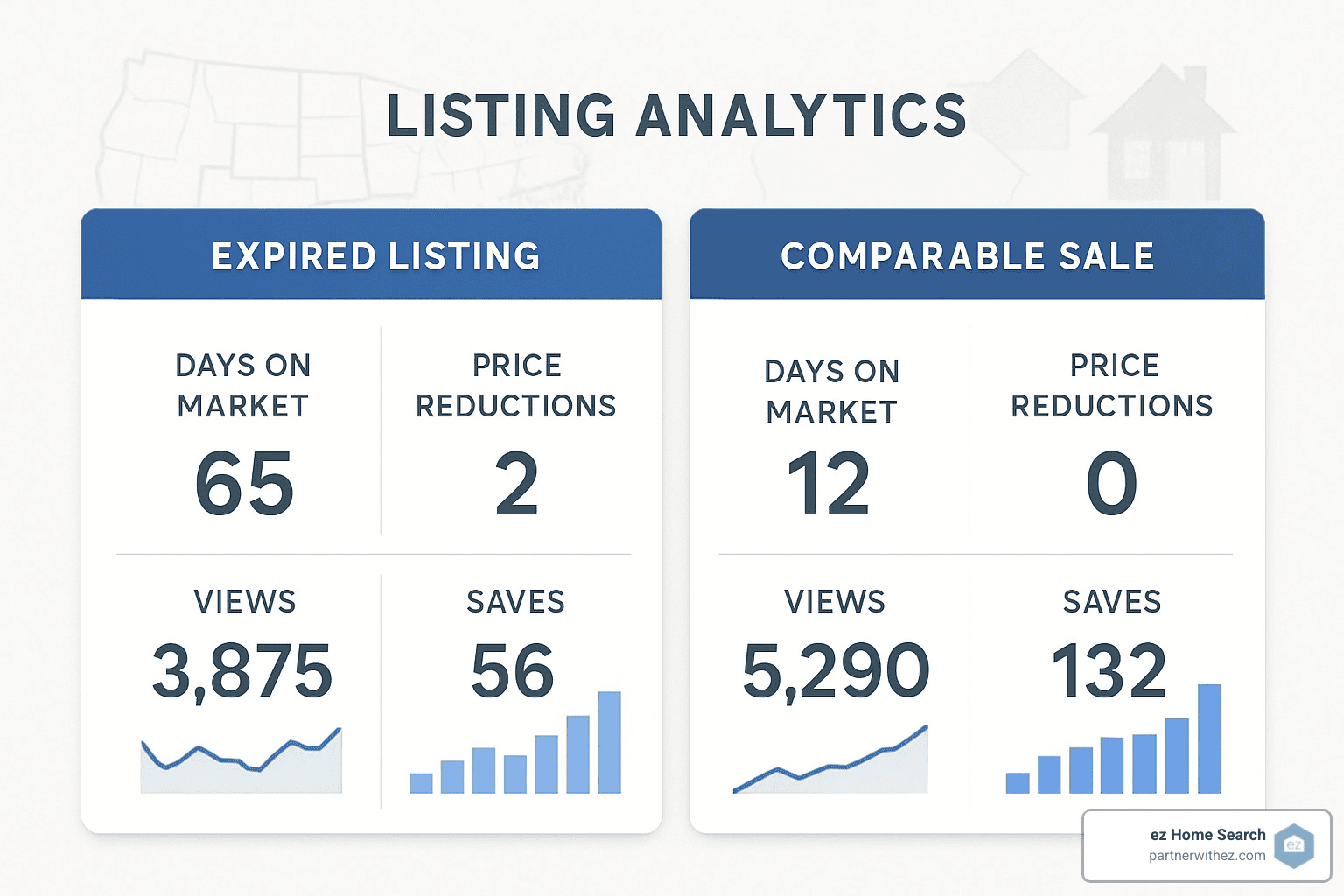
Your comparative market analysis becomes your credibility foundation. Research recent sales of similar properties, calculate the gap between their expired listing price and realistic market value, and document average days on market for comparable homes. This data tells a story that most agents never bother to uncover.
The marketing analysis reveals just as much. Review the previous agent’s online presence, photo quality, and social media exposure. Check showing activity and buyer feedback patterns. Industry data shows that homes priced even slightly above market value can lose significant buyer interest, ultimately selling for less than they should have.
Credibility boosters make your expertise tangible. Prepare recent sales statistics from their neighborhood, your average days on market compared to area averages, and specific marketing reach numbers. Client testimonials from similar situations show that you’ve solved this problem before.
This preparation serves two purposes: it demonstrates your professionalism immediately, and it gives you concrete talking points that differentiate you from agents making generic sales calls.
Step 3: Customize Your Expired Listing Scripts for Empathy & Rapport
The most effective expired listing scripts feel like conversations between neighbors, not sales pitches. Instead of memorizing scripts word-for-word, focus on mastering the flow and key conversation points that build trust naturally.
Your opening needs to acknowledge their frustration without throwing the previous agent under the bus. Something like: “Hi [Name], this is [Your Name] with [Brokerage]. I noticed your home came off the market recently. I’m sure this whole process has been frustrating for you. I’ve helped several homeowners in your area who faced similar situations. Do you have a minute to talk?”
Open-ended questions become your best friend for uncovering the real story. When they mention staying with the same agent, ask: “Can you help me understand what makes you feel confident things will be different this time?” When they’re considering renting instead: “Have you calculated the true costs of being a landlord—maintenance, taxes, vacancy periods?”
The Ben Franklin Effect works beautifully in these conversations. Research shows that asking for small favors actually increases rapport and trust. Questions like “Can you help me understand what was most disappointing about your previous experience?” engage the homeowner as a consultant rather than a prospect.
This conversational tone with pain-solution framing makes all the difference. You’re not trying to convince them of anything—you’re trying to understand their situation so you can help solve it.
Step 4: Deliver Your Expired Listing Scripts With Tech-Enabled Speed
Technology transforms good expired listing scripts into conversion machines. The agents who accept these tools consistently outperform those still dialing manually by massive margins.
Auto-dialers increase your call volume by up to 400% per hour compared to manual dialing. Instead of spending time looking up numbers and waiting for connections, you focus entirely on the conversation. The difference is dramatic—manual dialing typically yields 20-30 calls per hour while power dialers enable 80-120 calls in the same timeframe.
Manual Dialing
Power Dialer
20-30 calls per hour
80-120 calls per hour
Manual number lookup
Automated dialing
No call recording
Built-in call recording
Manual note-taking
CRM integration
No voicemail automation
Automated voicemail drops
Voicemail drops handle the inevitable missed calls professionally. A compelling voicemail might say: “Hi [Name], this is [Your Name] with [Brokerage]. I noticed your home recently came off the market, and I wanted to reach out because I’ve helped several homeowners in your neighborhood who faced similar challenges. I have some market insights that might interest you. You can reach me at [Phone Number].”
Video texts are game-changers for follow-up. A 30-second personalized video introducing yourself and offering market insights gets significantly more responses than traditional text messages. CRM integrations automatically log every interaction, schedule follow-ups, and trigger email sequences based on engagement levels.
Our experience shows that agents combining proven scripts with modern technology convert expired listings at rates three to four times higher than those relying on manual processes.
Step 5: Follow Up on Multiple Channels & Showcase Unique Value
Most agents give up after one or two attempts, but research shows that 80% of conversions require at least five touches. The secret is varying your approach across multiple channels while consistently demonstrating value.
Social media retargeting keeps your name visible between direct contacts. Create custom audiences from your expired listing contacts and run targeted Facebook and Instagram ads showcasing recent sales success and unique marketing approaches.
Direct mail postcards featuring recent neighborhood sales with days on market, professional headshots, and QR codes linking to market analysis videos often break through when phone calls don’t. Client testimonials from similar situations build credibility and trust.
The reverse listing presentation works exceptionally well when you secure appointments. Start with the successful closing and happy seller, work backwards through the marketing and showing process, then end with the listing agreement and pricing strategy. This approach helps sellers visualize success and builds confidence in your ability to deliver results.
Automated nurture sequences through tools like ezNurture provide ongoing value without manual effort. Market insights, neighborhood updates, and success stories keep you top-of-mind until sellers are ready to make a decision.
Your unique value proposition should clearly articulate what makes your approach different—specific marketing strategies the previous agent didn’t use, technology tools that increase buyer engagement, or communication styles that keep sellers informed throughout the process.
Common Mistakes to Avoid & Next Steps
Even with the most polished expired listing scripts and cutting-edge technology, many agents unknowingly sabotage their own success. After working with hundreds of real estate teams, we’ve identified the patterns that separate top performers from those who struggle to convert expired listings.
The Robot Trap: Nothing kills a conversation faster than sounding like you’re reading from a telemarketer’s playbook. While scripts provide essential structure, your goal is to make them feel like natural conversation starters. Practice until the key points flow naturally, then focus on listening more than talking. The magic happens when you achieve that sweet spot of 40% talking and 60% listening.
Compliance Blind Spots: Ignoring DNC registries or skipping consent verification can land you in serious legal trouble. Always check phone numbers against both national and brokerage DNC lists before dialing. Keep detailed records of every consent and opt-out request—your future self will thank you when compliance questions arise.
The Previous Agent Mistake: Here’s a truth that might surprise you: criticizing the previous agent almost always backfires. Homeowners often liked their agent personally, even if the results were disappointing. Instead of pointing fingers, focus on what you’ll do differently. Let your unique approach speak for itself without throwing anyone under the bus.
Follow-Up Fatigue: Most agents tap out after two or three attempts, missing 80% of potential conversions that happen after the fifth touch. Persistence isn’t pestering when you’re providing genuine value with each interaction. The fortune truly is in the follow-up, but only if you actually follow up consistently across multiple months.
Single-Channel Syndrome: Relying solely on phone calls is like fishing with one hook when you could have an entire net. Successful agents weave together phone calls, emails, handwritten notes, social media connections, and even strategic in-person visits. Each channel reinforces the others and keeps you top-of-mind through different communication preferences.
The Pricing Promise Trap: Nothing destroys credibility faster than promising to achieve the same price that caused the listing to expire originally. Be honest about market realities while showcasing your superior marketing approach. Sellers respect transparency, and setting realistic expectations leads to happier clients and better reviews.
Your Next Move Forward:
The expired listing market rewards agents who combine genuine empathy with systematic efficiency. Every expired listing represents a homeowner who deserved better service than they received. Your opportunity is to be the professional who finally delivers on their dreams.
At ez Home Search, we’ve helped countless agents transform their approach to expired listings through county-based exclusivity that eliminates the lead competition plaguing traditional platforms. Our integrated technology stack amplifies the effectiveness of your expired listing scripts through automated nurture sequences, CRM integration, and behavioral tracking that tells you exactly when prospects are ready to engage.
Travis McClure, our Chief Operating Officer, often reminds our partners: “Success in expired listings isn’t about having the perfect script—it’s about having the perfect system that supports authentic conversations with motivated sellers.”
The expired listing market belongs to agents who treat each homeowner as a person with dreams and frustrations, not just another number to dial. When you combine proven expired listing scripts with the right technology and genuine care for your clients’ success, you become exactly what frustrated sellers are hoping to find—their hero of second chances.
Why Your Real Estate Sphere of Influence Is Your Most Valuable Asset
Your real estate sphere of influence (also known as your real estate SOI) is every friend, relative, neighbor, past client, and professional contact who trusts you enough to send business your way. For examples, your SOI might include former coworkers, local business owners, your child’s teachers, or members of your gym. Nurtured correctly, this group becomes your lowest-cost, highest-conversion lead source.
Quick SOI Snapshot
Definition: Personal network that already knows, likes, and trusts you
Core members: Family, friends, past clients, colleagues, neighbors, service providers
Key benefit: 51% of closed deals industry-wide stem from repeat and referral business
ROI: Keeping an existing client is 5–7× less expensive than finding a new one. The cost to find a new client is significantly higher, making it essential to nurture your existing relationships. Nurturing your real estate SOI can lead to a sustainable and rewarding career in real estate by generating consistent referrals and repeat business.
According to the National Association of Realtors, 80% of real estate teams say most of their sales originate from their SOI. The data is clear, yet many agents still rely on costly cold-lead programs instead of building simple, scalable systems that keep their own relationships warm. Having a clear strategy for working your SOI is essential to maximize engagement and long-term success.
I’m Preston Guyton, founder of ez Home Search. For two decades I’ve helped teams turn their contact lists into referral engines that run on autopilot—without sacrificing the personal touch that makes sphere marketing so powerful.
Mastering Your Real Estate Sphere of Influence: Strategies & Systems
Top producers treat their real estate sphere of influence like a living asset, not a dusty spreadsheet. SOI marketing is a systematic approach to building and nurturing your sphere, using strategies like relationship management and personalized outreach to generate referrals and grow your business. Establishing trust is crucial as most transactions begin with people who know, like, and trust you. Networking—through attending local events, building visibility, and cultivating professional relationships—is a key activity for expanding your sphere. When someone needs an agent, they rarely search online first—they ask the person they already trust. Your job is to stay in that trusted seat. Having regular, genuine talk with your contacts helps build trust and keeps you top-of-mind.
What Is a Real Estate Sphere of Influence?
Think of your SOI as a web of second-hand trust. When a neighbor vouches for you, their credibility transfers instantly. Because each person knows roughly 100–200 others, even a modest 200-person sphere quietly connects you to 20,000+ potential clients. For example, if you help one client buy a home and they share your name with their friends, you could be introduced to an entirely new group of prospects.
Building & Expanding Your Sphere
Start by cataloging every obvious contact—family, friends, past coworkers—then add service pros (your barber, mechanic, dentist) who interact with dozens of locals daily. Be sure to include key segments such as investors, sellers, and home buyers in your database for targeted communication and marketing.
To grow organically:
Volunteer for causes that genuinely interest you.
Join hobby groups where your target demographic hangs out.
Host low-key neighborhood gatherings that position you as a connector.
Share authentic local content on social media to meet like-minded residents. Regularly create content and share engaging social media posts to boost visibility and audience engagement.
Participate in local events and use them as valuable networking opportunities to expand your reach.
Actively seek new clients through consistent outreach and by leveraging referrals from your existing sphere.
Consistency beats volume. A well-nurtured 200-person list outperforms a neglected 1,000-person database every time. Maintaining consistent communication with your SOI leads to higher referral rates, as it reinforces trust and keeps you top-of-mind. Keep generating creative ideas for campaigns and outreach to keep your sphere engaged and top-of-mind.
Hosting Events and Activities to Deepen Connections
Hosting events and activities is one of the most effective ways for a real estate agent to strengthen their sphere of influence and stand out in the real estate business. By organizing community events, open houses, or even fun seasonal gatherings like a pumpkin carving contest, you create opportunities to connect with past clients, family friends, and local businesses in a relaxed, engaging environment. These events aren’t just about showcasing houses—they’re about building strong relationships and demonstrating your genuine interest in the local community.
When you host a neighborhood block party, sponsor a local charity run, or invite your SOI to a seminar on current market trends, you position yourself as a real estate professional who cares about more than just transactions. These gatherings allow you to offer valuable real estate advice, answer questions, and provide insights that help your network make informed decisions. They also foster a sense of belonging, making your clients and contacts feel like part of a close-knit community.
The impact goes beyond the event itself. Every interaction—whether it’s a casual chat at a community event or a thoughtful follow-up after an open house—helps you stay connected and top-of-mind. Over time, these meaningful connections turn your sphere into a loyal network that’s eager to refer you to friends and family. By consistently showing up and adding value, you build a reputation as the go-to agent in your market, ensuring your real estate business thrives through strong relationships and a vibrant, engaged sphere of influence.
Nurturing & Communicating: Cadence, Channels, Value
Follow the simple monthly-quarterly-annual rhythm:
Monthly: email newsletter, handwritten note, or handwritten notes to your SOI
Quarterly: quick call, coffee, or pop-by gift to maintain relationships
Annual: client-appreciation event or home-equity review
Rotate channels—email, social, direct mail, text, short video—so no one feels spammed. Most messages should add value: neighborhood price trends, school district insights, or your curated reviews of local agents and communities for friends who are relocating. Sending regular market reports to your SOI is another way to demonstrate expertise and keep them informed. Celebrate the anniversary of a client’s home purchase to stay connected and show you care about their journey. Recognize personal milestones and significant life events, such as birthdays, anniversaries, or new family members, to personalize your outreach and strengthen engagement. Housewarming gifts, handwritten notes, and pop-bys strengthen SOI connections, making your outreach more meaningful. Be sure to promptly respond to client communications to build trust and maintain effective relationships. When segmenting your outreach, remember the importance of maintaining relationships with previous clients, as they can lead to referrals and repeat business. Share success stories in your communications to showcase your effectiveness and build trust with your audience. Ask for business only after you’ve provided clear benefit.
Staying Organized and Consistent for Long-Term Success
Long-term success in the real estate market depends on your ability to stay organized and consistent with your sphere of influence. As a real estate agent, having a reliable system for managing your contacts, follow ups, and communication is essential. Using a CRM to track client details, scheduling regular phone calls, and sending out a monthly newsletter with market updates are all practical ways to ensure you never miss an opportunity to connect. While 82% of all customers say they would work with their agent again, only 12% actually do, highlighting the importance of staying connected and maintaining strong relationships with your SOI.
Consistency is what transforms casual contacts into loyal advocates. By reaching out regularly—whether it’s a quick check-in call, a handwritten note, or a timely update on market conditions—you show your SOI that you have a genuine interest in their lives and real estate needs. This steady communication builds trust, making it more likely that your network will turn to you for real estate assistance and refer you to others.
Staying organized also means you can deliver more value with less effort. When you know who’s due for a follow-up or which past clients are celebrating a personal milestone, you can personalize your outreach and strengthen those relationships. Over time, this approach leads to more referrals, repeat business, and ultimately, more sales. By making organization and consistency a cornerstone of your real estate business, you create a self-sustaining network that supports your growth and positions you as a leading agent in your community.
Staying Organized and Consistent for Long-Term Success
Long-term success in the real estate market depends on your ability to stay organized and consistent with your sphere of influence. As a real estate agent, having a reliable system for managing your contacts, follow ups, and communication is essential. Using a CRM to track client details, scheduling regular phone calls, and sending out a monthly newsletter with market updates are all practical ways to ensure you never miss an opportunity to connect.
Consistency is what transforms casual contacts into loyal advocates. By reaching out regularly—whether it’s a quick check-in call, a handwritten note, or a timely update on market conditions—you show your SOI that you have a genuine interest in their lives and real estate needs. This steady communication builds trust, making it more likely that your network will turn to you for real estate assistance and refer you to others.
Staying organized also means you can deliver more value with less effort. When you know who’s due for a follow-up or which past clients are celebrating a personal milestone, you can personalize your outreach and strengthen those relationships. Over time, this approach leads to more referrals, repeat business, and ultimately, more sales. By making organization and consistency a cornerstone of your real estate business, you create a self-sustaining network that supports your growth and positions you as a leading agent in your community.
Measuring Success & Essential Tools
Track a few metrics and adjust quickly:
Sphere size: aim for 10–15% growth each year
Engagement: email opens over 25%, steady social interaction
Referral rate: 10% of contacts should send at least one referral annually
Top clients: identify and nurture top clients with personalized communication to drive higher engagement and future opportunities
A lightweight CRM such as Follow Up Boss—integrated with ez Home Search’s ezNurture workflows—automates reminders so nobody slips through the cracks while still letting you add personal touches. These tools also help you close more deals by ensuring every opportunity is tracked and followed up efficiently.
Common Mistakes to Avoid
Secret-agent syndrome: never assume people know you sell real estate.
Inconsistent cadence: enthusiasm without a system leads to silence—and lost deals.
Generic blasts: segment by relationship depth and interests; past clients deserve more than a mass email. When segmenting, share recent sale activity to demonstrate your expertise and keep contacts informed about the market.
Too many contacts, too little care: focus on the 150–300 people you can serve well.
No value before the ask: maintain an 80/20 ratio—give useful info 80% of the time, request business 20%.
Neglecting FSBO sellers: don’t overlook fsbo sellers; they represent a small but valuable segment of the market and can benefit from your expertise.
Conclusion & Next Steps
Your real estate sphere of influence is a compounding asset—the more you nurture it, the more predictable your deal flow becomes. ez Home Search was built to protect and amplify those relationships through county-based exclusivity, privacy-first data practices, and plug-and-play nurture tools.
Ready to turn your SOI into a referral machine while eliminating lead competition? Explore county exclusivity opportunities and see how our platform can secure your territory.
Need a lighter entry point? You can also create a free ez Connect account to tap into select features at https://www.ezconnect.info/
Cultivate your sphere today, and your business will thank you for years to come.
Preston Guyton has spent 20+ years helping people find the right home—and helping them avoid the costly mistakes that often come from not knowing their options. As the founder of ez Home Search, he’s leading the charge to build a better way to discover real estate—one that puts your privacy first, delivers accurate information, and gives you the confidence to make informed decisions. Preston has assembled a powerhouse team—made up of the innovators behind many of the technologies people use every day—to build the tools and transparency that deliver on a single mission: A Better Way To Discover Real Estate.
Why Smart Agents Are Prioritizing Exclusive Lead Sources
Buying leads for real estate has changed from a simple transaction to a strategic decision that can make or break your business growth. Here’s what every agent needs to know:
Quick Answer for Buying Real Estate Leads:
Best Lead Types: Exclusive buyer/seller leads, FSBO, expired listings, predictive analytics leads
Expected Costs: $20-$60 per lead (Zillow, Movoto, Realtor.com), $0.35 per lead (predictive platforms), $189+ monthly subscriptions
ROI Benchmarks: 0.4%-1.2% conversion rates, with exclusive leads performing significantly better
Critical Mistakes to Avoid: Shared lead platforms, slow follow-up, missing nurture sequences
The real estate lead landscape has fundamentally shifted. With 97% of real estate searches starting online and 35% of sales originating from referrals, agents face increasing competition for quality prospects. Traditional shared-lead platforms create bidding wars that drive up costs while driving down conversion rates.
Today’s top producers are moving toward exclusive lead sources and privacy-first platforms that eliminate competition and provide genuine territorial advantages. The most successful agents combine predictive analytics (achieving up to 72% accuracy in identifying likely sellers) with automated nurture systems that maintain consistent contact without overwhelming their schedules.
The challenge isn’t finding leads – it’s finding the right leads at a sustainable cost while maintaining the exclusivity needed to build lasting client relationships.
I’m Preston Guyton, and over my 20+ years in real estate, I’ve helped thousands of agents optimize their approach to buying leads for real estate through my work with ez Home Search, Reside Platform, and Digital Maverick.
Buying Leads for Real Estate: Costs, Providers & Evaluation
What Are Real Estate Leads & Why Buying Them Still Matters
A lead is anyone who signals, “I may need real-estate help.” Yet every signal carries a different level of urgency.
Buyer leads are actively scrolling listings, filling out loan calculators, and requesting tours.
Seller leads start by checking home-valuation tools or reading market updates. They typically require more nurturing but generate higher commissions.
FSBO leads are do-it-yourself sellers who often turn to an agent once pricing, marketing, or paperwork becomes overwhelming.
Expired listing leads are frustrated owners whose last agreement ended without a sale. They’re motivated and open to fresh strategies.
Online leads cover anyone engaging with digital property content—from signing up for alerts to downloading market reports.
Referral leads stem from past clients, other agents, or professional partners and remain the gold standard for quality.
Consistent lead flow equals predictable income. Referrals and organic marketing are powerful, yet they rarely arrive on a set timetable. Purchasing leads fills that gap and evens out your pipeline.
How to Compare Lead Platforms
Exclusivity should top your checklist. Being the only agent who can contact a prospect multiplies conversion rates and removes pricing wars.
Lead Type
Exclusivity
Typical Conversion Rate
Competitive Pressure
Exclusive Area
One agent
2–5%
None
Shared ZIP Code
3–5 agents
1–2%
Moderate
Broad Shared
10+ agents
0.4–0.8%
High
Other must-haves:
Replacement policies for bad numbers, duplicates, or out-of-area contacts.
Flexible contracts—watch for minimum spend and cancellation clauses.
Onboarding and coaching that teach follow-up techniques, not just sell you data.
Seamless CRM integration so leads auto-tag and trigger workflows.
TCPA compliance with documented opt-ins to protect you from fines.
“At ez Home Search, our county exclusivity lets partners invest in market dominance rather than bidding skirmishes,” explains Chief Operating Officer Travis McClure.
Expected Costs & Pricing Models
Cost per lead (CPL): Straightforward; premium portal leads often run $20–$60, while data-driven predictive lists can cost pennies.
Monthly subscription: A base fee plus lead credits. Ideal when you want steady volume.
Referral fee: Pay 25–35% of your gross commission only when a deal closes—low upfront risk, higher long-term cost if you’re a high performer.
Market size matters. High-priced metros command higher CPLs; rural counties cost less but may deliver fewer names. Always back-solve from your typical commission to set a ceiling on spend.
Lead Quality, Exclusivity & ROI Benchmarks
Low cost is meaningless if a lead never closes. Look for:
Complete contact info, verified phone numbers, and recent activity.
Clear property criteria or timeline signals that allow accurate tagging.
Documented opt-in so you can text or call without legal worry.
Exclusive leads convert several times better than shared lists because prospects aren’t being hounded by multiple agents. Successful users track cost per closing—not cost per lead—and adjust budgets monthly.
Curated reviews also influence lead quality:
Agent and brokerage reviews help consumers choose the best local expert.
Location reviews—covering counties, ZIP codes, or school districts—guide relocation and investment decisions and build your credibility when referenced in follow-ups.
Kurt Uhlir, ez Home Search’s Chief Marketing Officer, sums it up: “When agents know every consumer in their county belongs only to them, they focus on relationships, not reaction times.”
Maximizing ROI, Common Mistakes, and Next Steps
Best Practices for Converting Purchased Leads
The difference between agents who succeed with purchased leads and those who struggle often comes down to execution. Speed-to-lead response remains the single most critical factor in conversion success. Research consistently shows that contacting leads within the first five minutes increases your conversion rates by up to 900%.
Your optimal response timeline should include first contact within 5 minutes, a follow-up call within the hour, and an immediate automated email response. Text messages work well within 15 minutes for leads who’ve opted in, and you should always make a second attempt within 24 hours if the first contact doesn’t connect.
Multi-channel nurture approaches recognize that different people prefer different communication methods. Phone calls still deliver the most effective immediate engagement. Email sequences through automated drip campaigns provide consistent value while maintaining contact. Text messaging has become increasingly popular with younger demographics, but keep messages brief and professional.
Automated drip campaigns keep you in consistent contact without overwhelming your schedule. Your new lead sequence for the first 30 days might include a welcome email with market overview on day one, property search setup on day three, neighborhood guides on day seven, market trends on day 14, and a personal check-in at day 30.
CRM tagging and organization prevent leads from slipping through the cracks. Track lead source and date, communication history and preferences, property criteria and timeline, engagement levels, and next scheduled follow-up.
Behavioral alerts notify you when leads take specific actions – viewing multiple properties online, requesting information, engaging with email content, or visiting your website repeatedly. These alerts help you prioritize hot leads and time your outreach perfectly.
The most successful agents understand that lead conversion is relationship-building, not sales transactions. They focus on providing value, demonstrating expertise, and building trust rather than pushing for immediate commitments.
Common Mistakes to Avoid
Slow response times kill more lead conversions than any other single factor. Many agents mistakenly treat purchased leads like referrals, assuming they’ll wait patiently for contact. In reality, these leads are often evaluating multiple agents simultaneously, and the first professional response usually wins.
Missing nurture sequences represent the biggest wasted opportunity in buying leads for real estate. Industry data shows that only 2% of leads convert on first contact, but 80% of sales require five to twelve follow-up attempts. Agents who give up after one or two attempts essentially throw away their lead investment.
Non-exclusive lead lists create unnecessary competition that forces you to compete on speed rather than value. This leads to rushed interactions and poor client relationships. The small upfront savings rarely justify the dramatically lower conversion rates.
Compliance gaps can create serious legal and financial consequences. Common violations include calling leads without proper opt-in documentation, sending unsolicited text messages, failing to honor do-not-call requests, and inadequate record-keeping of consent.
Missing ROI metrics prevent optimization and waste money on ineffective lead sources. Agents who don’t track conversion rates, cost per closing, and lead source performance can’t make informed decisions about their marketing spend.
Overreliance on one source creates vulnerability to market changes, policy updates, or platform issues. Successful agents diversify their lead sources while maintaining focus on the most profitable channels.
Inconsistent follow-up confuses leads and reduces trust. Agents who contact leads sporadically or with different messaging create uncertainty about their professionalism and reliability.
Generic messaging fails to differentiate you from competitors. Leads receive similar communications from multiple agents, so personalized, value-driven messages stand out significantly.
The most expensive mistake is treating purchased leads like interruptions rather than opportunities. Each lead represents someone with real estate needs who took action to find help. Approaching leads with a service mindset rather than a sales mindset dramatically improves your results.
Conclusion & County-Exclusive Opportunities
The future of buying leads for real estate lies in exclusive, privacy-first platforms that eliminate competition while providing genuine territorial advantages. The most successful agents are moving away from shared lead platforms toward systems that offer county-based exclusivity and integrated marketing automation.
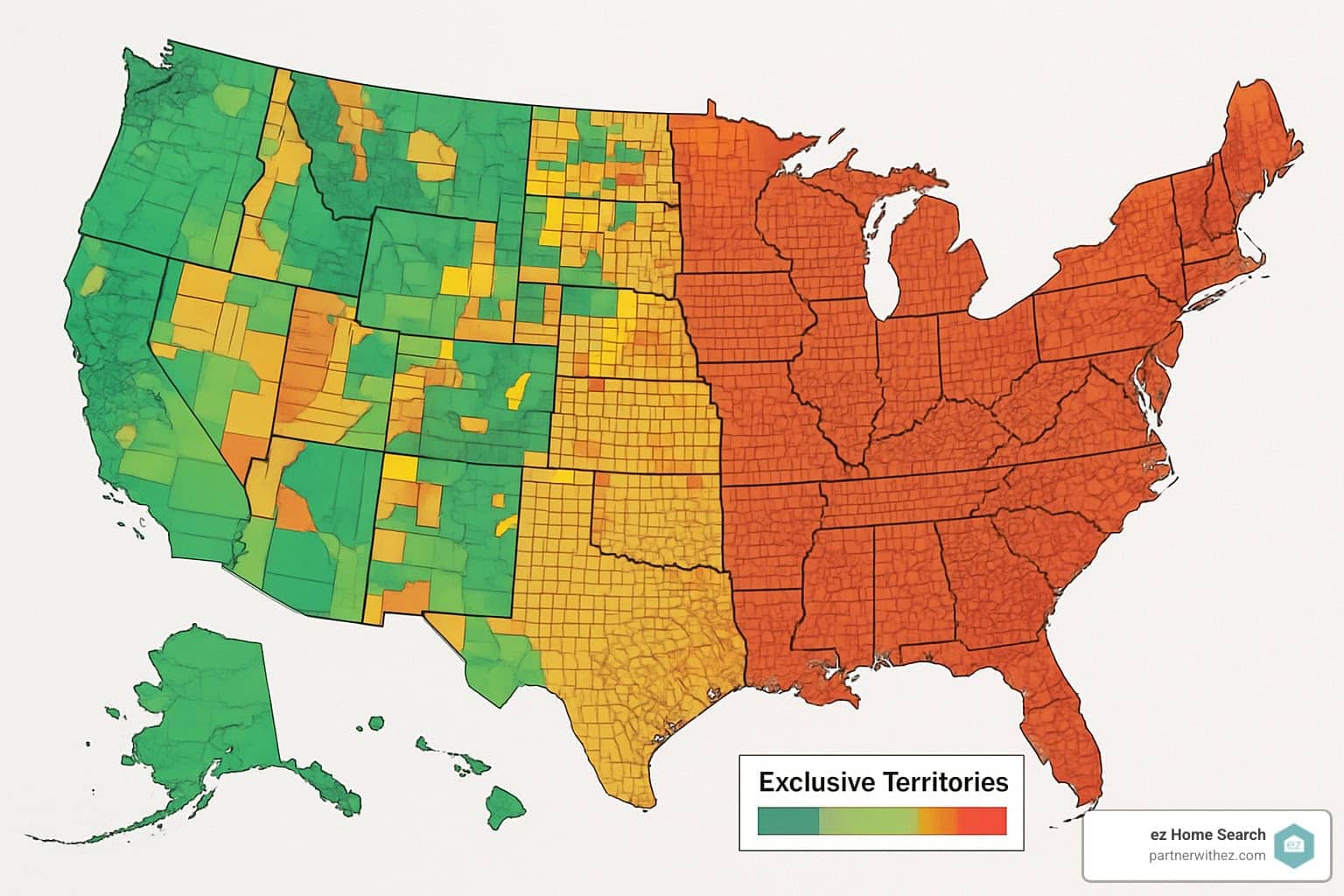
At ez Home Search, we’ve built the only national real estate platform that delivers exclusive buyer, seller, and cash offer opportunities while protecting consumer privacy and eliminating lead competition. Our county-based exclusivity model ensures that our partners never compete with other agents for the same leads.
Our unique ecosystem combines high-conversion landing pages, real-time behavioral tracking, automated nurture flows, and TCPA-compliant verification – all designed to maximize your ROI from purchased leads. Travis Halverson and Nikki Pais from our team work directly with partners to optimize their lead conversion strategies and scale their businesses effectively.
Whether you’re a real estate team leader seeking predictable lead flow, a loan officer wanting warm handoffs, or a local expert looking to dominate your market without ad waste, our platform delivers the technology, trust, and territory protection needed to convert at scale.
Built by leaders whose technology powers major platforms like Apple, Microsoft, and Meta, ez Home Search represents the evolution of real estate lead generation through transparency, automation, and exclusivity.
The key to success in buying leads for real estate isn’t just finding leads – it’s finding the right leads with the right support system to convert them effectively. Exclusive territory access, combined with proper nurture systems and behavioral tracking, creates sustainable competitive advantages that shared lead platforms simply cannot match.
Why LinkedIn Premium is Essential for Modern Real Estate Success
LinkedIn Premium for real estate agents and Realtors has become an inflection point in an industry where traditional lead generation methods are increasingly expensive and competitive. With over one billion users and a professional mindset that makes LinkedIn users more receptive to business conversations, this platform offers realtors unique access to high-net-worth individuals, relocating executives, and serious property investors.
Quick Answer: LinkedIn Premium for Realtor Benefits
InMail messaging: 2.6x more effective than cold emails or calls
Advanced search: Target prospects by job title, company, and location
Profile analytics: See who viewed your profile in the past 90 days
Sales Navigator: Access to 30 million companies and advanced lead filters
Premium badge: Visual credibility signal that builds trust
Unlimited browsing: No commercial use limits on profile searches
Unlike Facebook or Instagram where your business posts compete with cat videos and personal updates, LinkedIn users arrive in “business mode” – actively seeking professional connections and transaction-related information. This means your market updates, listing announcements, and expertise-building content reaches an audience already primed for high-ticket purchases.
LinkedIn Premium gives real estate professionals direct access to decision-makers and high-value contacts that are often out of reach with traditional prospecting. For agents focused on growth and quality leads, Premium consistently delivers stronger connections and more meaningful conversations than most standard advertising channels.
Why LinkedIn Is a Goldmine for Real Estate Professionals
LinkedIn’s professional environment creates unique advantages for real estate agents that simply don’t exist on other social platforms. With over one billion users, LinkedIn provides access to a vast network of professionals who are statistically more likely to be homebuyers, sellers, or investors due to their higher median incomes and career stability.
What makes LinkedIn truly special is how users engage with content. Video content receives 5x more engagement than standard posts, and profiles showcasing volunteer experience see up to 6x more views. For realtors, this means your market updates and expertise-building content reaches an audience that’s genuinely interested in professional advice rather than casual scrolling.
The platform’s business-focused design means your educational content performs exceptionally well. When you share neighborhood guides, investment insights, or home buying tips, you’re reaching professionals who approach the platform with a business mindset. Unlike other social media where business outreach can feel intrusive, LinkedIn users expect and welcome professional connections.
Perhaps most importantly, LinkedIn provides unparalleled access to C-suite executives, relocating professionals, and high-net-worth individuals—exactly the demographic most likely to make significant real estate decisions. Research on first impressions shows that professionals form trust judgments within seconds of viewing a profile, making LinkedIn’s professional format ideal for establishing credibility quickly.
The Free vs Premium Landscape
While LinkedIn’s free version offers basic networking capabilities, it comes with significant limitations that can frustrate serious lead generation efforts. Search limits restrict you to around 300-400 profile visits monthly, which becomes a bottleneck when you’re actively prospecting high-value clients.
Connection caps limit you to 100 requests per week, and the commercial use limit can temporarily restrict your account if LinkedIn detects high-volume business activity. For realtors who need consistent outreach, these restrictions slow down momentum just when prospects are most engaged.
Market Data & Curated Reviews for Location Decisions
One of LinkedIn’s most powerful features for realtors is the ability to share local insights that help buyers and sellers make informed decisions. The platform’s professional audience craves data-driven content about neighborhoods, school ratings, and relocation trends.
Realtors who consistently share curated reviews about their local markets—covering everything from commute times to neighborhood amenities—position themselves as trusted local experts. This type of content resonates because it provides genuine value to professionals researching relocation decisions for career moves or investment opportunities.
Deep Dive: LinkedIn Premium for Realtor Success
When you’re ready to take your LinkedIn prospecting seriously, LinkedIn Premium for Realtors offers several tiers that can transform how you connect with potential clients. The key is understanding which features actually move the needle for real estate professionals versus what’s just nice to have.
Premium Business serves as the sweet spot for most realtors who want to eliminate the frustrating restrictions of free LinkedIn. You’ll get unlimited profile browsing (no more hitting those monthly limits right when you’re on a roll), plus the ability to see who’s been checking out your profile over the past 90 days. Those profile visitors are often warm leads who haven’t worked up the courage to reach out yet.
The real game-changer comes with InMail messaging capabilities. Instead of hoping someone accepts your connection request, you can send direct messages to prospects who match your ideal client profile. Research consistently shows these InMail messages generate response rates that are 2.6x higher than traditional cold outreach methods.
Feature
Free LinkedIn
Premium Business
Sales Navigator
Monthly InMail Credits
0
15
150
Profile View History
5 recent
90 days
90 days
Advanced Search Filters
Basic
Improved
Advanced
Lead Recommendations
None
Basic
AI-powered
CRM Integration
None
Limited
Full sync
Monthly Cost
$0
$59.99
$99.99
What Is LinkedIn Premium for Realtor?
Think of LinkedIn Premium for real estate agents as removing the velvet rope that keeps you in the general admission section of networking events. The premium badge that appears on your profile isn’t just decoration—it signals to prospects that you’re serious about your professional presence and willing to invest in quality tools.
The fundamental difference lies in access and insights. While free LinkedIn users are limited to connecting with people they already know or can find through mutual connections, Premium opens up direct communication channels to anyone on the platform. This is particularly powerful in real estate, where your next big client might be someone you’ve never met but who fits your ideal buyer or seller profile perfectly.
Pricing Tiers & Hidden Discounts
LinkedIn Premium pricing follows a straightforward tier system, but there are several ways to reduce your costs if you know where to look. Annual billing typically offers significant savings compared to monthly payments, and new users can take advantage of extended free trials to test the waters before committing.
The 30-day free trial is your best friend when evaluating whether Premium makes sense for your business. This gives you a full month to test InMail messaging, advanced search features, and analytics capabilities. Most realtors can determine within those 30 days whether the tools will generate enough additional business to justify the ongoing investment.
Is LinkedIn Premium for Worth It for Realtors?
The ROI calculation for LinkedIn Premium for you as a Realtor ultimately comes down to your average transaction value and how effectively you can convert online conversations into closed deals. If you typically work with luxury properties or commercial clients, Premium can pay for itself with just one additional transaction per year.
Travis McClure, our Chief Operating Officer, often points out that the most successful real estate professionals understand that quality tools enable quality results. When you combine LinkedIn Premium’s prospecting capabilities with exclusive territory protection through county exclusivity partner opportunities, you’re building a lead generation system that compounds over time rather than competing against multiple agents for the same prospects.
Lead Generation Strategies Using LinkedIn Premium Tools
The magic of LinkedIn Premium for agent success lies in combining smart prospecting with genuine relationship building. Think of it as the difference between knocking on random doors versus having a warm introduction to someone who’s already interested in what you offer.
Your most powerful starting point is LinkedIn’s advanced search filters. Instead of casting a wide net and hoping for the best, you can laser-focus on prospects who are actually likely to need your services. Recently promoted executives often relocate for their new roles. HR directors at expanding companies frequently help employees with relocation packages. Even finance professionals who’ve just changed jobs might be looking to upgrade their living situation.
Circle prospecting transforms completely with Premium tools. Instead of making awkward cold calls to neighbors around your new listing, you can identify professionals who work at nearby companies and send personalized messages about the convenience of living close to their office. It’s still circle prospecting, but it feels more like helpful networking than pushy sales tactics.
Advanced Search & Sales Navigator Playbooks
Sales Navigator’s search capabilities can feel overwhelming at first, but once you understand the logic, it becomes incredibly powerful for finding exactly the right prospects. You can filter by job function, company size, recent activity, and even geographic location to create highly targeted prospect lists.
Boolean search operators take this even further. Searching for terms like “CFO OR ‘Chief Financial Officer’ OR ‘Finance Director'” within your target area helps you identify high-income prospects who might be interested in luxury properties or investment opportunities. The specificity means you’re not wasting time on prospects who aren’t a good fit.
Do you need Sales Navigator as a Realtor or Real Estate Agent? In most cases, no. However, if you are leading a larger team or focused on luxury clients, it may make sense to have somebody in your office with sales navigator that they use for prospecting.
Content & Engagement Best Practices
LinkedIn’s algorithm rewards content that sparks genuine conversations rather than passive scrolling. Single-image posts with thoughtful captions consistently outperform other formats on LinkedIn, which is different from platforms like Instagram where video dominates.
Polls work exceptionally well for real estate content because they encourage participation while giving you valuable market insights. Ask your network about local market trends, home buying preferences, or neighborhood amenities. You’ll generate engagement while positioning yourself as someone who actually listens to what the market wants.
Curate Reviews & Social Proof for Buyers & Sellers
LinkedIn’s professional environment makes it perfect for sharing curated reviews that help potential clients make informed decisions about both real estate agents and locations. Unlike casual consumer reviews, the feedback shared on LinkedIn tends to focus on professional competence, market knowledge, and client service quality.
Curated reviews of neighborhoods, school districts, and local amenities perform particularly well because they help relocating professionals make informed decisions about where to live. When you share insights about commute times, local restaurants, or community events, you’re positioning yourself as a trusted local expert who understands what matters to professionals considering a move.
For real estate professionals who want to eliminate the competition that comes with shared leads and multiple agents chasing the same prospects, county exclusivity partner opportunities through ez Home Search ensure you’re the only local expert serving each potential client, making your LinkedIn networking efforts even more valuable.
Maximizing ROI & Avoiding Pitfalls
Getting the most from LinkedIn Premium for your real estate business requires more than just upgrading your account—it demands strategic measurement and consistent activity that builds genuine relationships over time. Think of LinkedIn Premium as a professional networking tool that happens to generate leads, rather than a lead generation tool that happens to be on a networking platform.
Your Social Selling Index (SSI) score serves as LinkedIn’s internal report card for your platform effectiveness. This score, calculated based on profile completeness, network growth, content engagement, and relationship building, directly impacts how often your content appears in feeds and how easily prospects can find you.
Consistency beats intensity when it comes to posting cadence. Maintaining 2-3 valuable posts per week keeps you visible in your network’s feeds without becoming that person who clogs up everyone’s LinkedIn timeline. Quality market analysis, neighborhood insights, or helpful home buying tips will always outperform frequent but shallow promotional posts.
The biggest pitfall we see with LinkedIn Premium for realtor professionals is falling into spam-like behavior. Generic connection requests, copy-paste InMail messages, and overly promotional content get penalized by both LinkedIn’s algorithm and your professional network.
Measuring Performance Against Other Marketing Tools
LinkedIn Premium should complement, not replace, your existing marketing investments. Track metrics like cost per qualified lead, time to conversion, and average deal size from LinkedIn-generated prospects compared to your other lead sources.
The beauty of LinkedIn Premium lies in relationship quality over quantity. While paid advertising might generate more initial contacts, LinkedIn-sourced prospects often have higher conversion rates because they’re based on genuine professional relationships rather than paid promotion.
When calculating ROI, include your time investment, not just subscription fees. LinkedIn Premium requires more active engagement than passive advertising, but the quality of relationships and leads generated often justifies the additional time investment. As Travis McClure, our Chief Operating Officer, often notes, “The best lead generation systems require upfront relationship building that pays dividends for years.”
Compliance & Data Privacy
Real estate professionals must think about TCPA compliance carefully when using LinkedIn for prospecting. While LinkedIn messaging isn’t subject to the same restrictions as SMS or phone calls, maintaining professional standards and respecting privacy preferences builds long-term trust and credibility.
Frequently Asked Questions about LinkedIn Premium for Realtors
How many InMails do I really need monthly?
The honest answer? It depends on how actively you prospect and what your response rates look like. Most realtors find that Premium Business’s 15 monthly InMails work perfectly for targeted, quality-focused outreach. If you’re the type who carefully researches each prospect and sends thoughtful, personalized messages, this allocation will likely serve you well.
Here’s the thing that many agents don’t realize: InMail credits get refunded when recipients respond within 90 days. This means effective messaging actually stretches your monthly allocation further than you might expect.
The key insight from our experience helping real estate teams scale through LinkedIn Premium strategies is simple: quality trumps quantity every time. Five thoughtful, researched messages will outperform 50 generic templates.
Can LinkedIn Premium replace paid ads on other platforms?
This is one of the most common questions we hear, and the answer isn’t quite black and white. LinkedIn Premium excels at building genuine relationships and having meaningful conversations with specific prospects, but it requires your active time and engagement. Paid advertising, on the other hand, can work while you sleep.
Think of LinkedIn Premium as your relationship-building tool rather than your only marketing channel. It’s incredibly powerful for reaching decision-makers who would never respond to traditional advertising, but it won’t give you the broad market awareness that other marketing efforts provide.
At ez Home Search, we’ve seen the best results when agents combine LinkedIn’s relationship-building power with our county-exclusive lead system. This approach gives you both the deep connections that LinkedIn enables and the consistent flow of intent-driven prospects that comes from county exclusivity partner opportunities.
What happens if I cancel after the 30-day trial?
The short answer is that you keep everything you’ve built, but lose the tools that helped you build it. Your LinkedIn connections remain intact, ongoing conversations continue normally, and any relationships you’ve developed stay strong.
However, you’ll lose access to the premium features that made the connections possible in the first place. Your InMail credits disappear, you can only see your last five profile visitors instead of 90 days of history, and those powerful advanced search filters become unavailable.
Our recommendation? Use the full 30-day trial period strategically. Don’t just test the features—measure their impact on your actual lead generation and relationship building. Track how many meaningful conversations you start, how many prospects you identify, and whether the quality of your interactions improves.
If you’re ready to explore how LinkedIn Premium fits into a comprehensive, competition-free lead generation strategy, learn more about our county exclusivity opportunities where you’ll be the only local expert serving each prospect.
Conclusion
LinkedIn Premium for real estate professionals has proven itself as more than just another marketing tool—it’s a relationship-building powerhouse that transforms how real estate agents connect with high-value prospects. The combination of InMail messaging that outperforms cold emails by 2.6x, advanced search capabilities, and detailed prospect analytics creates opportunities that simply don’t exist on other platforms.
What makes LinkedIn Premium truly powerful for real estate professionals is how it aligns with the way serious buyers and sellers actually make decisions. These aren’t impulse purchases—they’re carefully considered transactions where trust, expertise, and professional credibility matter most. LinkedIn’s business-focused environment naturally attracts the kind of prospects who value professional relationships over flashy advertising.
The real magic happens when you combine LinkedIn Premium’s relationship-building capabilities with a systematic approach to lead generation and follow-up. At ez Home Search, we’ve watched realtors transform their businesses by integrating LinkedIn prospecting with our county-exclusive lead platform. Instead of competing with dozens of other agents for the same prospects, our partners become the single trusted expert for their territory.
Travis McClure, our Chief Operating Officer, often says that the best lead generation systems work together rather than in isolation. LinkedIn Premium multiplies success when combined with high-conversion landing pages, real-time behavioral tracking, and CRM-integrated nurture flows through tools like ezNurture and Follow Up Boss.
Whether you’re building your first real estate team or scaling an established business, LinkedIn Premium provides the professional credibility and direct access to decision-makers that traditional advertising simply can’t match. Combined with our ecosystem of conversion-optimized tools and territory protection, it becomes a complete growth system rather than just another monthly expense.
Ready to transform your LinkedIn connections into exclusive client relationships? Explore county exclusivity partner opportunities to combine LinkedIn Premium’s relationship-building power with intent-driven leads that are matched with you alone—no competition, no lead sharing, just qualified prospects ready to work with their trusted local expert.
For additional networking and lead generation tools that complement your LinkedIn Premium strategy, check out our ez Connect accounts designed specifically for real estate professionals who want to maximize their digital presence across multiple platforms.
How to run Google Ads for real estate leads starts with understanding one simple fact: Google controls roughly 90% of the search market, a level of search engine market concentration documented in recent research, making it the primary place where buyers and sellers begin their property journey today. Google Search and its network of partner sites remain the top channel for real estate lead generation in 2026, and agents who master the platform consistently out-produce those relying on referrals and social media alone.
Set up your Google Ads account using your existing Google account, or create a new one, and choose “Leads” as your campaign objective.
Create Search campaigns targeting high-intent keywords like “sell my house fast.”
Use geo-targeting to focus on your service areas with radius or ZIP code targeting.
Write strong ad copy with clear calls-to-action and benefit-focused headlines.
Build matching landing pages that deliver on your ad promises.
Set up conversion tracking to measure form fills and phone calls.
Start with a minimum budget of $500/month for consistent visibility.
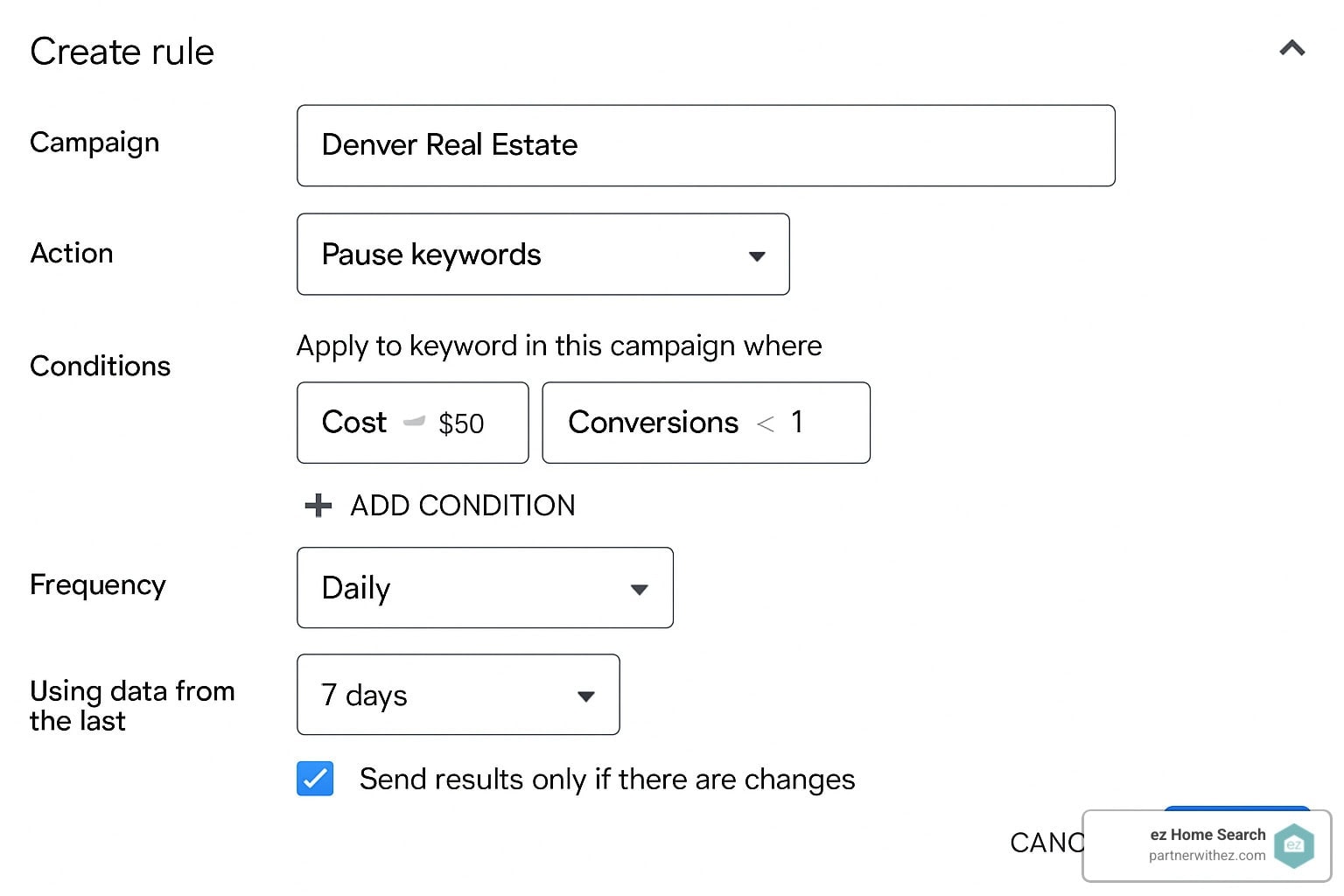
Monitor and refine using negative keywords and bid adjustments.
Run A/B tests on different ad copies and calls-to-action to identify what connects best with your audience and improves performance.
Your first Google Ads campaign starts with establishing your account, setting clear campaign goals, and configuring everything correctly from day one.
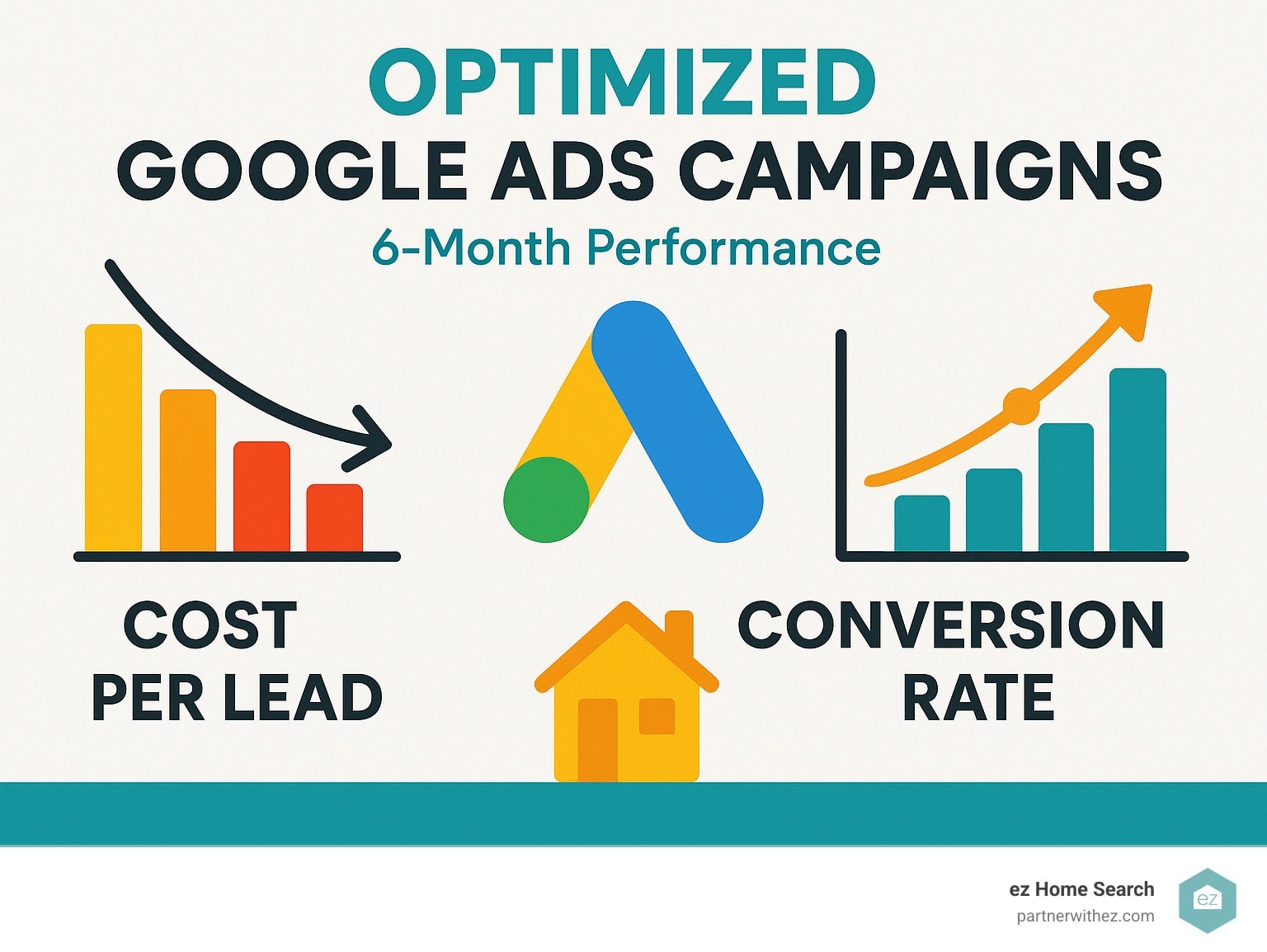
The numbers tell the story. In 2026, real estate Google Ads average a $3.06 cost-per-click with a 3.9% click-through rate and a typical return of $7 to $9 for every $1 spent. With 97% of homebuyers starting their search online, being visible at the exact moment they’re ready to buy or sell gives you a significant competitive advantage over agents still relying on yard signs and cold calls.
Unlike social platforms where you’re interrupting people scrolling through content, Google Ads puts you in front of people actively searching for real estate answers. When someone types “homes for sale near me” or “cash home buyers,” they’re not browsing, they’re ready to act. Google Ads offers targeted, immediate, and cost-effective advertising for real estate professionals, helping you reach motivated leads at the exact moment they’re looking.
I’m Preston Guyton, and over my 20+ years in real estate, I’ve helped teams generate millions in commissions through strategic digital marketing, including mastering how to run Google Ads for real estate leads through my companies Digital Maverick and ez Home Search.
The reach advantage is hard to match. With well over 90% of search traffic flowing through sites connected to Google’s ad network (including Google.com itself), you’re fishing where nearly all the fish are. But volume alone isn’t the point, it’s intent. When someone searches “sell my house fast” or “homes for sale in [your city],” they’re not casually browsing. They’re ready to make decisions.
The intent-driven traffic Google delivers converts at rates other marketing channels can’t touch. While Facebook ads might build awareness among people thinking about moving someday, a targeted Google ad can be built around a specific real estate goal, whether it’s buyer-focused, cash-buyer, agent branding, seller-focused, or new construction, and it will reach people who are actively looking today.
Local dominance becomes realistic once you understand that real estate is inherently local. Google’s geo-targeting tools let you own your market without wasting budget on clicks from three states away. You can target by ZIP code, radius around your office, or exclude specific areas entirely. Google Maps and Google Business Profile map ads add another layer of local visibility, helping your business show up in local searches and on Maps with ratings, reviews, and business details visible to nearby clients. For local service ads, the Google Screened badge acts as a trust signal that shows potential clients your business is verified.
Key Takeaways
Google Ads capture existing demand instead of creating it, which is why real estate lead generation on the platform outperforms most social advertising.
The average real estate Google Ads campaign now runs a $3.06 CPC, a 3.9% CTR, and roughly $7 to $9 back for every $1 spent.
Search Ads remain the top producer of bottom-funnel leads; Display, YouTube, and Local Services Ads support that engine rather than replace it.
Local Services Ads run on a pay-per-lead model and pair well with pay-per-click Search campaigns rather than competing against them.
Landing pages matching your exact ad promise are the single biggest lever for improving conversion rates and Quality Score.
Contacting a lead within 5 minutes can raise conversion rates by up to 900%, making CRM automation and speed-to-lead systems non-negotiable.
A starting budget of $400 to $500/month, paired with tight keyword targeting and full conversion tracking, is the right way to launch a new campaign.
Platforms like ez Home Search combine Google Ads expertise with county exclusivity, so agents aren’t bidding against each other for the same contact.
How to Run Google Ads for Real Estate Leads: Step-by-Step Playbook
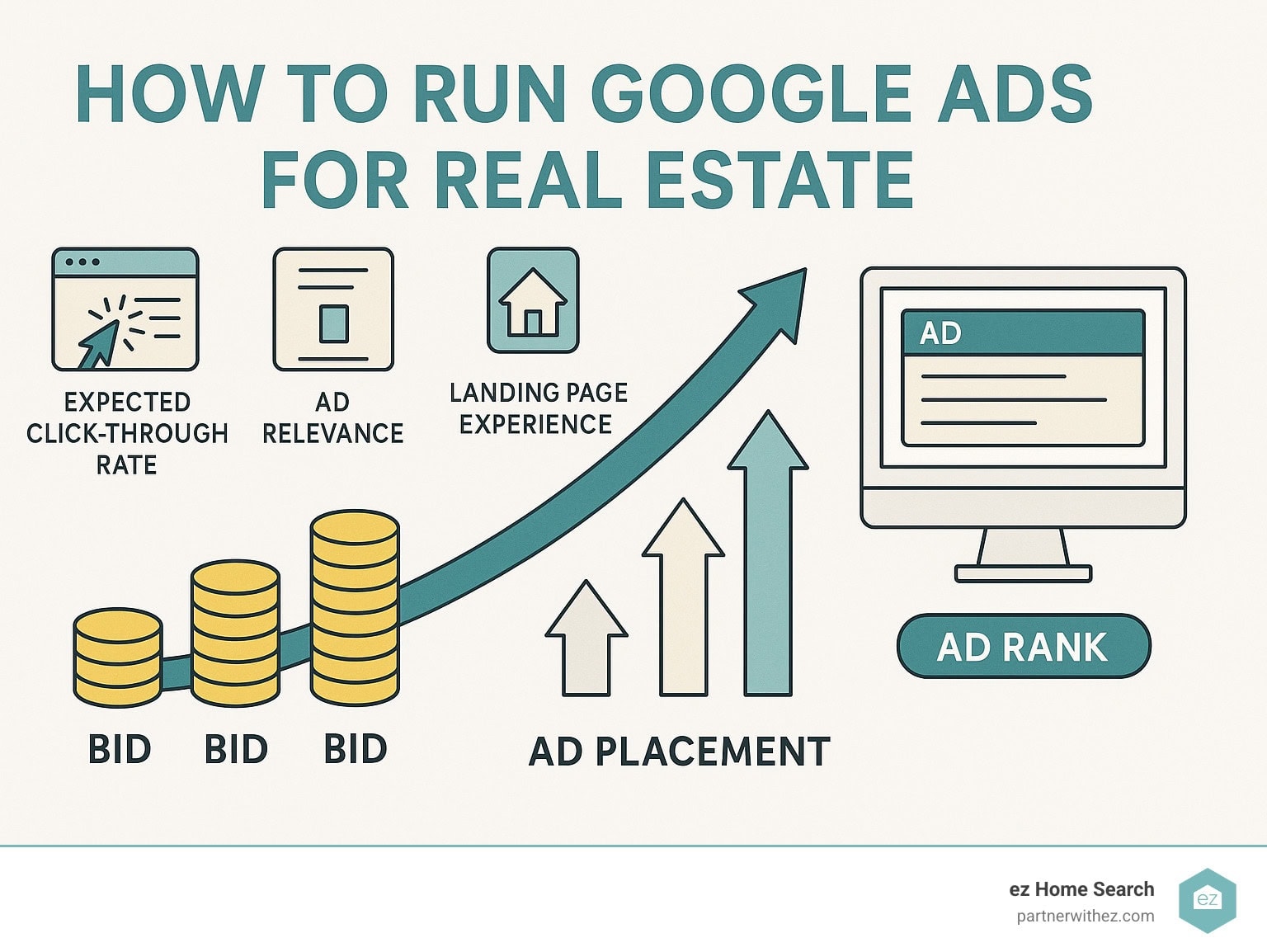
This step-by-step guide will help you build effective real estate campaigns using Google Ads. Understanding how Google Ads works matters here: ads are placed through an auction system where your bid, ad quality, and relevance determine placement, a dynamic examined in a recent field experiment on search market power. This system is built to reward the most relevant, high-quality ads with the best search real estate.
Campaign Type
Best For
Average CPC (2026)
Conversion Rate
Search
Bottom-funnel leads
$3.06
2.9%
Display
Retargeting visitors
$1.78
1.4%
Video (YouTube)
Brand building
$0.92
1.1%
Local Services
Trust building
Pay per lead
6–18%
Search campaigns should be your bread and butter when starting out. These ads appear when people type real estate queries directly into Google, putting your business in front of prospects at the exact moment they’re ready to buy or sell. Focus on keywords with strong buyer or seller intent rather than broad terms with high volume but weak conversion history.
Display campaigns work well for staying in front of people who visited your website but didn’t convert the first time. Think of them as your digital follow-up system.
Video ads on YouTube have become close to essential for real estate campaigns. They let you showcase properties through virtual tours, highlight neighborhoods, and provide immersive content that helps buyers picture themselves in a listing before they ever call you. Video ads engage viewers more effectively than static text and help set you apart from competitors running the same generic Search ads.
Local Services Ads deserve their own strategy based on research from Google showing their effectiveness for local service providers. These ads appear at the top of search results with Google’s trust badge, and you only pay when a prospect actually contacts you, which flips the standard pay-per-click model on its head.
Setting Up Your Account the Right Way
Head to ads.google.com and create your account using a dedicated business email address. The billing setup requires a valid payment method, but Google only charges when people actually click your ads. From the start, manage your ad budget carefully with negative keywords that filter out irrelevant searches so you don’t waste spend. Set up conversion tracking from day one so you’re collecting data from your very first lead instead of guessing.
Keyword Planner becomes your research headquarters. This free tool shows search volumes, competition levels, and suggested bid ranges for any keyword in your market. Calling out what sets you apart, such as years of experience or exclusive listings, in your ad copy can strengthen click-through rates and attract more qualified leads.
The manual vs. smart bidding decision affects both your control and your results. Manual bidding lets you set exact maximum bids for each keyword. Smart bidding uses Google’s machine learning to adjust bids automatically toward your conversion goals. Most successful real estate advertisers start with manual bidding to learn their market, then test smart bidding once they’ve collected solid conversion data.
Quality Score and Ad Rank determine where your ads appear and what you actually pay. Google calculates Quality Score from your expected click-through rate, ad relevance, and landing page experience. A higher Quality Score improves your ad position and lowers your costs at the same time, which is why it’s worth fixing before you scale spend.
If you want to see this process in action, a video walkthrough can save you hours of trial and error. Watch this step-by-step tutorial covering account creation, campaign structure, and billing setup for a real estate Google Ads account:
This Google Ads setup tutorial for beginners walks through account creation, campaign structure, and billing setup step by step, which pairs well with the checklist above. It’s worth watching before you spend your first dollar, since fixing a structural mistake after launch usually costs more than getting it right from the start.
Crafting High-Intent Campaigns & Keywords
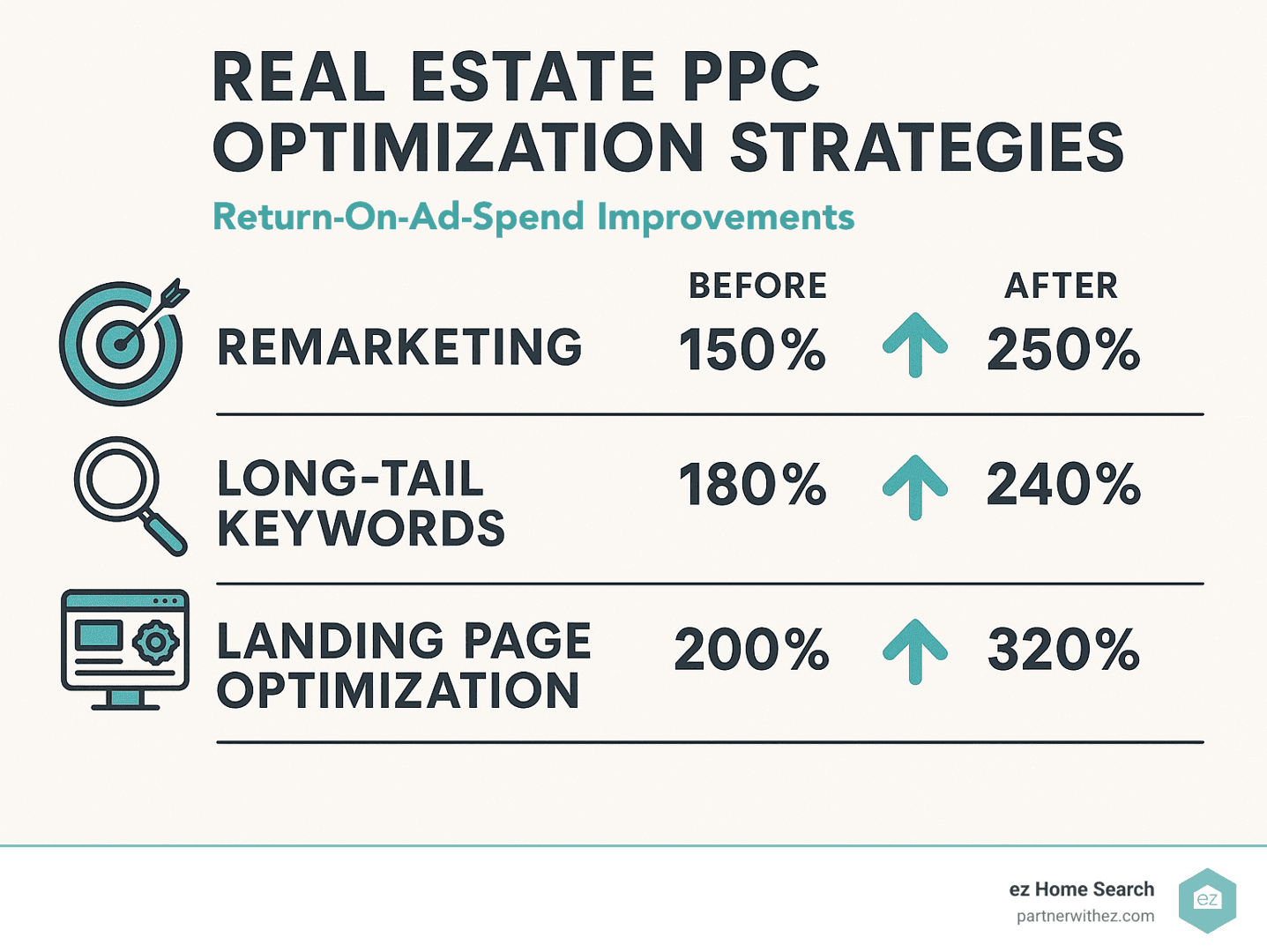
Long-tail phrases consistently outperform broad keywords because they capture specific intent (or, more precisely, they reflect it). Instead of competing for expensive terms like “real estate agent,” target phrases like “sell my house fast” or “cash home buyers in [your city].” Google Ads help real estate agents reach people actively searching for these specific services rather than casually browsing, and research on digital advertising’s influence in the construction and real estate sector shows targeted campaigns measurably shift consumer decisions. Use Google Keyword Planner to find relevant keywords with meaningful search volume, and prioritize match to intent over raw traffic numbers.
Understanding match types stops budget waste on irrelevant clicks. Broad match shows your ads for related searches and can trigger on queries with similar meaning to your keywords, but it can also surface surprisingly unrelated searches. Phrase match requires your exact phrase to appear in the search query. Exact match triggers only for your specific keyword and close variants. Review the Search Terms report regularly to refine your keyword list and find new opportunities to target high-intent searches more precisely.
Life-event targeting adds precision by identifying users going through major changes like marriage, divorce, or job relocation, since these events often trigger real estate decisions. Layering in online behavior signals refines your audience further, letting you reach people whose digital activity suggests they’re likely to move soon.
Tools like SpyFu reveal your competitors’ keyword strategies and ad spend, helping you spot gaps in their coverage or opportunities to outbid them cost-effectively.
Negative keyword lists protect your budget from irrelevant clicks. Add terms like “jobs,” “rental,” “apartment,” and “cheap” to keep from attracting people who aren’t potential buyers or sellers.
Targeting Strategies for Real Estate Ads in the Real Estate Market
Effective targeting is the backbone of successful real estate ads in a competitive real estate market. Google Ads lets real estate agents reach people who are actively searching for real estate services, so your message shows up at the right moment instead of getting lost in the feed. One of the strongest features of Google Ads campaigns is location targeting, which lets you zero in on specific neighborhoods, cities, or custom-drawn areas where your ideal clients are looking to buy or sell. Before launching any campaigns, building a high-converting website with clear messaging, trust signals, and simple lead forms is a prerequisite for getting real results.
Demographic targeting refines your audience further by letting you adjust your ads based on age, household income, and life stage, helping you connect with buyers and sellers most likely to need your help. You might target higher-income brackets for luxury listings or focus on first-time buyers in growing suburbs. To improve your Quality Score, keep your ad copy, keywords, and landing pages tightly aligned and update them regularly.
Remarketing ads are another key tool in your Google Ads toolkit. These ads re-engage people who visited your website but haven’t taken action yet, keeping your services top of mind as they continue their property search. Combined, these targeting strategies help real estate agents generate high-quality leads, get more out of every dollar spent, and keep Google Ads campaigns consistently reaching the most motivated prospects in the market.
Using Ad Groups to Organize Google Ads Campaigns
Ad groups are the organizational backbone of any effective Google Ads campaign, especially for real estate agents trying to maximize ad relevance and lead generation. By grouping related keywords and ads under a specific theme or audience, agents can make sure each ad speaks directly to the needs of the people searching for it.
For example, a real estate agent might build separate ad groups for “homes for sale,” “condos for rent,” and “luxury properties.” Each ad group would contain relevant keywords and matching ad copy for that specific audience. This structure makes your campaigns easier to manage and improves ad relevance, which raises your Quality Score and increases the odds that your ads appear in top search positions.
Ad extensions, like sitelinks and callouts, can be added at the ad group level to give searchers more information and encourage more clicks. Sitelinks might point to pages like “Free Home Valuation” or “Browse New Listings,” while callouts can highlight what sets you apart, like “No Hidden Fees” or “Local Market Experts.” Using ad groups and extensions together helps real estate agents build more targeted, effective ads that connect with the right audience and produce more high-quality leads.
Budgeting and Bidding Strategies for PPC Advertising
Smart budgeting and bidding are essential for real estate agents who want to get the most out of PPC advertising with Google Ads. Since Google Ads runs on a pay-per-click model, advertisers bid on specific keywords and only pay when someone clicks. To control costs and produce consistent results, set a daily or monthly budget that matches your business goals and reflects how competitive your local market actually is.
Start with thorough keyword research to identify the most relevant, highest-performing keywords for your business. Set competitive bids on those keywords so your ads show up in the right search results without overspending. You can choose bidding strategies like cost-per-click (CPC) to control ad spend directly, or cost-per-acquisition (CPA) to focus on generating high-quality leads at a set cost per conversion.
Don’t skip negative keywords to filter out irrelevant searches; excluding terms like “jobs,” “apartments,” or “cheap” keeps your ads in front of people genuinely interested in your services. Reviewing your bidding strategy regularly and adjusting your budget based on performance helps real estate agents improve ad relevance and generate more high-quality leads while keeping spend in check.
Responsive search ads let you provide multiple headlines and descriptions, then Google tests combinations to find what performs best with your audience. Write headlines that include your target keywords while focusing on benefits rather than features.
A strong call to action is essential for prompting immediate action and improving conversions. Use specific phrases like “Get Your Free Home Valuation,” “Schedule Your Property Tour,” or “Request Your Cash Offer Today.”
Sitelinks and callouts
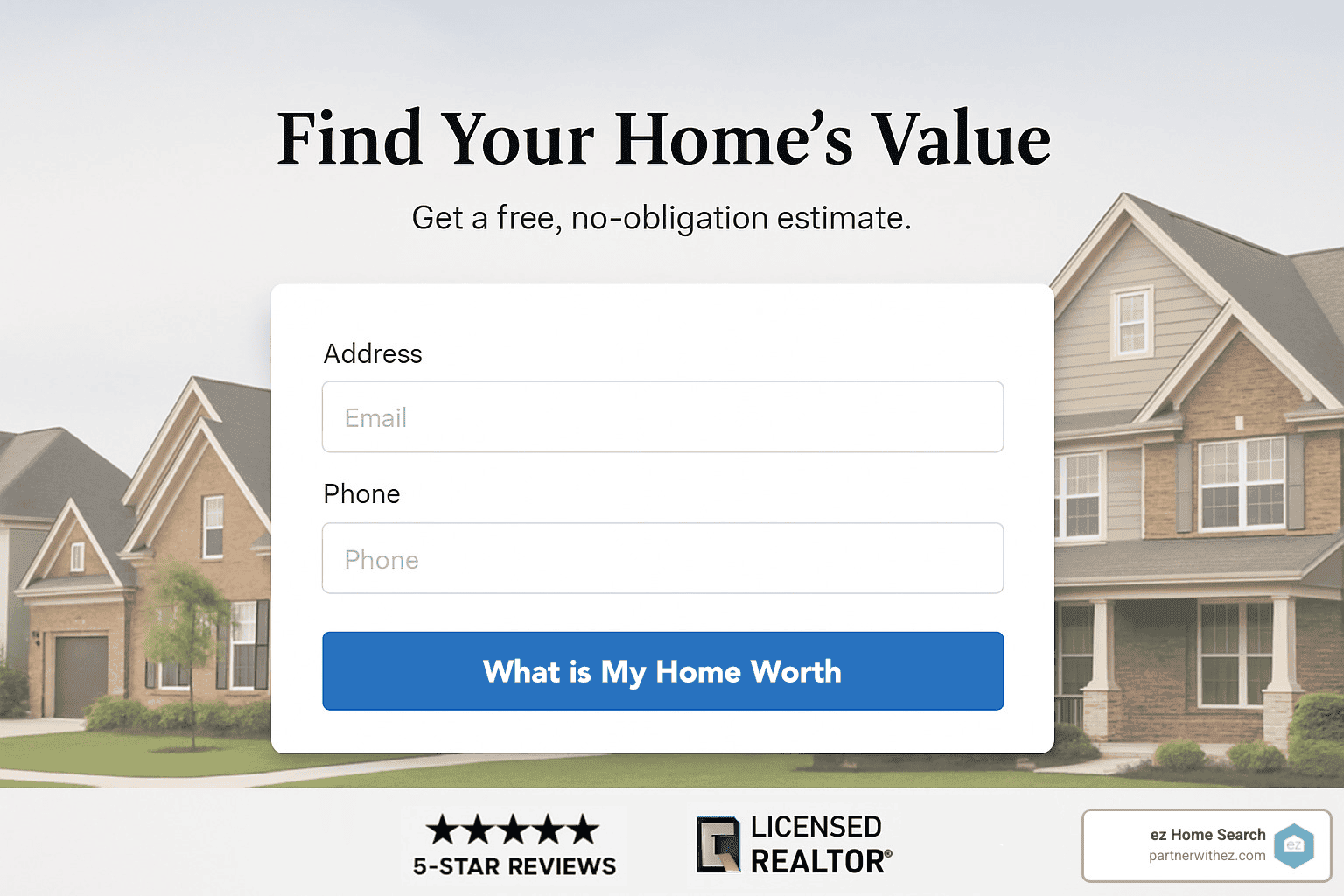
Landing page consistency directly affects both Quality Score and conversion rates. If your ad promises a “Free Home Valuation,” your landing page has to deliver exactly that, not a generic contact form. Building dedicated landing pages for offers like free home valuations keeps the experience smooth and relevant for visitors. Adding trust signals like professional photos and client testimonials can build trust further and encourage more conversions.
Mobile speed can make or break your campaigns, especially with roughly 90% of home shoppers using mobile devices during their search. Pages that load in under 3 seconds convert noticeably better than slower alternatives.
Home valuation forms consistently produce strong conversion rates because they offer immediate value while collecting lead information. These forms are effective at generating new leads and can help you win more listings by engaging homeowners who are curious about selling. They give prospects something useful right away while positioning you as the local expert.
2026 Cost-Per-Lead Benchmarks by Campaign Type
Cost-per-click tells you what you’re paying for attention. Cost-per-lead tells you what you’re actually paying for a prospect willing to hand over their contact information, which is the number that matters most when you’re building a pipeline. Here’s how the major campaign types compare in 2026, along with realistic timelines for recovering your ad spend through closed business.
Campaign Type
Avg. Cost Per Lead
Typical ROI
Pipeline Recovery Timeline
Search Ads
$45–$85
6:1 to 10:1
30–60 days
Local Services Ads
$25–$60 (pay-per-lead)
8:1 to 14:1
14–30 days
Display (Retargeting)
$18–$35
4:1 to 6:1
60–90 days
YouTube / Performance Max
$30–$70
5:1 to 8:1
45–90 days
A few patterns stand out:
Local Services Ads consistently produce the lowest cost per lead and the fastest pipeline recovery because you’re only charged for leads who actually reach out, not for browsers who click and bounce.
Search Ads cost more per lead but deliver the highest volume of bottom-funnel prospects, which is why they still anchor most real estate accounts.
Display and Performance Max campaigns take longer to pay back because they’re built for re-engagement and brand familiarity rather than immediate conversion, so don’t judge them by the same 30-day yardstick you’d use for Search.
“Pipeline recovery timeline” refers to how long it typically takes for closed transactions tied to a given lead source to cover the ad spend that generated them. Search and Local Services Ads recover faster because they capture people closer to a decision. Display and video campaigns take longer because they’re nurturing leads who are still months from acting, but those leads often convert at a higher rate once they do.
Local Services Ads vs Search Ads: Pay-Per-Lead vs Pay-Per-Click
One of the most common questions from agents building their first campaigns is whether to run Local Services Ads (LSAs), traditional Search Ads, or both. The honest answer: most successful accounts run both, because they solve different problems.
Factor
Search Ads (PPC)
Local Services Ads (Pay-Per-Lead)
Payment model
Pay per click, regardless of whether the click converts
Pay only when a verified lead contacts you
Trust signal
None built-in; relies on your ad copy and reviews
Google Screened badge displayed directly on the ad
Placement
Below LSAs, above organic results
Top of the search results page
Control
Full control over keywords, bids, and ad copy
Limited control; Google matches you to relevant searches
Setup complexity
Moderate to high; requires ongoing management
Lower; Google handles much of the matching automatically
Best for
Scaling volume, testing new markets, precise keyword targeting
Building trust quickly, lower-risk entry into paid leads
Search Ads give you control. You choose the keywords, write the copy, and decide exactly where your budget goes, but you pay for every click whether it turns into a lead or not. LSAs flip that risk profile: you only pay for leads who actually reach out, and the Google Screened badge gives you a built-in credibility boost that a plain text ad can’t match. The tradeoff is control. Google decides which searches trigger your LSA, and you can’t fine-tune keyword targeting the way you can with Search.
Choosing between the two often comes down to your risk tolerance and stage of growth:
Choose Search Ads first if you want full control over keyword targeting, have the bandwidth to manage ongoing optimization, and want to scale volume quickly across multiple markets.
Choose Local Services Ads first if you’re newer to paid advertising, want a lower-risk entry point, or need the built-in Google Screened trust badge to compete against more established agents.
Run both together if you want Search Ads driving controlled, scalable volume while LSAs pick up lower-risk, pay-per-lead prospects who respond to the trust badge.
Availability also matters. Local Services Ads for real estate aren’t live in every market, so verify eligibility in your specific area before building a strategy around them. Where they’re available, the smartest approach is layering LSAs on top of an existing Search campaign rather than replacing it, giving you a lower-risk lead source running alongside your primary, more controllable channel. Treat LSAs as a supplement to a full Google Ads system, not a standalone strategy.
Improving, Scaling & Avoiding Pitfalls
Your Google Ads campaigns need constant attention to stay profitable. Think of it like tuning a guitar: small adjustments make a noticeable difference in performance. These steps are essential for running a real estate campaign that actually improves over time instead of stalling out.
Bid strategies should evolve as your campaigns mature. Start with “Maximize Clicks” to gather data about what works in your market. Once you have at least 30 conversions over 30 days, switch to “Maximize Conversions” or “Target CPA” strategies.
Dayparting can meaningfully improve your return on ad spend. Real estate searches peak during evenings and weekends when people have time to browse properties. Raise your bids 20-30% during these high-intent windows.
Audience segments add another layer of precision to your targeting. Google’s “in-market” audiences identify people actively researching real estate purchases right now. You can also build custom audiences based on website behavior.
Remarketing campaigns re-engage visitors who didn’t convert the first time. Build separate audiences for different behaviors: people who viewed your home valuation page, visitors who browsed your “sell your house” content, and those who started but didn’t finish a form.
Review your ad performance regularly by tracking key metrics and watching how users interact with your ads and landing pages. This helps you spot what needs fixing and improve results over time instead of running blind.
Automation through CRM integration makes sure no lead falls through the cracks. When someone fills out your home valuation form, they should immediately enter a nurture sequence that keeps you top-of-mind while providing real value.
Lead follow-up practices can make or break your campaign’s success. Research on lead response time shows that contacting leads within 5 minutes can increase conversion rates by as much as 900% compared to waiting even an hour. Set up instant notifications and build a systematic follow-up process before you spend a single dollar on ads.
Measuring Success with Google Ads Campaigns
Tracking and measuring the success of your Google Ads campaigns matters for real estate agents who want steady lead generation and business growth. Google Ads provides metrics like click-through rate (CTR), conversion rate, and cost per click (CPC) that show how your ads are actually performing, and understanding CTR benchmarks and definitions helps you interpret whether your numbers are actually competitive. Watching these metrics helps you spot what’s working and where you need to make changes. Regularly checking metrics like CTR and cost per lead (CPL) keeps your campaigns efficient over time instead of quietly drifting off track.
A high click-through rate shows your ad copy and targeting connect with your audience, while a strong conversion rate shows your landing pages are effectively turning visitors into leads. If you notice a low CTR or high CPC, it may be time to rework your ad copy, adjust your targeting, or revisit your keyword strategy entirely.
Connecting Google Analytics to your Google Ads account adds deeper insight, letting you track website visits, lead generation, and other key metrics that matter to your business. Reviewing these numbers regularly and making changes based on the data helps real estate agents get the best possible results from their campaigns, attract more clients, and grow with more confidence in the numbers behind the strategy.
Once your campaigns are running smoothly, smart bidding strategies like Target CPA and Target ROAS use machine learning to adjust your bids in real time. These automated strategies often outperform manual bidding once you’ve collected enough conversion data.
Rules and scripts automate routine adjustments so you can focus on strategy instead of daily maintenance. Set up rules to pause keywords with high costs and no conversions, raise bids on high-performing terms, or send alerts when your daily budget is being spent too quickly.
Retargeting lists get more sophisticated as you gather visitor data. Build separate lists for different behaviors; people who spent three minutes or more on your site should get different messaging than quick visitors who bounced immediately.
The key to good automation is starting with solid fundamentals. Automate the routine tasks, not the strategy decisions.
CRM Integration and the 5-Minute Lead Response Rule
Google Ads can produce a steady stream of leads, but the campaign itself only gets you halfway there. What happens in the first 5 minutes after someone submits a form determines whether that lead turns into an appointment or goes cold and calls a competitor instead.
The data behind this is stark: research on inbound lead response has repeatedly shown that contacting a lead within 5 minutes dramatically increases the odds of a live conversation compared to waiting even 10 or 30 minutes, and the gap widens the longer you wait. That’s why speed-to-lead has become its own discipline inside real estate marketing rather than an afterthought.
A working CRM and follow-up system for Google Ads leads typically includes:
Instant lead alerts, delivered by SMS and email the moment a form is submitted, not batched into an hourly digest.
Automated first-touch texts, sent within seconds through your CRM so the prospect hears from you before they’ve even closed the browser tab.
Round-robin or rules-based lead routing, so leads go to whichever agent is actually available rather than sitting in a shared inbox.
Drip email and SMS sequences that continue nurturing leads who aren’t ready to act immediately, often over weeks or months.
Missed-call text-back, which automatically texts a lead if a call goes unanswered, keeping the conversation alive instead of losing it entirely.
Popular CRM platforms real estate teams use to build this system include:
Tool
Best Known For
Follow Up Boss
Speed-to-lead automation and agent accountability reporting
kvCORE
All-in-one IDX site plus built-in lead nurture campaigns
Lofty
AI-assisted lead scoring and behavioral triggers
Wise Agent
Budget-friendly automation for solo agents and small teams
HubSpot
Deep marketing automation for larger brokerages
Many of these are often paired with Twilio-powered call and text tracking for granular attribution. The specific tool matters less than the discipline behind it: every lead needs an automated first touch within minutes, followed by a human follow-up within the hour, and a structured nurture sequence for everyone who doesn’t convert immediately.
Teams running Google Ads without this kind of system in place are effectively paying for leads they never properly contact. The ad spend is only as good as the follow-up behind it.
Common Mistakes to Avoid
Broad targeting wastes budget faster than almost anything else. Targeting entire states or relying only on broad match keywords generates plenty of clicks from unqualified prospects. Stay tightly focused on your actual service areas.
Ignoring negative keywords is like leaving money on the table. Review your search terms report regularly and add irrelevant queries as negatives. Common real estate negatives include “jobs,” “salary,” “news,” and “images.”
Weak landing pages kill conversions even when your ads are strong. Generic “Contact Us” pages underperform because they don’t deliver on your ad’s promise.
No conversion tracking means you’re flying blind. Set up tracking for form submissions, phone calls, and any other valuable action. Without this data, you can’t improve your campaigns or prove your ROI to anyone, including yourself.
Fair Housing compliance oversights can create serious legal problems. Avoid targeting or excluding based on protected characteristics like age, gender, family status, or income level.
Click fraud zones, particularly certain international locations, can drain budgets without producing real prospects. Use location exclusions to block countries known for fraudulent click activity.
Conclusion & Next Steps
Mastering how to run Google Ads for real estate leads gives you an edge in an increasingly digital market. The combination of Google’s reach, intent-driven traffic, and precise targeting options creates opportunities that simply didn’t exist a decade ago.
At ez Home Search, we’ve taken this idea further by combining Google Ads know-how with county exclusivity and privacy-first lead generation. Our platform delivers exclusive buyer, seller, and cash offer opportunities to real estate teams while removing the lead competition that plagues traditional lead generation.
The platform combines high-conversion landing pages, real-time behavioral tracking, CRM-integrated nurture flows, and TCPA-compliant verification, all while giving you exclusive access to your territory. Whether you’re running your own Google Ads or looking for a done-for-you approach, the principles in this guide will help you generate more qualified leads at a lower cost per lead.
The real estate industry keeps shifting toward digital-first client acquisition, and agents who master Google Ads will keep pulling ahead of the competitors still stuck on referrals alone. Start with the fundamentals outlined here, test consistently, and scale what works.
Ready to take your lead generation to the next level with county exclusivity and privacy-first technology? Reach out to our team to see if your county is still available.
How much should I budget each month for Google Ads real estate leads?
Most agents start with a modest daily budget, testing a small group of high-intent keywords before increasing spend. As a general benchmark, $400 to $500/month can produce 10 to 20 leads depending on whether the campaign targets buyers or sellers. The most common mistake at this stage is sending traffic to a generic homepage instead of a focused landing page that matches the ad’s exact promise.
How quickly can Google Ads for real estate leads produce results?
Clicks and initial leads can show up within days of launching a campaign, but overall performance typically improves over the first several weeks as targeting, bidding, ad messaging, and landing pages get refined based on real performance data.
Do real estate Google Ads work better on Search, YouTube, or Display?
Search Ads typically produce the most immediate, high-intent leads, while YouTube and Display advertising reinforce brand trust across multiple touchpoints during a prospect’s research process. The strongest campaigns generally combine more than one ad format rather than relying on Search alone.
Are Google Local Services Ads available for real estate agents?
Local Services Ads are available only in certain categories and geographic areas. While Google lists real estate services among its eligible business types, agents should verify local eligibility before building a lead generation strategy centered on this specific ad format.
What are the best keywords for real estate Google Ads?
The strongest keywords combine local intent, service intent, and a clear next step, like “real estate agent near me,” “sell my house in [city],” “home value estimate [city],” “buyer agent in [city],” and “listing agent in [neighborhood].” The best keywords aren’t necessarily the ones with the highest search volume; they’re the ones that most closely match your offer, your market, and your landing page.
What types of leads can Google Ads generate for real estate professionals?
Google Ads campaigns can be built to generate buyer leads, seller leads, pre-construction leads, and realtor-hiring leads, each requiring its own landing page, ad copy, and follow-up sequence tailored to that audience’s stage in the buying or selling process.
How fast should I respond to a Google Ads real estate lead?
Within 5 minutes, ideally. Studies on inbound lead response consistently show conversion rates drop sharply once response time stretches past that window, which is why automated first-touch texts and instant CRM alerts have become standard for any team running paid lead generation.
Meta Title: How to Run Google Ads for Real Estate Leads in 2026 (Full Guide)
Meta Description: Get real 2026 cost-per-lead benchmarks, a step-by-step Google Ads setup video, and proven CRM tactics to turn clicks into real estate leads faster.
Why Creative Real Estate Marketing Ideas Are Essential for Success in Today’s Market
Creative real estate marketing ideas are changing how agents attract buyers and sellers in today’s competitive market. Here are the top strategies that deliver results:
Social Media Dominance: Short-form videos, Instagram Reels, and Facebook Live sessions
AI-Powered Personalization: Virtual staging, automated CMA reports, and smart chatbots
Experiential Marketing: Themed open houses, neighborhood events, and local partnerships
Social Proof Systems: Curated client reviews, video testimonials, and neighborhood insights
Offline Innovation: Creative yard signs, pop-by gifts, and community involvement
The numbers tell the story. 92% of buyers use the internet to begin their house hunting quest, making your online presence crucial. Yet 75% of people judge a business’s credibility based on website design alone. Meanwhile, 51% of millennials are more likely to hire an agent with a social media presence.
This creates both opportunity and pressure. Agents who master creative marketing stand out. Those who don’t get lost in the noise.
The challenge isn’t just generating leads anymore. It’s about creating memorable experiences that turn prospects into clients and clients into referrals. Traditional tactics like basic MLS listings and newspaper ads aren’t enough when buyers have endless options at their fingertips.
Smart agents are combining cutting-edge technology with authentic human connection. They’re using AI tools to scale personalization while hosting unforgettable in-person events. They’re leveraging social media algorithms while building genuine community relationships.
I’m Preston Guyton, founder of ez Home Search with over 20 years of real estate leadership experience helping teams achieve breakthrough growth through innovative lead generation and conversion strategies. Throughout my career developing creative real estate marketing ideas for teams across North America, I’ve seen how the right approach can transform struggling agents into market leaders.
Creative Real Estate Marketing Ideas That Dominate Social Media
Social media has transformed into the primary battleground for real estate success. With platforms prioritizing short-form video content, agents who master Instagram Reels, TikTok, and Facebook are experiencing unprecedented returns on their marketing efforts.
The numbers speak volumes: 51% of millennials are more likely to hire an agent with a social media presence. But simply existing on these platforms isn’t enough anymore. Today’s buyers expect agents to be memorable, genuinely helpful, and authentically engaging in their approach.
Research on Instagram Reels trends shows that video content consistently outperforms static posts by significant margins. This shift toward dynamic content has created both opportunities and challenges for real estate professionals looking to capture attention in increasingly crowded feeds.
Repurpose Listings into Scroll-Stopping Clips
Traditional listing photos feel static and forgettable in today’s fast-moving social media landscape. The most effective creative real estate marketing ideas start with changing your property listings into engaging, dynamic content that makes viewers pause mid-scroll.
Video walkthroughs with personality work incredibly well when you add your voice to explain unique features buyers might overlook. Instead of silent property tours, point out details like the perfect morning light streaming through the kitchen windows or how the master bedroom stays naturally cool during summer months.
Before-and-after staging changes consistently generate high engagement because people love witnessing dramatic changes. Quick cuts between empty rooms and beautifully furnished spaces tell a compelling story about a property’s potential.
Neighborhood lifestyle content helps you sell more than just houses—you’re selling entire lifestyles. Film yourself grabbing coffee at the local café, walking nearby trails, or showcasing the easy commute to downtown. This approach helps buyers envision their daily life in the area.
Tools like Minvo and OpusClip make repurposing longer content into bite-sized clips incredibly simple. Meanwhile, Meta’s Advantage+ AI optimization helps agents reduce advertising costs while increasing reach across Facebook and Instagram based on real performance data.
Success stories like DC Real Estate Mama demonstrate how consistent, personality-driven content builds massive followings that translate directly into closed deals.
Go Live When Your Audience Is Free
Facebook Live and Instagram Live sessions create authentic connections that pre-recorded content simply cannot match. The magic happens during afternoons and evenings when your audience is naturally scrolling after work hours.
Virtual open houses through live streaming allow you to tour properties while answering questions in real-time. Viewers can ask about specific rooms, neighborhood details, or pricing considerations without feeling the pressure of an in-person showing. This approach has become especially valuable for reaching out-of-town buyers or busy professionals.
Market update sessions position you as the trusted expert for real estate information in your area. Share monthly statistics, interest rate changes, and local market trends that directly impact your viewers’ buying or selling decisions.
Q&A streams dedicated to answering common buyer and seller questions build tremendous trust while providing valuable content your audience craves. These sessions showcase your expertise naturally while addressing real concerns people have about the real estate process.
The key to successful live content is consistency and genuine interaction. Respond to comments, acknowledge viewers by name, and create an atmosphere where people feel comfortable asking questions.
Creative Real Estate Marketing Ideas for Viral Memes
Humor in real estate marketing might feel risky, but when executed thoughtfully, it becomes incredibly effective for building brand personality and staying top-of-mind with your audience.
The secret lies in keeping memes relevant to real estate experiences while tapping into universal emotions and situations. Market condition memes work particularly well when you use trending templates to explain complex concepts in simple, relatable ways.
Home buying journey humor resonates powerfully because everyone who’s steerd buying or selling can relate to the emotional rollercoaster involved. These shared experiences create instant connections with your audience.
Local market inside jokes about traffic patterns, neighborhood quirks, or local landmarks help you connect specifically with your geographic area. This hyperlocal approach builds community while demonstrating your intimate knowledge of the market.
The “Dude With Sign” format has proven especially effective for real estate agents sharing market insights or buyer tips in a humorous, approachable way.
Memes work best when they feel authentic to your natural personality. Forcing humor that doesn’t align with who you are will feel inauthentic to your audience, potentially damaging the trust you’re working to build.
AI-Powered Personalization at Scale
Artificial intelligence is changing creative real estate marketing ideas by letting agents deliver personalized experiences to hundreds of leads simultaneously. The technology doesn’t replace human connection—it amplifies it.
Real estate companies using AI are seeing significant improvements in their conversion rates and overall efficiency. The secret is choosing AI tools that improve rather than replace the personal relationships that actually close deals.
Virtual staging has become one of the most popular AI applications. Instead of spending thousands on physical staging, agents can digitally furnish empty properties for a fraction of the cost. These AI-generated images help buyers visualize the potential of a space while keeping marketing budgets manageable.
Automated AVM reports are another inflection point. What used to take hours of manual research can now be generated instantly with current market data. This allows agents to respond to pricing questions immediately rather than making prospects wait days for analysis.
Automate Lead Nurture Without Losing the Human Touch
The challenge with automation is maintaining authenticity. Nobody wants to feel like they’re talking to a robot, especially when making one of life’s biggest financial decisions.
Text messaging delivers an 82% open rate, making SMS one of the most effective communication channels available. The key is using this channel strategically rather than bombarding people with generic messages.
Smart CRM systems like ezNurture and Follow Up Boss track how leads interact with your content and automatically trigger relevant follow-ups. When someone views a listing multiple times, the system can send similar properties or neighborhood information without you manually monitoring every click.
Video text messages are particularly effective because they feel personal while still being scalable. A 30-second video explaining why you’re sending a particular listing feels much more authentic than a generic text alert.
The most successful agents set up behavioral triggers based on specific actions—website visits, email opens, or social media engagement. The trick is making these automated responses feel natural and helpful rather than pushy or robotic.
At ez Home Search, our ezVerify.ai platform ensures all communications remain TCPA-compliant while enriching lead data for more targeted messaging. This protects agents from compliance issues while improving conversion rates through better personalization.
Hyper-Target With Behavior Data
The most effective creative real estate marketing ideas use data to deliver the right message to the right person at exactly the right moment. Modern marketing platforms provide incredible insight into what potential clients are actually looking for.
Retargeting campaigns keep you visible to people who’ve already shown interest in your services. When someone visits your website or engages with your social media content, you can show them relevant listings or neighborhood information across Facebook and Google. This positioning is much more effective than cold advertising because you’re reaching people who’ve already demonstrated interest.
YouTube pre-roll advertising lets you target video ads to people who’ve been watching real estate content in your market area. This puts you in front of active buyers and sellers while they’re already thinking about real estate.
Performance Max campaigns use Google’s AI to automatically optimize your ads across all Google properties—Search, YouTube, Gmail, and Display. The system learns from your conversion data and adjusts targeting and placement to maximize results.
The key to successful AI-powered marketing is starting with clear objectives and letting the technology handle optimization while you focus on creating compelling content and building genuine relationships. Technology should make you more efficient at being human, not replace the human element entirely.
Unforgettable Offline Experiences & Local Partnerships
In our digital-first world, creative real estate marketing ideas that bring people together in person create powerful competitive advantages. While everyone’s fighting for attention online, smart agents are building deeper relationships through memorable offline experiences that turn strangers into clients and clients into lifelong advocates.
The magic happens when you combine the reach of digital marketing with the trust-building power of face-to-face interactions. These offline touchpoints often become the deciding factor when prospects choose between you and another agent they’ve only known through social media.
Turn Open Houses into Experiential Events
Most open houses feel like walking through a museum—beautiful to look at, but cold and impersonal. The agents who generate buzz and attract serious buyers treat their open houses like community events that people actually want to attend.
Themed experiences work incredibly well when they match the property’s personality. A historic Victorian might feature period music and vintage décor that helps visitors imagine life in a different era. A modern downtown condo could showcase the urban lifestyle with local coffee and jazz music that captures the neighborhood’s energy.
Food partnerships with local restaurants or food trucks create a welcoming atmosphere that encourages people to stay longer and engage in real conversations. When visitors linger over coffee and pastries, they’re more likely to ask detailed questions about the property and neighborhood. Plus, you’re supporting local businesses—which often leads to reciprocal referrals.
Interactive elements turn passive viewing into active engagement. Set up a photo station with props that reflect the home’s style, or create a simple scavenger hunt that highlights unique features visitors might otherwise miss. These activities make the experience memorable while giving you natural conversation starters with potential buyers.
The most successful approach involves inviting neighbors to meet potential new residents. This strategy helps buyers envision themselves as part of the community while creating opportunities for existing homeowners to refer friends who might be interested in moving to the area.
Partner With Local Businesses for Win-Win Exposure
The most effective creative real estate marketing ideas often involve strategic partnerships that amplify everyone’s marketing reach while providing genuine value to the community. The key is finding businesses that serve similar clientele without competing directly for the same customers.
Cross-referral relationships with mortgage lenders, home inspectors, contractors, and interior designers create a steady stream of warm leads. These professionals interact with homeowners at different stages of the buying and selling journey, making them natural partners for mutual referrals. Since 51% of real estate business comes from referrals, these relationships can significantly impact your bottom line.
Joint educational events allow you to split costs while doubling your potential audience. Co-hosting a “First-Time Homebuyer Workshop” with a trusted lender provides value to attendees while showcasing both of your expertise. Similarly, partnering with contractors for “Home Maintenance 101” seminars positions you as a resource for both buyers and existing homeowners.
Community sponsorships build long-term brand recognition while supporting causes that matter to your target market. Sponsoring local sports teams, school events, or charity fundraisers keeps your name visible in positive contexts throughout the year. These investments in community goodwill often pay dividends through referrals and repeat business.
Vendor showcase events create win-win-win situations where local service providers demonstrate their expertise, you provide the venue and audience, and consumers find trusted resources for their homes. These events position you as a connector and community leader while building relationships with potential referral partners.
The most successful partnerships feel natural and provide genuine value to everyone involved. When your community sees you as someone who brings people together and supports local businesses, they’re more likely to think of you when real estate needs arise.
Curated Reviews & Social Proof That Close Deals Faster
In real estate, trust drives decisions. When buyers and sellers are making the largest financial commitment of their lives, they need confidence in their agent’s ability to deliver results. This is where creative real estate marketing ideas around social proof become game-changers.
The challenge isn’t just collecting reviews—it’s curating and presenting them in ways that address specific concerns and showcase your unique value proposition. Smart agents understand that strategic social proof can significantly accelerate the decision-making process.
Showcase Agent Expertise Through Curated Reviews
Generic testimonials that simply say “great service” don’t differentiate you from competitors. The most effective reviews tell complete stories that help prospects visualize working with you during their own real estate journey.
Problem-solution testimonials are particularly powerful because they demonstrate your ability to steer challenges. When a review details how you helped a seller price their home strategically in a declining market, or how you guided first-time buyers through a competitive bidding situation, it shows real expertise in action.
Video testimonials take this impact even further. They’re inherently more trustworthy than written reviews and nearly impossible to fabricate. Keep them under one minute and film in vertical format for easy sharing across social media platforms. The authentic emotion in a client’s voice when they describe closing on their dream home is something written words simply can’t capture.
Your ez Home Search profile deserves special attention since many buyers start their agent search there. Curate reviews that highlight different aspects of your service—negotiation skills, market knowledge, communication style, and problem-solving ability. This creates a comprehensive picture of what clients can expect when working with you.
Neighborhood-Level Insights Buyers Crave
Today’s buyers want more than property specifications—they’re investing in lifestyles and communities. Creative real estate marketing ideas that provide curated neighborhood insights position you as the local market expert while addressing the deeper questions buyers are asking.
School district analysis goes beyond test scores and ratings. Compile insights from parents about specific programs, teacher quality, class sizes, and extracurricular opportunities. When relocating families read detailed feedback about what it’s really like to have children in local schools, they gain confidence in their decision-making process.
If you’re an ez Home Search County Exclusivity Partner or part of ez Connect, you can use our featured school pages for any school across the country.
Commute and transportation reviews provide practical value that online calculators can’t match. Real experiences from residents about traffic patterns, public transit reliability, and seasonal variations in commute times help buyers understand the daily reality of living in different areas.
The lifestyle component is equally important. Curated reviews of local restaurants, shopping centers, parks, and entertainment options help buyers envision their weekends and social life. When you can provide insider knowledge about the best coffee shop for morning meetings or which parks have the safest playgrounds, you’re delivering value that builds lasting relationships.
Investment perspective reviews serve buyers who are considering long-term appreciation potential. Share insights about development plans, infrastructure improvements, and historical market trends specific to different neighborhoods. This information helps investors make informed decisions while positioning you as someone who understands market dynamics beyond current listings.
The key is presenting this information in digestible formats that don’t overwhelm prospects. Short videos, infographics, or interactive maps help buyers quickly understand their options while demonstrating your deep market knowledge.
Common Mistakes to Avoid
The difference between creative real estate marketing ideas that succeed and those that flop often comes down to avoiding critical mistakes that can derail your entire strategy.
Overposting property photos without personality is the fastest way to lose followers. When your social media feed becomes a monotonous stream of listing images, people stop paying attention. Instead of overwhelming your audience, focus on sharing 2-3 listings per week with compelling stories about what makes each property special. Talk about the family who raised three kids in that charming colonial, or highlight how the downtown loft’s floor-to-ceiling windows capture the morning light perfectly.
Ignoring your analytics is like driving with your eyes closed. Many agents create content based on what they think works rather than what actually generates leads. Your Facebook insights, Google Analytics, and CRM reports tell the real story about which tactics produce phone calls and appointments versus just likes and comments. Use UTM codes to track which social media posts drive website traffic, and pay attention to which email subject lines get opened.
Generic branding makes you forgettable in a crowded market. When you use the same templates, color schemes, and messaging as every other agent in your area, prospects can’t distinguish you from the competition. Your brand should reflect your personality and unique value proposition. Are you the agent who specializes in historic homes? The one who makes first-time buyers feel confident? Let that personality shine through in everything from your logo to your social media captions.
Poor follow-up systems waste all your marketing efforts. You might create brilliant content that attracts leads, but if you don’t have consistent nurture sequences in place, those prospects disappear. Set up automated email campaigns while maintaining personal touchpoints throughout the buyer journey. A lead who downloads your neighborhood guide should receive relevant market updates, not radio silence until you need them to make a decision.
Mobile optimization isn’t optional anymore. Most real estate searches happen on smartphones, yet many agents still create content that looks terrible on mobile devices. Test your website, landing pages, and email campaigns on different screen sizes. If someone can’t easily steer your virtual tour or fill out your contact form on their phone, they’ll move on to an agent whose content works seamlessly.
Focusing exclusively on seller marketing while ignoring buyer opportunities limits your potential. Many agents over-invest in listing promotion while missing chances to attract buyer clients. Balance your content strategy to showcase both your listing expertise and your ability to help buyers steer competitive markets, negotiate deals, and find their dream homes.
Copying your competitors rarely works as well as you’d expect. While it’s smart to learn from successful agents, directly mimicking their strategies often falls flat because what works for their personality and market might not fit yours. Use competitor research as inspiration, then adapt those ideas to match your unique strengths and local market conditions.
Conclusion
The landscape of real estate marketing has shifted dramatically, and creative real estate marketing ideas have become the difference between agents who thrive and those who struggle to stay relevant. The strategies that worked five years ago simply aren’t enough in today’s hyper-competitive, digitally-driven market.
What we’ve explored throughout this guide isn’t just about keeping up with trends—it’s about fundamentally changing how you connect with buyers and sellers. The most successful agents understand that modern consumers expect personalized experiences, authentic relationships, and value-driven interactions at every touchpoint.
The beauty of implementing these creative real estate marketing ideas lies in their flexibility. You don’t need to master every strategy overnight. Start with the approaches that feel most natural to your personality and market. Maybe that’s creating engaging social media content, or perhaps you’re more drawn to hosting memorable offline events. The key is choosing strategies that align with your strengths while addressing your clients’ actual needs.
What makes these approaches powerful isn’t just their individual effectiveness—it’s how they work together to create a comprehensive marketing ecosystem. Your social media content drives traffic to your website, your AI-powered follow-up nurtures those leads, your offline events build deeper relationships, and your curated reviews provide the social proof that closes deals. Each element reinforces the others.
The technology we’ve discussed—from AI personalization to automated nurture sequences—isn’t meant to replace human connection. Instead, it frees you to focus on what you do best: building relationships, solving problems, and guiding people through one of the biggest decisions of their lives. The automation handles the repetitive tasks so you can spend more time on high-value activities.
Consistency beats perfection every time. It’s better to execute a few strategies well than to attempt everything and deliver mediocre results. Your clients can sense authenticity, and they’ll respond better to genuine efforts than polished but impersonal campaigns.
The real estate industry rewards those who adapt quickly while maintaining their core values. The agents who succeed long-term are those who accept new tools and tactics while never losing sight of the fundamental truth that people buy from people they trust.
As you implement these strategies, measure what matters. Track not just leads generated, but conversion rates, client satisfaction, and referral volume. The most creative real estate marketing ideas in the world won’t help if they don’t ultimately drive business growth and client success.
Ready to eliminate lead competition while implementing these proven marketing strategies? Find how our county-exclusive partner program provides the territory protection and technology infrastructure that allows you to focus on what you do best—building relationships and closing deals.
Why LinkedIn for Real Estate Agents is Your Secret Weapon
LinkedIn for real estate agents isn’t just another social network—it’s the most under-used lead-generation engine in the industry. While competitors fight for attention on platforms packed with vacation photos and dance videos, smart agents are quietly scooping up clients on LinkedIn.
90% of users are household decision-makers with buying power
75% of members are 30+—prime home-buying age
50% earn more than $75,000 per year
InMail is 2.6× more effective than cold calls or email blasts
Those numbers matter because LinkedIn interactions feel exclusive. Instead of having your leads auctioned off, you build direct relationships with professionals who can actually buy or sell.
I’m Preston Guyton. After two decades in real-estate leadership—and now at ez Home Search—I’ve seen LinkedIn turn quiet agents into market leaders. The tactics in this guide come straight from scaling teams across North America.
Why Real Estate Agents Can’t Ignore LinkedIn Today
Imagine this: while other agents shout into the void on crowded apps, you’re having thoughtful conversations with professionals who already have the resources to move. That’s the LinkedIn edge.
When people open LinkedIn, they’re in “business mode.” They expect serious discussion, research service providers, and make buying decisions—including real estate moves. Most members are household decision-makers in their 30s and beyond, with incomes that let them act quickly.
Authenticity is trending hard. As Kurt Uhlir, Chief Marketing Officer at ez Home Search, explains: “Modern consumers crave real stories, not polished ads. LinkedIn is where agents can be human and still talk business.”
The Business Case
Organic reach still works here because there’s less content competition. Leads are higher quality: Facebook scrollers may be killing time; LinkedIn members are networking with purpose. If you’re growing a team, hires sourced on LinkedIn are 40% less likely to quit in the first six months.
Referrals flourish too. Every new connection can open doors to dozens more through introductions and endorsements.
Key Statistics You Should Know
“How-to” posts drive 31.5% more engagement than generic updates, perfectly aligning with educational real-estate content. LinkedIn profiles also rank high on Google, so an optimized page gives you another slice of coveted first-page real estate.
Ready to claim your digital territory? Partner with ez Home Search for county-based exclusivity that eliminates lead competition entirely.
Building a Stand-Out LinkedIn Profile
Think of your LinkedIn profile as your 24/7 digital open house. While you’re sleeping, potential clients are scrolling through profiles, deciding which agent deserves their business. The difference between a profile that converts and one that gets ignored often comes down to a few critical details.
Here’s something that might surprise you: profiles with professional photos get viewed seven times more often than those without. But it’s not just about slapping any headshot up there. Your profile photo should be recent, professionally taken, and show you as approachable yet competent. Think “trusted advisor,” not “used car salesman.”
Your branded banner is prime real estate (pun intended). This visual space should immediately communicate what makes you different. Whether it’s showcasing your market area’s skyline, highlighting your specialty in luxury homes, or displaying your track record, make every pixel count.
Don’t overlook your custom URL – it’s a small detail that screams professionalism. Instead of the default jumble of numbers LinkedIn assigns, create something clean like linkedin.com/in/yourname-realtor or linkedin.com/in/yourname-yourlocation.
Headline & Summary Hacks Using “LinkedIn for Real Estate Agents”
Your headline has 220 characters to grab attention – don’t waste them on “Real Estate Agent at ABC Realty.” That tells me nothing about why I should choose you over the thousands of other agents on LinkedIn.
Instead, be specific about your value and location. Something like: “Helping Growing Families Find Perfect Homes in Austin | New Construction Specialist | 98% On-Time Closings” immediately tells me who you serve, where you work, and what makes you reliable.
Your summary should feel like a conversation with your ideal client. Travis McClure, our Chief Operating Officer at ez Home Search, suggests starting with a question that hits home: “Tired of real estate agents who disappear after showing you three houses?” This approach immediately connects with frustrated buyers and sellers.
Write your summary in first person and include specific achievements. Instead of saying “I’m experienced,” try “I’ve helped over 200 families steer their real estate journey, with 95% closing within their target timeline.” Numbers create credibility in ways that generic statements never can.
Naturally weave in keywords that your ideal clients might search for. LinkedIn for real estate agents success often comes down to being findable when someone types in “realtor near me” or “luxury home specialist.”
Always end with a clear call-to-action. Don’t make people hunt for your contact information or wonder what the next step should be.
Visual Trust Builders
LinkedIn’s Featured section is your secret weapon for showcasing your marketing skills. Upload virtual tours of current listings, client testimonial videos, or market reports you’ve created. This rich media gives prospects a preview of how you’ll market their property.
Video introductions are pure gold on LinkedIn. A 30-second video where you introduce yourself and explain your approach can build more trust than paragraphs of text. People want to see the person behind the profile, especially when choosing someone to handle their largest financial transaction.
Consider featuring before-and-after photos of home staging projects, neighborhood guides you’ve created, or even behind-the-scenes glimpses of your day-to-day work. This content humanizes your brand and demonstrates your expertise simultaneously.
Social Proof & Curated Reviews that Convert
LinkedIn recommendations carry serious weight because they come from verified professionals with real names and faces. But here’s the key: ask for recommendations that tell specific stories about results you’ve delivered.
A recommendation that says “Sarah helped us sell our home in just 12 days for 5% over asking price during a slow market” is infinitely more powerful than “Sarah is a great agent.” The specificity makes it believable and actionable.
Beyond client testimonials, curate reviews that position you as the local market expert. Encourage satisfied clients to write about the neighborhoods where you helped them buy or sell. Reviews highlighting school districts, community amenities, or investment potential help future clients understand not just your service quality, but your deep knowledge of the area.
These location-focused recommendations serve double duty – they build your credibility while providing valuable insights that help other buyers and sellers make informed decisions about where to live or invest. When someone’s researching whether to relocate to your market, these curated reviews become powerful decision-making tools.
The goal isn’t just to collect generic praise, but to build a library of social proof that addresses the specific concerns and questions your ideal clients have when choosing both an agent and a location.
Content & Posting Strategy on LinkedIn for Real Estate Agents
Most agents either spam listings or vanish for months. Neither works. Treat LinkedIn like a neighborhood coffee chat: share insights first, business follows naturally.
Video is your secret weapon—posts with video earn roughly five times the engagement of text-only updates. No Hollywood budget needed; a phone and clear audio do the trick. Try 60-second market recaps, live walk-throughs, or quick “buy vs. rent” tips.
User-generated content builds trust money can’t buy. Celebrate client success stories (with permission), spotlight local businesses, and post community events to show you’re invested in the area, not just the transaction.
Hashtags are seasoning, not the meal. Use 3–5 per post—mix broad (#RealEstate) with hyper-local (#DenverHomes).
Consistency beats perfection. Aim for two or three thoughtful posts each week.
The “LinkedIn for Real Estate Agents” Weekly Calendar
Motivation Monday: quick client wins or homeowner milestones.
Market Wednesday: concise data drops—days on market, median price, mortgage-rate trends.
Testimonial Thursday: video or screenshot of a client review.
Open House Saturday: go live or post a 30-second teaser of new inventory.
Leveraging New Features
LinkedIn Newsletters help you own the inbox with monthly market roundups. LinkedIn Live lets you run virtual open houses. Carousel posts are perfect for “5 Staging Tips” or step-by-step buying guides. Use AI-assist tools for idea prompts, but keep your voice human.
Networking, Groups & Lead Generation Tactics
Personalized connection requests win. Reference a mutual contact or something on their profile instead of the default invite—anything else reads as spam.
InMail response rates are nearly 300% higher than cold email when the message is custom. Sales Navigator’s filters let you zero in on HR managers handling relocations, local business owners, or active investors.
LinkedIn groups are gold mines if you give before you ask. Share answers in investor or relocation forums for a few weeks; then, when you mention your services, members already trust you.
The Five-Touch Follow-Up
Connect with a personal note.
Welcome them with a free resource (e.g., neighborhood market report).
Check-in a week later with a fresh insight.
Soft CTA—offer a no-pressure market analysis.
Referral ask if they’re not ready to transact.
Spacing these touches over several weeks keeps you top-of-mind without being pushy.
Want exclusive leads no one else will call? Partner with ez Home Search and turn LinkedIn relationships into protected opportunities.
Tracking Success & Avoiding Pitfalls
LinkedIn hands you analytics—use them. Your Social Selling Index (SSI) shows overall health; anything above 70 means you’re in the top quarter of users.
Watch three metrics closely:
Profile views (are people curious?)
Connection acceptance rate (are your invites working?)
Post engagement (is your content resonating?)
Add UTM tags to every link so you know which posts drive traffic and sign-ups.
Common killers: posting 10 times a day, sending generic invites, or pitching immediately. Instead, post twice each week, personalize outreach, and give value first.
Automation & Time Management
Use Followr or Marky AI to schedule content, and sync conversations to your CRM (e.g., Follow Up Boss). Avoid mass-blast automation—LinkedIn will flag you.
Consistency, measurement, and genuine interaction win the long game.
Frequently Asked Questions about LinkedIn for Real Estate Agents
How often should I post?
Two to three high-value posts per week keep you visible without spamming. Pick fixed days so your network learns when to expect you.
What content attracts buyers vs. sellers?
Buyers crave education—financing tips, inspection checklists, neighborhood spotlights. Sellers want ROI—pricing strategy, staging hacks, case studies showing above-ask results. Tailor your mix to whichever side of the business you need most.
Should I upgrade to Premium or Sales Navigator?
Master the free version first. Upgrade only when you consistently hit limits like InMail credits or advanced search needs. As Travis McClure notes, “Tools accelerate what already works—they don’t replace fundamentals.”
Conclusion & Next Steps
LinkedIn lets you position yourself as the local expert while forging real relationships. Combine that visibility with ez Home Search’s county-based exclusivity, and you’re the only agent prospects ever speak to.
Kurt Uhlir sums it up: “Don’t pick between networking and lead generation—master both.”
Ready to lock down your territory? Partner with ez Home Search today. Need a streamlined profile to start networking? Ask about ez Connect accounts at https://www.ezconnect.info.
Why Real Estate Advertising Success Starts With Finding Your Perfect Match
The best real estate advertising turns strangers into clients by pairing precise targeting with visuals that stop the scroll. Done right, it protects your budget, your brand, and your time.
Top-Performing Formats
Short lifestyle videos (91% of businesses now invest in video marketing)
Facebook or Instagram carousels that walk buyers through a property story
Instagram Stories reaching more than 500 million people each day
Google Local Services Ads highlighted by reviews and photos
Retargeting that re-engages past site visitors
What Makes Them Work
Clear, intent-based audience filters—demographics, location, and real behavior
Pro-level photos or well-lit phone footage that feels authentic
Benefit-driven copy and a single, obvious call-to-action
Automated follow-up so no lead slips through the cracks
Ad costs range widely—Facebook leads can run $4–$100—but click-through rates around 6.4%–7.45% prove that smart campaigns pay off. The problem isn’t finding places to advertise; it’s choosing the ones that fit your goal, budget, and market.
As Preston Guyton, I’ve helped teams nationwide pinpoint those winning tactics through ez Home Search and Digital Maverick. The pattern is clear: agents who move fast, track everything, and pivot quickly out-convert slower competitors.
Finding the Best Real Estate Advertising: 7 Proven Tactics
The world of best real estate advertising has transformed completely over the past few years. What used to work—generic newspaper ads and basic MLS listings—now gets lost in the digital noise. Today’s winning campaigns require a more sophisticated approach that blends cutting-edge technology with genuine human connection.
After analyzing thousands of real estate campaigns through ez Home Search, we’ve finded something interesting: the most successful agents aren’t necessarily spending the most money. Instead, they’re getting smarter about targeting intent-driven audiences with hyper-local messaging that speaks directly to their community’s needs.
The game-changers include video tours that showcase lifestyle over square footage, carousel ads that tell complete property stories, and SMS campaigns that boast an impressive 82% open rate—far outperforming traditional email marketing. But here’s what separates the top performers: they’re using retargeting pixels to stay connected with interested prospects and leveraging curated reviews to build trust before the first phone call.
What’s particularly fascinating is how successful agents blend digital precision with offline touchpoints. They’re not abandoning traditional postcards and local events—they’re making them smarter by using AI tools to identify the perfect timing and messaging for each neighborhood.
Kurt Uhlir, our Chief Marketing Officer, puts it perfectly: “The best real estate advertising isn’t about choosing between digital and traditional—it’s about creating a seamless experience that meets prospects wherever they are in their journey.”
The seven tactics we’re about to explore work because they address the real challenge in today’s market: cutting through the clutter to reach people who are actually ready to buy or sell. Each strategy builds on the others, creating a comprehensive approach that turns strangers into clients and clients into raving fans.
1. Pinpoint Intent-Driven Audiences Quickly
The best real estate advertising starts with finding people who are actually ready to make a move, not just daydreaming about it. Too many agents waste their budget casting a wide net, hoping to catch someone interested in buying or selling. Smart targeting focuses on behavioral signals that reveal genuine purchase intent.
Think about it – someone who just searched for “mortgage pre-approval” is worlds different from someone casually browsing pretty house photos. The first person is actively preparing to buy, while the second might just be procrastinating at work. Your advertising dollars should chase the pre-approval searcher every time.
The behavioral signals that matter most include recent mortgage searches, property value lookups, moving company website visits, school district research, and local market report downloads. These actions show real intent, not just wishful thinking.
Geographic targeting has evolved far beyond basic ZIP codes too. The most successful campaigns target micro-neighborhoods based on recent sales activity and market conditions. For example, if homes in a specific area are selling above list price, those homeowners might be ready to capitalize on their equity. That’s your seller audience right there.
Look-alike audiences offer another powerful approach. When you upload your best client data, platforms like Facebook can find similar prospects in your market area. It’s like having a digital twin-finder for your ideal customers.
At ez Home Search, we’ve built our entire platform around this concept of intent-driven targeting and service. Our behavioral tracking technology identifies consumers showing genuine buying or selling signals, then matches them exclusively with one local expert. No lead competition, no bidding wars with other agents – just you and a qualified prospect.
As Travis McClure, our Chief Operating Officer, often explains to partners: “We’re not just generating leads – we’re identifying people who are already in motion toward a real estate decision.” That distinction makes all the difference in conversion rates and return on ad spend.
The key is moving quickly once you identify these intent signals. The longer you wait, the more likely these motivated prospects are to connect with another agent who recognized their buying signals first.
2. Choose Scroll-Stopping Visual Formats for the Best Real Estate Advertising
Your potential clients scroll past hundreds of posts every day. In that endless stream of content, your ad has maybe two seconds to grab their attention before they swipe away. The best real estate advertising doesn’t just look pretty—it stops thumbs mid-scroll and makes people genuinely curious about what you’re offering.
Here’s the reality: video content drives purchase decisions for 89% of consumers. But not just any video will do. The magic happens when you combine compelling visuals with authentic storytelling that helps people picture their future life.
Video tours remain the crown jewel of real estate marketing. Keep them under 60 seconds and start with your most stunning shot—maybe that gorgeous kitchen island or the view from the master bedroom. You don’t need Hollywood production values either. Some of our most successful partners at ez Home Search find that authentic, well-lit smartphone footage often outperforms overly polished content because it feels more genuine and accessible.
Carousel ads give you the perfect opportunity to tell a complete story about a property or neighborhood. Facebook’s algorithm automatically tests which images perform best, essentially doing your A/B testing for you. You might showcase the home’s exterior, then swipe to reveal the kitchen, the backyard, and finally the neighborhood amenities. Each image builds anticipation for the next.
The power of Instagram Stories can’t be ignored with over 500 million people checking them daily. What makes Stories special is the interactive elements. Try polls like “Which kitchen style speaks to you?” or quizzes that ask “How ready are you to make a move?” These aren’t just engagement boosters—they’re lead qualification tools disguised as fun content.
But here’s where most agents miss the mark: they show empty rooms instead of creating lifestyle content that sparks emotion. Instead of photographing a vacant kitchen, show a family making breakfast together. Rather than an empty patio, capture a couple enjoying their morning coffee with the sunrise. People don’t buy houses—they buy the life they imagine living in that space.
Kurt Uhlir often reminds partners that quality trumps quantity every time. One exceptional video tour that tells a compelling story will generate more qualified leads than ten mediocre photos that blend into the social media noise.
The visual nature of real estate makes platforms like Instagram and Facebook natural fits for your content. But remember, you’re not just showcasing properties—you’re selling dreams, lifestyles, and the promise of home.
4. Capture Leads With Value-First Offers
The best real estate advertising doesn’t start with “Call me now!” Instead, it begins with “Let me help you with something useful.” This approach recognizes that most people aren’t ready to talk to an agent immediately – they want information first.
Think about your own behavior online. When you see an ad asking for your phone number right away, you probably scroll past. But when someone offers a free tool or guide that actually solves a problem you have? That’s different.
Free home valuations remain the gold standard for attracting potential sellers. The key is making the process genuinely helpful, not just a data grab. When someone wonders “What’s my house worth?” they want a real answer, not just an excuse for you to call them. Automated valuation tools that provide instant, detailed estimates work beautifully while capturing the contact information you need for follow-up.
Buyer quizzes tap into something people love doing – learning about themselves. Questions like “What’s your ideal neighborhood personality?” or “How ready are you to buy?” feel more like entertainment than lead generation. The magic happens when these quizzes provide personalized results that genuinely help people understand their preferences or readiness level.
Gated market guides work especially well because they position you as the local expert. A monthly report showing recent sales, price trends, and inventory levels for specific neighborhoods provides real value. People bookmark these resources and share them with friends, extending your reach organically.
The secret sauce is matching your offer to where people are in their journey. Someone just starting to think about buying needs different information than someone who’s been house-hunting for months. A first-time buyer guide addressing common fears and questions serves a completely different audience than a seller’s guide to maximizing home value.
At ez Home Search, our high-conversion landing pages are built around this value-first philosophy. Instead of competing with multiple agents for the same skeptical leads, our partners receive exclusive access to consumers who’ve already engaged with helpful tools and resources.
4. Capture Leads With Value-First Offers
The strongest real-estate ads open with service, not a sales pitch. Instead of “Call me,” offer something prospects truly want:
Instant home-value reports that answer, “What’s my house worth?” in real time.
Interactive buyer quizzes that reveal neighborhood fit or readiness to purchase.
Gated market guides with hyper-local stats and trends.
Each resource delivers genuine help while quietly collecting contact info for follow-up. ez Home Search bakes this philosophy into our high-conversion landing pages so partners start conversations with warm, well-informed prospects—not cold leads.
5. Retarget & Nurture Automatically for the Best Real Estate Advertising
Most buyers and sellers need 7–12 touchpoints before committing. Retargeting bridges that gap by showing custom ads to people who already visited your site. A luxury-home browser should see different creative than a first-time buyer researching down-payment programs.
Sync your ad platforms with your CRM so every new contact triggers an email or text drip automatically. ez Home Search’s ezNurture connects to Follow Up Boss, sending market updates, property matches, and reminders without manual effort. When prospects are finally ready, you’re top-of-mind—and the only agent they’ve been hearing from.
6. Curate Reviews & Social Proof That Convert
Trust is the currency of real estate. Curated testimonials and location reviews prove two things: you’re the right agent and the neighborhood is the right fit.
Agent testimonials—especially short videos—show real people celebrating a smooth sale or smart purchase.
Location insights—school ratings, commute notes, and community vibes—help relocating buyers choose with confidence.
Recent-sale spotlights back up your expertise and remind locals you get results.
Travis McClure says, “Agents with hundreds of Google reviews convert leads at far higher rates. The social proof does half the selling for you.” Our exclusivity model lets partners focus on client satisfaction, leading to a steady stream of authentic, specific reviews.
7. Blend Offline Touchpoints With Digital Scale
The best real estate advertising doesn’t rely solely on digital channels. While online campaigns provide incredible targeting and tracking capabilities, offline touchpoints create lasting impressions that complement your digital efforts beautifully.
Think about it – when someone receives a thoughtful postcard showcasing recent neighborhood sales, it sits on their kitchen counter for weeks. That’s 17 days of average visibility compared to a Facebook ad they might scroll past in seconds. The physical nature of direct mail creates a different type of engagement that digital simply can’t replicate.
Strategic billboard placement works particularly well when combined with QR codes that bridge offline exposure to digital tracking. A well-positioned sign near a busy intersection can reinforce your digital campaigns while reaching prospects who might not be active on social media.
Community involvement through event sponsorships or youth sports team support builds genuine brand recognition in ways that feel authentic rather than promotional. In smaller markets especially, being the agent who sponsors the little league team or local charity run creates lasting goodwill that translates into referrals.
The magic happens when you coordinate messaging across all touchpoints. Your postcards should reinforce the same brand personality as your Instagram ads. Your branded promotional items – think useful things like measuring tape keychains or local emergency contact magnets – should match your digital aesthetic and include consistent contact information.
Pop-by gifts represent another powerful offline strategy that digital can’t replace. A small, thoughtful gift delivered to a potential seller’s door creates a personal connection that email simply cannot match. The key is choosing items that provide genuine value rather than cheap promotional products that might reflect poorly on your brand.
At ez Home Search, we understand that the most effective marketing strategies blend digital efficiency with offline impact. Our partners often use our automated home valuation tools to create compelling direct mail pieces, combining the convenience of digital data with the lasting impact of physical mail.
The secret is ensuring your offline efforts amplify rather than compete with your digital campaigns. Use consistent branding, track responses through unique phone numbers or QR codes, and measure the combined impact of all touchpoints to understand what’s driving real results in your market.
Metrics & Budget Benchmarks
Understanding performance metrics helps optimize your advertising investment and identify the most effective channels for your market. Different platforms and ad types require different success benchmarks.
Key Performance Indicators:
Cost Per Lead (CPL): Facebook ads typically range from $4-$100 per lead depending on market competition and targeting precision. Google Ads often cost more per lead but may deliver higher-quality prospects.
Click-Through Rate (CTR):Real estate ads average 6.4%-7.45% CTR across platforms. Video content typically achieves higher CTRs than static images.
Conversion Rates: Track how many leads become appointments, and how many appointments become clients. This data reveals which lead sources provide the highest quality prospects.
Return on Ad Spend (ROAS): Calculate the revenue generated per dollar spent on advertising. A successful real estate campaign should generate at least $3-5 in commission for every $1 spent on ads.
Use UTM codes to track lead sources accurately, especially when running campaigns across multiple platforms simultaneously.
Common Mistakes to Avoid
Spray-and-pray targeting wastes budget on people who only window-shop online.
Ignoring mobile video leaves vertical platforms like Instagram Stories looking amateurish.
Launching ads without follow-up systems means hot prospects cool off before you reply.
Buying overlapping lead lists creates confusion when multiple agents chase the same consumer. County exclusivity at ez Home Search erases this issue.
Skipping analytics keeps you from knowing which ads actually drive revenue.
Compliance gaps around fair-housing rules or platform policies can cost you your license.
Frequently Asked Questions about Best Real Estate Advertising
How much should I budget to test a new channel?
Set aside $500–$1,000 per month and commit to at least 30 days of consistent spend so the algorithm can optimize. Test one platform at a time, measure, then scale what works.
Which KPIs matter most for sellers vs. buyers?
For sellers, watch home-valuation requests and time-to-listing. For buyers, track showing requests, mortgage-pre-approval completions, and saved-search activity. Both groups benefit from automated nurturing to stay engaged.
How do curated reviews influence relocation decisions?
Out-of-area buyers lean on neighborhood reviews and agent testimonials because they can’t tour every community in person. Detailed insights about schools, amenities, and culture give them the confidence to act—and to act with you.
Conclusion
The best real estate advertising isn’t about following every new trend or spreading your budget across countless platforms. It’s about understanding what actually works in your market and executing consistently. The most successful agents combine smart targeting with compelling content and never let a lead slip through the cracks.
What separates winning campaigns from expensive failures? Focus and follow-through. Instead of chasing every shiny new advertising opportunity, the top performers master a few key channels and optimize relentlessly. They know their audience, tell stories that resonate, and have systems that nurture prospects automatically.
The real challenge isn’t generating leads—it’s generating leads that actually convert while avoiding the frustration of competing with multiple agents for the same prospects. When you’re bidding against three other agents for every inquiry, conversion rates plummet and costs skyrocket.
That’s exactly why ez Home Search built our county-based exclusivity model. Our partners don’t compete for leads because they receive exclusive access to intent-driven consumers in their territory. When someone shows genuine buying or selling interest in your county, you’re the only agent who gets that opportunity.
This exclusivity transforms everything about your advertising approach. Instead of worrying about response speed and competitor undercutting, you can focus on building relationships and providing exceptional service. Our platform handles the heavy lifting with automated nurture sequences, CRM integration, and behavioral tracking that identifies serious prospects before they even realize they’re ready to move.
The technology behind ez Home Search comes from the same teams that built and launched systems for Apple, Microsoft, and Meta. We’ve combined high-conversion landing pages, privacy-first data collection, and automated follow-up tools that work seamlessly together. Whether you’re testing new advertising channels or scaling successful campaigns, having the right foundation makes all the difference.
As Kurt Uhlir often says: “The best advertising strategy is the one that eliminates competition before it starts.” When you have exclusive territory protection, every dollar spent on advertising works harder because you’re not fighting for attention—you’re building relationships.
For additional marketing tools and resources designed to maximize your conversion potential, explore our ez Connect accounts that integrate seamlessly with your existing systems.
Why Real Estate Agent Advertising is Essential for Modern Success
Real estate agent advertising encompasses the strategic promotion of agents, brokerages, and their services across digital and traditional channels to generate leads and build brand recognition. With 92% of homebuyers starting their search online, effective advertising has become the cornerstone of real estate success.
Essential Real Estate Agent Advertising Components:
Digital platforms – Google Ads, Facebook, Instagram, YouTube
Traditional methods – Yard signs, direct mail, community events
Lead nurturing – Email campaigns, retargeting, CRM integration
Performance tracking – ROI measurement, conversion analytics
The shift from traditional print ads to sophisticated digital campaigns has transformed how agents connect with potential clients.
Modern advertising success requires a multi-channel approach that combines emotional storytelling with data-driven targeting. Agents who master both online and offline touchpoints see significantly higher conversion rates than those relying on single-channel strategies.
I’m Preston Guyton, and over my 20+ years in real estate, I’ve helped thousands of agents and teams optimize their real estate agent advertising strategies through my companies.
Real Estate Agent Advertising Fundamentals
The foundation of successful real estate agent advertising is a clear understanding of your market, a memorable brand, and an integrated plan that meets prospects wherever they are in the buying or selling journey.
Channel Type
Reach Potential
Cost Efficiency
Targeting Precision
Best For
Online Advertising
Global/National
High
Laser-focused
Lead generation, brand awareness
Traditional Advertising
Local/Regional
Moderate
Broad demographic
Community presence, credibility
Why Real Estate Agent Advertising Starts With Strategy
A solid strategy prevents the “spray-and-pray” budget drain. Conduct a quick SWOT analysis to clarify where you stand, then set a realistic budget that prioritizes the channels most likely to move the needle.
Your unique value proposition answers the only question prospects truly care about: “Why should I choose you over every other agent?” Make this benefit-oriented, not resume-oriented, so it resonates immediately.
Building a Memorable Personal Brand
Voice: Decide whether youre the friendly neighborhood expert, the data nerd, or the luxury conciergethen keep that tone consistent.
Visuals: Use the same colors, headshots, and logo treatments everywhere. Consistency builds instant recognition.
Niche Focus: Specializing in a specific property type, life stage, or neighborhood lets you dominate a segment instead of being forgettable to everyone.
Digital Power Plays: Search, Social & Retargeting
The digital landscape offers real estate agent advertising opportunities that were unimaginable just a decade ago. Unlike traditional marketing where you cast a wide net and hope for the best, digital platforms let you target specific audiences with surgical precision while tracking every interaction.
Google & YouTube for Real Estate Agent Advertising
Google processes over 8 billion searches daily, making it the ultimate hunting ground for capturing prospects with genuine buying intent. When someone types “homes for sale near me” at 11 PM on a Sunday, they’re not just browsing—they’re actively planning their next move.
Search intent is everything in Google advertising. Focus your campaigns on keywords that reveal genuine motivation. Terms like “best real estate agent in [your city],” “how to sell my house fast,” or “[neighborhood] home values” indicate people who are ready to take action.
Performance Max campaigns have revolutionized how we approach Google advertising. This automated system uses machine learning to optimize your ads across Search, Display, YouTube, Gmail, and Find simultaneously. Rather than managing multiple campaigns, you provide Google with your goals and creative assets, then let the algorithm find your ideal prospects.
Video advertising deserves special attention because it creates emotional connections that static images simply can’t match. Recent research on video marketing shows that people are significantly more likely to engage with video content across all platforms.
Social Media Funnels for Real Estate Agent Advertising
Social media excels at relationship building, which is exactly what real estate is all about. People buy homes from agents they know, like, and trust.
Instagram has become the visual showcase for modern real estate marketing. Reels featuring property walkthroughs consistently generate the highest engagement, especially when you use trending audio or music. Stories let you share behind-the-scenes moments that humanize your brand.
Facebook’s advertising ecosystem remains best for reaching specific demographics and interests. Carousel ads work beautifully for showcasing multiple listings, while video ads featuring client testimonials build credibility with prospects who don’t know you yet.
LinkedIn often gets overlooked in real estate marketing, but it’s incredibly valuable for certain niches. If you work with corporate relocations or luxury clients, LinkedIn’s professional targeting capabilities are unparalleled.
Retargeting transforms browsers into buyers because it keeps you top-of-mind during their decision-making process. Only about 2% of website visitors convert on their first visit, which means 98% of your traffic leaves without taking action. Facebook’s remarketing tools let you stay connected with those visitors through targeted ads based on their specific behavior.
Content That Converts: Blogs, Video & Curated Reviews
The magic of real estate agent advertising appears when you publish content that genuinely solves real problems for buyers and sellers while subtly showcasing your expertise.
Blogging & SEO Lead Magnets
Think of your blog as a 24/7 assistant that greets prospects long before theyre ready to call an agent. Topics that pull steady traffic include:
“First-Time Buying in [City]: Complete Checklist”
Neighborhood spotlights breaking down amenities, commute options, and price trends
Step-by-step seller prep guides
Turn top-performing posts into gated lead magnets (e.g., downloadable checklists) to capture emails for automated nurture.
Curated Review Campaigns for Location & Agent Selection
Curated reviews give hesitant prospects the social proof they need to act.
Agent credibility: Showcase video testimonials that speak to your negotiation skills or local market insight.
Location insights: Publish community reviews covering schools, walkability, and future development so relocating buyers can comparison-shop neighborhoods with confidence.
Neighborhood tours paint a lifestyle picture that attracts out-of-area buyers.
Drone footage highlights lot size, proximity to water, or unique vistas.
One shoot can be repurposed into a YouTube video, Instagram Reel, and blog embed, giving you maximum exposure with minimal extra work.
Offline & Community-Based Advertising Ideas
Even in a digital world, face-to-face connections remain a cornerstone of real estate agent advertising.
Yard signs, door hangers, and direct-mail market updates work because they appear right where your clients live. Meanwhile, sponsoring a Little League team or hosting a neighborhood Q&A turns you into a local fixture rather than another name on a postcard.
Low-Cost Tactics for New or Solo Agents
Join referral-heavy networking groups and give leads before asking for them.
Offer helpful insights to FSBO and expired listings instead of hard sells.
Partner with lenders, inspectors, and movers for mutual referrals.
Integrating Online & Offline Touchpoints
Add QR codes to yard signs that link to virtual tours, and sync every event signup to your CRM so automated follow-ups keep conversations alive without extra manual work.
Tracking ROI, Compliance & Ethics
Successful real estate agent advertising isn’t just about creating great campaigns—it’s about measuring what works and staying compliant while you do it. Without proper tracking, you’re essentially throwing money at the wall and hoping something sticks.
The foundation of any measurement strategy starts with understanding your key performance indicators. Your cost per lead by channel tells you which platforms deliver the most affordable prospects, while your lead-to-appointment conversion rate reveals how well you’re qualifying and nurturing those leads.
UTM code tracking makes all this measurement possible. These simple URL parameters let you see exactly which ads, platforms, and content types generate your best results.
But here’s where many agents stumble—they focus so much on generating leads that they forget about compliance. The real estate industry has strict rules, and violating them can cost you your license.
The NAR Internet Advertising Guidelines require you to include your license information in all advertising. This means every Facebook ad, Google campaign, and YouTube video needs proper disclosure. TCPA compliance is equally critical for text and email marketing—you need explicit consent before sending promotional messages.
Do Not Call registry requirements still apply to your phone outreach, and fair housing compliance must be woven into every piece of marketing copy you create. When featuring client testimonials, always obtain proper written permissions to avoid legal headaches down the road.
Common Mistakes to Avoid
The spray-and-pray approach kills more advertising budgets than any other mistake. New agents especially fall into this trap, spreading their limited budget across every platform instead of mastering two or three channels first.
Ignoring mobile optimization is another budget killer. Most property searches happen on phones, yet many agents still create desktop-first experiences. If your landing pages don’t load quickly on mobile, you’re losing leads every day.
Neglecting follow-up systems might be the most expensive mistake of all. Research consistently shows that most prospects need multiple touchpoints before they’re ready to work with an agent. Without systematic nurture campaigns, you’re hoping people will remember you months later.
Inconsistent review management can torpedo your reputation overnight. Negative reviews left unaddressed send a message that you don’t care about client satisfaction. Respond professionally to every review and address concerns promptly.
Finally, non-compliant advertising copy creates legal risk and credibility issues. Claims like “best agent in town” need verifiable proof, and missing license disclosures can trigger regulatory action.
Conclusion
The landscape of real estate agent advertising continues to change, but the fundamentals remain constant: build genuine relationships, provide exceptional value, and stay consistently visible where your ideal clients spend their time. Success isn’t about choosing between digital or traditional methods—it’s about creating a cohesive strategy that leverages the strengths of each approach.
Think of your advertising efforts as planting seeds across multiple gardens. Some will sprout quickly through Google Ads and social media campaigns, while others grow slowly through community involvement and referral relationships. The most successful agents understand that sustainable growth comes from nurturing all these channels simultaneously.
Territory protection has become increasingly important as lead costs rise and competition intensifies. When you’re competing against dozens of other agents for the same prospects, conversion rates plummet and advertising costs soar. The solution lies in securing exclusive access to high-intent consumers in your market area.
At ez Home Search, we’ve witnessed how county-based exclusivity transforms agent businesses. Instead of fighting over shared leads, our partners receive exclusive access to real buyers and sellers who are matched with a single local expert. This approach eliminates the bidding wars that drive up advertising costs while ensuring consumers receive focused, personalized service.
Our platform combines technical sophistication with the practical needs of real estate professionals. Real-time behavioral tracking, automated nurture sequences, and TCPA-compliant verification work behind the scenes while you focus on what matters most—serving your clients.
The future belongs to agents who accept both innovation and exclusivity. Privacy-first platforms, automated marketing systems, and territory protection aren’t just competitive advantages—they’re becoming essential for sustainable growth in an increasingly crowded marketplace.
Ready to stop competing for leads and start dominating your market? Partner with ez Home Search for county exclusivity and find how our integrated platform can scale your business through proven systems and territorial protection.
For expanded networking opportunities and professional connections, explore ez Connect accounts at https://www.ezconnect.info/ to build valuable referral partnerships in your market area.
Why County Real Estate Exclusivity Matters for Your Business
County real estate exclusivity reshapes how agents, buyers, and sellers work together. Instead of fighting dozens of competitors for the same prospects, an agent receives protected territory and higher-quality opportunities inside clear county lines.
Quick Answer for County Real Estate Exclusivity:
What it is: Territorial agreements that limit agent competition within county boundaries
Key benefit: Higher conversion rates and less lead waste
Duration: Typically 30–180 days depending on agreement type
Cost impact: MLS listings sell for 17.5% more than private listings
Legal status: Optional in most states, with county-specific variations
Industry surveys show 81% of consumers prefer transparent, public listings, yet 64% of agents believe private listing networks can still benefit sellers. County-level exclusivity bridges that gap by giving each side what it values most: clear representation for buyers, added privacy for sellers, and territory protection for agents.
I’m Preston Guyton, and after 20+ years in real-estate technology, I’ve seen exclusive territories transform team performance. Through ez Home Search, we match every qualified buyer or seller with one vetted local expert—never reselling that lead—so privacy stays intact and accountability is crystal-clear.
How county real estate exclusivity protects consumers
Under our model, consumers are paired with a single local expert instead of being sold as leads to multiple agents. The result is:
Privacy protection: Data stays with one professional and is verified through ezVerify.ai.
Single-agent accountability: One point of contact means clearer expectations and service standards.
Reduced pressure: No barrage of competing calls; the process feels consultative, not sales-driven.
County real estate exclusivity and multi-agent conflicts
Without exclusivity, buyers often juggle several agents, leading to commission disputes. If Agent A shows a property and Agent B later writes the offer, both may claim payment. ez Home Search’s county-based territories eliminate that overlap, protecting everyone involved.
What Is County Real Estate Exclusivity?
County real estate exclusivity creates a fundamentally different approach to real estate partnerships. Instead of the traditional model where dozens of agents compete for the same leads, these territorial agreements give specific agents, teams, or brokerages exclusive access to buyer and seller opportunities within defined county boundaries.
Territorial rights form the foundation of county exclusivity. Rather than hoping you’ll be the first agent to respond to a shared lead, you receive guaranteed access to all qualified prospects within your designated county.
The concept extends beyond simple buyer and seller agreements. County exclusivity encompasses MLS access rules, pocket listing practices, and local property tax regulations that create unique advantages for agents who understand their specific market.
Pocket listing dynamics vary dramatically by county. Some areas see heavy off-market activity, especially in luxury segments, while others maintain strict MLS participation requirements.
The recent NAR settlement has transformed how county real estate exclusivity works in practice. Starting in August 2024, buyers must sign written agreements specifying agent compensation before property showings. This requirement varies significantly by county implementation.
County code variations create hidden advantages for agents operating under exclusive arrangements. Local regulations around homestead exemptions, agricultural designations, and conservation easements can dramatically impact property values and marketing strategies.
At ez Home Search, we’ve built our entire platform around this county real estate exclusivity model. Instead of selling the same lead to multiple agents, we match qualified consumers with a single local expert who has exclusive access to their county territory.
Types of Exclusivity Agreements and How They Differ by County
Understanding the different types of exclusivity agreements helps agents and consumers make informed decisions about representation. Each agreement type offers different levels of commitment, compensation, and cancellation rights.
Exclusive Right to Sell Agreements: This gives the listing agent exclusive rights to market and sell the property, regardless of who finds the buyer. These agreements typically last 6 months to 1 year.
Exclusive Agency Agreements: The agent has exclusive marketing rights, but the seller retains the right to sell independently without paying commission.
Exclusive Buyer Representation: These agreements commit buyers to work with one agent for a specified period, typically 90 days. California’s AAP-11 form exemplifies this approach – it’s exclusive and irrevocable.
Open Listings: These non-exclusive arrangements allow sellers to work with multiple agents simultaneously, with commission only paid to the agent who produces a buyer.
Agreement Type
Exclusivity Level
Typical Duration
Cancellation Terms
Commission Obligation
Exclusive Right to Sell
Full
6-12 months
30-day notice
Always owed
Exclusive Agency
Partial
6-12 months
30-day notice
Only if agent involved
Exclusive Buyer Rep
Full
90 days
30-day notice
Always owed
Non-Exclusive Buyer
None
30-90 days
Immediate
Only if agent involved
Open Listing
None
Varies
Immediate
Only to producing agent
County-specific overlays on agreement forms
Different counties and states have developed their own standard forms and practices that modify how exclusivity agreements work in practice.
California Association of REALTORS® Forms:
BR-11 (Buyer Representation): Non-exclusive and revocable
NAP-11 (Non-Exclusive Authorization): Creates irrevocable compensation rights when the agent provides services
AAP-11 (Exclusive Authorization): The most restrictive form, creating exclusive and irrevocable obligations
Utah County Assessment Rules: Utah counties have unique property tax exemptions that affect real estate exclusivity. The primary residence exemption requires 183 consecutive days of occupancy and reduces taxable value to 55% of market value.
Possessory Interest Regulations: Some counties have specific rules about exclusive use of public property that create taxable possessory interests. These regulations can affect property values and marketing strategies for agents with exclusive territorial arrangements.
Benefits & Drawbacks for Buyers, Sellers, and Agents
Buyers get a dedicated advocate instead of competing for attention. A 90-day exclusive buyer-representation term is common: enough time to search thoroughly without feeling locked in forever.
Sellers benefit because listing agents invest more when their buyer pool is protected; fewer dollars are wasted on bidding wars for the same lead.
Agents enjoy predictable pipeline flow. “When agents have true territory protection, they stop being lead chasers and become market experts,” notes Travis McClure, COO of ez Home Search.
Common county benefits of exclusivity
Faster closings thanks to focused transaction management
Lower advertising spend because each prospect is handled once, not five times
Deeper local expertise as agents commit to mastering their territory
Potential drawbacks and mitigation
Termination fee traps: Some agreements include continuation periods after cancellation. Always read the fine print.
Overlap liability: Buyers crossing county lines can accidentally trigger dual-commission claims. Carve-out clauses solve this.
Pocket-listing opacity: In luxury segments, off-market deals can limit exposure. Ensure MLS policies are followed or explicitly waived.
Clear documentation and precise boundaries keep these risks manageable.
Navigating Agreements: Duration, Termination, and Local Rules
Most buyer-broker agreements span about 90 days, giving buyers adequate time without long-term lock-in. Key variations by county stem from local inventory pace and tax rules.
Termination basics
Non-exclusive agreements: End immediately upon written notice.
Exclusive agreements: Require 30-day written notice; during that period, the agent retains commission rights on properties already shown or negotiated.
Written notice is essential—verbal cancellations don’t hold up.
Local overlays
Counties with meaningful tax perks often see exclusivity paired with extra guidance. For instance, Utah’s primary-residence exemption (183 consecutive days of occupancy) lowers taxable value to 55% of market value, so knowledgeable agents bake that benefit into their strategy.
Termination steps and county consequences
Submit cancellation in writing.
Within five days, the broker provides a list of properties they influenced.
During the 30-day window, a continuation fee may apply if you buy anything on that list.
Working with multiple agents in one county
If you toured homes with Agent A, then sign exclusivity with Agent B, list those properties in a carve-out clause to avoid double payment. ez Home Search’s single-agent match eliminates this headache entirely.
Common Mistakes to Avoid
After guiding hundreds of agents and consumers, I still see the same errors:
Vague geography: Terms like “metro area” create confusion. Insist on precise county names or ZIP codes.
Skipping cancellation details: Understand whether a 30-day notice applies; it can mean thousands in surprise commissions.
Overlapping agreements: Relocating buyers often sign new exclusives without canceling the old ones—risking dual liability.
Ignoring curated reviews: Study past clients’ feedback about the agent’s performance in your exact county before signing.
Neglecting county tax impacts: Items like Utah’s residential exemption or California’s Proposition 13 transfers can materially change costs.
Poor documentation at termination: Always request the broker’s property list within five days; without it, you may be liable for unseen continuation fees.
ez Home Search bakes safeguards for all six issues into its county-based platform, reducing friction for every party involved.
Frequently Asked Questions about County Real Estate Exclusivity
Are exclusivity agreements required by law in California counties?
County real estate exclusivity agreements aren’t legally mandated in California, but the recent NAR settlement has created practical requirements that make written agreements essential before property showings.
California offers several agreement options with different exclusivity levels. The BR-11 form creates non-exclusive representation that you can cancel anytime. The AAP-11 form creates exclusive, binding obligations where you’re committed to that agent regardless of how you find your property.
The key legal requirement is that buyers must sign written agreements specifying agent compensation before touring MLS properties.
How long should a county-level exclusive buyer agreement last?
Ninety days has become the gold standard for exclusive buyer agreements, giving you enough time for a thorough property search without feeling trapped indefinitely.
Fast-moving markets might justify shorter terms of 30-60 days because properties sell quickly. Slower markets often benefit from longer terms of 90-180 days since inventory moves more slowly.
Many successful agents use a trial period approach – starting with a 30-day non-exclusive arrangement before converting to a 90-day exclusive term.
What happens if I buy through another agent while exclusive?
If you purchase through a different agent while under an exclusive agreement, you may owe commission to both agents – and that can cost thousands of extra dollars.
Under exclusive agreements like California’s AAP-11 form, you’re obligated to pay your exclusive agent regardless of who actually shows you the property or handles the paperwork.
Written cancellation is your safest protection. Provide written notice and wait through any required notice period before working with different agents.
Conclusion
County real estate exclusivity is the path to sustainable real-estate growth: clear geographic lines, privacy-first data handling, and zero lead competition.
At ez Home Search, we deliver that model nationwide. Our ecosystem—high-conversion IDX sites, real-time behavioral data, CRM-integrated nurture flows, and TCPA-compliant verification—gives partners sole access to serious buyers and sellers within their chosen county.
“When agents have true territory protection, they transform from lead chasers into market experts,” says Travis McClure, our COO.
Why Understanding Real Estate Statistics is Critical for Market Success
Real estate statistics provide the essential data foundation that drives informed decisions in today’s complex housing market. Whether you’re buying your first home, selling an investment property, or leading a real estate team, these numbers reveal the true pulse of local and national markets.
Key Real Estate Statistics for 2025:
National average home price: $691,299 (up 1.7% monthly, down 1.1% yearly)
Mortgage rates: Averaging above 6% for 30-year fixed loans
Housing inventory: Up 21.5% year-over-year nationally
First-time buyers: Represent only 26% of purchases (lowest on record)
The housing market entered 2025 with mixed signals. Home sales climbed 3.6% month-over-month in May – the first gain since November 2024 – yet affordability challenges persist as mortgage payments consume larger portions of household income.
Understanding these trends translates directly into strategic advantages. Real estate statistics help agents identify buyer’s versus seller’s markets, predict inventory shortages, and time listings for maximum profit. They reveal which regions are experiencing population growth and where new construction can’t keep pace with demand.
I’m Preston Guyton, and over my 20+ years in real estate leadership, I’ve learned that successful agents and teams rely heavily on real estate statistics to guide their strategies and client recommendations. My experience building ez Home Search and training thousands of agents has shown me that data-driven decisions consistently outperform gut instincts in this industry.
Why Current Real Estate Statistics Matter for U.S. Buyers, Sellers, and Investors
The real estate statistics from 2025 on tell a story of change. We’re witnessing a market that’s finally finding its footing after years of dramatic swings—from pandemic-fueled buying frenzies to affordability crises that left many Americans on the sidelines.
What makes this year different? The numbers reveal a market where consumer sentiment has shifted from panic buying to calculated patience. Buyers are no longer rushing into bidding wars. Instead, they’re studying the data, waiting for the right moment when mortgage rates align with their budgets.
The macro economy continues to influence every housing decision. Inflation concerns, potential policy changes, and Federal Reserve moves create ripple effects that show up in everything from construction costs to buyer confidence.
Travis McClure, our Chief Operating Officer, puts it perfectly: “The agents who thrive today are those who can translate complex real estate statistics into clear guidance for their clients. It’s not about predicting the future—it’s about helping people make smart decisions with the data we have today.”
How Mortgage Rates Shape Demand Today
Mortgage rates have become the single most important factor driving real estate statistics this year. With 30-year fixed rates averaging 6.2%, we’re seeing buyer behavior that would have seemed impossible just a few years ago.
Fed funds rate decisions ripple through every corner of the housing market. When the Federal Reserve signals potential rate changes, buyer inquiries spike or plummet within days. This sensitivity creates opportunities for agents who stay ahead of rate trends.
Refinancing activity has practically vanished, dropping over 80% from peak levels. This creates an interesting dynamic—homeowners with rates below 4% are essentially “locked in” to their current properties, reducing the natural inventory flow that typically drives market activity.
Rate Impact on Affordability:
Required household income at 3% rate: $63,000
Required household income at 6.5% rate: $96,000
Current median household income: $74,580
Affordability gap: Growing wider each month
Real Estate Statistics for Risk Management
Smart market participants use real estate statistics as their early warning system. Days on market data reveals which price points and neighborhoods are cooling before it becomes obvious to casual observers.
The national inventory increase of 21.5% year-over-year suggests market rebalancing, but regional variations create distinct opportunities. Some markets still favor sellers heavily, while others have shifted toward buyer advantages.
The Sales-to-New-Listings Ratio (SNLR) serves as our real-time market thermometer. At 47% nationally, we’re in balanced territory—but this average masks significant regional differences that create opportunities for informed agents and investors.
National & Regional Market Snapshot: Prices, Sales, Inventory
The U.S. housing market has settled into a new rhythm after years of dramatic ups and downs. Real estate statistics today show a market that’s learning to operate within different parameters than we’ve seen in decades.
At the national level, the median sale price of $449,800 reflects this stabilization. Existing home sales have leveled off at approximately 4.2 million units annually. More importantly for buyers, inventory has increased 21.5% year-over-year, providing the first meaningful breathing room in several years.
The Latest research on MLS® Home Price Index methodology helps us understand these price movements better by filtering out changes in the mix of homes being sold.
Real Estate Statistics by State and Metro
The story of American real estate statistics today is really a story of migration and opportunity. People are voting with their feet, and the housing data reflects these massive population shifts.
California continues to command premium prices, with many coastal markets exceeding $800,000 median home values. But the Golden State is also experiencing significant outmigration as residents seek affordability elsewhere.
Texas has become the poster child for this migration trend. Cities like Austin, Dallas, and Houston are absorbing thousands of new residents monthly from higher-cost states. The housing market is responding with continued price appreciation, though Texas still offers better affordability ratios than coastal markets.
The Sun Belt surge extends beyond Texas into Florida, Tennessee, and the Carolinas. These states offer the triple advantage of lower taxes, reduced living costs, and business-friendly environments. Remote work flexibility has made these moves possible for many professionals.
Meanwhile, Midwest markets are quietly demonstrating remarkable stability. Cities like Indianapolis, Kansas City, and Columbus show steady, moderate price growth with balanced inventory levels.
Tracking the Sales-to-New-Listings Ratio (SNLR)
Understanding the sales-to-new-listings ratio gives you a real-time pulse on market conditions that’s more reliable than many other real estate statistics. Think of it as the market’s heartbeat.
When the SNLR sits below 40%, buyers have the upper hand. When it climbs above 60%, sellers are in the driver’s seat because homes are selling faster than new ones are listed.
Right now, the national SNLR of 47% puts us in balanced territory. Neither buyers nor sellers have a clear advantage, which creates opportunities for skilled negotiation on both sides.
Regional variations tell completely different stories. Some markets in the Northeast show SNLR ratios in the low 30s, creating strong buyer’s markets. Meanwhile, certain Sun Belt cities are still running above 60%, maintaining seller’s market conditions.
Real Estate Statistics on Rents & Vacancy Rates
The rental market provides crucial context for understanding real estate statistics because it directly impacts the rent-versus-buy decision that many Americans face.
National median rent has reached $1,937, representing a substantial increase from pre-pandemic levels. This puts rental costs at levels that make homeownership more attractive for many households, even with higher mortgage rates.
Single-family rental demand remains incredibly strong. These properties appeal to households who want more space than traditional apartments provide but can’t qualify for mortgages at current rates.
Key Market Indicators Explained: Real Estate Statistics Every Analyst Should Know
Understanding real estate statistics means knowing which numbers actually matter and how they connect to create a complete market picture. The most reliable market indicators work like a dashboard in your car – each gauge shows something different, but together they tell you whether your market is running smoothly or heading for trouble.
The sales-to-new-listings ratio shows immediate supply and demand balance, while days on market reveals pricing accuracy and buyer urgency. Absorption rates tell us how quickly current inventory will sell at the present pace, and building permits forecast future supply relief.
Dwelling characteristics data adds crucial context by showing whether price changes reflect market conditions or simply different types of homes selling.
Reading Days on Market (DOM) Correctly
The median DOM of 31 days nationally masks dramatic local variations that smart agents use to their advantage. In hot zip codes, properties might sell in under 20 days, while cooler markets stretch beyond 60 days—and both scenarios can exist within the same metropolitan area.
Price point makes an enormous difference in DOM analysis. Starter homes under $350,000 typically move fastest regardless of overall market conditions, while luxury properties above $1 million show extended DOM even in seller’s markets.
Seasonality creates predictable DOM patterns that experienced agents plan around. Spring markets typically accelerate sales velocity, while winter months naturally extend DOM in most regions.
The key insight many agents miss is that DOM trends predict market shifts before price changes occur. Rising DOM often signals oversupply or pricing issues weeks before price adjustments become necessary.
Building Permits, Housing Starts, and Construction Costs
Construction real estate statistics provide the clearest window into future market conditions. The $20.4 billion in building permits issued in March 2024 represents a 20.5% monthly increase, suggesting builders anticipate stronger demand ahead.
However, housing starts of 1.42 million annually remain significantly below the estimated 1.6 to 1.8 million units needed to address the current housing shortage. This supply-demand imbalance continues supporting price pressure across most U.S. markets.
Construction cost pressures persist with the building cost index rising 0.8% quarterly. These increases flow directly into new home prices, maintaining the affordability challenges many buyers face.
Real Estate Statistics & Mortgage Accessibility
Mortgage accessibility data determines who can actually participate in today’s market. Credit score requirements have tightened significantly, with most conventional lenders now requiring scores above 720 for competitive rates.
Debt-to-income ratios have become more restrictive, with most lenders capping total monthly debt payments at 43% of gross income. This change eliminates many potential buyers who would have qualified under previous underwriting standards.
Non-bank lenders now originate over 50% of mortgages, fundamentally changing the lending landscape. These lenders often offer more flexible underwriting but may charge higher rates or fees.
As Travis McClure, our Chief Operating Officer, frequently observes, “Understanding lending conditions isn’t just about rates—it’s about knowing which buyers can actually close on the properties your sellers need to move.”
Digital Marketing & Lead Generation Real Estate Statistics
The way consumers find homes has shifted almost entirely online, with 78% of property searches now starting on a search engine. That single data point reshapes every agent’s marketing plan: if you are invisible in Google results, you are invisible to most buyers.
Search & SEO Performance in 2025
51% of all real-estate website traffic still arrives from organic search, while paid campaigns add another 6%.
Google processes roughly 13 billion real-estate queries each year, and 57% of those searches occur on mobile devices—making fast, responsive sites essential.
Average pay-per-click cost: $2.37. Agents who own their county can invest with confidence, knowing competitors can’t retarget the same prospects.
Social Media Benchmarks That Matter
Over 90% of agents maintain at least one social profile, but performance varies widely:
Facebook delivers the broadest reach, with typical click-through rates of 1.59%.
Instagram maintains solid engagement at 1.22%—especially effective for short video tours.
YouTube adoption has climbed to 26%; listings with a video tour generate 403% more inquiries than photo-only posts.
Kurt Uhlir, our Chief Marketing Officer, explains, “Video isn’t flashy—it’s practical. It answers buyer questions before showings and builds trust faster than any other medium.”
Converting Traffic Into Clients
Consistency, not volume, separates average from top-tier results:
Publishing 16 or more localized blog posts per month yields 3.5× more traffic than sporadic posting.
Email marketing retains its crown at an average $38 return for every dollar spent, with open rates hovering around 25%.
Curated reviews now shape nearly every client decision. Buyers and sellers read first-hand accounts of how an agent negotiated a complex deal or the lived experience of a specific school district before making contact. By showcasing these location-focused testimonials, agents position themselves as the clear expert.
Why Exclusivity Multiplies Your Marketing ROI
Most platforms resell leads to multiple agents, forcing everyone into an expensive, low-trust chase. ez Home Search’s county-based exclusivity flips that model: one consumer, one local professional, zero competition. Pair that with ezNurture automations and weekly coaching, and partners regularly exceed the industry-average 4.7% conversion rate.
Digital dominance starts with the right data, the right territory, and the right tools—exactly what ez Home Search delivers.
Construction Pipeline, Rents, and Affordability Outlook
The construction pipeline offers both hope and frustration for today’s housing market. Real estate statistics show building permits surged 20.5% in April 2024, reaching $12.8 billion in total value – a promising sign that builders are responding to demand.
Yet housing starts of 1.42 million units annually still fall dramatically short of what economists say we need. Most experts agree the U.S. requires 1.6 to 1.8 million new homes each year just to keep pace with population growth and household formation.
The math is sobering: cost-burdened households – those spending more than 30% of their income on housing – now represent 24.1% of all U.S. households. That’s nearly one in four families struggling with housing costs that would have been manageable just a few years ago.
Housing Starts vs. Home Prices
The relationship between new construction and home prices remains predictably inverse – more supply generally means slower price growth. Real estate statistics reveal that markets with active construction pipelines experience more moderate appreciation rates compared to supply-constrained areas.
This creates interesting regional dynamics. Markets like Austin and Phoenix, despite their popularity, show more reasonable price growth thanks to builder-friendly policies and available land. Meanwhile, coastal California markets with restrictive building regulations continue seeing dramatic price increases.
The forecast calls for 5% national home price appreciation, but this broad average masks huge regional differences. Some Sun Belt markets may see double-digit gains while certain Northeast and Midwest areas could experience flat or declining prices.
Affordability & Homeownership Rates
The American dream of homeownership faces its biggest challenge in decades. The national homeownership rate of 66% masks a troubling generational divide that’s reshaping the housing market.
Millennials show homeownership rates of just 42% by age 30, compared to 51% for Baby Boomers at the same age. This isn’t just about preferences – it’s about real estate statistics showing that entry-level homes now require household incomes many young families simply don’t have.
The mortgage-to-rent crossover point has shifted dramatically. In most markets, monthly mortgage payments now exceed comparable rent by 20-30% or more. This calculation keeps many potential buyers in the rental market longer.
First-time buyer programs and down payment assistance have become lifelines rather than nice-to-have benefits. As Travis McClure, our Chief Operating Officer, notes, “Understanding local assistance programs isn’t just helpful for agents – it’s essential for maintaining buyer flow in today’s market.”
Real Estate Statistics in Global Context
The U.S. residential real estate market’s approximately $47 trillion valuation makes it the world’s largest, providing both stability and complexity that affects global investment patterns.
Comparing American housing costs to similar markets offers perspective on our current situation. Canada’s benchmark home price of $701,800 reflects similar supply-demand imbalances in major metropolitan areas.
The scale of the U.S. market means that local real estate statistics can vary dramatically from national averages. What works in Des Moines may not apply in Denver, and agents who understand these local nuances serve their clients better than those relying solely on national trends.
Frequently Asked Questions about Real Estate Statistics
What is the most reliable real estate statistic for timing a purchase?
When clients ask me about timing their home purchase, I always point them to the sales-to-new-listings ratio (SNLR) as the most reliable real-time market indicator. This metric cuts through the noise and shows you exactly what’s happening right now in your local market.
Here’s how to read it: when the SNLR drops below 40%, you’re in a buyer’s market – meaning you have negotiating power and should consider moving quickly on properties you love. When it climbs above 60%, sellers hold the cards and you’ll face more competition and potentially higher prices.
But here’s the thing – no single real estate statistic tells the complete story. I’ve learned to combine SNLR data with days on market trends, inventory levels, and pending sales to get the full picture. A market showing 35% SNLR with rising inventory gives buyers even more leverage than the ratio alone suggests.
Don’t forget about interest rate trends either. When rates show sustained decline, buyer activity typically surges within 30-60 days, creating more competition. Rising rate environments often provide better negotiating opportunities as fewer buyers qualify for loans.
The key is understanding your local market dynamics alongside these national trends. What works in Austin might not apply in Cleveland.
How do rising mortgage rates affect real estate statistics?
Rising mortgage rates create a ripple effect that touches virtually every real estate statistic you’ll encounter. It’s like dropping a stone in a pond – the impact spreads outward in predictable waves.
Affordability takes the first hit. When rates jump from 3% to 6.5%, a buyer who could afford a $400,000 home suddenly qualifies for only $275,000. This immediately shrinks the buyer pool and shows up in our statistics as increased days on market and growing inventory levels.
Sales volume drops as fewer people can qualify for mortgages. This creates buyer’s market conditions reflected in lower SNLR ratios – sometimes dramatically. I’ve seen markets flip from 65% (strong seller’s market) to 35% (buyer’s market) within six months of significant rate increases.
The “lock-in effect” becomes particularly interesting from a statistical perspective. Existing homeowners with 3% mortgages simply won’t move to take on 7% rates, reducing inventory supply. This partially offsets the demand reduction, which is why some markets maintain relatively stable prices even with higher rates.
Construction activity often slows as builders face higher development financing costs and reduced buyer demand. This creates a delayed supply response that can actually support prices once buyer demand eventually recovers.
Where can I find hyper-local real estate statistics for my county?
Finding reliable county-level real estate statistics requires knowing where to look and how to piece together data from multiple sources. Most agents struggle with this because the best data isn’t always publicly available.
MLS systems provide the most detailed local data, but access typically requires real estate licensing or professional membership. These systems offer everything from average days on market to price per square foot trends by neighborhood.
Government sources offer valuable context data. Your county assessor’s office provides assessment trends and property tax information. Building departments track construction permits and housing starts. Planning commissions often publish demographic and economic forecasts that help interpret housing data.
Census Bureau data gives you the demographic backbone – population growth, income trends, and household formation rates that drive housing demand. The American Community Survey updates annually and provides county-level detail.
At ez Home Search, we’ve solved this data challenge for our partners through exclusive county-level access that goes far beyond traditional statistics. Our platform combines MLS data with real-time consumer behavior tracking, showing not just what happened, but what’s happening right now with actual buyers and sellers in your territory.
Our partners get behavioral data and consumer tracking that reveals intent before it shows up in traditional statistics. When someone’s searching for homes in your county, viewing property details, and calculating mortgage payments, that’s a much stronger signal than waiting for closed sales data.
This is part of why we offer county-based exclusivity – when you’re the only professional in your area with access to this real-time consumer intelligence, you can act on opportunities while others are still reading last month’s statistics.
Ready to access the most comprehensive county-level data available? Secure your exclusive county territory and start converting real-time buyer and seller intent into closed transactions.
Conclusion
Understanding real estate statistics has become the cornerstone of success in today’s evolving housing market. The numbers we’ve explored – from the national median sale price of $449,800 to the balanced 47% sales-to-new-listings ratio – tell a story of a market finding its equilibrium after years of dramatic swings.
These statistics aren’t just numbers on a page. They represent real opportunities for buyers finding more inventory to choose from, sellers finding optimal timing strategies, and investors identifying emerging market trends before they become obvious to everyone else.
The digital change of real estate, where 78% of searches begin online and video content drives 1,200% more engagement, shows how statistical understanding must combine with technological sophistication. Modern success requires both data literacy and the right tools to act on those insights.
As Travis McClure, our Chief Operating Officer, frequently reminds our partners, “The agents who master real estate statistics don’t just survive market changes – they position themselves to profit from them. Data creates competitive advantages that intuition alone simply cannot match.”
The construction pipeline showing 1.42 million housing starts against estimated demand of 1.6-1.8 million units tells us supply constraints will continue influencing prices. Meanwhile, the 24.1% of households spending over 30% of income on housing reveals the affordability challenges reshaping buyer behavior and market dynamics.
At ez Home Search, we’ve witnessed how combining statistical insights with exclusive territory protection creates sustainable competitive advantages. Our platform transforms raw real estate statistics into actionable intelligence, while our county-based exclusivity ensures partners receive high-quality, intent-driven leads without the dilution that destroys most lead generation efforts.
Our integrated ecosystem delivers more than just data – it provides the behavioral tracking, CRM integration, and automated tools that turn statistical understanding into measurable business growth. When you understand both the market statistics and have exclusive access to your territory, success becomes predictable rather than hopeful.
The trends we’ve analyzed create both challenges and opportunities ahead. Rising construction costs, evolving mortgage accessibility, and shifting demographics will continue reshaping market conditions. Agents and investors who stay ahead of these statistical trends will thrive, while those who ignore the data will find themselves constantly reacting instead of strategically positioning.
Ready to transform real estate statistics into your competitive advantage? Secure your county exclusivity with ez Home Search and gain access to the data, tools, and territorial protection that converts market insights into sustainable business growth.
For expanded networking and relationship-building opportunities that complement your statistical analysis, explore our ez Connect accounts designed to amplify your market presence through strategic connections.
The numbers reveal the opportunities – the question is whether you’ll use them to build your success story.
Why Personal Marketing is Your Key to Real Estate Success
Learning how to market yourself as a real estate agent starts with one fact: 92% of buyers begin their search online. Yet most agents still rely on scatter-shot tactics that blend in with the crowd. Instead, you need a simple, repeatable plan that combines authentic branding, digital reach, and local presence.
Six Fast Essentials
Build a magnetic personal brand
Launch a professional website and polished social profiles
Automate lead gen with AI tools and smart follow-up
Stay visible in the community through events and partnerships
Nurture every relationship with value-first emails, texts, and calls
Track ROI and double-down on what converts
I’m Preston Guyton. After two decades helping thousands of agents through ez Home Search, Reside Platform, Digital Maverick, and my past companies, I’ve learned that the winning formula is equal parts tech and human connection.
Craft a Stand-Out Personal Brand
With 1.56 million licensed agents in the U.S., your brand is the only thing clients remember after scrolling endless listings. Forget flashy gimmicks; focus on making your genuine strengths impossible to ignore.
Generalist
Niche Specialist
“I help everyone.”
“I relocate military families.”
Generic ads
Custom resources
Competes with all agents
Competes with few
Low recall
High recall
Lower conversions
Higher conversions
Find Your “Why” & Audience
Write a single-sentence mission that captures why you sell homes and whom you serve. Then outline two or three buyer personas—demographics, motivations, and communication preferences.
Visual & Verbal Identity
Logo: clean, legible wordmark
Colors: 2–3 consistent hues
Tagline: one clear promise (e.g., “Historic Homes, Modern Moves”)
Tone: friendly expert or high-end advisor—just stay consistent
Tell Stories That Build Trust
Share your origin, a recent client win, and ways you give back. Stories anchor you in clients’ memories far better than stock slogans.
Common Branding Mistakes to Avoid
Copying another agent’s style
Inconsistent visuals across print, web, and social
Talking about yourself more than client outcomes
How to Market Yourself as a Real Estate Agent Online
Your website, social channels, and automation stack form a 24/7 storefront. They should work together so prospects move seamlessly from findy to consultation.
Social Media That Sells (Without Spamming)
Follow the 80/20 rule—80% local insight, stories, and tips; 20% listings or asks.
Instagram Reels: 30-second neighborhood tours or buyer tips
Facebook Live: monthly Q&A on market shifts
LinkedIn: thought-leadership posts that attract professional referrals
Facebook’s Advantage+ and Google’s Performance Max place AI ads in front of ready buyers at lower cost than manual targeting.
Build a High-Converting Website
Hero headline: who you help and why you’re different—above the fold
IDX search + neighborhood pages without the use of a subdomain
Lead magnets: “2024 First-Time Buyer Checklist” or “Free Home Valuation”
Mobile-first speed and SSL security
Tap AI & Automation
Virtual staging for empty rooms
Chatbots that book showings while you sleep
Predictive analytics ranking hottest leads in your CRM
Skip shiny-object overload: master one platform, measure results, then expand.
Offline & Community-Focused Marketing
Digital drives findy; in-person cements loyalty.
Pop-by gifts tied to local flavor
Just-Sold postcards featuring market insights, not bragging
Sponsor youth sports or charity 5Ks—visibility plus goodwill
Door-knock only where you’ve added value (e.g., after a record sale)
Host Memorable Events
First-time buyer seminars with a lender and closing attorney
Historic-home walking tours that double as content for social
Charity drives that spotlight your commitment to the area
Build Win-Win Partnerships
Lenders, contractors, attorneys, and relocation firms meet homeowners before you do. Feed them quality referrals, and they’ll return the favor.
Curate Reviews & Testimonials That Sell Homes
Request feedback right after closing while excitement is high. Publish two types:
Agent reviews highlighting communication, negotiation, and guidance.
Neighborhood reviews describing schools, commute times, and community vibe.
Post to your Google Business Profile, Zillow, Facebook, and a dedicated page on your website.
Nurture, Convert & Measure Success
A lead isn’t a client until you guide them from first click to closing table. Combine automation with personal touches:
Monthly email digest of market stats and local events
Timely SMS for new listings or inspection reminders
Comment on followers’ milestones—weddings, graduations, new jobs
Handwritten notes at key moments
Smart CRMs like Follow Up Boss trigger tasks based on behavior so no one falls through the cracks.
New Agents: Marketing With Zero Deals
Leverage your brokerage’s track record and your prior career skills. Offer time, energy, and impeccable follow-through veterans may lack. Partner on their overflow business to earn experience and testimonials fast.
Data-Driven Adjustments
Track cost per lead, cost per closing, and average referral count per client. Review quarterly; cut what’s noise and invest in what works. As Kurt Uhlir, CMO at ez Home Search, says, “Data only matters when you act on it.”
Common Mistakes to Avoid
Inconsistent branding across print, web, and social
No mobile-friendly site or emails
Spreading yourself thin on every platform
Generic copy that could belong to any agent
Forgetting to request reviews after closing
Sending impersonal, sales-heavy drip emails
Ignoring ROI metrics and continuing blind spending
Each misstep erodes trust or wastes budget—fix them before adding new tactics.
Frequently Asked Questions
What’s the fastest way to land first clients?
Start with your sphere. Announce your new role on social, then text or call key contacts directly. Offer a free home-value report or buyer consult—no pressure, just help.
How much should I invest in marketing?
Aim for 10–15% of gross commission income. Early on, $500–$1,000 per month focused on social content, email tools, and local events is enough. Scale spend only after you see clear ROI.
Do I still need a website if I’m active on social?
Yes. Social builds interest; your website converts it. Algorithms change, but your site—equipped with IDX, testimonials, and lead magnets—remains an asset you control. See high-conversion examples at ez Home Search.
Conclusion & Next Steps
Great marketing pairs authentic relationships with smart systems. Define your brand, show up online and off, nurture every contact, and track the numbers.
Want exclusive, privacy-first opportunities in your county? Explore the ez Home Search partner program and see how sole-territory access, high-conversion websites, and real-time consumer data can fuel predictable growth.
Need additional networking tools? Check out our optional ez Connect accounts for fast, agent-to-agent referrals and collaboration.
Your future clients are already looking—make sure they find you first.