

West Virginia lost about 1.5% of its population between April 2020 and July 2025, according to Census Bureau estimates. Over the same stretch, house prices in the state rose about 47%, according to the Federal Housing Finance Agency. Both are true, and the gap between them explains why real estate leads in West Virginia behave nothing like the headlines about the state suggest.
More people moved into West Virginia than out of it in 2025. The population still fell, because deaths outpaced births. Census Vintage 2025 data analyzed by the West Virginia Center on Budget & Policy in May 2026 shows nearly 80,000 more deaths than births since 2011, while net domestic migration climbed from a 0.6% outflow in 2017 to a 0.4% inflow in 2025.
That difference decides how an agent spends the next year. Read the headline and West Virginia looks like a state to stop investing in. Look at what sits behind the number and you find roughly 545,800 owner-occupied households, most of them staying put, aging in place, and building equity in homes that will change hands eventually.
Most lead generation in this state chases the few people touring homes this weekend. The owner base is where the volume sits, and almost nobody is working it.
Deaths, births, and where West Virginia is growing
West Virginia’s population change is a story about age, and for an agent it points toward listings rather than away from them. The West Virginia Center on Budget & Policy, working from Census Vintage 2025 estimates, found that deaths have exceeded births in the state every year for the past 15 years of available data, adding up to nearly 80,000 more deaths than births since 2011.
Migration ran the other direction. Net domestic migration moved from a 0.6% outflow in 2017 to a 0.4% inflow in 2025, and net international migration held near 0.1% a year, adding more than 16,000 residents since 2011.
The age profile is the part worth planning around. West Virginia’s median age is 42.9, fourth oldest in the country, and 22.5% of residents are 65 or older (US Census Bureau, 2025). Only two of the state’s 55 counties, Berkeley and Monongalia, recorded more births than deaths between 2020 and 2025. An owner base that skews this old generates moves on a schedule, and those moves are driven by equity, health, and family rather than by a school calendar.
Eight counties are gaining people
Twenty-six of the 55 counties recorded positive net migration since 2020, and eight grew in total population: Berkeley, Jefferson, Monongalia, Hampshire, Morgan, Monroe, Grant, and Hardy. Berkeley added 17,449 residents to reach 139,522, a 14.3% gain and the largest in the state by both measures. Kanawha, still the most populous county at 172,381, fell 4.6%. McDowell lost the most to migration, down 6.1%.
Both directions are business. A departure in the southern counties is a listing and a relocation referral. An arrival in the Eastern Panhandle is a buyer who will need a local expert within weeks.
The school numbers tell you who is moving and why
West Virginia public school enrollment stands at 234,957 students for 2025-26, down 2.5% in a single year and down 6.5% from 250,899 in 2021-22, according to the state Department of Education report presented to the Board of Education in November 2025. State Superintendent Michele Blatt noted that 53 of 55 districts lost students that year. Only Tyler and Doddridge counties grew.
Higher education moved the same way. The West Virginia University system counted 26,046 students in fall 2025, including 5,057 first-time freshmen, against 29,107 system-wide in fall 2020 (WVU Office of Data and Analytics).
One more shift changes what buyers ask you. About 19,000 West Virginia students now use the Hope Scholarship at a full award of $5,267.38, and beginning in 2026-27 eligibility opens to every student eligible to enroll in a public school (West Virginia State Treasurer’s Office). When funding travels with the child, a district boundary carries less weight in a buyer’s search than it used to, and the questions you field about a neighborhood change accordingly.
The ten most populous West Virginia counties and their principal cities
| County | Population (2025) | Principal city |
|---|---|---|
| Kanawha | 172,381 | Charleston, the state capital and largest city |
| Berkeley | 139,522 | Martinsburg |
| Monongalia | 107,991 | Morgantown |
| Cabell | 91,183 | Huntington |
| Wood | 82,385 | Parkersburg |
| Raleigh | 71,775 | Beckley |
| Harrison | 64,221 | Clarksburg, with Bridgeport as the county’s second center |
| Jefferson | 63,102 | Charles Town, the county seat, with Ranson and Shepherdstown adjacent |
| Mercer | 57,503 | Princeton is the county seat; Bluefield is the largest city |
| Putnam | 56,885 | Winfield is the county seat; Hurricane is the largest city |
County population estimates: US Census Bureau, July 1, 2025 (V2025).
Where the work, the money, and the broadband are going

Statewide employment is close to flat, and almost all of the movement sits in a handful of counties. Total nonfarm payroll employment rose by 1,900 jobs over the year to June 2026, and the single largest gain was private education and health services at 3,400 (WorkForce West Virginia and the Bureau of Labor Statistics, June 2026). WVU’s Bureau of Business and Economic Research projects state employment essentially flat through 2029, against a national rate near 0.5% a year. Health care is the one sector adding people consistently, which matters because health care workers buy houses near hospitals and clinics rather than near a single plant gate.
The capital projects are concentrated enough to name. Nucor is building a $2.7 billion sheet steel mill in Mason County that is expected to create more than 800 jobs, and the West Virginia Economic Development Authority approved $75 million for port and water treatment infrastructure at the site. Form Energy’s iron-air battery plant occupies the former Weirton Steel property in Hancock County, up in the Northern Panhandle. In April 2025 the Legislature passed HB 2014, the Power Generation and Consumption Act, creating a certified microgrid program for high-impact data centers, removing local jurisdiction over siting, and routing 60% of the resulting property tax revenue to state-controlled funds. Fidelis New Energy has announced a 2,300-acre compute campus in Mason County under that framework. Treat it as an announced pipeline, because that is what it is.
Broadband decides which counties can absorb a remote buyer
West Virginia was allocated $1.21 billion under the federal BEAD program and identified 110,220 unserved and underserved locations in its plan. The state’s final proposal was approved on November 21, 2025, and roughly $546 million went to eight subgrantees to reach more than 73,000 locations (West Virginia Office of Broadband; National Telecommunications and Information Administration).
Read those two numbers next to each other. The approved build covers about two thirds of the locations the state itself flagged, so connectivity stays uneven from county to county and, in the mountains, from hollow to hollow. An agent who knows which side of that line an address falls on can answer the first question a remote-working buyer asks, and most cannot.
What owning here costs
Median household income in West Virginia is $59,608, and 143,400 households, one in five, spend more than 30% of income on housing. Among homeowners specifically, 73,229 are cost-burdened (Housing Needs Assessment for the State of West Virginia 2025, prepared for the West Virginia Housing Development Fund by WVU Research Corporation).
Taxes cut the other way. The state’s effective property tax rate is among the lowest in the country, near 0.48%, according to ATTOM’s 2025 property tax analysis. The homestead exemption shields the first $20,000 of assessed value for owner-occupants who are 65 or older or permanently and totally disabled, after two years of state residency (West Virginia Code 11-6B-3). A constitutional amendment on the November 3, 2026 ballot proposes raising that exemption to $50,000. The transfer tax at closing is $1.10 per $500 of value or any fraction of it, collected by the county clerk in the county where the property sits at the moment the deed is recorded (West Virginia Code 11-22-2). For a database full of owners in their sixties and seventies, the exemption vote alone is a reason to call.
West Virginia has 55 counties, and a single real estate partner holds each one at a time. It takes a few minutes to learn whether the county you work is still open.
Your next listing is probably shopping as a buyer first
The National Association of Realtors puts first-time buyers at about one purchase in five nationally, near a record low in the association’s Profile of Home Buyers and Sellers. Turn that around: four purchases in five come from somebody who owns a house and has to unload it to fund the next one, which makes the buyer lead you paid for and the listing you wanted a single household. That share is a national one. No clean West Virginia series exists, and nobody should invent one.
Most agents work one side at a time anyway. They run “list with me” campaigns at sellers, they buy cold buyer names on the other side, and they bill the two halves of one move to two separate budgets. Be precise about what is happening: no single sale ever has the same human on both sides of it. The pattern is that the same household plays both roles across its own move, and it starts on the buy side, wondering what the money gets them before it ever wonders what the current house is worth. An agent who chases listings alone hands those four in five to whichever buyer’s agent picked up first, and that agent collects the listing a few months later.
A move runs through four stages, and three of them are invisible
People dream first. Then they gather information, checking what homes cost and what their own is worth. Then they plan, working through financing, payments, timing, and the school-year calendar. Only after that do they go active, usually on one side and then, because they are usually both, on the other.
That path can take a few days or several years, and it is frequently private. One spouse in a couple will often look at listings, or run the home value, for months before the subject comes up at the kitchen table. A person facing a divorce or a parent’s decline may work through the timing half a year or more before saying a word to anyone. Nobody announces the largest financial decision of their life while they are still deciding, and nobody makes it anywhere a single search turns into a week of phone calls.
What that looks like in West Virginia
The state has roughly 545,800 owner-occupied households and a homeownership rate of 74.9%, well above the national figure (US Census Bureau, 2020-2024 American Community Survey). About one in ten West Virginians moved in the past year. And 22.5% of residents are 65 or older.
Three groups sit inside that. First-time buyers are the smallest of them, and what they are short of is affordability, plain explanation, and nerve, not equity. The dual majority is working a different problem: the money locked in the house they are leaving, the calendar that has to line up on both sides, and one move that reads to them as a single decision rather than two transactions. Seller-only owners are the minority in every state, and here they skew older, an estate to settle, a move closer to family, a house built for a household that is not there anymore.
Serve whichever side is live. That requires knowing which side is live.
What changes when you cross a region line in West Virginia
West Virginia is nine recognized regions, and the lead-generation job is a different job in each one. A playbook built in Martinsburg does not transfer to Beckley, and neither transfers to Parkersburg. The differences are big enough to change which lead source is worth paying for.
The Eastern Panhandle is a Washington and Baltimore commuter market that happens to be in West Virginia. Bright MLS put Jefferson County’s median sold price at $391,000 in August 2025, with closed sales up 12.7% year over year. Berkeley has added 17,449 residents since 2020. Buyers here compare a West Virginia address against Loudoun and Frederick county prices, and they win that comparison on cost and lose it on commute.
Mountaineer Country runs on the university and the hospital. Monongalia is one of only two West Virginia counties recording more births than deaths from 2020 to 2025, and Morgantown is an Ascend West Virginia community. The WVU system’s enrollment sits below where it was in 2020, which changes the rental math that has carried a lot of Morgantown investors for a decade. Harrison County, with Clarksburg and Bridgeport, anchors the region’s other half.
Metro Valley is where the state’s capital and its biggest industrial bet sit in the same region. Kanawha County’s population fell 4.6% since 2020, and the state’s housing needs assessment counts up to 6,906 dilapidated or abandoned units in or near Charleston. Downriver in Mason County, the Nucor mill and the announced compute campus are landing at once, which puts pressure on Point Pleasant and pushes buyers toward Putnam County and the Teays Valley corridor.
The Mid-Ohio Valley is the region with room. Wood County at 82,385 anchors it around Parkersburg and Vienna, and the state assessment flags high rental vacancy across several of its counties, meaning units are available rather than scarce. That is a buyer’s advantage worth naming out loud to a relocating family.
New River and Greenbrier Valley now runs partly on tourism. New River Gorge National Park and Preserve recorded 1.96 million recreation visits in 2025. Hotel occupancy tax collections in Fayetteville went from $108,639 in fiscal 2020 to $408,644 in fiscal 2025. In the planning region covering Fayette, Greenbrier, Nicholas, Pocahontas, and Webster counties, nearly 12% of housing units are held for seasonal or recreational use, so a meaningful share of the owners you would want to reach do not live there.
The Potomac Highlands are the state’s second growth story, and almost nobody covers them. Hampshire, Grant, and Hardy are three of the eight West Virginia counties that gained population since 2020. Bright MLS logged new pending sales up 47.1% in Hampshire and 83.3% in Hardy in August 2025, and those percentages come off very small bases, which is exactly why a single well-placed partner can own a county here.
Two more regions matter for coverage. In the Northern Panhandle, Form Energy’s plant sits on the old Weirton Steel site in Hancock County, and Wheeling anchors Ohio County at 40,496 residents. In the Hatfield-McCoy Mountains counties of Mingo, Wyoming, and Logan, trail tourism is adding short-term rental demand that the state assessment names directly as pressure on already tight local markets.
Six West Virginia regions and what is moving in each
| Region | Principal counties | What is happening |
|---|---|---|
| Eastern Panhandle | Berkeley, Jefferson, Morgan | Fastest-growing region in the state. Berkeley up 14.3% since 2020; Jefferson closed sales up 12.7% year over year at a $391,000 median in August 2025. (Census V2025; Bright MLS) |
| Mountaineer Country | Monongalia, Harrison, Marion, Preston | One of only two counties statewide with more births than deaths is Monongalia. Morgantown is an Ascend West Virginia community. (WV Center on Budget & Policy, 2026; Ascend WV) |
| Metro Valley | Kanawha, Cabell, Putnam, Mason | Kanawha population down 4.6% since 2020, with up to 6,906 dilapidated or abandoned units in or near Charleston. Mason County is absorbing a $2.7 billion steel mill and an announced compute campus. (Census V2025; WVHDF 2025; WV Public Broadcasting) |
| Mid-Ohio Valley | Wood, Jackson, Ritchie, Roane | Wood County at 82,385 anchors the region around Parkersburg and Vienna. Rental vacancy runs high enough to indicate available units rather than scarcity. (Census V2025; WVHDF 2025) |
| New River and Greenbrier Valley | Raleigh, Fayette, Greenbrier, Mercer | National park visitation of 1.96 million in 2025; Fayetteville occupancy tax collections nearly quadrupled from fiscal 2020 to fiscal 2025; roughly 12% of the planning region’s housing is seasonal. (National Park Service; 100 Days in Appalachia, 2025; WVHDF 2025) |
| Potomac Highlands | Grant, Hampshire, Hardy, Mineral, Tucker | Hampshire, Grant, and Hardy are among the eight counties gaining population. New pending sales up 47.1% in Hampshire and 83.3% in Hardy in August 2025, off small bases. (Census V2025; Bright MLS) |
The Eastern Panhandle runs on a commuter rail schedule
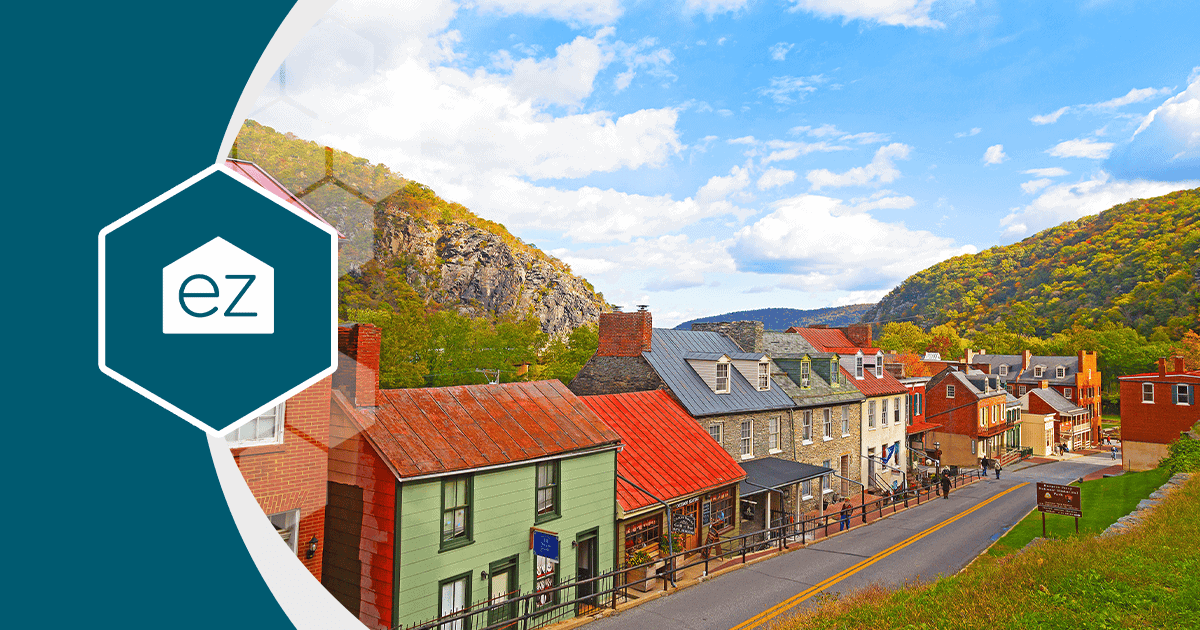
In Berkeley and Jefferson counties, a train timetable sets the buyer’s shortlist before the buyer ever calls an agent. West Virginia has three MARC stations, all on the Brunswick Line: Martinsburg, Duffields, and Harpers Ferry. The line runs nine commuter round trips a day out of Washington, and six of them reach Martinsburg (Maryland Transit Administration).
Those six trains are the whole story of who can live where. A household that needs to be at a desk in the District three days a week is choosing between a house within a reasonable drive of one of those three platforms and a house that requires 90 minutes on I-81 and I-270. That decision gets made before anyone opens a listing.
Ridership on the line fell from about 7,100 a day before the pandemic to 251 a day between April 2020 and March 2021, then recovered to roughly 2,400 a day by 2023, according to the MARC Brunswick Line Expansion Study. It has climbed again since. Maryland’s five-year MARC plan now targets peak-period service on the Brunswick Line at intervals of 60 minutes or less, which would put more trains on those same three West Virginia platforms. West Virginia riders have paid a surcharge since 2009, $2 on a one-way ticket and $80 on a monthly pass, according to the Maryland Transit Administration’s published fare schedule. It is a long-standing arrangement, and worth knowing before a client asks about it.
Every competing page about this market says the Eastern Panhandle is close to Washington. That sentence has never helped anyone pick a street. Tell them instead which three platforms exist, that Martinsburg sits at the far end of the line and takes two thirds of its daily trips, and that Maryland is planning to add frequency. That is information a buyer can act on. It also tells you which addresses to farm: Spring Mills and Falling Waters north of Martinsburg, Hedgesville to the west, Kearneysville and Middleway between the two counties, and the Charles Town and Ranson blocks within reach of the Duffields platform.
An agent who can hold that conversation is the local expert. An agent who says “you’re close to DC” is a search result.
Remote work did not go away, and West Virginia’s smaller counties are where it lands
West Virginia’s work-from-home share more than doubled between 2019 and 2024, from 3.92% of workers to 8.81%, and it is still sitting at better than twice where it started (US Census Bureau, American Community Survey 1-year estimates, table B08006). The national share moved the same way over the same years, from 5.7% to 13.3%.
Every headline says the opposite. The Federal Reserve Bank of Minneapolis examined Current Population Survey microdata in June 2026. It found that nearly 22% of US workers aged 16 and older worked from home at least some of the time in 2025, down just under one percentage point from 2024. The Fed’s own word for that was “sticky.” The 2025 declines sat in two sectors with identifiable causes: public administration fell about six percentage points and the information sector about five, both following return-to-office mandates. Professional services and health care grew their share of the remote workforce over the same period. Health care is also the sector this state has been adding jobs in.
The USDA Economic Research Service has been tracking what this does to rural counties nationally, and the pattern should look familiar. Rural counties have run negative natural change for eight consecutive years and have grown anyway every year since 2020, because arrivals more than offset the gap. They added roughly 168,000 residents in 2025, the fifth straight year that held. Between 2020 and 2024, 65% of nonmetro counties recorded positive net migration.
That is West Virginia’s own arithmetic, written at national scale. What is happening here is the rural pattern the USDA has been tracking for a decade, playing out inside one state’s borders.
Which places absorb that demand here is a broadband question before it is a housing question. Some 86.1% of West Virginia households had a broadband subscription in the 2020-2024 American Community Survey, and the state’s approved BEAD build reaches about two thirds of the locations it flagged as unserved or underserved. The counties positioned to take the shift are the ones where those two things line up: Hampshire, Hardy, Grant, and Tucker in the Potomac Highlands; the Greenbrier Valley around Lewisburg and White Sulphur Springs; Fayette and Nicholas in the New River corridor; Randolph around Elkins. Ascend West Virginia has already brought more than 900 new residents into six communities across the state, among them Morgantown, Greater Elkins, the New River Gorge, the Greenbrier Valley, the Eastern Panhandle, and, since September 2025, the Charleston area. Retention runs above 96%, average individual income above $97,000, and each participant arrives with an average of 1.9 additional people.
Remote buyers ask for specific things: a room with a door that shuts, or an accessory dwelling unit or outbuilding to work from; square footage a five-day commuter never needed; a connection that holds through a February video call. Most agents in these counties are not fielding those questions yet, which is the whole opportunity.
Beyond the metros, ten counties worth working
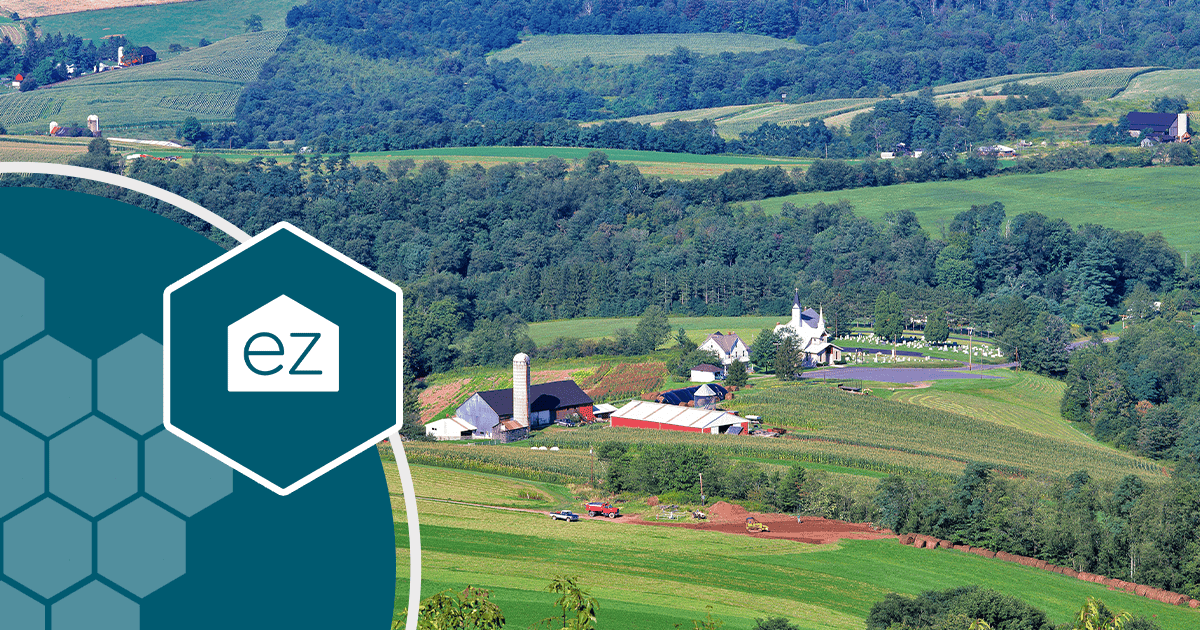
Most of West Virginia’s 55 counties sit outside a metro area, and being the name people think of first pays as well in a county of 12,000 as it does in a county of 170,000. That same National Association of Realtors research found 81% of sellers speak to a single agent and no one else before signing, 77% of repeat buyers sit down with just one, and 35% weigh reputation above every other factor in the choice. In a small county that math is brutal and it is also a gift, because there is room for one name and it can be yours.
Greenbrier County runs on Lewisburg and White Sulphur Springs, with Ronceverte and Rainelle behind them, and it has a steady flow of buyers arriving from Virginia and the Carolinas. Pocahontas County around Marlinton and Snowshoe, and Tucker County around Davis, Thomas, and Canaan Valley, have been the state’s established mountain markets for decades. A large share of the owners in both counties live somewhere else, which changes everything about how you reach them: they are not driving past your sign, and they check on their property from a laptop in another state.
Morgan County at Berkeley Springs and Hampshire County at Romney are the growth counties nobody writes about, and both gained population since 2020. Preston County around Kingwood and Terra Alta feeds Morgantown commuters without Morgantown prices. Nicholas County at Summersville sits between the New River corridor and the interstate. Jackson County, at Ripley and Ravenswood, is close enough to the Mason County buildout to feel it in rents before it feels it in prices. Randolph County around Elkins is an Ascend West Virginia community, which means new arrivals with above-average incomes and no local relationships yet.
Ten West Virginia counties beyond the big metros
| County | Communities |
|---|---|
| Greenbrier | Lewisburg, White Sulphur Springs, Ronceverte, Rainelle |
| Pocahontas | Marlinton, Snowshoe, Hillsboro, Durbin |
| Tucker | Davis, Thomas, Parsons, Canaan Valley |
| Morgan | Berkeley Springs, Great Cacapon, Paw Paw |
| Hampshire | Romney, Augusta, Capon Bridge, Slanesville |
| Hardy | Moorefield, Wardensville, Baker, Mathias |
| Preston | Kingwood, Terra Alta, Bruceton Mills, Reedsville |
| Nicholas | Summersville, Richwood, Craigsville, Mount Nebo |
| Jackson | Ripley, Ravenswood, Sandyville, Cottageville |
| Randolph | Elkins, Beverly, Harman, Mill Creek |
Nearly 12% of the housing in the planning region covering Fayette, Greenbrier, Nicholas, Pocahontas, and Webster counties is held for seasonal or recreational use, according to the 2025 statewide housing needs assessment. A postcard does not reach an owner who lives four states away.
If you work one of these counties and want to know whether it is still available, ask before your competitor down the road does.
What West Virginia agents do now, and where each approach runs out
Every approach below works, which is why agents keep paying for them. Each one also has a ceiling, and in West Virginia the ceilings arrive sooner than they do in a high-price metro. They are worth walking honestly before anything else gets said.
Shared leads from legacy portals produce volume, and they produce closings. The structure is what limits them. One name lands in several inboxes at the same moment, so the opening call is a sprint instead of an introduction, and the agent pays for that sprint either per name or out of the commission. In a market where a good month is a handful of transactions, paying twice over for a name three other people also bought is a hard way to build a year.
Your own IDX website is a genuine asset and it should exist. It is also a slow one. It ranks for a narrow band of queries against national platforms with engineering teams, it goes stale the week you stop feeding it, and the people who find it are mostly people who already know your name. It answers “where do I send my sphere” well. It does not answer “how do I reach the hundreds of thousands of owner households in this state who have never heard of me.”
Cold calling and dialers are still the fastest way to a conversation, and still legal. What most agents miss is that federal law puts them in the telemarketer category the second they prospect by phone or text, whether the target is a for-sale-by-owner sign, an expired listing, or a circle-prospecting list around a home that just closed. Should the person on the other end deny ever agreeing to hear from them, proving otherwise falls on the agent, number by number. A call or text with no proof behind it runs $500, a willful violation runs as high as $1,500, and nothing puts a ceiling on the total. Lawsuits of this kind more than doubled in 2025, and most arrive as class actions. Do Not Call complaints reached the Federal Trade Commission at a rate above 2.6 million in fiscal year 2025 alone. Run the numbers on a 10-agent team: one campaign, 3,000 dialer calls, documented consent on only a third of them, and the exposure starts near $1 million.
Predictive seller software scores a database, surfaces the names most likely to move, and points an agent in a useful direction. What a score cannot do is hold a relationship. Someone still has to build that relationship and keep it warm until a guess turns into a listing appointment, and no model does that part.
All-in-one CRMs and stitched-together stacks both ask for your time before they give any back. Buy the all-in-one and you spend months configuring it. Assemble the stack and you spend every week keeping it alive. Either way the data and engineering behind accurate valuations and a national search experience stay out of reach, because that is not what a CRM is for.
Do-it-yourself content and paid advertising work while you are running them. Both stop the day you stop, and neither leaves behind something a past client will come back to unprompted half a year later.
Three things that make every ceiling lower here
Severed mineral rights sit under a large share of West Virginia property, often separated from the surface generations ago and in some cases by conveyances written in the 1800s, and split since then across many heirs. Out-of-state buyers stall on it constantly, and a clean answer can require a mineral attorney. That is time between lead and closing that does not exist in most states.
The housing stock is old and a lot of it needs work. Some 44% of West Virginia households live in homes built before 1980, and the state’s 2025 housing needs assessment counts 23,947 vacant units sitting empty specifically because they need repair or are being repaired. The pre-listing conversation about what to fix and what to skip is a bigger part of the job here, and it starts months before anyone signs a listing agreement.
Then there is the driving. Topography, land ownership patterns, and water and sewer limits stretch a rural county’s service radius, and windshield time is a real, uncompensated cost of working a lead that may or may not be ready.
The arithmetic nobody puts on a slide
The median value of an owner-occupied home in West Virginia is $162,600, and median household income is $59,608 (US Census Bureau, 2020-2024 American Community Survey). Run that against a $600,000 market and the same lead, at the same price, has to work roughly four times harder here to pay for itself.
That is the whole reason lead generation feels like it stalls in this state even when the agent is doing everything right. The activity is fine. The unit economics are not, and no amount of dialing fixes a model that charges per lead or takes a slice of a commission that was smaller to begin with.
What an Exclusive County Partnership gives a West Virginia agent
The Exclusive County Partnership answers that arithmetic head on. Whoever holds a West Virginia county under it holds the whole thing, alone, and the holder can be one agent, a team, or an entire brokerage. Every opportunity inside the county line goes to that partner, nothing is billed per name, and closing a deal costs no piece of the commission. The fee is predictable and it does not move. A strong month stays a strong month instead of arriving as a larger bill. Where the median owner-occupied home is worth $162,600, that structure carries more weight than it would almost anywhere else.
What arrives is different too. A person who reaches an ez Home Search partner is not a name that was sold to four agents at once. They come attached to a record the agent can read: which style of house they kept opening, which streets they came back to, where their price kept settling, and which home finally made them ask for a tour. That lets the opening conversation start on the person’s own terms, and most of the trust that normally takes weeks is already there before either of them speaks. Across ez Home Search partners, opportunities worked this way convert inside 30 to 60 days instead of grinding through a year of follow-up.
Why people engage in the first place
The product underneath all of it is The Only Confidential Home Search, and that pillar is how ez Home Search keeps the brand promise it prints on everything: A Better Way To Discover Real Estate. Nobody’s phone number, email, or budget gets sold, resold, recycled, or pushed out to a roster of businesses they never picked. Each person is matched with one vetted local expert, the Single Local Expert, and the remainder of the vetted network stays available to them only on their own say-so.
Go back to the four stages. A West Virginia homeowner in her late sixties, deciding whether the house still fits the years ahead, is going to spend months gathering before she plans and longer before she goes active. She will not do that on a platform that turns one home-value lookup into a week of calls from strangers. She will do it somewhere private, and the partner whose brand is on that experience is the name she already trusts when she is finally ready. With 22.5% of the state’s residents 65 or older, that scenario describes most of the West Virginia pipeline.
The database the partner already owns
The largest opportunity is usually not new business at all. About 41% of what the average agent closes traces back to a past client or to somebody a past client sent, and the veterans of the business run well above that. Somewhere between 88% and 92% of buyers will tell you they would happily use their agent again or send a friend, while roughly 18% actually do. Everything in that gap was earned once and then lost.
ez Home Search closes it for the partner. Past clients keep coming back to the co-branded search to watch their value and follow their own market, and ezNurture fires the outreach off what they do there instead of off a calendar. When an ez Home Search partner works that database, repeat business and referrals come back at roughly 2.5 to 5 times the market rate.
Nationwide coverage also protects the listing when a client moves away. Each year, Census figures put roughly 2.1% of Americans in a different state and about another 3% in a different county inside the state they already live in. For an agent in McDowell or Mingo County, where residents have been leaving faster than anywhere else in West Virginia, that is the difference between hearing about a move in time to win the listing and hearing about it after the sign goes up.
The compliance problem, handled before you dial
By the time an opportunity reaches the partner, ezVerify.ai has already confirmed the opt-in, banked the audio that documents it, checked the number against a known-litigator database, and cleared every number that appears on the Do Not Call registry. Contact detail the agent would have spent an afternoon chasing arrives filled in. It is consent proof and enrichment, never a lead score, and it lifts the job’s biggest liability off the partner’s desk on everything ez Home Search sends.
One partner per county, and West Virginia has 55
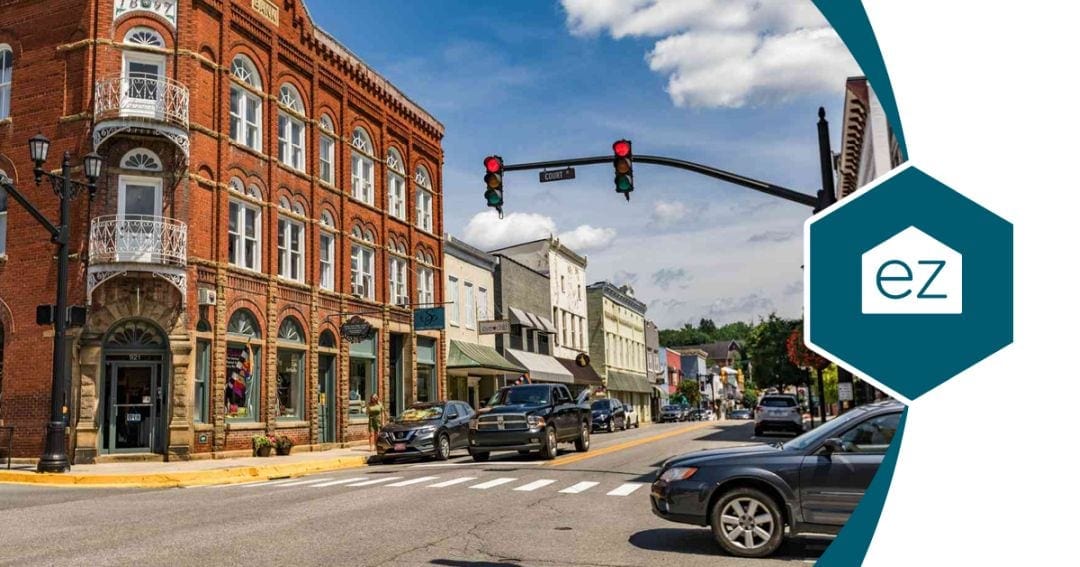
A county is spoken for by exactly one partner, and no competitor can buy that position at any price. That is the part of this that cannot be copied. Many of West Virginia’s counties are already claimed and more are taken every month, so the only useful question is whether a specific one is still open.
The position itself is what compounds. A partner’s name and brand sit across nearly the entire consumer experience in their county: their search, their listing alerts, their home value emails, their local market reports. Every one of those touchpoints builds the partner’s brand rather than a portal’s. An agent or team carries that brand into any brokerage they ever join, and an owner who holds the brokerage builds equity in the company itself. Local buyers and sellers start associating one name with real estate in the county long before anyone picks up a phone.
Nothing has to be built. Millions of people are already on the national platform, the partner’s brand goes onto it, and the whole arrangement runs from the first day. There is nothing to configure, no stack to hold together, and no engineers to hire. A year spent administering software is a year not spent in front of clients, and that trade is the one most agents make without noticing.
The model does not change with county size. It works the same in Kanawha and Berkeley as it does in Pocahontas or Wirt, because one trusted name carries the same weight in a county of 5,000 that it carries in a county of 170,000, and it is far easier to become that name in the smaller one. West Virginia is a state built out of small counties. That is a disadvantage under a per-lead model and an advantage under this one.
What this comes down to for a West Virginia agent
Three paths are open, and most agents take the first one by default. That path is the status quo: keep buying shared names, keep feeding the site you built, and keep running that against a $162,600 median. It produces closings. It does not compound, and the arithmetic gets harder every year the fee schedule outpaces the commission.
At the far end sits building the whole thing yourself. That means a national search experience people return to on their own, valuation modeling accurate enough to open a seller conversation, school and property tax data at the county and district level, consent infrastructure that survives a TCPA complaint, and automated follow-up that fires on behavior rather than a calendar. It is genuinely possible. It costs millions of dollars and several years, and the data sourcing underneath it sits beyond what a West Virginia brokerage can buy at any size.
The Exclusive County Partnership sits between them. It gives you a flat fee, a county to yourself, nothing billed per name, no slice of the commission, and a platform that was built and running long before you signed anything.
Be clear about what it costs you. Exclusivity runs both directions: the county is committed to one partner, so this works only if you are prepared to serve all of it rather than the corner you know best. And the business it produces builds rather than spikes. The relationships that make this model pay compound over months, so an agent looking for a full pipeline next Tuesday should keep dialing instead.
An ez Home Search partner reactivates past clients, through repeat purchases or referrals, reaching 2.5 to 5 times the market rate. It is revenue they already earned once and would otherwise have lost, and it is the number to weigh this decision against.
West Virginia’s population is falling because more people are dying than being born, while more people move in than move out. That is a demographic fact, and read correctly it describes a listing pipeline: an owner base of roughly 545,800 households, a fifth of the state past 65, and homes that will change hands on a schedule almost nobody is working. Whoever is the trusted name in a county when those owners are ready will handle those moves. The state has 55 counties, and one partner holds each.
Two minutes will tell you whether yours has been taken.
Frequently asked questions
Why is West Virginia’s population falling while home prices keep rising?
The two numbers measure different things. Population change here is driven by deaths outpacing births, nearly 80,000 more of them than births since 2011, while net domestic migration turned positive in 2025. Prices respond to how many households want a home against how many homes are available, and on that measure the state has held steady, with house prices up about 47% over five years according to the Federal Housing Finance Agency.
For an agent, the practical reading is that the number of potential clients is not collapsing. The age of those clients is shifting, which changes what they need from you and when they will need it.
How do I compete for Eastern Panhandle buyers who commute to the Washington and Baltimore metros?
Know the rail. West Virginia has three MARC stations on the Brunswick Line, at Martinsburg, Duffields, and Harpers Ferry, and six of the line’s nine daily commuter round trips out of Washington run to Martinsburg. That schedule decides which Berkeley and Jefferson addresses a commuting household will consider before they ever contact an agent.
You win the relationship by being the person who can explain that, and by being in front of the buyer while they are still comparing a West Virginia price against a Loudoun County one. The hard part is reaching them at that stage, which is exactly what a co-branded national search experience is for.
Where do listing opportunities come from in Kanawha County now that Charleston has been losing residents?
They come from the owners who stayed, which is most of them. Kanawha remains the state’s most populous county at 172,381 residents. A 4.6% population decline over five years still leaves tens of thousands of owner households in Charleston, South Charleston, St. Albans, Nitro, and Cross Lanes, many of them older owners with substantial equity and a decision ahead about whether the house still fits.
Those decisions surface as behavior long before they surface as a listing appointment: a home value checked twice in a month, a dormant search resumed, an old favorite reopened. An agent who can see that activity calls at the right moment instead of working a list in alphabetical order.
How do severed mineral rights change the way I work a rural West Virginia listing lead?
They lengthen everything, so you have to start earlier. Mineral ownership across much of the state was separated from surface ownership generations ago, sometimes by deeds written in the 1800s, and it may now be split among many heirs. An out-of-state buyer usually has never encountered the concept, and answering the question cleanly can require a mineral attorney.
Treat it as a reason to be in the relationship months ahead of the transaction rather than as a deal-killer. A seller who has already worked through their title questions with you is not going to interview anyone else.
With 44% of West Virginia homes built before 1980, how do I handle a seller lead whose house needs work before it lists?
Start with the value question, not the repair list. An accurate automated valuation model, or AVM, gives the owner a real number to reason from, and from there the conversation about which repairs move the price and which are wasted money becomes concrete instead of anxious.
That conversation also takes time, which is why it belongs months before a listing agreement. The state’s 2025 housing needs assessment counts 23,947 vacant units sitting empty specifically because they need repair. Every one of those was once an owner who did not get that guidance early enough.
Are Ascend West Virginia arrivals worth building a pipeline around in Morgantown, Elkins, and the Greenbrier Valley?
They are, with realistic expectations. The program has brought more than 900 new residents to the state at a retention rate above 96%, with average individual income above $97,000 and an average of 1.9 additional people arriving with each participant. That is a few hundred households across six communities, not a wave.
What makes them worth the attention is that they arrive with money, no local relationships, and a high likelihood of buying within a year or two of renting. The entire job is to be the recognized name in that county when they start looking.







Kurt Uhlir is a recognized leader in marketing, growth, and innovation, having helped scale companies and technologies used by millions every day—including at brands like eXp Realty, Sideqik, Vitrue, Oracle, Garmin, Facebook, Meta, Apple, and more. He’s trained tens of thousands of professionals on how to build trust, lead with service, and help clients make wise, informed decisions. At ez Home Search and Sure Send, his focus is on helping high-performing business owners, team leaders, and individual sales leaders grow their businesses through exclusive market access, privacy-first lead systems, and conversion-focused enablement tools.