

Hawaii looks like one market on a map and behaves like four. As of spring 2026 a single-family home runs around $1.3 million on Maui and under $600,000 on the Big Island, and while most of the state lost population last year, the Big Island kept growing. Anyone selling Hawaii real estate leads as a single statewide product is selling you a fiction, because the buyer pulling up listings in Kapolei and the seller weighing a Lahaina rebuild are not in the same market, the same price band, or the same conversation.
That gap is the whole opportunity. The agents who win in Hawaii are rarely the ones with the biggest shared-lead budget. They are the ones who become the recognized name across an entire island county and convert the warm, chosen connections that come with it.
Hawaii is four county markets, and that changes the whole lead math
Hawaii has only four real estate markets that matter, because it has only four functional counties. The City and County of Honolulu covers all of Oahu and holds close to 69% of the state’s roughly 1.4 million residents (US Census Bureau, July 2025 estimates). Hawaiʻi County is the Big Island, Maui County takes in Maui, Molokaʻi, and Lānaʻi, and Kauaʻi County covers Kauaʻi and Niʻihau. A fifth county, Kalawao on Molokaʻi’s Kalaupapa peninsula, has around 80 residents and no general real estate market, a piece of trivia rather than a place to prospect.
For a mainland agent, “own your county” can mean fighting for one of dozens of similar territories. In Hawaii it means something far larger. A county here is an island or a group of islands, with its own price structure, its own buyer mix, and its own rules. That scarcity sits underneath every decision in this article, and it is why a single strong position in Hawaii is worth more than a fistful of leads.
| County | Principal city | Island(s) | Share of state population |
|---|---|---|---|
| Honolulu (City & County) | Honolulu | Oahu | About 69% |
| Hawaiʻi County | Hilo (seat), Kailua-Kona | Big Island | About 15% |
| Maui County | Wailuku (seat), Kahului | Maui, Molokaʻi, Lānaʻi | About 11% |
| Kauaʻi County | Līhuʻe | Kauaʻi, Niʻihau | About 5% |
| Kalawao County | Kalaupapa | Molokaʻi (peninsula) | Under 0.01% |
The four islands are diverging, not moving together
The single most useful thing to understand about Hawaii right now is that the islands are pulling apart. The University of Hawaii Economic Research Organization (UHERO) reports in its 2026 Housing Factbook that statewide prices surged after 2020 and have stayed roughly flat for a third straight year, with the gap between single-family homes and condos widening. Underneath that flat statewide average, the islands tell four different stories.
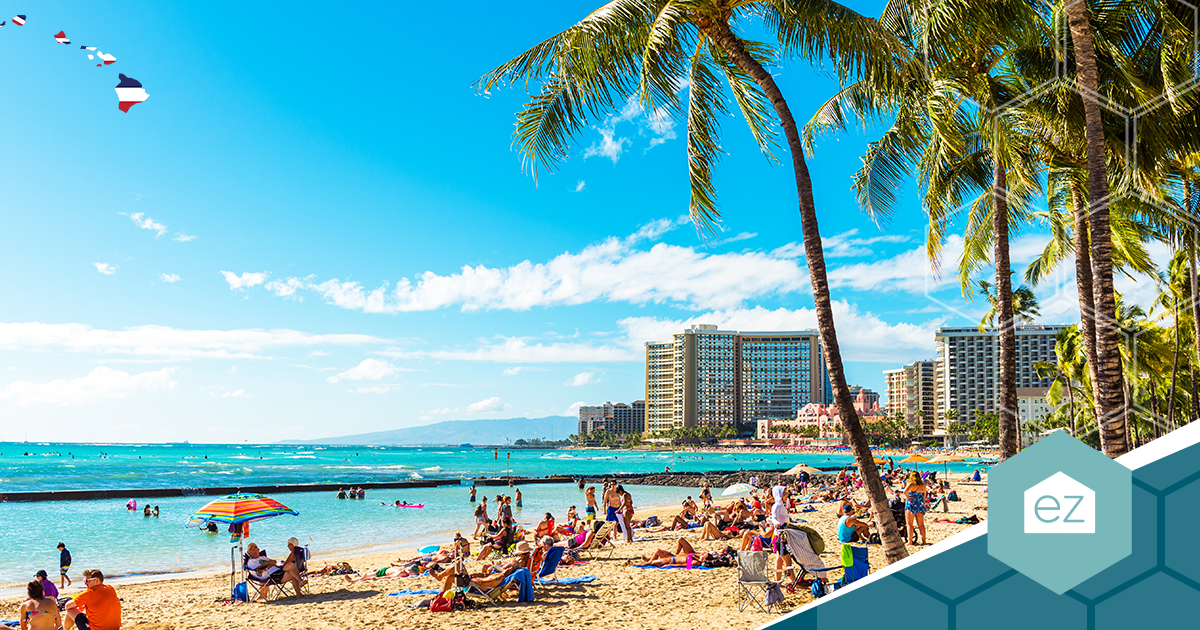
Oahu is the tightest market in the state. The Honolulu Board of REALTORS reported single-family inventory down about 11% year over year in May 2026, near 2.9 months of supply, with the median single-family home going to contract in roughly 13 days, down from about three weeks a year earlier. That is a market where listings, not buyers, are the scarce resource. The neighbor islands sit at very different price points, with single-family medians ranging from around $1.3 million on Maui to roughly $1.1 million on Kauaʻi and under $600,000 on the Big Island as of spring 2026. Condos diverge just as sharply by island. A lead-generation plan tuned for Oahu’s bidding-war pace will misfire on the Big Island, and the reverse is just as true.
| Island or region | Where the market sits in 2025-2026 |
|---|---|
| Oahu, urban Honolulu | Tightest market in the state; single-family inventory down about 11% year over year, median days on market near 13 (Honolulu Board of REALTORS, 2026) |
| Oahu, Leeward (Ewa, Kapolei) | The island’s growth and new-construction corridor, with more entry-level product than the urban core |
| Maui, West Maui (Lahaina) | Recovery and rebuilding after the 2023 wildfire, plus a vacation-rental phase-out reshaping supply; highest island single-family median, around $1.3 million |
| Big Island, Kona and Hilo | The only county still gaining population (about +0.9% a year, 2020-2025); lowest single-family median, under $600,000 |
| Kauaʻi | Smallest functional county; strict short-term-rental enforcement; resort demand split between the North Shore and the South Shore |
| Molokaʻi and Lānaʻi | Small, rural neighbor-island markets inside Maui County, with limited inventory and distinct ownership patterns |
Who is moving, and why it cuts both ways for agents
Hawaii’s population is shifting, and the honest version of that story is two-sided, not a tale of decline. The Census Bureau estimates the state lost a net 2,132 residents in the year ending July 2025, about 0.15% of the population, with most of the loss coming from domestic out-migration to the mainland (roughly 8,876 net) and partly offset by international arrivals and natural increase. UHERO’s migration work adds the piece the headlines miss: in 2023 around 58,000 people left Hawaii, and that outflow was roughly matched by people moving in. This is high churn in both directions, not a stampede for the exits. The Big Island actually grew.
For an agent, churn in both directions is two streams of business, not one problem. Every departure is a listing and, just as valuable, a relocation referral; relocation transactions tied to Hawaii tend to carry far higher values than the mainland average because of the price of the homes involved. Every arrival is a buyer: a military family on orders, a returning kamaʻāina, a mainland transplant, or an international cash buyer. The trouble is that most agents see only the side of this they happen to catch. The relocating seller who lists with someone else, and the out-of-state buyer who finds a different agent online, are both business that was reachable and got away.
The jobs picture is broader than tourism, with one real soft spot
Hawaii’s economy is more diversified than the postcard suggests, which matters because buyer demand rests on payrolls, not just visitors. State data put civilian employment around 670,100 in mid-2025, up about 1.1% year over year, with unemployment near 2.7%. Construction and health care both added jobs through 2025, and visitor arrivals rose about 2% in the second quarter of 2025 even with reduced airline capacity (Hawaii Department of Business, Economic Development and Tourism).
The soft spot is worth naming plainly, because it shapes where risk sits. Federal government employment in Hawaii fell about 9.5% year over year as of late 2025. In a state with a heavy military and federal footprint, that is a real headwind for a slice of the buyer pool, and it is the kind of detail a serious agent factors into how they advise a federal-employed client about timing. Demand here is broad, but it is not evenly distributed, and the agent who knows which payrolls are growing knows which conversations to start.
Short-term-rental rules are redrawing a whole segment of the business
The biggest single shift in Hawaii’s market right now is regulatory, and it is creating listing and buyer conversations across three islands at once. On Maui, Mayor Richard Bissen signed Bill 9 into law in December 2025, phasing out about 6,200 apartment-zoned vacation-rental units on the county’s Minatoya list. The county’s own figures put those units at roughly 21% of Maui’s housing stock, the highest share of any county in Hawaii, with about 94% owned by people who do not live in the county. Exemptions run out on January 1, 2029 in West Maui and January 1, 2031 for the rest of the county, and two lawsuits are pending, so the timeline is real but contested (County of Maui; Honolulu Civil Beat).
The other islands are tightening too. Hawaiʻi County’s Bill 47, now Ordinance 25-50, requires annual registration for short-term rentals starting July 1, 2026, with fees of $250 for hosted and $500 for unhosted rentals and fines up to $10,000 (Hawaiʻi Public Radio). Kauaʻi enforces its permit rules with little tolerance, and Honolulu’s attempts to lengthen minimum stays have run into federal court challenges. For thousands of owners, the question has changed from “how do I rent this” to “do I hold it or sell it.” That is exactly the moment an agent earns a listing or places a buyer, and it is happening to a defined, findable group of property owners right now.
In Hawaii, the tax bill follows who lives in the home
Here is the detail almost no out-of-state lead vendor will ever surface for you, and it shapes who can buy at every price point: Hawaii’s counties tax a property based on who lives in it, not just what it is worth. Each functional county runs a tiered real-property tax that separates owner-occupants from investors and second-home owners, and the spread is dramatic. For the 2025-2026 tax year, the City and County of Honolulu taxes an owner-occupied home at $3.50 per $1,000 of value, while its Residential A tier above $1 million runs $11.40. On Maui the gap is wider still, with an owner-occupant taxed as low as $1.65 per $1,000 and a non-owner-occupied home above $3 million taxed at $17.00, more than a tenfold difference at the same value (City and County of Honolulu Real Property Assessment Division; County of Maui).
The state’s conveyance tax works on the same principle. The transfer tax itself is tiered by price, and a buyer who does not qualify for a county homeowner exemption, typically an investor or non-resident, pays a higher rate than an owner-occupant on the same sale (Tax Foundation of Hawaii; Hawaii Department of Taxation). The practical effect is that owner-occupant status is worth real money every year, second-home buyers underwrite differently than they would on the mainland, and an agent who can explain the tax classes early looks like the local expert the client came to find. This is the kind of knowledge that converts a curious inquiry into a working relationship.
Leasehold versus fee simple is the deal friction no mainland playbook prepares you for
Hawaii has an ownership quirk that confuses buyers and stalls deals, and it is a lead-conversion advantage for the agent who understands it. Many Hawaii properties are leasehold, meaning you own the building but lease the land underneath it and pay ground rent that resets on a schedule. Leasehold can carry a lower purchase price than comparable fee-simple property, where you own the land outright, but it complicates financing and resale, because lenders generally want the lease to extend well beyond the loan term. The price discount and the reset terms vary deal by deal, so they are best treated as guidance rather than a fixed rule.
A buyer scrolling listings sees a lower number on a leasehold unit and does not understand why. An agent who can walk them through what they would actually own, how a lender will view it, and what happens at the next rent reset turns confusion into trust in a single conversation. That is the moment a lead becomes a client, and it is one a national lead vendor cannot script for you.
Where Oahu’s new inventory is actually being built
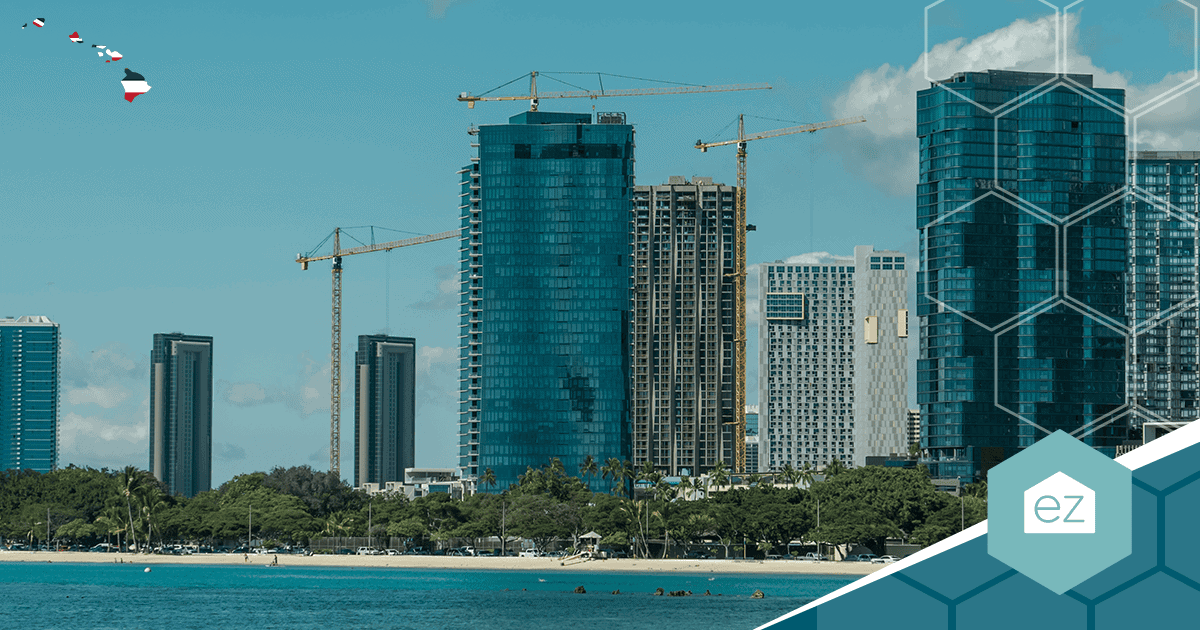
On an island this tight, knowing where new homes are coming is its own lead source, and on Oahu the answer is the Leeward corridor. The Skyline automated rail opened its airport segment in October 2025, adding about five miles and four stations running from East Kapolei through Joint Base Pearl Harbor-Hickam and the Daniel K. Inouye International Airport (City and County of Honolulu Department of Transportation Services). Rail tends to pull development and value toward its stations, and on Oahu that line runs straight through the island’s growth corridor.

That corridor is where the new product is. The master-planned Hoʻopili community in the Ewa and Kapolei area sits on about 1,554 acres reclassified from agricultural use by the State Land Use Commission, planned for roughly 11,750 homes across a range of price points over its build-out. For an agent, this is where first-time buyers, military families, and move-up buyers will find attainable inventory on an island that otherwise has almost none. An agent who is early and already known in that corridor holds something worth more than any volume of cold leads pointed at it.
The remote-work edge most Hawaii agents are not pricing in
There is a buyer pool feeding Hawaii’s neighbor islands that the headlines keep declaring dead, and the agents who understand it have an advantage. The claim that remote work is fading is mostly a measurement error, comparing today against the spring 2020 peak rather than against the pre-pandemic baseline. Measured against the pre-2020 baseline, remote and hybrid work has settled at roughly three times where it started and stayed put. By the Bureau of Labor Statistics count, roughly 36.7 million Americans were doing at least some telework in late 2024, a rise on the prior year, and Gallup’s 2025 tracking shows the hybrid-or-fully-remote share of remote-capable workers holding steady since late 2022. The US Census Bureau’s survey of about 150,000 firms found employers expect to maintain current work-from-home levels for years, not retreat from them.
That staying power matters for Hawaii because the people it frees to live where they want are exactly the buyers the neighbor islands can win. The Big Island, with the lowest prices in the state and the only county still gaining population, along with the rural stretches of Kauaʻi and the small markets of Molokaʻi and Lānaʻi, are the geography positioned to capture a relocating remote worker who can finally choose lifestyle over commute. These buyers ask for specific things: a dedicated or closable home office, an ʻohana unit or separate structure, more space, and genuine broadband. An agent who lists and markets for those features, and who knows which neighborhoods actually have the connectivity, reaches a national buyer pool that most local competitors are not even speaking to. The trend the headlines call over is, on the neighbor islands, a steady source of demand.
How Hawaii agents try to win leads today, and where it breaks

Most Hawaii agents are working hard at lead generation with tools that each solve part of the problem. They buy shared leads from the legacy listing portals, build and maintain an IDX website, cold call, run paid ads, lean on predictive-seller software, and rely heavily on relocation referral networks, which carry unusual weight in a state where so much business crosses an ocean. None of that is wrong, and the referral relationships in particular are genuinely valuable. The problem is what each approach costs in a market this small and this tight.
A shared lead is the clearest example. When you buy a lead from a legacy real estate portal, you are buying a name that can be sold or routed to whoever pays the most, often several agents at once, and you start the relationship cold and already in competition. In a state with thin inventory and a referral-driven culture, that is an expensive way to meet someone who may never have chosen you. An IDX site helps, but it is a slow asset that depends on you feeding it traffic and content you rarely have time to produce. Cold calling into a community that runs on relationships and reputation is the hardest possible way in. Across eXp Realty’s expansion from 4 countries to 23 and 32,000 agents to 89,000, the pattern I watched repeat was that teams in tight, relationship-driven markets won by becoming the name an area trusted, not by buying more cold names. The tools agents use today generate activity. What they rarely generate is a warm connection that was always going to be yours.
Why ez Home Search leads convert here, and what the partnership actually is
ez Home Search starts from the opposite premise: serve the consumer first, and the agent gets warmer, chosen connections instead of contested cold ones. The model for professionals is the Exclusive County Partnership. One agent, team, or brokerage holds an entire county, co-branded across the consumer experience, with no competing partner inside that territory, no charge per lead, and no share of the commission when a deal closes. In Hawaii, where a county is a whole island or island group, that is one of the strongest positions available anywhere in residential real estate.

What makes the connections convert is the way they begin. ez Home Search is built as The Only Confidential Home Search. A buyer or seller can browse listings, build saved searches, and weigh home values while keeping their phone number, email, and price range off the open market, so none of it gets resold or handed around to a list of businesses the person never picked. Rather than going to whoever bids highest, that searcher is paired with a Single Local Expert, the lone vetted partner covering their island. By the time they reach you, they already trust the platform and have shown real intent through real activity, the searches they keep running and the homes they keep returning to. That is why partners typically convert these connections in the 30-to-60-day range rather than the long, cold slog of a purchased list. The county exclusivity partners we work with in markets like these consistently tell us the difference is that the person was never a stranger.
The supporting pieces map directly onto Hawaii’s pains. Because the platform covers the whole country, a past client who starts searching the mainland shows up as an early signal, so the relocating seller’s listing and the referral fee stay with you instead of drifting to a stranger online, which is exactly the leak that costs Hawaii agents the most. The same co-branded experience keeps your existing database warm, reactivating past clients and sphere at a multiple of the market rate, which is the cheapest growth a small-market agent has. For the heavy military and relocation business on Oahu, ezVerify.ai confirms a person opted in, keeps the recording that proves it, screens each number against a known-litigator database, and suppresses Do Not Call numbers before you ever dial, so the riskiest part of prospecting is handled. And the consumer tools, the automated valuation model (AVM), the home-value pages, the listing alerts, all run co-branded to you without anything to build or maintain. For teams that want a CRM their people will actually use, Sure Send carries this follow-up automatically. The point is not a longer feature list. It is that every one of these maps to a specific way Hawaii agents lose business today.
The whole island, community by community
Real local coverage in Hawaii means knowing the districts, not just the county seat, and the platform is built to reach buyers and sellers across all of them. On Oahu that runs from urban Honolulu, Waikīkī, and Kakaʻako through the Windward towns of Kailua and Kāneʻohe, the North Shore around Haleʻiwa, the Leeward growth corridor of Kapolei and ʻEwa Beach, and the central communities of Mililani and Wahiawā. The neighbor islands each carry their own map of demand.
| Island | Communities and districts that drive demand |
|---|---|
| Oahu (Honolulu County) | Honolulu, Waikīkī, Kakaʻako, Kailua, Kāneʻohe, Haleʻiwa, Kapolei, ʻEwa Beach, Mililani, Wahiawā |
| Big Island (Hawaiʻi County) | Hilo, Kailua-Kona, Waimea (Kamuela), Pāhoa (Puna), Honokaʻa (Hāmākua), the Kaʻū district |
| Maui County | Lahaina and Kāʻanapali (West), Kīhei and Wailea (South), Makawao and Kula (Upcountry), Kahului and Wailuku (Central), Pāʻia and Haʻikū (North Shore), plus Molokaʻi and Lānaʻi |
| Kauaʻi County | Princeville and Hanalei (North), Līhuʻe and Kapaʻa (East), Poʻipū and Kōloa (South), Waimea and Hanapēpē (West) |
Only four county positions exist in the whole state

Scarcity in Hawaii is not a sales tactic, it is arithmetic. One partner holds a county, and Hawaii has only four county markets worth holding, so the number of these positions that will ever exist is tiny compared with any mainland state. Counties open and close as partnerships are claimed, more are taken each month, and no one can hold a territory that is already spoken for. Once a partner holds an island county, the recognition compounds in their favor and no competitor can buy the same co-branded position out from under them.
The engine behind that position is built and already running, so taking it on does not mean a setup project. The platform millions of people already use simply carries your brand across the island you serve. The only real question is whether the county you want is still open, which is worth checking before someone else does.
Your real options as a Hawaii agent

Step back and a Hawaii agent really has three roads in front of them. The first is to keep renting shared leads into the most expensive, tightest, most regulated market in the country, paying the bill again every month to meet strangers who were sold to your competitors on the same day. You can try to build the whole thing yourself, the national-grade search, the data, the valuations, the compliance, the co-branded follow-up, which no single team or brokerage can fund or maintain. Or you can hold the co-branded position across an entire island county and convert the warm, chosen connections that come to it.
The honest trade-off with the middle road is real and worth stating: a single partner holds each county, so a taken island means you wait for it to reopen, and even a warm connection still takes work and roughly 30 to 60 days to reach a closing, not one phone call. What you get for that is the thing the other two paths cannot give you, a position no competitor can copy and a stream of connections that were yours from the start. ez Home Search partners reactivate past clients and referrals at well above the market rate because the people in their database keep coming back to a search experience that carries the partner’s name. In a market where listings are the scarce resource and relationships decide everything, owning the island beats renting the lead.
If you sell real estate anywhere in Hawaii, the next step is simple: schedule a call to see whether your island county is still available.
Frequently asked questions
How do Hawaii agents generate listing leads when island inventory is this tight?
In a market like Oahu’s, where single-family supply has run near three months and homes go to contract in about two weeks, the scarce resource is listings, not buyers, so listing-side lead generation matters more than chasing more buyer names. The highest-return move is reactivating the database and sphere you already own, because past clients and referrals are the cheapest listings you will ever earn. ez Home Search does this by keeping your past clients on a co-branded home search and home-value experience, so when someone’s life or equity points toward selling, you see the activity and reach out before they have called anyone else. That beats buying shared buyer leads into a market where there is little for those buyers to purchase.
How do you reach military PCS buyers relocating to Oahu before their report date?
Military families moving to Schofield Barracks or Joint Base Pearl Harbor-Hickam start searching well before they arrive, often from another state, and the agent who is present during that early search usually wins the relationship. Because ez Home Search covers the entire country and is co-branded to one partner per county, an incoming buyer can search Oahu on your platform from their current duty station, and their activity reaches you rather than a rotating list of agents. ezVerify.ai also confirms consent and screens numbers before you dial, which matters when you are working a high volume of relocation contacts on a tight timeline tied to report dates.
How can a Hawaii agent turn the steady out-migration to the mainland into listings and relocation referrals?
Hawaii’s out-migration is real but two-sided, with roughly as many people arriving as leaving in recent years, and each departure is two pieces of business at once: the listing on the home they are leaving behind, plus a referral fee for handing them to an agent where they land. The leak most agents suffer is not seeing the move until the listing is already gone, because the client quietly searched the mainland somewhere else. National coverage closes that leak. When a past client starts searching another state on your co-branded platform, that activity is an early signal to reach out, win the local listing, and refer them onward for a fee, on transactions that in Hawaii tend to carry high values.
How are Maui’s Bill 9 and the other counties’ short-term-rental rules changing the lead pool?
The short-term-rental crackdown is converting a large group of investor and second-home owners into hold-or-sell decision-makers, which is precisely when listing and buyer conversations happen. Maui’s Bill 9 phases out about 6,200 apartment-zoned vacation rentals, roughly 21% of the county’s housing stock and overwhelmingly owned by non-residents, with exemptions ending in 2029 and 2031. The Big Island begins requiring registration in July 2026, and Kauaʻi enforces strictly. For agents, this is a defined, findable group of owners weighing their options right now, and the partner who is the recognized local name is positioned to handle both the sellers exiting and the buyers acquiring.
How do leads and client expectations differ for leasehold versus fee-simple properties?
A leasehold buyer needs more guidance earlier, because they are buying the building while leasing the land, and that affects price, financing, and resale in ways most buyers do not understand from a listing. Leasehold often shows a lower price than comparable fee simple, which draws inquiries, but lenders typically want the lease to run well past the loan term, and the ground rent resets on a schedule. The agent who can explain clearly what the client would own and how a lender will treat it converts those inquiries into trust, while an out-of-state lead vendor leaves the buyer confused and likely to walk.
Where do buyer leads come from on the neighbor islands where the resident market is small?
On the Big Island, Kauaʻi, Molokaʻi, and Lānaʻi, the resident buyer pool is small and prices diverge sharply from Oahu, so neighbor-island business leans on relocation, lifestyle, and remote-work buyers reaching in from outside the island. The Big Island in particular, with the state’s lowest prices and the only growing county population, draws remote and hybrid workers who can now choose where to live. A co-branded national platform puts those out-of-area buyers in front of one local partner instead of a portal full of competitors, and marketing the home features remote buyers want, a home office, an ʻohana unit, real broadband, reaches them directly.
How can a Lahaina or West Maui agent generate business sensitively during the rebuild?
West Maui’s recovery is first a community rebuilding homes and lives, and any agent working there has to lead with service rather than sales. The county’s recovery dashboard showed hundreds of rebuilding permits issued and a growing number of homes completed through early 2026, so the market is slowly coming back, alongside displacement that is still very real. The respectful approach is to be a genuinely useful local resource, on rebuilding, valuation, and options, for residents who ask, and to let that trust earn the business over time. A co-branded platform that keeps you present and helpful, rather than pushing cold outreach, fits that moment far better than a purchased lead list.



Kurt Uhlir is a recognized leader in marketing, growth, and innovation, having helped scale companies and technologies used by millions every day—including at brands like eXp Realty, Sideqik, Vitrue, Oracle, Garmin, Facebook, Meta, Apple, and more. He’s trained tens of thousands of professionals on how to build trust, lead with service, and help clients make wise, informed decisions. At ez Home Search and Sure Send, his focus is on helping high-performing business owners, team leaders, and individual sales leaders grow their businesses through exclusive market access, privacy-first lead systems, and conversion-focused enablement tools.