

Delaware is the second-smallest state with only three counties, and most agents treat it like one market. That is the first mistake. The agents who win real estate leads in Delaware understand that New Castle, Kent, and Sussex behave like three different states stacked end to end, each with its own buyers, price points, and timing. The demand holding them together is real: Delaware has ranked among the very top states in the country for home-price growth, well ahead of the national pace.
A small map hides a lot of variety. The finance-and-suburbs north around Wilmington has little in common with the government-and-farm middle around Dover, and neither looks like the booming coast-and-agriculture south in Sussex. A lead plan that ignores those differences spends money in the wrong place at the wrong time. This is a guide to where buyers and sellers are actually moving across Delaware, how agents try to capture them today, and a structurally better way to own the demand in a county before a competitor does.
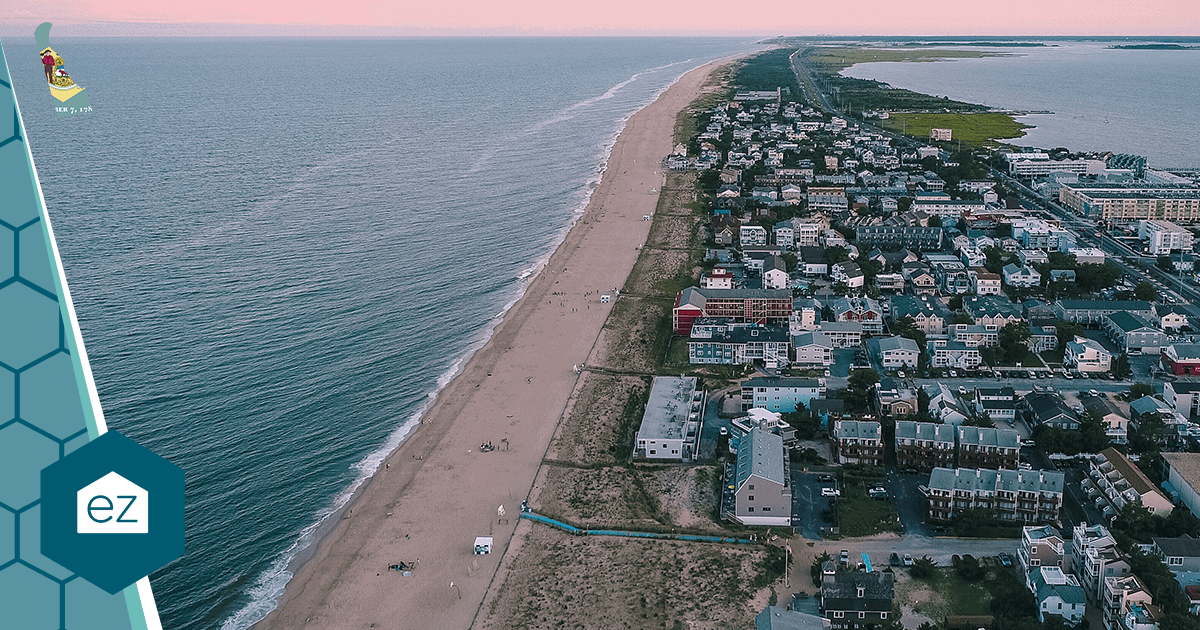
What is actually happening across Delaware’s market
Delaware is a seller-leaning market that has loosened from very tight, not turned down. Recent Delaware Association of Realtors data show a median sold price near $399,000, up by double digits year over year, with active inventory up roughly 60% as more homes reach the market and houses taking around six weeks to sell. More supply and slightly longer market times describe a market returning toward balance, with prices still firm. Step back from the monthly noise and the longer trend is strength: in the Federal Housing Finance Agency House Price Index, Delaware’s annual price growth recently ranked second among all states, near 6.3% against a national rate under 2%.
Underneath that statewide number sit several forces pulling in different directions. Here is the honest picture, because a lead plan built on one headline trend misses most of the opportunity.
Sussex County is the growth engine, and the building permits prove it. Sussex is the fastest-growing county in Delaware by a wide margin, with roughly 78% of all residential growth in the state landing there in a recent year and its population topping 270,000 (Delaware Population Consortium). That is not a survey artifact. The Census Bureau’s Building Permits Survey shows Sussex authorizing roughly 3,900 to 4,800 new private housing units a year in recent years, an extraordinary pace for a county of about a quarter-million people, with only a modest pullback lately as the market cools from its peak.
In-migration is real, but it is one trend among many, not the whole story. Delaware has added close to 30,000 net new residents through migration in recent years, concentrated in Sussex (Delaware Population Consortium). Set against a state of more than one million people, a large existing owner base, and ordinary annual turnover, migration is a meaningful tailwind rather than the thing that makes or breaks a year. It is also two-sided in a way agents can use. Arrivals from New Jersey, New York, and Pennsylvania are buyers. The homes people leave, whether across town or across the country, are listings. Delaware is a net in-migration state, so the dominant signal here is demand coming in.
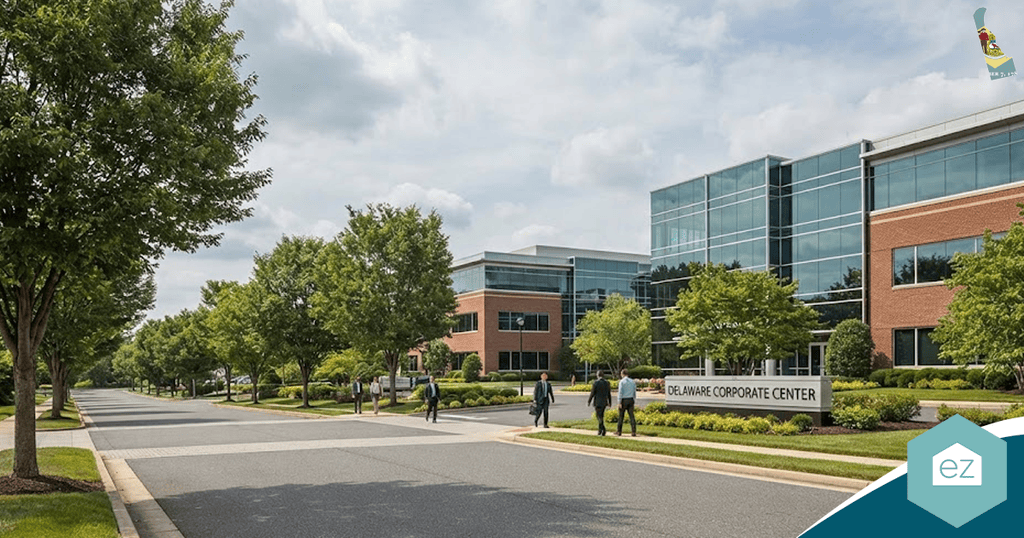
The north runs on finance and incorporation. Finance, insurance, and real estate make up the largest share of Delaware’s economy, around 41% of state GDP in 2024 (Delaware Department of Labor). Wilmington is a banking and credit-card center, and Delaware remains the country’s incorporation capital, home to about 66.7% of Fortune 500 companies and more than 2.1 million active legal entities, with 289,810 new entities formed in 2024 (Delaware Division of Corporations). That professional and legal workforce is the income base under New Castle County buyers.
The south and center run on agriculture and government. Sussex and Kent anchor Delaware’s poultry and farming economy, with major operations around Georgetown and Seaford. Kent adds the steadying weight of state government in Dover and Dover Air Force Base, one of the largest Air Force installations in the country. These are different buyers, on different timelines, than a Wilmington credit analyst.
Families are moving to the Middletown corridor. The Middletown-Odessa-Townsend area in southern New Castle County is the fastest-growing community in the north, pulling new construction and young families south of the Wilmington-Newark core. The Appoquinimink School District there enrolls roughly 12,945 students across 21 schools, and school-enrollment growth is one of the clearest leading indicators of family demand an agent can watch.
Affordability, not collapse, is the real constraint. Commentary from the Delaware Association of Realtors frames affordability and thin supply as the pressure on buyers, with first-time buyers increasingly leaning on family help and pre-approval often deciding who wins a home. That is a buyer-readiness problem an agent can solve with the right early relationship, not a reason to expect falling prices.
Add the property-tax story developed later in this guide, and the through-line is clear. Delaware is small, but it is not one market, and the agents who plan around its three economies capture leads the agents chasing a single statewide average never see. If you already know which county you want to own, you can check whether it is still open before you read another word.
Three markets in one small state
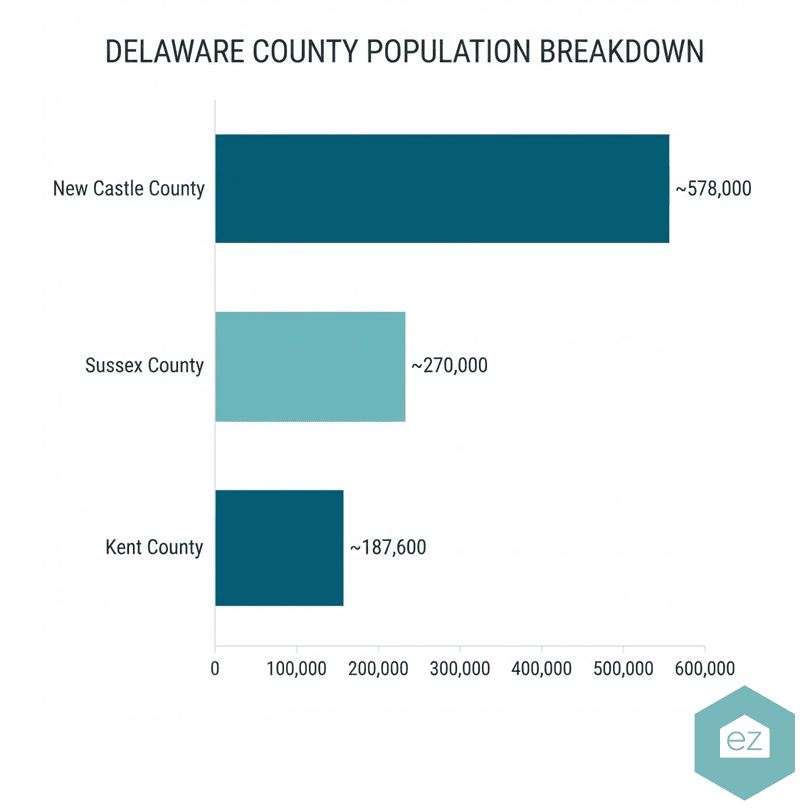
The fastest way to understand Delaware lead generation is to stop thinking statewide and start thinking by county, because the three diverge sharply. The table below frames the scale of each.
| County | Population (estimate) | Principal city and places |
|---|---|---|
| New Castle | ~578,000 | Wilmington (county seat, the state’s largest city, about 71,000), Newark, Middletown, Bear, New Castle, Glasgow, Hockessin, Pike Creek, Claymont |
| Sussex | ~270,000 (state demographer estimate) | Georgetown (county seat), Lewes, Rehoboth Beach, Milton, Millsboro, Seaford, Laurel, Selbyville, Bethany Beach |
| Kent | ~187,600 | Dover (county seat and state capital, about 40,000), Smyrna, Milford, Camden, Harrington |
Sources: US Census Bureau (2020 Census and 2024 American Community Survey); Delaware Population Consortium for the Sussex estimate.
New Castle County: finance, universities, and the Middletown boom
New Castle is Delaware’s population and employment center, and it behaves like a mature metro market. Wilmington concentrates the banking, credit-card, and legal economy; Newark adds the University of Delaware and ChristianaCare, the state’s largest healthcare provider, which together give the I-95 corridor a stable education-and-health employment base. The energy in the county is in the Middletown-Odessa-Townsend corridor, where new construction and the state’s fastest-growing school district are drawing families south from the older suburbs.
For an agent, New Castle splits into two lead motions: resale and equity conversations in the established Wilmington and Newark suburbs, and new-construction and relocation activity in the MOT corridor.
Kent County: the capital, the base, and value pricing
Kent is the steadiest and most affordable of the three counties, anchored by state government in Dover and by Dover Air Force Base. Its agriculture base and capital-city employment give it a buyer pool less exposed to the swings that hit luxury coastal markets, and its lower price points make it the entry door for many first-time and relocating buyers who are priced out closer to Wilmington or the beaches. Kent agents compete less on glamour and more on knowing the value corridors of Dover, Smyrna, Milford, and Harrington better than anyone else.
Sussex County: one county, two economies
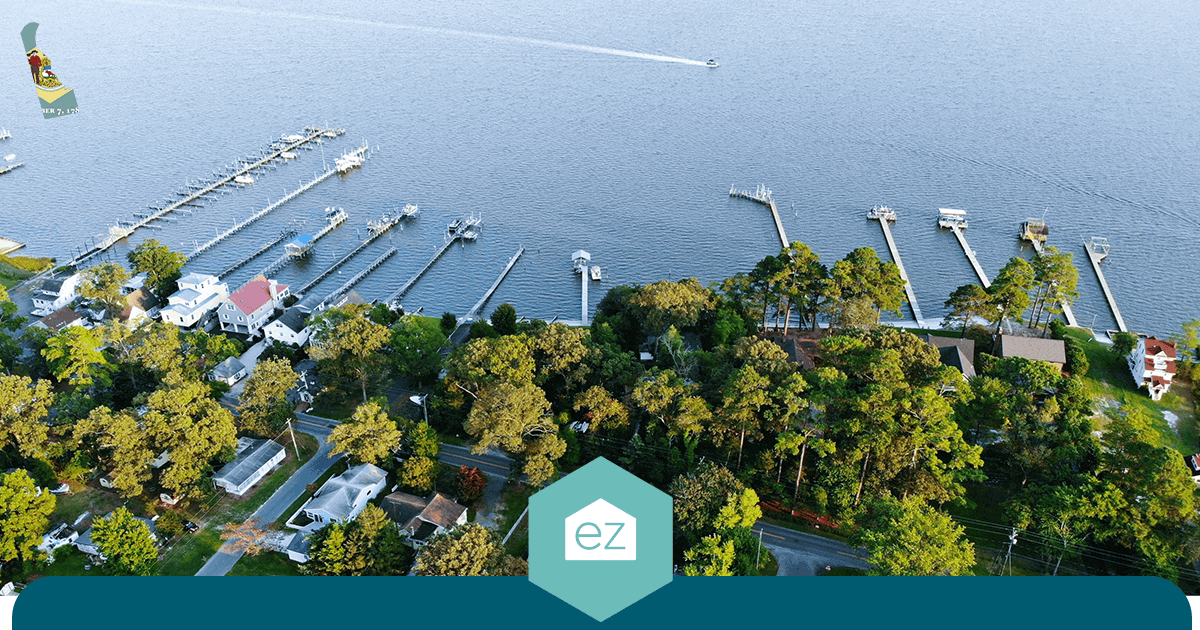
Sussex is really two markets wearing one county’s name. Along the coast, the Cape region of Lewes, Rehoboth Beach, and Bethany Beach carries the highest prices in the state and a heavily second-home, retiree, and seasonal buyer base. Inland and to the west, Georgetown and Seaford anchor the poultry and agriculture economy, with far more attainable prices and a year-round working population. An agent who treats a Rehoboth second-home buyer and a Seaford first-time buyer as the same lead will serve neither well. The regional differences below show how varied even a three-county state can be.
| Region | County | What is happening |
|---|---|---|
| Wilmington metro and Brandywine | New Castle | The finance, credit-card, and professional economy concentrates here; mature and slower-growing, the state’s population and jobs center |
| Newark and the I-95 corridor | New Castle | The University of Delaware and ChristianaCare anchor a stable education-and-health employment base |
| Middletown-Odessa-Townsend | New Castle | The fastest-growing community in the north; new construction and the state’s fastest-growing school district pulling families south |
| Central Delaware and Dover | Kent | State capital and Dover Air Force Base give Kent a government-anchored, value-priced market |
| The Cape region | Sussex | Lewes, Rehoboth, and Bethany: the state’s highest prices, second homes, retirees, and seasonal demand |
| Inland and western Sussex | Sussex | Georgetown and Seaford anchor the poultry and agriculture economy, more affordable than the coast |
Counties are only part of the map: Delaware’s towns and communities
With only three counties, geographic breadth in Delaware comes from its towns, and knowing them is what separates a local authority from an out-of-area name on a sign. The Middletown corridor reaches into Odessa and Townsend. Bear connects to Glasgow and Lums Pond. Hockessin and Pike Creek run toward Greenville and the Brandywine Hundred. Smyrna ties to Clayton and the Bombay Hook refuge. Milford straddles the Kent and Sussex line. The coast runs from Lewes past Rehoboth down to Bethany and Fenwick, while inland Sussex moves through Georgetown, Millsboro, Seaford, and Laurel. The table below maps ten of these communities to the places around them.
| Town or community | County | Nearby communities and landmarks |
|---|---|---|
| Middletown | New Castle | Odessa, Townsend, Appoquinimink schools, Bear |
| Bear | New Castle | Glasgow, Lums Pond State Park, Pulaski Highway corridor, Newark |
| Hockessin and Pike Creek | New Castle | Greenville, Brandywine Hundred, Mill Creek, Newark |
| Smyrna | Kent | Clayton, Bombay Hook National Wildlife Refuge, Smyrna Opera House, Dover |
| Milford | Kent and Sussex | Riverfront downtown, Slaughter Beach, Ellendale, Lincoln |
| Harrington | Kent | Delaware State Fairgrounds, Harrington Raceway, Felton, Camden |
| Lewes | Sussex | Cape Henlopen State Park, Rehoboth Beach, Milton, Cape May-Lewes Ferry |
| Millsboro | Sussex | Long Neck, Indian River Bay, Dagsboro, Georgetown |
| Seaford | Sussex | Laurel, Blades, Nanticoke River, Bridgeville |
| Bethany Beach | Sussex | Fenwick Island, South Bethany, Ocean View, Selbyville |
How Delaware agents try to win leads today
Most Delaware agents run more than one lead source at once, and every one of them does something real before it hits a wall. The only way to choose well is to name those limits honestly, so here is a fair read on the common approaches.
Shared portal leads put a name in front of you quickly, which is their appeal. The problem is structural. A lead from a legacy real estate portal can be sold or routed to whoever pays the most, so the same buyer often hears from several agents at once, and you are paying to compete for a person who never chose you. In a market like Delaware’s, where affordability already makes buyers cautious, starting from a cold, shared contact is the hardest possible opening.
An IDX website of your own gives you a presence buyers can search, and that matters. But moving listing data quickly and keeping a site fast is genuinely hard and expensive, and most agent sites run on older technology that refreshes slowly. The site becomes one more thing to maintain rather than a place clients return to on their own.
Cold calling still produces conversations, and some agents are very good at it. It also carries real legal exposure under the Telephone Consumer Protection Act, where the burden falls on the caller to prove consent for every number, and the yield per hour is low. There is more on that compliance exposure below.
Predictive-seller tools rank your contacts by how likely each one is to list soon. A ranking can point you toward a worthwhile call, yet a ranking is not a relationship, and someone still has to earn and keep the one that turns a hunch into a signed listing.
Generic all-in-one CRMs and DIY content promise to organize follow-up, and in the right hands they help. In practice they become one more system to run and one more newsletter to write, disconnected from anywhere clients actually spend time, which is why so many go quiet within a few months.
Paid ads can fill a pipeline fast, then empty it just as fast when the budget pauses. They reward constant spend, not compounding relationships.
Layer Delaware’s own frictions on top of all this and the picture sharpens. Beach-market seasonality and out-of-state buyers make follow-up hard, because a Sussex coastal client may live in the home only part of the year and shop from another state entirely. The property reassessment has left sellers and buyers confused about what their tax bills will actually be. Intra-state moves, a Wilmington family heading to the MOT corridor or a New Castle couple retiring to Lewes, quietly become listings the original agent loses because no one saw the move coming. And a Dover or Kent agent is constantly competing for attention against larger Wilmington and Sussex brokerages with bigger ad budgets. None of the common tools solves those problems on its own.
The remote-work demand most Delaware agents underestimate
Remote and hybrid work is a lasting source of buyer demand in Delaware, and treating it as a pandemic blip misreads the data. The return-to-office headlines come almost entirely from a handful of large, publicly traded employers. Across the broader economy the picture is steady.
The Business Trends and Outlook Survey, run by the U.S. Census Bureau across roughly 150,000 firms, found that about 31% of businesses had employees working from home and projected the same level five years out. Gallup’s workforce data show that among remote-capable workers, about half are hybrid and another quarter are fully remote. This is a structural change in where people can afford to live, not a fad.
The companies driving it are not the ones in the headlines
Here is the part most agents miss. The growth in remote and fully distributed work is concentrated in venture-capital-backed startups, private-equity-backed companies, family-office-backed firms, and middle-market businesses, not the Fortune 500 names that dominate the coverage. These companies compete on talent, speed, and capital efficiency, and remote work serves all three.
They are also doing it because the output went up, not down. An analysis of 554 public companies by BCG and Scoop Technologies found that firms with fully flexible work grew revenue about four times faster than office-mandate peers, roughly 21% a year against 5%. The Bureau of Labor Statistics’ own productivity work found that the industries that went remote fastest, computer systems design, software publishing, and data processing, saw output rise faster than labor input. The employees of these companies can live anywhere, and a growing number are choosing Delaware.
What it means on the ground
When a job no longer requires a daily commute to Philadelphia, New York, or Washington, Delaware’s affordable and lifestyle markets become full-time addresses rather than weekend ones. Inland Sussex around Georgetown and Seaford, the value corridors of Kent, the beach towns, and the MOT exurbs all sit within reach of the Northeast corridor while costing far less than the metros people are leaving. Pair that with Delaware’s tax pull, no state sales tax and a retiree-friendly income-tax profile, and you have buyers who can finally live where they used to vacation.
For an agent, this changes what to watch and what to show. Remote buyers want a dedicated or closable home office, often a separate structure or accessory dwelling unit for a second workspace, more square footage, and genuine high-speed internet, which much of rural Sussex and Kent still lacks. An agent who can speak to internet service by area, flag listings with a true home-office layout, and recognize that a Lewes or Milford buyer may be keeping a Northeast salary is positioned to win relationships most competitors are not even looking for.
Winning the seller side in Delaware
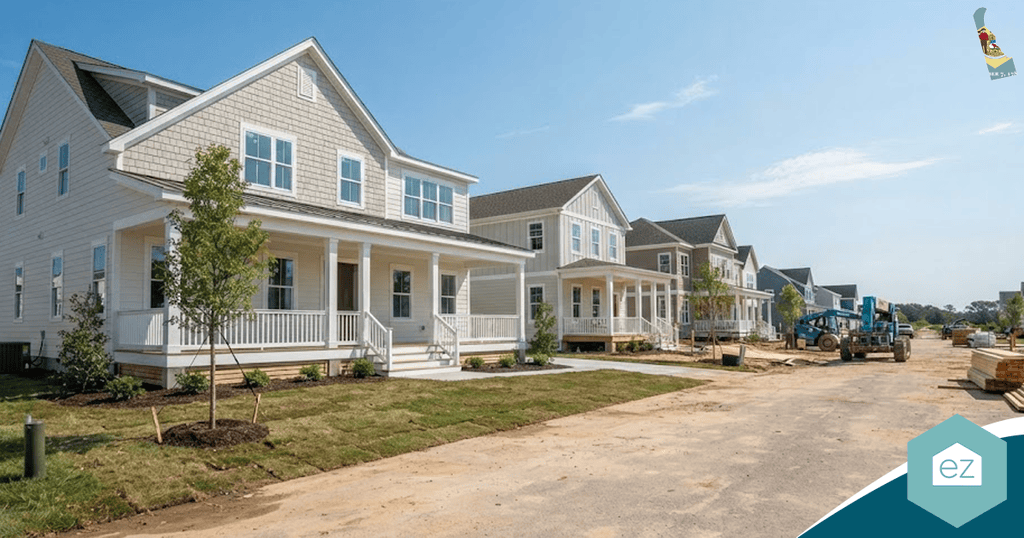
The strongest seller-side opening in Delaware right now is the property reassessment, because almost no one understands it and every homeowner is anxious about it. For the first time in roughly half a century, all three counties revalued every parcel: the last reassessments took effect in 1974 in Sussex, 1983 in New Castle, and 1987 in Kent. Sussex alone reassessed about 200,000 parcels, with new values reflecting fair-market value as of mid-2023. Homeowners opened their notices, saw assessed values many times higher than the decades-old figures they were used to, and assumed their tax bills were about to multiply.
Here is the part an agent can explain that builds instant trust: a higher assessment does not mean a proportionally higher tax bill. Delaware law caps how much additional revenue a county can collect after a reassessment at 15% above the prior year, so the counties had to roll their tax rates down hard to stay close to revenue-neutral. Sussex County’s pre-reassessment rate was 44.5 cents per $100 of assessed value, and Kent County cut its rate sharply for the 2024 tax year to offset the higher values. New Castle County’s rollout was messier, drawing thousands of appeals and legislative fixes through 2025, so a New Castle seller needs more careful guidance than a Kent or Sussex one. The agent who can sit at a kitchen table and walk a worried owner through what their notice actually means is the agent who earns that listing.
The second Delaware-specific seller conversation is the realty transfer tax, which is the highest state-level transfer tax in the country at a combined 4%, typically split between buyer and seller. On a $400,000 sale, that is roughly $16,000 changing hands at closing, about $8,000 of it on the seller’s side. A seller who learns that number late feels ambushed; a seller whose agent walked them through it early trusts that agent with everything else.
Both conversations depend on starting from an honest number. ez Home Search begins with an automated valuation model (AVM) built to be the most accurate available, then puts a full comparative market analysis in the partner’s hands, drawn from data that refreshes every minute. For owners who are not ready to sell, the same platform tracks their home’s value and equity month over month through co-branded home-value pages and listing-alert newsletters that carry the partner’s name, so the relationship stays warm for years instead of going cold the week after closing. That is the difference between a seller lead you chase once and a seller relationship that produces a listing when the owner is finally ready.
Winning the buyer side in Delaware
Buyer demand in Delaware is best understood as several streams arriving from different directions, and the agents who win buyer leads target the streams rather than the average. The largest is in-migration from higher-tax neighbors. Delaware’s tax profile is a documented pull factor: no state sales tax, Social Security benefits exempt from state income tax, and a retirement-income exclusion of up to $12,500 for residents age 60 and older (Delaware Division of Revenue). For a retiree leaving New Jersey or New York, the annual savings are large enough to change where they can comfortably live, which is much of why the money and the people keep flowing into Sussex.
The second stream is intra-state movement: Wilmington and Newark families heading to the new construction of the Middletown corridor, and empty-nesters trading a New Castle suburb for a Lewes or Rehoboth condo. The third is the year-round local buyer in Kent and inland Sussex, where Dover, Smyrna, Milford, and Seaford offer the entry-level price points first-time buyers can still reach.
That first-time buyer has a Delaware-specific advantage worth knowing. The state reduces the buyer’s share of the transfer tax by 0.5% on the first $400,000 of value for qualified first-time buyers, a benefit worth up to $2,000 at closing. An agent who can explain that, alongside what pre-approval does in a tight market, becomes a guide rather than a salesperson.
Early contact is the whole game here, and it is where activity beats a cold form. On ez Home Search, a buyer describes what they want to ez Match in plain language and explores homes, schools, and property taxes confidentially, and their saved searches and return visits become signals the partner can see. When a contact picks an old search back up or runs a valuation again, ezNurture handles timely follow-up inside the partner’s system, so the agent reaches out while the interest is live rather than working a list in order. A buyer who arrives this way is no cold name; their agent already sees which neighborhoods they keep opening and the price range they keep circling back to.
Why an Exclusive County Partnership changes the math in Delaware
An Exclusive County Partnership gives one agent, team, or brokerage an entire Delaware county, co-branded across the consumer experience, with no competing partner inside that territory and no charge per lead or share of the commission when a deal closes. That last point matters in a state this concentrated: a strong month of buyer and seller activity in New Castle, Kent, or Sussex is a strong month for the partner, not a bigger invoice. The county belongs to one partner, and the leads that come from it belong to them.
Those leads convert because of the model standing behind them. A person who reaches a partner through ez Home Search is not a shared name bought off a list; they have used a confidential home search they trust and shown real intent through real activity, and they are matched with a Single Local Expert rather than sold to whoever paid the most to reach them. That is The Only Confidential Home Search: a person’s contact details and budget are not sold, resold, recycled, or broadcast to a long list of businesses they never chose. The county exclusivity partners we work with consistently tell us those warm, chosen connections convert on a different timeline than shared portal leads, often turning into closings within 30 to 60 days because the relationship starts with trust instead of a cold pitch.
The partnership also solves the specific Delaware pains named earlier.
The biggest and cheapest opportunity for most agents is the database they already own, and ez Home Search reactivates it for them: our partners reactivate past clients, by repeat business or referral, at 2.5 to 5 times the market rate, because the co-branded home search keeps those clients engaged month after month and surfaces them the moment they show signs of moving.
Relocation retention closes the loophole where intra-state and out-of-state moves slip away. Because the platform covers the entire country, a past client searching the MOT corridor or a market across the country surfaces as an early signal, so the partner can capture the listing on the home that client is about to leave.
And the compliance exposure of cold prospecting is handled by ezVerify.ai, which confirms a person opted in, keeps the recording that proves it, screens numbers against a known-litigator database, suppresses Do Not Call registrants, and enriches each contact, all before the partner dials. It is consent protection and contact intelligence, not a lead score.
The partner builds none of this. The valuations, the search experience, the listing alerts, the home-value pages, and the follow-up automation run on ez Home Search’s national platform with the partner’s brand on them from day one. An agent trying to assemble the equivalent alone would spend years and more money than any single team can justify, and the data behind it would still be out of reach.
The privacy edge behind the whole model
Privacy is the reason the whole model works, and it is not a marketing slogan in Delaware, where the affluent and retiree in-migrants arriving from the Northeast are exactly the people most tired of being treated as data to sell. ez Home Search is the only major real estate platform built around the confidentiality of the person searching, and that follows a pattern proven well beyond real estate. Apple made privacy one of the central promises of its products. By refusing to track anyone, DuckDuckGo and Brave each climbed to around 100 million users. Proton, along with password managers like 1Password and Bitwarden, runs on an architecture under which the company has no way to read what a customer keeps there.
People have shown they will choose, and pay for, the private option. Real estate is one of the last industries to feel that shift, and ez Home Search brought it there first. For a Delaware partner, that means the platform attracting buyers and sellers is the one those high-value newcomers actually trust.
Only three counties means only three positions
Delaware makes the scarcity in this model impossible to ignore, because the Exclusive County Partnership is one partner per county, and the state has only three counties. New Castle, Kent, and Sussex are the entire board. In a state with dozens of counties, a partner who waits can usually find another market later; in Delaware, the position is one of three, and once a county is claimed, the co-branded authority across that territory belongs to that partner alone. Positions are taken market by market and more are claimed over time, so the practical question for a Delaware agent or brokerage is simply whether the county they want is still open. When a partner steps in, the engine is already running: millions of people use the platform, and the partner’s brand goes on the search, the alerts, and the valuations from day one, with nothing to build and nothing to configure.
The decision Delaware agents face
Every Delaware agent serious about growth faces three real options. One is to keep renting shared portal names that get resold and worked by a crowd, a pipeline that stays busy while the conversion rate stays low. Another is to assemble the data, search, follow-up, and compliance stack alone, which is slow, costly, and, for the parts that lean on national real-estate data, beyond what any single team can reach. The option in between is the Exclusive County Partnership: take one of Delaware’s three counties, carry no per-lead charge, and put your brand on a platform buyers and sellers already trust.
The honest trade-off is that a county partnership is a commitment, and its biggest returns compound. The warm, confidential relationships it produces often convert within 30 to 60 days, and the database reactivation builds for every year the partnership runs, rather than spiking and fading the way a paid-ads push does. If there is one number to weigh, weigh this one: partners reactivate past clients at 2.5 to 5 times the market rate, turning the contacts they already own into the most dependable business they have.
With three counties total, the math is unforgiving: each Delaware position that gets claimed leaves one fewer for everyone still deciding. See whether the New Castle, Kent, or Sussex county you want is still open, then schedule a call to walk through what holding it would mean for your pipeline.
Frequently asked questions
Where are the buyers moving into Sussex County actually coming from, and how do I reach them before they pick an agent at the beach?
Most of Sussex County’s in-migration comes from higher-tax Northeast states, led by New Jersey, New York, and Pennsylvania, with a heavy retiree share drawn by Delaware’s no-sales-tax and retiree-friendly income-tax profile. Many of them research the move for months before they ever contact an agent, often from out of state. The way to reach them early is to be present in the confidential home search they are already using to explore Lewes, Rehoboth, and Millsboro, so their saved searches and return visits surface to you as buying signals while they are still planning, rather than waiting for them to fill out a form once they have arrived and already met someone.
How is Delaware’s court-ordered property reassessment changing what I should tell sellers about their tax bills?
The most useful thing you can tell a seller is that a much higher assessed value does not mean a proportionally higher tax bill. Delaware reassessed every parcel for the first time in roughly half a century, so values jumped sharply, but state law caps post-reassessment revenue growth at 15%, so counties rolled their tax rates down to compensate. Sussex started from a 44.5-cent-per-$100 rate and lowered it, and Kent cut its rate sharply for 2024. New Castle County’s process was rougher and drew thousands of appeals, so sellers there need more careful, current guidance. An agent who can walk an anxious owner through their specific notice earns a level of trust that wins the listing.
With Middletown and the MOT area growing so fast, how do I win listing leads from families relocating within New Castle County?
The Middletown-Odessa-Townsend corridor grows largely by pulling families out of older Wilmington and Newark suburbs, which means many MOT buyers are also sellers of a home a few miles north. The listing leads come from catching that move early. When a past client or sphere contact starts searching the MOT corridor or browsing new construction near the Appoquinimink schools, that activity is an early signal that they will soon need to sell their current home, and the agent who sees it first is positioned to win both sides of the move instead of losing the listing to whoever the family meets near the new build.
How do I generate real estate leads in Delaware’s beach towns when so many buyers are second-home and out-of-state?
Beach-market lead generation in Delaware is a follow-up problem more than a discovery problem, because the buyer for a Rehoboth or Bethany second home often lives elsewhere and shops on a long, seasonal timeline. The agents who win them stay present between visits rather than only during them. A co-branded home search the buyer can use from their primary home, with listing alerts for the Cape towns they are watching and value updates once they buy, keeps you in front of a part-time resident year-round, which is exactly when a competitor who only engages on-site loses them.
Are buyers relocating from New Jersey, New York, and Pennsylvania worth targeting in Delaware, and how do I find them early?
They are among the most valuable buyers in the state, because they are often equity-rich sellers in their home market and motivated by concrete tax savings rather than idle curiosity. You find them early by being the source they use while they are still comparing Delaware to staying put. A confidential search where they can explore prices, property taxes, and schools across Sussex and Kent without being sold to a crowd of agents gives them a reason to engage months before they move, and their search activity tells you when planning is turning into action.
What’s the best way to get seller leads in New Castle County now that prices have leveled and homes sit a little longer?
In a New Castle market that has loosened from very tight, seller leads come from owners weighing equity and timing rather than reacting to a frenzy, so the winning approach is patient and value-first. Owners who can watch their home’s value and available equity month over month, and who hear from you with genuine local market context instead of a generic newsletter, come back to you when life events make a move real. Pair that with credible guidance on the reassessment and the transfer tax, and you become the New Castle agent a homeowner already trusts before they decide to list.
How can a Dover or Kent County agent compete for leads against the larger Wilmington and Sussex brokerages?
A Kent County agent competes by owning the local authority position rather than outspending bigger brokerages on ads. Kent is a distinct, value-priced, government-and-agriculture market that the large coastal and Wilmington brokerages understand less well, and depth in Dover, Smyrna, Milford, and Harrington beats a broad statewide ad budget. When your brand is the one on the home search the county’s buyers and sellers actually use, recognition compounds locally, and that recognition is what most Kent clients weigh most heavily when they choose an agent.
Does Delaware’s no-sales-tax, retiree-friendly tax setup actually drive enough buyers to build a lead pipeline around?
It drives a meaningful and steady stream, especially in Sussex and increasingly in Kent, though it works best as one pillar of a pipeline rather than the whole thing. The tax advantages are a documented reason households and their income keep moving into Delaware, and retiree buyers tend to be financially ready and serious. The pipeline gets strong when you combine that in-migration demand with the resident owner base, intra-state movers, and database reactivation, so you are not betting the year on any single source. That breadth, across buyers and sellers in all three counties, is what makes a Delaware book of business steady.

Kurt Uhlir is a recognized leader in marketing, growth, and innovation, having helped scale companies and technologies used by millions every day—including at brands like eXp Realty, Sideqik, Vitrue, Oracle, Garmin, Facebook, Meta, Apple, and more. He’s trained tens of thousands of professionals on how to build trust, lead with service, and help clients make wise, informed decisions. At ez Home Search and Sure Send, his focus is on helping high-performing business owners, team leaders, and individual sales leaders grow their businesses through exclusive market access, privacy-first lead systems, and conversion-focused enablement tools.