

For most of the last decade, an Idaho listing sold itself. You put a sign in the yard, held it open on Saturday, and picked from a stack of offers by Sunday night. That market is gone. Statewide for-sale inventory has climbed back above where it sat in 2019, homes in Ada and Canyon counties now take roughly 40 to 60 days to sell, and price reductions have become a normal line in the deal. The agents still winning real estate leads in Idaho are the ones who stopped waiting for the phone to ring and built a pipeline they own.
Most lead-gen advice treats Idaho as a single market. It is at least six, each cooled in its own way and for its own reasons. The chip-fab economy around Boise behaves nothing like the dairy belt of the Magic Valley, which behaves nothing like the out-of-state retiree wave in the Panhandle. A lead source tuned for one of them is noise in another. So this read goes region by region: where the listings and buyers sit now, and how one agent, team, or brokerage can own a county instead of renting names from a list.

Idaho is several markets now, not one
Start with the statewide numbers. Idaho led the entire country in housing-unit growth in 2025, adding more than 17,000 units at a 2.1% rate, according to the Idaho Department of Labor. Over 2020 to 2025 the state grew its housing stock by 12.3%, second only to Utah. And it still is not enough. Construction continues to trail population and household formation, which is why prices stayed high even as the frenzy ended.
What changed is the pace, not the demand. Statewide months of supply reached roughly 2.8 months in early 2026, with active inventory up about 18% year over year, per Idaho Housing and Finance Association data reported locally. That is still under the five-to-six-month mark of a balanced market, so Idaho leans slightly toward sellers. But it is a different game than 2021. Prices have flattened off the peak while holding above the prior year, days on market have stretched, and buyers in the Treasure Valley paid a little under asking through 2025 rather than bidding each other up. The Idaho Business Review and local year-end reports put average days on market around 43 in Ada County and 52 in Canyon, with mid-range Ada homes near 61.
Affordability is the pressure underneath all of it. By the Idaho Department of Labor’s own housing analysis, only about 5 to 6% of for-sale homes were affordable to a household earning the local median income in 2025. The National Low Income Housing Coalition frames the same squeeze at the wage level: a worker needs to earn about $27.83 an hour, near $57,876 a year, to afford the average two-bedroom rent of $1,447 a month, and the state runs roughly 30,000 to 35,000 affordable homes short. For an agent, that math is not abstract. It defines how wide your qualified-buyer pool really is and why seller-side and move-up business now carries more of the year.
One more thread runs through the whole state: Idahoans keep starting businesses. New business applications averaged about 2,810 a month in 2024, up 7% from the prior year and roughly 36% above 2019, according to Census Business Formation Statistics reported by the Idaho Department of Labor. That entrepreneurial base feeds demand on both sides of the closing table, from first offices to second homes.
| County | Approx. population | Principal city / county seat |
|---|---|---|
| Ada | ~520,000 | Boise (state capital and seat); Meridian, Eagle, Star, Kuna |
| Canyon | ~260,000 | Nampa (largest city); Caldwell (county seat); Middleton |
| Kootenai | ~188,000 | Coeur d’Alene (seat); Post Falls, Hayden, Rathdrum |
| Bonneville | ~130,000 | Idaho Falls (seat) |
| Twin Falls | ~94,000 | Twin Falls (seat); Kimberly |
| Bannock | ~90,000 | Pocatello (seat); Chubbuck |
| Madison | ~55,000 | Rexburg (seat) |
| Bonner | ~54,000 | Sandpoint (seat); Ponderay |
| Bingham | ~50,000 | Blackfoot (seat); Shelley |
| Nez Perce | ~43,000 | Lewiston (seat) |
Population figures are rounded from recent U.S. Census Bureau county estimates and move with each annual release; treat them as the order of scale, not the decimal.
The six Idahos, and where leads sit in each
The reason a single statewide playbook fails is that the state’s economies barely touch. Walk them one at a time.
The Treasure Valley (Ada and Canyon, anchored by Boise, Meridian, Eagle, Nampa, and Caldwell) is the population engine and now the growth engine again. Census estimates released in early 2026 showed Ada, Canyon, and Kootenai counties together taking more than three-quarters of the state’s annual gain, a swing back toward the metros after the pandemic-era spread into the exurbs. Boise’s economy is increasingly a technology story: Micron announced a second leading-edge memory fab in Boise, a build the company and Idaho Commerce tie to more than 17,000 direct and indirect jobs, with first output expected around 2027. Boise State University set an enrollment record of 28,519 students in fall 2025. Those are thousands of relocating engineers, faculty, and families who arrive without a local agent and need one.
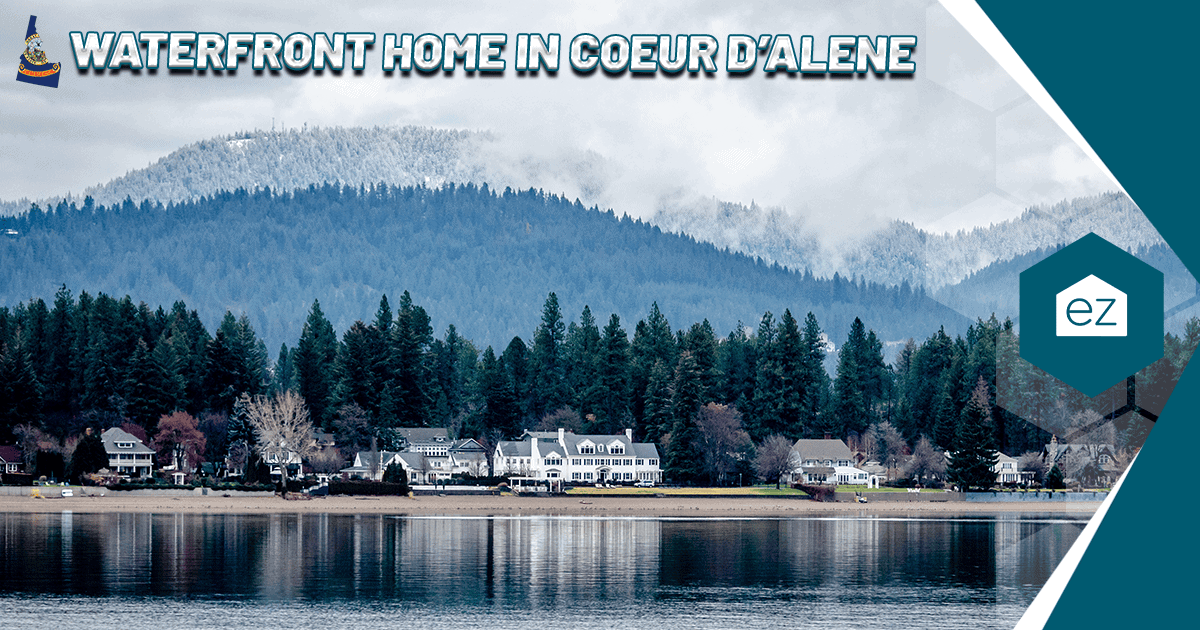
North Idaho, the Panhandle (Kootenai, Bonner, and Boundary, anchored by Coeur d’Alene, Post Falls, and Sandpoint) runs on a different fuel: people moving in from out of state, skewing older. Kootenai County grew about 1.7% and Bonner about 2.4% in the most recent estimate, and Boundary County grew more than 15% from 2020 to 2025. Net in-migration drove the large majority of it, much of it households 55 and up relocating from higher-cost states. The Department of Labor also notes North Idaho posted the fastest population growth of the state’s regions but the slowest job growth, which tells you these are buyers bringing income with them rather than chasing local paychecks. They are also buyers with no network in town, which is exactly the gap a local expert fills.
The Magic Valley (Twin Falls, Jerome, Cassia, Gooding, and Minidoka) is agriculture and food processing, and it is expanding, not coasting. Chobani is investing $500 million to expand its Twin Falls plant, already the world’s largest yogurt factory, lifting its daily milk use and adding hundreds of jobs. Idaho’s dairy herd produced roughly 17 billion pounds of milk in 2024, per USDA data. This is a payroll-driven housing market with its own rhythm, tied to processing shifts and ag wages rather than to Boise’s tech cycle.
Eastern Idaho (Bonneville, Madison, Jefferson, and Bingham, anchored by Idaho Falls, Rexburg, Rigby, and Blackfoot) is a high-wage research economy bolted onto a fast-growing college town. Idaho National Laboratory grew from about 4,000 to roughly 6,000 employees over recent years, projects more than 2,800 new hires across five years, and generates over $4 billion in annual economic impact, according to INL’s own reporting and the Idaho Capital Sun. A short drive away, BYU-Idaho in Rexburg enrolled more than 46,000 students. That puts relocating scientists on one end and a churning student-and-staff rental market on the other.

Southeast Idaho (Bannock, Franklin, Bear Lake, and Caribou, anchored by Pocatello and Chubbuck) is Idaho State University’s territory and the most affordable entry point of the bunch. It also posted the state’s largest wage gain in 2024: the Department of Labor reported that the Pocatello metro’s average and median hourly wages each rose more than two dollars, the biggest jump of any Idaho metro. Local wages are rising against prices that stay reasonable, which makes this a working-buyer market.
North Central Idaho and the Palouse (Nez Perce, Latah, Clearwater, and Idaho County, anchored by Lewiston and Moscow) pairs a university town with a river-port industrial hub. The University of Idaho in Moscow reached 12,383 students in fall 2025, its ninth straight semester of growth, while Lewiston’s economy leans on manufacturing and shipping. It is lower-cost than the Treasure Valley or the Panhandle, and steady.
Cost of living diverges as sharply as the economies. The National Low Income Housing Coalition’s two-bedroom housing wage runs from $35.35 an hour in the Boise area and $28.08 in Coeur d’Alene down to $25.21 in Idaho Falls. An agent who treats Boise affordability math as Idaho affordability math will price a Pocatello or Lewiston buyer wrong.
| Region | Anchor counties and cities | What’s driving it |
|---|---|---|
| Treasure Valley (Southwest) | Ada (Boise, Meridian, Eagle), Canyon (Nampa, Caldwell) | Most populous region, absorbing the bulk of statewide growth again; Micron’s second fab and record Boise State enrollment feed relocation demand while inventory rebuilds. |
| Idaho Panhandle / North Idaho | Kootenai (Coeur d’Alene, Post Falls), Bonner (Sandpoint), Boundary | Out-of-state in-migration skewing 55-plus; Boundary among the fastest-growing counties 2020-2025; fastest population growth, slowest job growth in the state. |
| Magic Valley (South Central) | Twin Falls, Jerome, Cassia, Gooding, Minidoka | Dairy and food processing expanding, led by Chobani’s $500M Twin Falls expansion; an ag-wage housing market distinct from Boise tech. |
| Eastern Idaho | Bonneville (Idaho Falls), Madison (Rexburg), Jefferson (Rigby), Bingham (Blackfoot) | Idaho National Laboratory’s high-wage hiring ($4B+ impact, 2,800+ hires over five years) plus BYU-Idaho-driven growth in Rexburg. |
| Southeast Idaho | Bannock (Pocatello, Chubbuck), Franklin, Bear Lake, Caribou | Idaho State University anchors Pocatello; the state’s largest 2024 wage gain against more affordable entry prices. |
| North Central / Palouse | Nez Perce (Lewiston), Latah (Moscow), Clearwater, Idaho County | University of Idaho growth in Moscow; Lewiston a river-port industrial hub; lower-cost, steady markets. |
Most of your business already lives in Idaho
Idaho’s growth story gets told as a flood, so it is worth putting a ruler on it. The state passed two million residents on July 1, 2024, reaching 2,001,619, a one-year gain of 30,497, the seventh-fastest rate in the country, per the Census Bureau. Of that gain, net migration accounted for about 24,282 and natural increase for about 6,195. Across 2020 to 2024, roughly three-quarters of growth came from people moving in from other states.
Set that annual net inflow against a base of two million residents and a large existing stock of owners, and it is a meaningful but modest single-digit share of total households. The far larger pool of transactions in any given year comes from people who already live here: owners trading up, downsizing, relocating across town, settling an estate, or moving for a job. Migration is one trend among many, not the whole market.
For an agent, the useful frame is that the churn runs in both directions, and each direction is business. Arrivals are buyers who need a guide in a place they do not know yet. Departures are listings, and they are also relocation-retention business if you stay connected to the client moving away. A quieter pattern sits underneath: a 2026 report from the Boise-area nonprofit Jesse Tree, cited by the Idaho Capital Sun, estimated roughly a $30,000 annual-income gap between households leaving Idaho and those arriving, with higher-income newcomers replacing lower-income residents who are priced out. Treat that as one organization’s finding rather than settled fact, but it sharpens the point: the inbound buyer and the outbound seller are often different people with different budgets, and an agent who only works one side leaves the other on the table.
The remote-work edge most Idaho agents miss

Remote work did not die. The story that it did rests on one trick: comparing today against the spring-2020 peak, when about 61% of paid workdays happened at home. Set it against the honest baseline, the 5 to 8% of workdays that were remote before the pandemic, and remote and hybrid work has settled at roughly triple that and stayed there. Most Idaho agents bought the headline and now market as if the wave receded. It did not, and that miss is an opening.
The numbers come from people with nothing to sell. The Bureau of Labor Statistics counted 36.7 million Americans teleworking at least part of the time in the fourth quarter of 2024, a 23.4% rate and higher than the year before. The Census Bureau’s Business Trends and Outlook Survey, covering about 150,000 firms, found employers expect the same level of work-from-home five years out as they run today. The USDA Economic Research Service found rural counties reversed more than a decade of decline starting in 2020, adding 974,000 net migrants through 2024, most of them working-age adults between 25 and 44. That last group buys houses.
Idaho is built to catch that demand, and two 2026 laws sharpen the case. Senate Bill 1354 forces cities to allow accessory dwelling units by right starting July 1, 2026. Senate Bill 1352 makes Idaho the first state to require local governments to allow starter-home lots as small as 1,400 square feet. More ADUs and small lots mean more of what a remote buyer pays for: a separate office, a detached structure, square footage, and a yard. The state is also spending $583 million in federal money to bring broadband to roughly 100,000 households that did not have it, which turns a working connection into a listing feature in counties that could not promise one before.
The agents who win this work the counties where a remote salary stretches furthest: Bonner, Boundary, Valley, Teton, Latah, Payette, Gem, and Jefferson, plus the resort edges around McCall and the Wood River Valley. A software engineer on a Seattle paycheck buying near a lake or a ski lift is not a pitch-deck fantasy in Idaho. It is a documented pattern, and most agents still market to it as if it ended in 2022.
Counties and communities beyond the metros
Past the metros, Idaho splits into two kinds of markets, and they reward opposite playbooks.
The first is resort and second-home country. Blaine County (Hailey, Ketchum, Sun Valley, and Bellevue) and Valley County (McCall, Cascade, and Donnelly) sell a lifestyle, and the lead work looks nothing like a primary-residence sale. Buyers are often out of state, paying cash, and willing to take a year from first search to closing. One finding reframes the whole market for an agent working Blaine: a county housing study found short-term rentals are not the main force pushing prices up. Second-home demand, population growth, and a slowdown in construction are. The county and the ARCH Community Housing Trust now build deed-restricted homes for locally employed households earning 80 to 140% of area median income, a workforce market running right alongside the luxury one.
The second is the exurb and rural growth market, where the buyers are families priced out of Boise or chasing space. Payette and Gem counties on the Treasure Valley’s western edge, Boundary in the far north, Jefferson and Bingham in the east: smaller, quicker to transact, and far less crowded with agents than Ada or Kootenai. The communities below carry real volume, and they are where an agent who commits to an unglamorous county can build a pipeline almost uncontested.
| County | Region | Communities |
|---|---|---|
| Madison | Eastern Idaho | Rexburg, Sugar City, Newdale |
| Jefferson | Eastern Idaho | Rigby, Menan, Ririe, Lewisville |
| Bingham | Eastern Idaho | Blackfoot, Shelley, Aberdeen, Firth |
| Bannock | Southeast Idaho | Pocatello, Chubbuck, Inkom, McCammon |
| Nez Perce | North Central | Lewiston, Lapwai, Culdesac |
| Latah | Palouse | Moscow, Troy, Genesee, Potlatch |
| Bonner | Panhandle | Sandpoint, Ponderay, Priest River, Clark Fork |
| Boundary | Panhandle | Bonners Ferry, Moyie Springs, Naples |
| Valley | West-central mountains | McCall, Cascade, Donnelly |
| Payette | Southwest | Payette, Fruitland, New Plymouth |
If your county is not on that list, that is the point. Idaho has 44 counties and a recognized agent in only a fraction of them, and the open ground is where the opportunity sits.
How Idaho agents try to win leads today, and where each runs out

Every agent reading this already runs a lead strategy, usually several at once, and each one does something real. A normalizing, fragmented market just exposes the limits of all of them at the same time.
Shared and portal leads move volume, and for a newer agent volume buys activity. The model is the catch: the same name gets sold, or routed to whoever pays the most for it, so it lands cold, contested, and often already worked by three other agents. You are renting access to a person who never chose you.
An IDX website you build and run yourself is the opposite bet. You own the traffic and the relationship, which is the right instinct. The cost is time. A site takes months or years and constant upkeep to rank, and until it does it fights far bigger budgets for the same searches. It pays off eventually. It rarely fills this quarter.
Cold calling expired and for-sale-by-owner listings, circle prospecting, farming, and open houses work, and always will. They also stop at the edge of your calendar, and in a market where homes sit longer, the expired and FSBO list grows faster than any one agent can work it.
Predictive-seller tools point you at the doors most likely to list, which is useful. They are also sold to everyone, so you and three competitors knock on the same doors with the same opening line.
A general-purpose CRM keeps your contacts in order and fires your follow-up. It is still an empty container. It does not produce a lead or give a past client a reason to come back on their own. You supply all of that.
Your own content and paid ads can both produce. They also enter you in a daily auction for attention and clicks against the legacy portals and the local marketing shops that outspend you, on ground they control.
None of these is a mistake. The pattern underneath them is the problem: each one asks you either to rent a relationship you will never own, or to build national-grade infrastructure alone that no single team can fund. That is the gap ez Home Search was built to close.
Own the county, not the lead

The Exclusive County Partnership is the other side of that bet. One agent, team, or brokerage holds an entire Idaho county, co-branded across a consumer platform millions of people already use, with no rival partner on the same ground. No charge per lead. No share of your commission at closing. You pay one predictable fee, and the opportunities that come in are yours, not split with the three other agents who bought the same name.
Those connections convert because of how the consumer side is built. ez Home Search is The Only Confidential Home Search: a person searches, saves, and compares homes without their contact details and budget being sold, recycled, or broadcast to a crowd of businesses they never chose. Each buyer or seller is paired with one Single Local Expert who already knows the area, matched for fit rather than for outbidding everyone else to reach them. So when a Coeur d’Alene retiree or a relocating Micron engineer comes through, they are not a cold name. They arrive trusting the platform, carrying a history you can read: the searches they ran, the neighborhoods they kept circling, the price they kept landing on. Partners routinely turn that warm, informed connection into a closing inside 30 to 60 days.
Four pieces of the model land on problems Idaho hands you specifically.
Relocation retention answers the two-directional churn. When a past client starts planning a move out of your market, their activity on your co-branded platform shows it early enough to act: you list the home they are leaving and refer them to a vetted agent in the new market for a fee. Because coverage is national, a client pricing out Phoenix or Spokane does it on your platform instead of drifting to a legacy portal and the stranger who ends up with the listing.
The database you already own becomes your steadiest pipeline once the easy deals slow. Most agents chase new names and let past clients cool, and the research is blunt about the cost: 88 to 92% of buyers say they would use their agent again, and about 18% actually do. The rest is repeat and referral business earned once and lost. ez Home Search keeps that list warm with co-branded value updates, listing alerts, and a search people come back to on their own, and partners reactivate past clients at 2.5 to 5 times the market rate.
The recognized name in a county is worth more in Idaho than almost anywhere, because so few counties have one. The National Association of Realtors finds 81% of sellers contact only one agent before listing, and 77% of repeat buyers interview only one. The known local name wins before any comparison starts, and exclusivity makes that name yours.
Compliance stops being the part of prospecting you dread. Working a wave of relocating buyers by phone is exactly where consent rules bite, and ezVerify.ai confirms a person opted in, keeps the recording that proves it, screens each number against a known-litigator database, and drops Do Not Call registrants before you dial. The conversion tools, the valuation widgets, the home-value pages, the open-house sign-ins, run on the same platform with nothing for you to build or maintain.
Turn Idaho home equity into seller leads

Idaho’s property-tax code hands agents a seller-side lead engine, and almost no one works it. The homeowner’s exemption erases 50% of an owner-occupied home’s value from taxation, up to a $125,000 cap fixed in 2021 under Idaho Code 63-602G. The Circuit Breaker program takes another $250 to $1,500 off the bill for owners who qualify, with a 2026 income ceiling of $39,130 for those 65 and older, widowed, disabled, or otherwise eligible. Every one of those owners has a standing reason, once a year, to ask what their home is worth and what they still owe.
That question is the lead. An automated valuation model, or AVM, that tracks a home’s value and equity month to month gives an owner a reason to keep coming back, and each visit is a signal you can read. Set it against Idaho’s age curve, where the Department of Labor projects the 65-and-over population growing about 30% by 2031, and you have a renewable supply of downsizing and aging-in-place sellers who list with whoever has been quietly useful for the past two years. ez Home Search runs that home-value experience under your brand, so the equity question a tax bill raises becomes a seller conversation you are first to have.
Securing a county before it’s taken
Only one partner holds a county. That is what makes it worth holding, and it is also the limit: many Idaho counties are already claimed, and more go every month. The platform runs from day one under your brand, with the search, the alerts, the valuations, and the compliance tools already built, so nothing has to be set up before it produces. The only open question is whether the county you want still is.
Make the decision you can defend
Stripped down, an Idaho agent has three options. Keep renting shared leads and slowly building an IDX site against the giants, and stay at the mercy of whoever sells the next name. Build the whole stack yourself, the national search, the data, the compliance, the follow-up engine, which no single team can fund or staff. Or own your county on a platform that already runs, and spend your hours on clients and closings instead of on infrastructure. Most agents pick the third once the first two are named honestly.
The honest trade-off is that exclusivity is finite. One partner per county is the whole point, which means not every county is open and the one you want may already be gone. The proof worth weighing is the one that holds up in a slowing market: partners reactivate their past clients at 2.5 to 5 times the market rate, so the pipeline keeps producing when the easy deals stop.
If you want to know whether your Idaho county is still available, check it and schedule a call. The market that sold itself is gone. The agents who build a pipeline they own will not need it back.
Frequently asked questions
Now that Treasure Valley homes take 40 to 60 days to sell, where are the best listing leads coming from?
In a slower Ada and Canyon market, the cleanest listings come from owners who move regardless of conditions, downsizers, relocations, estate sales, and move-up buyers who have to sell first, plus the people who already know you. That puts a reactivated past-client database and a home-value tool that keeps owners watching their equity ahead of another batch of cold buyer leads. The agents taking listings now are in front of the owner while the decision is still forming, not cold-calling after the sign goes up two doors down.
How should an agent outside the Boise metro build a steady pipeline?
Most of Idaho’s recognized-name opportunity sits outside the Treasure Valley, in the Magic Valley, Eastern Idaho, Southeast Idaho, and the Panhandle, precisely because fewer agents have claimed those counties. Own one rather than chase clicks across the whole state: become the co-branded local source for Twin Falls, Pocatello, Idaho Falls, or Sandpoint, build the database there, and let exclusivity do the work a Boise agent has to buy with ad spend. Smaller markets reward the agent who is present and known over the one with the bigger budget.
How do agents reach North Idaho’s out-of-state arrivals before a national portal does?
Buyers headed to Coeur d’Alene, Post Falls, and Sandpoint from out of state start searching months before they have an agent, so the only question is whose platform they search on. Land on a legacy portal and they get handed to whoever bought that ZIP code. Search on a confidential platform co-branded to a local expert and the relationship starts with you, trust already half built. The agent who reaches them during that early research, while they are still comparing schools and neighborhoods from another state, beats the one who waits for a call.
How can an agent get in front of Micron and INL relocation buyers?
The workers arriving for Micron’s second Boise fab and Idaho National Laboratory’s hiring near Idaho Falls have income, a deadline, and almost no local knowledge. They search well ahead of the move and want a guide who knows the specific commutes, schools, and neighborhoods near the new job. You win that business by being the co-branded local expert they meet during the early search, not a name they dig out of a portal directory after they have already landed.
With so few homes affordable to a median-income household, how do you generate buyer leads who can actually close?
When only about 5 to 6% of for-sale homes fit a median income, fit matters more than volume. Aim at the buyers with room to move: relocating households bringing higher incomes, move-up buyers spending built equity, and buyers in the more affordable Southeast and North Central markets. A platform that surfaces real activity and intent lets you spend your hours on people who can actually close instead of a list of names who cannot yet, and working the seller and move-up side harder offsets a thinner first-time-buyer pool.
How is lead generation for resort and second-home buyers different in Idaho?
Resort markets like Sun Valley, Ketchum, and McCall run on a long, lifestyle-driven timeline, with buyers who are often out of state and paying cash, so the early relationship and patience matter more than the speed-to-lead tactics that fit a primary-residence sale. These buyers research for months and reward an expert who knows the seasonal inventory and the individual communities. The supply politics matter too: in Blaine County, second-home demand rather than short-term rentals drives the cost pressure, and a deed-restricted workforce-housing market runs right beside the luxury one.
Many Idaho markets lean on one big employer. How do agents avoid building a pipeline that depends on one company’s hiring?
Twin Falls leans on Chobani and dairy, Rexburg on BYU-Idaho, Idaho Falls on INL, Pocatello on Idaho State University, and any one employer’s slowdown can chill a market fast. The hedge is a pipeline that does not ride a single payroll: a warm past-client database, seller and equity-driven leads, and relocation-retention business all keep producing when a local hiring cycle stalls. When you own the county rather than chase one company’s new hires, the business comes from owners, sellers, and movers in every direction, not a single payroll.
How can the Idaho homeowner’s exemption turn into seller leads?
The homeowner’s exemption and rising assessed values give every Idaho owner a yearly reason to ask what their home is worth and what they would walk away with. A value tool that tracks their equity month to month answers that and turns it into a signal you can act on, especially among the growing 65-and-over group weighing a downsize. Be the source an owner checks for two years, and you are the agent they call when the tax bill, the equity, and a life change finally line up into a decision to sell.



Kurt Uhlir is a recognized leader in marketing, growth, and innovation, having helped scale companies and technologies used by millions every day—including at brands like eXp Realty, Sideqik, Vitrue, Oracle, Garmin, Facebook, Meta, Apple, and more. He’s trained tens of thousands of professionals on how to build trust, lead with service, and help clients make wise, informed decisions. At ez Home Search and Sure Send, his focus is on helping high-performing business owners, team leaders, and individual sales leaders grow their businesses through exclusive market access, privacy-first lead systems, and conversion-focused enablement tools.