

Iowa is one of the most affordable places in the country to own a home, and that single fact reshapes where your Iowa real estate leads come from. The Common Sense Institute’s 2024 analysis ranks Iowa the ninth most affordable owner market relative to income: a median-priced home takes roughly 22% of the typical household’s income here, against about 33% nationally, and an Iowan works around 37 hours a month to cover a new mortgage payment versus close to 50 hours for the typical American buyer. Affordability brings buyers off the sidelines and keeps owners moving through the lifecycle of buying, improving, and selling.
What that affordability sits on top of is the part most lead-gen advice misses. There is no single “Iowa market.” There are at least six of them, each with its own economic engine, its own pace, and its own kind of opportunity. The agent who treats Polk County like Dickinson County, or works the Corridor the way they work Siouxland, leaves business on the table. This article lays out where Iowa’s buyer and seller leads really sit, the methods agents reach for now to chase them, and why holding a county beats renting attention by the click.
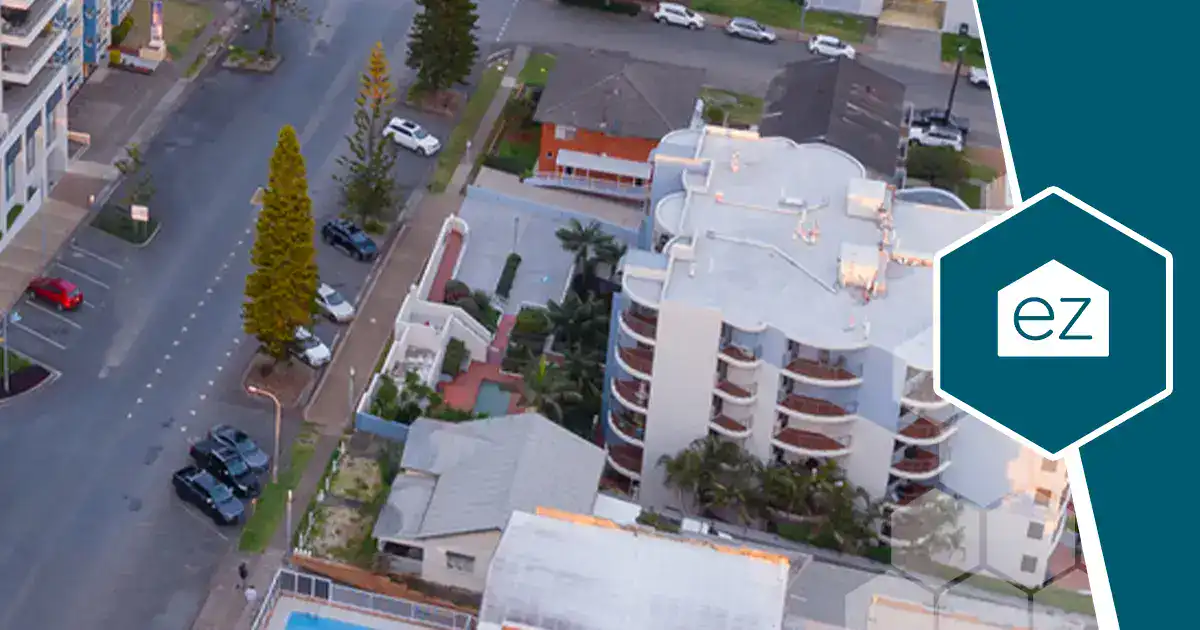
Iowa is several markets, not one
The honest picture of Iowa real estate is a spread of distinct regional economies, not one headline trend. Statewide, the market has eased from its tightest years toward more balance. The Iowa Association of Realtors reports months of supply rose to about 2.7 in 2024, with new single-family listings up 8.3% to 42,303, and active inventory continued climbing through 2025. Prices kept rising at a measured pace rather than spiking: the Federal Housing Finance Agency’s Iowa house-price index shows steady, moderate appreciation, the profile of a market that compounds value instead of whipsawing.
Underneath the statewide numbers, the economy is genuinely plural. Iowa is a national leader in several industries at once, and they do not sit in the same place. Des Moines anchors a finance and insurance sector with roughly 7,000 firms and close to 95,000 workers, by the Iowa Economic Development Authority’s count. Wind turbines generated about 63% of Iowa’s electricity in 2024, the highest share of any state, according to the U.S. Energy Information Administration, and the state produces close to 28% of the nation’s ethanol, per the Iowa Renewable Fuels Association. Agriculture remains the backbone that sets land values and the seasonal rhythm of small-town demand. Advanced manufacturing is large by output but in active adjustment on employment.

That last point matters for an agent reading activity signals. Iowa’s manufacturing base has been contracting: the Business Record counted roughly 26 facility closures since the start of 2024 and about 7,000 affected jobs over a 19-month stretch, with John Deere idling around 2,100 Iowa workers and a Whirlpool plant in the Amana area winding down. Plant closings and corporate moves are not just economic news. They are relocation listings on the leaving side and a reason past clients suddenly need to sell.
Demand pressure runs the other way at the same time. A multi-billion-dollar wave of data-center construction is reshaping specific metros: Microsoft in West Des Moines, Meta’s large campus in Altoona, an Apple facility in Waukee, Google’s long-running investment in Council Bluffs, and a separate Meta-subsidiary project approved in Davenport. Those projects pull in construction, operations, and the household formation that follows. Iowa is adding and shedding demand in different counties at the same time, which is exactly why a county-level approach beats a statewide one.
Population change reflects the same modest, two-sided story. The U.S. Census Bureau estimated Iowa grew by about 23,074 people in 2024 to just over 3.2 million, with the gain led by international arrivals and net domestic movement essentially flat. International inflows slowed in 2025 as federal immigration enforcement tightened, which trimmed the state’s growth rate. Set against roughly 1.3 million households and an owner base near 71%, none of this is a state emptying out. It is a steady market with buyers arriving in some places and listings opening up in others.
Iowa real estate leads region by region
Where your leads come from depends heavily on which Iowa you work. The table below pairs the major regions with one sourced trend each, so you can match your prospecting to the local engine rather than a statewide average.
| Region | Anchor markets | What is driving the market |
|---|---|---|
| Des Moines metro (central) | Des Moines, West Des Moines, Waukee, Ankeny, Altoona | Insurance and finance hub; Dallas County has been among the nation’s fastest-growing counties, and data-center investment is adding demand (Iowa Economic Development Authority; Census via The Gazette). |
| Cedar Rapids–Iowa City Corridor (east-central) | Cedar Rapids, Iowa City, Coralville, North Liberty | The Corridor added roughly 42,000 residents from 2010 to 2020, about twice the state’s rate, led by Johnson County growth (Census via Corridor Business). |
| Quad Cities (east) | Davenport, Bettendorf | Cross-river metro with faster spring sales pace than the statewide average (Iowa Association of Realtors). |
| Cedar Valley (northeast) | Waterloo, Cedar Falls | Advanced-manufacturing and education center now in employment adjustment as factory jobs soften (Bureau of Labor Statistics; Iowa Workforce Development). |
| Siouxland (northwest) | Sioux City | Tri-state agribusiness and food-processing hub where international arrivals help stabilize population (Census 2024 estimates via Sioux City Journal). |
| Council Bluffs / Omaha metro (southwest) | Council Bluffs | Iowa side of the Omaha metro, with logistics and cross-river commuting demand (Census; Pottawattamie County). |
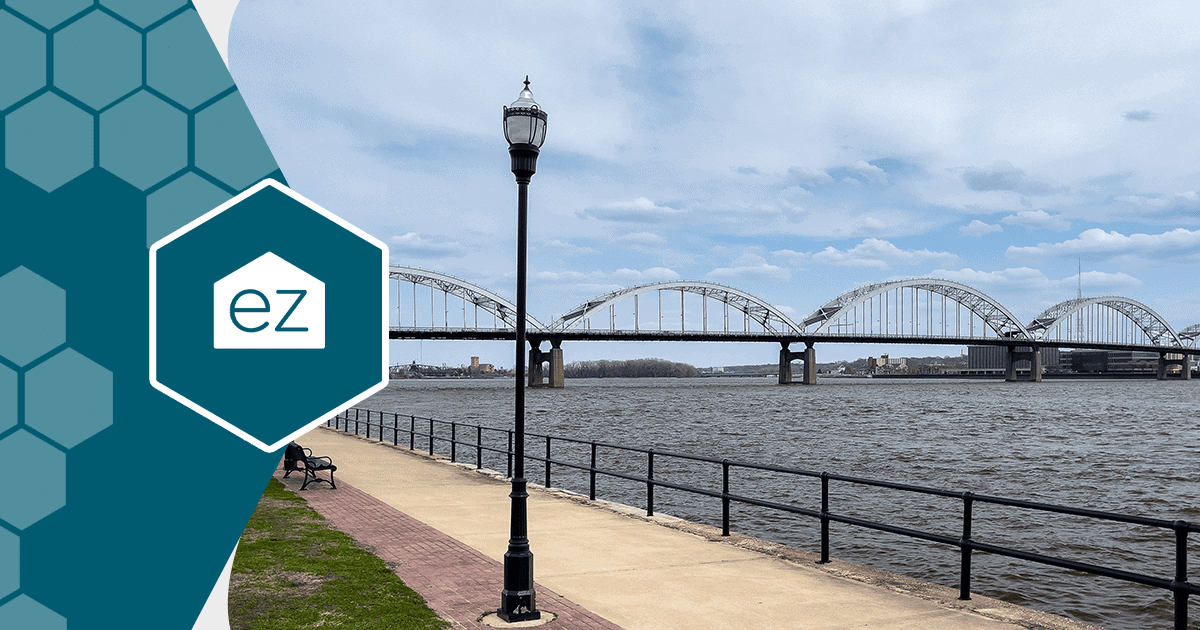
Two more regions reward a lifestyle play. The Iowa Great Lakes around Okoboji and Spirit Lake draw second-home and recreational buyers, and the Driftless country near Decorah and Dubuque sells on scenery and small-town character. These are not high-volume metros, but they carry higher price points and a buyer who searches for months before acting, which is precisely the kind of long lead an activity-based system is built to keep warm.
Where the buyers are in Iowa
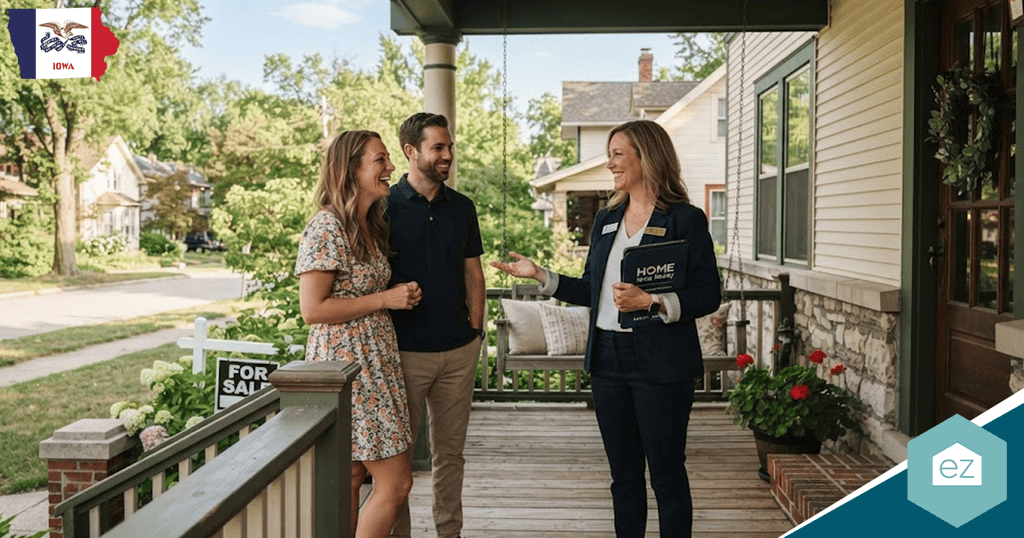
Buyer leads in Iowa cluster where jobs and growth are landing. Dallas and Johnson counties have led the state’s expansion, pulling buyers into Waukee, West Des Moines, Coralville, and North Liberty, and the data-center build-out is layering new construction and operations demand onto Polk, Dallas, Scott, and Pottawattamie counties. International arrivals add buyers in Sioux City and Des Moines. College towns add a steady churn of their own: Ames around Iowa State and Iowa City around the University of Iowa cycle renters into first purchases every year.
| Rank | County | Population (2024 estimate) | Principal city |
|---|---|---|---|
| 1 | Polk | 503,175 | Des Moines |
| 2 | Linn | 230,004 | Cedar Rapids |
| 3 | Scott | 174,608 | Davenport |
| 4 | Johnson | 156,639 | Iowa City |
| 5 | Black Hawk | 131,049 | Waterloo |
| 6 | Dallas | 107,968 | Waukee |
| 7 | Woodbury | 106,247 | Sioux City |
| 8 | Story | 100,466 | Ames |
| 9 | Dubuque | 99,030 | Dubuque |
| 10 | Pottawattamie | 93,424 | Council Bluffs |
The first-time buyer is a real opportunity in an affordable state, and Iowa just handed agents a fresh way to start that conversation. The 2026 property-tax law created FirstHome Iowa, a tax-advantaged savings account that lets eligible first-time buyers set aside money for a down payment and closing costs with state tax benefits on contributions and earnings. It is distinct from the Iowa Finance Authority’s existing FirstHome mortgage program, and most buyers have never heard of it. An agent who can explain it becomes the person a young household trusts well before they are ready to tour.
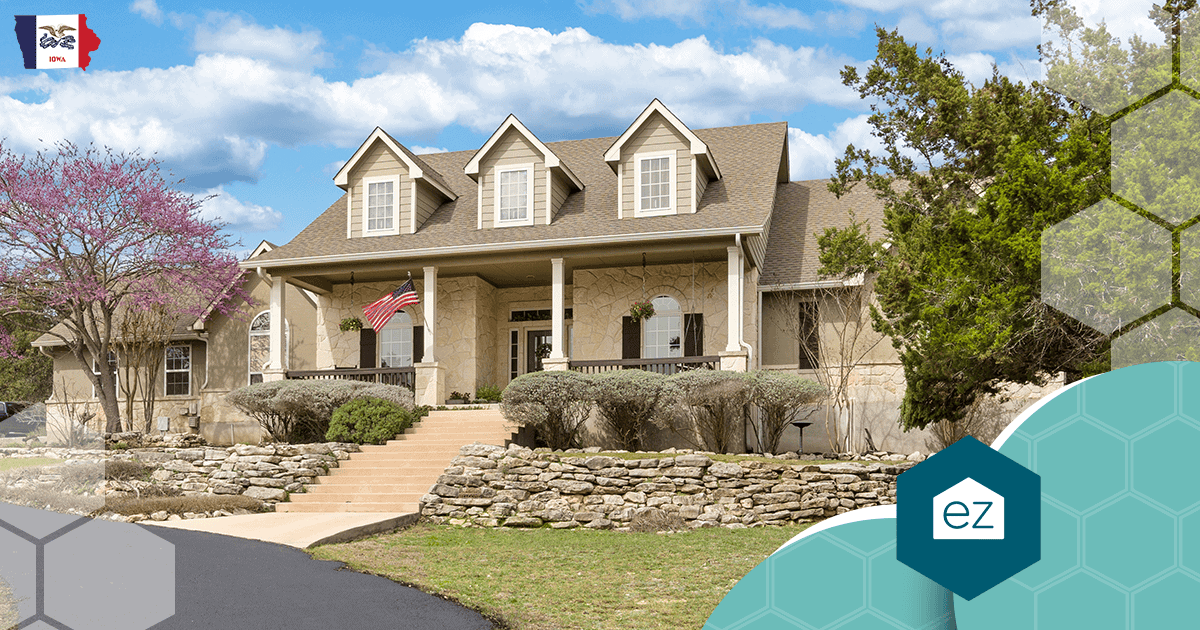
A buyer pipeline is only as strong as what you know at first contact. A buyer who reaches you through ez Home Search arrives with a readable history: the neighborhoods they searched again and again, the price range they keep landing on, the homes they saved and came back to. With ez Match, the platform’s plain-language search, buyers describe what they want in their own words, and that intent is visible to the partner who serves them. ezNurture keeps the follow-up running automatically, so a buyer who is six months out stays warm without you inventing something to say each week. You open the first call already knowing the person wants a three-bedroom in Ankeny under $375,000, which is a different conversation than dialing a name off a list.
Where the listings are in Iowa
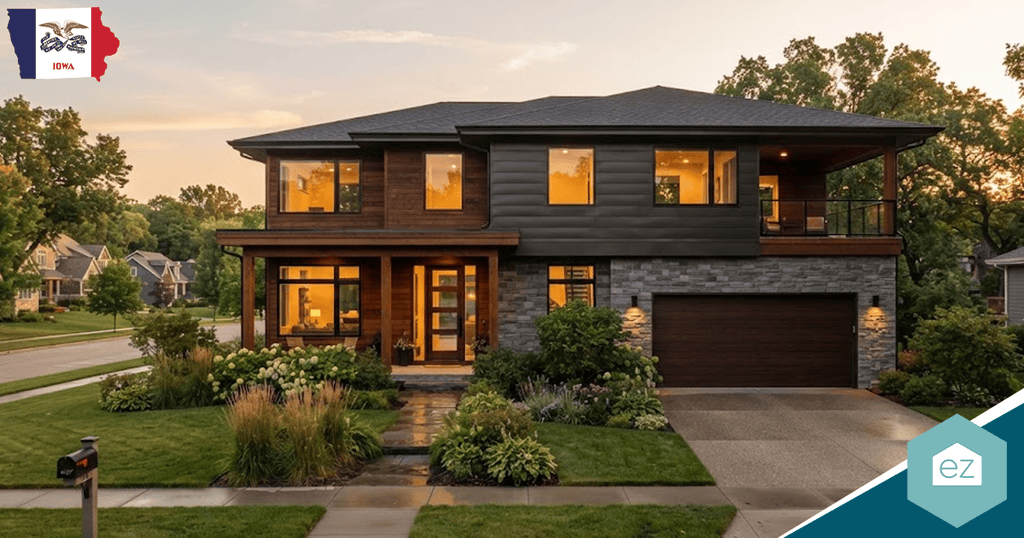
Most Iowa listings start from one of four triggers an agent can see coming: built-up equity, the 2026 property-tax change, a move out of the area, and the past clients an agent already has. The platform’s job is to surface each one before a competitor does.
Equity is the steady trigger. After years of moderate, consistent appreciation in the Federal Housing Finance Agency’s index, most Iowa owners hold real equity, and the question every owner eventually asks is what the home is worth. ez Home Search answers it with an automated valuation model, or AVM, engineered for the highest accuracy available, on a home-value page that carries the partner’s brand. A past client who checks that value twice in a month is sending a listing signal, not reading a data point.
The 2026 property-tax law is a reason to call this year. Iowa’s Senate File 2472, signed in 2026, replaced the long-standing Homestead Credit with a homestead exemption equal to 10% of a home’s taxable value, set between a floor and a ceiling and indexed over time, and capped the annual growth of city and county property-tax collections at 2%. Two companion laws took effect July 1, 2026: Senate File 2448 changed homeowner-association disclosures at sale, and Senate File 2369 clarified the rules for accessory dwelling units, with the agent-facing summary laid out by the Iowa Association of Realtors. The carrying-cost math is what an agent uses: a buyer prices the tax bill into the offer alongside the mortgage and insurance, so a rising bill quietly holds down the sale price. An agent who walks a seller through what changed, and what it means for their number, has the conversation that wins the listing.
A relocation is the listing most agents lose. Census figures put about 2.1% of Americans moving to another state each year and roughly 3% moving to another county, so on the order of one in twenty of your past clients relocates beyond the area you serve in any given year, and over a five-year relationship those odds stack up. Iowa adds its own churn on top: the Business Record counted roughly 7,000 manufacturing jobs affected over a 19-month stretch, including about 2,100 idled at John Deere, and every corporate transfer leaves a home behind. ez Home Search runs nationwide, so a client scouting a new market does it on the partner’s co-branded site instead of a legacy portal. That out-of-area search trips an early signal, and the partner who catches it can list the departing Iowa home before it slips to an agent in the destination city.
The biggest source of all is the book of past clients an agent already holds. Most agents pour their effort into new names while the past clients and sphere who already trust them go cold. That book is the cheapest, steadiest listing source an Iowa agent has, and the partner section below covers how ez Home Search keeps it producing instead of decaying.
Lead opportunity beyond Iowa’s metros
The breadth of Iowa’s lead opportunity sits outside the big metros, where competition is thinner but the market is harder to work. Demand for small-town homes, farmland, and recreational property stays firm while listings turn over slowly, so agents fight over a small flow of new inventory across large territories. The Common Sense Institute found real housing shortages even in the larger counties: Pottawattamie carried the biggest deficit relative to its stock among Iowa’s ten largest counties, with Dubuque and Polk close behind, and a statewide gap estimated above 13,000 homes in 2024. Scarce supply means the agent who controls the local relationship controls the deal.
| County | Communities |
|---|---|
| Cerro Gordo | Mason City, Clear Lake, Ventura, Rockwell |
| Dickinson | Spirit Lake, Okoboji, Arnolds Park, Milford |
| Marshall | Marshalltown, State Center, Melbourne, Albion |
| Muscatine | Muscatine, Wilton, West Liberty, Atalissa |
| Jasper | Newton, Colfax, Baxter, Prairie City |
| Marion | Pella, Knoxville, Pleasantville, Bussey |
| Sioux | Orange City, Sioux Center, Hull, Rock Valley |
| Webster | Fort Dodge, Gowrie, Dayton, Badger |
| Clinton | Clinton, DeWitt, Camanche, Wheatland |
| Winneshiek | Decorah, Calmar, Ossian, Spillville |
That breadth is where a single agent runs out of hours. Cover Cerro Gordo, Webster, and Winneshiek, and you cannot knock on doors in Mason City, Fort Dodge, and Decorah in the same week, let alone the smaller towns between them. A co-branded search the whole territory uses does that watching for you: it flags which owners are running valuations or saving listings in which towns, so your drive time goes to the handful showing real intent instead of canvassing three counties at random.
How Iowa agents generate leads today
Most Iowa agents assemble their leads from a handful of sources, and each one does part of the job. A shared online lead purchased through a legacy real estate portal shows up in volume, but that same name can be routed or resold to whichever buyer pays the most, so the call reaches someone who has already fielded competitors and chose none of them. An IDX website wired to a CRM such as Follow Up Boss or BoldTrail gives an agent their own presence, though it takes a long time to mature into one and adds a system to feed. Cold calling and door-knocking still produce for the disciplined few, and they happen to be the work most agents dodge. Predictive-seller software scores a database to guess the next likely lister; paid search and social ads rent attention by the click; content marketing compounds slowly. None of these is a mistake. Each handles one piece of the problem.
What they share is a blind spot: nearly all of them work the small share of people in the market this month and write off everyone else as a name that did not convert. ez Home Search runs on a different premise. Think of it as intent-and-activity matching. Instead of paying for a cold name and sprinting to dial it first, the platform serves the entire lifecycle of owning a home, the owners tracking equity, the dreamers saving listings they cannot buy yet, the families a year out from a move, and it hands each person to one partner at the moment their own behavior shows they are close. That connection is warm and chosen, not shared and cold, and it lasts across years rather than weeks because the trust sits with the platform the person already relies on.
That trust is engineered into the consumer side. The product is built as The Only Confidential Home Search, so a searcher keeps their contact details and budget out of the resale stream, never recycled or pushed to a roster of businesses they did not pick. Each searcher draws a Single Local Expert, the partner who holds their county, and the rest of the vetted network stays available only if they reach for it. Safety changes behavior; people who feel safe share more, and that fuller picture is what turns interest into a closing. Plan on relationships that ripen over 30 to 60 days rather than the same night, and plan on more of them closing, because they started with trust rather than a race to the phone.
The remote-work demand most Iowa agents are missing
There is a lasting source of Iowa buyer demand that most agents have written off because the headlines told them to. The story that remote work is fading compares today against the spring-2020 emergency peak, not against the long-run baseline. Measured correctly, the shift is real and has settled at a structurally higher level. During the fourth quarter of 2024, Bureau of Labor Statistics figures showed 36.7 million Americans doing at least some telework, a gain over the prior year, with the telework rate up to 23.4%. A Census Bureau survey of business trends and outlook, covering roughly 150,000 firms, found about 31% had staff working from home and expected close to the same share five years out. Gallup’s tracking shows hybrid work leveled off and held. This is a plateau, not a slide, and these are national figures from named federal and research institutions, not a vendor’s blog.
Here is why it matters for Iowa specifically. Research from the USDA Economic Research Service shows rural counties reversing more than a decade of population decline beginning in 2020, adding hundreds of thousands of net migrants through 2024, the gains concentrated among working-age adults 25 to 44, exactly the remote-capable group. Iowa’s affordable, scenic, and mid-size markets are positioned to capture that flow: the Iowa Great Lakes around Okoboji, the Driftless country near Decorah and Dubuque, a town like Pella, and the commuter ring of small towns within reach of Des Moines, Cedar Rapids, and the Quad Cities. A household earning a coastal salary while paying Iowa prices is a powerful buyer, and Iowa’s recent move to clarify accessory-dwelling-unit rules statewide makes the home office and the separate work structure easier to add.

The agent who understands this knows what these buyers want and can speak to it: a home office that closes off, a finished room or detached structure for work, extra square footage, and real broadband. An agent who names those features in a listing, and knows which towns deliver them, turns a national trend into a local closing. It is an edge most Iowa teams are not using because they believe a narrative that the data does not support.
What an Exclusive County Partner gets in Iowa
An Exclusive County Partnership hands a single agent, team, or brokerage the recognized real estate name across one whole Iowa county, with nobody else partnered inside it. Those leads are the partner’s outright. Nothing is billed per lead, and no slice of the commission leaves when a deal closes, so a busy month pays the partner instead of generating a larger invoice. That is the foundation. Everything built on it is shaped to the specific pains an Iowa agent works against.
The biggest lever is the database the partner already holds, and it matters most where the client base is aging in a slower-growth county. Agents know repeat and referral work is the cheapest business they will ever land, yet the research is blunt: the great majority of buyers say they would use their agent again, and only about 18% do. Follow-up is the gap. Good follow-up takes a steady supply of material people actually open, plus a home search they choose to come back to on their own. ez Home Search produces and operates the whole of it, co-branded to the partner, and partners working a county on the platform reactivate former clients at 2.5 to 5 times the rate the wider market sees.
The next lever shows up when a client moves away. With nationwide coverage behind the platform, a past client weighing a relocation runs that search on the partner’s own co-branded site rather than wandering off to a legacy portal, and the activity registers as an early tell. The partner makes contact while the home is still theirs to win, walks through the sale of the current property, and keeps a listing that would otherwise have vanished. In a state where plant moves and corporate transfers are part of the calendar, that retention carries real dollars.
Recognition as the county’s name is what compounds everything else. The National Association of Realtors reports that 81% of sellers reach out to just one agent before they commit, and that reputation outranks every other factor for more than a third of them. Across rural Iowa, where a familiar local name counts for even more than it does in a metro, owning the brand on the home search the whole county already opens means the client is decided before any comparison starts. Layer on the consent protection in ezVerify.ai, which records that a person opted in, holds the proof, checks every number against a known-litigator database, drops Do Not Call registrants, and fills in the rest of the contact detail, and the most exposed part of prospecting is settled before the first call goes out. The conversion tools, the coaching, and the done-for-you marketing arrive in the package, so the partner’s hours land on clients and closings instead of administering software.
One county, one partner
Iowa has 99 counties, and each one belongs to a single partner. A good share are spoken for, and additional ones come off the board month after month, which is what an exclusive model produces: the recognized seat in a county is worth keeping, so it rarely sits open for long. The engine performs the same in Polk County as in a rural county of a few thousand households, because the worth of being the known local name has nothing to do with market size. Setup is plug-and-play. The partner steps onto a home search that already has millions of users, brand attached, and it runs from the first day. What is left to decide is simply whether the county you have in mind is still open.
The choice every Iowa agent now faces
An Iowa agent’s choice narrows to three routes. The first keeps buying shared online leads, paying for each name even though it can be steered to whoever bids highest and the prospect never picked you; that is the familiar grind, and it is why prospecting feels like a treadmill. At the far end is to assemble the data, search, valuation, follow-up, and compliance stack on your own, a build that runs into millions of dollars and years of work and still leaves the operating burden on you. Between them sits the Exclusive County Partnership: you hold a county, the leads are yours with nothing charged per name, and the engine is built and operated on your behalf.
The trade-off is worth saying plainly. Exclusivity is finite. One partner to a county means a county already held is one you have to wait on, and the relationships you do open ripen over 30 to 60 days instead of closing on the first call. That is what warm, chosen connections cost in place of shared cold ones. The evidence is concrete: on this model, partners reactivate former clients at a rate 2.5 to 5 times the broader market’s, turning a database they already own into the steadiest source of business they have.
To find out whether the Iowa county you want is still open, check your county and schedule a call. The recognized local name in your market is going to belong to someone. The only question is whether it is you.
Frequently asked questions
How do recent Iowa property-tax changes affect what I tell buyers and sellers about cost of ownership?
Iowa recently overhauled how property taxes work, and the details matter for every cost-of-ownership conversation. The state replaced its old Homestead Credit with a homestead exemption set at 10% of a home’s taxable value, within a floor and ceiling and indexed over time, and capped annual growth in city and county tax collections at 2%. For a seller, the takeaway is that property taxes feed directly into what a buyer can afford to offer, so the tax line belongs in your comparative market analysis, not as an afterthought. For a buyer, it means the true monthly cost is more predictable than it used to be. An agent who can explain the change in plain terms turns it into a lead source.
Where are buyer leads easiest to capture in the Cedar Rapids–Iowa City Corridor versus the Des Moines metro?
Both are growth markets, but they reward different tactics. The Corridor added roughly 42,000 residents from 2010 to 2020, much of it in Johnson County and the North Liberty and Coralville ring, with university and healthcare employment driving steady first-time and move-up demand. The Des Moines metro is larger and more competitive, with insurance, finance, and data-center investment pulling buyers into Dallas County suburbs like Waukee and West Des Moines. In the Corridor, an agent can own a town or a school district; in the metro, the edge comes from a recognized brand and an activity-based pipeline rather than outbidding large brokerages for shared leads.
How do I generate listing leads in shrinking rural Iowa counties where inventory is thin and clients are aging?
Listing leads in slower-growth counties come from equity and life events, not from new arrivals. The reliable engine is staying in front of every owner in the county with a co-branded home search and monthly value updates, so when an owner starts thinking about downsizing or settling an estate, you are the name they already associate with their home’s value. An aging client base produces a steady flow of downsizing and estate sales, and reactivating your past-client database is the cheapest way to capture them before a competitor does.
With the data-center build-out and growth in Waukee and West Des Moines, how do I capture buyers moving into Dallas and Polk counties?
Buyers following jobs into the western Des Moines suburbs are searching long before they contact an agent, so the goal is to be present during that search rather than buying the click at the end of it. Dallas County has been among the fastest-growing in the country, and major facility investments are adding operations and construction households on top of the existing finance and insurance base. An agent who holds the county and whose brand sits on the search those buyers are already using gets the contact warm, with a visible history of what they want, instead of competing for a resold name.
How should I time Iowa lead generation around the spring surge and the harvest-season and winter slowdown?
Iowa’s market is seasonal, and the pipeline should be built to carry through the slow months rather than spike and fade. Spring and summer carry most transaction volume, especially near job centers, while harvest season and winter slow things down. The way to smooth it is to keep owners engaged year-round through a home search and value updates they return to on their own, so your follow-up runs on real activity in January as well as June. Leads that come from sustained engagement do not dry up when the season turns the way a paid-ad campaign does.
What lead sources actually work for a Cedar Valley or Siouxland agent covering several counties at once?
When you cover a large multi-county territory, the lead source that works is one that scales without your physical presence. You cannot personally reach every owner across several counties by driving the territory, but a co-branded home search that the whole area uses can, surfacing buyer and seller activity wherever it happens. For an agent in Waterloo and Cedar Falls or across Siouxland, owning the recognized brand across the territory and letting an activity-based platform flag who is ready beats spreading paid ads thin across markets you cannot personally cover.
How do I compete for Des Moines metro leads against large brokerages without buying resold portal leads?
You compete on ownership and relationship rather than ad budget. Large brokerages can outspend an individual agent on shared online leads, but a lead like that can still be resold or handed to whoever bids highest for it, so the edge is shallow. Hold a county outright, with your brand on the home search local buyers and sellers already use, and you have a position the biggest competitor cannot buy inside your territory. Pair that with an activity-based pipeline that tells you who is ready, and you are working warm contacts while competitors are still dialing cold ones.
How do I generate farmland and small-town seller leads in Iowa without cold calling?
Farmland and small-town listings come from long relationships and local recognition, which is the opposite of cold calling. The lasting approach is to be the known name across the county through a co-branded search and steady value updates, so owners think of you first when they decide to sell land or a small-town home. Because so much of that business is repeat and referral, reactivating the database you already own and staying visible to the local sphere produces listings without a dialer, and a compliant, opted-in contact system handles outreach when it is warranted.
What is FirstHome Iowa, and how can I use it to start buyer conversations?
FirstHome Iowa is a tax-advantaged savings account created in Iowa’s 2026 property-tax law that lets eligible first-time buyers set aside money for a down payment and closing costs with state tax benefits. It is separate from the Iowa Finance Authority’s existing FirstHome mortgage program, and most prospective buyers have never heard of it. For an agent, it is a reason to start a conversation with a renter who assumes ownership is years away: explaining how to save toward a first home, in an affordable state, positions you as the trusted guide long before they are ready to tour.



Kurt Uhlir is a recognized leader in marketing, growth, and innovation, having helped scale companies and technologies used by millions every day—including at brands like eXp Realty, Sideqik, Vitrue, Oracle, Garmin, Facebook, Meta, Apple, and more. He’s trained tens of thousands of professionals on how to build trust, lead with service, and help clients make wise, informed decisions. At ez Home Search and Sure Send, his focus is on helping high-performing business owners, team leaders, and individual sales leaders grow their businesses through exclusive market access, privacy-first lead systems, and conversion-focused enablement tools.