

Buyer Leads: The Engine of Real Estate Growth
If you’re looking for buyer leads for real estate agents, here’s a quick overview of the most effective methods. Buying real estate leads is one of the fastest ways to build a new business or revitalize an existing one.
- Build an IDX website that captures search behavior
- Run targeted digital ads on Google and social platforms
- Leverage your sphere and generate referrals
- Host community events and open houses
- Implement fast follow-up systems with CRM automation
- Consider paid lead platforms with exclusivity guarantees
- Track performance metrics to optimize your approach
Effective real estate lead generation strategies include building a strong online presence with SEO and social media marketing, hosting open houses and community events, nurturing professional networks through referrals, and creating valuable content like neighborhood guides.
There are plenty of lead generation options available to real estate agents, so you can choose the ones that best fit your business model and goals. Some providers, like Market Leader, offer a guaranteed monthly volume of exclusive leads to agents. Market Leader guarantees exclusive leads delivered monthly to its users, ensuring agents have a steady and reliable source of potential clients. Market Leader claims pricing starts at $189 per month plus $30 to $50 per lead, but many agents say the ROI is not there when looking at how many convert..
Buyer leads for real estate agents are the foundation of a sustainable and profitable business. In today’s competitive market, having a consistent pipeline of qualified prospects isn’t just helpful—it’s essential for survival. With 97% of home searches starting online, agents who master digital lead generation while maintaining human connection create an unbeatable advantage. Finding what works for your business is key to long-term success. Positive client reviews boost local search rankings and help attract potential buyers. Showcasing testimonials and positive feedback prominently builds credibility and aids in converting leads. Using Google Business Profile allows potential clients to find contact information and reviews for real estate agents for free, further enhancing visibility and trust.
The challenge isn’t just finding leads—it’s finding the right leads and converting them efficiently. The answer to how to find buyer leads for real estate agents lies in using a combination of proven strategies, targeted marketing, and consistent follow-up. To maximize results, it’s important to align your lead sources with your specific market and business objectives. Many agents waste thousands of dollars chasing cold prospects or competing with dozens of other professionals for the same contact information. The key difference between struggling agents and top producers often comes down to lead quality, exclusivity, and follow-up systems. Expired listings are a viable source of leads because the homeowners may be frustrated and willing to change agents. These leads come from properties that were on the market but did not sell. Sold.com connects agents with seller leads and only charges referral fees after a deal closes, making it an attractive option for those looking to minimize upfront costs.
With so many options, foundational marketing methods and choosing the right lead sources truly matter, no matter your market or experience level. Building a brand and maintaining visibility is essential for generating real estate leads. A multi-channel approach combining online and offline strategies is essential for attracting potential buyers. The existing network of contacts is often the highest-converting source for new business, emphasizing the importance of nurturing personal and professional relationships.
I’m Preston Guyton, with over 20 years of experience generating and converting buyer leads for real estate agents through my companies ez Home Search and Digital Maverick, where we’ve helped thousands of agents build sustainable lead generation systems that deliver consistent results. Some lead generation platforms offer additional support, such as training resources for agents.
Before diving into tactics, let’s clarify what we mean by buyer leads for real estate agents. These are potential clients who have shown interest in purchasing property and have shared their contact information. They exist at various stages of readiness – from just browsing listings to actively searching with pre-approval in hand. There are different types of lead generation strategies, and it’s important to diversify the ones you use to maximize your reach and results. Host open houses and community workshops to meet prospective buyers and gather their contact information. Networking with friends, family, and colleagues is a powerful way to generate leads. Referral leads, which come from satisfied clients recommending agents to their friends and family, are another powerful way to generate business.
Understanding the difference between a prospect (someone who might buy) and a qualified lead (someone ready to engage) is crucial for optimizing your time and resources. The most successful agents build systems that not only generate high volumes of prospects but efficiently filter for quality and intent. Completing the qualification process ensures you’re focusing on leads most likely to convert. Producing high-quality articles, videos, and downloadable guides can establish you as an expert in real estate. Sending out emails can also be a low-cost way to generate leads, especially when automated.
With industry conversion rates hovering between 0.4% and 1.2% according to NAR data, volume matters – but so does exclusivity. When multiple agents compete for the same lead, conversion rates plummet. That’s why we focus on creating systems that deliver exclusive opportunities to a single agent per territory. Zillow pricing ranges from $300 to over $1,000 per month plus lead costs.
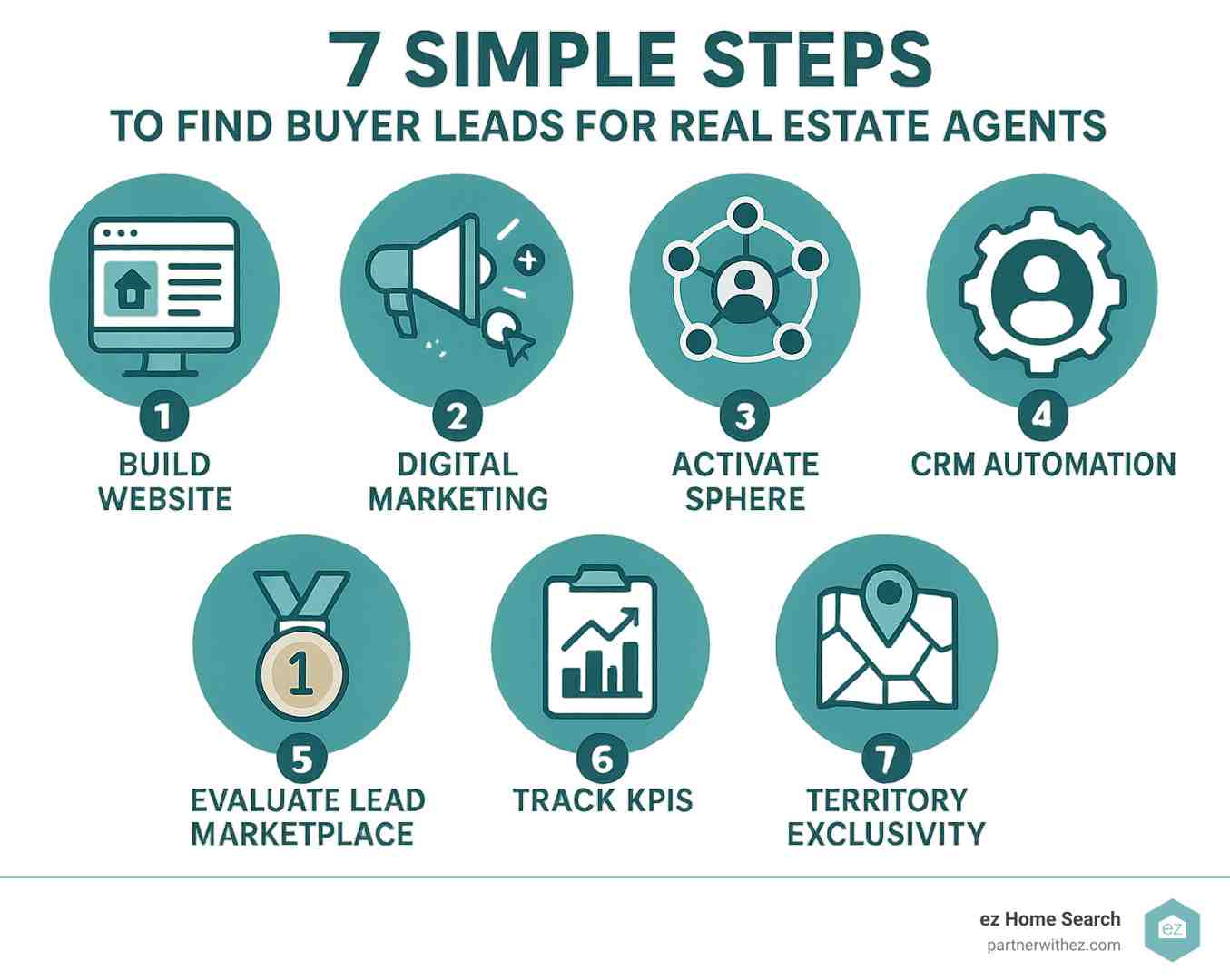
Let’s explore the seven proven steps to build your buyer lead pipeline. If you’re unsure where to start, expert guidance can point you to the right strategies for your market and business goals.
Types of Real Estate Leads
In the world of real estate, not all leads are created equal. For solo agents and teams alike, understanding the different types of real estate leads—and how to engage each one—can make all the difference in maximizing your ROI and conversion rates. By recognizing the unique characteristics of each lead source, real estate agents can tailor their approach, allocate their energy more efficiently, and ultimately increase their chances of turning prospects into clients.
Here’s a breakdown of the main types of real estate leads and what makes each one valuable:
- Online Leads: These are generated through digital channels such as your IDX website, social media, or online real estate marketplaces. Online leads can vary based on the method used—some may come from targeted ads, others from organic content or property search forms. While online leads offer scale and automation, they often require robust lead nurturing to move them through the journey from casual browser to serious buyer.
- Referral Leads: Sourced from past clients, friends, or professional connections, referral leads are gold for real estate agents. They come with built-in trust and typically have a much higher conversion rate, making them a powerful tool for maximizing ROI. Many agents report that referrals provide higher conversion rates compared to cold leads. These leads require consistent relationship-building and follow-up to keep the referral pipeline strong.
- FSBO Leads (For Sale By Owner): Homeowners selling their properties without an agent can be a challenging but rewarding source. FSBO leads require patience, education, and a consultative approach to help them see the value you bring. When you successfully engage FSBOs, you often gain motivated clients who appreciate your expertise.
- Expired Listings: Properties that didn’t sell the first time around represent a unique opportunity. Owners of expired listings may be frustrated and more open to new methods or a fresh perspective. By demonstrating your ability to help where others have not, you can quickly build trust and increase your chances of securing the listing.
- Direct Mail Leads: Responses to mailers—like postcards, newsletters, or property brochures—can be highly targeted to specific neighborhoods or demographics. While this method can be time consuming and require upfront costs, it allows you to reach prospects who may not be active online. Consistent, value-driven mailers help keep your name top-of-mind and can yield a steady stream of leads.
- Event or Open House Leads: Meeting potential buyers or sellers at open houses or community events gives you the advantage of face-to-face engagement. These leads are often further along in their property journey and can be easier to qualify. The key is to capture their contact info and follow up promptly to maximize your conversion rate.
- Investor Leads: Real estate investors are always on the lookout for properties that fit their criteria. These clients often move quickly and can provide repeat business if you prove your value. Working with real estate investors requires a deep understanding of the market and the ability to source properties that meet their investment goals.
- AI-Generated Leads: Leveraging artificial intelligence and machine learning, AI-generated leads help agents identify potential clients and properties based on predictive analytics. This method can uncover opportunities that traditional prospectors might miss, enabling you to scale your lead gen efforts and improve conversion rates with less manual work.
Beyond the source, it’s essential to recognize where each lead is in their buying or selling journey:
- Top-of-Funnel Leads are just starting to explore their options and may not be ready to engage immediately. These leads require long-term nurturing and educational content to build trust.
- Middle-of-Funnel Leads are actively researching properties or seeking advice. They’re more likely to respond to targeted communication and are closer to making a decision.
- Bottom-of-Funnel Leads are ready to act—these are your hottest prospects and require immediate, personalized follow-up to close the deal.
By understanding the variety of lead types and their readiness, real estate agents can apply the right methods at the right time—whether it’s automation, personal outreach, or specialized content. This strategic approach not only helps maximize your conversion rates and ROI but also ensures you’re spending your time and resources where they’ll have the greatest impact. In a market where choices and competition abound, knowing how to work each lead source to its full potential is what sets top agents apart.
Step 1 – Build an IDX Hub That Attracts “Buyer Leads for Real Estate Agents”
With 97% of real estate searches starting online, your digital presence is your most valuable lead generation asset. An IDX (Internet Data Exchange) website serves as your 24/7 lead capture machine by allowing visitors to search local MLS listings directly on your site. Zillow Premier Agent is still considered as a primary source for high-quality buyer leads, despite their being much better sources of leads that help agents and teams in more ways.
Key elements of a high-converting IDX hub include a mobile-first design (since over 70% of property searches happen on mobile devices), neighborhood landing pages that capture targeted search traffic, and value-driven lead magnets like neighborhood guides or first-time buyer resources that visitors want enough to share their contact information.
Strategic calls-to-action throughout your site – such as options to schedule showings, save searches, or get notified of new listings – create natural conversion points. And don’t forget those retargeting pixels that let you reconnect with visitors who leave without converting!
The most effective IDX sites don’t just display listings – they create an experience that makes visitors want to register. At ez Home Search, we’ve found that websites with neighborhood-specific content convert up to 3x better than generic IDX sites. By creating dedicated pages for local communities, school districts, and lifestyle categories (waterfront, golf course, etc.), you attract highly qualified traffic with specific buying criteria. Consistently sharing a new post on your social media channels—such as Instagram posts or video posts highlighting these neighborhood features—can further boost engagement and attract more leads to your IDX website.
Step 2 – Drive Traffic With Paid & Organic Digital Marketing
Once your IDX hub is built, you need a consistent flow of targeted traffic through both paid and organic channels.
On the paid side, Google PPC campaigns targeting keywords like “homes for sale in [location]” can connect you with active searchers. Facebook and Instagram ads help you reach potential buyers based on demographics and interests, while retargeting campaigns keep you in front of people who’ve already visited your site. YouTube pre-roll videos can also introduce you to relevant audiences watching real estate content. Use platforms like Facebook, Instagram, and LinkedIn to post engaging content and run targeted ads.
For organic growth, focus on SEO-optimized content that answers real buyer questions, engaging social media posts that showcase your local expertise, video marketing that brings properties to life, and email newsletters that keep your audience informed about market conditions.
To maximize conversions, use strong calls-to-action and lead magnets that encourage visitors to sign up or sign in to access exclusive resources, property listings, or market reports.
For maximum effectiveness, your content should solve problems buyers face during their search. Articles like “10 Hidden Costs of Buying in [Your Market]” or “School District Guide for [Your Area]” provide genuine value while positioning you as a trusted local expert.
Different platforms attract buyers at different stages of readiness – Facebook might capture early-stage browsers, while Google PPC often connects with more motivated searchers actively looking for properties.
Step 3 – Activate Sphere, Referrals & Local Events
While digital marketing casts a wide net, your sphere of influence remains one of your most valuable lead sources. According to NAR, 35% of real estate sales originate from referrals – making this channel impossible to ignore.
Nurture your existing relationships through client appreciation events that keep you top-of-mind, and consider offering referral incentives when past clients send new business your way. Building strategic partnerships with lenders, attorneys, and home inspectors creates a referral network that benefits everyone.
Community involvement through sponsorships or volunteer work helps you connect with potential buyers in authentic settings. And don’t underestimate the power of open houses – they’re still one of the most direct ways to meet active buyers face-to-face. Take the opportunity to speak directly with potential clients at these events to build trust and rapport.
The key to sphere marketing is consistency and value. Rather than only reaching out when you need business, create regular touchpoints that provide genuine benefit to your network. Market updates, home maintenance tips, or local business spotlights all show that you care beyond the transaction.
First-time homebuyer seminars remain one of the highest-converting in-person lead generation tactics. By partnering with a local lender, you can educate potential buyers about the purchasing process while collecting contact information from attendees who are actively considering a purchase. Open houses are a traditional and effective lead generation strategy in real estate.
Step 4 – Capture & Convert Fast: CRM Automation for “Buyer Leads for Real Estate Agents”
Generating leads is only half the battle – converting them requires systematic follow-up. Studies show that 78% of buyers work with the first agent who contacts them, making speed-to-lead a critical competitive advantage. Use chatbots on your website for instant responses and leverage marketing automation to manage lead follow-up.
A robust CRM system with automation capabilities helps you deliver immediate responses to new leads, coordinate multi-channel follow-up across email, text, phone and social media, and implement lead scoring to prioritize your hottest prospects. Drip campaigns keep you connected with leads based on their timeline and interests, while activity tracking alerts you when someone is showing increased engagement.
At ez Home Search, our ezNurture™ system integrates with popular CRMs like Follow Up Boss to create behavior-triggered follow-up sequences. When a lead views the same property multiple times or returns to your website after receiving an email, the system alerts you to this high-intent activity.
For teams handling high lead volume, implementing an ISA (Inside Sales Agent) or virtual assistant ensures no lead falls through the cracks. These team members focus exclusively on initial contact and qualification, passing only sales-ready leads to agents for showings.
The most effective lead nurture systems segment contacts into three categories: hot leads ready to act within 30 days (requiring immediate personal contact), warm leads planning to buy within 1-6 months (needing regular value-based touchpoints), and nurture leads on a 6+ month timeline (maintaining awareness with automated content).
By tailoring your communication to each segment’s timeline and needs, you maintain relationships without burning out on manual follow-up.
Step 5 – Evaluate Paid Lead Marketplaces & Costs
While building your own lead generation ecosystem is ideal for long-term sustainability, paid lead sources can supplement your pipeline, especially when entering new markets or scaling quickly.
When evaluating paid lead providers, consider factors like lead exclusivity (are you competing with multiple agents?), cost structure (pay-per-lead vs. subscription), lead quality (how are leads verified?), conversion rates, and replacement policies for bad leads. Some platforms, such as Zillow Premier Agent, have the capacity to deliver a large volume of high-quality leads and offer exclusive ad placements, making them attractive for agents seeking extensive reach. CINC charges start at $899 per month (and go up from there) for solo agents for its end-to-end lead generation and nurturing service, providing a comprehensive solution for those looking to streamline their efforts.

According to our research, costs for buyer leads for real estate agents typically range from $20-$60 per lead, with monthly investments varying based on your market. However, these figures can vary dramatically based on lead quality and exclusivity. Some referral programs and lead generation services only charge fees after deal closes, emphasizing a performance-based model where payment is due only upon a successful transaction.
At ez Home Search, we’ve found that exclusive, verified leads cost more upfront but deliver significantly higher ROI due to reduced competition and higher intent. Our county-based exclusivity model ensures that each lead is matched with only one agent, dramatically improving conversion rates compared to shared-lead models.
When calculating ROI for paid leads, consider the average commission in your market, your typical conversion rate, the time investment required for follow-up, and the lifetime value of a client (including referrals).
For new agents with limited budgets, start with a small, targeted paid lead campaign while simultaneously building organic lead systems. As you close transactions and build capital, you can gradually increase your paid lead investment.
Step 6 – Track KPIs, Compliance & Data Hygiene
You can’t improve what you don’t measure. Successful lead generation requires diligent tracking of key performance indicators (KPIs) at each stage of the funnel.
Monitor traffic metrics like website visitors and ad click-through rates, conversion metrics such as lead capture rate and cost per lead, and sales metrics including appointment-to-client conversion and cost per closing.
Beyond performance tracking, maintaining compliance with regulations like TCPA (Telephone Consumer Protection Act) and managing data hygiene are critical for sustainable lead generation. This includes documenting consent, maintaining Do-Not-Call compliance, verifying contact information, and regularly cleaning your database.
At ez Home Search, our ezVerify.ai system automatically validates lead information and ensures TCPA compliance, providing agents with an audit trail for every contact. This protection is increasingly important as privacy regulations become more stringent.
Establish a regular reporting cadence – weekly reviews of leading indicators (new leads, response times) and monthly analysis of lagging indicators (closings, ROI) – to keep your lead generation efforts on track.
Step 7 – Scale With Territory Exclusivity & Partnerships
Once you’ve established a working lead generation system, scaling requires strategic expansion rather than simply increasing ad spend.
Consider geographic expansion by securing exclusive territories in adjacent areas, forming strategic partnerships with lenders and service providers, implementing team specialization with dedicated buyer agents for specific lead sources, adding ancillary services like mortgage or insurance to capture additional revenue, and leveraging technology integration to automate more of your nurture process.
At ez Home Search, our county-based exclusivity model allows agents to secure protected territories where they receive all buyer leads generated in that area. This eliminates competition and creates predictable lead flow that can support team growth.
Strategic partnerships with mortgage professionals can be particularly powerful for scaling. By co-marketing with lenders, you can share marketing costs while creating a seamless experience for buyers. These partnerships often include pre-qualification services that improve lead quality.
Weekly coaching and accountability sessions are crucial during the scaling phase to ensure team members are maximizing lead conversion. These sessions should review KPIs, identify bottlenecks, and refine scripts and processes.
Have all the counties near you been claimed for county exclusivity yet?
Tools & Tech Stack That Boost Lead Conversion
The right technology stack can dramatically improve lead conversion rates by ensuring timely follow-up and personalized communication. Here are the essential components:
- IDX Website: The foundation of your digital presence, allowing visitors to search listings
- CRM System: Centralized database for lead management and follow-up automation
- Marketing Automation: Email and text sequences triggered by lead behavior
- Lead Qualification Tools: AI-powered systems that score and prioritize leads
- Call Tracking: Phone systems that record calls and integrate with your CRM
- Virtual Tour Software: Tools for creating immersive property experiences
- Calendar Scheduling: Self-booking systems for appointments and showings
- Analytics Dashboards: Visual reporting on lead performance metrics
Research from MIT shows that the odds of qualifying a lead drop by 400% when response time exceeds 5 minutes. This makes automation tools that enable immediate response essential for modern real estate practices.
At ez Home Search, our integrated ecosystem connects these tools through API integrations, creating a seamless flow of data from lead capture through nurturing and conversion. This eliminates manual data entry and ensures no lead falls through the cracks due to system gaps.
The most important consideration when building your tech stack is integration capability. Isolated tools create data silos that hamper follow-up effectiveness. Look for platforms that connect with your core CRM to maintain a single source of truth for all lead data.
Frequently Asked Questions About Finding Buyer Leads
How much should a new agent budget for buyer leads?
Starting out in real estate can feel like trying to fill a bathtub with the drain open if you don’t have a smart lead strategy. For new agents, I recommend a conservative approach – set aside about 10-15% of your anticipated annual commission for lead generation. Experienced agents often spend over $1,000 each month on leads.
Think of it this way: If you’re aiming to make $100,000 in your first year with an average commission of $5,000 per transaction, you’ll need to close 20 deals. A reasonable investment would be $10,000-$15,000 spread across your lead generation efforts.
But here’s the good news – you don’t need to drop thousands right away! Focus first on these budget-friendly methods:
Tap your personal sphere – The people who already know and trust you are golden. Make those calls!
Host open houses for other agents – This is practically free access to active buyers.
Create neighborhood content for your social channels – Become the local expert people turn to.
Join an established team with systems already in place – Learn while you earn.
As those first commission checks start coming in, you can gradually scale up your investment in paid lead sources. The key is tracking every dollar spent against results so you know exactly what’s working.
What’s the average conversion rate for online buyer leads?
Let’s get real about conversion rates. According to NAR data, most agents convert online leads at just 0.4% to 1.2%. That means for every 100 leads, you might get 1 or 2 transactions. Feels discouraging, right?
But these numbers don’t tell the whole story. Your actual results will vary dramatically based on several factors:
Lead quality – A motivated pre-approved buyer beats a casual browser every time.
Exclusivity – When five agents are calling the same lead, nobody wins.
Response time – The difference between 5 minutes and 50 minutes is astronomical.
Follow-up consistency – The fortune is in the follow-up, as they say.
Market conditions – Hot markets mean faster decisions.
At ez Home Search, our exclusive territory model typically delivers conversion rates 2-3 times higher than these industry averages. Why? Because each lead connects with just one agent rather than being sold to multiple competitors who end up fighting over the same prospect.
The single biggest factor I’ve seen affecting conversion? Speed and consistency in follow-up. Agents who reach out within 5 minutes and maintain regular communication convert at rates up to 9 times higher than those who delay or follow up sporadically. The early bird really does get the worm!
Are purchased leads better than organic leads?
This question is a bit like asking whether vegetables or protein is better for your diet – you actually need both for a balanced approach!
Organic leads tend to come with higher trust from the start. They’ve found you through content they valued, a friend’s recommendation, or your social media presence. While they cost less in direct dollars, they require significant time investment. They’re slower to accumulate but build lasting brand equity and tend to be more loyal.
Purchased leads, on the other hand, offer volume and predictability. When you need to fill your pipeline quickly or target specific neighborhoods, paid leads can deliver results faster. They require more upfront investment but potentially offer quicker ROI.
The smartest agents I know use both strategies: building organic systems for long-term sustainability while strategically using purchased leads to accelerate growth or fill immediate gaps in their pipeline.
Quality varies dramatically between lead providers, though. Buyer leads for real estate agents that come with exclusivity and proper verification typically cost more upfront but convert at much higher rates than the bargain-basement leads sold to dozens of agents simultaneously.
At EZ Home Search, we’ve focused on delivering high-quality, exclusive buyer leads for real estate agents through our county-based territories, while featuring that local agent in the marketing materials, drip emails, and other communications we send to local buyers. This approach gives you the volume advantages of purchased leads combined with the higher conversion rates typically associated with organic sources – truly the best of both worlds.
Conclusion
Generating a consistent flow of qualified buyer leads for real estate agents requires a systematic approach combining digital marketing, relationship nurturing, and strategic partnerships. By implementing the seven steps outlined in this guide, you can create a predictable pipeline that supports sustainable business growth.
The most successful agents don’t rely on a single lead source but build diversified systems that deliver prospects at various stages of the buying journey. This balanced approach provides both immediate opportunities and long-term stability.
What truly sets top-performing agents apart is their commitment to exclusivity and privacy-first practices. By securing protected territories and respecting consumer data, they build trust while eliminating the competition that plagues traditional lead generation models.
At ez Home Search, we’ve helped thousands of agents transform their businesses through our county-based exclusivity model, which delivers intent-driven buyers to a single local expert rather than selling the same lead to multiple competing agents. Our integrated ecosystem combines high-conversion IDX tools, behavioral tracking, CRM-integrated nurture flows, and TCPA-compliant verification – all under one privacy-first platform.
Whether you’re just starting your real estate career or looking to scale an established team, implementing these seven steps will help you build a more predictable, profitable, and sustainable business based on quality buyer leads for real estate agents.
Ready to secure exclusive buyer leads in your market? with ez Home Search and find how our county-based exclusivity model can transform your lead generation strategy.

Preston Guyton has spent 20+ years helping people find the right home—and helping them avoid the costly mistakes that often come from not knowing their options. As the founder of ez Home Search, he’s leading the charge to build a better way to discover real estate—one that puts your privacy first, delivers accurate information, and gives you the confidence to make informed decisions. Preston has assembled a powerhouse team—made up of the innovators behind many of the technologies people use every day—to build the tools and transparency that deliver on a single mission: A Better Way To Discover Real Estate.