

A Market in Transition: What’s Next for US Real Estate?
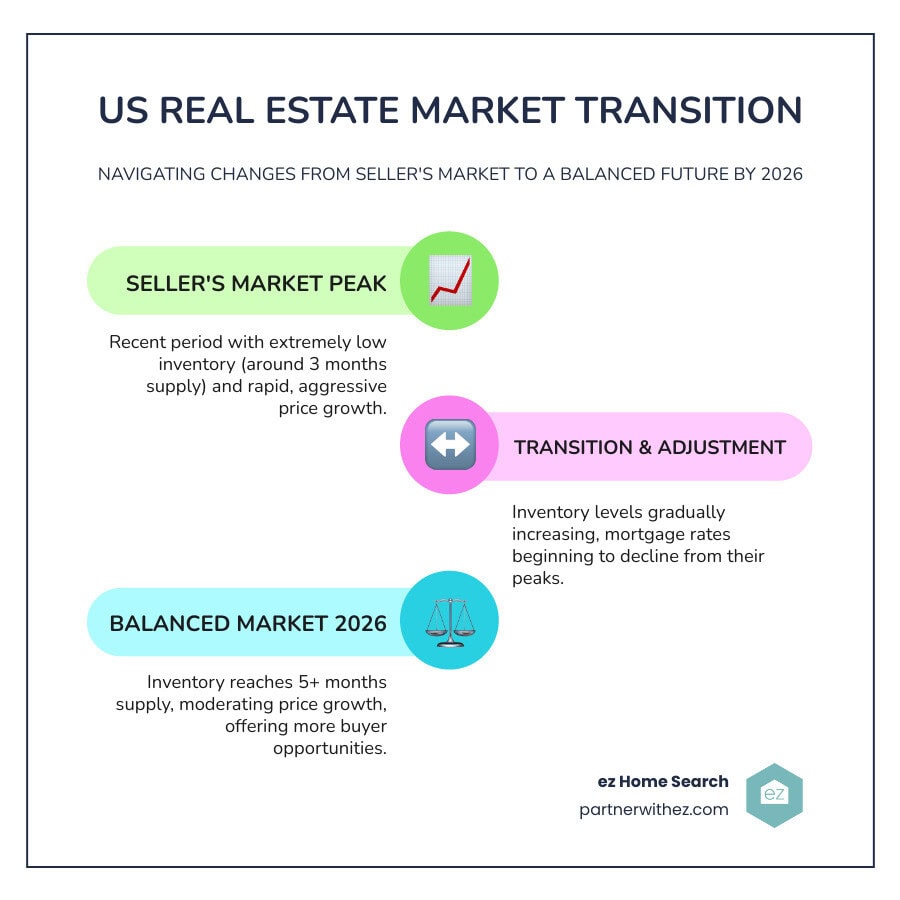
The forecasted real estate industry changes in the coming years will reshape how Americans buy, sell, and invest in property. The market is shifting from a seller-dominated environment to a more balanced landscape, with rising inventory, moderating price growth, and evolving buyer power.
Key Changes Expected:
- More balanced market conditions – Inventory levels are projected to reach a 5+ months’ supply nationally, up from the tight 2-3 month range of recent years.
- Modest price growth – National home prices are forecast to rise 1-4% annually, a significant slowdown from double-digit gains.
- Lower mortgage rates – 30-year fixed rates are expected to trend downward, improving affordability.
- Technology change – AI-driven tools, digital twins, and automated processes will streamline transactions.
- Regional variations – Sun Belt markets may soften while Midwest and select urban cores show stability.
- Increased buyer negotiation power – More opportunities for concessions, rate buy-downs, and inspection periods.
The shift isn’t a crash; it’s a correction toward sustainability. After years of bidding wars and waived contingencies, the pendulum is swinging back. Buyers will have more time to make decisions, sellers will need realistic pricing strategies, and agents who understand these dynamics will thrive.
Technology will accelerate this transition. From AI-powered property valuations to virtual tours, the tools reshaping real estate are already here. The winners won’t just be those with the most listings—they’ll be the professionals who leverage data and deliver genuine value.
I’m Preston Guyton EZP, and at ez Home Search, we’ve spent over 20 years helping teams steer market cycles. We build systems that help agents capitalize on shifts like the ones described in these U.S. real estate industry changes by providing exclusive access to motivated buyers and sellers.
Key Real Estate Industry Changes: A Deep Dive
The housing market is entering a new chapter. After years of breakneck competition, we’re moving toward a market where thoughtful strategy matters more than speed, and where both buyers and sellers need to understand the changing landscape to succeed.
The Great Rebalancing: From Seller Frenzy to Buyer Power
The era of every listing sparking a bidding war is fading. Inventory levels are climbing back toward healthier territory, with projections moving toward a more balanced months’ supply nationally. For comparison, a six-month supply is historically considered a balanced market.
More homes on the market means buyer negotiation power is returning. Buyers can now reasonably ask for repairs, negotiate on price, and expect seller concessions. Common concessions include closing cost credits, which help buyers with upfront cash, and rate buy-downs, where a seller pays to reduce a buyer’s mortgage rate. For a buyer, this can mean saving hundreds of dollars monthly. Home warranty inclusions and repair credits are also becoming more frequent.
This shift extends to new construction, where builders are once again offering attractive incentives like design upgrades, appliance packages, and contributions toward closing costs to move inventory.
Interest Rates and Affordability: The Financial Outlook
Interest rates have kept many potential buyers on the sidelines, but the forecast is encouraging for housing affordability. Mortgage rate projections suggest the average 30-year fixed rate could drop toward 5.9% in the coming years. That might not sound dramatic, but the impact on monthly payments is substantial, making homeownership accessible to more families.
The Federal Reserve’s role is significant, as its policy adjustments influence the entire lending landscape. As rates improve, we will likely see refinancing waves from homeowners who locked in higher rates, freeing up household budgets and strengthening the overall market.
Tech and AI: The Future of Real Estate Transactions
Real estate has been slower to adopt technology, but that’s changing fast. This wave of real estate industry changes is heavily driven by innovation, particularly artificial intelligence.

Proptech adoption is now mainstream. AI in property valuation incorporates massive datasets to predict market trends, while virtual and augmented reality tours make the initial search process far more efficient. Behind the scenes, automated nurture flows keep potential clients engaged, and data analytics for agents turns market information into actionable insights.
As Kurt Uhlir, our Chief Marketing Officer at ez Home Search, puts it: “The future isn’t about replacing the agent; it’s about empowering them with tools that make them indispensable. AI handles the data, so agents can master the relationship.”
At ez Home Search, our platform is built on this principle. Our tools combine high-conversion landing pages, real-time behavioral data, and integrated nurture flows to deliver insights that drive conversions, giving our partners a genuine competitive advantage.
Regional Hotspots vs. Cooling Markets
Real estate is local. National trends provide context, but the market in Phoenix looks nothing like the market in Jacksonville. These real estate industry changes will play out differently across U.S. regions, making local expertise more valuable than ever.

One significant trend is Sun Belt softening. Markets across the South and Southwest that saw explosive growth are now experiencing more modest appreciation as supply catches up. This is a natural stabilization, not a crisis. Meanwhile, we’re seeing Midwest stability, where more affordable housing and steady demand are attracting attention.
The lasting remote work impact continues to sustain the appeal of suburban areas, while an urban core rebound is also occurring in many cities. Understanding these regional differences is critical, which is why curated reviews of locations—detailed assessments of communities, school districts, amenities, and commute patterns—have become so important for making smart relocation and investment decisions. Likewise, curated reviews of real estate agents and brokerages help consumers choose the right representation for their goals and transaction style.
Positioning for Success in the New Real Estate Landscape
The current wave of real estate industry changes brings both challenges and immense opportunities. For real estate professionals, this isn’t just a time to react; it’s a time to innovate, adapt, and leverage the powerful tools now at our disposal. Success in this evolving market comes down to embracing change as an opportunity. The agents and teams who will thrive are those willing to adapt their strategies to serve clients better in a more balanced, tech-driven environment.
Common Mistakes to Avoid in the Evolving Market
Navigating a shifting real estate market requires adapting your strategy. Here are some common mistakes to steer clear of as you navigate current and emerging shifts in the U.S. housing market:
- Overpricing Properties Based on Past Peaks: In a market with more inventory, overpricing a home leads to longer market times and eventual price reductions. Trusting your agent’s current market analysis is key to pricing strategically from the start.
- Ignoring Local Market Data: Real estate is hyper-local. National forecasts provide context, but decisions should be based on granular data for your specific neighborhood, zip code, or county.
- Neglecting Property Condition and Presentation: When buyers have more choices, condition matters. A well-maintained and staged home stands out against the competition and can significantly impact its perceived value.
- Skipping or Waiving Inspections (Buyers): In a balanced market, there is no reason to waive a home inspection. This is your best protection against unforeseen and costly issues after closing.
- Underestimating the Importance of Credit and Financing (Buyers): Strong credit and a clear understanding of your financing options are paramount. Get pre-approved early to understand your buying power and secure the best possible interest rate.
- Being Inflexible with Deal Terms (Both Sides): The era of rigid, take-it-or-leave-it demands is fading. A willingness to negotiate reasonably on repairs, closing costs, or timelines fosters successful transactions for both buyers and sellers.
How to Thrive Amidst Real Estate Industry Changes

The evolving real estate industry changes are an invitation to innovate and redefine success. The professionals who thrive will be those who become more valuable and efficient by combining local expertise with cutting-edge tools.
Agent adaptation is essential. The most successful agents are leveraging technology to automate repetitive tasks so they can focus on the human elements that no algorithm can replace. Travis McClure, our Chief Operating Officer at ez Home Search, puts it perfectly: “Our goal is to provide a platform where technology doesn’t complicate, but simplifies. It’s about giving agents the competitive edge through automation and exclusive access, so they can focus on what they do best: serving clients.”
For buyers, strategies now center on education and patience. They need agents who can provide curated reviews of locations (cities, counties, ZIP codes, neighborhoods, school districts) and curated reviews of agents and brokerages to guide them through a more complex market. For sellers, success requires realistic pricing based on current data, professional presentation, and a willingness to negotiate.
In a market that values trust, building a referral network remains the most powerful growth engine. Exceptional service, amplified by technology, creates clients who become advocates for your business.
At ez Home Search, we’ve built our platform to empower professionals in this environment. We deliver exclusive buyer, seller, and cash offer opportunities through county-based exclusivity. This means you get sole access to real, intent-driven consumers—no competing with other agents for the same lead.
Our ecosystem combines high-conversion landing pages, real-time behavioral data, CRM-integrated nurture flows, and TCPA-compliant verification. We provide done-for-you SEO and marketing support, plus weekly coaching to help teams scale. It’s the tech, trust, and territory protection you need to convert at scale, built by leaders whose work powers companies like Apple, Microsoft, and Meta.
We also offer ez Connect accounts for professionals looking for streamlined solutions and valuable resources. You can explore these options at https://www.ezconnect.info.
The market is shifting toward balance and transparency. With the right strategies and technology partner, you can position yourself not just to survive this transition, but to truly thrive.
Ready to secure your exclusive county and gain access to intent-driven leads without competition? Learn how to partner with ez Home Search and transform your real estate business.

Preston Guyton has spent 20+ years helping people find the right home—and helping them avoid the costly mistakes that often come from not knowing their options. As the founder of ez Home Search, he’s leading the charge to build a better way to discover real estate—one that puts your privacy first, delivers accurate information, and gives you the confidence to make informed decisions. Preston has assembled a powerhouse team—made up of the innovators behind many of the technologies people use every day—to build the tools and transparency that deliver on a single mission: A Better Way To Discover Real Estate.