

Why Mortgage Modification Lead Generation Is Different
Mortgage modification leads are distressed homeowners seeking help to restructure their loans, and they require a fundamentally different approach than traditional purchase or refinance leads. These homeowners are facing financial hardship—often 3–12 months behind on payments—and need to adjust their loan terms to avoid foreclosure. Their situation is defined by high urgency and specific triggers like job loss or medical bills.
Unlike buyers planning a dream home, modification leads are in crisis mode. They’re trying to save their homes, and this emotional context changes everything. The challenge is that most lenders treat them like any other prospect, using generic lists and standard follow-up, leading to low conversions. This isn’t about casting a wide net; it’s about precision, speed, and trust.
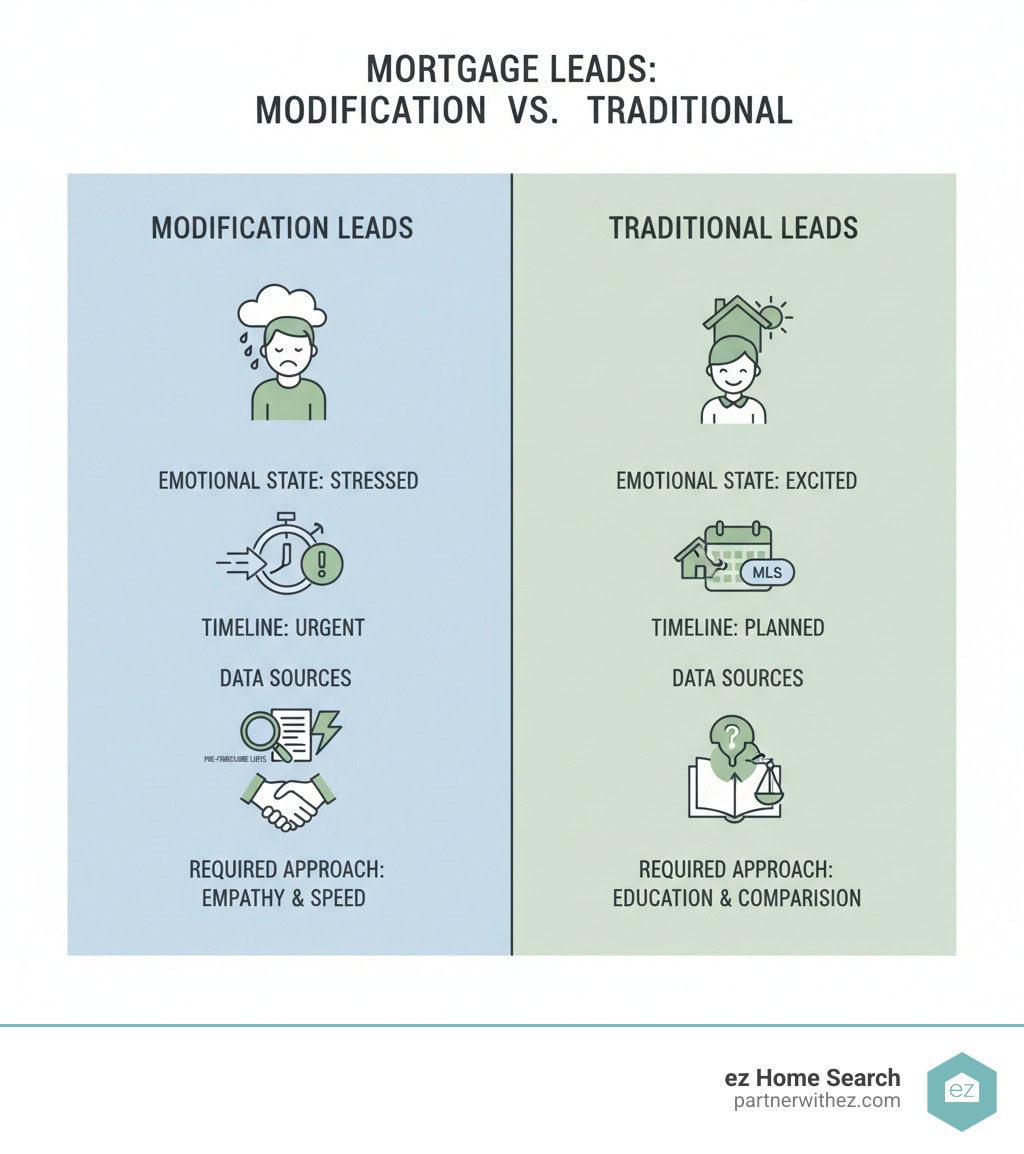
The journey of a homeowner seeking a mortgage modification is driven by stress and urgency. While a purchase lead involves planning, a modification lead stems from financial triggers like job loss or medical emergencies. This critical situation means traditional, slow nurturing methods are ineffective.
For lenders, understanding this distinction is key. Mortgage modification leads are a niche but highly motivated segment. Ignoring their unique needs leads to wasted resources and missed opportunities. In a changing mortgage landscape, adaptable and precise lead generation is more important than ever.
3 Strategic Changes for High-Quality Mortgage Modification Leads
Generating and converting mortgage modification leads demands a rethinking of how you identify, engage, and support homeowners in distress. These three strategic changes will transform your results.
Change 1: Target High-Intent Homeowners, Not Just Demographics
The biggest mistake is casting too wide a net. Generic demographic targeting fails for mortgage modification leads. Instead, focus on homeowners already showing clear signs of distress.
Their search for a modification is rarely planned; it’s triggered by a crisis like job loss or medical bills. As our Chief Marketing Officer, Kurt Uhlir, puts it, “The way home buyers interact with lending and real estate professionals is changing,” especially for distressed homeowners needing immediate answers.
Pre-foreclosure data is your first line of defense. Platforms with distressed property data identify homeowners who have defaulted but not yet faced foreclosure. This data includes Notice of Default status, LTV ratios, and delinquency status, allowing you to offer solutions proactively.
Beyond data, homeowners are actively searching online for terms like “how to stop foreclosure.” Your digital presence is crucial. Create content optimized for these high-intent keywords to capture organic traffic. A good article on some basic SEO can provide foundational knowledge, but know that building your own site will be a long journey and investment.
Focus on educational resources like guides on avoiding foreclosure and explanations of modification programs. These are lifelines for people in crisis and can be used in other forms of your reach-outs and follow-up sequences.

Geographic targeting adds another layer of precision. Custom filters for your licensed service areas, combined with advanced filters for employment status or credit ratings, help you identify the most viable opportunities and turn lead generation into a strategic operation.
Change 2: Leverage Technology for Speed and Nurturing
With high-intent homeowners, the clock is ticking. The urgency of mortgage modification leads demands swift engagement, where technology is your competitive advantage.
Taking longer than five minutes to contact a lead can cause an 80% decrease in qualification. For distressed homeowners, this speed is everything. As Travis Halverson reminds our partners, every inquiry is an opportunity, but only if you act on it immediately. Real-time lead delivery to your CRM eliminates delays.
A robust CRM integration is the backbone of lead management. Our technology integrates with platforms like ezNurture and Follow Up Boss, helping you track interactions and manage follow-ups so no homeowner falls through the cracks.

Marketing automation keeps the conversation going. Automated email and SMS sequences provide valuable information and guide homeowners to the next step, which is vital since it often takes six to eight touches to convert a lead. Your CRM should support automated lead capture, customizable follow-ups, and detailed lead profiles. For compliance, our ezVerify.ai tool provides TCPA-compliant verification and data enrichment, ensuring your outreach meets regulatory standards.
Lead management systems help you segment prospects into Marketing Qualified Leads (needing education) and Sales Qualified Leads (ready for engagement), ensuring you deliver the right message at the right time.
Change 3: Build Trust Through Value and Ethical Practices
For homeowners seeking mortgage modification leads, trust is the deciding factor. Your ability to build it through empathy, expertise, and ethical practices will determine your success.
Approach conversations as a guide, not just a lender. As Travis Halverson notes, “It’s about helping them find a path forward, not just selling a product.” Explain complex options in simple terms and focus on tangible borrower benefits: keeping their home, reducing payments, and preserving credit.
Social proof is powerful. Curated real estate reviews are persuasive, especially those highlighting your expertise in helping homeowners steer difficult situations or showcasing positive experiences with your team. Additionally, reviews of locations like cities or counties can guide homeowners considering relocation.
Compliance and ethical practices are foundational. Ensure all communication is TCPA-compliant and adheres to fair lending practices. Be transparent about processes and potential outcomes to build a long-term relationship based on honesty.
Building strategic partnerships with real estate agents, CPAs, and attorneys is a valuable source of referrals. As Nikki Pais points out, “It’s not just about buying referral partners coffee; it’s about helping them grow their business.” A reciprocal relationship builds a network of trust. Learn more about how to meet face-to-face with more referral partners to build these relationships.
Common Mistakes to Avoid
Even with the right strategy, it’s easy to stumble with mortgage modification leads. These missteps drain your budget and fail homeowners who need your help.
- Buying generic or low-quality lists. Many lenders buy broad databases not curated for modification intent, resulting in abysmal conversion rates. As our COO, Travis McClure, says, “Understand where your leads are coming from. If you don’t know, you’re risking both your reputation and your conversion rate.” Always verify your provider’s generation methods and whether leads are exclusive.
- Repurposing refinance leads. A refinance lead is seeking a better rate; a modification lead is trying to save their home. The intent is completely different, and using the same messaging will alienate the very people you’re trying to help.
- Neglecting speed-to-lead. For mortgage modification leads, the 5-minute rule is critical. Waiting hours to respond means the homeowner has likely already connected with a competitor or lost hope. Speed is a requirement, not a bonus.
- Lacking a follow-up process. It takes six to eight touches to convert a lead. Making one call and moving on is a recipe for failure. A systematic, automated follow-up sequence is essential for nurturing these relationships.
- Poor data management. Tracking leads in spreadsheets or on paper leads to chaos. Without a robust CRM, leads fall through the cracks, follow-ups are missed, and the client experience suffers.
- Using one-size-fits-all messaging. Distressed homeowners need personalized communication that acknowledges their unique hardship. A generic marketing message can feel offensive to someone in a vulnerable position. Your outreach must reflect genuine empathy.
Your Blueprint for Lasting Relationships
Generating mortgage modification leads is about connecting with homeowners in need and offering genuine solutions. A successful system is built on three pillars: targeting with precision, leveraging technology for speed, and building trust through ethical practices. This approach creates lasting relationships with homeowners who will remember you as the professional who helped them through a difficult time.
The future of lead generation lies in exclusivity and data-driven decisions. As Kurt Uhlir remarks, “Lenders need to get creative to fill their lead funnels in light of new rulings.” This means moving beyond shared leads to a model that respects consumer privacy and provides unique opportunities.
Homeowners in crisis need a trusted advisor, not another sales pitch. That’s why county-based exclusivity matters. When you have sole access to intent-driven consumers in your territory, you become the local expert who responded fastest and built trust.
At ez Home Search, we redefine real estate growth through transparency, automation, and exclusivity. Our platform delivers exclusive opportunities to loan officers and real estate teams while protecting consumer privacy. Our ecosystem provides high-conversion tools, real-time behavioral data, CRM-integrated nurture flows, and TCPA-compliant verification from ezVerify.ai. This ensures you have the tech, trust, and territory protection to convert at scale.
Whether you’re a loan officer seeking warm handoffs or a team leader looking for predictable lead flow, our platform provides the tools to succeed. We also offer ez Connect accounts for additional support.

The homeowners seeking mortgage modification leads need you at your best. Partner with us for exclusive, intent-driven opportunities and transform your approach to helping distressed homeowners.

Preston Guyton has spent 20+ years helping people find the right home—and helping them avoid the costly mistakes that often come from not knowing their options. As the founder of ez Home Search, he’s leading the charge to build a better way to discover real estate—one that puts your privacy first, delivers accurate information, and gives you the confidence to make informed decisions. Preston has assembled a powerhouse team—made up of the innovators behind many of the technologies people use every day—to build the tools and transparency that deliver on a single mission: A Better Way To Discover Real Estate.