The best way to stay in touch with real estate leads without annoying them is to send helpful, well‑timed messages that match what those people care about right now. When you understand how to nurture a real estate database with smart segments, clear consent, and value‑first communication, follow‑up feels like service instead of pressure. Recent research from National Association of Realtors shows 88 to 92 percent of buyers would gladly work with their agent again, yet only about 18 percent actually do, which is a nurture problem, not a personality problem.
This guide walks through practical systems that close that gap. You will see how to segment contacts, build a multi‑channel plan, automate routine touches, revive dormant records, and keep past clients close for years. ez Home Search appears throughout as a live example of how these ideas work inside a real platform.
Stick with it and you will see how to nurture a real estate database in a way that feels natural to your clients and sustainable for your team.
Key Takeaways
Before we go deeper, it helps to see the main ideas in one place. These points sit behind every tactic in the rest of the article. Keep them in mind while you shape your own database plan.
The 88 to 18 loyalty gap shows how much revenue most agents leave on the table without meaning to. Clients like their agent, but the relationship fades when no one owns ongoing contact. A simple, steady nurture system closes that gap.
Segmentation turns a messy contact list into something you can actually manage. You speak differently to a hot buyer, a past client, and a referral partner, so they each need different plans. Without segments, every message feels generic and people lose interest.
Behavioral timing beats rigid calendars when you decide when to reach out. If you contact someone right after they view listings or adjust their price range, the message feels natural. ez Home Search highlights those moments so the right person gets a call at the right time.
Automation keeps touches going when you are buried in showings and closings. It handles standard emails, texts, and reminders while you focus on real conversations. The goal is not to replace you, but to free you up for the calls that actually close.
Post‑closing nurture is where most of the lifetime value in your database shows up, through repeat deals and referrals. Past clients and their friends cost far less to win than new cold leads from a portal. Strong post‑closing habits help you tap that long‑term revenue stream.
As the National Association of Realtors has found in multiple surveys, buyers are usually happy with their agents — they just stop hearing from them.
Why Most Real Estate Databases Are Leaking Revenue Right Now
Most real estate databases leak revenue because they are treated like a blast list instead of a living system of relationships. When an agent only reaches out during promotions or ignores follow‑up while busy, contacts slowly forget who that agent is. Over time, that quiet drift turns past clients and warm leads into someone else’s business.
According to National Association of Realtors, close to nine out of ten buyers say they would reuse or refer their agent, yet fewer than two out of ten actually do. That drop is not about service quality; it is about disappearing after closing. When no system exists for how to nurture a real estate database, good intentions fade the moment the next urgent deal appears.
Most agents slide into one of two habits:
Some blast the full list only when they have something to sell, which trains contacts to expect spam.
Others ignore the database during heavy transaction months, which trains contacts to expect silence.
Both patterns push people to unsubscribe, send messages to junk folders, or look elsewhere when they are ready to move.
Agents and teams using ez Home Search see something different. Because past clients stay on a co‑branded home search with home value updates, Exclusive County Partners recover repeat and referral business at roughly two and a half to five times the market rate. The difference is simple: they treat their database as a compounding system, not a pile of names.
Segment First: Why One Message To Everyone Guarantees Poor Results

Segmenting your contact list is the first real step in learning how to nurture a real estate database without annoying people. When every person gets the same message, it fits almost no one. Sending a “hot new listing” alert to a family that closed six months ago tells them you are not paying attention, and they disconnect.
A database without segments behaves like a liability instead of an asset. Open rates fall, responses fall, and you lose trust with the very people most likely to send you repeat and referral business. Clear tags fix that by telling you who each person is, what they care about, and how soon they may move.
Here is a simple tagging framework that most solo agents, teams, and ISAs can apply in a week. It works whether you run ez Home Search alongside CRMs such as Follow Up Boss, Sure Send, or another system, and it sets the base for the behavioral data ez Home Search adds later.
Relationship type
Mark each contact as past buyer, past seller, sphere of influence, active lead, industry partner, or long‑term nurture. A past buyer who closed three years ago expects very different communication than a lender who sends you referrals, even if both live in the same zip code.Lead temperature
Label contacts as hot, warm, or cold so your team knows who needs fast response. Hot means actively searching or ready to list, warm means researching with a three‑ to twelve‑month window, and cold means little current activity but worth keeping.Timeline and history
Track close dates, number of deals, and stated plans, such as “planning to upsize in two years.” A client who has already bought twice with you and mentioned downsizing soon deserves a top‑tier follow‑up pattern.Interest type
Note whether each contact is buying, selling, investing, renting with buy potential, or just watching the market. This gives you the context to send content that feels relevant rather than random.
With those core tags in place, you can finally send the right messages to the right groups instead of guessing. Start simple; you can always refine or add tags as your database grows.
How ez Home Search Surfaces Behavioral Segmentation Automatically
ez Home Search adds a live layer on top of your manual segments by watching what people actually do on your co‑branded site. The platform tracks search activity, saved homes, price‑range changes, and visit frequency in real time, then pushes that information into Follow Up Boss or Sure Send. You do not have to open a separate dashboard or export lists.
Instead of working your database in alphabetical order, you see which contacts just increased their price range, started viewing new neighborhoods, or requested a home value update. That behavior tells you who is warming up right now. ezVerify.ai supports this by enriching contact records, confirming opt‑in, and screening numbers against the Do Not Call registry and known litigators, in line with guidance from the Federal Communications Commission. The result is smarter outreach that protects your business while raising your response rate.
Build A Multi-Channel Nurture Strategy That Earns Consistent Attention

A strong multi‑channel strategy is how you stay present with leads and past clients without feeling repetitive or intrusive. Relying only on email misses contacts who prefer text, while leaning only on text without documented consent risks TCPA trouble. The goal is a steady mix of channels, each used for what it does best.
Email handles depth and scale. Text supports quick, personal touches. Phone calls create real relationship depth. Social platforms like Facebook, Instagram, and LinkedIn keep you visible between direct contacts. Direct mail provides a physical reminder that feels different from anything on a screen. According to Campaign Monitor, email marketing still delivers one of the highest returns of any channel, which makes it a natural backbone for nurture.
Compliance matters in this mix. The Federal Communications Commission makes clear that promotional texts and auto‑dialed calls require proof of consent. That is why ezVerify.ai records opt‑in details, keeps the audio proof, and blocks risky numbers before you ever pick up the phone. A legal misstep can wipe out years of commission checks, so your system has to protect you by default.
Content matters just as much as channel. When you focus on market updates, equity reports, neighborhood news, and simple homeowner tips, contacts learn that opening your messages is worth their time. Learning how to nurture a real estate database means pairing that kind of value‑first content with the right mix of email, text, social, calls, and mail, instead of blasting only listings.
Tip: Map each segment (hot buyer, past seller, sphere, and so on) to a default mix of channels so you do not have to decide from scratch every time you follow up.
Channel By Channel Playbook: What To Send And When
Every channel plays a different role in your database plan. Once you understand those roles, you can match each message to the place it fits best. Here is a simple guide you can keep beside your CRM while you work your day.
Email
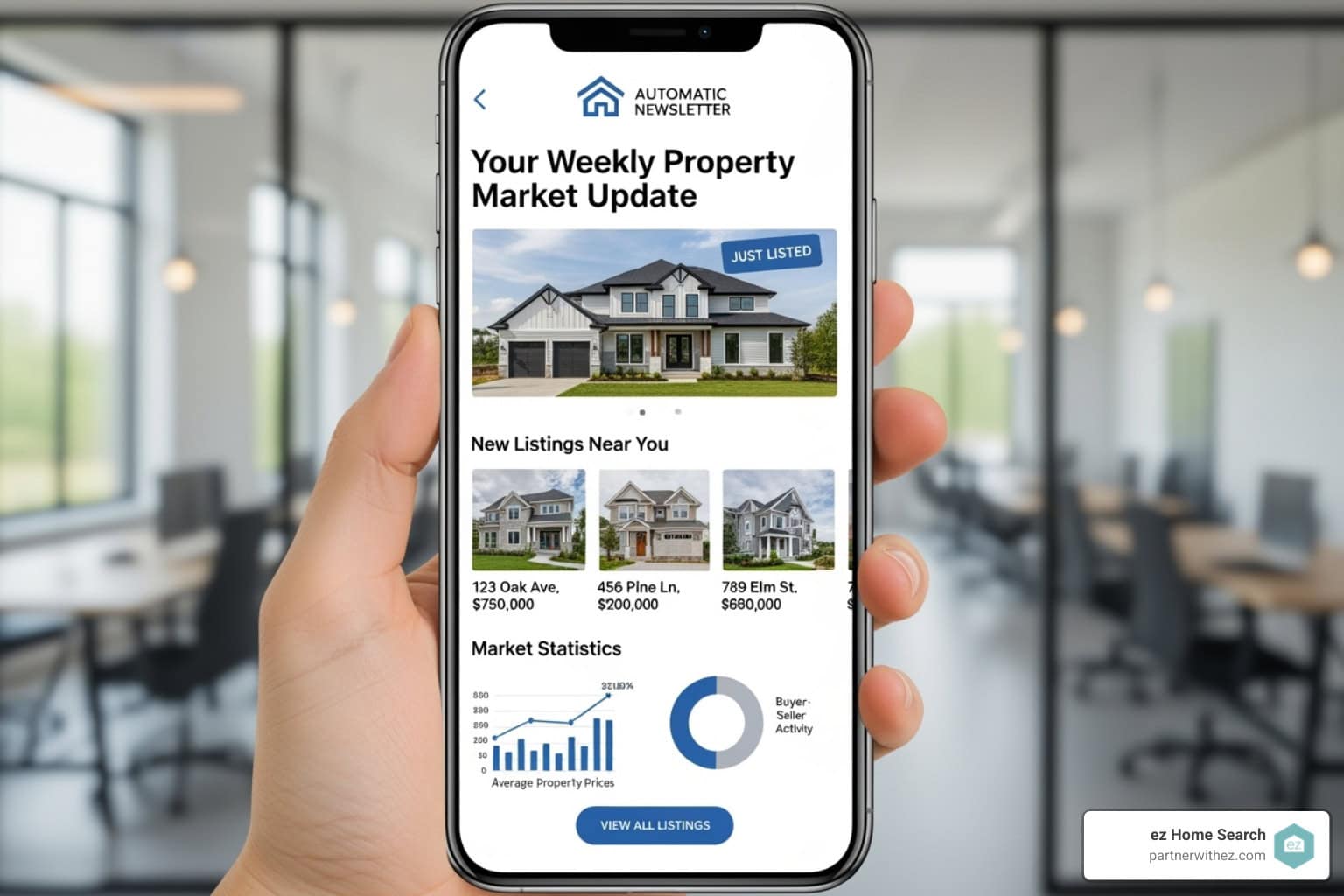
Use email for monthly market newsletters, new‑lead drip sequences, and detailed buyer or seller guides. Long‑form content about pricing trends, equity growth, or local development fits here. Add simple personalization like first name, town, and buyer or seller status to raise open and click rates.Text
Treat SMS as a personal lane for time‑sensitive and short messages, not as a mass blast channel. Appointment reminders, quick check‑ins, and “a home just hit your price range” notes all work well. Studies cited by Gartner report SMS open rates above ninety percent, which is why restraint and prior consent are so important.Phone
Phone calls build trust faster than any digital touch. Use calls for hot leads, top past clients, referral partners, and complex questions that are hard to handle over email. A five‑minute call each quarter to your top twenty percent of contacts often produces more deals than dozens of marketing emails.Social media
Platforms like Facebook, Instagram, and LinkedIn keep you in your contacts’ daily scroll without asking for a reply. Share local stats, community highlights, and client wins, and spend a few minutes each day liking and commenting on posts from your database. Seeing your name when they are not in the market makes it easier to remember you when they are.Direct mail
Physical mail stands out precisely because so much real estate marketing lives online. Quarterly postcards with neighborhood stats, home‑anniversary cards, and holiday notes all work well for past clients and sphere contacts. For older homeowners or people who rarely open email, regular mail may be the channel that keeps you connected.
You do not need to master every channel at once. Pick one or two to improve each month and layer the rest in over time.
Automate The Follow-Up Without Losing The Human Touch

Automation lets you follow up with hundreds or thousands of people without losing your mind, but it cannot replace real human contact. When you design automation well, it carries the routine touches so you can focus on live conversations. That balance is a key part of how to nurture a real estate database at scale.
Every automated campaign has three parts:
The trigger. This is the event that starts the sequence, like a new registration, a tag change to “warm seller,” or a one‑year home anniversary.
The sequence. This is the set of messages and timing steps, such as emails across the first month and a reminder for an ISA to call on day three.
The exit rule. This is the point where a contact leaves automation because they replied, booked an appointment, or moved to a new stage.
Automation also needs clear rules for when a human steps in early. Research highlighted by Harvard Business Review found that leads contacted within an hour converted far better than those called later.
A study summarized in Harvard Business Review found that companies that reached out to online leads within one hour were almost seven times more likely to qualify those leads than companies that waited longer.
That means any sign of real interest, such as repeated listing views or a fresh home value request, should create an immediate task for a live call. Your CRM should make those people easy to spot.
Platforms like ez Home Search, together with CRMs such as Follow Up Boss and Sure Send, already handle much of this structure. When you add ez Home Search on top of your CRM, behavior from your co‑branded site feeds into those systems so that automation follows what people do, not just what you planned on day one. That is how you keep automation personal.
How ezNurture Handles Every Pipeline Stage Automatically
ezNurture, from ez Home Search, is built to carry contacts through the entire pipeline with minimal manual effort. New leads receive a welcome message, early education about the market, and listing alerts that match their preferences. Mid‑pipeline contacts receive check‑ins, neighborhood reports, and reminders that match their stated timeline.
Inside Follow Up Boss, ezNurture shows each contact’s search activity, saved homes, and visit patterns so the system can send the right follow‑ups and nudge you when a personal call is smart. Inside Sure Send, ezNurture runs even deeper, since every part of the nurture plan lives in one place. The guiding idea from leaders like Travis McClure is simple: technology should make an agent’s workday lighter, not heavier.
Re-Engage Dormant Contacts Before Writing Them Off

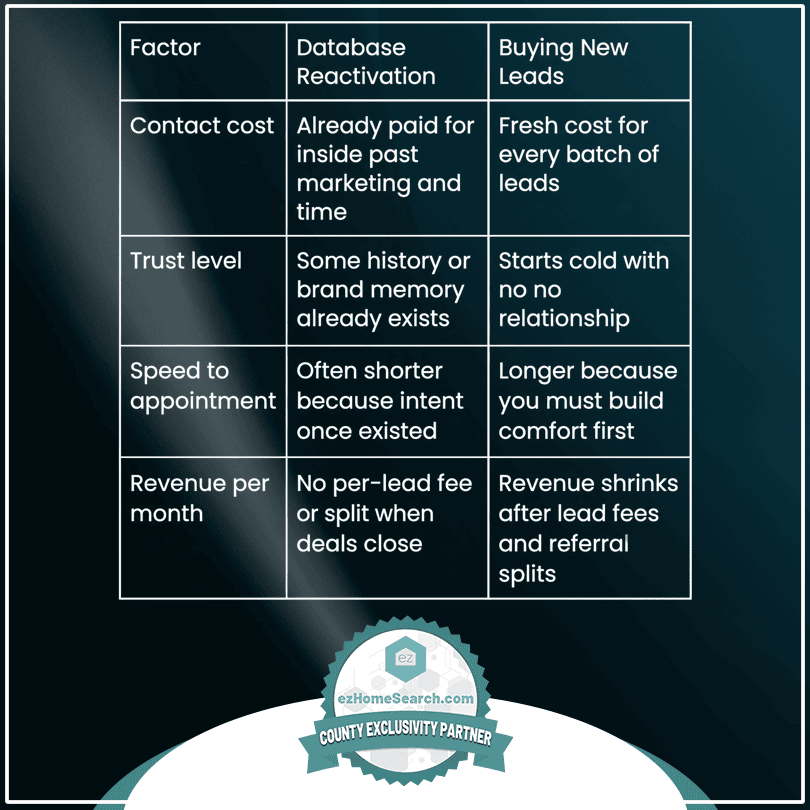
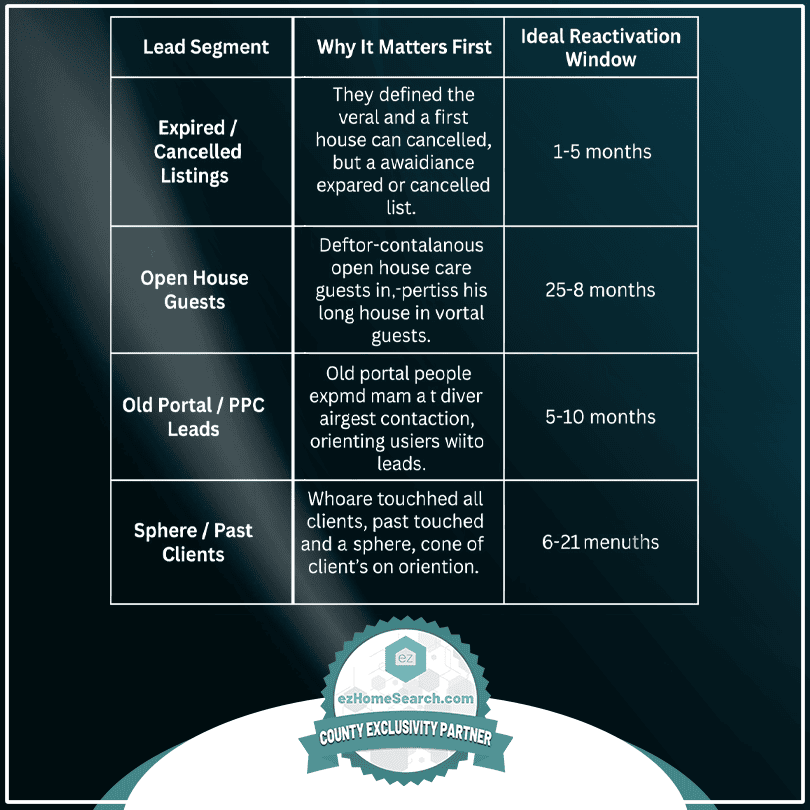
Dormant contacts feel tempting to delete, but they often hold more value than a fresh cold lead you just paid for. Many online real estate leads take twelve to twenty‑four months to close, according to data summarized by RealTrends. If you give up after a few weeks of silence, you hand someone else the closing that your marketing already earned.
Re‑engagement starts by defining what “dormant” means inside your CRM. It might be six months without an email open, no text replies for ninety days, or no logins to your home search in a year. Once those rules are set, you can pull clean lists instead of guessing who has gone quiet.
A smart re‑engagement pattern changes both message and tone. Instead of more listing blasts, you shift to direct check‑ins, neighborhood equity updates, short surveys, and seasonal tips. This gives people reasons to respond even if they are not ready to move next month. When you learn how to nurture a real estate database this way, you treat old leads as delayed opportunities, not dead weight.
ez Home Search helps here by keeping contacts on a co‑branded home search and home value update experience even when they are not answering calls. Exclusive County Partners often see repeat and referral activity at two and a half to five times the market rate because those “quiet” contacts keep browsing. When search activity suddenly spikes, the agent sees it and can reach out while interest is live.
Four Re-Engagement Tactics That Work
Re‑engaging quiet contacts works best when you follow a simple playbook instead of guessing. These four patterns fit into almost any CRM workflow and work for both solo agents and teams. Adjust the exact wording to match your voice.
The direct check‑in
Send a short note that simply acknowledges time has passed. For example, “It has been a while since we talked, and I wanted to see how things are going.” There is no pitch, just a real question. Many people reply because the message feels human and low pressure.The market hook
Share a quick update tied to their neighborhood or price band. You might say, “Homes in your area have reached a new average price, and I can send a simple estimate of your current value.” This gives immediate benefit and invites a reply without forcing one. People care about their equity even when they are not ready to move.The two question survey
Ask for help improving your updates instead of asking for a meeting. One question can ask about their next housing plan, and the other can ask what kind of information they want from you. This approach both refreshes your data and restarts the relationship on a helpful note.The seasonal moment
Use holidays, school years, or weather changes as natural reasons to check in. A message with fall maintenance tips or a summer backyard checklist feels light and useful. Set a CRM rule that anyone who has not interacted in ninety to one hundred eighty days enters this seasonal sequence. Over time, that habit recovers deals you would otherwise miss.
Post-Closing Nurture Where The Real Long-Term Revenue Lives

Post‑closing nurture is where a large share of your lifetime revenue actually sits. The people who already trusted you with one transaction are most likely to trust you again, and to send friends your way. Learning how to nurture a real estate database after closing can change the shape of your business far more than another ad campaign.
Data from National Association of Realtors shows that repeat and referral clients together make up a major slice of closed business for top producers. Yet the same reports show that many consumers cannot remember their agent’s name a few years after buying. The drop comes from lack of contact, not lack of satisfaction.
A simple post‑closing plan has three phases:
First 90 days. Check on the move, send local resource lists (contractors, utilities, neighborhood spots), and answer repair or warranty questions.
First year. Add home tips, market snapshots, and one or two friendly calls. This keeps you positioned as their go‑to housing resource, not just the person who handled the paperwork.
Long term. Rely on annual home value updates, home‑anniversary messages, and invitations to client events or appreciation offers.
Tip: Block 30–60 minutes each week to work only on post‑closing touches. Protecting that time does more for future income than another hour scrolling new listings.
ez Home Search bakes much of this into its Exclusive County Partnership. Past clients search for their next place on your co‑branded platform, even when that move is across the country. Roughly one in twenty Americans moves beyond their local market each year, according to the United States Census Bureau, and this national coverage means you can see the early signs when a former buyer starts looking in a new city. You keep the local listing, earn the referral, and stay the trusted name in their mind.
The Bottom Line
The big gap between client satisfaction and client return is not about charm; it is about systems. Agents who build clear structures for segmentation, multi‑channel contact, automation, re‑engagement, and post‑closing care collect more repeat and referral business from the same number of leads. Over time, their database turns into a predictable source of closings instead of a graveyard of old names.
Conclusion
To recap, segment your contacts first, then decide what value each group needs and which channels fit them best. Add automation to cover the routine touches, but always let live behavior decide when you or an ISA picks up the phone. Build a simple plan for reviving quiet records and never let the relationship stop just because the ink on the closing statement is dry.
The next step is to audit your own database. Look for past clients with no active nurture plan, leads with no recent touches, and records without clear tags. Then check whether your CRM shows real‑time behavior or just static data. If you want a system that adds timing intelligence and compliance on top of what you already use, visit partnerwithez.com to see how ez Home Search fits into your current workflow.
Frequently Asked Questions
This section gives quick answers to the questions agents and team leaders ask most often about database nurture. Each answer stands on its own, so you can skim or share these with your ISAs and marketing staff. Use them as a starting point while you shape your own written playbook.
How Often Should I Contact My Real Estate Database?
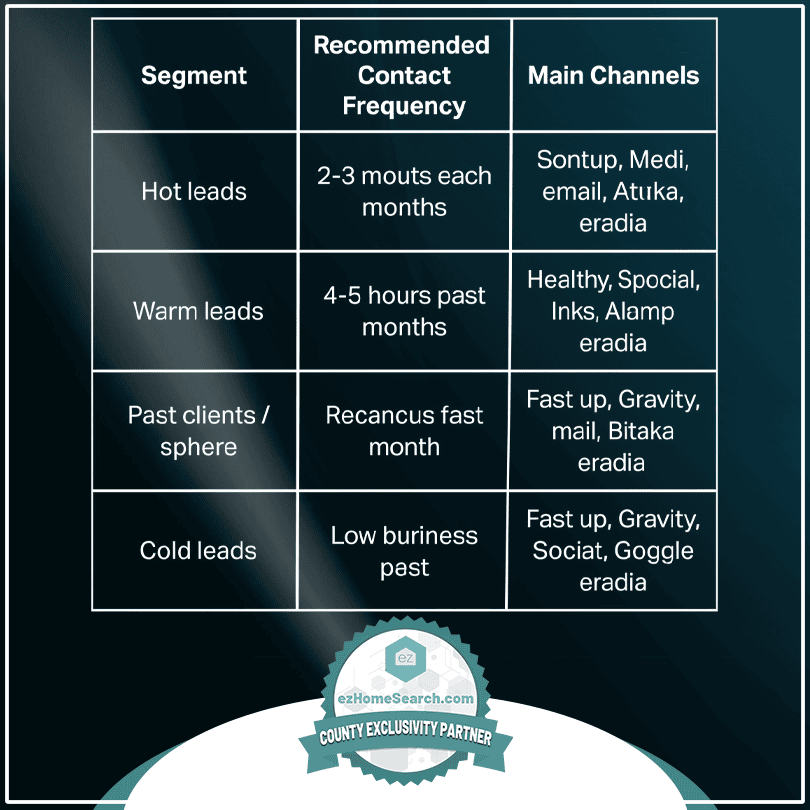
You should adjust contact frequency by segment rather than use a single schedule. Hot leads deserve same‑day response and several touches in the first week. Warm leads often need one to two automated touches per week plus a monthly personal check‑in. Past clients and sphere contacts do well with monthly value emails and a personal call or text each quarter. Cold leads can receive light monthly or bi‑monthly updates.
Here is a quick reference table you can adapt to your market:
What Is The Best CRM For Real Estate Database Nurturing?
The best CRM for database nurture is the one your team actually uses every day. Consistent data entry and follow‑up beat fancy features that no one touches. ez Home Search integrates with Follow Up Boss and Sure Send so behavioral data from your co‑branded site appears inside the platform you already trust. Pick the system your agents will truly adopt and then layer smart nurture on top.
How Do I Re-Engage A Contact Who Has Stopped Responding?
Start re‑engaging quiet contacts with value, not a pitch. Send a neighborhood equity update, a short check‑in that asks how plans have changed, or a two question survey about what information they want. Then place these contacts into a light re‑engagement sequence inside your CRM for the next ninety days. Only after several thoughtful touches should you consider archiving them.
Is Text Messaging An Effective Tool For Real Estate Database Nurture?
Yes, text messaging is very effective when used with care and consent. Studies summarized by Gartner show SMS open rates above ninety percent, which makes it perfect for reminders, quick updates, and fast replies. Avoid mass blasts, and always respect opt‑in rules under the TCPA. ezVerify.ai from ez Home Search helps by recording consent and screening risky numbers before you send anything.
How Do I Measure Whether My Database Nurture Strategy Is Working?
Measure your nurture success with a small set of clear numbers. Track email opens and clicks by segment, response rates to calls and texts, and how many closings come from your database versus paid cold leads. Watch repeat and referral business as a share of total volume over time. If that share is not rising each year, review your segmentation, content mix, and follow‑up timing.